
REVIEW · KATHMANDU
10 Days Private Annapurna Base Camp Trek
Mountain mornings come early in Nepal. This private Annapurna Base Camp trek earns its keep with close-up Himalayan views and a steady walk through Gurung villages, river gorges, forests, and high alpine country. I especially like the hot springs at Jhinu Danda and the personal help from a guide and porter. At $1,100 per person, the package also covers permits, meals, transport, lodging, and staff costs, which makes budgeting fairly simple.
The main catch is the walking. This is not a gentle sightseeing holiday, and one stage lasts about seven hours, with steep stone steps, long descents, and high-altitude walking. Guides such as Kumar and Sukman receive repeated praise for adapting the pace and keeping spirits up, but you still need moderate physical fitness and a willingness to walk day after day.
Five things to know before you book
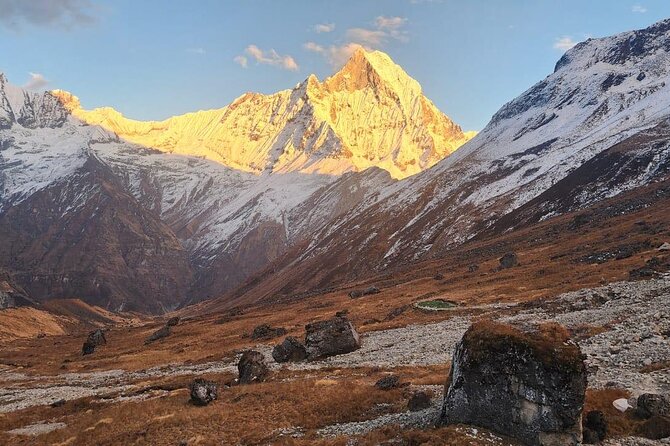
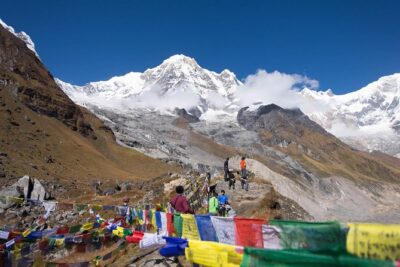
- The highest reward comes at Annapurna Base Camp: You reach a mountain bowl surrounded by Annapurna I, Annapurna III, Annapurna South, Hiunchuli, and Machhapuchare, with the Annapurna glacier close by.
- The route mixes culture with scenery: Ghandruk offers Gurung homes, a local museum, an ACAP office, and a chance to see village life before the trail enters the Modi River gorge.
- A private trip gives you useful flexibility: Only your group takes part, and the guide can help adjust the walking pace to your ability.
- The route is physically demanding: Expect stone steps, uphill stretches, narrow forest trails, long downhill sections, and a high point at Annapurna Base Camp.
- The price covers most core costs: Lodging on trek, two nights in Pokhara, food, guide, porter, transport, insurance, permits, and the TIMS Card are included.
What the 10-day route really feels like
This itinerary is built around the Annapurna Sanctuary, a dramatic mountain basin reached by following the Modi River upstream. It is a sensible route for seeing several sides of the region: city and highway travel, farm villages, Gurung culture, dense forest, high mountain terrain, and a relaxing finish at the Jhinu hot springs.
The schedule also gives you two nights in Pokhara, one at the beginning and one after the trek. That matters. Pokhara is not just a transfer point. It gives you a softer landing before the walking begins and a place to recover before the return to Kathmandu.
The route is private, but it is not luxurious. Accommodation during the trek is in local lodges. Food is included, though drinks and grocery items are not, and you should budget extra for tips.
More Annapurna Treks in Kathmandu
- Annapurna Circuit Trek with Tilicho Lake
★ 5.0 · 368 reviews - Annapurna base camp trek 5 Days
★ 5.0 · 252 reviews - 14-Day Private Annapurna Base Camp Trek
★ 5.0 · 180 reviews
Day 1: Kathmandu to Pokhara by road
The first day is mostly a six-hour drive from Kathmandu to Pokhara. The road follows valleys and rivers, with views of villages, hills, and the Trisuli and Marsyangdi rivers.
This is a scenic transfer rather than a sightseeing tour with formal stops. You will spend a large part of the day seated, so it helps to see it as the opening chapter of the trek, not as a full day in Pokhara.
The advantage of driving is that you see more of rural Nepal than you would from a plane. You pass local settlements and changing mountain scenery as the road moves toward Pokhara. The schedule lists a private vehicle, and transport between Pokhara, Nayapul, and Phedi is included.
You spend the night in Pokhara. The town is a useful place to enjoy views of Annapurna and Machhapuchare, often called Fish Tail, before heading to the trailhead.
Day 2: Ghandruk and the first trail
After breakfast in Pokhara, you drive beyond the Pokhara Valley toward Bhirethati. The road follows the Modi River and passes farm villages and small towns.
The walking begins at Bhirethati with a relatively easy stretch toward Syauli Bazaar. From there, the route uses stone-paved steps to Kimche, followed by a gradual uphill walk to Ghandruk.
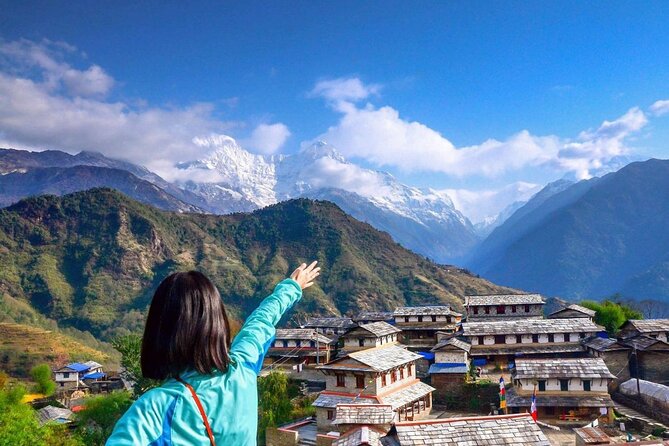
Ghandruk is one of the most rewarding cultural stops on the route. It is a Gurung village with mountain views toward Annapurna South, Hiunchuli, and Machhapuchare. You can visit the Gurung local museum and the Annapurna Conservation Area Project headquarters, while also seeing how local residents live in a mountain community shaped by trekking.
The day takes about six hours, counting the drive and walk. It is a good introduction, but do not underestimate the steps. Your legs are still adjusting to the rhythm of mountain walking.
Day 3: Ghandruk to Chhomrong
The route from Ghandruk to Chhomrong is shorter, listed at about five hours, but it has plenty of changes in grade. You climb toward Kyomrong and Chomro, descend toward the river, then climb again through Gurjung village.
This up-and-down pattern is typical of the Annapurna foothills. A day can look short on paper but still feel demanding because the trail keeps changing direction and height.
Chhomrong is a key point in the route. It is described as the last permanent Gurung village and the gateway to the Annapurna Sanctuary and Base Camp. From here, the trail becomes more focused on the river gorge, forest, and high mountain country.
Take advantage of the evening to rest. The next stage is longer and moves through forested terrain toward the Himalayan Hotel.
Same trailhead, a longer or shorter day out:
- Everest Base Camp Trek – 14 Days
★ 5.0 · 1,499 reviews - Everest Base Camp Trek
★ 5.0 · 842 reviews - Everest Base Camp Trekking
★ 5.0 · 485 reviews - Everest Base Camp Trekking – 13 Day
★ 5.0 · 365 reviews
Day 4: Chhomrong to the Himalayan Hotel
The morning begins with a downhill walk over terraced farm fields to Chhomrong River. After crossing a bridge, you climb toward Sinuwa Danda.
Sinuwa is a small settlement with a few lodges and views toward rolling green hills. From here, the trail enters dense forest. Bamboo, rhododendron, and oak line the route as you continue toward Bamboo, a lodge area beside the Modi River.
The final stretch takes about an hour of gradual uphill walking to Dovan and then the Himalayan Hotel area. The full day is listed at around seven hours, making this one of the longer and more tiring sections.
The setting changes noticeably here. Farm terraces give way to river gorge and forest, and the human presence becomes more limited. The lodges are basic, but their location beside the river gives the overnight stop a strong sense of place.
Day 5: The climb to Annapurna Base Camp
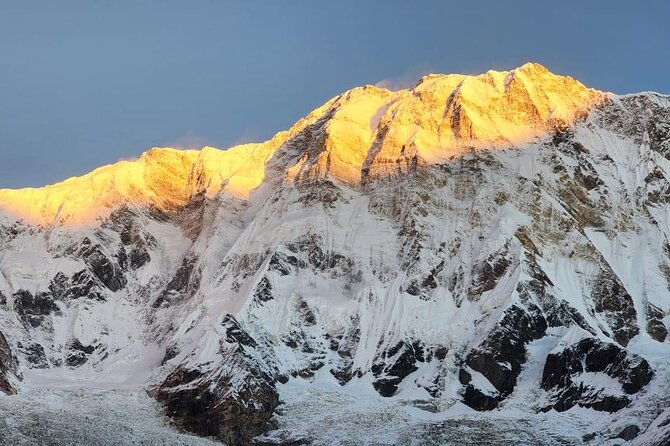
This is the centerpiece of the trek. From the Himalayan Hotel, you follow the Modi River upstream as trees become shorter and the vegetation changes to alpine bushes and shrubs.
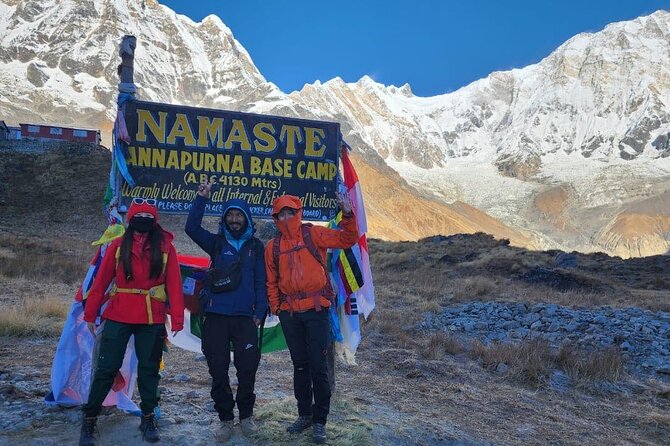
The route continues toward Machhapuchare Base Camp. From there, a shorter walk brings you to Annapurna Base Camp, the main destination of the trip.
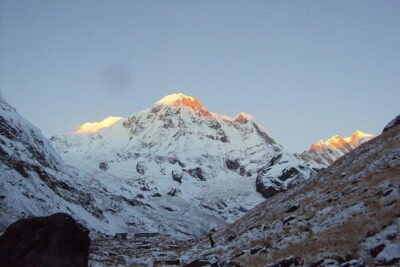
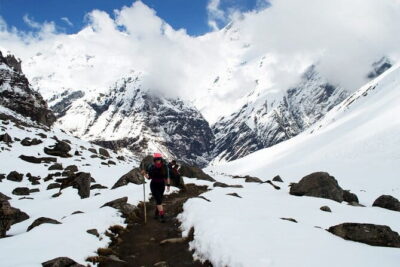
The final approach is rewarding because the mountains begin to surround you rather than sit far away on the horizon. The Annapurna peaks form a huge wall around the sanctuary, with Annapurna I among the most important sights. The Annapurna glacier and the white peaks of Annapurna I, Annapurna III, Annapurna South, Hiunchuli, and Machhapuchare are the visual payoff.
The day is listed at about six hours, but altitude can make the effort feel greater than the clock suggests. The schedule does not state the exact elevation, so you should not treat the timing as a promise of an easy day. Walk steadily, listen to your guide, and avoid rushing simply to arrive early.
You spend the night in the Annapurna Sanctuary area. The weather may shape the view, which is why the cancellation terms allow a different date or full refund if poor weather prevents the experience from running.
Day 6: Annapurna Base Camp to Sinuwa
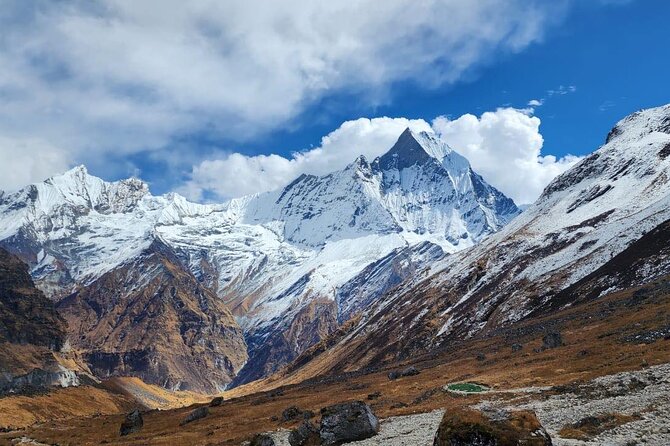
After time at Base Camp, the route turns downhill. You retrace the trail past Machhapuchare Base Camp and Deurali before reaching greener forest again.
The day is listed at about six hours. Downhill walking sounds easy, but it can be hard on knees and ankles, especially after the uphill effort of the previous day. Trekking poles, if you use them, can be useful, though they are not listed as included.
The overnight stop is Sinuwa. You return to a warmer, greener setting, with bamboo and rhododendron forest around the Modi River. This change from open mountain basin to thick forest makes the return feel like a second journey rather than a simple reversal.
Day 7: Sinuwa, Chhomrong, and Jhinu Danda
From Sinuwa, the route climbs briefly to Khuldi Ghar, then descends through forest toward Chhomrong Danda. You continue down to Chhomrong Khola, cross the bridge, and climb for less than an hour to Chhomrong village.
After a rest or lunch, there is another short climb to the top of Chhomrong Ridge. The trail then descends to Jhinu Danda.
Jhinu is one of the best recovery stops in the program. A path leads about 20 minutes downhill to hot springs near the Modi River. After several demanding days, this is exactly the sort of simple pleasure that makes a trek feel well planned.
The walking time is about five hours, but the repeated climbs and descents still require care. Your guide can help you keep a sensible pace, a quality that is repeatedly associated with guides such as Kumar and Sukman.
Day 8: Jhinu Danda to Landruk and the Tolka area
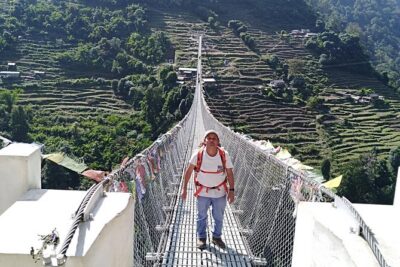
The route begins with a long descent to the Modi River. You cross a long suspension bridge, walk past farm fields, and climb to Landruk, a large village.
The itinerary then describes several hours of gentle, winding walking toward Tolka, with views of Annapurna South and Hiunchuli. The listed stop is Landruk, while the route description refers to Tolka for the overnight area. Confirm the exact lodge and stopping point with the company before departure, since the two names describe different points along this section.
This is a pleasant contrast to the narrow gorge and high mountain country. You are back among fields and villages, with a more open feel and regular views toward the peaks.
The day takes about six hours. It is not a technical stage, but the long descent from Jhinu can be tiring, followed by the climb after the suspension bridge.
Day 9: Deurali, Dhampus, and Pokhara
From Tolka, the trail follows a gradual route with short ups and downs toward Bheda Kharka. You then climb through cool forest to Deurali.
Deurali is a strong viewpoint, with views toward Dhaulagiri, Annapurna South, Hiunchuli, Machhapuchare, and Ghandruk. From there, you descend through forest to Pothana and continue to Dhampus.
Dhampus is the final scenic ridge of the trek. The views extend toward the Annapurna, Manaslu, and Lamjung ranges, with Machhapuchare also in sight. The route then descends to Phedi, where a short drive of about 30 minutes returns you to Pokhara.
The day is listed at six hours, not counting every transfer detail. It is a satisfying finish because the mountains remain visible while the route returns you to roads, vehicles, and town comforts.
Day 10: Pokhara to Kathmandu
The final day offers a scenic flight or a tourist bus back to Kathmandu. The schedule allows about six hours and says you can arrive in the afternoon, leaving time to relax or shop.
Because the transport method affects the day, confirm which option is included or selected before you leave Pokhara. The supplied inclusions clearly cover private transport for the trek transfers, but they do not spell out the cost of the flight or tourist bus.
You finish back at the Kathmandu meeting point at View Nepal Treks and Expedition on Thamel Marg 24.
What the $1,100 price includes
At $1,100 per person, the value depends on how much support you want. This is a private trek, not simply a route map and a lodge list. The package includes a licensed guide, a porter arrangement of one porter for two clients, trekking accommodation, two nights of room in Pokhara, meals during the trek, permits, the TIMS Card, transport, staff salaries, and insurance.
That is a substantial list of core costs. Eight breakfasts, eight lunches, and seven dinners are included. Drinks, grocery items, and tips are extra, and accommodation in Kathmandu costs an additional $40 per night if required.
The porter ratio is worth understanding. Two clients share one porter, so pack with restraint and clarify the luggage allowance before setting out. You will still carry a daypack with your personal essentials.
The price is strongest for someone who wants a private setup and does not want to arrange every transfer, permit, meal, and lodge night separately. It is less attractive if you already have trekking support, prefer independent travel, or expect upscale accommodation.
Guides, group size, and the human side
The trip is private, so only your group participates. That can make a real difference on a route with changing trail conditions and varying walking ability.
Kumar is praised for humor, local knowledge, responsibility, and practical help. Sukman is also described as warm, helpful, and responsible. Several accounts emphasize guides adjusting the pace to match the group, which matters more than polished speeches when you are tired on a steep trail.
The guide and porter are central to the experience. You should ask how many people will be in your group, who the assigned guide is, and how luggage is handled. The company lists a licensed guide and porter, but individual staff assignments may vary.
Food, lodging, and daily comfort
Meals are included as breakfast, lunch, and dinner during the trekking days. The information does not provide sample menus, so you should think of the food plan as practical trail nourishment rather than a culinary program.
Lodging on the trek is in local accommodation. The Himalayan Hotel area, Bamboo, Sinuwa, Jhinu Danda, and the villages along the route all serve as lodge stops, but room standards can vary. The package includes accommodation, while drinks and extra groceries do not.
Two nights in Pokhara are included, which gives the trip a useful buffer at both ends. Kathmandu lodging is not included unless added for $40 per night.
Who should book this trek?
I would recommend it to someone who wants the full Annapurna Base Camp route with cultural stops, a private guide, and most major costs bundled together. It suits walkers who are comfortable with five to seven hours of movement per day and who enjoy simple lodges more than polished hotels.
It is also a good fit for first-time Himalayan trekkers who want support. The guides can help with pacing, route decisions, and everyday needs, while the porter reduces the load.
I would hesitate to recommend it to anyone who dislikes steep steps, long descents, basic accommodation, or changing weather. The route is described as difficult for amateur walkers, and that warning deserves attention. The scenery is generous, but the trail asks for steady effort.
Book at least 24 hours before the start if you want the stated full-refund cancellation option. Cancellations within 24 hours are not refunded, and changes inside that window are not accepted. The experience also requires suitable weather and a minimum number of participants, though the trip is otherwise private once confirmed.
Should you book the Annapurna Base Camp trek?
Yes, if your priority is a well-supported mountain trek with strong scenery and local culture rather than luxury. The route gives you Ghandruk and Gurung heritage, Modi River forests, Annapurna Sanctuary views, a glacier, hot springs, and a comfortable return through Dhampus and Pokhara.
The best reason to book is the combination of private guiding and a price that covers the main practical pieces. The main reason to pause is the physical demand. If you are ready for repeated climbs, long downhill walks, and simple lodge accommodation, this 10-day plan offers a clear and rewarding way to reach Annapurna Base Camp.
FAQ
Where does the trek start?
The experience starts at View Nepal Treks and Expedition, Thamel Marg 24, Kathmandu 44600, Nepal.
Where does the trek finish?
The activity ends back at the Kathmandu meeting point.
How long does the experience last?
The full program lasts approximately 10 days.
Is this a private trek?
Yes. Only your group participates in the private activity.
What level of fitness do I need?
A moderate level of physical fitness is required. The route includes uphill and downhill walking, stone steps, forest trails, and days lasting about five to seven hours.
Is a guide included?
Yes. A licensed guide is included, along with a porter arrangement of one porter for every two clients.
Are meals included?
Yes. The package includes eight breakfasts, eight lunches, and seven dinners during the program. Drinks and grocery items are not included.
Are trekking permits included?
Yes. The trekking permit and TIMS Card are included.
Can I cancel for a full refund?
You can receive a full refund if you cancel at least 24 hours before the experience start time. Cancellations or changes made less than 24 hours before the start are not accepted for a refund.
Recently added around Kathmandu
- Ghorepani Poon Hill Trek★ 5.0 · 16 reviews
- Private Manaslu Circuit Trek at Himalayas★ 5.0 · 3 reviews
- Amazing 1 Day Trekking Experience in Kathmandu Nepal★ 5.0 · 24 reviews
- Ghorepani Poonhill Trek★ 5.0 · 5 reviews
- Upper Mustang Trekking★ 5.0 · 2 reviews
- Upper Mustang Trekking★ 3.0 · 2 reviews
- Upper Mustang Trekking★ 5.0 · 4 reviews
- Upper Mustang Trek★ 5.0 · 5 reviews
Annapurna Base Camp Treks, compared.
Trekking in Annapurna/Langtang/Everest/Upper Mustang regions
Read our review →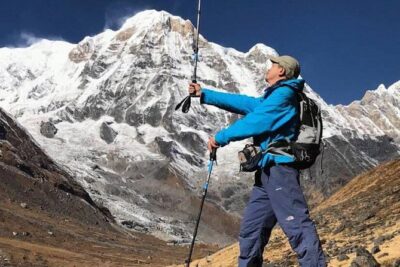
Kathmandu to Annapurna Base Camp (ABC) 5-Day Trek
Read our review →Browse the lists this tour appears in