
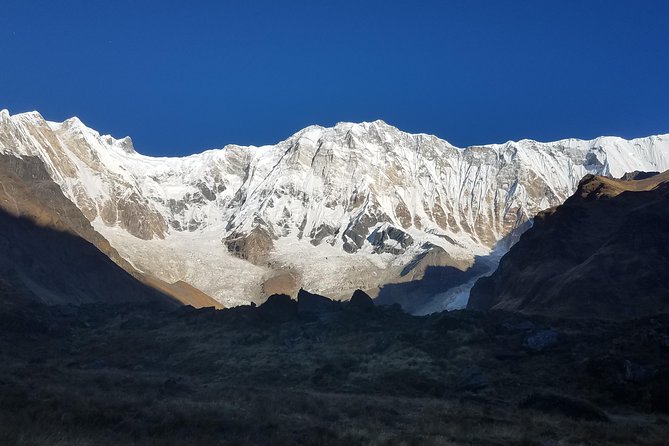
REVIEW · KATHMANDU
Annapurna Base Camp Trekking – 14 Days
Mountain views arrive one trail bend at a time. This 14-day Annapurna Base Camp trek takes you from Kathmandu through Pokhara, terraced hills, rhododendron forest, and the narrow Modi Khola gorge to a high basin ringed by major Himalayan peaks. I especially like the gradual climb and the local lodge stays, which give you time to adjust while keeping the trip connected to village life. The main caution is altitude: Annapurna Base Camp reaches 4,130 meters, so you need steady fitness, patience, and proper travel insurance.
I also like the amount included for $1,250 per person. Lodging, most meals during the trek, permits, transfers, a licensed English-speaking guide, and porter support are bundled together. The tradeoff is that city meals, drinks, tips, insurance, and the Nepal entry visa cost extra, so your final budget will be higher.
Key points before you book
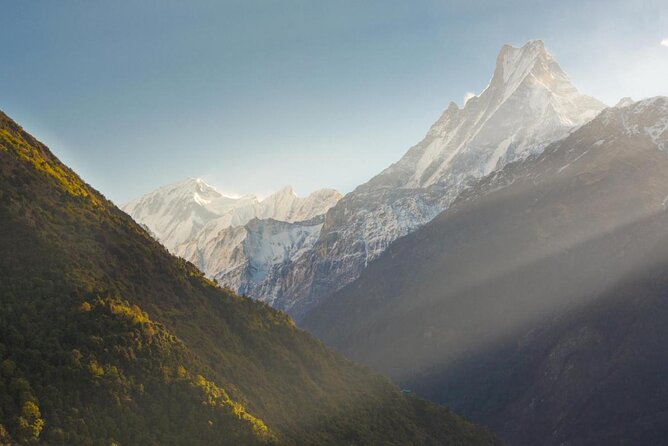
- Annapurna Base Camp reaches 4,130 meters: The itinerary allows several days to gain height instead of rushing straight uphill.
- The scenery changes constantly: You move from rice terraces and bamboo to rhododendron woodland, high pasture, and glacial mountain country.
- Tea-house lodging keeps the trek local: You sleep in family-run lodges, usually in simple twin rooms, with full-board meals during the walking days.
- Guide and porter support are included: One porter is provided for every two trekkers, while staff costs, insurance, food, and lodging are covered.
- The hardest sections are not only about distance: Stone steps, repeated descents, and altitude can make moderate daily walks feel demanding.
- Spring and autumn offer the best conditions: Winter can also work for this route, including Annapurna Base Camp, but weather remains a serious factor.
Why the Annapurna Base Camp route works so well
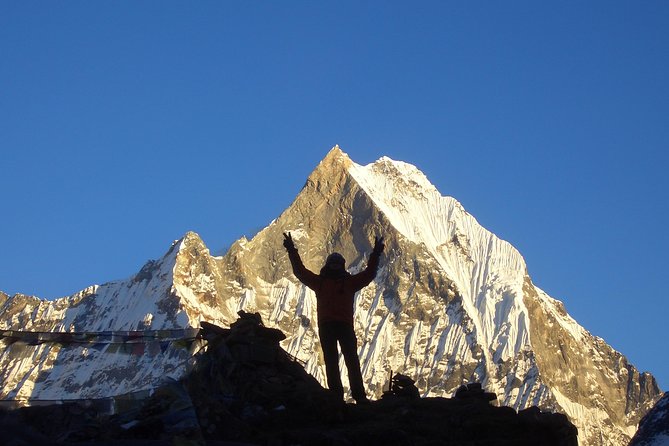
This trek is appealing because it delivers a remarkable range of scenery without requiring a long expedition. You begin among low foothills and cultivated land, then follow stone paths through forest and mountain villages before reaching a glacial basin beneath Annapurna I.
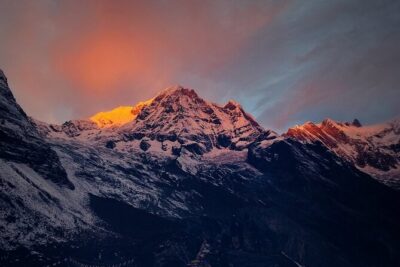
The route follows the Modi Khola valley. As you climb, the gorge narrows and the mountains close in. By Machhapuchre Base Camp and Annapurna Base Camp, the feeling is no longer that of a hill walk. You are in high mountain country, surrounded by peaks that rise well above 7,000 meters, with Annapurna I reaching the 8,000-meter class.
The route is also well suited to people who want support without giving up the character of a traditional trek. You walk with a trained, licensed guide, sleep in local lodges, and eat full-board meals on the trail. The setup is practical rather than luxurious, which is exactly right for this kind of journey.
More Annapurna Treks in Kathmandu
- Annapurna Circuit Trek with Tilicho Lake
★ 5.0 · 368 reviews - Annapurna base camp trek 5 Days
★ 5.0 · 252 reviews - 14-Day Private Annapurna Base Camp Trek
★ 5.0 · 180 reviews
Day 1: Kathmandu arrival and a simple start
The trek begins in Kathmandu, with pickup offered and a meeting point in Thamel. Your first day is mainly for arrival, hotel check-in, and getting organized.
Two nights in Kathmandu are included on a bed-and-breakfast basis, with Hotel Holy Himalaya named as the usual accommodation. That gives you time to recover from the flight and prepare for the mountains before the walking begins.
Do not expect all meals to be covered in the city. Lunch and dinner are your responsibility, and the supplied estimate is $10 to $14 per meal in tourist restaurants. Drinks, snacks, and bottled or boiled water also come from your own budget.
Day 2: The long road to Pokhara
The drive from Kathmandu to Pokhara takes you from the capital toward the Annapurna region, with Pokhara at about 900 meters. The route is a full travel day rather than a sightseeing walk, so patience matters.
Two nights in Pokhara are included, again with bed and breakfast. Pokhara gives you a lower-altitude pause before the trek begins, and it is an important practical stop for final supplies and preparation.
The package includes the Kathmandu to Pokhara ground transfer. Since road conditions and timing can affect mountain travel, keep some flexibility in your expectations. This is one of those days where the destination matters more than the journey.
Day 3: Nayapul to Hile, with the trail finally underfoot
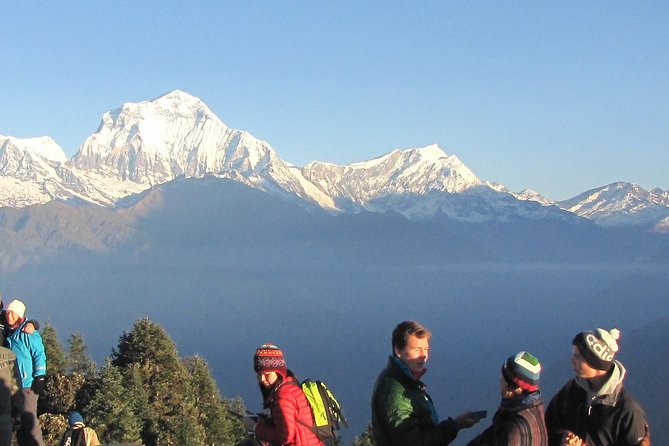
From Pokhara, you drive to Nayapul at about 1,010 meters. The walking begins there, with a roughly three-hour trek to Hile at 1,400 meters.
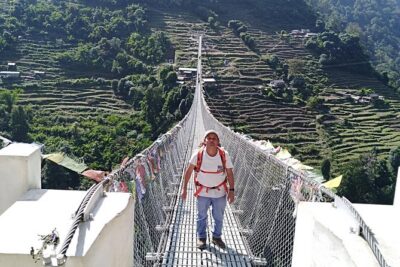
This is a gentle introduction compared with the days ahead. You begin among lower-elevation hills and cultivated areas, with the route passing through the foothills that make the Annapurna region famous.
The short distance is useful. You have time to settle into your boots, learn how the group walks together, and see how your porter arrangements work. Do not judge the full trek by this first day. The stone steps and longer climbs arrive soon enough.
Same trailhead, a longer or shorter day out:
- Everest Base Camp Trek – 14 Days
★ 5.0 · 1,499 reviews - Everest Base Camp Trek
★ 5.0 · 842 reviews - Everest Base Camp Trekking
★ 5.0 · 485 reviews - Everest Base Camp Trekking – 13 Day
★ 5.0 · 365 reviews
Day 4: The climb to Ghorepani
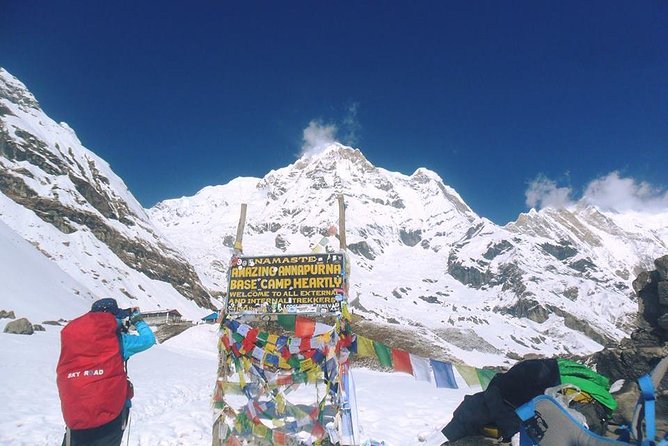
The walk to Ghorepani is listed at six to seven hours, reaching 2,855 meters. This is one of the first days when the trek feels properly mountainous.
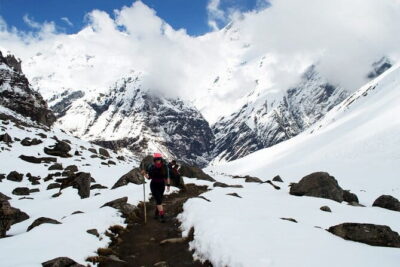
You climb through forest and cultivated slopes, with rhododendron and bamboo becoming important parts of the scenery. The stone stairway can be tiring, especially if you are not used to sustained uphill walking.
Ghorepani is a major stop on the route because it marks a clear rise in altitude and brings you closer to the high ridges. The lodge stay is simple, with a twin-share room and meals included. At this height, warm layers and a good sleeping bag become more valuable than extra clothing options.
Day 5: Ghorepani to Tadapani
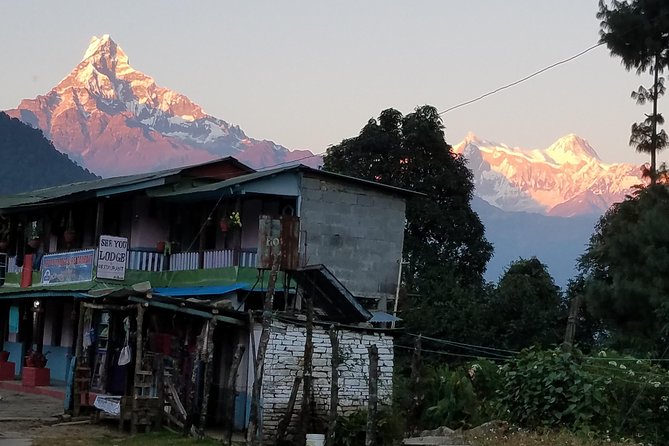
The walk to Tadapani takes about five hours and drops slightly to 2,610 meters. That lower elevation can feel welcome after Ghorepani, but the day still includes plenty of uneven trail and stone steps.
This section is especially attractive for forest walking. Rhododendron country is one of the route’s signature features, and spring can bring color to the hillsides. The scenery changes often, so you are not simply staring at the same mountain view all day.
Tadapani is a good example of how the route uses natural changes in elevation to help you adjust. You gain height, then spend time at a lower stop before climbing farther into the Modi Khola valley.
Day 6: Tadapani to Chhomrung
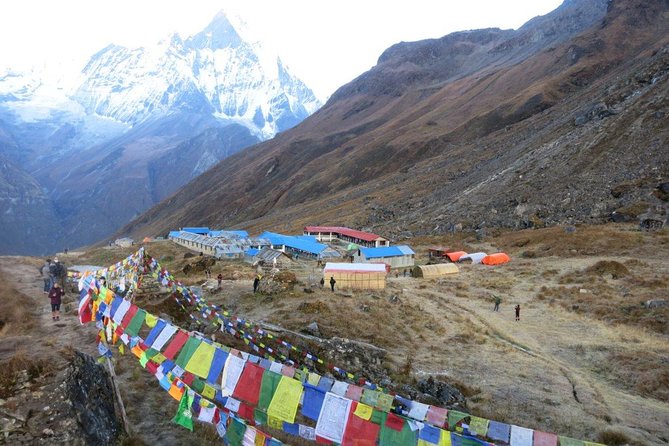
The trek to Chhomrung takes about four hours, ending at 2,040 meters. On paper, this is a shorter day, but it is not necessarily easy because the route rises and falls.
Chhomrung is an important gateway toward Annapurna Base Camp. From here, the route becomes more focused on the upper valley and the high mountain basin ahead.
This is also a good point to take stock of your body. If your knees are feeling the stairs, use walking poles and keep your pace controlled. The schedule is designed to reduce altitude problems, but it cannot remove the physical work involved.
Day 7: Chhomrung to Dovan
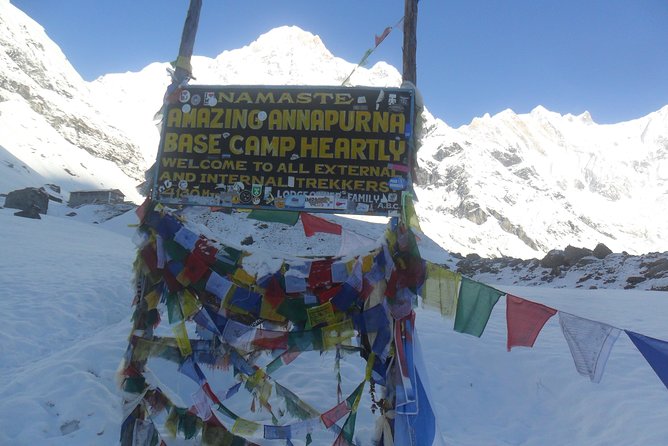
The trail continues to Dovan at 2,550 meters, with four to five hours of walking. From this point, the valley becomes more enclosed, and the forest route begins to feel wilder.
You follow the Modi Khola corridor through bamboo and woodland. The gorge narrows as you go, and the mountains begin to feel less like distant scenery and more like walls around the trail.
Dovan is a basic lodge stop. Accommodation on this trek is about warmth, food, and rest rather than private facilities or hotel comfort. You should be comfortable with simple twin rooms and shared lodge conditions before booking.
Day 8: Dovan to Machhapuchre Base Camp
The walk to Machhapuchre Base Camp takes four to five hours and reaches 3,700 meters. This is a significant altitude gain, even though the walking time is manageable.
Machhapuchre, also known as Fishtail, is one of the defining peaks in the region. The base camp stop places you in a high alpine setting, with fewer trees and a stronger sense of exposure.
This is where the gradual schedule earns its keep. You have already spent several days walking upward, rather than arriving at high altitude immediately. Even so, you may notice headaches, reduced appetite, tiredness, or shortness of breath. Tell your guide promptly if you feel unwell.
Day 9: The main goal, Annapurna Base Camp
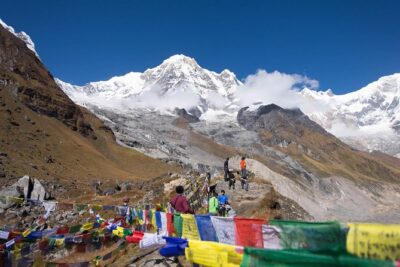
The route from Machhapuchre Base Camp to Annapurna Base Camp is only two to three hours, but altitude makes this a serious morning. You reach 4,130 meters, inside the high glacial basin beneath Annapurna I.
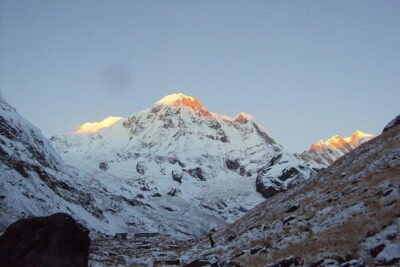
The setting is the emotional high point of the trek. You are surrounded by a ring of major Himalayan peaks, including the massive mountains that draw mountaineering expeditions toward Annapurna’s south face.
Take your time here. The goal is not to race to the sign or spend the whole day posing for photographs. Walk slowly, keep drinking, and follow your guide’s advice. The supplied guidance recommends at least three liters of water a day, with filtered refill points available in the region.
Overnight conditions are basic and weather can change quickly. Your reward is the rare feeling of being enclosed by high, glaciated mountain country, reached entirely on foot.
Day 10: Returning to Bamboo
The return to Bamboo, at 2,340 meters, takes four to five hours. The large drop in elevation can make breathing easier, but downhill walking often tests the knees and thighs.
You retrace part of the Modi Khola route, now seeing the gorge from a different angle. The trail may feel more familiar, but fatigue can make the return surprisingly demanding.
This is a good day to keep your pace measured. You do not need to hurry simply because you are descending. Your guide and porter team are part of the safety system, so speak up if you need a break.
Day 11: Bamboo to Jhinu Danda
The trek to Jhinu Danda takes about five hours and ends at 1,780 meters. The lower altitude brings warmer air and a more relaxed feel after the high basin.
Jhinu Danda is known on this route as the stop associated with natural hot springs, but the supplied program does not specifically promise a hot-spring visit. Treat it as a possible local experience rather than a guaranteed inclusion.
This day also gives you a final taste of the village environment and forested foothills. The route is still active and uneven, but the high-altitude pressure is behind you.
Day 12: Nayapul and the return to Pokhara
The final walking day takes five to six hours and brings you down to Nayapul, followed by transport to Pokhara at 900 meters.
This is not just a transfer day. You finish the walking portion under your own power, after moving from low foothills to 4,130 meters and back again. That gradual arc is a major strength of the program.
The package includes the Nayapul to Pokhara transfer. You return to the relative comfort of Pokhara before the next day’s road journey to Kathmandu.
Day 13 and Day 14: Kathmandu and departure
Day 13 is the drive back to Kathmandu, at about 1,345 meters. Day 14 is departure, with the activity ending back at the Thamel meeting point.
The two Kathmandu hotel nights included in the program are described as one before and one after the trek, though the day-by-day schedule should be confirmed at booking if your transport timing matters.
The return day can be tiring after the road journey. If you have an important international flight, check the exact departure arrangement carefully rather than assuming the transfer will match your preferred airport timing.
What the $1,250 price really covers
At $1,250 per person, the value is strong for a private, supported Himalayan trek. The price covers air-conditioned ground transport, Kathmandu and Pokhara lodging, nine nights in local lodges, full-board meals during the trek, permits, conservation fees, and TIMS documentation.
You also receive an English-speaking licensed guide and one porter for every two trekkers. Staff salary, food, lodging, equipment, and personal insurance for Nepalese staff are included, which helps explain why the price is higher than a basic self-guided trip.
Energy supplies such as Snickers, Mars, and Bounty bars, along with fresh fruit, are included during the trek. A first-aid medicine kit is also provided.
Budget extra money for:
- Nepal entry visa fees
- Personal travel insurance
- Lunch and dinner in Kathmandu and Pokhara
- Soft drinks, mineral water, boiled water, and beer
- Tips for your guide, porters, and driver
The suggested personal spending money is about $10 to $15 a day on the trek for extras, though prices rise farther from the road. Carry some cash because your choices become more limited as you go higher.
Fitness, altitude, and safety
You do not need technical climbing experience for this trek, but you do need a moderate level of fitness. The daily schedule includes several hours of walking, frequent stairs, and large changes in elevation.
Altitude is the main concern. The careful progression helps, but no itinerary can guarantee that you will avoid altitude sickness. Drink at least three liters daily, walk slowly, and report symptoms early.
Personal insurance is not included. You need cover for medical treatment, injury, lost baggage, liability, and emergency evacuation at the elevations reached on this route. Check the policy wording before you leave home.
The guide can change or cancel part of the route if weather, health problems, or natural events make the planned schedule unsafe. That flexibility is not a flaw. In the mountains, reaching base camp matters less than returning safely.
The guide and porter setup
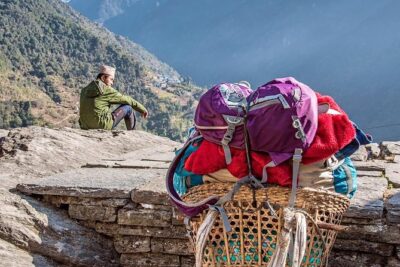
The company provides an English-speaking Sherpa guide who is government trained and licensed. One porter serves two trekkers, allowing you to walk with a lighter daypack while still carrying your personal essentials.
Past company feedback gives particular praise to team members named Ngima, Dawa, Tashi, Nima, and Mingma. The common thread is attentive care, patience, and support, including for family groups and teenagers. You should still confirm the names of your assigned staff before departure.
This support matters most on the longer stair days and at altitude. A good guide watches pace, hydration, and health, while a porter allows you to focus on walking rather than hauling a heavy load.
Best time to go
Spring, from February through late April, and autumn, from late September through late November, are identified as the best seasons.
Winter trekking is also possible on the Ghorepani, Poon Hill, Ghandruk, Annapurna Base Camp, and Kali Gandaki routes. Christmas and New Year can suit families and friends who want to trek during the holiday period, but cold and weather changes remain important considerations.
The route requires good weather. If poor conditions force cancellation, you are offered another date or a full refund. The experience is otherwise non-refundable and cannot be amended after cancellation, so read those terms carefully before paying.
Who should book this trek?
I would choose this trip if you want a guided route with strong logistical support and enough time for altitude adjustment. It suits first-time Himalayan trekkers who are reasonably fit and prefer tea houses to camping.
It also works well for couples, friends, and families with active teenagers. The gradual schedule and included porters reduce some practical strain, though nobody should mistake this for an easy holiday.
I would hesitate if you dislike basic lodging, long road transfers, shared rooms, or uncertain mountain weather. You should also reconsider if you cannot obtain evacuation insurance or are looking for a luxury walking trip.
Should you book Annapurna Base Camp Trekking?
Book it if your priority is a classic Nepal trek with dramatic scenery, local lodge stays, and dependable support at a sensible all-in price. The route gives you forest, villages, high passes of scenery, and a true base-camp finish without forcing the fastest possible schedule.
Before paying, confirm the hotel names, exact transport timing, assigned guide, porter luggage limit, and current room arrangements. Also budget for city meals, drinks, tips, insurance, and the visa.
For a fit person who wants the Annapurna experience without camping, this is a well-balanced choice. The big question is not whether the mountains are worth seeing. It is whether you are ready for the stairs, altitude, simple rooms, and slow pace that make reaching them possible.
FAQ
How long is the Annapurna Base Camp trek?
The program lasts approximately 14 days, including arrival and departure days, road transfers, two nights in Kathmandu before and after the trek, two nights in Pokhara, and the walking section.
What is the highest point of the trek?
Annapurna Base Camp is the highest point, at approximately 4,130 meters or 13,547 feet.
Is accommodation included?
Yes. Two nights in Kathmandu and two nights in Pokhara are included on a bed-and-breakfast basis. During the trek, nine nights in local lodges are included with twin-share rooms and full-board meals.
Are meals included during the trek?
Full-board meals are included during the trekking portion. Lunch and dinner in Kathmandu and Pokhara are not included.
Is a guide included?
Yes. The package includes an experienced, English-speaking Sherpa guide who is government trained and licensed.
Are porters included?
Yes. One porter is included for every two trekkers. Staff salary, food, lodging, equipment, and personal insurance for Nepalese staff are also included.
What permits and fees are covered?
The package includes the Annapurna Conservation Fee, TIMS permits, required permits, and official documentation.
When is the best time to do this trek?
The preferred seasons are spring, from February to late April, and autumn, from late September to late November. Winter trekking is also possible on this route.
Do I need travel insurance?
Yes. Personal travel insurance is not included. You need coverage for medical treatment, injury, lost baggage, liability, and emergency evacuation in remote mountain areas.
Recently added around Kathmandu
- Ghorepani Poon Hill Trek★ 5.0 · 16 reviews
- Private Manaslu Circuit Trek at Himalayas★ 5.0 · 3 reviews
- Amazing 1 Day Trekking Experience in Kathmandu Nepal★ 5.0 · 24 reviews
- Ghorepani Poonhill Trek★ 5.0 · 5 reviews
- Upper Mustang Trekking★ 5.0 · 2 reviews
- Upper Mustang Trekking★ 5.0 · 4 reviews
- Upper Mustang Trek★ 5.0 · 5 reviews
- Upper Mustang Trekking★ 3.0 · 2 reviews
Annapurna Base Camp Treks, compared.
Trekking in Annapurna/Langtang/Everest/Upper Mustang regions
Read our review →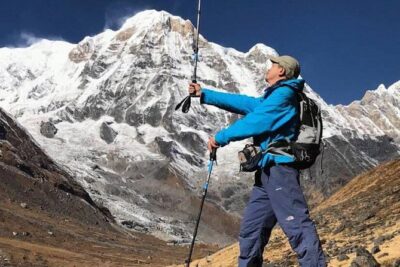
Kathmandu to Annapurna Base Camp (ABC) 5-Day Trek
Read our review →Browse the lists this tour appears in