
REVIEW · KATHMANDU
Annapurna Base Camp Trek
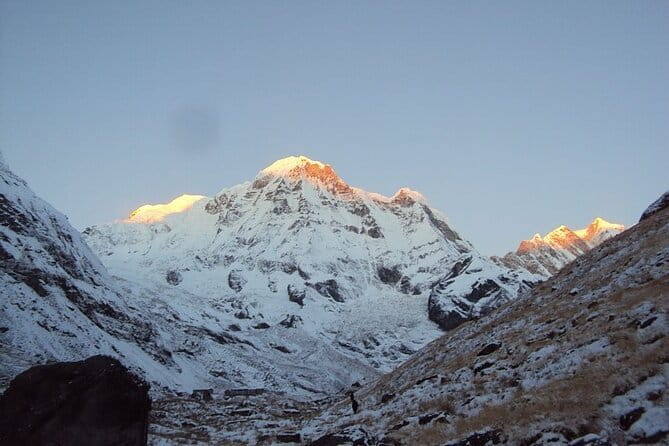
The Himalayas reward steady legs. I like the mix of hilltop villages and forest trails, plus the powerful arrival at Annapurna Base Camp beneath peaks rising above 21,000 feet. I also like that the trip includes Kathmandu and Pokhara, not just the trek. The main drawback is clear: several days involve hours of uphill walking, and the route reaches 13,550 feet.
This is a well-supported private trip with licensed guides, porters, and local staff. Guides such as Kumar Thapa and Jeevan receive especially warm praise for patience, humor, care, and practical help. Still, you need moderate fitness, proper equipment, insurance, and a little spare time in case weather, roads, or other mountain problems alter the plan.
Key points before you book
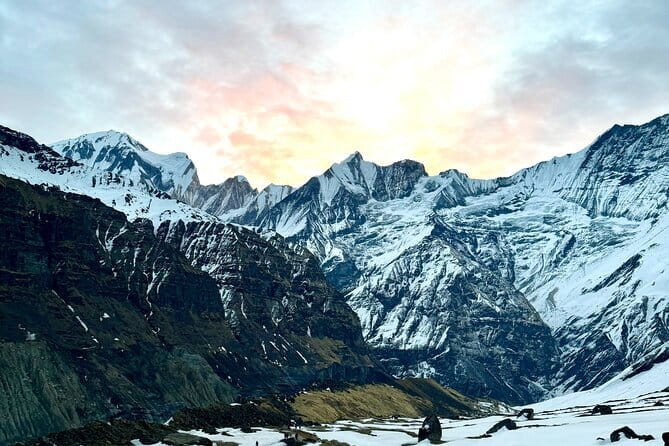
- Poon Hill adds a sunrise mountain viewpoint at 10,535 feet before the route turns toward Annapurna Base Camp.
- The trek climbs from Nayapool to 13,550 feet, with forests, gorges, stone paths, and villages along the way.
- Kathmandu and Pokhara are included, giving you two city stops before and after the mountain section.
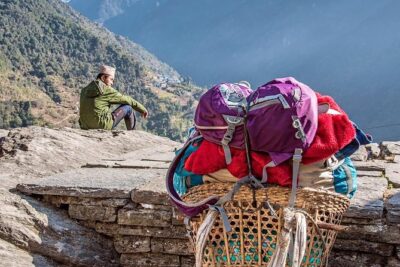
- Porters carry gear for each pair of travelers, while licensed local guides lead the walk and provide support.
- Guesthouse stays keep you close to village life, though comfort and facilities can be simpler than city hotels.
- The $1,300 price covers major trip services, but insurance, flights, visa costs, and trekking equipment are extra.
What this Annapurna route does well
The appeal of this 14-day trip is its steady change of scenery. You begin in Kathmandu, move to Pokhara, then start walking through lower Himalayan foothills before climbing into a more severe mountain setting. The route does not rush straight to base camp. That is a good thing.
You get villages, forests, gorges, hot springs, and high mountain views along the way. The return route also differs from the ascent, so you are not simply retracing every step.
I especially like the balance between physical challenge and support. You walk under your own power, but a licensed guide leads the group and porters help carry equipment. That makes the trip more realistic for someone attempting a multi-day Himalayan trek for the first time.
The experience is private, meaning only your own group participates. That can make a real difference on long walking days. The itinerary may also be adjusted to some degree if time allows and everyone agrees. Do not expect unlimited flexibility, but the arrangement gives your guide room to respond to the group’s pace and condition.
More Annapurna Treks in Kathmandu
- Annapurna Circuit Trek with Tilicho Lake
★ 5.0 · 368 reviews - Annapurna base camp trek 5 Days
★ 5.0 · 252 reviews - 14-Day Private Annapurna Base Camp Trek
★ 5.0 · 180 reviews
Days 1 to 3: Kathmandu, preparation, and the road to Pokhara
Day 1 is for arrival in Kathmandu and an overnight hotel stay. Day 2 adds sightseeing around the Kathmandu Valley, followed by a pre-trip meeting. This meeting matters. It gives you time to discuss equipment, health concerns, expectations, and the walking schedule before leaving the city.
The Kathmandu stay is at a three-star hotel, with breakfast included and twin-sharing rooms. That is a practical start rather than a luxury one. You have a proper base for the first two nights, but the main purpose is to prepare for the mountains.
On Day 3, you take a tourist bus to Pokhara, located at about 3,000 feet. The drive takes much of the day, according to the schedule, so do not treat it as a quick transfer. It is part of the journey and may feel tiring after arrival in Nepal.
Pokhara provides a useful pause before the trek. You spend the night at a hotel, and Day 12 also includes Pokhara sightseeing after the mountain section. This gives the trip a broader feel than a point-to-point hike.
Day 4: Nayapool to Tikhedhunga
The walking section begins with a drive to Nayapool at 3,477 feet. From there, you trek to Tikhedhunga at 5,060 feet and spend the night in a guesthouse.
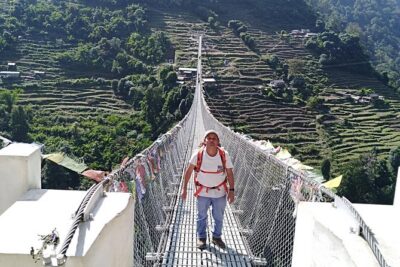
This first day is useful for finding your rhythm. The altitude gain is modest compared with later days, but you still need to pay attention to your feet, pack, water, and pace. You will be moving through the lower Himalayan foothills, where the route passes forests, villages, and sections above gorges.
The guesthouse stay marks a clear change from Kathmandu and Pokhara. Rooms are shared on a twin basis, and conditions will be more basic. That is part of the mountain experience, but it also means you should pack with practicality in mind rather than expecting hotel-style comfort.
Day 5: The climb to Ghorepani
Day 5 takes you to Ghorepani at 9,416 feet. This is one of the more demanding early days because you gain a large amount of altitude in a single day.
The route tests your legs more than the first day. You should take the ascent slowly and use the guide’s advice about pacing. The tour describes most days as being in the lower Himalayas, but this section makes clear that the trek is not a casual walk.
Ghorepani is important because it places you near Poon Hill, one of the route’s major viewpoints. The overnight stop also helps break up the climb before the early start on Day 6.
Same trailhead, a longer or shorter day out:
- Everest Base Camp Trek – 14 Days
★ 5.0 · 1,499 reviews - Everest Base Camp Trek
★ 5.0 · 842 reviews - Everest Base Camp Trekking
★ 5.0 · 485 reviews - Everest Base Camp Trekking – 13 Day
★ 5.0 · 365 reviews
Day 6: Poon Hill and Tadhapani
The day begins with a hike to Poon Hill at 10,535 feet. The schedule then continues to Tadhapani at 8,628 feet, where you spend the night.
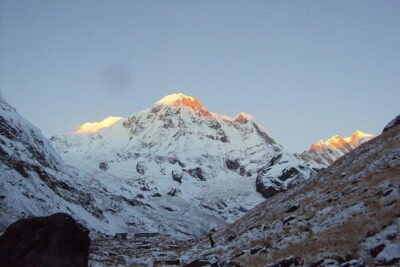
Poon Hill is one of the strongest reasons to choose this route. You gain a high viewpoint before continuing toward base camp, and the setting gives you a chance to see the scale of the Annapurna massif from above the surrounding hills.
There is a practical catch: this is not only a viewpoint stop. You still have to trek onward to Tadhapani. The early climb and the later descent make this a full day, so keep your expectations realistic. The view is valuable, but it comes with more effort.
Day 7: Tadhapani to Chomrong
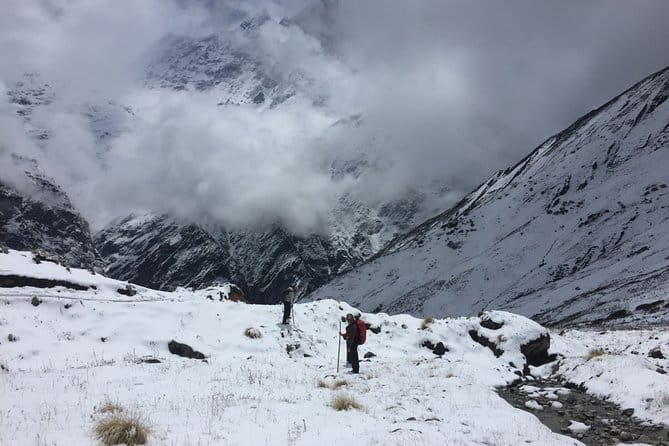
From Tadhapani, you trek to Chomrong at 7,120 feet. The lower overnight altitude may feel welcome after the higher stops around Ghorepani and Poon Hill.
Chomrong is one of the key villages on the route to Annapurna Base Camp. Here, the journey begins to feel more focused. You are no longer simply walking through the foothills. The mountains ahead become the main reason for each day’s effort.
The drop in altitude does not make this a free day. Mountain paths can still involve repeated climbs and descents. You may find the constant changes harder than a simple uphill trail.
Day 8: Chomrong to Himalaya Hotel
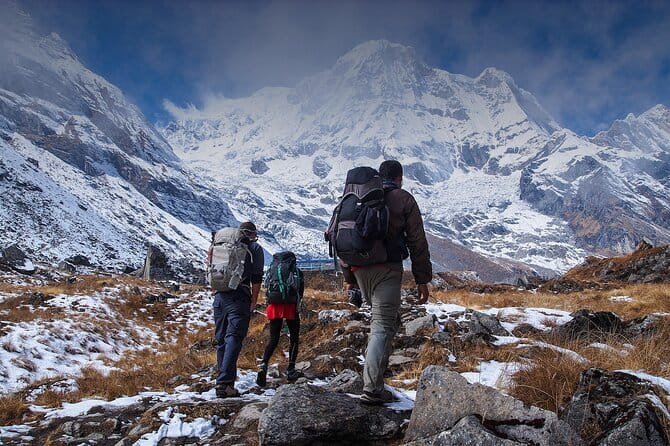
Day 8 leads to Himalaya Hotel at 9,678 feet. This is another steady climb toward the higher section of the trek.
The route continues through forested country and along steep mountain terrain. The original plan specifically highlights the thrill of moving through forests and above gorges, and this is the type of setting that gives the trek its character.
Your guide’s role becomes increasingly important here. On longer climbs, a good guide can help you keep a sensible pace and notice when someone needs a break. The company’s guides, especially Kumar and Jeevan, are praised for flexibility, patience, and personal care. Those qualities matter more on a high-altitude walking day than a polished speech about the region.
Day 9: The main goal, Annapurna Base Camp
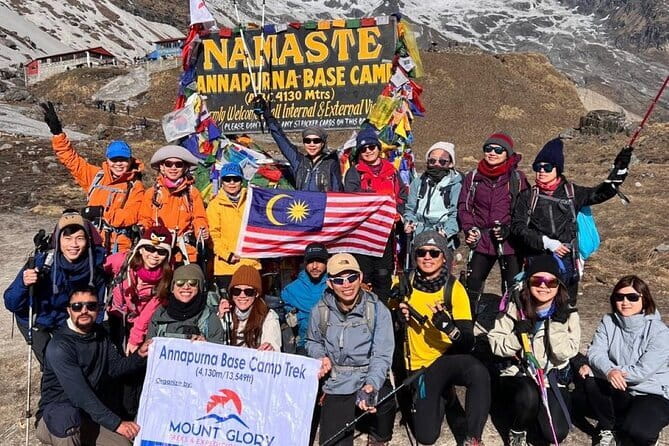
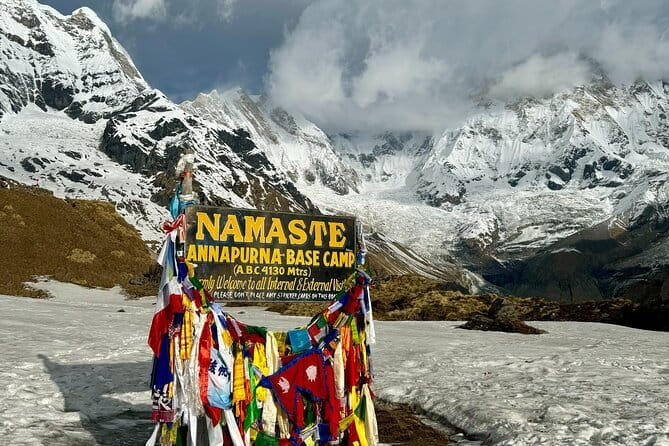
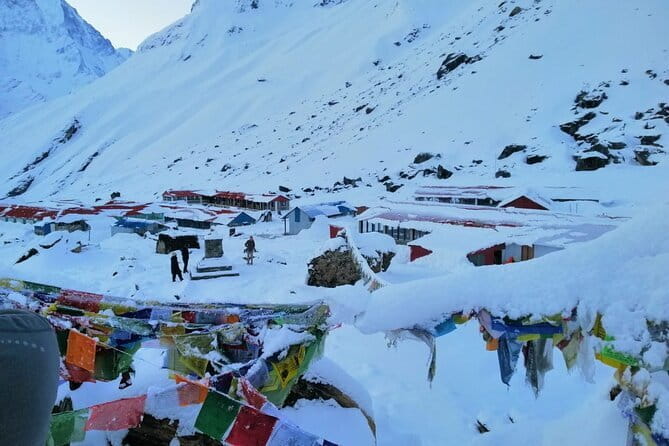
Day 9 is the centerpiece: a trek to Annapurna Base Camp at 13,550 feet, followed by an overnight guesthouse stay.
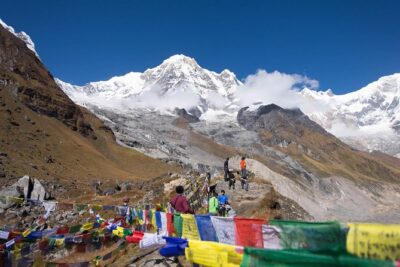
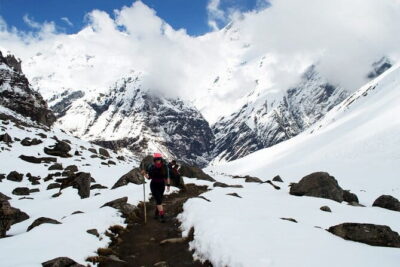
The route has built toward this moment through several days of climbing. You reach the foot of the Annapurna massif, surrounded by mountains that rise above 21,000 feet. Local people regard the base camp area as a home of the gods, and the setting is intended to feel more than scenic. It is a high, enclosed mountain world with a strong sense of scale.
This is also the day when altitude becomes a serious concern. The tour itself warns that climbing above 10,000 feet for hours will test your legs and determination. A moderate fitness level is required, but fitness alone does not remove altitude risk. You need to tell the guides about any medical condition, carry required medicine, and have emergency insurance that covers rescue and evacuation.
Staying overnight at base camp means you are not racing in and out. That gives you time to take in the setting, rest, and prepare for the return.
Days 10 to 12: Downhill walking, hot springs, and Pokhara
Day 10 takes you from base camp to Bamboo at 7,695 feet. The large drop in altitude may feel encouraging, but downhill walking can be hard on knees and thighs, especially after the previous day’s effort.
Day 11 continues to Jhinu Hot Spring at 5,840 feet. This is a welcome change in the rhythm of the trek. After the high mountain section, the hot spring stop gives you a chance to rest in a warmer, lower setting.
The route ends on Day 12 with a trek to Nayapool at 3,477 feet. From there, you drive to Pokhara and have time for sightseeing before another hotel night.
This return is well planned in one important way: it does not simply send you straight back to Kathmandu after finishing the walk. Pokhara gives you space to recover, eat properly, and enjoy a city setting again. It also helps separate the demanding mountain days from the final road journey.
Days 13 and 14: Returning to Kathmandu
Day 13 is the drive back to Kathmandu, followed by a farewell dinner and another hotel night. Day 14 is departure.
The schedule gives you a final Kathmandu night before leaving, but I would still keep extra personal time around the trip if possible. The operator advises leaving a few open days before and after the planned schedule because flight delays, accidents, road conditions, and natural hazards can force changes.
That advice is not empty fine print. Nepal’s mountain roads and weather can affect timing, so a tightly connected international flight may create needless stress.
What the $1,300 price covers
At $1,300 per person, the trip offers solid value if you want a guided, supported trek rather than arranging every service yourself.
The price includes:
- Three-star hotel accommodation in Kathmandu on a twin-sharing basis
- Breakfast at the Kathmandu hotel
- Hotel accommodation in Pokhara
- Twin-sharing guesthouse stays during the trek
- Local government-licensed guides
- One porter for each pair of travelers
- Local support staff
The porter arrangement is worth noting. You are not being promised a porter for every person, but one for each pair. Pack carefully and confirm how much personal luggage the porter will carry before setting out.
You must pay separately for international airfare, Nepal’s visa fee, travel insurance, and trekking equipment. Equipment can be bought in Kathmandu or rented from the operator for a small fee if you forget something, but I would not rely on last-minute shopping for essential items.
At this price, the strongest value comes from the coordination: city hotels, transport, guides, porters, guesthouses, and the full route are arranged together. You are paying for support as well as the walk.
Fitness, equipment, and insurance
You need moderate physical fitness. The biggest strain comes from repeated uphill sections, long walking days, and the climb above 10,000 feet. The route is not presented as a technical mountaineering expedition, but it is far more demanding than ordinary sightseeing.
Bring trekking equipment yourself, using the operator’s standard equipment list. If something is missing, Kathmandu offers places to buy or rent gear, but preparation at home is safer and less rushed.
Travel insurance is compulsory. It must cover emergency rescue and evacuation, and the information provided says you cannot buy the required policy in Nepal. Arrange it before arriving and make sure it fits a high-altitude trek.
Tell your guide about medical conditions before walking. The guides and local support staff have basic medical training, but they are not a substitute for proper insurance or medical advice from your doctor.
The people supporting the trek
The human side of this trip receives unusually strong praise. Kumar Thapa is repeatedly described as respectful, honest, patient, funny, and attentive. Jeevan is also singled out as an excellent guide.
That matters because the itinerary allows some changes when time permits and everyone agrees. A guide who listens can make the difference between a rigid schedule and a trip adjusted sensibly to the group.
The support also appears suitable for mixed ages and ability levels within a group. One organized party ranged from age 15 to 55, and the guides handled the different needs well. That does not mean the trek is easy for every age. It means the support team can adapt the pace and assistance when the group is prepared for the physical work.
Who should book this trek?
I would recommend it to you if you want a major Himalayan goal without planning every hotel, transfer, porter, and mountain night yourself. It suits people who value village routes, changing scenery, and local support more than luxury accommodation.
It is also a good choice for a first multi-day trek if you are honest about your fitness and willing to prepare. The organized structure, private group format, and experienced guides reduce many practical worries.
I would be cautious if you dislike shared rooms, long road transfers, basic guesthouses, or uncertain mountain schedules. You should also think twice if you have no room in your calendar for delays or if you are not ready to carry essential personal gear and walk for hours at altitude.
Free cancellation is available when you cancel at least 24 hours before the start time. Changes or cancellations inside that window are not accepted for a refund.
Final decision: is Annapurna Base Camp worth it?
Yes, for the right kind of trekker. The $1,300 cost is reasonable for a 14-day private trip that includes Kathmandu, Pokhara, guided walking, porters, hotels, guesthouses, and local transport.
I like the route because it earns its big moment. You do not simply arrive at Annapurna Base Camp by road, take a photo, and leave. You pass villages, forests, gorges, Poon Hill, and increasingly high mountain paths before reaching 13,550 feet.
Book it if you want strong local support and a full Himalayan journey. Do not book it expecting an easy walk or a fixed timetable. Bring insurance, prepare your legs, leave spare days around the trip, and let the mountains set part of the schedule.
FAQ
How long is the Annapurna Base Camp trek?
The full experience lasts approximately 14 days, including arrival in Kathmandu, sightseeing, transfers, the trek, a farewell dinner, and departure.
Where does the experience begin?
The trip begins in Kathmandu, Nepal. The stated start time is 7:45 am.
Is pickup offered?
Yes, pickup is offered. The experience also provides a mobile ticket.
What is the highest point reached?
Annapurna Base Camp is listed at 13,550 feet. Poon Hill reaches 10,535 feet.
What accommodation is included?
You stay in a three-star Kathmandu hotel on a twin-sharing basis, with breakfast provided. During the trek, you stay in twin-sharing guesthouses. Hotel accommodation is also included in Pokhara.
Are guides and porters included?
Yes. The price includes local government-licensed guides, local support staff, and one porter for each pair of travelers.
Is travel insurance included?
No. Travel insurance is not included, and it is compulsory. Your policy must cover emergency rescue and evacuation.
Do I need to bring trekking equipment?
Yes. You are expected to bring your own trekking equipment. Equipment can be purchased in Kathmandu or rented from the operator for a small fee if necessary.
Can the itinerary change?
Yes. The itinerary may need to change because of flight delays, accidents, natural hazards, or other conditions beyond the operator’s control. Some changes may also be possible when time allows and everyone in the private group agrees.
Recently added around Kathmandu
- Ghorepani Poon Hill Trek★ 5.0 · 16 reviews
- Private Manaslu Circuit Trek at Himalayas★ 5.0 · 3 reviews
- Amazing 1 Day Trekking Experience in Kathmandu Nepal★ 5.0 · 24 reviews
- Ghorepani Poonhill Trek★ 5.0 · 5 reviews
- Upper Mustang Trekking★ 5.0 · 2 reviews
- Upper Mustang Trekking★ 5.0 · 4 reviews
- Upper Mustang Trek★ 5.0 · 5 reviews
- Upper Mustang Trekking★ 3.0 · 2 reviews
Annapurna Base Camp Treks, compared.
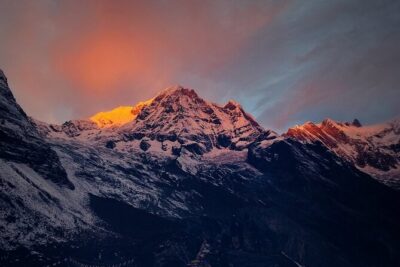
Trekking in Annapurna/Langtang/Everest/Upper Mustang regions
Read our review →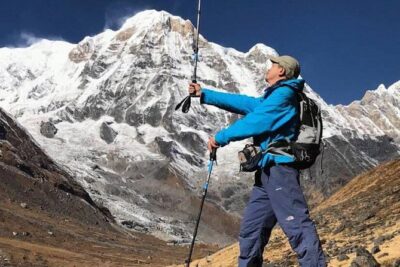
Kathmandu to Annapurna Base Camp (ABC) 5-Day Trek
Read our review →Browse the lists this tour appears in