
REVIEW · KATHMANDU
Annapurna Base Camp Trek
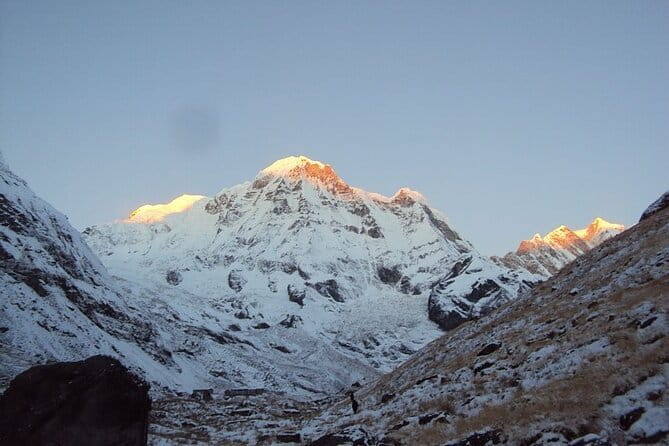
The mountains arrive in stages. This 12-day Annapurna Base Camp Trek links the Poon Hill sunrise with the high sanctuary around Annapurna I, giving you forests, villages, suspension bridges, and some of Nepal’s finest mountain views in one trip. I like the varied route and the strong support package, including permits, meals, porters, mountain lodging, and airport transfers. I also like that the trek is private, so your group can set a more personal pace.
The main concern is the altitude and the long walking days. Annapurna Base Camp reaches about 4,130 meters, and the itinerary includes several five- to six-hour hikes, plus an early morning climb to Poon Hill. The schedule also has a few unclear transport and route details, so I would confirm the exact plan with Shikhar Adventure before paying.
Key points to know before booking
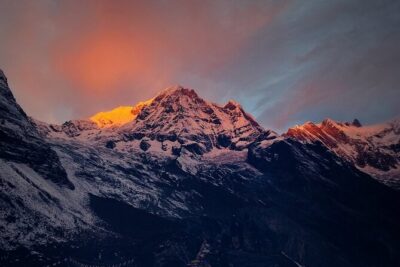
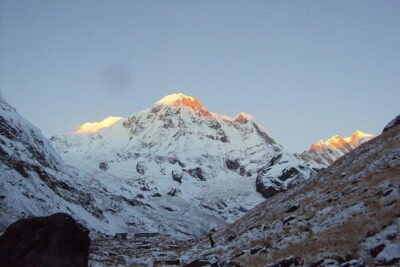
- Poon Hill at sunrise: An early climb to 3,210 meters brings views of Annapurna and Dhaulagiri glowing in the first light.
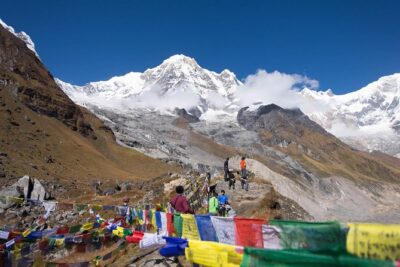
- Annapurna Base Camp at 4,130 meters: The trail finishes inside the Annapurna Sanctuary, surrounded by high peaks including Annapurna I, Annapurna South, Hiunchuli, and Gangapurna.
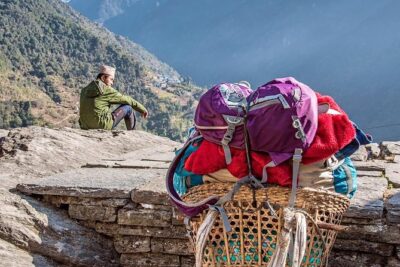
- A private 12-day trip: Only your own group participates, with an authorized guide and porters included.
- A useful $940 package: The price covers mountain lodging, three daily meals during the trek, permits, transport, staff wages, and equipment such as sleeping bags and duffel bags.
- Hot springs at Jhinu Danda: After the high country, you can rest near natural hot springs at about 1,780 meters.
- Guide support matters: Dambar Thapa is praised for careful pacing, clear organization, and helping with altitude concerns.
Why this Annapurna route works so well
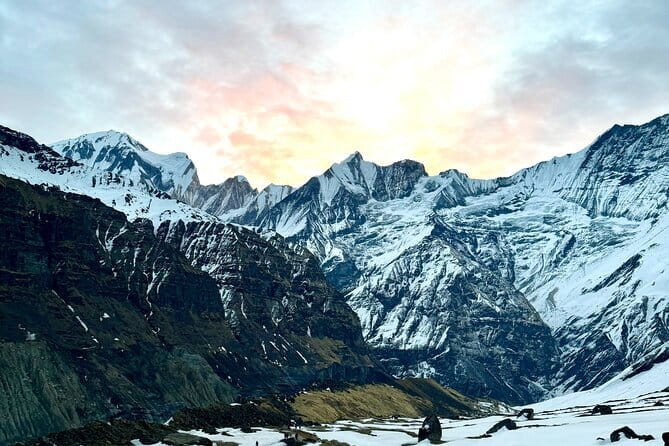
The appeal here is the combination of two popular walks. The Poon Hill section gives you a classic Himalayan viewpoint without requiring the highest altitude of the trip. Then the trail turns toward Annapurna Base Camp, where the mountains close around you.
I like this progression. You begin among villages, terraces, and forests, then move through bamboo and rocky river valleys before reaching the snowy inner sanctuary. The scenery changes often enough to keep each day distinct. You are not simply walking toward one distant summit for a week.
The route also gives you time at lower elevations before the highest point. That does not remove the risk of altitude sickness, but it is a more sensible approach than racing straight upward. Your guide should still watch your pace, breathing, appetite, and general condition.
This is a moderate-to-demanding trek, not a sightseeing tour with a little walking attached. You need a reasonable level of fitness and comfort with repeated uphill and downhill sections. The itinerary lists walking days of roughly five or six hours, and the early start for Poon Hill adds another test before breakfast.
More Annapurna Treks in Kathmandu
- Annapurna Circuit Trek with Tilicho Lake
★ 5.0 · 368 reviews - Annapurna base camp trek 5 Days
★ 5.0 · 252 reviews - 14-Day Private Annapurna Base Camp Trek
★ 5.0 · 180 reviews
Kathmandu arrival and the road to Pokhara
Day one begins with an airport pickup in Kathmandu. A staff member meets you and takes you to your hotel, with two nights at Hotel Simal or a similar property included in the package. Kathmandu sits at about 1,400 meters, so this first stop gives you a chance to rest before the walking begins.
The city itself is only lightly scheduled. You may have time to see temples, historic places, and busy streets, but the trek is clearly the main event. Meals in Kathmandu are not included except for the stated breakfasts, so budget separately for lunch and dinner.
The plan then includes time in Pokhara, with two nights at Hotel Trekkers Inn or a similar hotel. Phewa Lake is the main listed stop, and an evening stroll beside the water is a pleasant change after the Kathmandu arrival and road travel.
Pokhara is also your practical base before the trail. The package includes tourist-bus transport between Kathmandu and Pokhara, along with the drive toward Birethanti. Because the meeting time is listed as 2:15 a.m., I would ask exactly which day and departure that time applies to. It may relate to an early transfer, but the schedule does not explain it clearly.
Birethanti to Ulleri: the first real test
After breakfast in Pokhara, you drive to Birethanti, a small town near the Annapurna region. From there, the trail rises toward Ulleri through villages, terraced fields, and forest.
This is where the trip stops feeling like a mountain holiday and starts feeling like a proper trek. Five hours of uphill walking can feel long on the first day, especially after transport and a change in routine. Take your time, keep your pack light, and let the guide set a steady rhythm.
Ulleri is valuable because it introduces the shape of the route. You will walk through settled mountain country rather than empty wilderness. Homes, farms, and local paths form part of the journey, and the scenery changes as you gain height.
The package includes a local guest house, meals, a porter, and guide services in the mountain region. That removes much of the daily planning burden, though you should still expect simple accommodation rather than hotel comfort.
Ulleri to Ghorepani through rhododendron forest
The next five-hour walk continues to Ghorepani. Rhododendron forests line the trail, with mountain and valley views opening through the trees.
Ghorepani is one of the route’s key overnight stops because it sets up the Poon Hill morning. It is also a popular rest point, so the atmosphere may feel busier than on smaller sections of the trail. That is not necessarily a flaw. It means there are services and fellow walkers around, but you should not expect solitude.
The real prize comes before breakfast the next day. You will need to rise early for the climb to Poon Hill, so keep your warm layers and headlamp, if you bring one, ready the night before. The supplied details do not specify equipment beyond the sleeping bag and duffel bag provided, so ask what personal gear you need to bring.
Same trailhead, a longer or shorter day out:
- Everest Base Camp Trek – 14 Days
★ 5.0 · 1,499 reviews - Everest Base Camp Trek
★ 5.0 · 842 reviews - Everest Base Camp Trekking
★ 5.0 · 485 reviews - Everest Base Camp Trekking – 13 Day
★ 5.0 · 365 reviews
Poon Hill sunrise and the walk to Tadapani
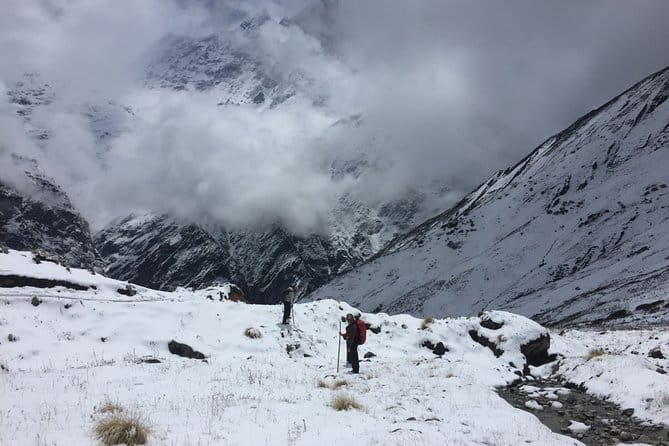
Poon Hill sits at 3,210 meters and gives you a broad view toward the Annapurna and Dhaulagiri ranges. The sunrise is the visual high point of the lower route, with sunlight touching the snowy summits before the valleys below brighten.
I like this stop because the reward is immediate and easy to understand. You work for the early climb, then watch the mountains change color in front of you. Weather matters, of course, and clouds can soften the view. Still, the viewpoint earns its place in the itinerary.
After descending to Ghorepani for breakfast, you continue to Tadapani at about 2,630 meters. The trail passes through oak and rhododendron forest, with occasional views of the mountains. The day is listed at about five hours, but the early morning climb means your legs have already done work before the main walk begins.
Tadapani is a quieter-feeling stop, surrounded by trees and mountain country. It is a good place to rest, though the combination of sunrise and a full trekking day makes this one of the more tiring sections.
Tadapani to Sinuwa and the route’s confusing detail
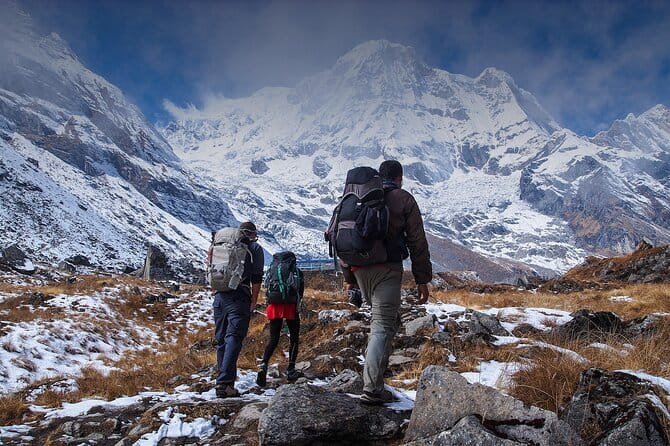
The schedule describes the next day as a six-hour trek from Chule to Sinuwa. That wording does not line up neatly with the preceding stop at Tadapani, so I would confirm the overnight village and exact trail sequence with the operator.
The intended character of the day is clear enough: forest trails, mountain views, and a move toward Sinuwa. You will see Annapurna and Machhapuchhre, also called Fishtail, as the route continues through the hills.
Sinuwa, at about 2,340 meters, provides a useful lower stop before the trail rises again. The village setting and local guest houses keep the trip connected to everyday life in the mountains. You are not sleeping in a sealed resort environment, and that is part of the appeal.
Sinuwa to Deurali through bamboo and river country
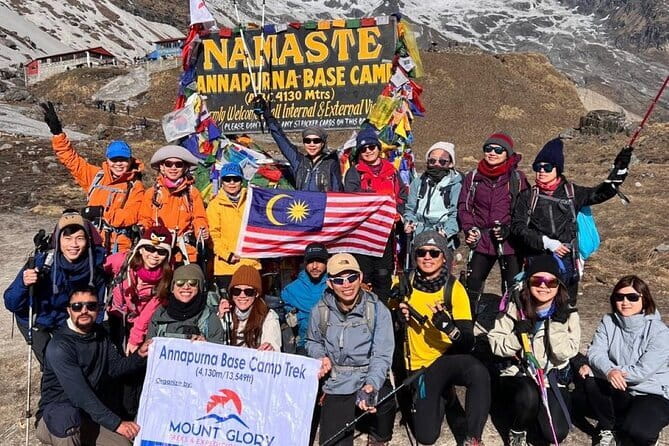
From Sinuwa, the trail heads toward Deurali over roughly five hours. This section brings bamboo forests, rocky ground, and river valleys. The path gradually feels more enclosed and more remote as you approach the high part of the sanctuary.
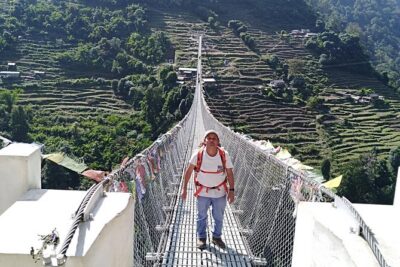
The scenery here is less about one grand viewpoint and more about changing textures. Forest gives way to rock, water cuts through the valleys, and the peaks begin to feel closer. Suspension bridges and rushing rivers add variety, though they also require care when the trail is wet.
Deurali is an important staging point. You are now close to the highest part of the route, so the next day should be treated with patience. Eat what you can, drink regularly, and tell your guide if you feel unwell. One of the strongest details from the trip’s feedback is that Dambar Thapa helped a solo participant pace carefully when altitude became a problem. That kind of attention is more important than a fast walking time.
The climb to Annapurna Base Camp at 4,130 meters
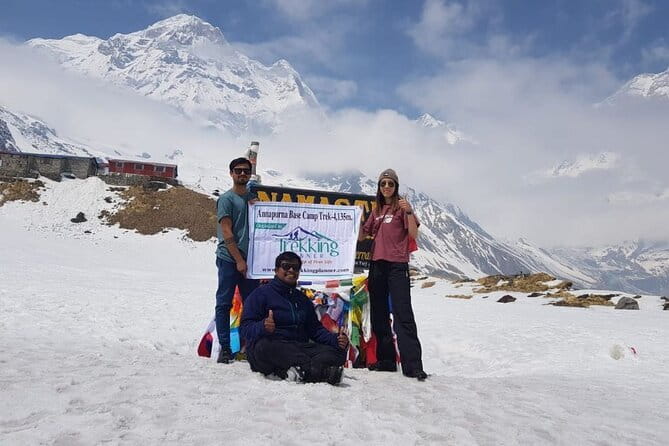
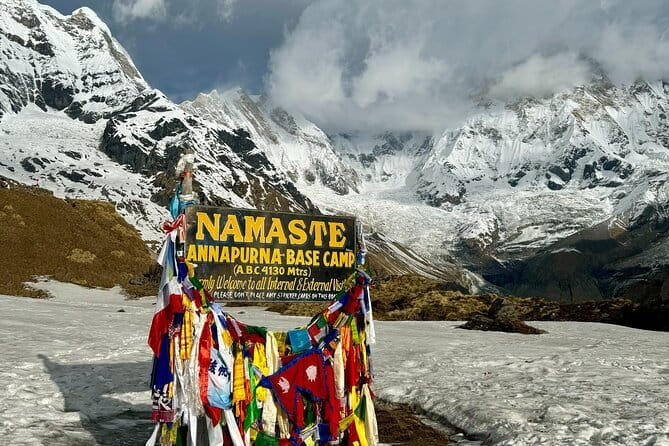
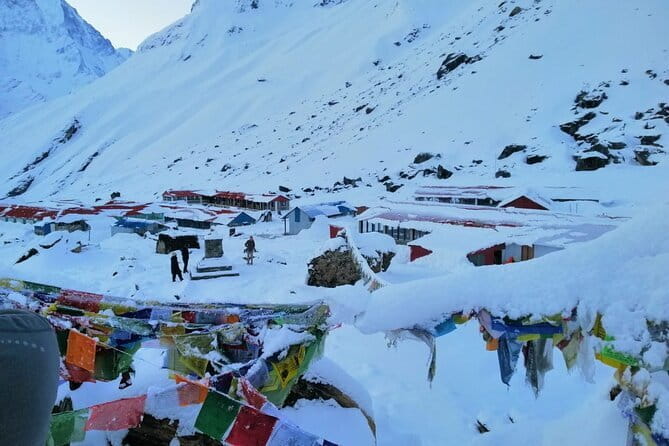
The walk from Deurali to Annapurna Base Camp takes about five hours and forms the trip’s main goal. At roughly 4,130 meters, the base camp sits inside the Annapurna Sanctuary, with Annapurna I, Annapurna South, Hiunchuli, and Gangapurna rising around you.
This is not just a finish line for a photograph. The enclosed setting changes the scale of the mountains. You are surrounded by high summits rather than looking at them from a distant viewpoint, and the route feels more dramatic as the rocky terrain replaces the lower forests.
The altitude is the serious part. Even fit walkers can feel breathless, tired, or unwell at this height. The schedule includes one night at base camp, so you should not expect a leisurely evening packed with activities. The reward is the setting itself, plus the sense of having reached the heart of the route.
The package includes food and guest house accommodation, but it does not include showers or electronic charging fees. Those extras can cost about $5 at some guest houses. Alcohol, chocolates, and packaged drinks are also separate, so carry enough personal cash for small purchases.
Returning to Sinuwa and descending to Jhinu Danda
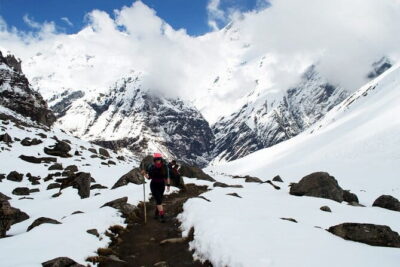
After the night at base camp, you retrace the trail to Sinuwa in about five hours. The route is familiar, but the views can feel different in the opposite direction. You move from rocky high country toward bamboo forests, suspension bridges, and greener lower valleys.
Downhill walking is not automatically easy. It can put pressure on knees and ankles, especially after several days on foot. Trekking poles may help, but they are not listed among the included items, so bring your own if you use them.
The next destination is Jhinu Danda, at about 1,780 meters. This is one of the trip’s smartest recovery stops. The village is known for natural hot springs, where warm water can ease tired muscles after the high-altitude section.
The itinerary lists only about one hour for the Jhinu Danda stop, which may refer to the hot-spring visit rather than the entire walking day. Ask how much time is actually planned there. If you enjoy a slower finish, this is the place where an extra hour matters.
Transport from Jhinu to Pokhara is included by car or jeep. That is useful because it avoids adding another long mountain walk at the end of the trek.
The long return to Kathmandu
Day eleven includes about seven hours of driving back to Kathmandu, although the stop is listed as four hours. This is another detail worth confirming before departure. Road conditions and traffic can affect the day, and a long road transfer after a trek may feel tiring.
The final night in Kathmandu is included in the two-night hotel arrangement, and day twelve is reserved for your onward journey. Airport departure transport is included, which makes the final logistics easier.
Do not treat day twelve as a full sightseeing day unless your flight timing allows it. The schedule simply says you continue onward from Kathmandu.
What the $940 price really covers
At $940 per person, the package offers solid value if you want a guided trek with most major costs handled. Included items cover:
- Airport arrival and departure by private car
- Two nights in Kathmandu
- Two nights in Pokhara
- Mountain guest house accommodation
- Tourist-bus transport between Kathmandu and Pokhara
- Car or jeep transport from Jhinu to Pokhara
- Annapurna Conservation Area Permit
- An authorized guide and porters
- Guide and porter wages, insurance, food, and accommodation
- Breakfast, lunch, and dinner during the trek
- Sleeping bag and duffel bag, both returned after the trip
- First-aid kit, service charges, and government taxes
The package does not cover international flights, most meals in Kathmandu and Pokhara, personal shopping, drinks, tips, travel insurance, or costs caused by illness, cancellations, weather, or other unexpected events.
Travel insurance is mandatory, so do not treat it as an optional add-on. You should also plan for tips and small mountain charges, including showers and charging. The price is strongest for someone who wants one booking to handle permits, staff, meals, lodging, and transfers.
Guide quality and the private-trip advantage
The experience is private, with only your group participating. That matters on a trek because your guide can respond to your pace rather than managing a large mixed group.
Dambar Thapa receives especially warm praise for organization, safety, and personal attention. He is described as having more than 25 years of experience, and one account highlights his help with altitude pacing. Another describes an itinerary shaped around personal preferences, with time allowed for reflection.
Those details suggest a guide-led trip rather than a simple escort from one village to the next. Still, you should confirm whether Dambar himself will lead your departure or whether another guide will be assigned. The operator is Shikhar Adventure, while the guide’s name appears separately in the trip details.
Who should book this trek?
I would recommend it to you if you want a serious but organized Himalayan walk, prefer private guiding, and like a route with several different settings. It suits people who value support staff, included meals, and simple mountain lodging over independent planning.
It is less suitable if you dislike early starts, long uphill days, basic guest houses, or uncertain weather. The 4,130-meter high point also means you need to take altitude seriously, regardless of your past fitness.
The route works well for a first major Nepal trek because the logistics are largely arranged. It is not effortless, though. You still need to train, pack for changing temperatures, and accept that the schedule can shift when mountain roads or weather cause trouble.
Should you book the Annapurna Base Camp Trek?
Book it if you want the full progression from Poon Hill’s sunrise to the high bowl of Annapurna Base Camp, with meals, permits, porters, lodging, and transport included for $940. The private format and strong guide feedback add real value.
Before booking, ask Shikhar Adventure to clarify the 2:15 a.m. start, the Tadapani to Sinuwa route wording, the exact time at Jhinu’s hot springs, and which guide will lead your group. If those points are clear and you are ready for five- to six-hour walking days at altitude, this is a well-priced way to see a remarkable section of Nepal.
FAQ
How long is the Annapurna Base Camp Trek?
The trip lasts approximately 12 days, including arrival and departure arrangements, time in Kathmandu and Pokhara, the trek, and return transport.
What is the highest point on the trek?
Annapurna Base Camp is the highest point, at about 4,130 meters, or 13,550 feet. Poon Hill reaches about 3,210 meters.
Is transportation included?
Yes. Airport arrival and departure transfers by private car are included. The package also includes tourist-bus transport between Kathmandu and Pokhara, transport to Birethanti, and a car or jeep from Jhinu to Pokhara.
Are meals included?
Breakfast, lunch, and dinner are included during the trek. Meals in Kathmandu and Pokhara are not included apart from the stated breakfasts.
What accommodation is included?
The package includes two nights at Hotel Simal or a similar hotel in Kathmandu, two nights at Hotel Trekkers Inn or a similar hotel in Pokhara, and local guest house accommodation in the mountains.
Can I cancel for a full refund?
Yes. You can cancel at least 24 hours before the experience start time for a full refund. Cancellations or changes made less than 24 hours before the start time are not accepted for a refund.
Recently added around Kathmandu
- Ghorepani Poon Hill Trek★ 5.0 · 16 reviews
- Private Manaslu Circuit Trek at Himalayas★ 5.0 · 3 reviews
- Amazing 1 Day Trekking Experience in Kathmandu Nepal★ 5.0 · 24 reviews
- Ghorepani Poonhill Trek★ 5.0 · 5 reviews
- Upper Mustang Trekking★ 5.0 · 2 reviews
- Upper Mustang Trekking★ 3.0 · 2 reviews
- Upper Mustang Trekking★ 5.0 · 4 reviews
- Upper Mustang Trek★ 5.0 · 5 reviews
Annapurna Base Camp Treks, compared.
Trekking in Annapurna/Langtang/Everest/Upper Mustang regions
Read our review →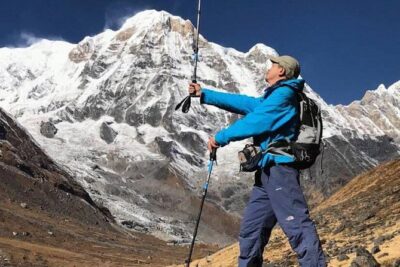
Kathmandu to Annapurna Base Camp (ABC) 5-Day Trek
Read our review →Browse the lists this tour appears in