
REVIEW · KATHMANDU
Annapurna Base Camp Trek 12 Days
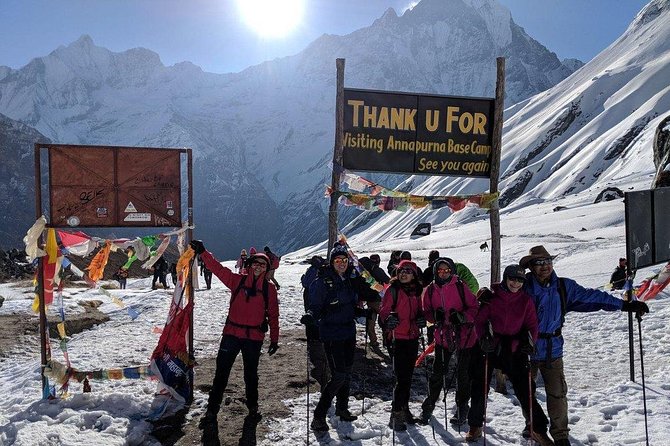
Feel the Himalayas under your boots. This 12-day Annapurna Base Camp trek combines high mountain views, a famous Poon Hill sunrise, village life, and the warm springs at Jhinu. I especially like the included airport transfer and the fact that the price covers lodges, three meals a day on the trail, permits, ground transport, and a professional guide. The route also brings you into Gurung and Magar communities, rather than keeping you on a mountain-only schedule.
The private group format is another strong point. You are not sharing the trip with a large mixed crowd, and past guests praised the company’s flexibility, reasonable pricing, and helpful staff. The main caution is the physical effort: the route includes roughly 3,000 stone steps to Ulleri, steep sections, long descents, and trekking above 3,000 meters. You need a moderate level of fitness and a willingness to walk several hours most days.
Key points to know before booking
- Poon Hill sunrise at 3,200 meters: A pre-dawn climb leads to one of the region’s best mountain viewpoints, with about 15 peaks potentially visible.
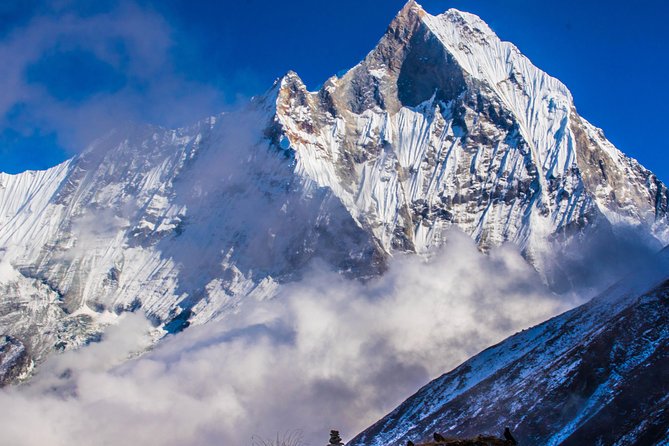
- Annapurna Base Camp included: The route continues beyond the lower Annapurna villages into the sanctuary below Annapurna South and Machhapuchhare.
- Three meals daily on the trail: Breakfast, lunch, dinner, and tea or coffee are included during the trekking portion.
- Cultural contact in Gurung country: Chhomrong and nearby villages add a human side to the mountain journey.
- Private trip with airport pickup: The company meets you at Tribhuvan International Airport and arranges ground transport.
- A practical $799 package: Lodging, permits, meals, transport, and guide costs are included, though Kathmandu and Pokhara lodging, drinks, insurance, tips, and a porter cost extra.
Why this 12-day route works well
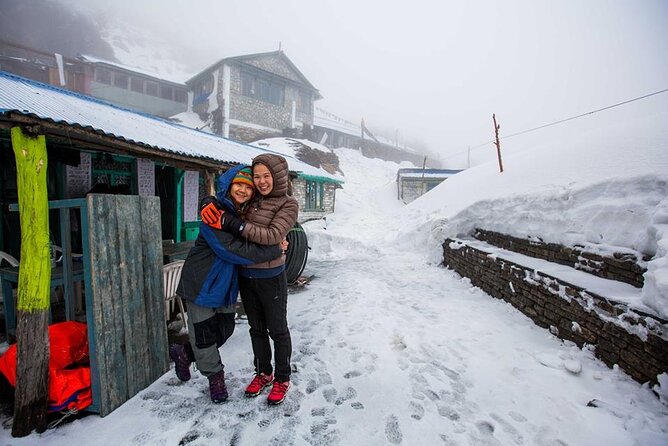
The Annapurna Base Camp trek is a good choice if you want a serious Himalayan walk without committing to a much longer circuit. In 12 days, you get a gradual approach through foothill villages, the sunrise at Poon Hill, the forested Modi Khola valley, and a night at Annapurna Base Camp before returning by a different rhythm.
I like the balance here. The trip is not only about reaching a sign at base camp, taking a photo, and turning around. You pass through farming villages, walk beside rivers, sleep in simple trekking lodges, and spend time in communities linked to Gurung and Magar culture.
The pace still demands respect. The route climbs and descends repeatedly, and the altitude becomes more noticeable after Dovan. Your guide is meant to set a sensible pace, but you remain responsible for telling the guide how you feel. Good preparation matters more than speed.
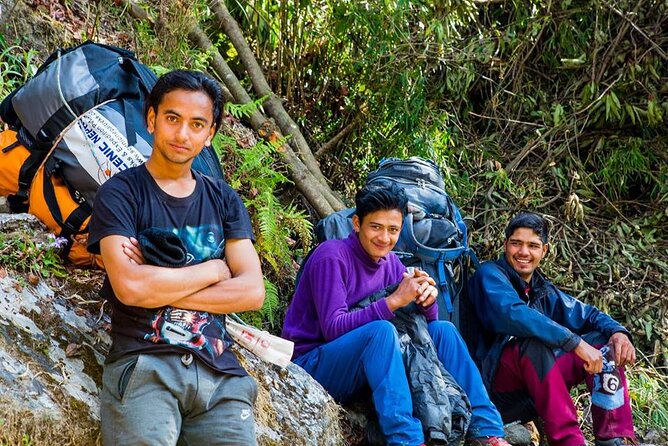
The company has received praise for professional service and flexible planning. Guides and porters named in past feedback include Arjun, Krishna, Sudip, and Ram. Dil Prasad Sapkota, the company director, was also praised for helping with customized plans and solving transport problems when weather disrupted a flight to Pokhara. Those details suggest a company that pays attention to the practical side of a Nepal trip, not only the walking itself.
More Annapurna Treks in Kathmandu
- Annapurna Circuit Trek with Tilicho Lake
★ 5.0 · 368 reviews - Annapurna base camp trek 5 Days
★ 5.0 · 252 reviews - 14-Day Private Annapurna Base Camp Trek
★ 5.0 · 180 reviews
Kathmandu arrival and the first transfer
Your trip begins at Tribhuvan International Airport, where an Adventure Glacier representative meets you at the arrival gate. You are then taken to a hotel in Thamel, Kathmandu, with a briefing planned for the first day.
That airport pickup is useful after a long international flight. Kathmandu can feel confusing when you first arrive, and having someone meet you removes one small but real source of stress. The package does not include your Kathmandu accommodation, so check exactly where you will stay and how many nights are covered before you pay.
The first night is also your chance to check your equipment, ask questions, and confirm the walking plan. Because the trek includes changing weather and high altitude, use the briefing to ask about clothing, water, food, and what happens if the trail changes.
Day 2: The long road from Kathmandu to Pokhara
The trip to Pokhara is by tourist bus and usually begins around 7 a.m. The drive takes about six to seven hours, depending on road conditions. That timing makes this a full transport day, not a relaxed morning followed by a quick hop across the country.
Pokhara Lakeside gives you a gentler setting before the trek starts. You have time to rest at the hotel and prepare for the next morning’s drive to the trailhead. Ground transportation is included, which adds value to the $799 price, but you should still expect delays because road conditions can affect the journey.
I see this day as useful rather than glamorous. It gets you into the Annapurna region without adding a flight, and it gives your body a little time to adjust before the walking begins.
Day 3: Nayapul to Tikhedhunga
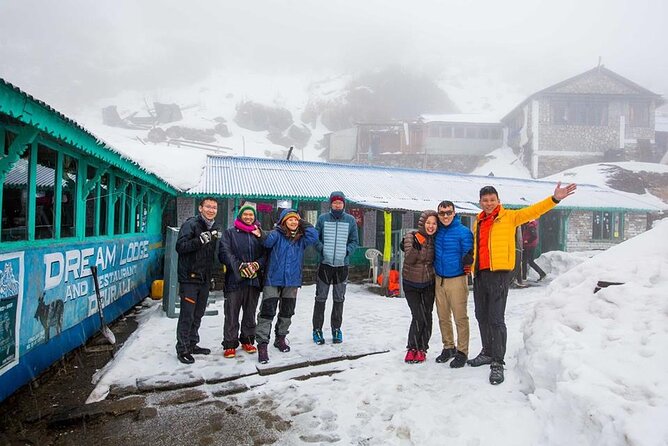
After breakfast, a private vehicle takes you from Pokhara to Nayapul, the starting point for the hike. The drive takes around two hours through the countryside. Nayapul is near the meeting point of the Modi River and another river, and the route then begins its steady move into the hills.
The walk to Tikhedhunga is your first proper trekking day. It is a good introduction because you begin at a lower altitude and move through settled areas rather than immediately facing a high pass. Your overnight stay is in a lodge, and the package includes the evening meal, room, and the next day’s food on the trail.
Do not judge the whole trip by this first day. The early route can feel manageable, but the following stages become much more demanding.
Same trailhead, a longer or shorter day out:
- Everest Base Camp Trek – 14 Days
★ 5.0 · 1,499 reviews - Everest Base Camp Trek
★ 5.0 · 842 reviews - Everest Base Camp Trekking
★ 5.0 · 485 reviews - Everest Base Camp Trekking – 13 Day
★ 5.0 · 365 reviews
Day 4: The stone steps to Ghorepani
The climb from Tikhedhunga toward Ulleri is one of the route’s first real tests. About 3,000 stone steps lead uphill to Ulleri, and the climb can take around two hours. This is where a moderate fitness level becomes important.
The steps are not technically difficult, but they are repetitive and steep. Go slowly, keep your breathing steady, and avoid trying to match someone else’s pace. The trail then continues toward Ghorepani through mountain villages and forest.
Ghorepani is important because it positions you for the early climb to Poon Hill. The overnight stop also gives you a chance to rest before the next morning’s sunrise walk. This is a simple mountain lodge experience, not a luxury hotel stay, so pack with basic facilities in mind.
Day 5: Poon Hill sunrise and Tadapani
The pre-dawn walk to Poon Hill takes about 50 minutes. At roughly 3,200 meters, the viewpoint can offer sunrise over a wide group of Himalayan peaks, including around 15 named or visible summits depending on weather and visibility.
This is one of the strongest parts of the route. You get a major mountain view early in the trip, before entering the narrower valley toward base camp. The climb is short but steep in places, and cold morning conditions are likely, so keep warm layers ready rather than buried in your pack.
After Poon Hill, you return for breakfast and continue toward Tadapani. This section brings more forest and changing views. It also makes for a long day because the sunrise start comes before breakfast. Expect tired legs by the time you reach the lodge.
Day 6: Tadapani to Chhomrong
From Tadapani, the trail drops about 900 meters to the Gurjung River valley before climbing again toward Chhomrong. This is a classic Annapurna day: downhill first, uphill later. Descending can be harder on your knees than climbing, especially after the early start at Poon Hill.
Chhomrong is a large Gurung village set high on a ridge and serves as an important gateway toward Annapurna Sanctuary. It is one of the best places on the route to connect the mountain scenery with local life. The village is not simply a sleeping stop. Its position, homes, trails, and community atmosphere help explain how people live along this trekking corridor.
You should use the evening to rest and prepare for the more enclosed valley ahead. From here, the route begins to feel more remote and more focused on the approach to base camp.
Day 7: Chhomrong to Dovan
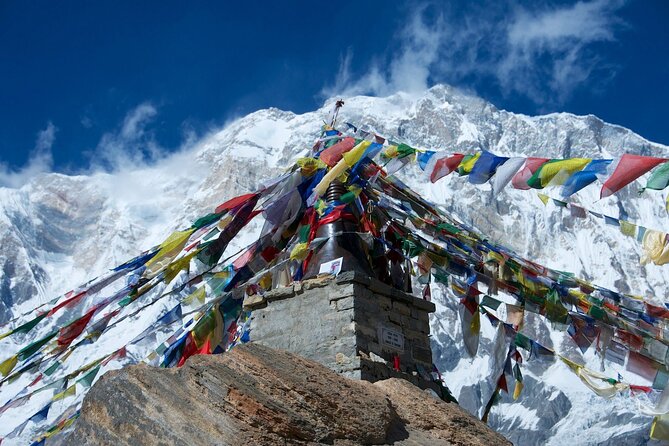
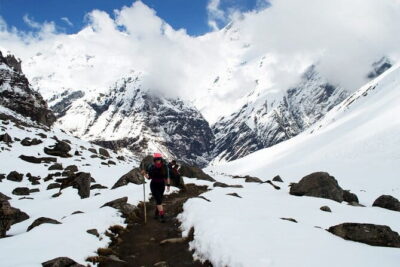
The trail drops toward the Chhomrong Khola before climbing toward Sinuwa. The uphill section can take around three hours. From Sinuwa, you enter a steep valley leading toward Annapurna Sanctuary, with Annapurna South and Machhapuchhare rising farther ahead.
This is a scenic but demanding stage. The route moves through forest and follows the river corridor, so the views change from open ridges to a more enclosed setting. Water, shade, and natural sounds become part of the day.
Dovan is a practical overnight stop. It is located at a river junction where two streams meet. The accommodation remains lodge-based and simple. At this point, avoid spending all your energy trying to rush ahead. The next two days bring more altitude, and a steady pace is more useful than an early arrival.
Day 8: Dovan to Deurali
Above Dovan, the effects of altitude become more noticeable. The climb to Deurali takes around two hours through peaceful forest, with the trail passing another Himalayan settlement.
This is the point where you should pay close attention to your body. Walk slowly, drink regularly, and tell your guide if you develop symptoms that worry you. The supplied details do not promise a separate acclimatization day, so the guide’s judgment and your own honesty become especially important.
The forest keeps this section appealing. Water, birds, and thick greenery make the route feel quiet before the more exposed approach to base camp. Deurali is not the final destination, but it is an important staging point for the next day.
Day 9: Deurali to Annapurna Base Camp
The route from Deurali heads toward Fishtail Base Camp and then onward to Annapurna Base Camp. The walk to Fishtail Base Camp takes about two hours, but the route can be affected by avalanche risk. The crossing near the Modi River may change according to the season and current conditions.
That flexibility is a safety feature, not a flaw. Mountain routes cannot always follow a fixed plan, and the guide may need to alter the path. Ask about the day’s conditions before setting out, especially if weather has been unsettled.
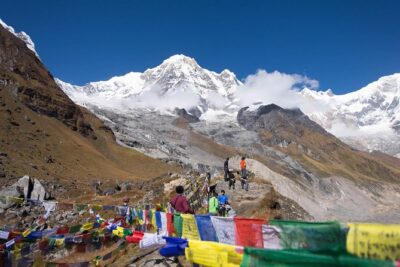
As you approach the sanctuary, the setting becomes more enclosed by high peaks. Annapurna South and Machhapuchhare are major visual landmarks, and the base camp itself gives you the achievement this trek is built around. The altitude makes the final approach slower, so leave pride at the lodge door and walk at a comfortable pace.
Day 10: Sunrise and the return to Dovan
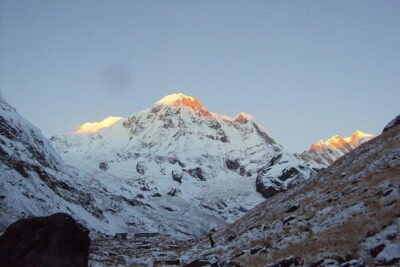
After the early morning views over the Annapurna range, you begin walking back toward Dovan. The first part of the trail can be steep, then the route becomes a more gradual descent.
The return gives you a different view of the same valley. Details you missed on the way up may become easier to notice when you are no longer watching every step uphill. Still, this is not an easy day. Descending on tired legs can bring its own strain.
Dovan’s river junction provides another practical overnight stop. The return schedule is sensibly broken up rather than forcing one very long push back to the lower villages.
Day 11: Forest paths toward Sinuwa
The trail follows the river through quiet forest, with waterfalls, birds, and running water along the way. You then climb gently toward Sinuwa Hill and spend the night at a trekking lodge near Sinuwa.
This is one of the more restful-feeling sections because the path combines natural sounds with a manageable uphill finish. It is also a useful transition from the high sanctuary back toward the lower settlements.
The package includes a lodge, meals, and tea or coffee during the trekking portion. Drinks beyond the included tea or coffee are extra, so keep some local currency available for personal purchases.
Day 12: Jhinu hot springs and Pokhara
The final walking section takes about two hours to Jhinu, known for its natural hot springs. You have time to bathe, eat lunch, and then continue by vehicle to Pokhara. The schedule also allows for the possibility of trekking farther before the drive, depending on the day’s plan.
Jhinu is a welcome finish after repeated climbs and descents. The hot spring stop gives the last day a clear sense of reward, and returning to Pokhara marks the end of the mountain section.
The supplied plan does not include accommodation in Pokhara, so confirm your onward arrangements. Daily breakfast in Pokhara may be excluded as well, along with meals in Kathmandu and Pokhara generally.
What the $799 price really covers
At $799 per person, this package offers solid value if you want the main practical pieces arranged. Included are en-route lodge accommodation, three meals a day while trekking, tea or coffee, ground transportation, airport pickup and drop-off, the professional guide’s expenses, guide insurance and equipment, the Annapurna Conservation Area Permit, and local permits.
A porter is not included, though you can add one if needed. Your own insurance, drinks, tips, personal spending, Kathmandu accommodation, Pokhara accommodation, and meals in both cities are also extra.
The private format adds value for people who want a set of companions rather than a large public group. It may also allow more flexibility, though the exact flexibility depends on the guide and mountain conditions. The strongest cost advantage is that permits, meals, transport, and guide costs are already bundled into one price.
Who should book this trek?
I would suggest this trip to you if you want a moderate-to-demanding Himalayan trek with a clear structure and a famous base camp finish. It suits people who value mountain scenery, simple lodges, local villages, and a guide-led experience more than comfort or luxury.
It is less suitable if you dislike early starts, steep stairs, basic accommodation, long road journeys, or changing plans caused by weather and trail conditions. You also need to be comfortable paying extra for insurance, drinks, tips, city hotels, city meals, and possibly a porter.
The company’s strongest praised qualities are its professional staff, flexible help, and fair pricing. If you book, ask who your guide will be, confirm the exact Kathmandu and Pokhara hotel arrangements, and decide in advance whether you need a porter.
Should you book the Annapurna Base Camp trek?
Yes, this is a good-value choice if you want a private, fully guided route with Poon Hill, Annapurna Base Camp, Gurung villages, and Jhinu hot springs in one 12-day plan. The included meals, permits, transport, and guide costs make the $799 price easier to justify.
Book only after accepting the physical demands and the extra costs outside the trek package. If you prepare well, walk patiently, and want both mountain views and local village contact, Adventure Glacier Treks & Expedition offers a practical way to experience this famous Annapurna route.
The experience allows free cancellation with a full refund when you cancel at least 24 hours before the local start time. Cancellations within 24 hours are not refunded, and late changes are not accepted.
FAQ
Where does the Annapurna Base Camp trek begin?
The trip begins at Tribhuvan International Airport in Kathmandu, Nepal. An airport representative meets you at the arrival gate and transfers you to a hotel in Thamel.
How long does the trek last?
The experience lasts approximately 12 days, including arrival arrangements, transport between Kathmandu and Pokhara, the trek, and the return to Pokhara.
Is airport pickup included?
Yes. Airport pickup and drop-off are included in the package.
Are meals included?
Breakfast, lunch, and dinner are included during the trekking portion, along with a cup of tea or coffee. Meals in Kathmandu and Pokhara are not included, except for any daily breakfast specifically arranged there.
Is accommodation included?
Lodge accommodation along the trekking route is included. Accommodation in Kathmandu and Pokhara is not included in the stated package.
Is a porter included?
No. A trekking porter is available if you need one, but the porter cost is extra.
What level of fitness is required?
You should have a moderate level of physical fitness. The trek includes steep climbs, about 3,000 stone steps to Ulleri, long descents, and walking at altitude.
Is this a private tour?
Yes. Only your group participates in the activity.
Recently added around Kathmandu
- Ghorepani Poon Hill Trek★ 5.0 · 16 reviews
- Private Manaslu Circuit Trek at Himalayas★ 5.0 · 3 reviews
- Amazing 1 Day Trekking Experience in Kathmandu Nepal★ 5.0 · 24 reviews
- Upper Mustang Trekking★ 5.0 · 2 reviews
- Ghorepani Poonhill Trek★ 5.0 · 5 reviews
- Upper Mustang Trekking★ 3.0 · 2 reviews
- Upper Mustang Trekking★ 5.0 · 4 reviews
- Upper Mustang Trek★ 5.0 · 5 reviews
Annapurna Base Camp Treks, compared.
Trekking in Annapurna/Langtang/Everest/Upper Mustang regions
Read our review →
Kathmandu to Annapurna Base Camp (ABC) 5-Day Trek
Read our review →Browse the lists this tour appears in