
REVIEW · KATHMANDU
Annapurna Base Camp Trek – 11 Days
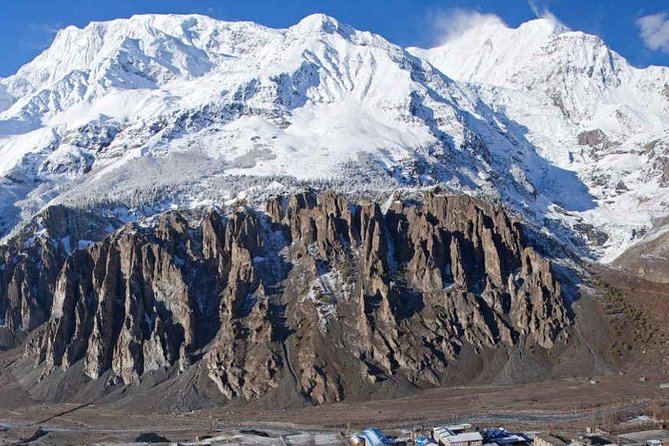
The Himalayas reward steady walkers. This 11-day Annapurna Base Camp trek combines mountain scenery, rhododendron forests, stone stairways, ethnic villages, hot springs, and the high-altitude amphitheater around Annapurna Base Camp. I like the route for two clear reasons: it includes the famous sunrise at Poon Hill, and it gives you time to experience both village life and the high mountains rather than rushing straight to base camp.
The price is $986 per person, which covers transport between Kathmandu and Pokhara, trekking accommodation, meals, permits, guide services, staff costs, basic equipment, and medical supplies. That is a useful package for a private trek, though you still need to budget for drinks, personal gear, insurance, tips, and international flights. The main concern is the physical demand: long climbs, repeated stone stairs, and high altitude make this a serious walking holiday, not a gentle sightseeing trip.
Five details that shape the trek
- Poon Hill sunrise comes early: You climb before breakfast for views of Annapurna, Dhaulagiri, Nilgiri, and Lamjung Himal.
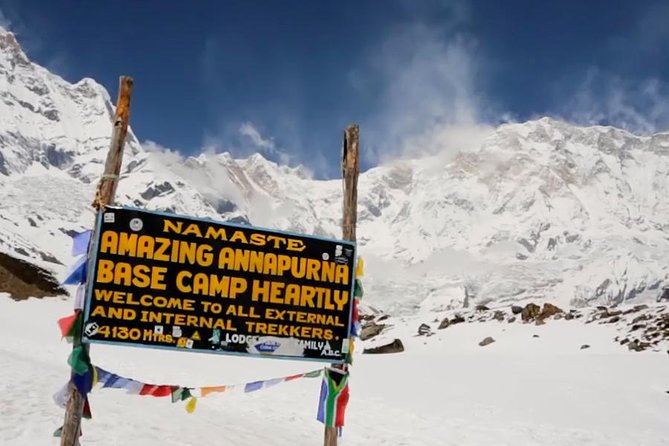
- Annapurna Base Camp reaches 4,130 meters: The route includes Machhapuchhre Base Camp at 3,700 meters before continuing higher.
- Transport takes up two full days: You travel by tourist bus between Kathmandu and Pokhara at the beginning and end.
- The trek includes a Jhinu Danda hot spring stop: It is a welcome break after steep trail sections.
- A private group gets one local guide: Only your own party takes part, with a licensed English-speaking guide.
- The package includes useful cold-weather gear: A down jacket, sleeping bag, duffel bag, route map, first-aid kit, and oxygen monitor are provided.
From Kathmandu to Pokhara by tourist bus
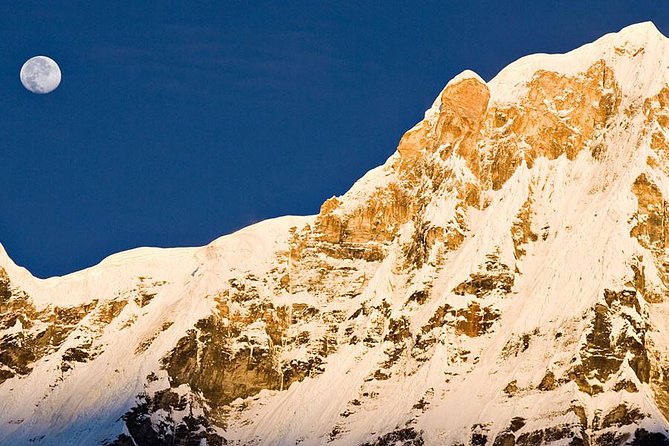
Your first day begins at 6:15 a.m. in Kathmandu. After breakfast, you board a tourist bus for Pokhara along the Prithvi Highway. This is not just a transfer to endure with your eyes closed. The road follows rivers, terraced farmland, villages, and small towns, giving you an early look at rural Nepal.
Still, this is a long road day, and a bus journey can feel slow after an early start. I would treat it as part of the trip rather than a wasted day. You are moving from the capital toward the Annapurna region, and the changing scenery helps set the tone for the walking days ahead.
Pokhara is the staging point for the trek. The itinerary does not list a major activity there on the first evening, so you should expect a practical overnight stop before the trail begins. The return to Kathmandu also uses the same road, so the experience includes two days of road travel as well as the mountain walking.
More Annapurna Treks in Kathmandu
- Annapurna Circuit Trek with Tilicho Lake
★ 5.0 · 368 reviews - Annapurna base camp trek 5 Days
★ 5.0 · 252 reviews - 14-Day Private Annapurna Base Camp Trek
★ 5.0 · 180 reviews
Nayapul and the first suspension bridge
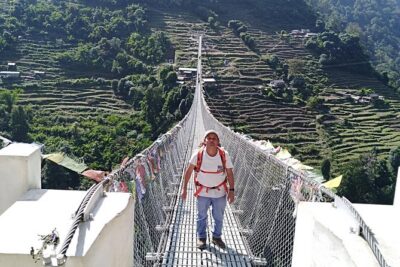
On Day 2, you leave Pokhara by road for Nayapul, a drive of about two hours. From there, the trek starts on foot. Crossing the suspension bridge over the Modi River, you head toward Birethanti and continue into the lower Annapurna trails.
This opening walking section is a useful introduction because it gets you moving without putting you immediately into the highest elevations. The river crossing, village paths, and changing vegetation offer a gentler beginning than the tougher stone stair climbs that come later.
You should still expect uneven walking surfaces. The itinerary describes trails, bridges, and village routes rather than paved paths, so proper walking shoes matter. The included guide is especially useful here for pacing and route direction, since your first day on foot is also when your legs are adjusting to repeated climbs and descents.
Ghorepani through rhododendron forest
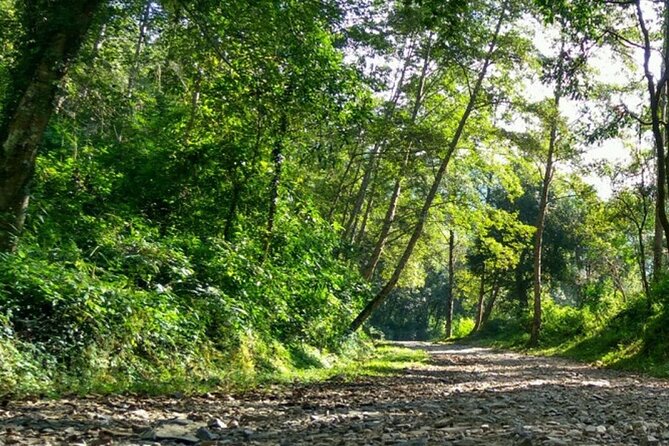
Day 3 leads through thick rhododendron forest toward Ghorepani. You pass Banthanti and Nangethanti, then climb uphill on stone stairs before reaching the village.
This is one of the more attractive sections of the route. Rhododendrons, orchids, and ferns give the lower trail a different character from the bare, snowy surroundings higher up. The villages also make the walk feel connected to daily life in the mountains rather than being only a march toward a famous viewpoint.
The stone stairs are the catch. They can turn a supposedly moderate day into a tiring one, especially if your fitness is only average. The tour asks for a moderate fitness level, but you should read that as a need for regular walking ability, not a guarantee of easy days. I would prepare for sustained uphill walking before arriving in Nepal.
Poon Hill sunrise and the long route to Tadapani
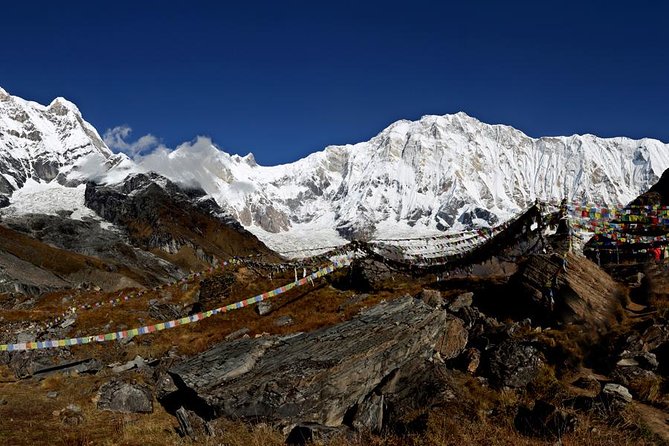
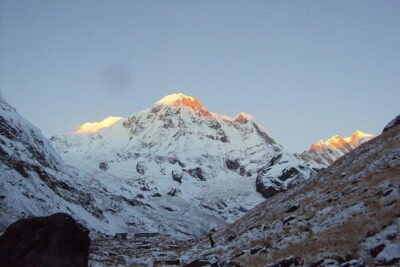
Day 4 begins before sunrise with a climb to Poon Hill. The trail can be snowy, and the reward is a wide mountain view as the sun reaches the Annapurna and Dhaulagiri ranges. The itinerary also identifies Nilgiri at 7,061 meters and Lamjung Himal at 6,983 meters among the peaks visible from this area.
This early start is one of the best features of the trek. Poon Hill gives you a major mountain viewpoint without requiring the full effort of reaching base camp, and it provides a dramatic first look at the peaks before the route turns deeper into the Annapurna Sanctuary.
After the viewpoint, you continue along forested trails, with both uphill and downhill walking. That combination matters. A descent may feel easier on your lungs, but it can be hard on knees after the early climb. Day 4 is not simply a sunrise outing. It is a full trekking day that asks you to keep going after the main scenic moment has passed.
Same trailhead, a longer or shorter day out:
- Everest Base Camp Trek – 14 Days
★ 5.0 · 1,499 reviews - Everest Base Camp Trek
★ 5.0 · 842 reviews - Everest Base Camp Trekking
★ 5.0 · 485 reviews - Everest Base Camp Trekking – 13 Day
★ 5.0 · 365 reviews
Jhinu Danda and the hot spring pause
The route then moves through forest toward Jhinu Danda. You climb and descend, cross the suspension bridge over Kimrong Khola, and reach the hot spring.
I like this part because it gives the itinerary a physical reset. After several days of stairs and forest trails, soaking in warm water can be a welcome way to rest. The hot spring is not a luxury add-on. It is one of the few clearly built-in pauses where the route acknowledges tired legs.
The trail continues beyond Jhinu Danda, so you should not think of the hot spring as the end of the day. The itinerary describes entering the next section after the stop, and the route remains active. Pack swimwear where you can reach it easily, though the supplied details do not specify changing facilities or towels.
Sinuwa and the changing forest
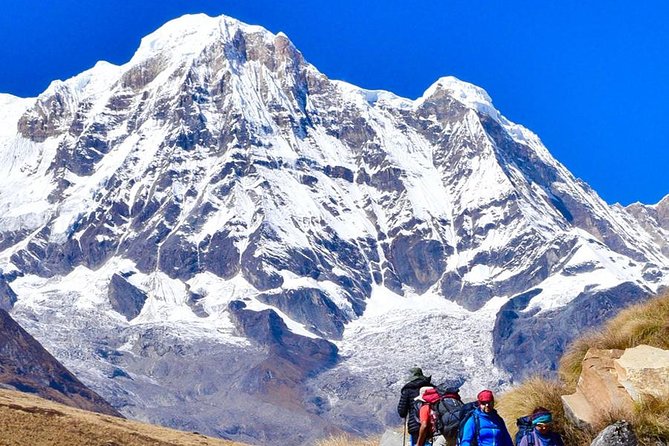
Day 6 is described as an easier walk through rhododendron forest, with orchids and ferns along the trail. You descend stone stairs, cross Chhomrong Khola, and climb toward Sinuwa before continuing through more forested sections.
This day helps break up the larger effort of the trek. The plants and forest cover make it feel cooler and more sheltered than the exposed high route ahead. At the same time, the route still uses substantial stone stairways, so easier does not mean flat.
The crossing at Chhomrong Khola also shows how the trek is shaped by mountain rivers. You are repeatedly moving between ridges, valleys, bridges, and stairways. That variety keeps the route interesting, but it means you should not judge a day only by its distance. A shorter day with repeated up-and-down sections can still test your legs.
Machhapuchhre Base Camp and Annapurna Base Camp
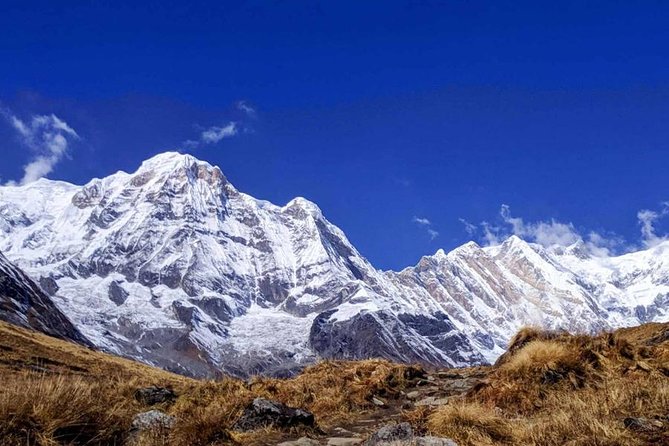
Day 7 is the high point of the trip. You ascend to Deurali, continue along stone stairs, and reach the area around Machhapuchhre Base Camp at 3,700 meters. From there, the route follows moraine terrain toward Annapurna Base Camp.
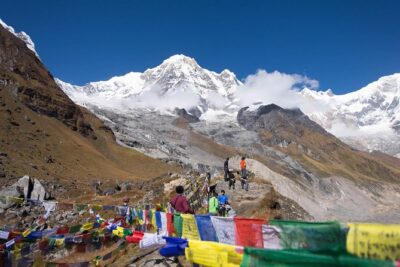
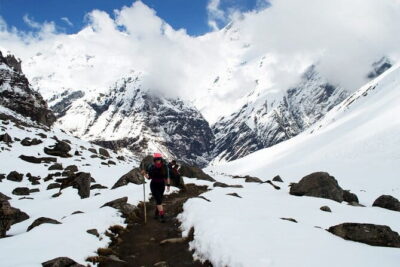
The scenery changes sharply at this height. Forest gives way to snowy peaks, rock, and the broad mountain setting around the base camps. Machhapuchhre, also known as Fishtail, is a major visual presence, while the route leads onward toward the Annapurna range.
Annapurna Base Camp sits at about 4,130 meters. That elevation is the reason you need to take the pace seriously. The itinerary includes an oxygen monitor, first-aid supplies, and a guide, which are practical safeguards, but they do not remove the risk of altitude problems. Move steadily, follow your guide’s advice, and tell the guide promptly if you feel unwell.
This is also the most demanding section of the trip. The trail includes moraine routes and high-altitude walking, and the weather can affect the experience. The tour requires good weather, and poor conditions can lead to a different date or a full refund if the experience is canceled.
The return through the Modi Khola valley
Day 8 begins with a descent from Machhapuchhre Base Camp along the moraine route. You then follow the Modi Khola through rhododendron and fir forest, enjoying views of the snowy peaks as the trail drops lower.
The return route is not an afterthought. It gives you a different view of the same valley and lets you notice how quickly the vegetation changes as you lose height. After the high, rocky setting around the base camps, forest and river corridors feel almost generous.
Descending can be harder than expected. High steps and uneven ground place pressure on your knees, and tiredness from the previous day may show up here. Trekking poles would be useful, but they are not listed among the included items, so you would need to bring or arrange personal trekking equipment yourself.
Back to Chhomrong and another hot spring visit
Day 9 retraces part of the route through Sinuwa and Chhomrong. You climb through forest to Sinuwa, descend to Chhomrong Khola, and then climb the stone stairs to upper Chhomrong before descending again to Jhinu Danda.
This is a day of repeated changes in direction. You gain height, lose it, cross the river, gain it again, and descend once more. That pattern is typical of Himalayan trails, but it can feel demanding after the high point of the trek.
The second visit to Jhinu Danda gives you another chance to enjoy the warm spring. I see this as a smart feature of the route because it places a recovery stop near the end, when fatigue is likely to be at its highest. Just remember that the return is not finished when you leave the hot water. You still have walking before the day ends.
Returning to Pokhara, then Kathmandu
On Day 10, you descend to Nayapul along the Modi Khola and return by road to Pokhara. The final trekking day gives you more views of villages and countryside, but it is still a proper descent rather than a quick stroll.
Pokhara offers an evening pause before the final road journey. The itinerary says you may rest or make your own evening plans, but it does not include a specific Pokhara activity. That flexibility is useful if you want a quiet night after the trek, though you should not expect a guided city tour as part of this package.
Day 11 starts early with the tourist bus back to Kathmandu. The route again passes greenery, villages, rivers, and highway scenery. Once you arrive in the capital, the activity ends at the meeting point.
What the $986 price includes
At $986 per person, the cost is easier to assess when you look at what is bundled. You receive:
- Surface transport from Kathmandu to Pokhara and back
- Accommodation in the best available guest houses, mainly twin-sharing rooms
- Breakfast on 10 days, lunch on 9 days, and dinner on 8 days
- Trekking permits and entry fees
- A licensed English-speaking local guide
- Staff food, accommodation, salary, insurance, equipment, medicine, and transport
- A down jacket, sleeping bag, and duffel bag
- A route map, oxygen monitor, and first-aid medical kits
That is a solid list for a private trek. The staff costs are particularly important because they cover more than just the guide’s daily presence. The package also reduces the need to carry bulky cold-weather items, though you remain responsible for your personal trekking equipment.
You pay separately for alcoholic drinks, hot and cold drinks, laundry, international airfare, airport departure tax, travel insurance, tips, and any item not listed as included. Drinks can add up during an 11-day trek, so I would keep a separate spending allowance rather than assuming the package covers all meals and refreshments.
Accommodation is mainly twin sharing, and the wording best available guest houses means you should expect practical mountain lodging rather than polished hotels. The cost offers convenience and support, but not a fully private room or luxury standard at every stop.
Guides, private groups, and service quality
This is a private activity, so only your group participates. That gives you more control over pace and daily rhythm than a large shared departure. It can also make the trip feel more personal, particularly if your group has different walking speeds or needs regular breaks.
Several guide names appear in the experience history, including Prakash, Dhakal Saroj, Mansing, Shiva, and Naba. The strongest praise centers on friendly, helpful guiding and careful organization. One solo trekker specifically highlighted Saroj’s service, while other groups praised Prakash and his team for patience, politeness, and support. A family of four had a positive experience with Mansing and porters Kul and Nishan.
There is also a caution. One complaint described an unprofessional guide, although the company responded that the complaint appeared to concern a different business and that it had not organized the stated solo trek in the previous four months. I would not treat that exchange as proof of a general problem, but I would confirm your guide’s name, responsibilities, and contact details before departure.
The current score is 4.9 from 30 ratings, with 97 percent recommending the experience. That points to strong satisfaction overall, especially with the guide team and organization, while the mixed account is a reminder to clarify arrangements in advance.
Fitness, equipment, and practical preparation
You need moderate physical fitness for this trek. The hardest demands are not only altitude and distance. You should also be ready for stone stairs, uphill and downhill sections, suspension bridges, forest paths, moraine terrain, and long days that begin early.
The operator supplies a down jacket, sleeping bag, duffel bag, first-aid kit, and oxygen monitor. You still need personal trekking equipment, and the supplied details do not specify a full packing list. Good walking footwear, layers, personal medication, and a way to protect small items from rain would be sensible, but check directly with the provider for its current equipment guidance.
The start time is 6:15 a.m. in Kathmandu. That early departure affects your first day and may be tiring after international travel. I would plan to arrive with enough time to sleep, meet the guide, and organize your bag before the bus leaves.
The route is weather-sensitive. If poor conditions force cancellation, you can accept a different date or receive a full refund. For other cancellations, you receive a full refund if you cancel at least 24 hours before the start time. Inside that window, payment is not refunded and changes are not accepted.
Should you book the Annapurna Base Camp trek?
I would recommend this trek if you want a full Himalayan walking experience with a private group, an English-speaking guide, included transport, and a route that combines Poon Hill with Annapurna Base Camp. The hot springs, village trails, forest scenery, and high mountain views give the 11 days a good range of experiences.
I would hesitate if you want short walking days, luxury accommodation, flexible last-minute changes, or a trip without major altitude gain. The route is demanding, and the two long bus transfers reduce the time available for walking and rest.
For the right person, $986 is a fair price for the level of support included. Confirm your guide, ask what personal gear you must bring, and make sure you are comfortable with twin-sharing guest houses and early starts. If you can handle the stairs and respect the altitude, this is a well-rounded route to one of Nepal’s best-known base camps.
FAQ
Where does the Annapurna Base Camp trek start and end?
The activity starts in Kathmandu at 44600, Nepal, and ends back at the same meeting point after the return from Pokhara.
What time does the trek start?
The listed start time is 6:15 a.m.
How long is the experience?
The trek lasts approximately 11 days.
Is this a private tour?
Yes. Only your own group participates in the activity.
What meals are included?
The package includes breakfast on 10 days, lunch on 9 days, and dinner on 8 days.
Is accommodation included?
Yes. Accommodation is provided in the best available guest houses during the trek, mainly in twin-sharing rooms.
What happens if bad weather cancels the trek?
If the experience is canceled because of poor weather, you can choose a different date or receive a full refund.
Recently added around Kathmandu
- Ghorepani Poon Hill Trek★ 5.0 · 16 reviews
- Private Manaslu Circuit Trek at Himalayas★ 5.0 · 3 reviews
- Amazing 1 Day Trekking Experience in Kathmandu Nepal★ 5.0 · 24 reviews
- Ghorepani Poonhill Trek★ 5.0 · 5 reviews
- Upper Mustang Trekking★ 5.0 · 2 reviews
- Upper Mustang Trekking★ 3.0 · 2 reviews
- Upper Mustang Trekking★ 5.0 · 4 reviews
- Upper Mustang Trek★ 5.0 · 5 reviews
Annapurna Base Camp Treks, compared.
Trekking in Annapurna/Langtang/Everest/Upper Mustang regions
Read our review →
Kathmandu to Annapurna Base Camp (ABC) 5-Day Trek
Read our review →Browse the lists this tour appears in