
REVIEW · KATHMANDU
Annapurna Base Camp Trekking
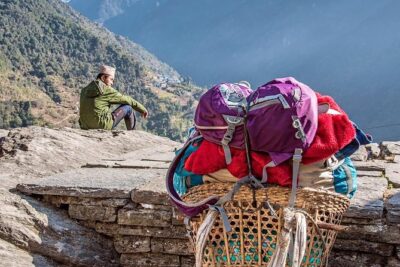
The mountains begin long before base camp. This 16-day Nepal journey combines the Annapurna Base Camp trek with Kathmandu temples, Pokhara downtime, village teahouses, and an optional Chitwan program. I like the way the trip builds slowly, starting with cultural sights before leading you through forests, waterfalls, stone steps, and high mountain valleys. I also like that a private guide, porter, permits, sleeping bag, duffle bag, and several hotel nights are included. The main drawback is the physical demand: five-hour trekking days, steep stairs, changing weather, and basic teahouse accommodation require real preparation.
You also get a useful safety net in the form of a private English-speaking trek leader, an assistant leader, staff insurance, and a medical kit carried by the guide. The route is scenic from start to finish, but it is not a gentle walking holiday. Moderate fitness is essential, and the package does not include international flights, travel insurance, tips, alcoholic drinks, or domestic flights between Kathmandu and Pokhara.
The trip at a glance
- Poon Hill sunrise: An early morning climb brings wide views of Annapurna and Dhaulagiri, with more than 20 high peaks visible in clear conditions.
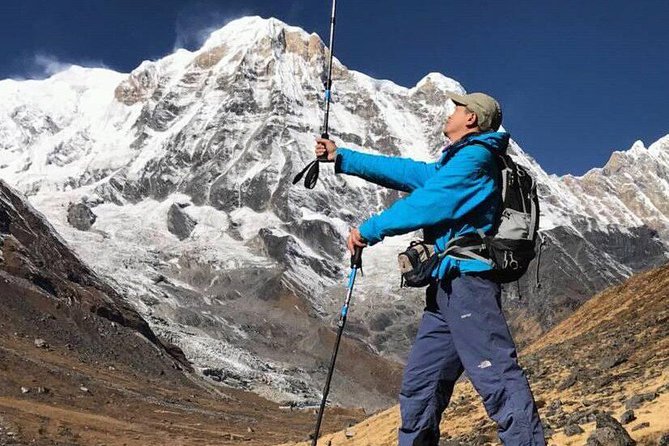
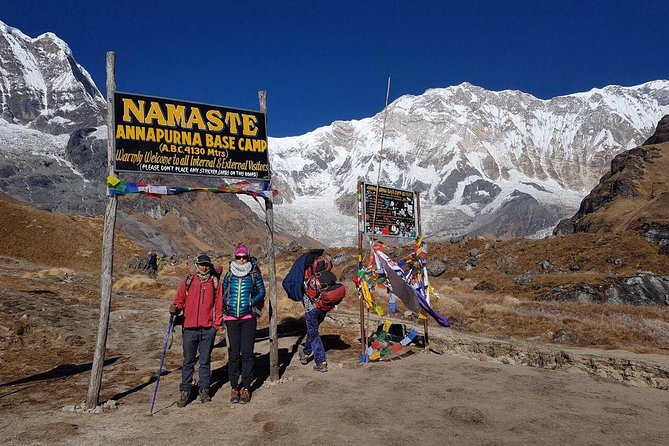
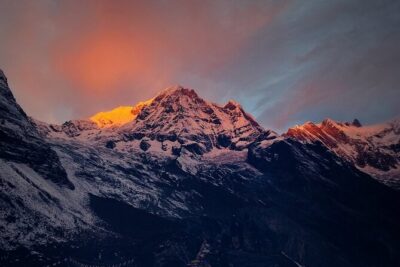
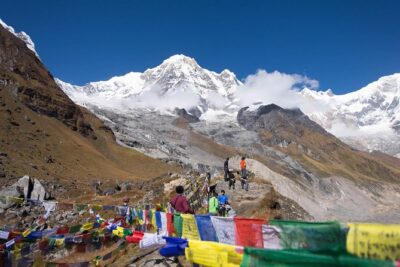
- Annapurna Sanctuary: The route reaches Annapurna Base Camp at about the dramatic upper end of the trek, where vegetation thins and cliffs, waterfalls, rivers, and snow peaks fill the view.
- Cultural Kathmandu: Patan Durbar Square, Swayambhunath, Pashupatinath, and Boudha Stupa give you four very different introductions to Nepal.
- Private trekking support: A licensed English-speaking leader, assistant leader, porter, permits, staff costs, and a medical kit are included.
- Jhinu Danda rest stop: The itinerary gives you time to relax after the descent, with the local hot spring listed as the main attraction.
- Optional Chitwan extension: Jungle safari, walking, canoeing, bird watching, and a Tharu cultural show can be added, but the supplied schedule does not detail the extra days or price.
Arrival day and Kathmandu’s four faces
Your first day is simple. A Vyas Treks and Expedition representative meets you at Tribhuvan International Airport, takes you to your hotel, and hosts a welcome dinner in the evening. That meal introduces you to Nepalese food before the walking begins.
The second day is packed, but worthwhile. At Patan Durbar Square, you see ancient royal buildings, temples, and monuments tied to the former kingdom of Patan. The two-hour visit gives you a useful cultural frame for the villages and religious sites later in the trip.
Swayambhunath, often called the Monkey Temple, sits on a hill with views across Kathmandu Valley. The one-hour stop includes the stupa, bells, monastic buildings, and monkeys that may show more interest in your snacks than in the sacred architecture. Keep food and small belongings secure.
Pashupatinath brings a more serious mood. This is the most important Hindu temple complex in Nepal, with small shrines, religious ceremonies, meditating holy men, and cremation rituals along the Bagmati River. It can be visually powerful, but you should approach the site respectfully and remember that some rituals are private.
The day ends at Boudha Stupa and a nearby thanka center. The huge stupa, watchful painted eyes, golden statues, and praying monks offer a strong contrast to Pashupatinath. Admission charges for these Kathmandu sights are not included, so keep some money available.
More Annapurna Treks in Kathmandu
- Annapurna Circuit Trek with Tilicho Lake
★ 5.0 · 368 reviews - Annapurna base camp trek 5 Days
★ 5.0 · 252 reviews - 14-Day Private Annapurna Base Camp Trek
★ 5.0 · 180 reviews
The road to Pokhara and the first mountain views
On day three, you travel from Kathmandu to Pokhara by luxury tourist bus. The ride takes about five or six hours, so this is not a quick transfer. Still, it places you on the ground and gives you a direct look at Nepal’s hill roads rather than removing the journey by air.
Pokhara is the trip’s comfortable pause before the trek. From the city and Phewa Lake, you may see Dhaulagiri, Manaslu, Machhapuchhre, and several Annapurna peaks when the weather is clear. The first night here also gives you time to adjust to the pace of the trip.
The package includes three-star accommodation in Kathmandu and Pokhara with breakfast. Lunch and dinner in Pokhara are not included, giving you freedom to choose your own meals, but adding to your daily spending.
Nayapul to Ghorepani: forests, rivers, and stone stairs
After breakfast on day four, a private vehicle takes you to Nayapul, where the trek begins. The first walking section follows a valley through forest and crosses the Bhurundi Khola before reaching Tikhudhunga. It lasts about four hours and offers a manageable introduction to the route.
Day five changes the rhythm. You climb stone steps toward Ghorepani, passing waterfalls, small villages, tea houses, and views of Annapurna South. The uphill work is steady, and the stairs can feel demanding even though the walking time is listed at about five hours.
Ghorepani sits high enough to provide broad mountain views, including Annapurna South and Nilgiri. Small shops sell local crafts such as handbags, and Wi-Fi is available. That connection can be handy, though I would treat it as a bonus rather than something to count on in the mountains.
Poon Hill sunrise and the walk to Tadapani
Day six starts before breakfast. You climb to Poon Hill in time for sunrise, then return to Ghorepani for food before continuing toward Tadapani.
Poon Hill is one of the most popular viewpoints on this route for good reason. From the ridge, you can see the Annapurna and Dhaulagiri ranges, Mustang, Pokhara, and more than 20 high mountains in clear weather. The supplied plan includes time for a cup of coffee at the viewpoint, a small comfort after the early climb.
After returning to Ghorepani, the trail crosses a ridge and drops through rhododendron forest, with waterfalls along the way. The path to Tadapani combines a rewarding viewpoint with a second walking section, so this is an early day when pacing matters. If the sky is cloudy, the sunrise may be muted, but the forest remains part of the appeal.
Same trailhead, a longer or shorter day out:
- Everest Base Camp Trek – 14 Days
★ 5.0 · 1,499 reviews - Everest Base Camp Trek
★ 5.0 · 842 reviews - Everest Base Camp Trekking
★ 5.0 · 485 reviews - Everest Base Camp Trekking – 13 Day
★ 5.0 · 365 reviews
Chhomrong and the long stairway rhythm
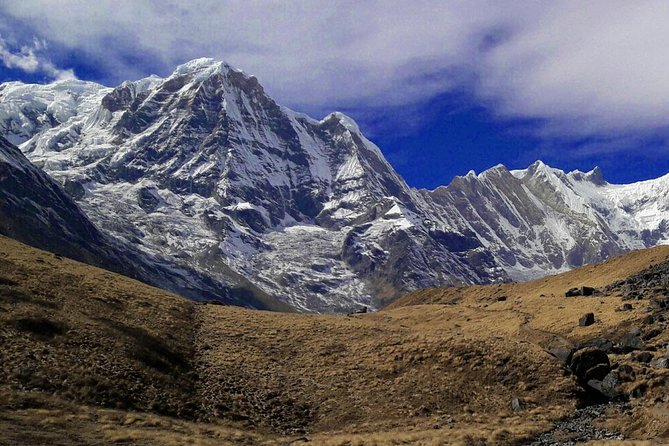
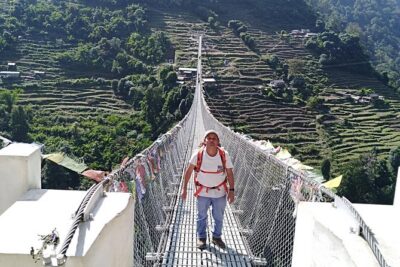
From Tadapani, the trail descends through a large rhododendron forest before opening onto terraced fields. You pass waterfalls and a suspension bridge, then continue over a mix of uphill and downhill sections to Chhomrong.
Chhomrong is a striking village below the Annapurna massif. It is also a good place to understand the basic rhythm of this trek: descend to a river, climb away from it, and repeat the pattern. The five-hour estimate does not mean an easy day, since the stairs and uneven ground make the effort more demanding than the clock suggests.
The next morning, you leave Chhomrong by a long run of stone steps. You cross the Chhomrong Khola on a suspension bridge, climb toward Inuwa, pass through forest to Kuldihar, and then descend to Bamboo. The route is scenic, but the repeated steps will test your knees and calves. Trekking poles could be useful, though they are not listed among the included equipment.
Bamboo to Deurali: thinner vegetation and bigger views
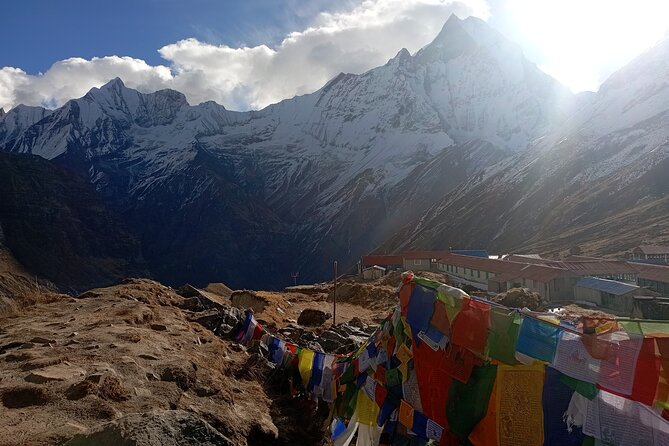
The walk from Bamboo to Deurali goes through damp, cool bamboo forest. The trail then climbs, sometimes steeply, toward Himalaya Hotel. When the forest opens, you can see the glacial river below and enjoy a wider sense of the valley.
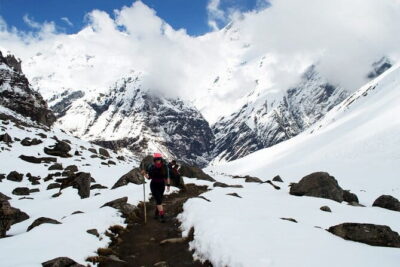
From there, the route passes through drier forest toward Hinku Cave, descends to a river, and climbs again to Deurali. Vegetation becomes sparse as you gain height. That change matters because it opens the views to cliffs, waterfalls, the river, and distant Dhaulagiri.
The day is listed at around five hours, but conditions can affect the pace. Rain, wet steps, or low cloud can make this section slower. One past guest specifically praised the guide support during rainy conditions, and guide Pradip was named in the company’s response. That detail is useful if you want a sense of the human side of the trip: the guide is not just there to point out peaks, but to help manage difficult weather and terrain.
Annapurna Base Camp and the high point of the route
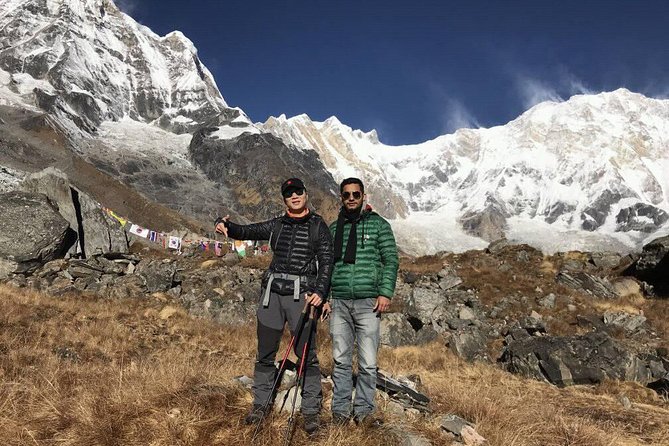
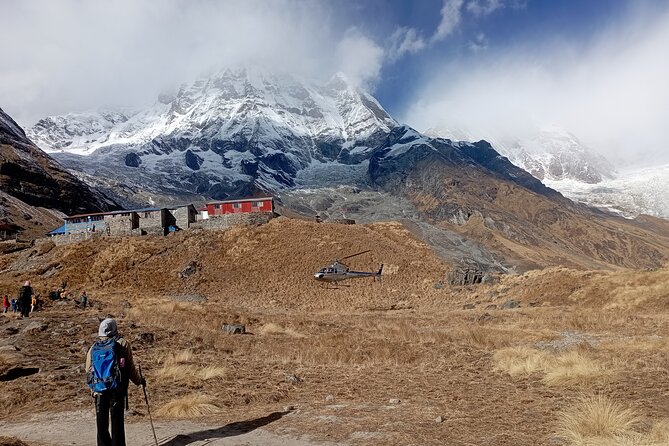
Day ten takes you from Deurali to Annapurna Base Camp. The route continues through increasingly open country, with waterfalls on steep cliffs, a river below, and the mountain walls drawing closer.
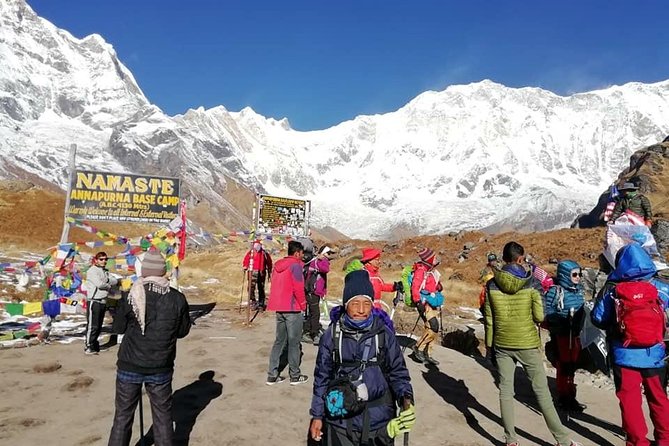
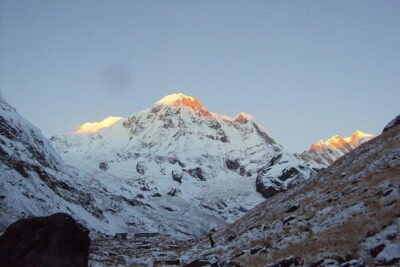
At base camp, the scenery is the main reward. The itinerary highlights the Annapurna massif, Machhapuchhre, Himchuli, Manaslu, Ganesh Himal, and other peaks across the wider trip, though exact visibility depends on weather. You should expect cold conditions and basic mountain lodging rather than hotel comfort.
This is the emotional center of the trek, but it is important to see it as part of a longer route. You are not simply reaching a viewpoint and leaving by vehicle. The next day still involves a five-hour walk, even though it is mostly downhill.
The descent through Machhapuchhre Base Camp
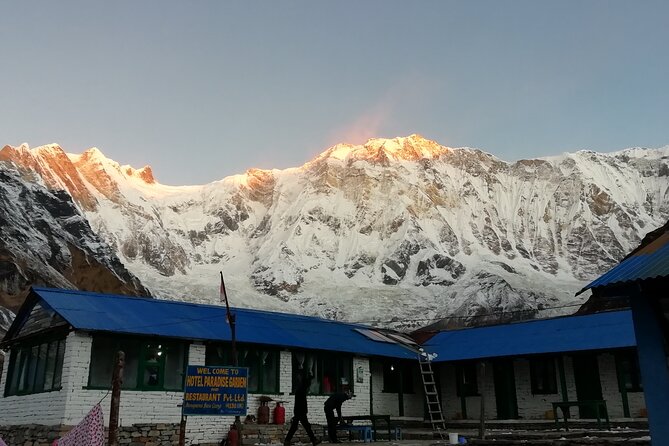
From Annapurna Base Camp, the trail drops past Machhapuchhre Base Camp, Deurali, Himalaya Hotel, and Doban before ending at Bamboo. The descent is easier on the lungs than the climb, but downhill steps can be hard on tired knees.
The route retraces familiar ground, which may feel less fresh than the ascent. I still like this part because the changing direction gives you new angles on the river, cliffs, and forest. It also brings you gradually back to thicker vegetation and warmer conditions.
Jhinu Danda and a welcome afternoon break
You return toward Chhomrong on day twelve, stopping for lunch before tackling the steep descent to the Modi Khola valley. The stone staircase is challenging in both directions, so do not assume that going downhill makes the day effortless.
The trail continues through rain forest and farms to Jhinu Danda. The itinerary identifies a hot spring here and allows the rest of the afternoon for rest. This is a smart pause after the high section of the trek. The hot spring can be an appealing way to ease tired legs, although the program does not provide further details about facilities or entry fees.
Nayapul, Pokhara, and a slower final stretch
On day thirteen, you walk from Jhinu Danda toward Nayapul through western Nepal’s hills and farms. Lunch is taken along the way, and the trekking section ends when you board a vehicle for Pokhara.
Day fourteen gives you a flexible Pokhara day. You can choose a half-day visit to Davis Falls, Gupteshwor Cave, and Bindabasini Temple, or go boating on Phewa Lake. The activity and admission costs are not included, so check the price before choosing.
This extra night in Pokhara is valuable. After several consecutive walking days, you get time to rest, wash clothes, organize luggage, and enjoy the city without immediately facing another mountain trail.
Kathmandu farewell and the optional Chitwan idea
On day fifteen, you return to Kathmandu by road. The journey takes about six hours, followed by a hotel drop-off and free time for rest or final shopping in Thamel.
A farewell dinner closes the scheduled program. It is a practical chance to share the trek experience with the trip team before your flight the next day.
The program also offers an optional Chitwan extension. Listed activities include jungle safari, jungle walking, canoeing, bird watching, and a Tharu cultural show. The Tharu are one of Nepal’s indigenous peoples, and this addition would give the trip a lowland wildlife and cultural contrast to the high mountains. However, the supplied 16-day plan does not state the extra duration, transport, accommodation, or cost. Ask for those details before adding it.
On day sixteen, a representative takes you to Tribhuvan International Airport three hours before your scheduled flight. The airport transfer is included.
What the $1,200 price really covers
At $1,200 per person, the cost has good value if you want an organized private trek rather than arranging every part yourself. The package includes airport transfers, Kathmandu and Pokhara hotels with breakfast, teahouse accommodation, a private guide and porter, ground transport listed in the schedule, permits, the ACAP and TIMS paperwork, a sleeping bag, a duffle bag, staff costs, taxes, and a medical kit.
It also includes a licensed English-speaking trek leader and assistant leader. That matters on a route where weather, altitude, tiredness, and trail conditions can change the day’s pace.
The price does not cover international flights, Nepal’s visa fee, travel and rescue insurance, tips, alcoholic drinks, personal expenses, lunches and evening meals in Kathmandu and Pokhara, or domestic flights. The itinerary uses tourist bus and private ground transport between Kathmandu and Pokhara, but the exclusion of domestic flights means you should confirm whether any flight option is being considered for your dates.
Group discounts are offered, and pickup is available. The activity is described as private, so only your own group participates. That gives you more control over pacing than a large fixed group, though the route itself remains physically demanding.
Who should book this trek?
I would choose this trip if you want a full Nepal introduction rather than a trek alone. The mix of temples, mountain villages, Poon Hill, Annapurna Base Camp, Pokhara, and optional Chitwan gives you more variety than a direct in-and-out mountain walk.
It suits people with moderate fitness who can handle repeated uphill and downhill walking for about five hours per day. You should be comfortable with teahouse accommodation and understand that mountain weather may affect views and scheduling.
I would think twice if you want luxury lodging, short walks, or a flexible independent trip. The support is strong, but the route remains strenuous. Also budget separately for insurance, tips, meals outside the included breakfasts and dinners, entry fees, visas, and personal purchases.
Free cancellation is available up to 24 hours before the start time. Changes or cancellations inside that window are not refundable, and poor weather may lead to a different date or a full refund.
Final verdict: a strong choice for a supported Himalayan trek
I recommend the Annapurna Base Camp program for someone who wants mountain scenery without giving up cultural time in Kathmandu and Pokhara. The best features are the careful route progression, Poon Hill sunrise, Annapurna Sanctuary setting, private trekking support, and useful recovery time in Jhinu Danda and Pokhara.
The key caution is simple: prepare your legs. The stairs, descents, and long walking days are not minor details. If you accept the effort and confirm the missing costs before booking, the $1,200 price offers a solid package for a first Himalayan trek, especially with a guide such as Pradip and the included porter, permits, equipment, and transport.
FAQ
How long is the Annapurna Base Camp trip?
The trip lasts approximately 16 days, including arrival and departure transfers, Kathmandu sightseeing, travel between Kathmandu and Pokhara, the trek, and time in Pokhara.
Is the tour private?
Yes. The activity is private, and only your group participates.
What fitness level is required?
The program states that you should have a moderate physical fitness level. Trekking days are generally listed at about five hours and include steep stairs, uphill climbs, downhill sections, forests, suspension bridges, and uneven trails.
Is a guide included?
Yes. The package includes an experienced English-speaking, government-licensed trek leader, an assistant trek leader, and a porter.
Are trekking permits included?
Yes. The package includes the necessary paperwork and trekking permits, including ACAP and TIMS.
Are Kathmandu and Pokhara hotels included?
Yes. Three-star hotel accommodation in Kathmandu and Pokhara with breakfast is included. Extra nights caused by early arrival or late departure are not included.
Can I add a Chitwan Jungle Safari?
Yes, Chitwan activities are offered as an optional program. Listed activities include jungle safari, jungle walking, canoeing, bird watching, and a Tharu cultural show. The extra schedule and cost are not provided, so confirm those details before booking.
Recently added around Kathmandu
- Ghorepani Poon Hill Trek★ 5.0 · 16 reviews
- Private Manaslu Circuit Trek at Himalayas★ 5.0 · 3 reviews
- Amazing 1 Day Trekking Experience in Kathmandu Nepal★ 5.0 · 24 reviews
- Ghorepani Poonhill Trek★ 5.0 · 5 reviews
- Upper Mustang Trekking★ 5.0 · 2 reviews
- Upper Mustang Trekking★ 3.0 · 2 reviews
- Upper Mustang Trekking★ 5.0 · 4 reviews
- Upper Mustang Trek★ 5.0 · 5 reviews
Annapurna Base Camp Treks, compared.
Trekking in Annapurna/Langtang/Everest/Upper Mustang regions
Read our review →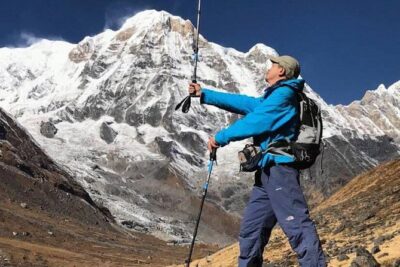
Kathmandu to Annapurna Base Camp (ABC) 5-Day Trek
Read our review →Browse the lists this tour appears in