
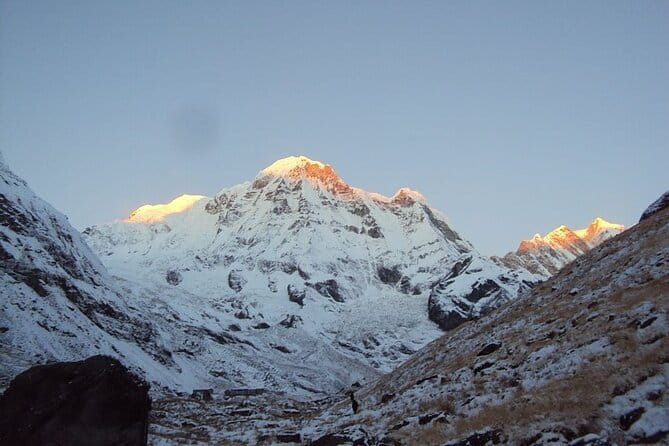
REVIEW · KATHMANDU
Annapurna Base Camp Trek
Mountains reward steady feet. This 14-day Annapurna Base Camp trek combines Poon Hill sunrise views with the main route to Annapurna Base Camp, while a small group, guide, meals, lodging, and transport keep the practical work under control. I like the personal feel of a group capped at 10, and I like that the route includes both teahouses in the hills and hotels in Kathmandu and Pokhara. The catch is simple: you need moderate fitness and a real appetite for hiking 4 to 7 hours most days.
This is a good fit if you want the Himalaya without handling every lodge reservation or trail decision yourself. The price of $925 includes a great deal, but you still pay for lunch and dinner in Kathmandu and Pokhara, and the long road transfers can test your patience before your boots do.
Key points at a glance
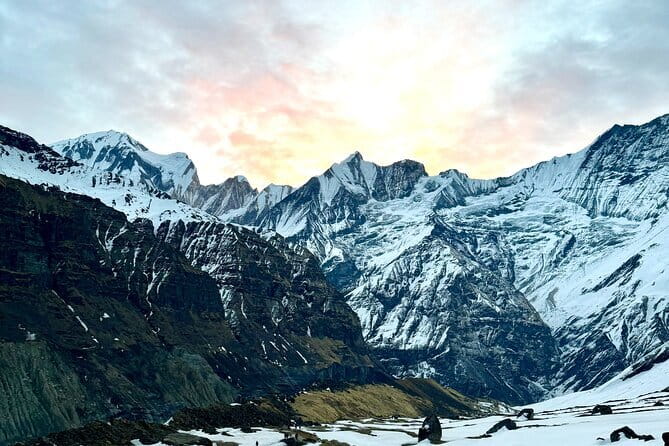
- Poon Hill at 3,210 meters: A 45-minute early hike leads to one of the route’s best mountain viewpoints.
- A small group of no more than 10: You get more direct contact with the guide than on a large trekking departure.
- Ten dinners, 13 breakfasts, and 10 lunches included: Food costs are largely covered during the walking portion.
- Teahouse nights and mountain villages: You sleep close to the trail rather than returning to a city each evening.
- A demanding but moderate route: Daily walks last about 4 to 7 hours, with steep stone steps and high-altitude sections.
- A hot-spring finish: Jhinu Danda offers natural pools beside the Modi River, a welcome reward after the mountain trail.
What the $925 price really covers
At $925 per person, this trek offers solid value for anyone who wants the major logistics arranged. The package includes accommodation, a professional guide, shared round-trip transfers, taxes, fees, and handling charges. It also includes 13 breakfasts, 10 lunches, and 10 dinners.
That meal count matters. Food on the trail is not an extra detail, and the inclusion of most walking-day meals makes the final cost easier to judge. You still need to budget for lunch and dinner in Kathmandu and Pokhara. Admission to Pashupatinath Temple is also not included, although the route only allows a brief photo stop there.
The accommodation mix is practical rather than fancy. In Kathmandu and Pokhara, you stay in hotels or guesthouses. Along the trail, you sleep in teahouses, the basic lodges that make Himalayan trekking possible. They place you near the route and provide a social setting, but you should choose this trip for access to the mountains, not for resort comfort.
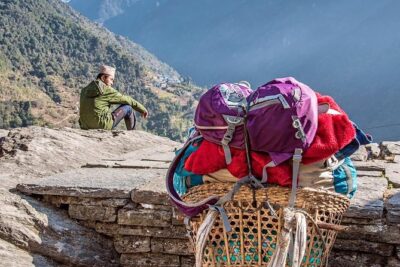
The guide is another major part of the value. You do not have to find the next lodge, work out each trail junction, or manage every change in altitude alone. The company has been praised for guides including Krishna, Tulsi, Suvi, and Anil, with Arjun handling trip communication in one account. Past guests also appreciated being able to add a porter when needed. That is useful information if you are unsure how much weight you want to carry.
More Annapurna Treks in Kathmandu
- Annapurna Circuit Trek with Tilicho Lake
★ 5.0 · 368 reviews - Annapurna base camp trek 5 Days
★ 5.0 · 252 reviews - 14-Day Private Annapurna Base Camp Trek
★ 5.0 · 180 reviews
Kathmandu arrival and the road to Pokhara
Your trip begins at Tribhuvan International Airport in Kathmandu. An airport representative meets you and arranges a private tourist vehicle to your hotel in the Thamel area. You can rest or visit the company office for a detailed briefing.
That first day is more useful than it may sound. You are arriving in a new country, sorting gear, and adjusting to the trip ahead. Having a local contact at the airport reduces the usual first-hour confusion. The included transfer also means you do not need to negotiate a ride immediately after a long flight.
On Day 2, you leave Kathmandu after breakfast for Pokhara by tourist bus. The journey covers about 200 kilometers and takes around six hours, with lunch along the way. This is not a quick airport hop. Road travel in Nepal is part of the experience, and the bus ride can feel long, but it connects the capital with the main gateway for the Annapurna route.
You spend the night in a Pokhara guesthouse. Lunch and dinner here are not included, so plan for those separately. The free evening gives you a chance to rest before the walking begins.
The first trail days: Nayapool, Ulleri, and Ghorepani
On Day 3, a drive of about an hour takes you from Pokhara to Nayapool. From there, the trek follows the Modi River toward Birethani. Teahouses appear along the route, and the trail passes through villages before continuing toward Ulleri.
This opening section gives you a gradual introduction to mountain walking, but do not mistake a gentle start for an easy holiday. The route includes village paths and changes in height, and the daily walking schedule can last several hours. Your guide can set a pace that works for the group, which is one advantage of traveling with no more than 10 people.
Day 4 continues from Ulleri through rhododendron and oak forests. The path rises gently toward Banthanti and then on to Ghorepani. Ghorepani is a popular overnight stop because it gives access to Poon Hill, one of the finest viewpoints on this route.
The forest section is one of the trek’s pleasures. You are not simply walking from one mountain lodge to another. You pass through plant life, villages, and changing views as the route gains height. The less pleasant part is the repeated climbing, especially if your legs are still adjusting to the schedule.
Poon Hill sunrise and the road toward Chhomrong
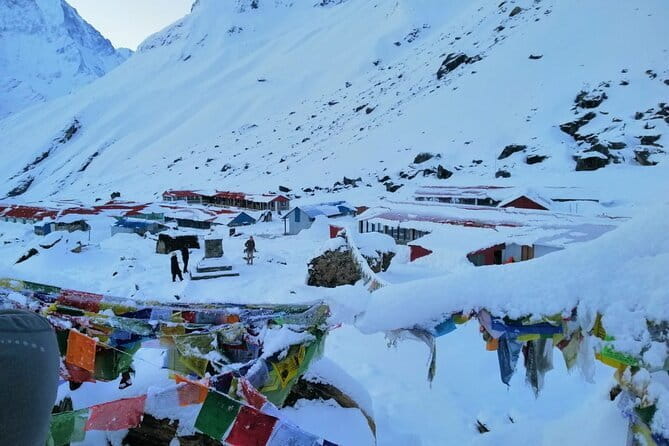
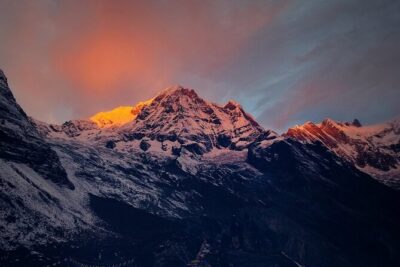
Day 5 begins with a short hike to Poon Hill. The walk to the viewpoint takes about 45 minutes, and the summit reaches 3,210 meters. It is described as a photographer’s favorite for good reason: the viewpoint gives you a broad mountain panorama before breakfast.
The early start is the price of the view. You need to walk uphill before the day’s main route begins, so this is not a sleep-in morning. Still, Poon Hill adds something important to the trip. You get a major viewpoint early, rather than waiting until the final approach to base camp for your first big mountain moment.
After returning from Poon Hill, the route continues toward Tadapani and then down through rhododendron forest. You cross the Kimsung River and climb toward the Gurung village of Gurjung. From there, a direct climb takes you to Chhomrong.
Chhomrong spreads across a hillside with views toward the Annapurna range and Machhapuchhre. The setting gives you a clear sense of how villages fit into the mountain terrain. It also reminds you that this trek is not a flat walk with mountain scenery in the background. The route repeatedly drops into river valleys and climbs back out.
Same trailhead, a longer or shorter day out:
- Everest Base Camp Trek – 14 Days
★ 5.0 · 1,499 reviews - Everest Base Camp Trek
★ 5.0 · 842 reviews - Everest Base Camp Trekking
★ 5.0 · 485 reviews - Everest Base Camp Trekking – 13 Day
★ 5.0 · 365 reviews
Stone steps, bamboo forest, and the quieter trail
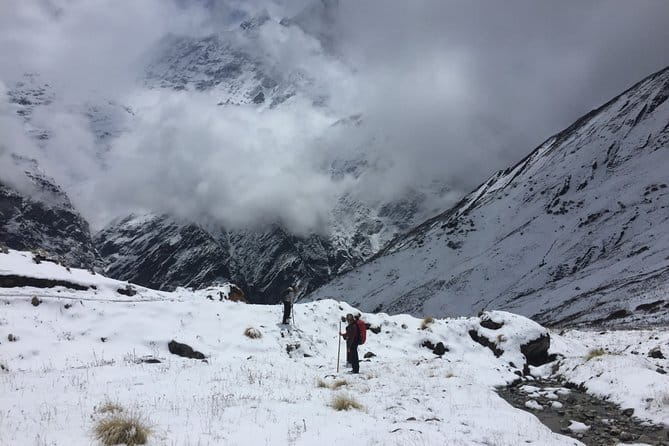
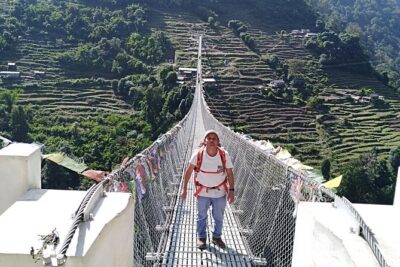
From Chhomrong, stone steps descend to the Chhomrong Khola. You cross a suspension bridge and then climb steeply to Sinuwa. This is one of the days when the route’s moderate rating deserves attention. Downhill steps can be as tiring as uphill walking, especially when you know another climb is waiting.
After Sinuwa, the route passes through jungle and continues toward Bamboo. The forest changes as you walk, with bamboo and rhododendron sections giving the trail a quieter character. The pace here is shaped by the path itself, not by sightseeing stops. You walk, climb, rest, and repeat.
Day 8 follows the route from Dovan toward Himalaya. The trail enters a quieter forest section near a temple, where loud noise is discouraged. That small rule gives the route a different mood. You are asked to pay attention to the place rather than treat every section as a race to the next lodge.
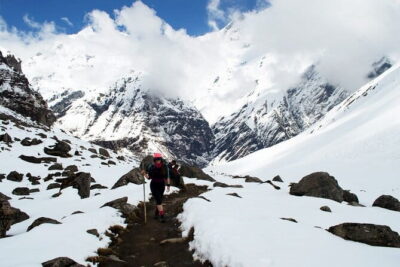
The trail includes bamboo and rhododendron forest, with several climbs along the way. This is where a guide’s experience becomes useful. You need to monitor your energy, drink regularly, and tell the guide if you feel unwell. The trek is organized, but no guide can replace your own judgment about your condition.
Machhapuchhre Base Camp and Annapurna Base Camp
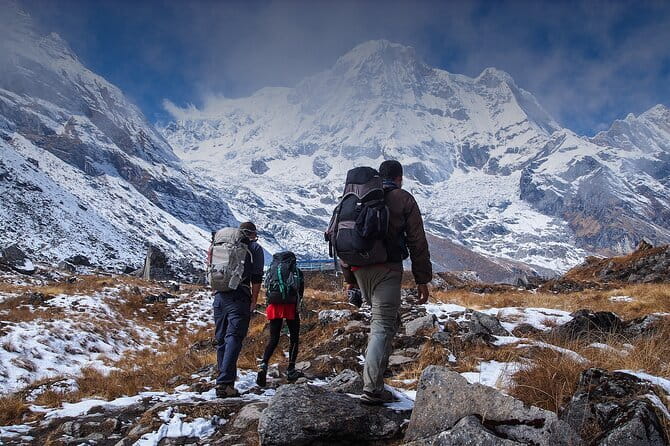
From Deurali, the route passes through a river bed and then climbs steadily to Machhapuchhre Base Camp. The climb is described as tiring, which is fair warning. You are farther into the high-altitude section now, and the path demands patience.
Machhapuchhre Base Camp is surrounded by mountains, including views toward Annapurna, Machhapuchhre, Gangapurna, and Himchuli. This is one of the most dramatic points of the trek because the peaks feel close on all sides rather than distant across a valley.
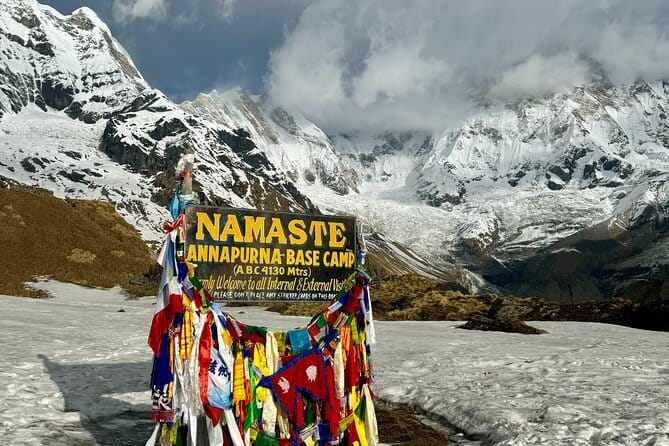
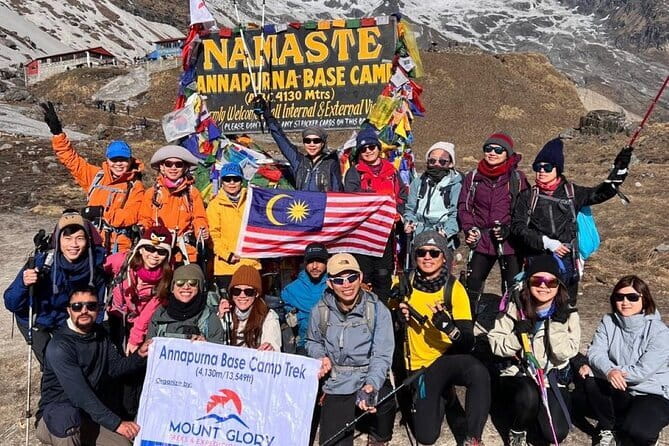
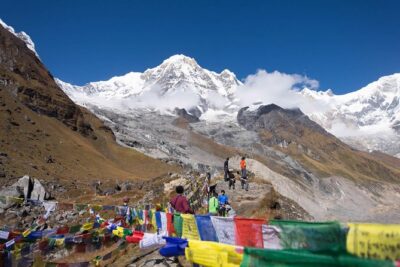
The next stage takes you to Annapurna Base Camp. The route is the main goal of the trip, but the approach matters just as much. By this point, you have passed villages, forests, bridges, steep steps, and high mountain paths. Base camp feels like a destination earned through many smaller sections.
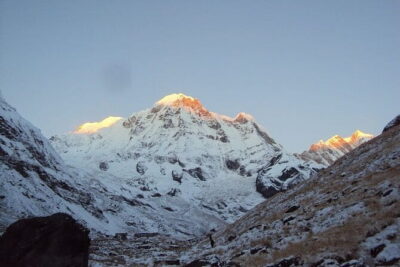
Day 10 begins with a sunrise view from Annapurna Base Camp. Afterward, you retrace the trail through Machhapuchhre Base Camp, Deurali, Himalaya, and Bamboo, continuing to Sinuwa. The return is mostly downhill and described as easier, though downhill trails can still be hard on knees and feet.
You should expect the same trail from a new angle on the way back. The return does not provide a completely different route, but it allows you to see sections you may have hurried through on the ascent.
Chhomrong, Jhinu Danda, and the hot springs
Day 11 brings you back to Chhomrong for lunch. The hillside village again provides views toward Annapurna and Machhapuchhre. After several days of high walking, this stop offers a familiar place to pause before the final section.
On Day 12, you continue to Jhinu Danda. The village is known here for natural hot-spring pools beside the Modi River, about a 20-minute walk from the hotel. The bath is optional, but it is an appealing way to ease tired legs after the long return from base camp.
Jhinu Danda also gives the trek a satisfying change of pace. You are no longer focused only on gaining height or reaching the next mountain lodge. The hot springs make the final mountain days feel like a reward rather than a simple retreat to the road.
Day 13 shifts fully back to road travel. You stop for about 30 minutes at Malekhu for lunch, a place known for fish and fish products. It is a short stop, but it breaks up the journey and gives you a local food reference point along the drive.
On Day 14, the return to Kathmandu includes a brief stop near Pashupatinath Temple for photographs. The stop lasts about five minutes, and temple admission is not included. Treat it as a quick roadside look rather than a full cultural visit. If you want substantial time at the temple, this schedule may not provide it.
How demanding is this trek?
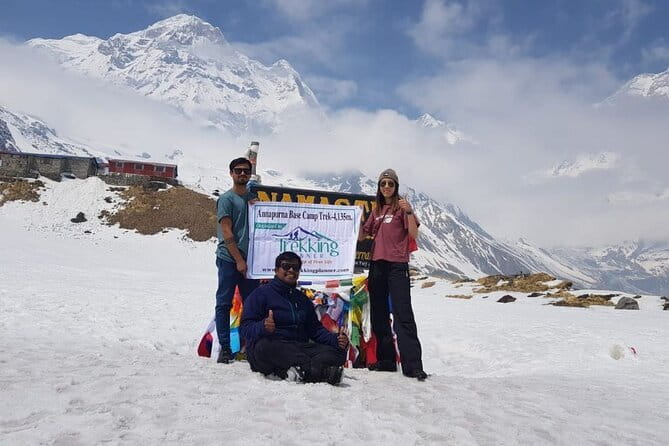
The trek is described as moderate and suited to active people. Daily walks generally last between 4 and 7 hours. That range hides plenty of variation: some sections involve forest paths, while others include steep stone steps, suspension bridges, river crossings, and long climbs.
The highest clearly stated viewpoint is Poon Hill at 3,210 meters. The route also reaches Machhapuchhre Base Camp and Annapurna Base Camp, so altitude is not a minor detail. You should be comfortable walking for several consecutive days and should take any signs of illness seriously.
The group limit helps. A maximum of 10 people makes it easier for the guide to keep track of the pace and give individual attention. It does not make the route easy, but it can make a challenging route feel more manageable.
Children must be accompanied by an adult. The experience requires a moderate level of physical fitness. I would choose it if you want a structured mountain challenge, not if you are looking for a relaxed sightseeing tour with occasional walks.
Transport, meals, and what to plan for
Airport pickup is provided at the start, and the tour includes round-trip shared transfers. The first airport ride is arranged in a private tourist vehicle, while the Kathmandu to Pokhara journey uses a tourist bus. These details matter because road time forms a noticeable part of the 14-day plan.
Most meals on the trail are included, which simplifies daily budgeting. You should still expect to pay for lunch and dinner in Kathmandu and Pokhara. The package also does not include the Pashupatinath admission fee.
The experience is offered with a mobile ticket and confirmation at booking. It can be canceled for a full refund up to 24 hours before the start time. A cancellation within 24 hours is not refunded, and poor weather can lead to a different date or a full refund.
Who should book this Annapurna trek?
I would recommend this trek to an active first-time Himalayan visitor who wants a guide and a clear plan. The small group, included meals, organized lodging, and airport pickup remove much of the administrative work.
It also suits you if you want more than a single mountain viewpoint. Poon Hill, Gurung villages, forest paths, Chhomrong, Machhapuchhre Base Camp, Annapurna Base Camp, and Jhinu’s hot springs create a varied trip.
I would hesitate if you dislike basic teahouse accommodation, long bus rides, steep steps, or repeated uphill walking. I would also think twice if you want a private departure, since the advertised format is a small shared group with up to 10 people.
Should you book it?
Book this Annapurna Base Camp trek if you want strong logistical support and a serious mountain experience at a price that includes most major costs. The best features are the small group, the guide support, the Poon Hill addition, and the inclusion of most meals and accommodation.
Before booking, make sure you are ready for 4 to 7 hours of walking per day and high-altitude conditions. Ask how porter support can be arranged if you prefer not to carry your full pack. If you accept basic lodges and long road transfers, this trip offers a practical route into the Annapurna mountains without forcing you to manage every detail yourself.
FAQ
How long is the Annapurna Base Camp Trek?
The trip lasts approximately 14 days, including arrival in Kathmandu, the road journey to Pokhara, the trek, the return drive, and the final stop near Pashupatinath Temple.
Where does the trek begin?
The experience begins with pickup at Tribhuvan International Airport in Kathmandu, Nepal. The walking section begins near Nayapool after a drive of about one hour from Pokhara.
How many people can join the group?
The group has a maximum of 10 participants.
Is airport pickup included?
Yes. An airport representative meets you at Tribhuvan International Airport, and a private tourist vehicle takes you to the hotel.
What meals are included?
The package includes 13 breakfasts, 10 lunches, and 10 dinners. Lunch and dinner in Kathmandu and Pokhara are not included.
What type of accommodation is provided?
Accommodation includes hotels or guesthouses in Kathmandu and Pokhara, plus teahouse accommodation during the trek.
How physically difficult is the trek?
The trek is described as moderate and suited to people with moderate physical fitness. You should expect to walk about 4 to 7 hours per day, with steep climbs, stone steps, and high-altitude sections.
Is Poon Hill part of the route?
Yes. The route includes an early hike to Poon Hill, which is 3,210 meters high. The walk to the viewpoint takes about 45 minutes.
Can I cancel for a refund?
You can receive a full refund if you cancel at least 24 hours before the experience starts. Cancellations within 24 hours are not refunded. If poor weather causes the experience to be canceled, you can receive a different date or a full refund.
Recently added around Kathmandu
- Ghorepani Poon Hill Trek★ 5.0 · 16 reviews
- Amazing 1 Day Trekking Experience in Kathmandu Nepal★ 5.0 · 24 reviews
- Private Manaslu Circuit Trek at Himalayas★ 5.0 · 3 reviews
- Ghorepani Poonhill Trek★ 5.0 · 5 reviews
- Upper Mustang Trekking★ 5.0 · 2 reviews
- Upper Mustang Trekking★ 3.0 · 2 reviews
- Upper Mustang Trekking★ 5.0 · 4 reviews
- Upper Mustang Trek★ 5.0 · 5 reviews
Annapurna Base Camp Treks, compared.
Trekking in Annapurna/Langtang/Everest/Upper Mustang regions
Read our review →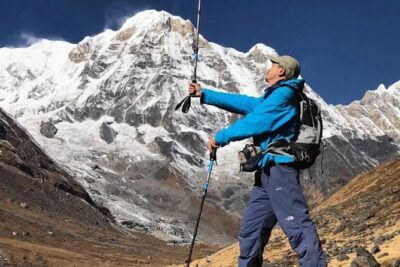
Kathmandu to Annapurna Base Camp (ABC) 5-Day Trek
Read our review →Browse the lists this tour appears in