
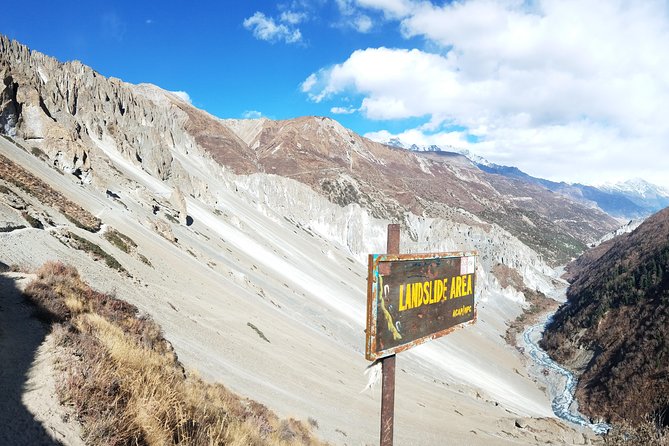
REVIEW · KATHMANDU
18 days Tilicho Lake and Thorungla Pass trek in Annapurna Region
A lake above the clouds changes the trek. This 18-day route links Tilicho Lake with the 5,416-meter Thorung La Pass, while adding village walks, mountain roads, a Jomsom flight, and time to adjust to thin air. I like the clear progression from Kathmandu to Manang, and I like that a private guide and porter support are included. The main catch is the demanding altitude, plus a few itinerary details that look unclear on paper.
At $2,028.67 per person, the price covers accommodation, meals, local transport, a guide, porter support, permits listed separately, and the Jomsom to Pokhara flight. That is a useful package for a long Himalayan trek, but you still need to budget for the Annapurna Conservation and TIMS permit, sleeping bag, bottled water, and drinks.
Key points before you book
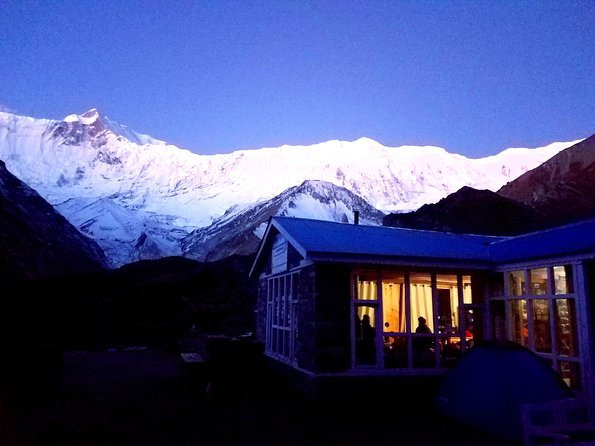
- Tilicho Lake at high altitude: The route reaches the lake on a dedicated day trip, with the itinerary listing the excursion at roughly 5,200 meters.
- Thorung La at 5,416 meters: The pass is the physical high point, followed by a long descent to Muktinath.
- A private 18-day arrangement: Only your group takes part, with a local guide and one porter for every two trekkers.
- Built-in acclimatization: A rest day in Manang comes before the route heads toward Khangsar and Tilicho Base Camp.
- Jomsom to Pokhara by air: The 20-minute flight saves a long return overland journey.
- Support and organization: The strongest praise centers on the company’s organization, food, accommodation, and porter support. Bhairam is specifically credited with keeping a 21-day Annapurna trip running smoothly.
Why Tilicho Lake and Thorung La make a strong pairing
Many Himalayan routes offer either a high lake or a famous pass. This one gives you both, and the contrast is part of its appeal. Tilicho Lake provides a quiet, high-altitude goal reached by a side route from Manang. Thorung La then gives the trek its great crossing day, with a summit at 5,416 meters.
The route also lets you see several sides of the Annapurna region. You begin with a long road journey through river gorges and villages, then move into walking stages between mountain settlements. The culture is not presented as a separate performance. It appears through the small villages, guest houses, meals, and daily rhythm of the route.
I especially like the private format. You are not tied to a large group’s walking speed, though the guide still needs to manage the route safely and sensibly. The included porter ratio, one porter for two trekkers, also reduces the load you personally carry.
There is a small paperwork issue to notice. The included items do not list the Annapurna Conservation and TIMS permit, and the exclusions put that cost at US$40. The package is not fully all-inclusive, so add that fee to your planning.
More Annapurna Treks in Kathmandu
- Annapurna Circuit Trek with Tilicho Lake
★ 5.0 · 368 reviews - Annapurna base camp trek 5 Days
★ 5.0 · 252 reviews - 14-Day Private Annapurna Base Camp Trek
★ 5.0 · 180 reviews
Days 1 and 2: Kathmandu to the road toward Jagat
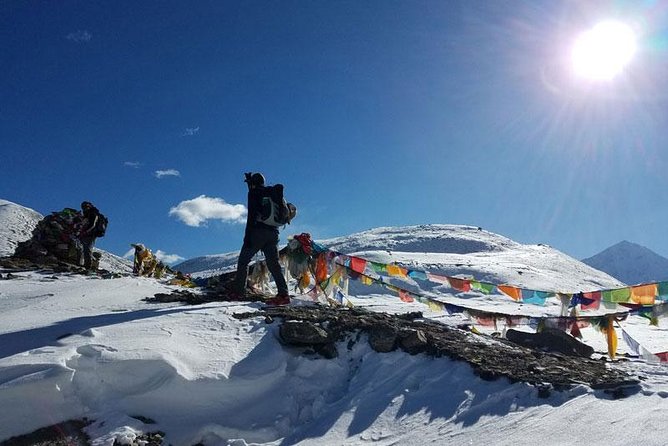
Day 1 is simple. You receive pickup assistance and transfer to the airport, then spend the night at a hotel. Since the tour begins and ends in Kathmandu, this first night gives the program a clear base before the long approach to the mountains.
Day 2 brings a substantial drive toward Jagat, listed as about 200 kilometers and seven to eight hours. The route follows the Prithvi Highway through river gorges and villages. The schedule also lists Besisahar and Chame Sadak, so the exact road sequence deserves confirmation before booking.
This is not a sightseeing day in the usual sense. It is a necessary approach day, and the road time may feel long after arriving in Nepal. Still, the changing scenery gives you an early look at how quickly the urban setting gives way to steep hills and mountain settlements. Breakfast, lunch, and dinner are included on the relevant trek days, with accommodation in a guest house.
Days 3 to 5: Tal, Danaque, and Chame
The next three walking days are listed as six to seven hours each. Day 3 takes you to Tal at 1,675 meters. Day 4 continues to Danaque at 2,210 meters. Day 5 is listed as a trek to Chame at 2,630 meters.
The written schedule has some repeated or mismatched place labels, so I would ask the operator to confirm the overnight stops and walking direction. The intended route is clear enough: you gradually gain height through villages toward Chame, but the labels should match the actual lodging plan.
This gradual rise matters. You are not thrown directly into the highest sections. At this stage, the value lies in building a walking routine, testing your boots, and learning how your body handles several consecutive days on foot.
Expect the days to feel active rather than rushed. Six or seven hours of walking leaves little room for casual sightseeing, yet guest house stops and village passages provide the human scale that makes this route more than a race to high points.
Days 6 to 8: Pisang and two nights around Manang
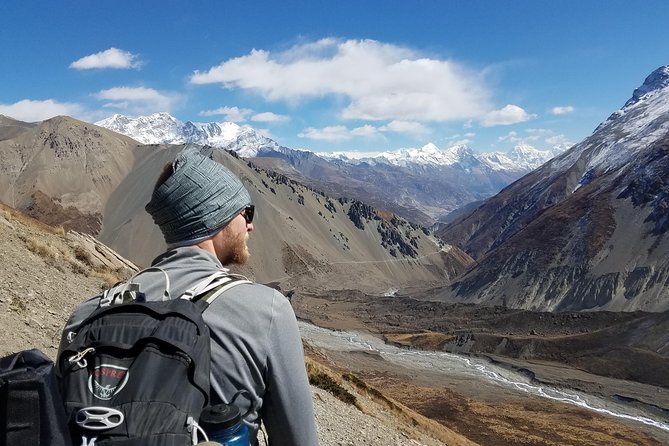
Day 6 takes you to Pisang at approximately 3,300 meters, with five to six hours of walking. Day 7 continues to Manang at about 3,500 meters, listed as a four-hour walk. These are important altitude days, even though the walking times are shorter than earlier stages.
Manang receives a full acclimatization day on Day 8. This is one of the smartest parts of the schedule. You are not simply walking higher each day and hoping for the best. You have time to rest before the route turns toward Khangsar, Tilicho Lake, and the pass.
The itinerary lists the rest day as 10 hours, but it is described as rest and acclimatization rather than a formal excursion. In practical terms, you should treat this as recovery time, not as another full walking stage. Your guide can help you understand how the day should be used.
Manang also marks a change in the route’s feel. The road approach and lower villages give way to a higher, more exposed setting. You will notice the altitude in the pace of the day, even when the distance seems manageable.
Same trailhead, a longer or shorter day out:
- Everest Base Camp Trek – 14 Days
★ 5.0 · 1,499 reviews - Everest Base Camp Trek
★ 5.0 · 842 reviews - Everest Base Camp Trekking
★ 5.0 · 485 reviews - Everest Base Camp Trekking – 13 Day
★ 5.0 · 365 reviews
Days 9 to 11: Khangsar, Tilicho Base Camp, and the lake
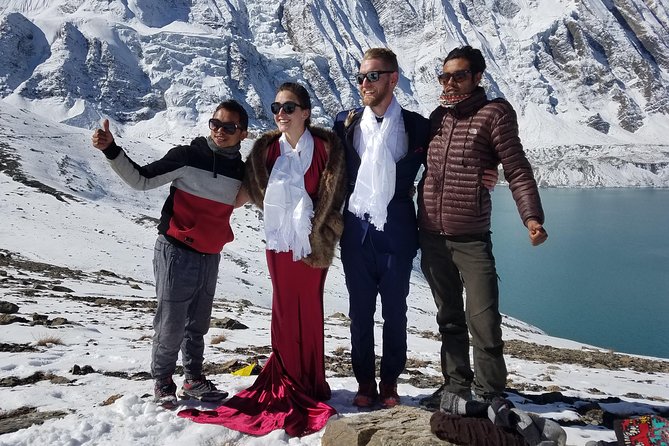
Day 9 heads to Khangsar Village at 3,700 meters, with about five hours of walking. This village is the gateway to the Tilicho side trip and gives you a clear sense that the trek is now moving into its serious high-altitude section.
Day 10 continues to Tilicho Base Camp at about 4,200 meters, listed as six hours. The base camp is more than a place to sleep. It is the staging point for the next day’s climb to the lake, so this overnight helps break the high route into manageable sections.
Day 11 is the Tilicho Lake day trip. The itinerary lists three hours and gives the elevation as 5,200 meters, while the overview gives the lake’s altitude as 4,919 meters. Those figures do not match, so I would ask for clarification. Either way, this is a very high outing and should be treated as one of the hardest parts of the trek.
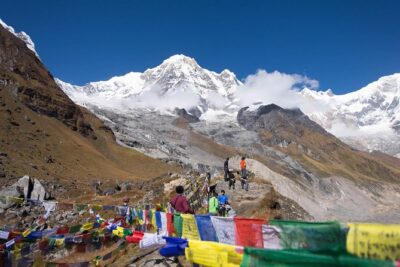
The lake is the emotional centerpiece for many people booking this route. It collects glacial melt from the Annapurna range, and the appeal is not only the elevation. You are making a dedicated effort to reach a remote body of water surrounded by high mountain views, rather than simply passing it during a normal circuit day.
The return from the lake is also important. The listed three-hour duration may refer to one part of the excursion or a simplified estimate, so confirm whether the timing is one way or the full day. You should be ready for a demanding outing at altitude, not a quick walk to a viewpoint.
Days 12 to 14: Yak Kharka and the Thorung La crossing
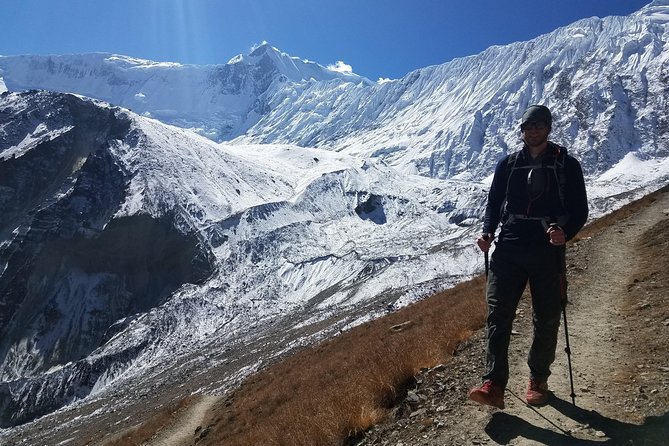
After Tilicho Lake, Day 12 takes you toward Yak Kharka at about 4,200 meters, with six hours of walking. Day 13 continues to Phedi at 4,450 meters or High Camp at 4,600 meters, again listed as six hours.
These nights are functional and strategic. You are positioning yourself for the pass, not stopping in places chosen for comfort or long cultural visits. The higher sleeping altitude can be difficult, which is why your earlier acclimatization day and steady ascent matter.
Day 14 is the major test: crossing Thorung La at 5,416 meters and descending to Muktinath at 3,800 meters. The schedule allows eight hours. This is a long day with a major climb followed by a substantial descent, and it deserves respect even for fit trekkers.
The reward is the sense of crossing from one side of the Annapurna route to another under your own power. Muktinath gives you a lower stopping point after the pass and marks the end of the most demanding high section.
The route uses both Thorung La and Thorong La in its wording. They refer to the same pass, but the spelling changes between sections. That is harmless, though the schedule’s inconsistent names and elevations make a pre-trip confirmation worthwhile.
Days 15 to 18: Muktinath, Jomsom, Pokhara, and Kathmandu
Day 15 includes a flight from Jomsom to Pokhara, listed as about 20 minutes. This is a valuable inclusion. After the pass and the descent to Muktinath, flying avoids a long overland return and gives the trip a cleaner finish.
The itinerary labels this section as a Jomsom and Muktinath trek, but it does not clearly describe the transfer from Muktinath to Jomsom. Ask the operator how that connection works and how much time you should allow.
Day 16 lists a drive from Pokhara to Kathmandu of about 200 kilometers and six hours. Day 17 repeats a Kathmandu drive of the same distance and duration, even though the tour is already described as being in Kathmandu. This is another point to clarify. It may be a duplicated entry, or the operator may have intended a different transfer.
Day 18 is departure from Tribhuvan International Airport, with airport transfer assistance included. The tour ends back at the Kathmandu meeting point, and pickup and drop-off are part of the package.
What the $2,028.67 price covers
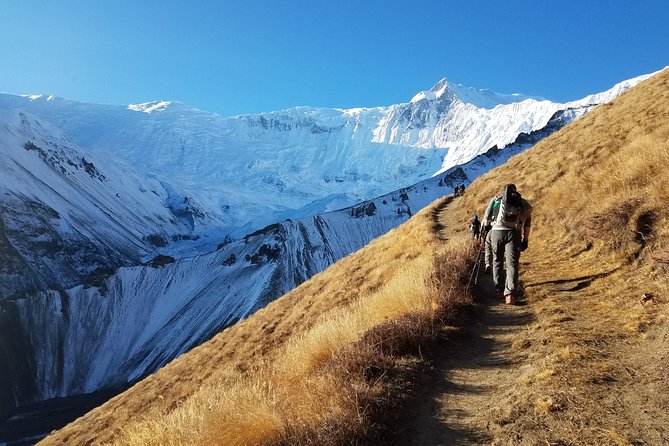
For an 18-day private trek, the price has real value because several costly and practical pieces are bundled together. You receive accommodation as listed, a local guide, porter support, private vehicle transport, hotel pickup and drop-off, the Jomsom to Pokhara flight, and 17 breakfasts.
You also receive 14 lunches and 14 dinners. That leaves some meals outside the stated coverage, likely around the arrival, departure, and transfer portions, but you should confirm the exact meal count.
The strongest value is the logistics. Arranging a high-altitude route with several villages, a flight, road transfers, and porters on your own would take time and local coordination. The private format may also suit you if you want flexibility without paying for a very large group operation.
Still, the extra costs are not trivial. You must provide your own trekking equipment, including a sleeping bag, bottled water, alcoholic drinks, and the US$40 conservation and TIMS permit. Those costs should be added before you decide if the package fits your budget.
Guides, porters, and the human side of the trek
The company’s organization, accommodation, food, and trekking support receive the clearest praise. One particularly positive account credits Bhairam with organizing a 21-day Annapurna journey and quietly taking care of the group in the background.
That detail matters because a trek like this depends on hundreds of small decisions. Road connections, guest house arrangements, food, porter loads, and timing all become more important as you gain altitude. You should still ask who your guide will be for this specific departure, since Bhairam may not be assigned to every group.
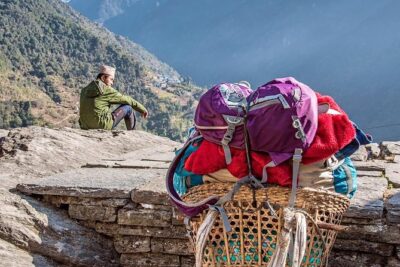
The porter arrangement is one porter for two trekkers. Pack thoughtfully and respect the stated ratio. You will likely carry a daypack, while the porter handles the larger shared load, but the package does not say what weight limit applies.
The tour is private, with only your group participating. That can make the experience more personal and may allow a better match between your pace and the guide’s decisions. It also means the quality of your guide and group preparation matters more than it would in a large organized departure.
Who should book this trek?
This route suits you if you want a serious Himalayan walk with two major goals, Tilicho Lake and Thorung La Pass. You need moderate physical fitness, a minimum age of 16, and the ability to manage repeated six to eight-hour walking days at high altitude.
It is not a casual mountain holiday. The route reaches above 5,000 meters, includes a long pass-crossing day, and uses guest house accommodation rather than a standard hotel setup throughout the trek. You should be comfortable with basic facilities and changing daily conditions.
The schedule is best for someone who values support and route planning. A local guide, porter arrangement, private transport, and included flight remove much of the practical work. If you prefer independent travel with complete control over every overnight stop, this package may feel too structured.
Before paying, ask for a corrected day-by-day schedule. Confirm the actual Day 2 transport endpoint, the overnight stops between Chame and Manang, the Tilicho altitude and excursion timing, the Muktinath to Jomsom transfer, and the repeated Kathmandu drive on Days 16 and 17.
Should you book the Tilicho Lake and Thorung La trek?
I would book this if your main goal is a supported, private crossing of two of the Annapurna region’s biggest high points. The combination of Tilicho Lake, a built-in Manang acclimatization day, porter assistance, and the Jomsom flight gives the trip a strong practical shape.
I would not book it without first clearing up the itinerary inconsistencies. They do not erase the appeal of the route, but precise timings and overnight locations matter at altitude. If Nepal Hiking Pvt. Ltd. confirms those details and you are prepared for the physical demands, the $2,028.67 price is reasonable for the transport, staff, meals, accommodation, and flight included.
Free cancellation is available up to 24 hours before the start time. Bad weather or an insufficient minimum number of participants can also lead to a date change or full refund, according to the stated terms.
FAQ
How long is the Tilicho Lake and Thorung La trek?
The experience is scheduled for approximately 18 days, beginning and ending in Kathmandu.
What is the highest point on the route?
Thorung La is listed as the highest point at 5,416 meters above sea level.
How high is Tilicho Lake?
The overview gives Tilicho Lake’s altitude as 4,919 meters. The Day 11 itinerary lists the lake excursion at 5,200 meters, so you should confirm the exact figure with the provider.
Is this a private tour?
Yes. Only your group participates in the activity.
What transport is included?
The package includes hotel pickup and drop-off, private vehicle transport, and a flight from Jomsom to Pokhara. The flight is listed as approximately 20 minutes.
Are meals included?
Yes. The package includes 17 breakfasts, 14 lunches, and 14 dinners.
Are permits included in the price?
The Annapurna Conservation and TIMS permit is listed as an additional cost of US$40. All other taxes, fees, and handling charges are listed as included.
What equipment must I bring or pay for separately?
Trekking equipment, including a sleeping bag, is not included. Bottled water and alcoholic drinks are also excluded.
Recently added around Kathmandu
- Ghorepani Poon Hill Trek★ 5.0 · 16 reviews
- Private Manaslu Circuit Trek at Himalayas★ 5.0 · 3 reviews
- Amazing 1 Day Trekking Experience in Kathmandu Nepal★ 5.0 · 24 reviews
- Ghorepani Poonhill Trek★ 5.0 · 5 reviews
- Upper Mustang Trekking★ 5.0 · 2 reviews
- Upper Mustang Trekking★ 3.0 · 2 reviews
- Upper Mustang Trekking★ 5.0 · 4 reviews
- Upper Mustang Trek★ 5.0 · 5 reviews
Annapurna Base Camp Treks, compared.
Trekking in Annapurna/Langtang/Everest/Upper Mustang regions
Read our review →
Kathmandu to Annapurna Base Camp (ABC) 5-Day Trek
Read our review →Browse the lists this tour appears in