
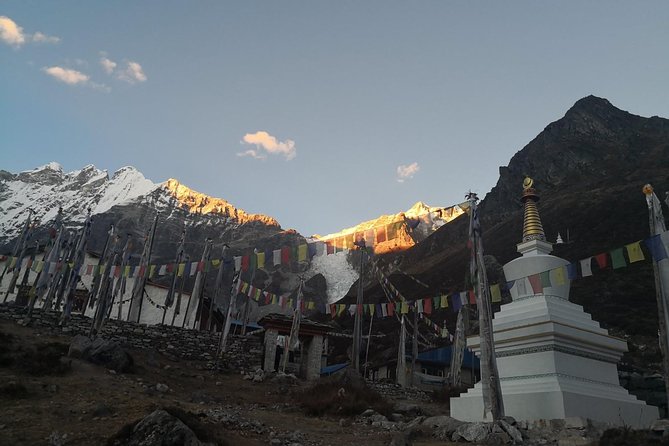
REVIEW · KATHMANDU
14 Days Annapurna Base Camp Trekking | Best trek for visit Nepal 2020
The mountains arrive one hard step at a time. This 14-day Annapurna Base Camp trek combines Kathmandu’s major sights, a scenic overland trip to Pokhara, and a demanding but rewarding walk through the Annapurna Conservation Area. I especially like the sunrise at Poon Hill and the recovery stop at Jhinu’s natural hot springs.
I also like the personal setup. This is a private trip for your group, with airport pickup, an English-speaking guide, private transport during key transfers, sleeping bags, down jackets, and a first aid kit included. The main caution is physical: several days involve long climbs, stone staircases, and steep descents, so moderate fitness is not just a polite suggestion.
The highlights worth knowing before you book
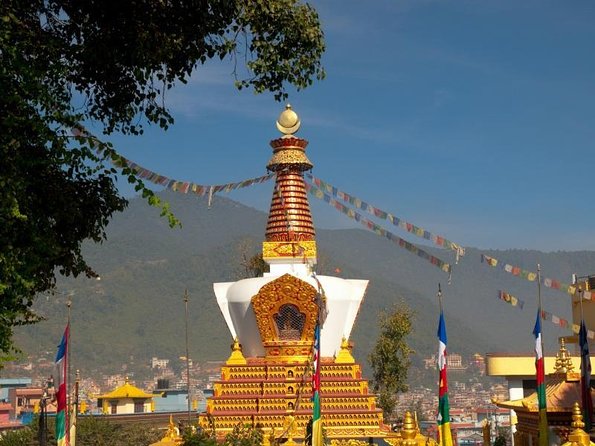
- Poon Hill sunrise adds a second major viewpoint to the trek, with views toward the Annapurna and Dhaulagiri ranges.
- Annapurna Base Camp reaches 4,130 meters, according to the itinerary’s stated route context, so the rising altitude makes each walking day more demanding.
- Jhinu hot springs provide a welcome finish to the hard trekking section, especially after repeated climbs and descents.
- The route passes through Gurung and Magar communities, including Ulleri, Ghorepani, Tadapani, Chhomrong, and Sinuwa.
- The $871 price covers important practical support, including the guide, permits and documents arranged by the company, transport, sleeping bags, and down jackets.
- The trip is private rather than a mixed group departure, which gives your party more control over pace and daily arrangements.
Why this Annapurna route works so well
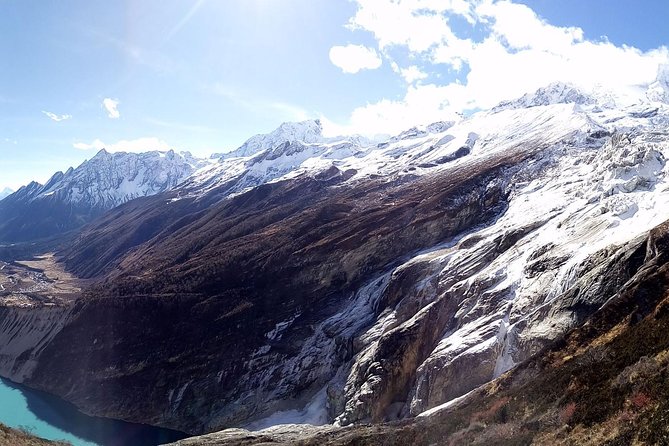
The appeal here is variety. You do not spend two weeks walking through the same type of scenery. The trip begins with temples and city streets in Kathmandu, shifts to lakeside Pokhara, then moves into forest, farming villages, alpine scrub, and high mountain viewpoints.
The route also includes Poon Hill before reaching Annapurna Base Camp. That matters because you get an early taste of the big Himalayan views before the trek reaches its highest point. Poon Hill is not a minor warm-up. The predawn climb and sunrise can be one of the most memorable parts of the journey.
You should also understand the pace. The itinerary includes several six-hour trekking days, with the longest walking days listed at roughly seven hours. Those times do not make the route an extreme expedition, but stone stairs and uneven trails can make six hours feel much longer than a flat city walk.
This is best for someone who wants a supported mountain trip without arranging every hotel, vehicle, permit, and guide independently. It is not the right choice if you want a relaxed holiday with only short walks.
More Annapurna Treks in Kathmandu
- Annapurna Circuit Trek with Tilicho Lake
★ 5.0 · 368 reviews - Annapurna base camp trek 5 Days
★ 5.0 · 252 reviews - 14-Day Private Annapurna Base Camp Trek
★ 5.0 · 180 reviews
Kathmandu gives you temples before trails
Your first day starts at Tribhuvan International Airport, where a company representative meets you and takes you to your hotel. The schedule leaves room for a short walk in Thamel, a useful place to recover from the flight and get your first feel for Kathmandu.
A welcome dinner is planned for the first evening. This gives you a chance to meet the company representatives before the trek begins, though dinner is not listed among the formal included meals, so confirm the details before departure.
The second day uses a private vehicle for sightseeing around the Kathmandu Valley. The planned stops include Pashupatinath, Swayambhunath, and Boudhanath. These are among the valley’s best-known religious and cultural sites, and the private vehicle matters because traffic in Kathmandu can make short distances surprisingly slow.
The trip description also highlights Kathmandu Durbar Square as a major UNESCO World Heritage site, but the detailed sightseeing schedule names Pashupatinath, Swayambhunath, and Boudhanath. If Durbar Square is important to you, ask the company if it can be added or substituted.
That same day, the company arranges the permits and documents needed for the trek. This is one of the quiet benefits of booking an organized route. You can focus on the walk rather than tracking paperwork.
The long road from Kathmandu to Pokhara
On day three, a tourist bus takes you along the Prithvi Highway to Pokhara. The journey covers about 200 kilometers and takes roughly seven hours. Expect a full travel day, not a quick transfer.
The road follows green hills and rushing rivers, with mountain views appearing when conditions allow. The scenery is worthwhile, but the trip can be tiring, so keep the evening simple after arrival.
Pokhara gives you a pleasant change of pace. Phewa Lake, Davis Falls, Mahendra Cave, and Bat Cave are listed as possible sights. The city is also the gateway for many treks in the Annapurna region. You spend the night there before the walking begins.
The next morning, private transport takes you to Nayapul on a winding road. Nayapul is the trailhead area for this route, and the first walking section goes through Birethanti and Tikhedhunga before reaching Ulleri.
Ulleri and Ghorepani bring the first serious climbs
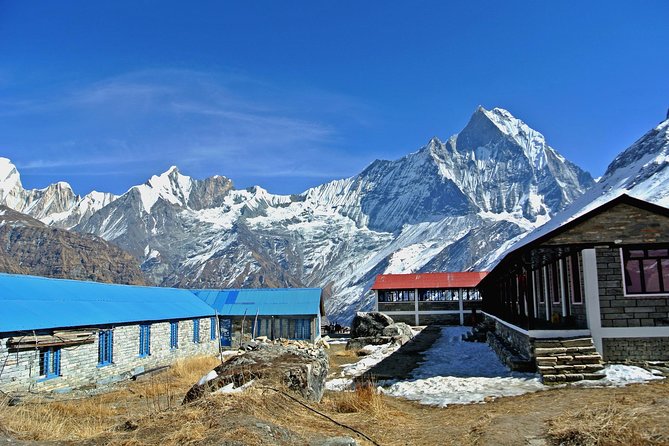
The walk to Ulleri takes about four hours. After crossing a suspension bridge, you begin climbing a long stone staircase. This is an early test of your legs, but it also introduces the rhythm of the trek: steady movement, frequent pauses, and a route shaped by mountain villages rather than paved roads.
Ulleri is associated with Magar culture. The village setting gives the route a human scale, since you are not simply walking toward a distant peak. You are passing through communities where farming, lodges, and local life remain part of the journey.
Day five continues toward Ghorepani, with about six hours of walking. Banthanti is planned as a lunch stop, followed by more trail toward Ghorepani, another Magar village.
Ghorepani is important for two reasons. It is a useful overnight stop before the Poon Hill sunrise, and it offers broad views toward the Annapurna and Dhaulagiri ranges. The altitude is rising, but the route still passes through wooded sections and settled areas.
Same trailhead, a longer or shorter day out:
- Everest Base Camp Trek – 14 Days
★ 5.0 · 1,499 reviews - Everest Base Camp Trek
★ 5.0 · 842 reviews - Everest Base Camp Trekking
★ 5.0 · 485 reviews - Everest Base Camp Trekking – 13 Day
★ 5.0 · 365 reviews
Poon Hill sunrise is worth the early alarm
Day six begins before breakfast with the climb to Poon Hill. The early start is not optional if you want the sunrise experience. Afterward, you descend to Ghorepani for breakfast, then continue toward Tadapani.
Poon Hill is often described as one of the finest viewpoints in the region, and the attraction is easy to understand. The sunrise lights the Himalayan peaks while you stand at a viewpoint reached on foot, not by road or cable car. Weather controls how much you see, so keep your expectations sensible, but the timing gives you the best chance at clear morning views.
Tadapani is a Gurung village with views toward Annapurna South and Hiunchuli. The itinerary also mentions homestay opportunities for learning about Gurung culture. Ask the company what is actually available for your departure, since a standard lodge night and a homestay are not always the same thing.
This day combines an early climb, a descent, breakfast, and several more hours on the trail. You may find it more tiring than the stated schedule suggests.
Chhomrong and the forested Modi Valley
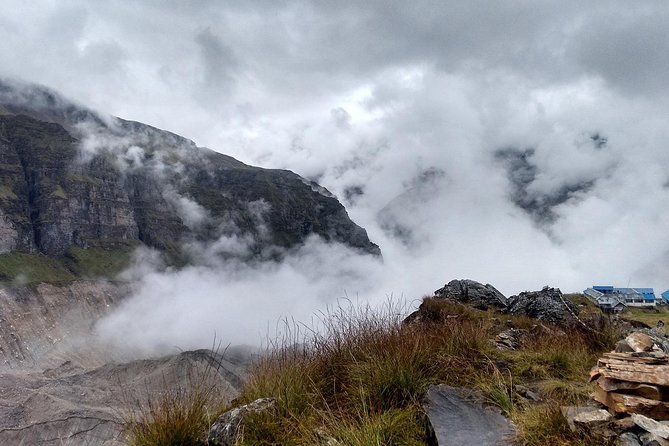
From Tadapani, the route drops to Kimrong Khola and then climbs through the forested Modi Valley. You pass Chulie and Gurjung, stop for lunch at Talung, and climb stairways to Chhomrong.
Chhomrong is one of the larger settlements on the route and is known in the itinerary for agricultural production. It is also a useful stage before the trail turns more remote and alpine. The village offers a chance to rest, eat, and prepare for the higher section.
Day eight crosses the Chhomrong Khola and climbs to Sinuwa. From there, the trail passes through rhododendron and oak forest before dropping to Bamboo. After lunch, you climb again toward Himalaya.
The repeated up and down is the main challenge here. You should not assume that reaching a higher village means every step afterward is uphill. Mountain trails often lose height only to make you regain it later. Himalaya is a small group of teahouses and lodges, and it is the last listed stop before Annapurna Base Camp.
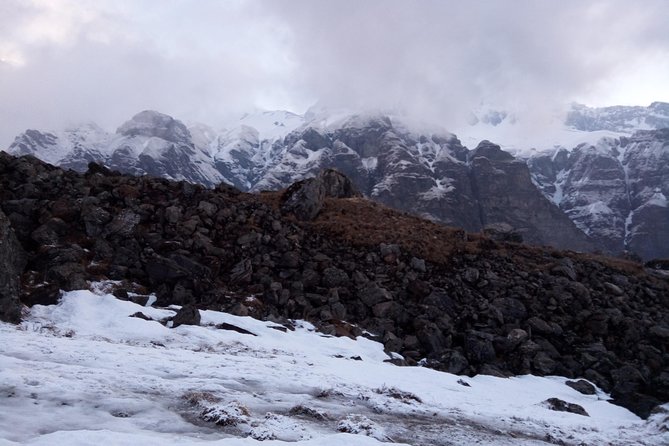
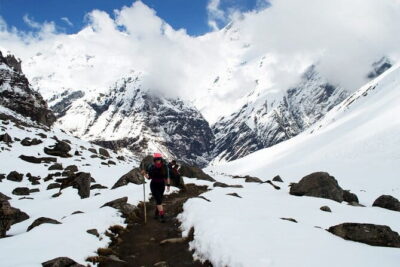
The trail becomes more rugged in places, and snow may appear depending on conditions. This is also where the scenery changes from thick forest toward alpine scrub and open mountain terrain.
Annapurna Base Camp is the main reward
Day nine is the central goal of the trip. As you gain height, trees thin out and give way to smaller bushes and alpine scrub. The route passes Hinku Cave before reaching Machhapuchhre Base Camp.
From Machhapuchhre Base Camp, you can look toward Machhapuchhre, listed at 6,993 meters. The final approach to Annapurna Base Camp takes several more hours, depending on conditions and pace.
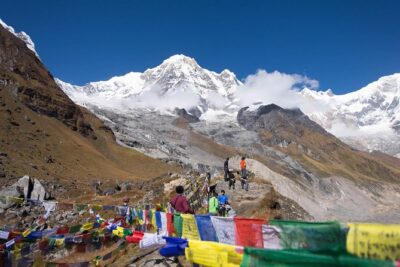
At Annapurna Base Camp, the surrounding peaks create the feeling of a natural mountain amphitheater. The itinerary highlights views toward Annapurna, Dhaulagiri, and Manaslu. You spend the night at base camp, which makes the achievement more than a quick photograph before turning around.
The practical point is that the summit day is not just about distance. The altitude, cold, uneven ground, and accumulated fatigue all matter. Listen to your guide, keep your pace steady, and do not treat the final approach as a race.
The descent is easier on the map than on your knees
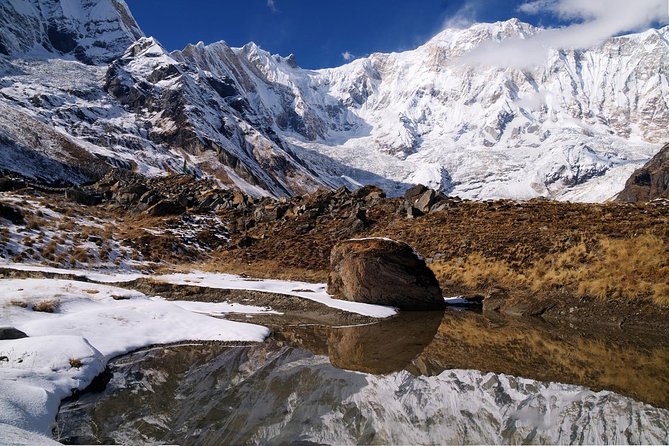
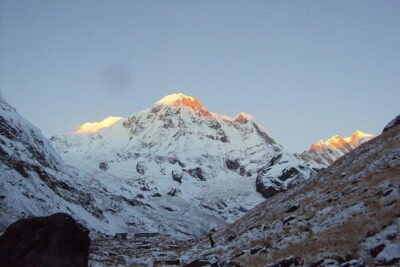
After a morning view of sunlight on the mountains, you leave base camp and descend to Bamboo. The itinerary gives this day about six hours, mostly downhill.
Downhill walking sounds gentle, but it can be hard on tired knees. There is plenty of down climbing, and uneven stone steps require care. The reward is a return to thicker vegetation and more familiar trail conditions.
Day eleven continues from Bamboo toward Jhinu Danda. The route climbs to Khuldighar, passes an experimental sheep farm, drops through rhododendron areas to Sinuwa, and then climbs steeply to Jhinu.
Jhinu’s natural hot springs are a fine choice for this point in the itinerary. They give your legs a chance to relax after several demanding days, and the stop adds something different from mountain views and village lodges. Bring a practical change of clothing and keep your expectations simple. The value is recovery, not luxury.
Returning to Pokhara and Kathmandu
Day twelve is the final trekking day. You descend toward Birethanti, cross the river, stop for lunch, and continue to Nayapul. A company representative meets you there and drives you back to your Pokhara hotel.
The walking time is listed at about seven hours, so this is not merely a short exit from the trail. You may be ready for a proper bed and an easy evening.
The next day includes more time around Pokhara, with Phewa Lake and the World Peace Pagoda named as key sights. You then return to Kathmandu by road, with the drive taking about six hours.
This final highway journey can be tiring, but it gives you one more look at Nepal’s hills and river valleys. Back in Kathmandu, you have time to rest or shop for souvenirs in Thamel before the airport transfer the following day.
What the $871 price really covers
At $871 per person, the value depends on how much support you would otherwise arrange yourself. The package includes private transportation, taxes and fees, an English-speaking guide with expenses covered, a first aid kit, sleeping bags, and down jackets.
The company also handles the trek permits and documents. Those inclusions reduce the small but annoying costs that can build up on a mountain trip.
The listed meal inclusions are three breakfasts and eleven lunches. Dinner is not listed, and the itinerary’s overnight stops suggest that you should confirm exactly which meals are covered at each lodge. Travel insurance, the Nepal visa, and tips for guides, porters, and drivers are also your responsibility.
The price is strongest for a private group that wants a guide and equipment support without paying for a fully luxury arrangement. Lodging and meals should be clarified in writing before you pay, especially because the itinerary describes breakfasts and lunches more broadly than the formal inclusion list does.
The human side of the service
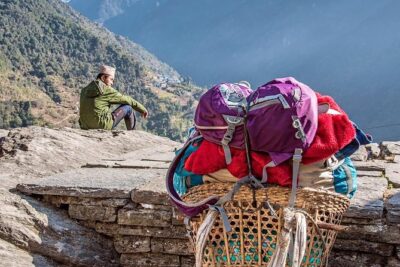
The most consistent praise is directed at the staff, guides, and porters. Several named team members appear in the feedback, including Saran, Niran, Lal, Nilan, Tika, Sam, and porter Bheem.
Saran is especially noted for being flexible when plans changed. That matters in Nepal, where road journeys, weather, and walking pace can affect a carefully planned schedule. Guides are also praised for arranging meals and lodging, offering encouragement, and helping people feel safe on the trail.
You should still ask who your guide will be before departure. The company uses different staff members, and your actual experience will depend heavily on that person’s communication, judgment, and mountain experience.
Who should book this trek?
Book it if you want a private, guided introduction to the Annapurna region with Kathmandu sightseeing, Pokhara, Poon Hill, Annapurna Base Camp, and Jhinu hot springs in one trip.
It suits people with moderate physical fitness who can handle repeated climbs, steep stairways, long downhill sections, and six to seven hours of walking. It is also a good fit if you value support from guides and porters more than traveling independently.
Think twice if you dislike long road transfers, basic mountain accommodation, early starts, or changing trail conditions. Confirm the meal plan, lodging standard, guide assignment, and exact sightseeing stops before booking.
Should you book the 14-day Annapurna Base Camp trek?
I would recommend it for an active first visit to Nepal, especially if you want more than a single high-altitude objective. Poon Hill adds a strong viewpoint, the villages add cultural interest, and Jhinu gives your tired legs a sensible reward.
The main reason to book is the balance of support and variety at $871. The main reason to pause is the demanding schedule and a few details that need clarification, particularly meals and the exact Kathmandu sightseeing plan. If you are comfortable with those conditions, this is a strong-value route with excellent mountain scenery and a service team known for personal care.
FAQ
How long is the Annapurna Base Camp experience?
The trip lasts approximately 14 days, including arrival and departure transfers, Kathmandu sightseeing, travel to and from Pokhara, and the trek.
Where does the tour start?
The tour starts at Tribhuvan International Airport in Kathmandu, Nepal. The listed start time is 7:45 am.
Is airport pickup included?
Yes. A company representative meets you at Tribhuvan International Airport and transfers you to your hotel.
Is this a private tour?
Yes. Only your group participates in the activity.
What level of fitness is required?
A moderate level of physical fitness is required. The route includes stone staircases, steep climbs, long descents, and walking days of roughly four to seven hours.
What equipment is provided?
A first aid kit, complimentary sleeping bags, and down jackets are included.
Are meals included?
The formal inclusions list three breakfasts and eleven lunches. Dinner is not listed, so confirm the full meal arrangement before booking.
What is not included in the price?
Travel insurance, the Nepal visa fee, and tips for guides, porters, and drivers are not included.
Recently added around Kathmandu
- Ghorepani Poon Hill Trek★ 5.0 · 16 reviews
- Private Manaslu Circuit Trek at Himalayas★ 5.0 · 3 reviews
- Amazing 1 Day Trekking Experience in Kathmandu Nepal★ 5.0 · 24 reviews
- Ghorepani Poonhill Trek★ 5.0 · 5 reviews
- Upper Mustang Trekking★ 5.0 · 2 reviews
- Upper Mustang Trekking★ 3.0 · 2 reviews
- Upper Mustang Trekking★ 5.0 · 4 reviews
- Upper Mustang Trek★ 5.0 · 5 reviews
Annapurna Base Camp Treks, compared.

Trekking in Annapurna/Langtang/Everest/Upper Mustang regions
Read our review →
Kathmandu to Annapurna Base Camp (ABC) 5-Day Trek
Read our review →Browse the lists this tour appears in