
REVIEW · KATHMANDU
13 Days Annapurna Base Camp Trek
The Himalayas reward steady walkers. This 13-day Annapurna Base Camp trek combines snow-covered peaks, village life, family-run tea houses, and the support of an English-speaking guide and porter. I especially like the small-group format, with one porter for every two people, and the fact that transport, permits, meals, Kathmandu stays, and Pokhara stays are built into the price. The main caution is simple: this is a real mountain trek, not a sightseeing holiday, and the required physical fitness should be taken seriously.
I also like the human side of the trip. Guides and porters named on past departures include Deepak, Sheepy, Ram, Shambu, Shiva, Krishna, Santosh, Jit, Kabiraj, and Bassu. Their roles went beyond walking at the front: good pacing, patience, local contacts, and a sense of humor made a difference when weather and tired legs complicated the day. The tradeoff is that tea-house accommodation is basic, hot showers are excluded, and conditions can change because of snow, landslides, road closures, or illness.
Key points at a glance
- A 13-day route to Annapurna Base Camp: You get time for Kathmandu, Pokhara, the trek itself, and a proper return rather than racing through the mountains.
- Eight nights in local tea houses: These are normal lodges run by Nepali families, offering a direct connection with village life but limited comforts.
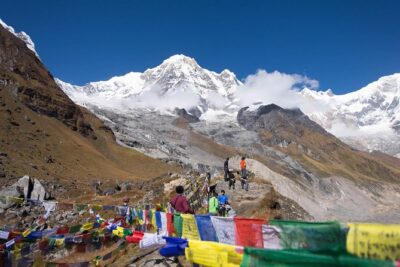
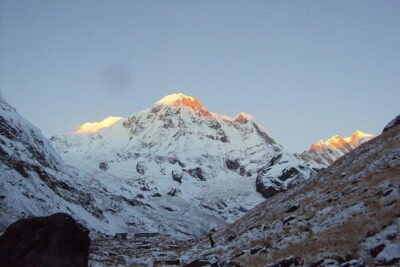
- Major Himalayan views: Annapurna I, Annapurna South, Annapurna II, Annapurna III, Hiunchuli, Fang, Gangapurna, and Machhapuchhre are among the peaks named for the route.
- Guide and porter support included: One English-speaking guide accompanies the group, with one porter for every two people.
- Meals and permits are covered: Breakfast, lunch, and dinner during the trek, plus the Annapurna Conservation Permit and TIMS registration, are included.
- A practical starting point in Pokhara: Transport takes you from Kathmandu to Pokhara, then to Nayapul, with the trek ending at Phedi before private transport returns you to Pokhara.
Why Annapurna Base Camp is such a rewarding trek
Annapurna Base Camp works well for people who want a serious Himalayan experience without committing to a very long expedition. The route is described as moderate and suited to people with medium physical fitness, but that label should not lull you into complacency. You will walk for several days at altitude, handle changing weather, and sleep in simple mountain lodges.
The reward is variety. You are not looking at snow peaks from one distant viewpoint for the whole trip. The route moves through green countryside, villages, forests, and higher mountain terrain before reaching the base camp area. The change in scenery gives the trek a natural rhythm, while village life adds something a photograph cannot.
I particularly like that the experience includes time in Kathmandu and Pokhara. Those city stays provide a softer landing before and after the walking days. You also get airport transfers, two nights at Hotel Thamel in Kathmandu with bed and breakfast, and two nights at Splendid View in Pokhara with bed and breakfast.
More Annapurna Treks in Kathmandu
- Annapurna Circuit Trek with Tilicho Lake
★ 5.0 · 368 reviews - Annapurna base camp trek 5 Days
★ 5.0 · 252 reviews - 14-Day Private Annapurna Base Camp Trek
★ 5.0 · 180 reviews
Days 1 and 2: Kathmandu, arrival, and preparation
The trip begins with airport pickup and a transfer to Hotel Thamel. Two nights in Kathmandu are included, with breakfast at the three-star hotel. The start time for the organized meeting is listed as 7:15 am, so you should plan to be ready early.
These first days matter because a trek is easier when you are not still solving basic problems on the morning of departure. You can organize personal equipment, confirm your documents, and meet the guide team. The company also asks for three passport-size photographs for permits and a hard copy of your itinerary at arrival.
Kathmandu is also your first taste of Nepal beyond the trail. The package does not include lunch or dinner here, so you have room to choose your own meals and keep spending under control. Your Nepal entry visa is separate and can be obtained on arrival at Tribhuwan International Airport, with two passport-size photos required for that process.
The included farewell dinner with cultural dance usually belongs near the end of the trip, but it is worth thinking of the Kathmandu stays as bookends. You begin in the capital, leave for the mountains, then return with a better sense of what you have just walked through.
Day 3: The road to Pokhara and the trailhead
Transport from Kathmandu to Pokhara is provided by tourist bus. From Pokhara, the trek begins at Nayapul using private transport. At the other end, you finish at Phedi and return to Pokhara by private vehicle.
The road journey is part of the practical reality of this trip. It connects Nepal’s capital with the trekking area without requiring you to arrange separate transport. It can also be a long day, and road conditions may affect timing. The provider specifically notes that landslides, road blockages, floods, political unrest, and other unavoidable problems can force itinerary changes.
Nayapul marks the shift from road travel to walking. From here, your attention turns to footpaths, villages, rivers, changing vegetation, and the steady work of gaining height. The guide and porter arrangement is valuable at this point because you can focus on walking rather than managing every logistical detail yourself.
The middle trekking days: villages, green scenery, and family tea houses
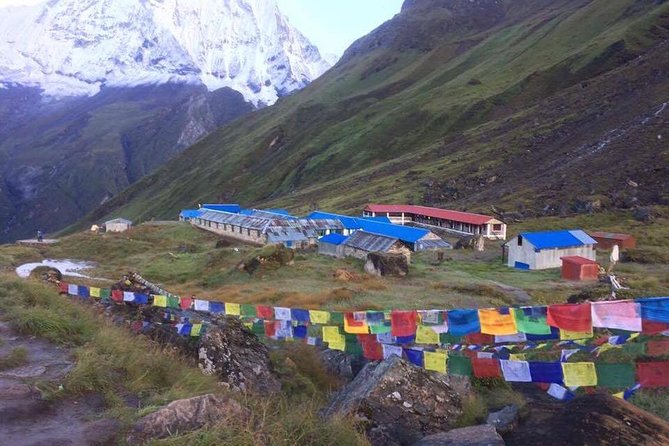
The package includes eight days of accommodation during the trek in normal lodges or tea houses run by Nepali families. That wording tells you what to expect: clean and serviceable places rather than hotels with polished facilities.
The tea houses are one of the most meaningful parts of the experience. You are staying in the communities along the route, eating meals prepared for walkers, and seeing how people live in mountain villages. You should also be ready for shared or simple facilities, limited hot water, and a quieter standard of comfort. Hot showers are specifically excluded, so budget separately if you want one when available.
Breakfast, lunch, and dinner are included throughout the trek, with the package describing the meals as main-course food. Reviews of the food were positive, but you should keep expectations sensible. The point is filling mountain fare, not a restaurant tour. Chocolate, desserts, alcoholic drinks, and nonalcoholic drinks are not included, so small treats and beverages become personal expenses.
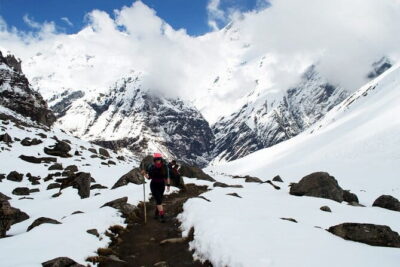
This part of the trek is where pacing matters. One past departure with guide Ram was described as easier during the first two days, giving the group time to adjust to altitude and walking. Later days became harder, with snow and heavy rain adding to the challenge. That pattern is useful to keep in mind even if your exact daily schedule differs.
Same trailhead, a longer or shorter day out:
- Everest Base Camp Trek – 14 Days
★ 5.0 · 1,499 reviews - Everest Base Camp Trek
★ 5.0 · 842 reviews - Everest Base Camp Trekking
★ 5.0 · 485 reviews - Everest Base Camp Trekking – 13 Day
★ 5.0 · 365 reviews
Reaching Annapurna Base Camp and the mountain views
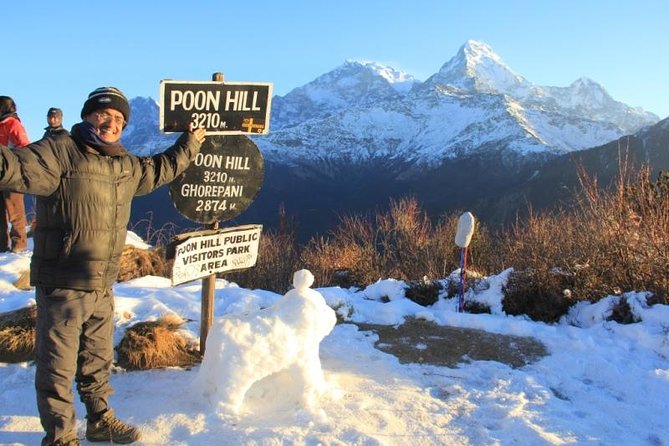
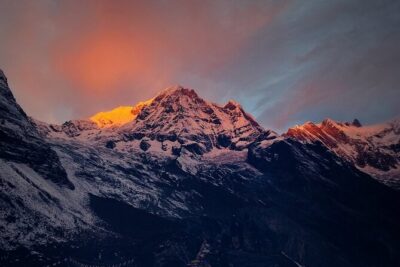
The high point is Annapurna Base Camp, where the surrounding peaks make the effort worthwhile. The named mountains include Annapurna I, Annapurna South, Annapurna II, Annapurna III, Hiunchuli, Fang, Gangapurna, and Machhapuchhre.
Machhapuchhre, often called Fishtail, is especially recognizable by its twin summit shape. The views are not guaranteed to be clear. One family completed the trek despite poor weather on almost every day, while another group enjoyed November conditions and found only the early mornings over high passes particularly cold. You should pack for both possibilities: bright mountain sun, cold mornings, rain, and snow.
The base camp section is not merely a photo stop. It is the point where the route’s earlier green scenery gives way to a more exposed mountain setting. The sense of arrival comes from the accumulated walking, not just from reaching a sign or viewpoint.
You should also remember that no itinerary can control the mountains. If snow, illness, road problems, or other hazards force a change, extra costs may fall to you on the spot. That is one reason proper insurance is essential rather than optional.
The return to Phedi and Pokhara
The trek ends at Phedi, followed by private transport back to Pokhara. This return arrangement saves you from having to negotiate the final transfer after several demanding walking days.
Pokhara provides a welcome change of pace. Two nights at Splendid View, with breakfast included, give you time to rest before returning to Kathmandu. Lunch and dinner in Pokhara are not included, so you can choose how simply or generously to eat.
I like this pause in Pokhara because it keeps the trip from becoming a continuous rush. You have room to recover, organize luggage, and enjoy a different side of Nepal before the final return. The package includes land transport back to Kathmandu and then airport transfer, completing the Kathmandu-to-Kathmandu plan.
What the $999 price really covers
At $999 per person, the value depends on how much support you would otherwise need to arrange. The package includes:
- Two Kathmandu hotel nights with breakfast
- Two Pokhara hotel nights with breakfast
- Eight nights in trekking tea houses
- An English-speaking trekking guide
- One porter for every two people
- Tourist bus transport from Kathmandu to Pokhara
- Private transport between Pokhara and Nayapul
- Private transport from Phedi to Pokhara
- Land transportation back to Kathmandu
- Breakfast, lunch, and dinner during the trek
- Annapurna Conservation Permit and TIMS registration
- Guide and porter insurance
- Airport, hotel, and airport transfers
- Service charges
- Farewell dinner with cultural dance
That is a substantial list. I see the strongest value in the combination of permits, meals, lodging, porter support, and transport. You are not simply paying for a guide to walk with you. Much of the trip’s basic machinery is already arranged.
The price does not cover trekking equipment, Nepal’s entry visa, personal travel insurance, emergency rescue evacuation, tips, drinks, sweets, hot showers, or personal spending. Lunch and dinner in Kathmandu and Pokhara are also separate. Add those costs before deciding that the advertised price is your complete budget.
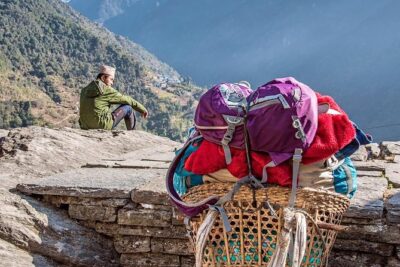
A porter for each pair is a useful arrangement, especially if you want to carry only a daypack. You should still pack responsibly and respect porter weight limits. A good guide also makes a difference when a group member is tired, rooms are mixed up, or the weather changes. Guides Shambu, Chris, Krishna, Ram, and Jit have all been praised for patience, organization, local knowledge, or good humor on past trips.
Fitness, equipment, and insurance
The required fitness level is described as strong, even though the route itself is called moderate. That is not a contradiction. Moderate means manageable compared with harder high-altitude routes, not easy for someone who rarely walks uphill.
You should prepare for consecutive walking days and uneven mountain paths. Training with regular uphill walks, stairs, or long day hikes will help more than occasional gym sessions. If you have any medical concern, speak with a doctor before booking.
The requested equipment list includes:
- A sleeping bag rated to minus 15 Celsius
- Down jacket
- Warm clothing and gloves
- Trekking shoes
- Trekking stick
- Sunglasses and sunscreen
- Torch light
- Personal towel
- Socks
- Personal medicine
- Basic items such as bandages, painkillers, and stomach medicine
The provider asks for insurance covering medical treatment, accidents, natural disasters, emergency evacuation, trip cancellation, and baggage or gear loss, theft, or damage. Emergency rescue evacuation itself is not included in the tour price. Read the policy carefully rather than assuming a standard travel policy covers a helicopter rescue in Nepal.
Weather, changes, and the practical fine print
November is described as a good time for weather, with cold early mornings. Other departures faced rain, snow, or persistent poor visibility. You should think in terms of preparation rather than guarantees.
The experience is private, meaning only your own group participates. That can make the pace and daily decisions more personal, though it also means your group carries responsibility for staying fit and communicating clearly with the guide.
Confirmation is provided at booking. The experience is non-refundable and cannot be changed for any reason, so I would not book until your dates, fitness, insurance, and equipment are settled. The company also notes that unavoidable changes can create extra costs payable by clients during the trip.
Who should book this Annapurna trek?
I would recommend it to you if you want a supported Himalayan trek with village contact, included meals, arranged transport, and a guide who can help you handle the practical details. It suits people who have reasonable mountain fitness and who accept that tea houses are basic.
It is also a good choice if you want more than a quick mountain outing. The 13-day format leaves room for Kathmandu, Pokhara, the approach to base camp, and a less hurried return.
I would hesitate if you need hotel-level comfort, guaranteed clear views, flexible cancellation, or a trip with no unexpected costs. You must bring or rent key equipment, pay for insurance and personal expenses, and be ready for weather or road disruptions.
Should you book it?
Book this trek if the combination of organized support and authentic mountain living appeals to you. The strongest features are the included meals and permits, the porter arrangement, the local tea houses, and the care repeatedly associated with guides such as Shambu, Ram, Deepak, Sheepy, and others.
Before paying, confirm the exact daily route, accommodation arrangements, porter limits, equipment rental options, and current transport plan. Then check your insurance for emergency evacuation. If you can handle cold mornings, basic lodges, long walking days, and possible weather changes, the $999 package offers a practical way to reach Annapurna Base Camp without arranging every detail yourself.
FAQ
How long is the Annapurna Base Camp trek?
The experience lasts approximately 13 days, including time in Kathmandu, Pokhara, transport, and the trekking portion.
Where does the trek begin?
The trekking section begins at Nayapul after transport from Pokhara.
Where does the trek finish?
The walking portion ends at Phedi, followed by private transport to Pokhara.
Is transport from Kathmandu included?
Yes. Tourist bus transport from Kathmandu to Pokhara and land transportation back to Kathmandu are included.
Are airport transfers included?
Yes. Airport to hotel and hotel to airport transfers are included.
Is accommodation included?
Yes. The package includes two nights at Hotel Thamel in Kathmandu, two nights at Splendid View in Pokhara, and eight nights in normal trekking lodges or tea houses.
Are meals included?
Breakfast is included at the Kathmandu and Pokhara hotels. Breakfast, lunch, and dinner are included during the trek. Lunch and dinner in Kathmandu and Pokhara are not included.
Is a guide included?
Yes. One English-speaking trekking guide is included.
Is a porter included?
Yes. The arrangement provides one porter for every two people.
Do I need travel insurance?
Yes. You must arrange personal travel insurance covering medical care, accidents, natural disasters, emergency evacuation, trip cancellation, and lost, stolen, or damaged baggage and gear. Emergency rescue evacuation is not included in the tour price.
Recently added around Kathmandu
- Ghorepani Poon Hill Trek★ 5.0 · 16 reviews
- Private Manaslu Circuit Trek at Himalayas★ 5.0 · 3 reviews
- Amazing 1 Day Trekking Experience in Kathmandu Nepal★ 5.0 · 24 reviews
- Ghorepani Poonhill Trek★ 5.0 · 5 reviews
- Upper Mustang Trekking★ 5.0 · 2 reviews
- Upper Mustang Trekking★ 3.0 · 2 reviews
- Upper Mustang Trekking★ 5.0 · 4 reviews
- Upper Mustang Trek★ 5.0 · 5 reviews
Annapurna Base Camp Treks, compared.

Trekking in Annapurna/Langtang/Everest/Upper Mustang regions
Read our review →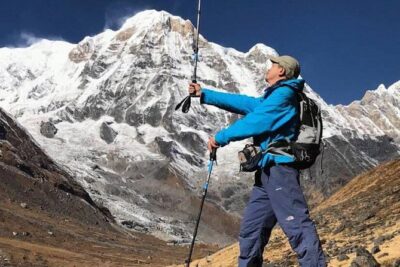
Kathmandu to Annapurna Base Camp (ABC) 5-Day Trek
Read our review →Browse the lists this tour appears in