
REVIEW · KATHMANDU
From Kathmandu: 7-Day Annapurna Basecamp Trek
The Himalayas begin with a long road day. This seven-day Annapurna Base Camp trek combines mountain scenery, Gurung villages, waterfalls, local guesthouses, and the striking arrival at 4,130 meters. I like the route because it gives you both cultural stops and high mountain views, rather than rushing straight toward the base camp. I also like the included guide, porter, permits, transfers, sleeping bag, duffle bag, and trekking poles. The main concern is the pace: several walking days last six to seven hours, and the itinerary gives you little spare time for altitude adjustment.
The price of $276 per person can be good value if the listed inclusions match the option you choose. You get five nights in mountain guesthouses, transport between Kathmandu, Pokhara, Ghandruk, and Pokhara again, plus trekking support. Still, check whether full-board meals and porter service are included in your selected package, since those are marked as optional. Guides Raju and Terrence have received especially warm praise for clear communication, care during small problems, and finding solutions when bad weather disrupted plans.
Key points at a glance
- Base camp at 4,130 meters: Reach the foot of Annapurna I, one of the world’s highest mountains, with sunset and sunrise views.
- Two Gurung villages: Ghandruk and Chomrong add local culture, traditional homes, and mountain communities to the walking route.
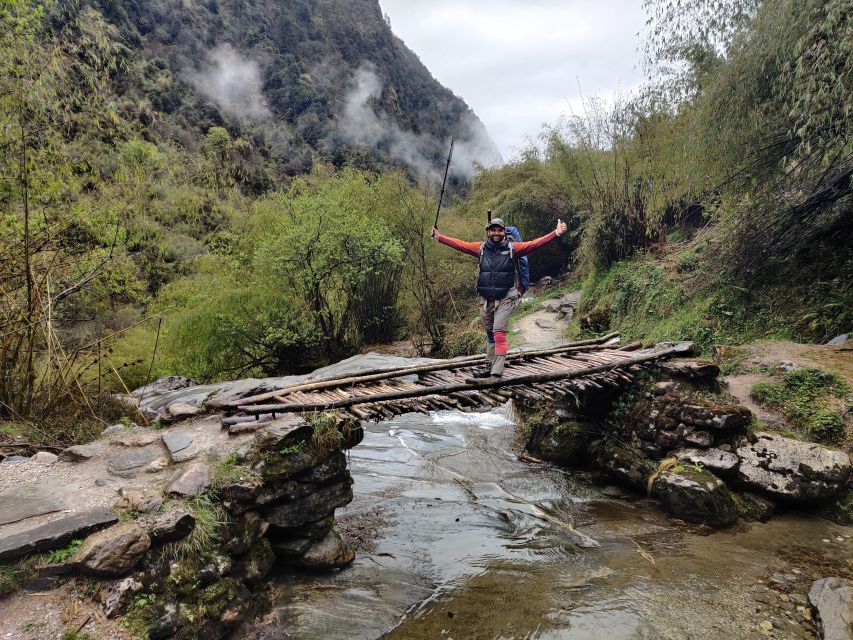
- Waterfalls and forest trails: The route passes through the Annapurna Conservation Area, with dense forest and frequent waterfalls.
- Hot springs at Jhinu: End the trek with a natural hot bath before the drive to Pokhara.
- Small groups of up to 14: A group this size allows a social trek without the feel of a large procession.
- Useful gear included: A sleeping bag, duffle bag, and trekking poles are available as returnable equipment.
What the seven-day route really involves
This is a compact Annapurna Base Camp itinerary. It is designed for people who want to reach the famous mountain destination in one week, not for those seeking a slow, flexible trek with rest days.
Your first day is mainly an arrival and orientation day in Kathmandu. On day two, the route moves quickly from the capital toward Pokhara and then into the hills. The walking begins properly on day three, and the highest point arrives on day five. You then descend for two days, ending near Pokhara.
That plan is efficient, but it is also demanding. You will spend long hours on the road before the trek and six to seven hours on foot on several days. If you are comfortable with sustained walking and stairs, the schedule may suit you. If you prefer a gentler pace, ask about the selected route, overnight stops, and meal package before paying.
More Annapurna Treks in Kathmandu
- Annapurna Circuit Trek with Tilicho Lake
★ 5.0 · 368 reviews - Annapurna base camp trek 5 Days
★ 5.0 · 252 reviews - 14-Day Private Annapurna Base Camp Trek
★ 5.0 · 180 reviews
Kathmandu arrival and the long road to Ghandruk
On arrival at Tribhuvan International Airport, a representative meets you with a name sign and takes you to your hotel. Accommodation is in a three-star Kathmandu hotel, with breakfast and twin-share rooms included.
You also meet your guide and receive a briefing about the trek. This is a useful moment to confirm the walking plan, what goes into the porter’s bag, and which returnable equipment you need. A daypack is listed as something to bring, so keep items you need during the day separate from your main luggage.
Day two starts early. You travel by tourist bus from Kathmandu to Pokhara, followed by a private vehicle toward Ghandruk. The total drive takes about eight to nine hours. That is a lot of sitting, but it connects Nepal’s capital with the Annapurna foothills in one travel day.
Ghandruk is one of the first highlights. It is a traditional Gurung village, and the stop gives the trip a human side before the higher walking begins. You then stay in Birethanti for the night. The itinerary wording is a little unclear about the exact order of Ghandruk and Birethanti, so I would confirm the overnight location with the operator before departure.
The main drawback here is simple: day two is long. You should expect a full transport day, not a relaxed sightseeing day in Pokhara. Accommodation and meals in Pokhara are not included, so any extra night in the city before or after the trek will add to your cost.
Chomrong, waterfalls, and the first long walking day
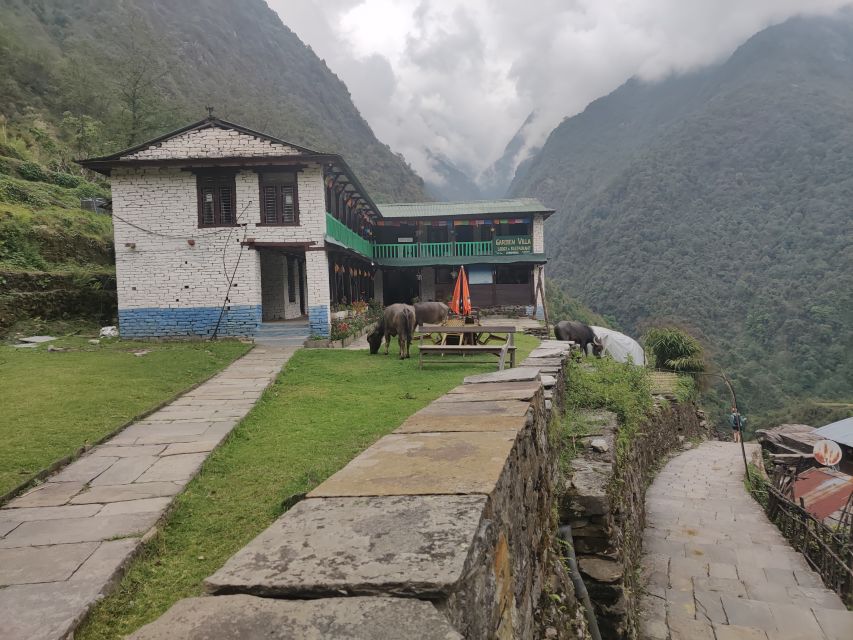
On day three, you walk for around six to seven hours toward Sinuwa, passing through Chomrong. This is a modern Gurung village with strong links to the local mountain culture. It is more than a quick photo stop, since the village helps you understand the communities that support trekking in the Annapurna region.
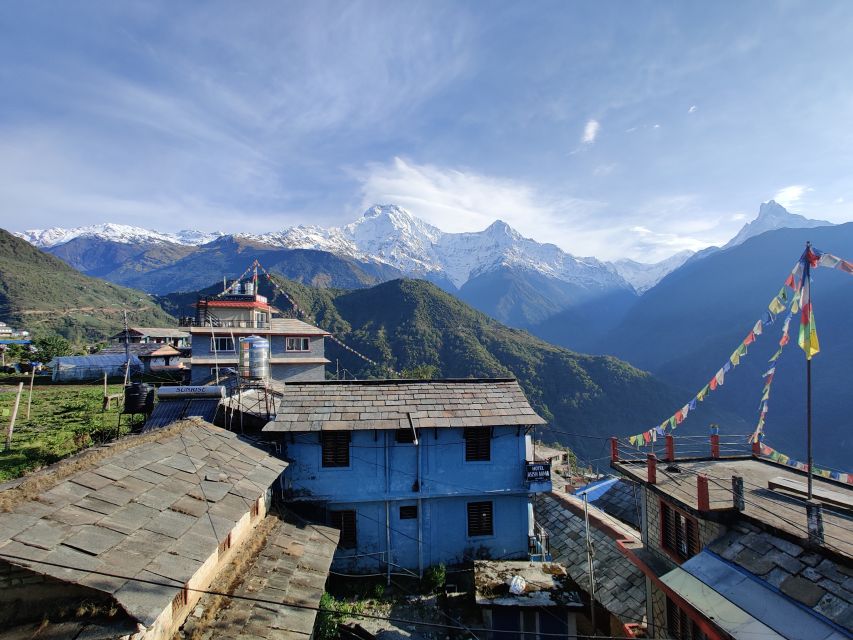
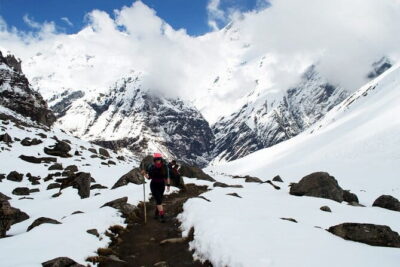
The route also brings the first clear mountain views, including Annapurna South and Hiunchuli. Waterfalls appear along the trail, and the combination of forest, rushing water, and steep mountain slopes gives this section plenty of variety.
You sleep in Sinuwa at a mountain guesthouse. The accommodation is in twin-sharing rooms during the trekking days. You should keep expectations practical: the appeal is location and access to the route, not hotel-style comfort.
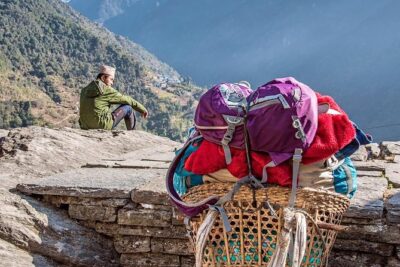
This day may be the first real test of your legs. The hours are long, and the route includes repeated uphill and downhill sections. A porter is provided for every two clients if that option is selected, which can make a meaningful difference. Carry your daypack with water, warm layers, rain protection, medication, and documents, while the porter carries the heavier load.
Sinuwa to Deurali through forest and waterfalls
Day four takes you from Sinuwa to Deurali in another six to seven hours. The trail passes through dense forest and continues through settlements such as Himalaya, a small stop with tea houses.
This is a quieter section of the route, with trees providing a change from open mountain views. Waterfalls remain a recurring feature, so the trail does not feel like one long uphill march. You may find the forest useful on warmer sections, though the higher you go, the cooler and more exposed conditions can become.
Deurali sits at about 3,230 meters. That altitude matters because the following day takes you above 4,000 meters. The itinerary does not include a separate acclimatization day, so pay attention to how you feel. The supplied information does not promise medical support or emergency evacuation, which makes travel insurance especially important.
You spend the night at Deurali Guest House. This is another reason to pack carefully. Your daypack should contain the clothes and personal items you need overnight, because your main load may be with the porter.
Same trailhead, a longer or shorter day out:
- Everest Base Camp Trek – 14 Days
★ 5.0 · 1,499 reviews - Everest Base Camp Trek
★ 5.0 · 842 reviews - Everest Base Camp Trekking
★ 5.0 · 485 reviews - Everest Base Camp Trekking – 13 Day
★ 5.0 · 365 reviews
The final climb to Annapurna Base Camp
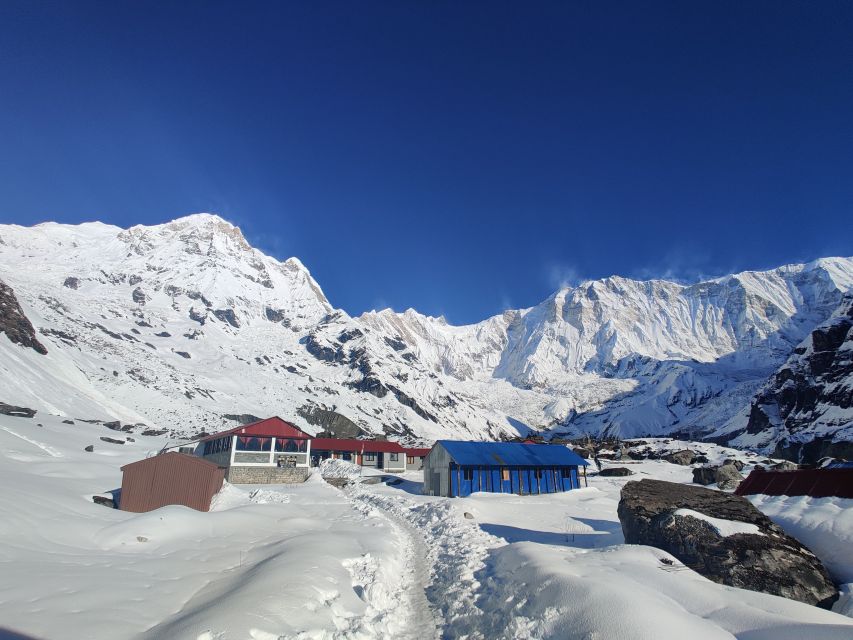
Day five is the main event. You walk from Deurali to Annapurna Base Camp in about five to six hours, passing through Machhapuchhre Base Camp on the way.
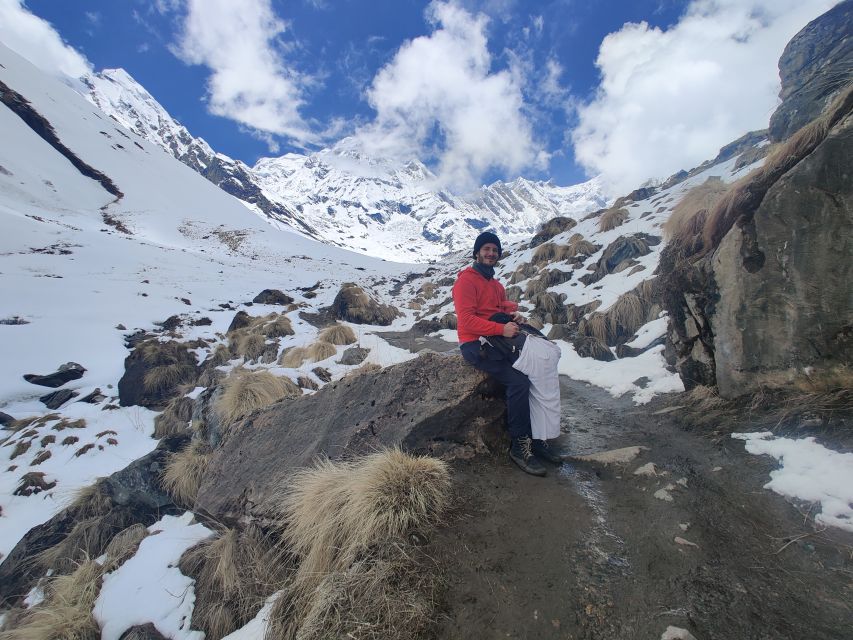
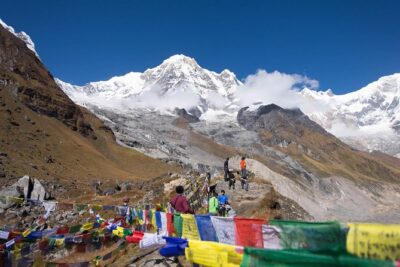
The route enters a high valley surrounded by the Annapurna range. The reward is not only the destination sign or the sense of completion. It is the change in scale as the mountains draw close around you. Annapurna Base Camp sits at 4,130 meters beneath Annapurna I, which rises to 8,091 meters and is the world’s tenth-highest mountain.
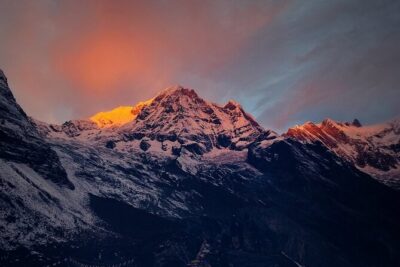
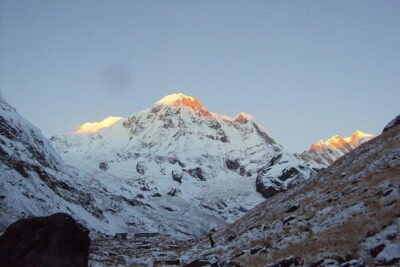
You stay in a tea house at base camp itself. That saves you from descending immediately after arrival and gives you time to look around the site. The itinerary specifically highlights sunset toward the west, followed by a sunrise view the next morning. Those are the best reasons to sleep at base camp rather than treat it as a quick turnaround point.
This is also the day when altitude is most likely to affect your comfort. The plan is short on paper, but high-altitude walking can feel slow. Follow your guide’s instructions, drink regularly, and tell the guide promptly about any symptoms. Do not treat reaching base camp as more important than your health.
The lack of an extra high-altitude night is the central limitation of the seven-day format. It keeps the price and duration down, but it leaves less room for poor weather, slow progress, or altitude problems.
Sunrise, descent, and the road to Jhinu
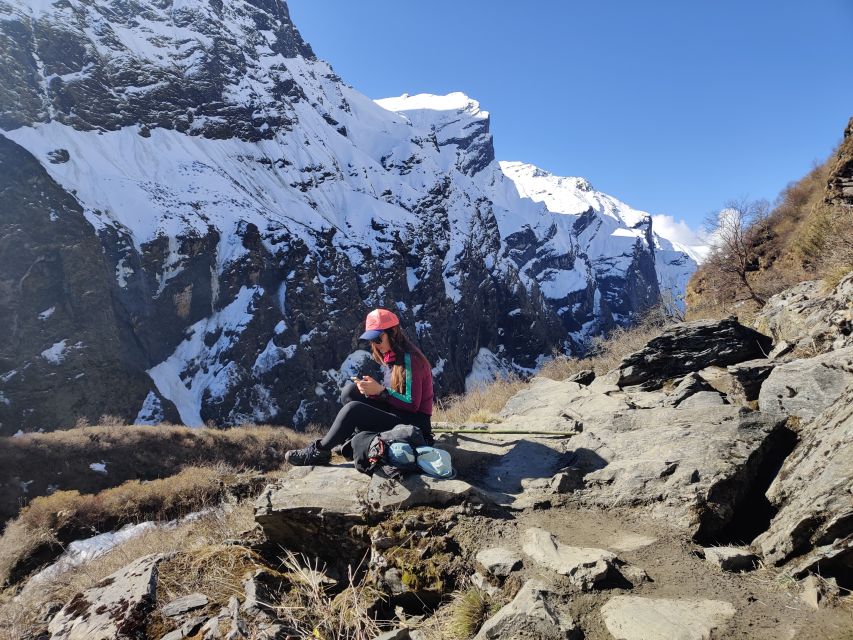
Day six begins with sunrise at Annapurna Base Camp and breakfast before the return walk. You descend through Deurali, Himalaya, and Dobhan toward Bamboo or Sinuwa.
The descent usually feels easier on the lungs, but it can be hard on knees and thighs. Trekking poles are included as returnable equipment, and this is where they can be particularly useful. Bamboo or Sinuwa is your overnight stop, depending on the exact arrangement.
Day seven continues downhill toward Simrung via Jhinu. The walking takes about five to six hours. Jhinu is known for its natural hot bath, which gives the trip a welcome physical reward after several days on the trail.
After the walk, you take a shared jeep from Simrung to Pokhara. The drive takes about one and a half hours. This is where the organized transfers help: you are not left to arrange the final vehicle on your own.
The trip ends in Pokhara, not back in Kathmandu. That matters when you plan flights and extra hotel nights. Accommodation and meals in Pokhara are excluded, so budget for your own stay there if you are not continuing elsewhere.
What the $276 price includes, and what it does not
At $276 per person, this can be a strong value for a guided Himalayan trek, especially if your package includes full-board meals and porter service. The listed inclusions cover airport arrival transfers, one Kathmandu hotel night with breakfast, five trekking nights, permits, several transport legs, a guide, and shared trekking gear.
The transport package is also useful. You get the Kathmandu to Pokhara tourist bus, a private vehicle from Pokhara to Ghandruk, and a shared jeep from Simrung to Pokhara. That mix keeps costs lower than using private transport throughout.
Read the package details closely before booking. Full-board trekking meals and porter service are marked as included only if the inclusion option is selected. Hot, cold, and alcoholic drinks are not included. Lunch and dinner in Kathmandu are also extra, as is accommodation and food in Pokhara.
Tips for the guide and porter are not included. Travel insurance is not included either, and it is one cost I would not skip for a trek reaching 4,130 meters.
Guides, group size, and practical support
The group is limited to 14 people, with English and Hindi guiding available. That is a useful middle ground. You have company on the trail, but the group should remain small enough for the guide to keep track of people and respond to problems.
The strongest praise has gone to the personal care provided by the guides. Raju is noted for answering questions clearly and helping with small difficulties. Terrence is also singled out for staying present when problems arose and finding practical solutions. That kind of support matters more than polished commentary when weather or fatigue changes the plan.
The operator has also shown flexibility when severe weather threatened a last-minute departure. Still, flexibility is not a guarantee that roads or trails will remain open. Mountain conditions can force changes, so keep some patience and avoid booking a tight onward connection immediately after the trek.
Bring a towel, your passport or a copy, and a daypack. The returnable equipment includes a sleeping bag, duffle bag, and trekking poles. Ask how and when those items will be issued so you can pack efficiently.
Who should book this trek
I would recommend this trip to an active adult who wants a guided introduction to the Annapurna region and values a clear seven-day plan. It suits you if you want village visits, forest walking, mountain views, a high base camp, and a hot spring without organizing permits and transport yourself.
It is less suitable if you need a slow itinerary, dislike long bus rides, or want several spare days for weather. The walking days are substantial, and the itinerary climbs from Kathmandu at 1,350 meters to base camp at 4,130 meters in a short period.
Children under eight, people with mobility impairments, and people over 95 are listed as not suitable for this activity. Those limits do not describe every person’s fitness, but they signal that the route is physically serious.
Should you book the Annapurna Base Camp trek?
Book it if you want maximum scenery and support in a compact week, and if you are comfortable with long walking days and basic mountain guesthouses. The combination of Ghandruk, Chomrong, waterfalls, Annapurna Base Camp, and Jhinu’s hot bath gives you a good range of experiences for the price.
Before you commit, confirm three things: whether meals are included, whether the porter is included, and where you will sleep on the Ghandruk and Birethanti night. If you need a more relaxed altitude schedule, choose a longer Annapurna Base Camp itinerary instead.
For an active trekker with limited time, this is a practical choice. For anyone seeking a gentle holiday, it asks too much too quickly.
FAQ
How long is the Annapurna Base Camp trek?
The activity lasts seven days, beginning with arrival in Kathmandu and ending with the drive from Simrung to Pokhara on day seven.
How high is Annapurna Base Camp?
Annapurna Base Camp is at 4,130 meters, or 13,549 feet.
How high is Kathmandu on this trip?
Kathmandu is at about 1,350 meters, or 4,429 feet.
How many hours do the walking days take?
The walking sections generally take six to seven hours on days three and four, five to six hours from Deurali to base camp, and five to six hours on the final walking day.
Where do you sleep during the trek?
You stay in mountain guesthouses and tea houses in twin-sharing accommodation. The trek includes five nights in mountain guesthouses, with a tea house at Annapurna Base Camp.
Is a guide included?
Yes. An experienced trekking guide is included, with English and Hindi available.
Is a porter included?
A porter for every two clients is included if the porter inclusion option is selected. Confirm this when choosing your package.
Is food included?
Full-board meals during the trekking days are included if that option is selected. Drinks are not included, and lunch and dinner in Kathmandu are extra.
Does the trip return to Kathmandu?
No. The final transfer goes from Simrung to Pokhara. Accommodation and meals in Pokhara are not included.
More 7-Day Experiences in Kathmandu
- Short Annapurna Base Camp Trek – 7 Days
★ 5.0 · 22 reviews - Kathmandu to Langtang Valley 7-Day Trek
★ 5.0 · 11 reviews - 7 Days Langtang Valley Private Trek From Kathmandu
★ 5.0 · 10 reviews - Langtang Trek from Kathmandu 7 Days
★ 5.0 · 5 reviews
Recently added around Kathmandu
- Ghorepani Poon Hill Trek★ 5.0 · 16 reviews
- Amazing 1 Day Trekking Experience in Kathmandu Nepal★ 5.0 · 24 reviews
- Private Manaslu Circuit Trek at Himalayas★ 5.0 · 3 reviews
- Ghorepani Poonhill Trek★ 5.0 · 5 reviews
- Upper Mustang Trekking★ 5.0 · 2 reviews
- Upper Mustang Trekking★ 3.0 · 2 reviews
- Upper Mustang Trekking★ 5.0 · 4 reviews
- Upper Mustang Trek★ 5.0 · 5 reviews
Annapurna Base Camp Treks, compared.
Trekking in Annapurna/Langtang/Everest/Upper Mustang regions
Read our review →
Kathmandu to Annapurna Base Camp (ABC) 5-Day Trek
Read our review →Browse the lists this tour appears in