
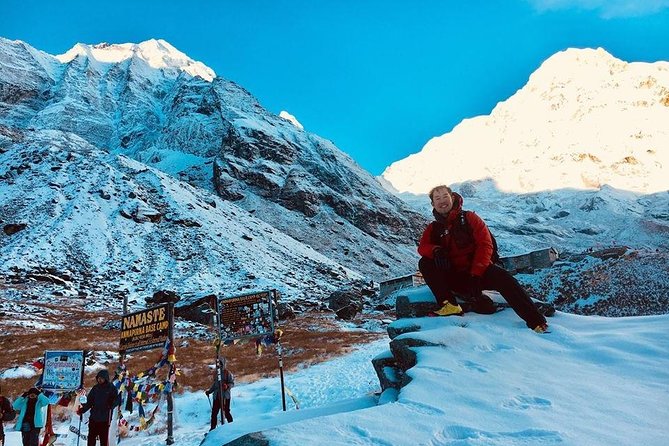
REVIEW · KATHMANDU
8 Days Annapurna Base Camp Budget Trek from Kathmandu
Mountains, villages, and hot springs fill this compact trek. This eight-day route takes you from Kathmandu to Pokhara, then through Ghandruk-area villages, Chhomrong, Bamboo, Machhapuchhre Base Camp, and Annapurna Base Camp. I like the combination of high mountain scenery and traditional villages, and I like that Jhinu’s hot spring gives your legs a welcome break after several hard walking days.
The price of $853.34 includes permits, guide costs, tea-house lodging, Kathmandu to Pokhara transport, and a three-star Pokhara hotel with breakfast. The main drawback is the pace: reaching Annapurna Base Camp and returning to lower ground in eight days demands solid fitness, with several days listed at about six hours of walking and steep climbs or descents.
Key points at a glance
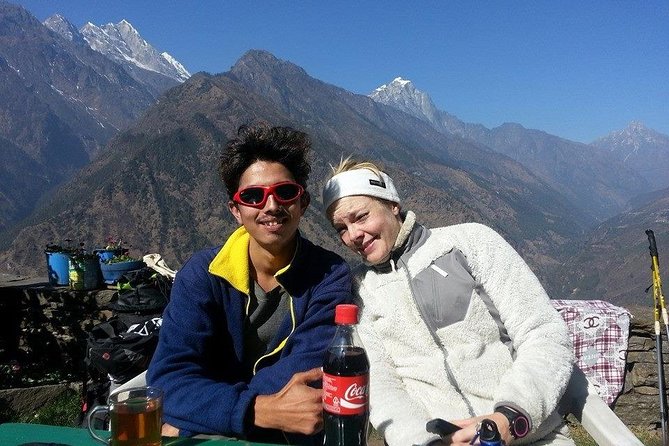
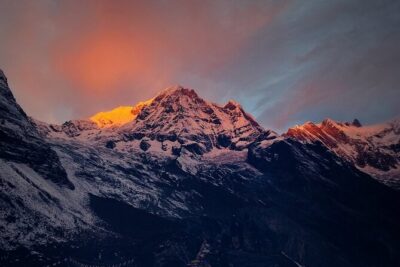
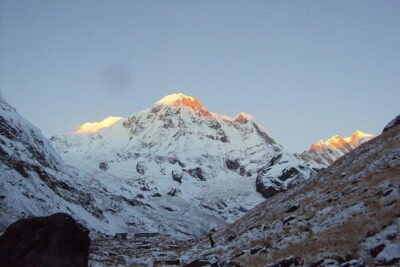
- Sunrise at Annapurna Base Camp: Reach the famous sanctuary and wake early for mountain light around Annapurna and the surrounding peaks.
- Jhinu hot spring stop: Walk 15 to 20 minutes downhill from Jhinu Danda to the bathing pools, a welcome pause after the return trek.
- Chhomrong overnight: Sleep in one of the route’s best mountain-view villages, with Annapurna South, Hiunchuli, Annapurna III, and Machhapuchhre nearby.
- Forest and river walking: The trail passes through oak, rhododendron, pine, and bamboo forests beside the rushing Modi River.
- Pokhara bookends the trek: Begin with free time around Phewa Lake and finish with another night in Pokhara before returning to Kathmandu.
- Budget structure: Lodging, permits, guide expenses, transport, and breakfast in Pokhara are covered, but standard trekking meals are extra.
What this eight-day Annapurna route is really like
This is a short version of the Annapurna Base Camp trek, not a gentle sightseeing tour. You walk through farm villages, forest, river gorges, suspension bridges, and high mountain country before reaching the base camp area at roughly 4,130 meters. The reward is a close look at the Annapurna Sanctuary without committing to a much longer route.
The route has a clear rhythm. You spend the first day getting from Kathmandu to Pokhara, climb through Chhomrong and the Modi River valley, reach Machhapuchhre Base Camp and Annapurna Base Camp, then retrace much of the trail before leaving by road from the lower villages.
I like that the program does not rush directly from Kathmandu to the trailhead. Pokhara gives you a softer first evening by Phewa Lake, though the long bus ride means you will not have much time there on day one.
The group can include up to 15 people. That is large enough to make the price practical, but small enough to keep a group moving along a narrow mountain trail. A guide is included, with salary, food, drinks, accommodation, transport, and insurance covered by the tour price.
More Annapurna Treks in Kathmandu
- Annapurna Circuit Trek with Tilicho Lake
★ 5.0 · 368 reviews - Annapurna base camp trek 5 Days
★ 5.0 · 252 reviews - 14-Day Private Annapurna Base Camp Trek
★ 5.0 · 180 reviews
Day 1: Kathmandu to Pokhara by tourist bus
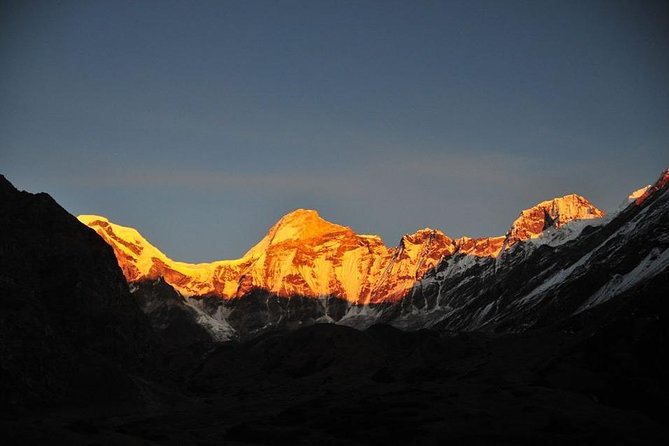
The first day is mostly about distance. The tourist bus covers about 210 kilometers and takes roughly five to six hours, though road conditions can affect the timing. The destination is Pokhara, Nepal’s relaxed lake city and the main gateway for this trek.
After checking in at Hotel Third Pole or a similar property, you have free time around Phewa Lake and the lakeside tourist area. This is useful time, not filler. You can walk beside the lake, eat an easy dinner, and prepare for the early start ahead.
The accommodation in Pokhara is described as a three-star hotel with free breakfast. That gives you a more comfortable beginning and ending than sleeping in a tea house every night of the trip.
The main point to understand is that the bus ride can make this feel like a travel day rather than a holiday day. If you want a longer stay in Pokhara, this schedule will feel tight.
Day 2: Siwai, Jhinu Danda, and the climb to Chhomrong
The trail begins from Siwai after a shared vehicle ride of about three hours. The road passes Naudanda, Nayapul, and Birethanti, following a winding route through the lower hills.
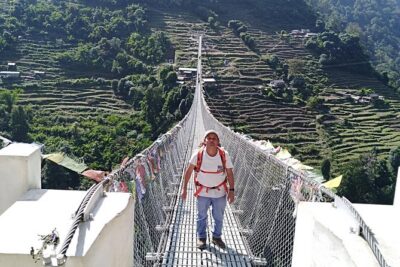
From Siwai, the walking begins with farm villages and mountain scenery. You cross a long suspension bridge over the Kimrong Khola, then reach Jhinu Danda before tackling the uphill route to Chhomrong.
This is a good introduction to the physical side of the trek. The path rises through terraced fields, and the final climb to Chhomrong can feel demanding after the road journey. Pace yourself instead of treating the first walking day like a race.
Chhomrong is one of the most appealing stops on the route. From here, the views can include Annapurna South, Hiunchuli, Annapurna III, and Machhapuchhre, also called Fishtail. The village is also an important point on the approach to the sanctuary.
An overnight stay here breaks up the ascent and places you in a proper mountain community rather than sending you farther up on the same day. I consider this one of the better choices in the schedule, even though the climb from Jhinu will test your legs.
Day 3: Chhomrong to Bamboo and Himalaya Hotel
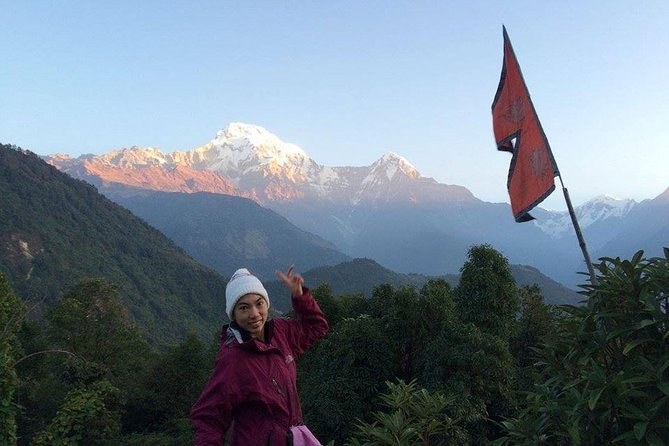
Day three starts with a descent to the river, followed by a bridge crossing and an uphill walk to Sinuwa at 2,330 meters. This pattern of descending and climbing is common on mountain trails, so do not expect every kilometer to translate into easy progress.
From Sinuwa, the route enters cooler forest with oak, rhododendron, and pine trees. You then descend to Bamboo, a small settlement with several lodges beside the Modi River gorge.
After Bamboo, the trail climbs gradually for a little more than an hour to Dovan. The sound of the Modi River becomes a constant companion as you continue through thick forest toward Himalaya Hotel, below Hiunchuli.
The scenery changes in a satisfying way here. Day two gives you fields and villages, while day three brings forest, river noise, and a more enclosed mountain setting. The downside is that the river valley can make the walking feel relentless, especially because the path keeps gaining height.
This is also the point where simple tea-house accommodation becomes part of the experience. You are not paying for polished hotel facilities in the mountains. You are paying for a bed, meals purchased separately, and a place to recover before the next day’s harder climb.
Same trailhead, a longer or shorter day out:
- Everest Base Camp Trek – 14 Days
★ 5.0 · 1,499 reviews - Everest Base Camp Trek
★ 5.0 · 842 reviews - Everest Base Camp Trekking
★ 5.0 · 485 reviews - Everest Base Camp Trekking – 13 Day
★ 5.0 · 365 reviews
Day 4: Himalaya Hotel to Machhapuchhre Base Camp and Annapurna Base Camp
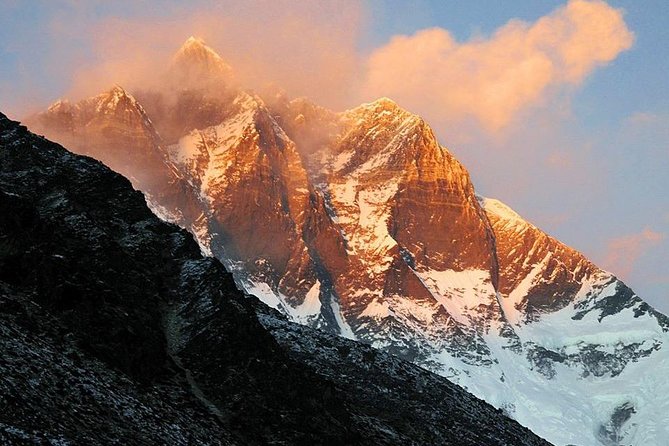
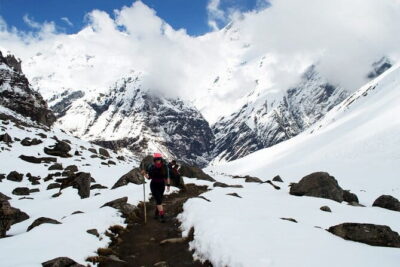
Day four is the key walking day. The trail climbs toward Hinko Cave, crosses rocky ground shaped by old avalanches, and reaches Deurali as the valley opens up.
Beyond Deurali, the trees thin out. The route follows the glacial Modi River toward Machhapuchhre Base Camp at about 3,700 meters. The camp sits below the dramatic north face of Machhapuchhre, the mountain known as Fishtail.
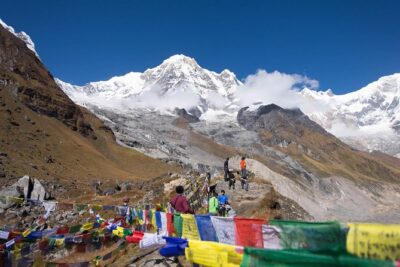
After lunch at Machhapuchhre Base Camp, you continue into the Annapurna Sanctuary. Annapurna Base Camp is the day’s great goal, surrounded by a high mountain bowl that feels very different from the forested trail below.
The schedule calls for about six hours, but the altitude makes those hours more serious than a six-hour walk at home. Your guide can help set a sensible pace, but you still need to watch your own energy and tell the guide if you feel unwell.
This is where the trek earns its price. Permits, guide support, mountain lodging, and the route planning matter most on a day when the trail becomes rocky, cold, and exposed compared with the lower valleys.
Day 5: Sunrise at Annapurna Base Camp and the long descent to Bamboo
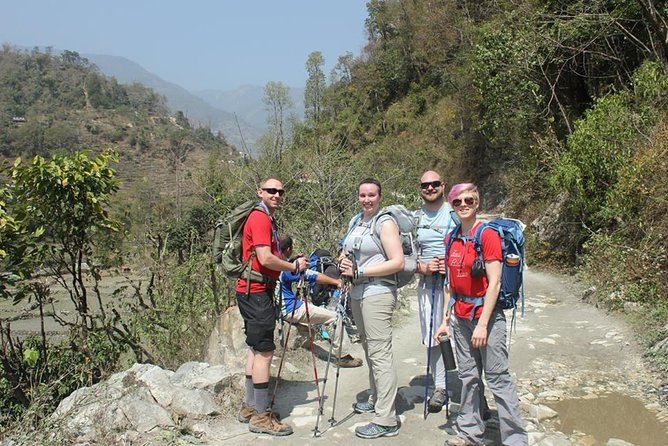
The sunrise is the main event on day five. You wake at Annapurna Base Camp for early mountain views, then eat breakfast before beginning the return walk.
The descent follows much of the approach route, but it is not an easy day. You drop about 1,700 meters toward Bamboo, passing back through the high mountain area and into the river valley.
Going downhill can be harder on knees than climbing is on lungs. Good footwear and careful steps matter here, particularly on rocky or uneven sections. The reward is the return to thicker air, more trees, and lower elevations.
Overnight at Bamboo keeps the route moving without forcing an even longer descent. The lodges and tea houses here are basic, but the stop makes sense as a practical resting point.
I like the overnight sunrise plan, though it leaves little room for a slow morning. If taking mountain photographs is important to you, have your camera or phone ready before breakfast and expect a cold start.
Day 6: Bamboo to Chhomrong, then down to Jhinu Danda
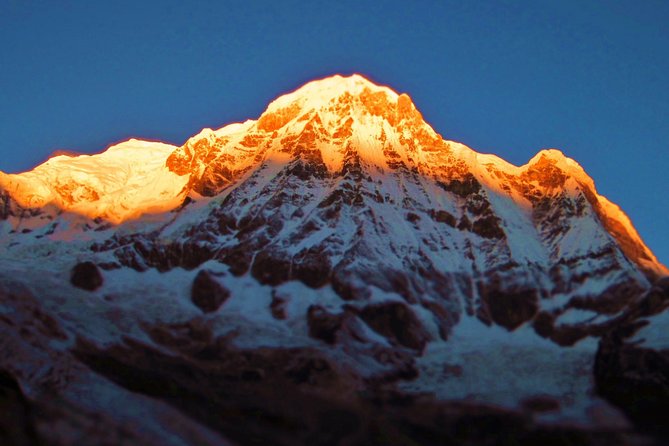
The route begins with a climb from Bamboo to Kuldhigar, where the Annapurna Conservation Area Project office and visitor center are located. You then descend toward the Chhomrong River, passing through Sinuwa before crossing the bridge.
From the bridge, you enter Chhomrong again, this time on the way down. A steep descent leads to Jhinu Danda, where the hot spring is about 15 to 20 minutes downhill from the lodge area.
The spring is one of the trip’s best practical pleasures. After repeated climbs and descents, warm water gives tired muscles a chance to relax. Remember that reaching the pools means another uphill walk afterward, so do not stay so long that the final climb becomes miserable.
Jhinu also adds a different kind of local experience. The village is not just a place to sleep between trail sections. It gives the trek a natural pause before the road journey out.
This day is not easy simply because it ends at a lower altitude. The descent from Chhomrong is steep, and the trail has already put several long walking days into your legs.
Day 7: Jhinu to Nayapul, then back to Pokhara
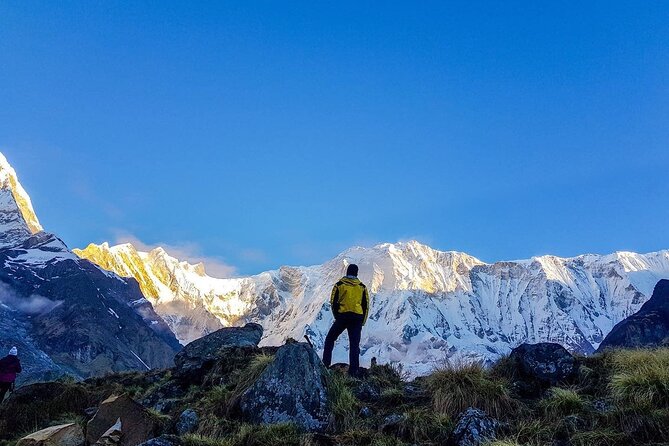
You can visit the hot spring again in the morning before walking down toward Nayapul. From Nayapul, you drive back to Pokhara and spend the night at Hotel Third Pole or a similar hotel.
This is a satisfying transition. The trail ends, mountain lodging gives way to a city hotel, and you have time to enjoy Pokhara’s lakeside area. The schedule still lists about six hours, so your departure from Jhinu and the road timing will shape how much free time remains.
Pokhara is particularly useful after the trek because it gives you a place to sleep properly and eat away from the trail. If you have energy, the area around Phewa Lake is the obvious place to wander.
Day 8: Pokhara to Kathmandu
The final day is another long tourist bus ride, taking about six to seven hours. It is a practical ending rather than a grand finale.
The value here is simplicity. Kathmandu to Pokhara transport is arranged as part of the package, so you do not need to organize separate public transport for the main city transfers. Still, road travel can be tiring after the trek, and you should avoid scheduling an important same-day onward connection without plenty of spare time.
What the $853.34 price includes
At $853.34 per person, this is not an all-inclusive luxury trek. It is a budget-focused package with several expensive or complicated pieces already handled.
Included items are:
- Tourist bus transport between Kathmandu and Pokhara
- Ground transport connected with the trek
- Three-star hotel accommodation in Pokhara
- Free breakfast at the Pokhara hotel
- Tea-house and lodge accommodation during the trek
- Conservation entry permits and required paperwork
- An experienced guide
- Guide salary, meals, drinks, accommodation, transport, and insurance
- Government taxes, VAT, and service charges
The biggest extra cost is your standard trekking food. Breakfast, lunch, and dinner during the walking section are not included, so you need to budget separately for those meals. Gratuities are also not mandatory, but they are expected.
For me, the price looks strongest if you want a guided route and do not want to arrange permits, transport, lodging, and guide expenses on your own. It is less attractive if you already have a guide, prefer independent trekking, or want more time in Pokhara.
Fitness, group size, and practical expectations
The tour is rated for people with a moderate level of physical fitness. That wording should be taken seriously. The route includes steep climbs, steep descents, suspension bridges, rocky sections, high altitude, and repeated days of roughly six hours.
The small group limit of 15 helps, but it does not change the mountain conditions. You should be comfortable walking for several hours and handling a schedule with limited recovery time.
The tour starts at 6:45 a.m. Pickup is offered, and confirmation is provided at booking. The route is near public transportation, though most of your main city transfers are already arranged.
The strongest praise attached to this experience focuses on the helpful guide, good hospitality, transport arrangements, and the mountain sunrise. The guide support matters because the route changes from village paths to forest trail to high rocky ground in only a few days.
Free cancellation is available if you cancel at least 24 hours before the local start time. Changes or cancellations made within 24 hours are not accepted for a refund.
Who should book this trek?
I would recommend it to you if you want to reach Annapurna Base Camp in a relatively short time, value a guide, and like a mix of mountain scenery, villages, forest, and a hot spring. It also suits anyone who prefers having transport and permits organized in advance.
I would be cautious if you want slow mornings, long stays in Pokhara, or a gentle introduction to altitude. The eight-day format is efficient, but efficiency here means hard walking and little spare time.
Should you book it?
Book this trek if your priority is Annapurna Base Camp with a managed budget, not luxury or leisurely pacing. The strongest reasons are the included guide costs, permits, mountain lodging, Pokhara hotel, and the memorable combination of sunrise at base camp and hot water at Jhinu.
Skip it if you are not ready for steep terrain and long days, or if you want meals included in the headline price. For a fit trekker who wants a direct route into the Annapurna region, this package offers a practical balance of cost, support, and scenery.
FAQ
How long is the Annapurna Base Camp trek?
The experience lasts approximately eight days, including travel between Kathmandu and Pokhara.
What time does the tour start?
The stated start time is 6:45 a.m.
Is hotel accommodation included?
Yes. A three-star hotel in Pokhara with free breakfast is included. Tea-house and lodge accommodation is also included during the trek.
Are trekking meals included?
No. Standard breakfast, lunch, and dinner during the trekking portion are not included. Breakfast is included at the Pokhara hotel.
Is a guide included?
Yes. An experienced guide is included, along with the guide’s salary, food, drinks, accommodation, transportation, and insurance.
Are conservation permits included?
Yes. Necessary paperwork and conservation entry permits are included.
How many people can join the tour?
The maximum group size is 15 people.
Is transportation from Kathmandu to Pokhara included?
Yes. Tourist bus transportation from Kathmandu to Pokhara and back to Kathmandu is included.
Can I cancel for a full refund?
Yes, if you cancel at least 24 hours before the experience start time. Cancellations made less than 24 hours before the start are not refunded.
Recently added around Kathmandu
- Ghorepani Poon Hill Trek★ 5.0 · 16 reviews
- Private Manaslu Circuit Trek at Himalayas★ 5.0 · 3 reviews
- Amazing 1 Day Trekking Experience in Kathmandu Nepal★ 5.0 · 24 reviews
- Ghorepani Poonhill Trek★ 5.0 · 5 reviews
- Upper Mustang Trekking★ 5.0 · 2 reviews
- Upper Mustang Trekking★ 3.0 · 2 reviews
- Upper Mustang Trekking★ 5.0 · 4 reviews
- Upper Mustang Trek★ 5.0 · 5 reviews
Annapurna Base Camp Treks, compared.
Trekking in Annapurna/Langtang/Everest/Upper Mustang regions
Read our review →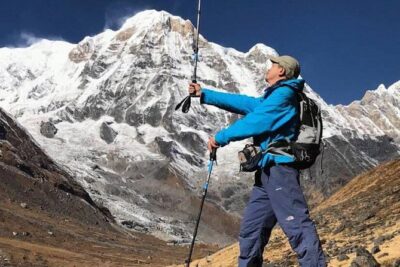
Kathmandu to Annapurna Base Camp (ABC) 5-Day Trek
Read our review →Browse the lists this tour appears in