
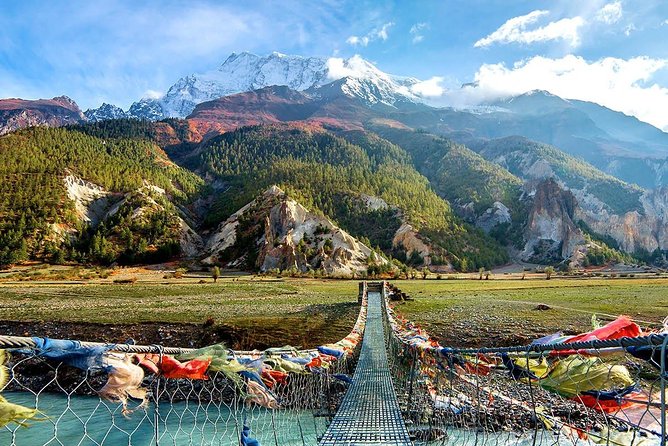
REVIEW · KATHMANDU
18-Day Annapurna Circuit Private Trekking Tour from Kathmandu
Catch the Himalayas one village at a time. This 18-day Annapurna Circuit trek links Kathmandu with Manang, Mustang, Muktinath, Jomsom, and the hot springs at Tatopani, with the high point at Thorong La Pass. I like the mix of mountain scenery and local life, and I like that the price includes guides, porters, meals, permits, lodging, and most ground transport. The main consideration is the altitude: crossing 5,416-meter Thorong La is serious work, and the printed schedule contains a few transport and place-name details you should confirm before paying.
The private format gives your group more control than a large departure. Guide Umesh received especially warm praise for keeping the party safe and well cared for, which matters on a route where weather, road conditions, and altitude can change the day. You should also check the apparent mismatch between the listed Jomsom to Pokhara flight and the walking and bus itinerary, as both cannot describe the same section.
Key points at a glance
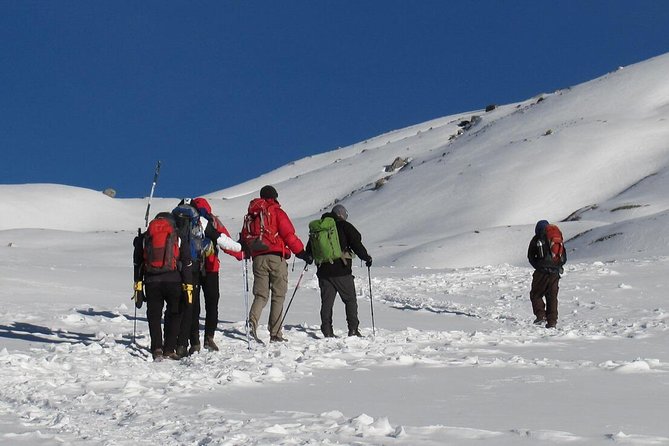
- Thorong La Pass at 5,416 meters: The trek’s toughest and most memorable day, connecting the Manang and Mustang sides of the circuit.
- Four distinct regions: The route passes through Lamjung, Manang, Mustang, and Myagdi, shifting from subtropical valleys to high mountain country.
- Acclimatization in Manang: An extra day at 3,540 meters gives your body time to adjust before the higher camps.
- Private support: An English-speaking guide, one porter for every two people, a medical kit, staff insurance, and a company duffel bag are included.
- Mostly teahouse lodging: You sleep in local trekking lodges rather than standard hotels for much of the route.
- A useful price package: At $2,000 per person, the package covers many major costs, but insurance, tips, drinks, personal gear, and Nepal’s entry visa remain yours.
Why this circuit still earns 18 days
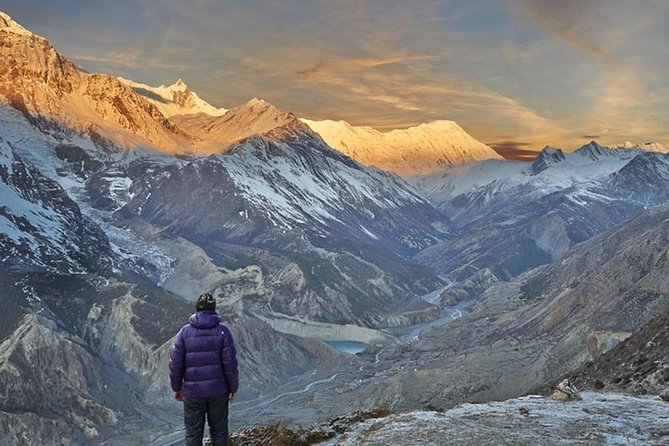
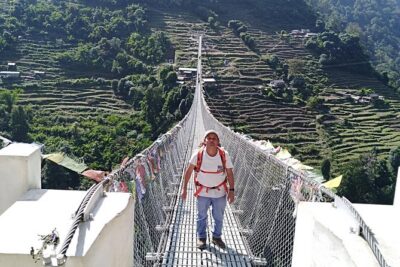
The Annapurna Circuit works because it changes character as you walk. In the lower valleys, Lamjung and Myagdi bring green hills, Hindu villages, terraced fields, and warmer air. Farther north, Manang and Mustang become drier, higher, and more influenced by Tibetan culture.
That change is the point. You are not simply walking toward a famous pass. You are watching the climate, buildings, food, and daily rhythm shift over nearly two weeks on foot.
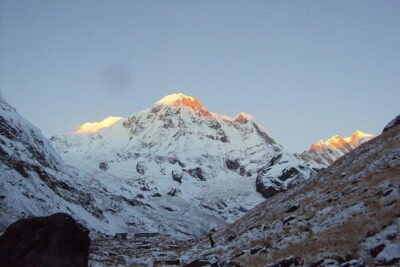
The route also gives you views toward some of Nepal’s biggest peaks. The named mountains include Manaslu, Annapurna I, Dhaulagiri, Annapurna II, III, and IV, Annapurna South, Tilicho Peak, Nilgiri, Machapuchare, Lamjung Himal, Hiunchuli, and Tukuche Peak.
At $2,000, this is not a bargain-basement independent trek, but it covers a great deal. You receive airport transfers, two nights in Kathmandu, two nights in Pokhara, teahouse accommodation during the trek, a guide, porter support, meals, permits, transport, snacks, a duffel bag, a shirt, and local and government taxes.
I would still ask for a written day-by-day cost breakdown. The package includes breakfast on 16 days, dinner on 14 days, and lunch on 15 days, but the exact lodging standards and transport arrangement deserve clarification.
More Annapurna Treks in Kathmandu
- Annapurna Circuit Trek with Tilicho Lake
★ 5.0 · 368 reviews - Annapurna base camp trek 5 Days
★ 5.0 · 252 reviews - 14-Day Private Annapurna Base Camp Trek
★ 5.0 · 180 reviews
Kathmandu preparation and the road to Bulbule
Day one is deliberately gentle. You arrive in Kathmandu, transfer to your hotel, prepare your equipment, and sleep in the capital. This is practical rather than scenic, but it gives you a chance to settle in and meet the guide before the long road journey.
The trek officially moves out on day two, with a bus from Kathmandu to Bulbule at 840 meters. Road travel in Nepal can take patience, so do not treat this as a throwaway transfer. It places you at the lower end of the route and avoids spending your first trekking days at a high elevation.
Bulbule to Jagat is the first walking day, with Jagat at 1,300 meters. The lower section is where you begin to see the route’s Hindu villages, cultivated slopes, and subtropical vegetation. Day four continues from Jagat to Dharapani at 1,860 meters.
One practical issue needs attention here: the schedule lists Jagat to Dharapani on both days four and five. Day six then begins with Chame to Pisang, so a stop in Chame is clearly missing from the written sequence. Ask the operator to correct the official itinerary and explain where day five ends.
Chame, Pisang, and the first high views
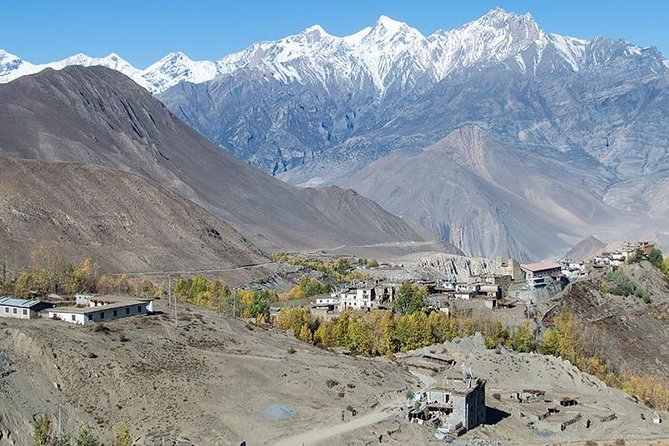
The route reaches Chame before continuing to Pisang at 3,300 meters. This is where the trek begins to feel properly high-mountain, and the pace should become more careful.
From Pisang, you walk to Manang by the upper Pisang route. The route description specifically calls for upper Pisang, which makes this a notable variation from simply following the lower valley road. You should ask the guide exactly which walking path is planned, since the name matters when comparing route options.
Manang sits at 3,540 meters and is the key resting point of the trip. Day eight is set aside for acclimatization and exploring around town. That extra day is one of the best features of the schedule. It gives your body time to adjust before the route climbs above 4,000 meters, and it reduces the temptation to rush toward Thorong La.
The supplied details do not specify the exact acclimatization walk, so ask what the guide normally plans. The important thing is to keep moving gently, drink enough, and tell the guide quickly if you develop a headache, nausea, unusual tiredness, or breathing trouble.
Manang to Thorong Phedi
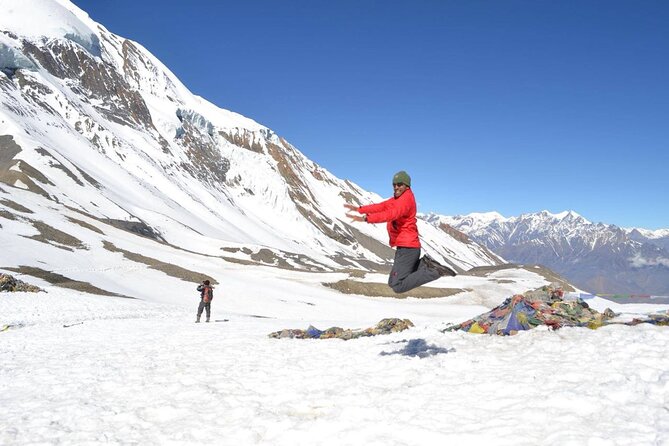
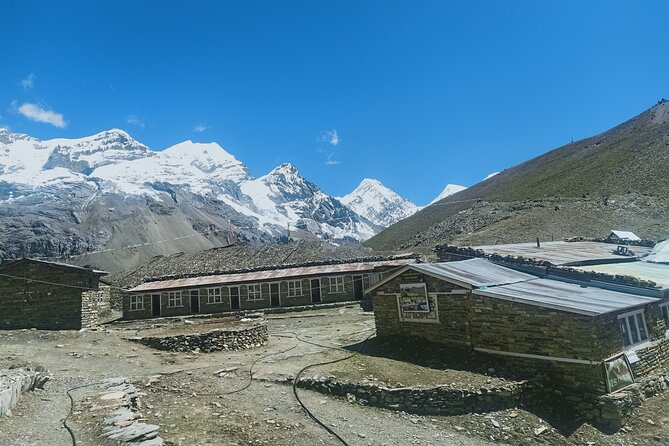
After Manang, the route climbs to Ledar, listed at 4,200 meters. The schedule spells this place as leader, so confirm the correct spelling when you receive your final documents. The next day continues to Thorong Phedi at 4,450 meters.
These are short-sounding place names with a serious change in altitude. I would not judge the trek by distance alone. At this height, a modest walk can feel demanding, and cold, wind, poor sleep, or altitude symptoms can affect your pace.
Thorong Phedi is the staging point for the pass. The itinerary does not give a separate rest day here, so your fitness and acclimatization matter. The earlier rest day in Manang is doing important work.
The package includes a medical kit and insurance for the staff, but it does not include your travel medical insurance or emergency evacuation. You need your own policy that covers trekking at the stated altitude and any evacuation costs. This is one of the most important practical points in the whole trip.
Same trailhead, a longer or shorter day out:
- Everest Base Camp Trek – 14 Days
★ 5.0 · 1,499 reviews - Everest Base Camp Trek
★ 5.0 · 842 reviews - Everest Base Camp Trekking
★ 5.0 · 485 reviews - Everest Base Camp Trekking – 13 Day
★ 5.0 · 365 reviews
Thorong La and the descent to Muktinath
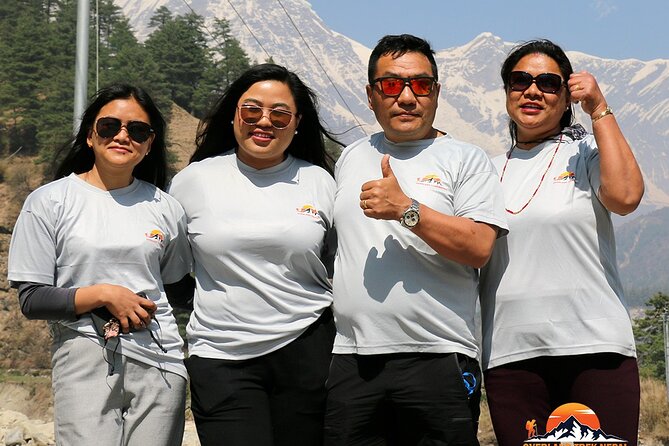
The biggest day comes when you walk from Thorong Phedi over Thorong La at 5,416 meters and descend to Muktinath at 3,800 meters. This is the moment the circuit earns its reputation.
You gain a high pass, then lose a great deal of height in the same day. That combination is physically demanding, even for people who exercise regularly at home. Follow the guide’s pace rather than racing ahead, and keep warm clothing accessible instead of buried in your duffel.
Muktinath is a major cultural stop as well as a trekking destination. The route has now crossed from the Manang side into Mustang, and the change in climate and scenery becomes clear. The itinerary does not list a separate sightseeing program, so ask how much time you will have around Muktinath before continuing.
The pass is also the point where weather matters most. The operator states that the experience requires good weather, with a different date or full refund offered if poor weather cancels the trip. On a live trek, conditions may also affect the planned order or timing, so flexibility is wise.
Muktinath, Jomsom, and the Kali Gandaki section
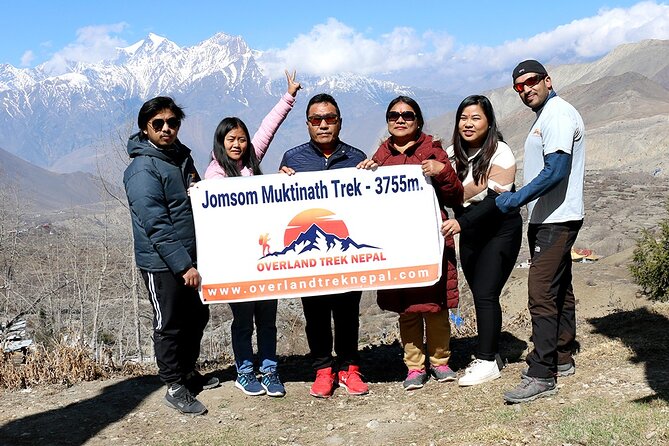
Day 12 takes you from Muktinath to Jomsom at 2,720 meters. The drop in altitude should feel welcome after the pass, and Jomsom marks a change from the high crossing to the lower Mustang and Kali Gandaki section.
The next day is listed as Jomsom to Kalopani at 2,530 meters, followed by Kalopani to Tatopani at 1,200 meters. This section brings you back toward warmer valleys and the Myagdi region.
Tatopani is known for hot springs, although the supplied schedule does not explicitly promise a bathing stop. Ask whether time at the springs is part of your plan rather than assuming it is included. The name is a good clue, but the exact activity should be confirmed.
The package also mentions a Poon Hill park permit, yet Poon Hill is not listed as a stop in the 18-day route. If Poon Hill matters to you, ask whether the route can be adjusted. Do not assume you will see it simply because the permit is included.
Beni, Pokhara, and the return north
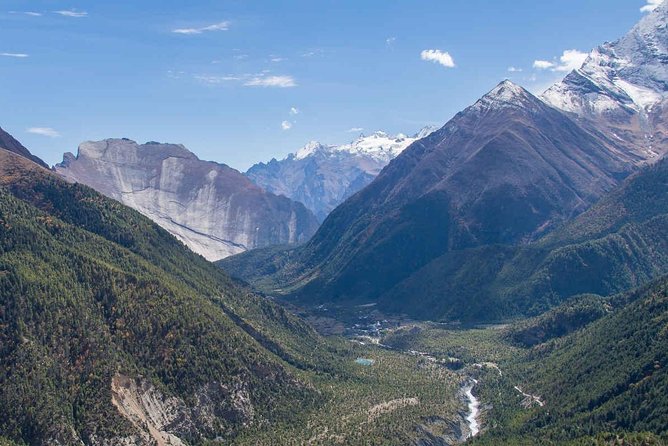
From Tatopani, the plan uses a bus to Beni at 830 meters on day 15. Day 16 continues by bus from Beni to Pokhara at 825 meters. After days of walking, this lower-altitude road section gives your legs a break.
Two nights in Pokhara with breakfast are included. That is useful because Pokhara is not just a transit point. It gives you time to rest, sort gear, and enjoy a slower city setting before returning to Kathmandu.
Day 17 uses a tourist bus from Pokhara to Kathmandu, listed at 1,336 meters. The tour finishes on day 18 with airport departure, or extra time in Kathmandu for shopping, sightseeing, and rest if your flight schedule allows.
There is an important conflict in the transport details. The inclusions also mention a domestic flight from Jomsom to Pokhara, while the itinerary sends you on foot from Jomsom through Kalopani and Tatopani, then by bus through Beni to Pokhara. Ask which plan applies to your booking. This could change the walking days, cost, luggage plan, and total experience.
What the private format adds
Only your group participates, which can make a difference on a high-altitude trek. You can ask the guide to slow down, discuss symptoms privately, and spend more time at a village or viewpoint if the day allows.
The English-speaking guide handles accommodation, food, and salary arrangements, and one porter is assigned for every two people. That porter ratio means you should still pack sensibly. The porter is not a substitute for a small daypack containing water, warm layers, sunscreen, personal medication, and anything you need during the day.
Guide Umesh is the one named in the positive feedback, with particular praise for safety and personal care. You cannot assume he will lead every departure, so ask whether he is available for your dates. The company also supplies a duffel bag and T-shirt, plus snacks such as biscuits, Oreo cookies, peanuts, chocolate, apples, and pomegranates. These small food supplies are useful on long walking days, but they do not replace your own drinking water and preferred snacks.
What the $2,000 price really covers
The fee has strong value if all stated inclusions apply. It covers:
- Airport pickup and drop-off
- TIMS card and Annapurna conservation entry permit
- Teahouse lodging during the trek
- Two nights in Kathmandu with breakfast
- Two nights in Pokhara with breakfast
- English-speaking guide and porter service
- Breakfast, lunch, and dinner on most scheduled days
- Ground transportation listed in the plan
- Medical kit and staff insurance
- Company duffel bag, T-shirt, trip certificate, and local taxes
You still pay for Nepal’s entry visa, international flights, personal equipment, alcoholic drinks, cold drinks, bottled or hot water, battery charging, donations, tips, travel medical insurance, and emergency evacuation.
Tipping is expected, so include it in your real budget. The exact recommended amount is not provided, and you should ask the operator before departure. Also ask if the price changes for solo occupancy, a private room, extra porter weight, or transport changes.
Who should book this trek?
This trip suits you if you want the classic Annapurna Circuit with a private guide, organized logistics, local teahouse stays, and a planned acclimatization day. It is especially useful if you prefer one company to coordinate permits, porters, buses, lodging, meals, and city transfers.
You should have a moderate fitness level, but that phrase should not be taken lightly. The route reaches 5,416 meters and includes several consecutive walking days. You need to be comfortable with long uphill and downhill stretches and ready to accept slower progress if your body needs it.
This is not the best choice if you want a soft holiday, fixed luxury hotels, or no uncertainty. The road schedule may shift, the written itinerary needs correction, and some costs remain outside the package.
Should you book it?
I would consider booking this tour if you want a supported private trek and value the included guide, porter, meals, permits, and city transport. The strongest features are the Manang acclimatization day, the four-region route, and the support around the high pass.
Before booking, get three points in writing: the missing day between Dharapani and Chame, the exact Jomsom to Pokhara transport plan, and whether Poon Hill is included or merely covered by the permit. If those details are resolved and your insurance covers high-altitude trekking and evacuation, the $2,000 price offers a practical way to tackle one of Nepal’s great walking routes.
The cancellation terms are friendly for planning: cancel at least 24 hours before the 6:45 a.m. start for a full refund. Any late changes are not accepted, and bad weather may lead to a new date or full refund.
FAQ
Where does the trek start and finish?
It starts at the meeting point in Thamel, Kathmandu, and returns to Kathmandu before departure on day 18.
How long is the tour?
The planned duration is 18 days, including arrival, trekking, transport to and from Pokhara, and departure.
What is the highest point?
The highest point is Thorong La Pass at 5,416 meters.
Is this a private tour?
Yes. Only your group participates in the activity.
Is accommodation included?
Yes. Teahouse accommodation during the trek is included, along with two nights in Kathmandu and two nights in Pokhara with breakfast.
Are meals included?
Breakfast is included on 16 days, dinner on 14 days, and lunch on 15 days.
Is travel insurance included?
Travel medical insurance and emergency evacuation are not included. The package includes insurance and medical support for staff, so you need your own suitable policy.
Recently added around Kathmandu
- Ghorepani Poon Hill Trek★ 5.0 · 16 reviews
- Amazing 1 Day Trekking Experience in Kathmandu Nepal★ 5.0 · 24 reviews
- Private Manaslu Circuit Trek at Himalayas★ 5.0 · 3 reviews
- Ghorepani Poonhill Trek★ 5.0 · 5 reviews
- Upper Mustang Trekking★ 5.0 · 2 reviews
- Upper Mustang Trekking★ 3.0 · 2 reviews
- Upper Mustang Trekking★ 5.0 · 4 reviews
- Upper Mustang Trek★ 5.0 · 5 reviews
Annapurna Base Camp Treks, compared.
Trekking in Annapurna/Langtang/Everest/Upper Mustang regions
Read our review →
Kathmandu to Annapurna Base Camp (ABC) 5-Day Trek
Read our review →Browse the lists this tour appears in