
REVIEW · KATHMANDU
14-Day Private Annapurna Base Camp Trekking and Multi Activity
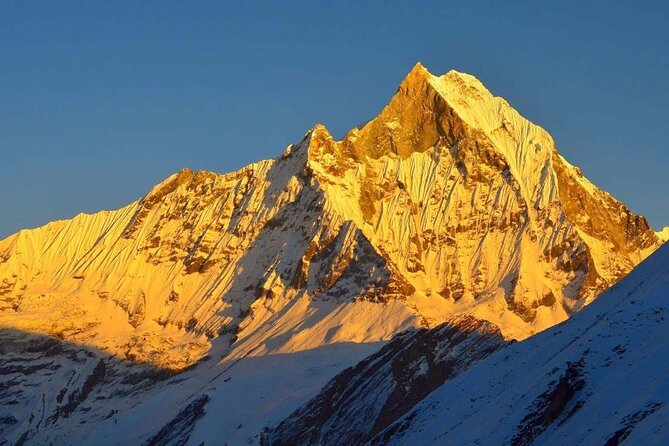
Mountain days reward steady feet. This 14-day private trek links Poon Hill and Annapurna Base Camp in one well-planned route, with mountain villages, rhododendron forests, waterfalls, and close views of Annapurna and Machhapuchhre. I like the private format, which keeps the walk limited to your own group, and I like that meals, permits, hotels, porters, and teahouse stays are included. The main consideration is physical: this is not a sightseeing holiday with a few gentle walks. You need moderate fitness and comfort with several days of mountain trekking.
The itinerary also has a friendly human side. Guides such as Ramesh and GP have been praised for being helpful, positive, attentive, and good at adjusting to the group’s needs. The trade-off is that transport days between Kathmandu and Pokhara take time, and the route includes early starts, climbs, descents, and basic lodge accommodation.
Key points to know before booking
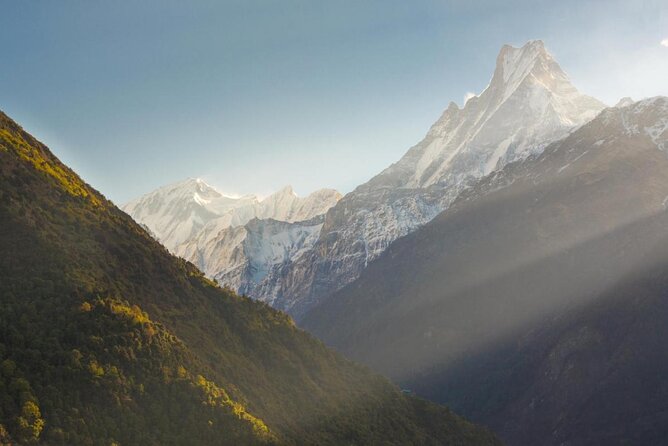
- Two famous viewpoints in one trek: You visit Poon Hill before continuing to Annapurna Base Camp.
- Private group format: Only your group participates, allowing more direct support from the guide.
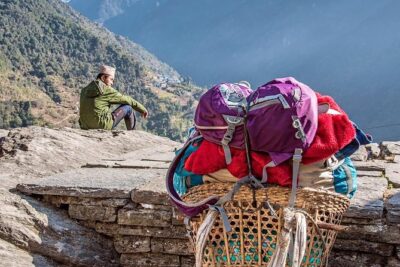
- Porters carry luggage: You walk with a lighter day pack while porters handle the main bags.
- Meals are included during the trek: Breakfast, lunch, and dinner are covered from the trekking days onward.
- The price covers major essentials: At $925 per person, the package includes hotels in Kathmandu and Pokhara, permits, transport in an air-conditioned vehicle, porter service, and teahouse accommodation.
- Good weather matters: If poor weather forces cancellation, you can choose another date or receive a full refund.
What the route gives you in 14 days
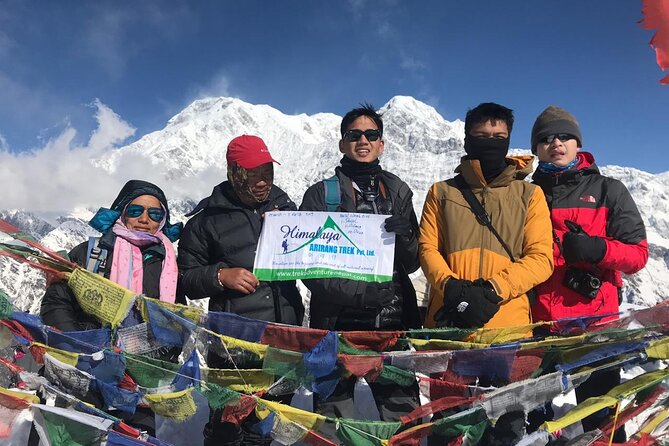
This trip is designed as a gradual approach to Annapurna Base Camp rather than a quick march to the high point. You begin in Kathmandu, travel to Pokhara, walk through the lower hills, gain altitude toward Ghorepani and the sanctuary, then return by a different village route.
That shape is one of the itinerary’s strengths. Poon Hill gives you an early mountain viewpoint, while Annapurna Base Camp provides the main high-altitude goal. The route also includes villages such as Ulleri, Tadapani, Sinuwa, Deurali, Dovan, Chhomrong, and Ghandruk, so the trek is not just about reaching one viewpoint and turning around.
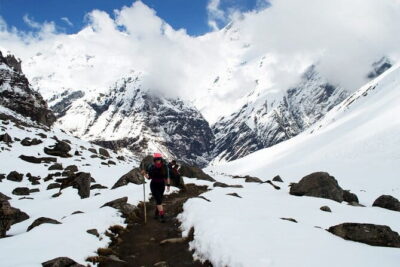
You should expect changing scenery rather than one repeated trail. The walk passes through rhododendron forest, open mountain areas, waterfalls, and settlements where local culture is part of the journey. The closer you get to base camp, the more the snowy peaks dominate the day.
More Annapurna Treks in Kathmandu
- Annapurna Circuit Trek with Tilicho Lake
★ 5.0 · 368 reviews - Annapurna base camp trek 5 Days
★ 5.0 · 252 reviews - 14-Day Private Annapurna Base Camp Trek
★ 5.0 · 180 reviews
Days 1 and 2: Kathmandu to Pokhara
The first day is simple. You arrive in Kathmandu and transfer to your hotel. Pickup is offered, and the meeting point is Himalaya Arirang Trek Private Limited at the A1 Business Complex on Thamel Marg.
This first night gives you a base before the trek begins. It is also the practical point to make sure you have what you need for the walking days. The next morning, breakfast is included before the drive to Pokhara.
Pokhara is the gateway to the Annapurna region and a useful contrast to Kathmandu. Here, the trip shifts from city arrival to mountain preparation. Your accommodation in Pokhara is included, which keeps the package easier to manage and avoids the need to arrange a separate hotel.
The downside is time on the road. Kathmandu and Pokhara are not connected by a quick transfer in this itinerary, so the second day is mainly a transport day. If you dislike long drives, this is worth keeping in mind when comparing the trip with a shorter trek that starts closer to the trail.
Days 3 and 4: Nayapul, Ulleri, and Ghorepani
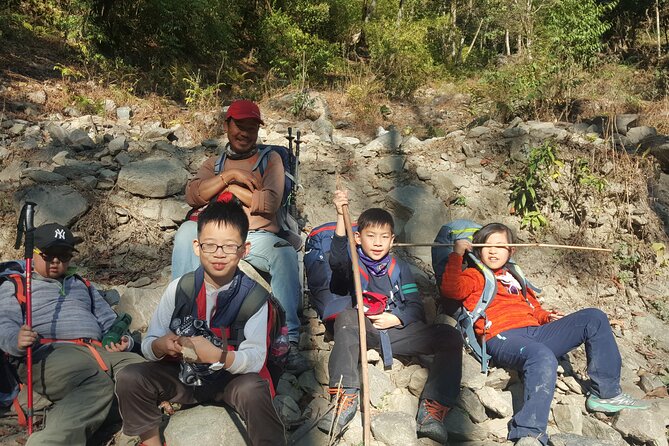
On day three, you drive from Pokhara to Nayapul, then begin walking toward Ulleri. Breakfast, lunch, and dinner are included, and the night is in a guesthouse.
This is where the trip changes pace. You leave the vehicle behind and start moving through the foothills on foot. Ulleri is an important early stop because it introduces the steady climbing that defines much of the route. You should not treat this as a warm-up stroll. Even with a porter carrying your main luggage, the first trekking day asks for a measured pace.
Day four continues from Ulleri to Ghorepani. You stay in another guesthouse, with all three meals included. Ghorepani is a key stop because it places you near Poon Hill, one of the most popular viewpoints in the region.
The first two walking days offer a useful lesson: slow and steady is more valuable than speed. You will want to keep water close, follow the guide’s pace, and avoid spending all your energy early in the route. The private arrangement should help here, since the guide is working with your group rather than a large mixed party.
Day 5: Poon Hill and Tadapani
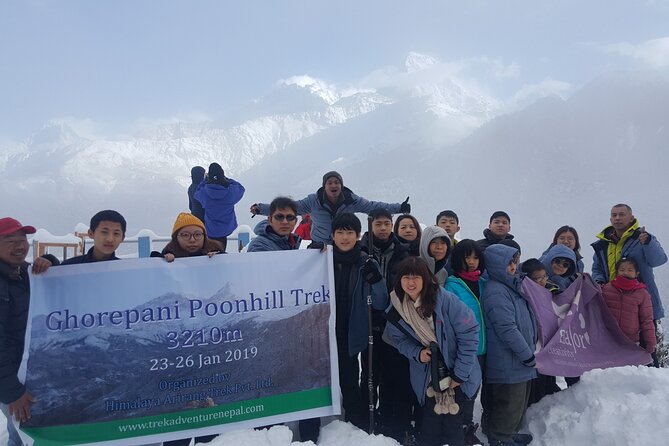
Day five begins with an excursion to Poon Hill, followed by the trek to Tadapani. This is one of the most appealing parts of the schedule because you get a major viewpoint before reaching the main base camp.
Poon Hill is known for broad mountain views, including the Annapurna range and Machhapuchhre. The trip description does not specify the exact start time, but the viewpoint is commonly treated as an early-day highlight, so you should be prepared for a prompt morning. Your guide can clarify the timing when you arrive.
After Poon Hill, you continue to Tadapani, staying in a hotel or lodge. The day combines a viewpoint visit with a full trekking stage, so it can feel busy. Still, that combination gives the route variety. You are not spending an extra day only to see one lookout.
One useful point comes through in the feedback about this route: Poon Hill was singled out as the best viewpoint of the journey by one person who completed the trek. That is important if you are deciding between several Annapurna routes. Base camp is the headline destination, but Poon Hill may provide the more open and sweeping view.
Same trailhead, a longer or shorter day out:
- Everest Base Camp Trek – 14 Days
★ 5.0 · 1,499 reviews - Everest Base Camp Trek
★ 5.0 · 842 reviews - Everest Base Camp Trekking
★ 5.0 · 485 reviews - Everest Base Camp Trekking – 13 Day
★ 5.0 · 365 reviews
Days 6 and 7: Tadapani to Sinuwa and Deurali
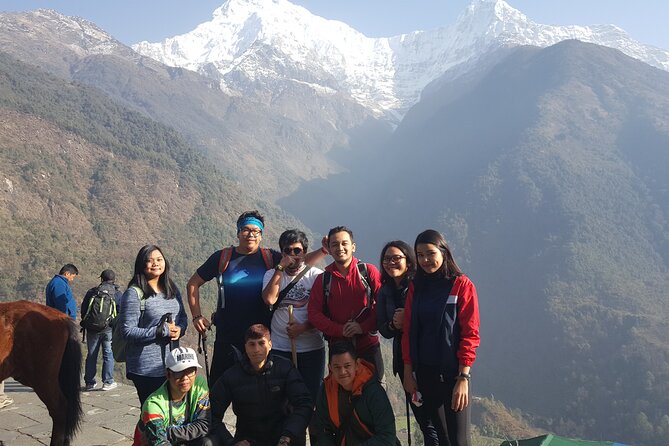
From Tadapani, day six takes you to Sinuwa. You stay in a hotel or lodge and receive breakfast, lunch, and dinner.
This section moves you farther into the route toward the base camp area. The setting changes as the trail passes through forest and mountain settlements. You may see waterfalls along the way, one of the small details that keeps the walking days from feeling like a simple climb from point A to point B.
Day seven runs from Sinuwa to Deurali, with a night in a lodge. By this stage, the walk is becoming more focused on the upper valley and the approach to Annapurna Base Camp. Deurali is an important staging point because it leaves you positioned for the next day’s main climb.
These days are also where the private service matters most. The itinerary has several consecutive walking stages, and fatigue can build even when the daily route looks manageable on paper. The guide can respond to your pace and condition. A French-speaking review praised guides for listening to the group’s wishes and fitness level and adapting the route, though the available details do not identify that guide or promise a particular language service.
Day 8: Deurali to Annapurna Base Camp
Day eight is the central push: Deurali to Annapurna Base Camp. You stay at a lodge or teahouse, with all meals included.
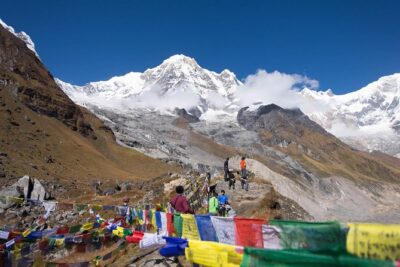
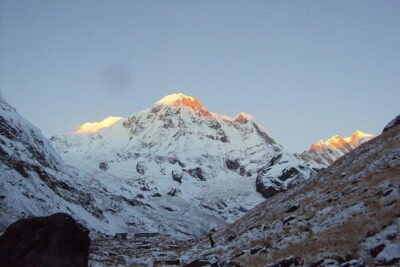
The appeal is clear. You are walking into the mountain setting that defines the trip, with Annapurna, Machhapuchhre, and Hiunchuli among the peaks associated with the route. At base camp, the reward is not only the destination itself. It is the enclosed mountain setting and the feeling of having walked into the heart of the range.
Do not expect luxury at this point. Teahouse accommodation is part of the package, and the upper route is about access and atmosphere rather than hotel comforts. The exact room arrangements are not specified, so you should ask the operator what to expect before departure if accommodation standards are important to you.
This is also the day when weather can have the greatest effect on your plans. The operator states that the experience requires good weather. If poor conditions cancel the trip, you are offered a different date or a full refund.
Day 9: Time at base camp, then down to Dovan
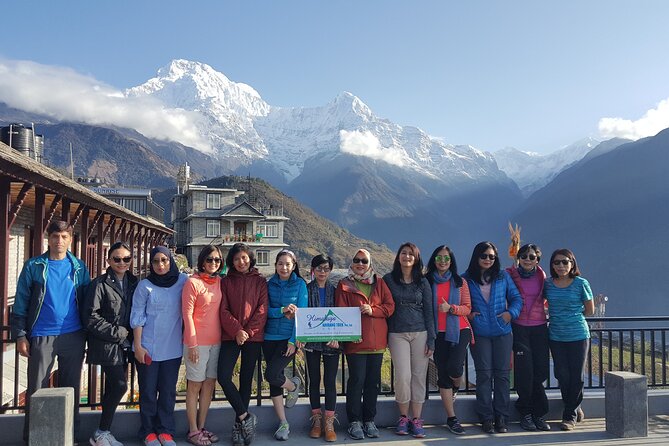
Day nine gives you time to explore Annapurna Base Camp before trekking back to Dovan. You stay in a lodge or teahouse and continue with included meals.
That extra time at base camp is valuable. A rushed arrival followed by an immediate retreat would make the main goal feel thin. Here, you have a chance to take in the peaks, photograph the setting, and enjoy the achievement before beginning the descent.
The descent to Dovan is not automatically easy. Going downhill can be hard on tired knees, especially after several days of walking. Trekking poles, sensible footwear, and a controlled pace can make a real difference, though the tour information does not state whether poles are supplied.
Days 10 and 11: Dovan to Chhomrong and Ghandruk
Day ten takes you from Dovan to Chhomrong. You sleep in a lodge or teahouse and receive all three meals.
Chhomrong is one of the best-known villages on this route and marks a change from the upper base camp approach. The trail begins to feel more connected to settled mountain communities again. You can expect a mixture of walking through natural surroundings and passing through villages where local life is part of the experience.
On day eleven, you continue from Chhomrong to Ghandruk. The accommodation is listed as a lodge or homestay, which adds a more local feel to this part of the journey. A homestay is not guaranteed, but it is a welcome possibility for anyone who values contact with village life over polished hotel service.
Ghandruk is a strong final village stop. The trip description highlights local culture, and this is the kind of place where the human side of the Annapurna route becomes just as important as the views. You should see the village stay as more than a bed for the night. It is part of the reason to choose a trekking route rather than a simple mountain transfer.
Days 12 to 14: Return to Pokhara, Kathmandu, and home
Day twelve takes you from Ghandruk to Nayapul, followed by a drive back to Pokhara. Breakfast and lunch are included, and you spend the night in a hotel.
This is a satisfying way to finish the walking portion. You return through a different set of villages and then trade your boots for a vehicle. The shift back to a hotel gives you a chance to rest before the final drive.
Day thirteen is the return from Pokhara to Kathmandu, with breakfast included. Day fourteen is departure.
The final two days are practical rather than scenic highlights, but they keep the tour organized. You do not need to arrange separate transport back to Kathmandu or find your own hotel in Pokhara. The trade-off is that the itinerary leaves little spare time for delays, so you should avoid scheduling an important flight immediately after the planned return without checking the timing carefully.
What the $925 price covers
At $925 per person, this is a strong package value if you want an arranged private trek rather than a collection of separate bookings.
The price includes:
- Breakfast, lunch, and dinner as specified in the itinerary
- Hotels in Kathmandu and Pokhara
- Teahouse accommodation during the trek
- Porters to carry luggage
- Annapurna Conservation Area Permit
- Trekkers’ Information Management System fee
- Transport in an air-conditioned vehicle
- All listed fees and taxes
The porter service is especially useful. You still need a day pack, but carrying less of your main luggage can make the long walking days more comfortable. Meals being included also reduces daily decision-making and helps you keep the budget under control.
The exclusions are important. You pay separately for your Nepal visa, travel insurance, and tips for the guide, porter, and driver. I would treat insurance as essential for a trek of this length, even though it is not included.
The package does not list flights, personal drinks, equipment rental, or other personal expenses, so ask for a full packing and cost sheet before you commit. That is not a criticism of the price. It is simply the smart way to avoid surprises.
The guide service and private format
The strongest praise connected to this trip focuses on the people running it. Ramesh is described as positive, helpful, and reassuring, with a knack for sharing stories about Nepal’s culture and scenery. GP is also praised as an excellent guide who helped make the trek successful.
Those comments point to the real value of a private trek. You are not just buying transport and beds. You are buying support during a demanding route, help with practical questions, and a guide who can help your group handle changing energy levels.
The private format means only your group participates. That suits friends, couples, and families who want to set their own rhythm. It may be less suitable if you prefer meeting a large mix of other walkers each day, since a small private group naturally offers less built-in social contact.
Who should book this trek?
I would recommend it to someone who wants a classic Nepal trekking route with a clear plan and a strong mix of scenery, village life, and mountain goals.
It suits you best if you:
- Have moderate physical fitness
- Can manage repeated walking days and mountain climbs
- Want both Poon Hill and Annapurna Base Camp
- Prefer a private group
- Value included meals, permits, hotels, porters, and transport
- Like the idea of teahouse stays rather than resort accommodation
- Want a guide who can offer practical support along the route
I would hesitate if you want a relaxed holiday with short walks, private luxury rooms, or a flexible schedule with many spare days. Fourteen days is a serious commitment, and the itinerary has several consecutive trekking stages.
The route is also not ideal for anyone who has not considered insurance, weather delays, and the limits of mountain accommodation. Good preparation will make the experience much more enjoyable.
Booking details and cancellation terms
Confirmation is provided at booking, and the meeting point is open daily from 7:15 AM to 9:45 PM during the stated operating period. The location is near public transportation, and pickup is offered.
You can cancel up to 24 hours before the start time for a full refund. Cancellations or changes made less than 24 hours before the start are not accepted for a refund. Cut-off times use local Nepal time.
FAQ
How long is the Annapurna Base Camp trek?
The experience lasts approximately 14 days, including arrival in Kathmandu, travel between Kathmandu and Pokhara, trekking days, the return to Kathmandu, and departure.
Is this a private tour?
Yes. Only your group participates in the activity.
What level of fitness is required?
A moderate level of physical fitness is required. The itinerary includes repeated trekking days, climbs, descents, and a route to Annapurna Base Camp.
Are meals included?
Yes. Breakfast is included on the Kathmandu to Pokhara drive and return travel days. Breakfast, lunch, and dinner are included on the listed trekking days.
Where will I stay?
You stay in hotels in Kathmandu and Pokhara, guesthouses, hotels, lodges, homestays, and teahouses during the trek, depending on the day.
Are permits included?
Yes. The Annapurna Conservation Area Permit and Trekkers’ Information Management System fee are included.
What is not included in the price?
Nepal visa costs, travel insurance, and tips for the guide, porter, and driver are not included.
Should you book this Annapurna Base Camp trek?
Book it if you want a well-supported private route that combines Poon Hill with Annapurna Base Camp and takes care of many major costs. The combination of porters, meals, permits, hotels, transport, and teahouse stays gives the $925 price real value.
Go in with sensible expectations. You will trade comfort for access, spend long days on your feet, and depend on weather and trail conditions. But if you are ready for that bargain, this itinerary offers a memorable way to see the Annapurna region, with strong guide support and a satisfying mix of mountain views, waterfalls, forests, and village life.
Recently added around Kathmandu
- Ghorepani Poon Hill Trek★ 5.0 · 16 reviews
- Private Manaslu Circuit Trek at Himalayas★ 5.0 · 3 reviews
- Amazing 1 Day Trekking Experience in Kathmandu Nepal★ 5.0 · 24 reviews
- Ghorepani Poonhill Trek★ 5.0 · 5 reviews
- Upper Mustang Trekking★ 5.0 · 2 reviews
- Upper Mustang Trekking★ 3.0 · 2 reviews
- Upper Mustang Trekking★ 5.0 · 4 reviews
- Upper Mustang Trek★ 5.0 · 5 reviews
Annapurna Base Camp Treks, compared.

Trekking in Annapurna/Langtang/Everest/Upper Mustang regions
Read our review →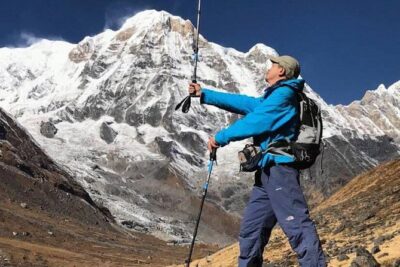
Kathmandu to Annapurna Base Camp (ABC) 5-Day Trek
Read our review →Browse the lists this tour appears in