
REVIEW · KATHMANDU
13 Days Trekking in Annapurna Circuit
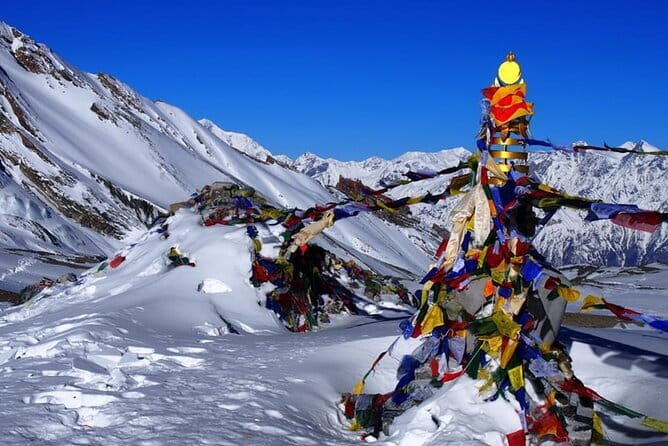
High passes reward steady walkers. This 13-day Annapurna Circuit trek takes you from Kathmandu through village paths, pine forests, Buddhist communities, and the 5,416-meter Thorong La Pass. I like the gradual rise through places such as Manang, and I like that meals, tea-house lodging, permits, transport, and a licensed guide are included. The main caution is that this is a serious high-altitude trek, not a gentle sightseeing holiday.
I also like the small private-group format, since your own group takes part rather than joining a large busload of people. Guides named Ravi and Sandip received special praise for their care and organization. Still, you need to budget for a porter if you want help with your bags, and the return to Kathmandu is not included.
Key points before you book
- Thorong La Pass reaches 5,416 meters, making Day 11 the hardest and most important day.
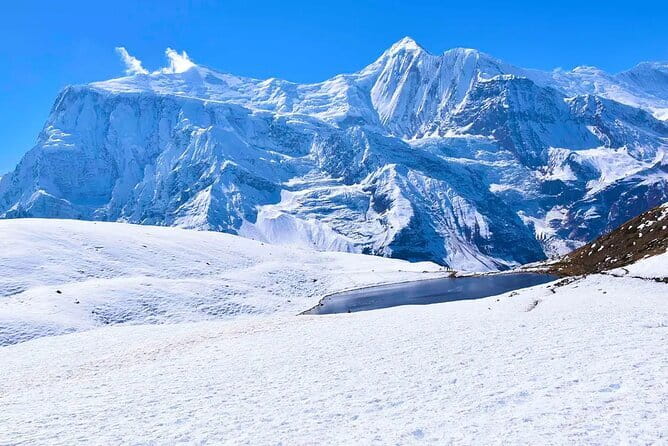
- Manang includes an acclimatization day, with optional walks to Gangapurna Lake or Praken Monastery.
- Tea-house lodging and three daily meals are included during the trek.
- The route begins with road transport from Kathmandu and ends with private transport to Pokhara.
- A guide is included, but porter service costs extra if you want someone to carry your main bag.
- The $809.10 price covers many major costs, but not Nepal visa fees, personal spending, extra hotel nights, or transport back to Kathmandu.
What the $809.10 price really covers
At $809.10 per person, this trek offers solid value for a 13-day Himalayan route. The price includes airport pickup if you need it, public transport from Kathmandu toward Besisahar, shared transport to Nyadi, tea-house accommodation, all standard meals during the trek, a cup of tea or coffee with breakfast, permits, TIMS fees, a licensed guide, a route map, and basic first-aid equipment with an oximeter.
That list matters because small trekking costs can add up quickly. You are not paying only for a guide and a bed. You are also covering the Annapurna Conservation Area permit, the Trekkers’ Information Management System fee, government taxes, and office charges.
The package also includes one night in a standard twin-sharing hotel in Pokhara with breakfast. Transport from the trek’s ending point to Pokhara is private, which is a useful comfort after several demanding days on foot.
There are clear limits. A porter is not included, so you pay extra if you want one. Personal expenses, extra nights in Kathmandu or Pokhara, transport during the trek, the Nepal entry visa, and transport back to Kathmandu are also outside the price.
For a fair comparison, add money for snacks, drinks beyond breakfast tea or coffee, tips, personal purchases, and your return plans. The price is strongest for someone who already expects to pay for a guide, permits, meals, and basic lodging. It is less all-inclusive than the headline figure may first suggest.
More Annapurna Treks in Kathmandu
- Annapurna Circuit Trek with Tilicho Lake
★ 5.0 · 368 reviews - Annapurna base camp trek 5 Days
★ 5.0 · 252 reviews - 14-Day Private Annapurna Base Camp Trek
★ 5.0 · 180 reviews
From Kathmandu to Bulbule and Besisahar
Day 1 starts early, with a long road journey from Kathmandu toward the lower Marsyangdi River area. The schedule describes about nine hours to Bulbule, at 820 meters, while the listed stop shows roughly six hours. Road conditions and the exact starting point can affect the timing, so you should treat the first day as a full transport day rather than a relaxed morning transfer.
The road passes small villages, terraced fields, and views toward the lower Himalayas. This is a useful opening because you move from Nepal’s busy capital into a quieter rural setting before walking begins.
The transport plan uses public buses from Kathmandu to Besisahar, followed by shared transport toward Nyadi. That keeps the cost down, but it also means this part may be less comfortable than a private transfer. If you value comfort over price, ask the operator before departure if a private vehicle is available at an extra cost.
The supplied schedule uses both Besisahar and Bulbule in its Day 1 description. Confirm the exact overnight point and pickup plan before you leave Kathmandu. This is a small detail, but it prevents confusion when a long road day already has several names attached to it.
Bulbule to Bahundanda on Day 2
From Bulbule, the trek begins properly. The route to Bahundanda passes through villages and terraced farmland, with a gradual gain in height.
This is a good first walking day because you begin with rural scenery rather than an immediate high-altitude test. You will see how homes, fields, and footpaths fit together in the lower hills. Bahundanda is an overnight stop, giving you a chance to settle into the tea-house rhythm.
The schedule does not provide a walking time for Day 2. That means you should ask for the expected start and finish times during your briefing. Trekking days can feel very different depending on weather, trail conditions, and the pace of your group.
Forests, bridges, and the Marsyangdi River
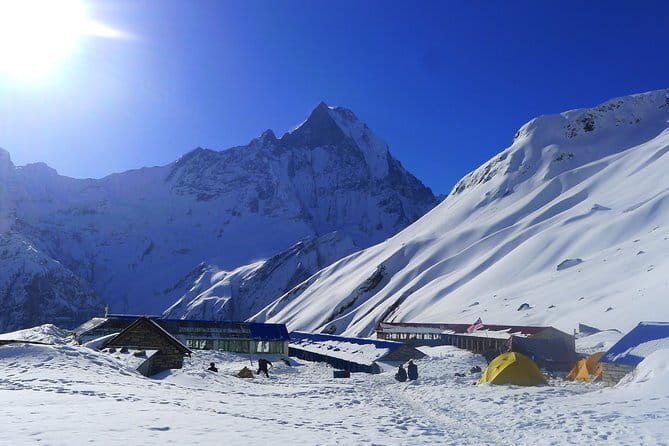
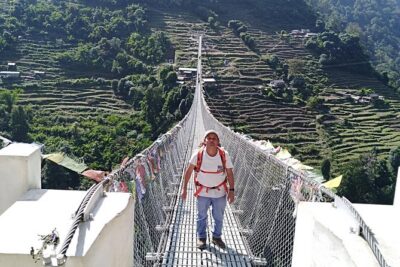
Day 3 heads through denser forest and across several suspension bridges before reaching Chamche. The trail follows the Marsyangdi River and its tributaries, with a gradual ascent as you continue.
The bridges are part of the character of the route, not just a way to get from one bank to another. They add a little excitement and make you aware of the steep river valleys below. If heights bother you, take your time and let other members of the group cross first.
This section also gives you a useful change from open farmland. Forest, rushing water, village paths, and steep hills keep the walking varied. The schedule appears to cut off part of the description, so ask your guide for the precise overnight location and walking time at the start of the day.
Same trailhead, a longer or shorter day out:
- Everest Base Camp Trek – 14 Days
★ 5.0 · 1,499 reviews - Everest Base Camp Trek
★ 5.0 · 842 reviews - Everest Base Camp Trekking
★ 5.0 · 485 reviews - Everest Base Camp Trekking – 13 Day
★ 5.0 · 365 reviews
Dharapani and the shift toward alpine country
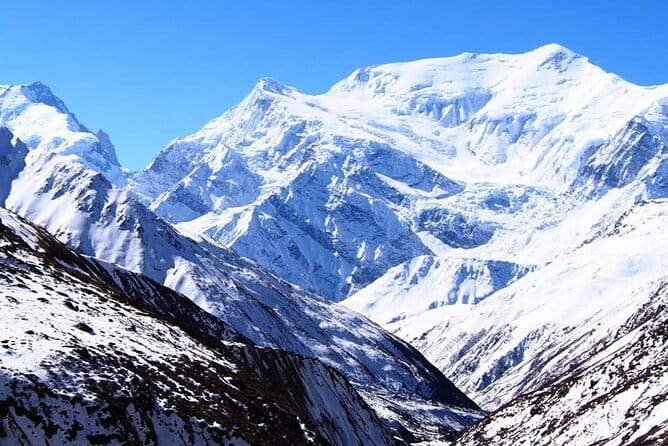
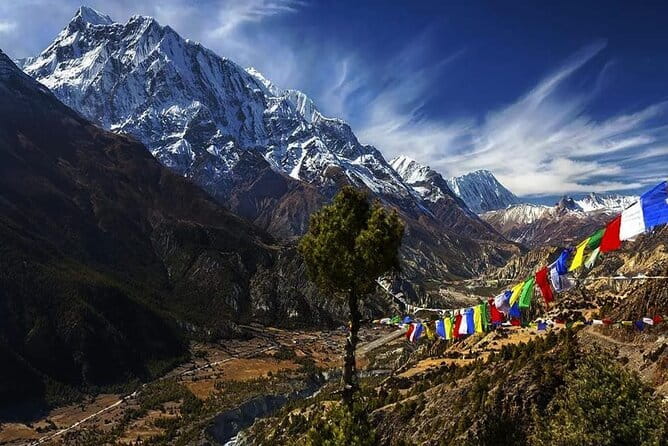
On Day 4, the route continues toward Dharapani through Gurung and Manangi villages. The cultural change is one of the best parts of the circuit. You are not simply walking through scenery. You are passing through communities with their own traditions, architecture, and mountain way of life.
The surroundings change as you gain height. Lower, warmer conditions give way to cooler air and more alpine terrain. This gradual transition is one reason the Annapurna Circuit remains so rewarding. You get several days to adjust before the route reaches its highest point.
Your guide can add useful context here, especially around local customs and village life. The company supplies a government-licensed English-speaking guide, and the personal care praised in connection with Ravi and Sandip is important on a route where pacing and altitude awareness matter.
Chame, pine forests, and big mountain views
Day 5 brings you to Chame, the administrative center of Manang District. The walk passes through pine forests and offers views of Lamjung Himal and Annapurna II.
Chame is more than another overnight stop. It marks a stronger shift toward the high mountain environment. The air is cooler, the vegetation changes, and the peaks begin to feel much closer.
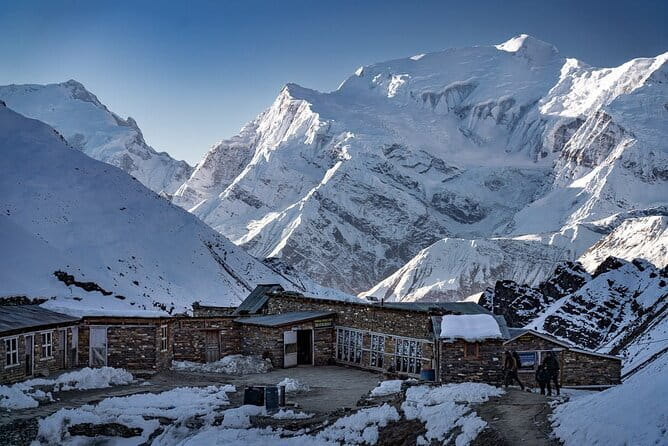
You will still be following a lodge-based route, so this is not a wilderness camping expedition. Tea-house accommodation gives you a simple bed and communal meal setting, but standards can vary. The package says standard tea-house lodging, so pack for basic conditions rather than hotel comfort.
Lower Pisang and the Manangi villages
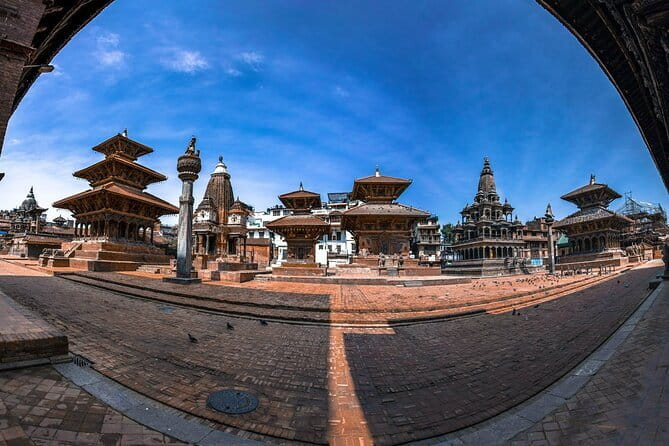
From Chame, Day 6 follows the trail toward Lower Pisang through forest and small settlements. Annapurna II, III, and IV become more striking as you approach Pisang, a traditional Manangi village.
Lower Pisang gives you a strong sense of the route’s changing culture and geography. The name Manangi refers to the people and traditions of the Manang region, where Tibetan Buddhist influence becomes more visible.
This is a good point to slow down and look around instead of treating each village as a quick lunch stop. The trek’s value comes from the sequence of small changes: architecture, vegetation, altitude, and mountain views all shift over several days.
Manang and the most useful rest day
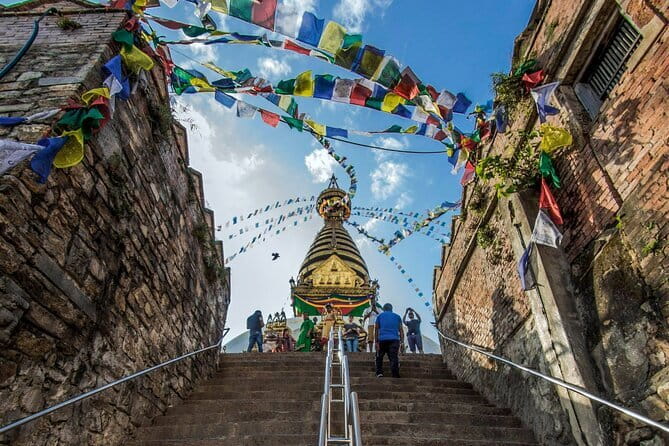
Day 7 takes you to Manang, one of the largest settlements on the route. It is known for traditional Tibetan culture and Buddhist monasteries, and it serves as the key place to pause before the higher section.
Day 8 is set aside for acclimatization. That rest day is not wasted time. It gives your body a better chance to adjust before Yakkharka, Thorong Phedi, and the pass.
You can hike to Gangapurna Lake or make a shorter walk to Praken Monastery. The monastery route offers views toward Gangapurna, Annapurna III, and Himalchuli. These outings let you gain some height without immediately committing to a long full-day push.
You should use this day sensibly. Keep the pace easy, drink enough, and tell your guide if you feel unwell. The itinerary includes a first-aid box and an oximeter, but equipment does not replace good judgment. High altitude deserves respect.
Yakkharka and the approach to Thorong Phedi
Day 9 leads from Manang to Yakkharka through sparse forest and high-altitude terrain. Views of Annapurna II and Gangapurna continue to frame the route.
The surroundings become more open and severe here. You will see fewer trees and feel the effects of altitude more clearly. This is where a steady pace matters more than speed. Your guide should help you keep the day manageable.
Day 10 continues to Thorong Phedi, the base area for Thorong La Pass. The trail gets steeper as you rise, and the schedule advises taking your time. That is exactly the right approach.
Thorong Phedi is the final stop before the pass, so the night may feel tense for some people. You know the hardest day is next. Get your clothing, water, and day bag organized before bed, and ask your guide about the expected early start.
Thorong La at 5,416 meters
Day 11 is the trek’s main test. You start early and climb to Thorong La Pass at 5,416 meters.
The climb is demanding, but the reward is a wide mountain panorama from the top. The pass is the point where the whole route’s gradual buildup pays off. You have moved from river valleys and farmland through forest, villages, and high country to one of the highest crossings on the Annapurna Circuit.
Do not judge this day by normal hiking standards. The altitude can slow you sharply, and the cold or wind may make the climb feel harder than the distance suggests. Walk at a controlled pace and stay close to your group and guide.
The pass is also a practical reason to choose a 13-day plan with an acclimatization day. The route does not rush directly from the lower hills to the high crossing. Even so, no itinerary can remove the physical challenge.
The finish at Pokhara
The trekking section ends after the pass, with Day 12 devoted to a bus journey to Pokhara. The package specifies private transport from the trek ending point to Pokhara, though the daily outline calls the journey a bus transfer. Confirm the exact vehicle arrangement before you start.
A night in Pokhara with breakfast is included in a standard twin-sharing room. The group also has a dinner together, giving you a comfortable moment to mark the end of the trek.
Pokhara is a logical place to recover. The package does not include extra hotel nights or activities there, so you can either continue onward or arrange more time independently.
Day 13 is intentionally open. You can stay longer in Pokhara, arrange a Chitwan National Park visit, drive back to Kathmandu, or continue to another destination. Transport back to Kathmandu is not included, so make those arrangements before the final day.
Guides, group size, and the support level
This is a private tour, meaning only your group takes part. That can make a real difference on a demanding route. Your pace, rest stops, and daily questions are handled within your own group rather than around a large mixed party.
A government-licensed guide is included, along with the guide’s food and accommodation. Two guides named in the feedback, Ravi and Sandip, were praised for professionalism, attention to detail, comfort, food, and organization. Those are the qualities I would want most on the Annapurna Circuit.
The package does not include a porter. That distinction matters. A guide leads and supports the group, but a porter is the person you hire to carry your main baggage. If you do not want to carry your own load over several long days, arrange porter service and confirm the cost before departure.
The company also provides a route map and a first-aid box with normal medical supplies and an oximeter. These are useful safeguards, but you still need moderate physical fitness. The operator specifically requires that level of fitness, and the 5,416-meter pass explains why.
What kind of person should book this trek?
I would recommend this trip to you if you want a classic Annapurna Circuit route with a guide, included meals, tea houses, permits, and a private group. It suits someone who prefers a structured itinerary but still wants contact with villages, monasteries, forests, and mountain communities.
It is also a good fit if you value practical support more than luxury. This is a lodge-based trek, not a premium hotel journey. You should expect simple accommodation and long walking days.
I would hesitate to recommend it if you dislike early starts, basic lodging, public transport, or uncertain road timing. I would also think twice if you have not prepared for sustained walking and high altitude. The price is appealing, but the pass is not a casual add-on.
The four published ratings are all five stars, with especially strong praise for guide care, organization, food, accommodation, and the mountain scenery. That positive pattern is encouraging, but the limited number of ratings means you should still read the inclusions carefully and ask direct questions about porter service, vehicle type, exact overnight points, and the return to Kathmandu.
Booking decision
Book this trek if you want a well-supported Annapurna Circuit route and can handle a serious mountain schedule. The included guide, permits, meals, tea houses, acclimatization day, and Pokhara transfer make $809.10 a reasonable starting price.
Before paying, confirm the Day 1 destination, the transport used to Pokhara, the porter cost, and your return plan to Kathmandu. If those details suit your budget and fitness, this trip offers a strong mix of Himalayan scenery, local culture, and practical support without the price of a luxury trek.
FAQ
How long is the Annapurna Circuit trekking experience?
The experience lasts approximately 13 days, including road transport from Kathmandu, the trek, the Thorong La crossing, and the transfer to Pokhara.
What is the highest point on the route?
The highest point is Thorong La Pass, at 5,416 meters.
Is a guide included?
Yes. A government-licensed, experienced guide is included, along with the guide’s food and accommodation.
Is a porter included?
No. Porter service for your baggage is not included and must be arranged at an additional cost if needed.
Are meals included during the trek?
Yes. Breakfast, lunch, and dinner are included during the trek, along with a cup of tea or coffee at breakfast.
Is accommodation included?
Yes. Tea-house accommodation during the trek is included, as well as one night in a standard twin-sharing hotel in Pokhara with breakfast.
Is there an acclimatization day?
Yes. Day 8 is an acclimatization day in Manang. You can visit Gangapurna Lake or walk to Praken Monastery.
Is airport pickup available?
Yes. Airport pickup by private vehicle is available if required.
Can I cancel for a full refund?
Yes. You can cancel at least 24 hours before the experience start time for a full refund. Changes or cancellations made less than 24 hours before the start time are not accepted for a refund.
Recently added around Kathmandu
- Ghorepani Poon Hill Trek★ 5.0 · 16 reviews
- Private Manaslu Circuit Trek at Himalayas★ 5.0 · 3 reviews
- Amazing 1 Day Trekking Experience in Kathmandu Nepal★ 5.0 · 24 reviews
- Ghorepani Poonhill Trek★ 5.0 · 5 reviews
- Upper Mustang Trekking★ 5.0 · 2 reviews
- Upper Mustang Trekking★ 3.0 · 2 reviews
- Upper Mustang Trekking★ 5.0 · 4 reviews
- Upper Mustang Trek★ 5.0 · 5 reviews
Annapurna Base Camp Treks, compared.
Trekking in Annapurna/Langtang/Everest/Upper Mustang regions
Read our review →
Kathmandu to Annapurna Base Camp (ABC) 5-Day Trek
Read our review →Browse the lists this tour appears in