
REVIEW · KATHMANDU
Trek to Everest Base Camp
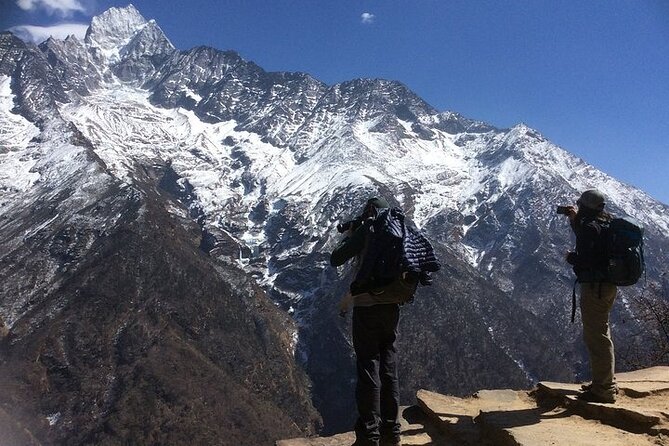
The Himalaya demands patience and sturdy legs. This 14-day Everest Base Camp Trek takes you from Kathmandu to Lukla, Namche Bazaar, Tengboche, Gorakshep, Everest Base Camp, and Kala Patthar before returning the same way. I like the well-paced acclimatization days in Namche and Dingboche, and I like that airport transfers, permits, accommodation, guides, and porters are arranged for you.
The main consideration is the altitude. You reach 5,364 meters at Everest Base Camp and 5,545 meters at Kala Patthar, with long walking days on rocky trails. The $1,597 price is fair for the services listed, but you still need to budget for mountain meals, drinks, equipment, insurance, tips, and possible personal costs.
Key points before you book
- Two acclimatization stops: Rest days in Namche Bazaar and Dingboche give your body time to adjust before the highest walking days.
- Everest Base Camp at 5,364 meters: You reach the famous base camp after a long day from Gorakshep over rocky, glacial ground.
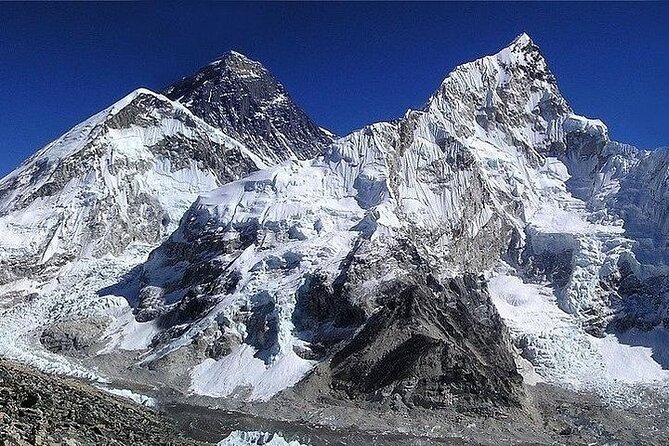
- Kala Patthar offers the big view: The early climb to 5,545 meters gives you wide views of Everest, Nuptse, Lhotse, Changtse, and the Khumbu Glacier.
- Private support from Kathmandu onward: Only your group takes part, with an English-speaking guide and one porter for every two clients.
- Tea house accommodation: You spend 11 nights along the trail, giving you a practical way to experience mountain villages without carrying camping equipment.
- Strong guide praise: Bimal, Pramish, and Ngawang receive repeated praise for organization, care, humor, and support.
What the $1,597 price covers
At first glance, $1,597 is a serious sum. For a trek at this altitude, though, the value depends on how much planning you want to hand over to someone else. This package includes airport pickup and drop-off by private transport, two nights in Kathmandu with breakfast, 11 nights in tea houses, trekking permits, entry fees, government and local taxes, an English-speaking guide, and a porter shared by two clients.
You also receive welcome drinks, a farewell dinner, and a trip certificate marking your Everest Base Camp achievement. The package includes dinner, but the details list breakfast twice in an unclear way, so I would confirm exactly which meals are included before paying.
The biggest cost gap comes once you reach the trail. Food and drinks in the mountains are not included, nor are hot showers, bottled water, hot water, battery charging, cold drinks, alcohol, donations, or other personal purchases. You must also pay for international airfare, a Nepal entry visa, travel medical insurance, emergency evacuation, personal equipment, and tips.
That matters because the advertised price is not the final cost of the trip. It is a useful organized trekking package, but you should leave room in your budget for mountain expenses and insurance. Tipping the guide and porter is expected.
More Everest Base Camp Treks in Kathmandu:
- Everest Base Camp Trek – 14 Days
★ 5.0 · 1,499 reviews - Everest Base Camp Trek
★ 5.0 · 842 reviews - Everest Base Camp Trekking
★ 5.0 · 485 reviews
Day 1: Kathmandu starts the practical way
You arrive in Kathmandu at 1,350 meters and receive a private transfer to your hotel. The evening briefing is used to prepare you for the trek and help you rest before the early start.
This first day is less about sightseeing and more about getting organized. The meeting point is Happyland Treks on Paknajol Marg, and the stated start time is 6:45 a.m. If you arrive with questions about equipment, permits, or the flight to Lukla, this is the moment to raise them.
Kathmandu is also your final base after the mountains. You return here on Day 13, with time to explore the city or rest, then spend your last morning shopping for souvenirs or taking a final stroll before your airport transfer.
Days 2 and 3: Lukla, Phakding, and the first climb to Namche
The flight from Kathmandu to Lukla takes about 35 minutes. The views are a memorable opening to the trek, but the real work begins after landing at 2,800 meters.
Your first walking day covers about 8 kilometers in three to four hours. You follow the Dudh Koshi River through stone-built villages, passing Cheplung at about 2,700 meters and Ghat at about 2,530 meters before reaching Phakding at 2,652 meters.
This is a sensible first day because the distance is short compared with what follows. You get your first night in a tea house and begin learning the steady pace needed for the route.
Day 3 brings the first major climb to Namche Bazaar. You walk through pine forest, cross the Dudh Koshi on a long suspension bridge, and pass through Monjo, the entrance to Sagarmatha National Park. Your permits are registered here before the trail climbs steeply toward Namche.
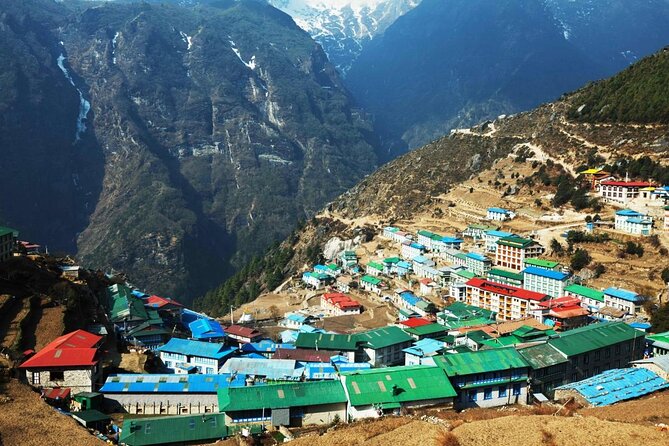
Namche sits at 3,440 meters and is one of the most important stops on the route. You may catch your first distant view of Everest, but the real value of Namche is practical. It is a place to pause, adjust to the altitude, and prepare for thinner air ahead.
Day 4: Namche gives you time to adjust
The rest day in Namche is not wasted time. It is a key part of the schedule, since rushing higher can make the trek much harder.
You can explore the town or take a three to four-hour hike to the Everest viewpoint hotel. That optional walk gives you a useful way to spend the day without going too far. Sunrise and sunset may bring views of Ama Dablam, Nuptse, Lhotse, and Everest.
I like this part of the itinerary because it balances ambition with common sense. You do not simply keep climbing every day. You get time to walk, rest, and let your body respond.
A few more treks around Kathmandu worth a look
- Annapurna Circuit Trek with Tilicho Lake
★ 5.0 · 368 reviews - Everest Base Camp Trekking – 13 Day
★ 5.0 · 365 reviews - Everest Base Camp Trek
★ 5.0 · 350 reviews - Everest Base Camp Trek -14 Days
★ 5.0 · 321 reviews
Days 5 and 6: Tengboche and Pangboche
From Namche, the trail climbs through Phunki Tenga toward Tengboche at about 3,800 meters. The walking distance is roughly 9.2 kilometers and takes five to six hours.
Tengboche is best known for its Buddhist monastery, described as the largest and most legendary in the Khumbu region. The setting is also a highlight, with broad Himalayan views and a chance to connect the trek with local religious life rather than treating the route as only a mountain challenge.
The next day covers about 9 kilometers in five to six hours. You descend through rhododendron forest to Debuche, cross the Imja Khola River, and continue toward Pangboche at 4,200 meters.
The route brings fine views of Ama Dablam and other peaks, but it also introduces a common feature of Himalayan walking: you do not simply go uphill. Descents can be tiring, and every downhill section has to be climbed again later.
Day 7: Dingboche and the second acclimatization pause
Dingboche is another important rest point. After several demanding days, you have time to relax or take an optional three to four-hour hike toward Nangkhartshang Peak, which reaches 5,083 meters.
This optional hike is designed to help your body adjust to altitude, but it is not a casual stroll. You should treat it as a serious effort, especially if you are already feeling tired or affected by the thinner air.
The itinerary is strongest when it gives you choices like this. You can walk higher for acclimatization, or you can preserve energy for the final approach. Your guide can help you decide how much is sensible on the day.
Days 8 and 9: Lobuche, Gorakshep, and Everest Base Camp
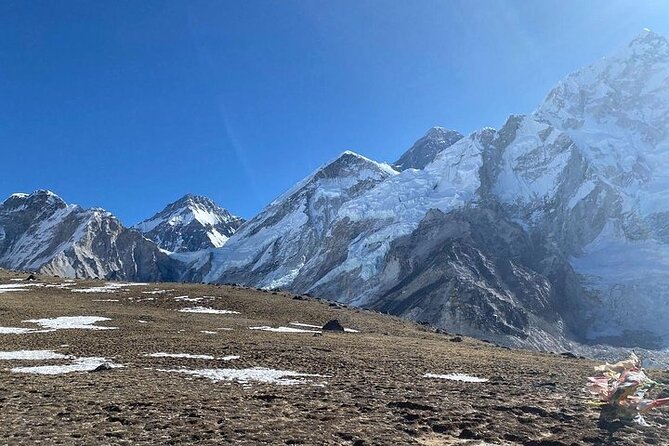
The route becomes more demanding as you ascend toward roughly 4,900 meters. The walking distance is listed at 11 to 12 kilometers, taking six to seven hours. You climb toward the moraine of the Khumbu Glacier, described as the highest glacier in the world.
At this point, the air is thin and the trail feels more serious. The scenery becomes increasingly dominated by rock, ice, and snow peaks. You need patience here. Short steps and a steady pace matter more than speed.
Day 9 is the big approach to Everest Base Camp. You walk about 15 kilometers in six to eight hours, reaching Gorakshep at 5,180 meters and Everest Base Camp at 5,364 meters.
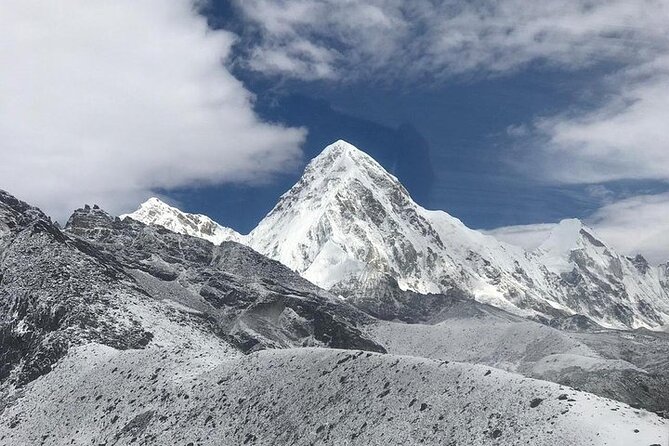
The trail from Gorakshep is described as challenging because of rocky ground and icefalls. You continue alongside the Khumbu Glacier before reaching the base camp area. This is the emotional high point of the trek, but it is not the easiest viewpoint of Everest itself. The next morning at Kala Patthar usually gives the wider mountain panorama listed in the program.
The day is long, and the altitude makes every kilometer count. You should expect the base camp visit to feel like an achievement rather than a gentle sightseeing stop. After photographs and time at the site, you return to Gorakshep.
Day 10: Kala Patthar delivers the great view
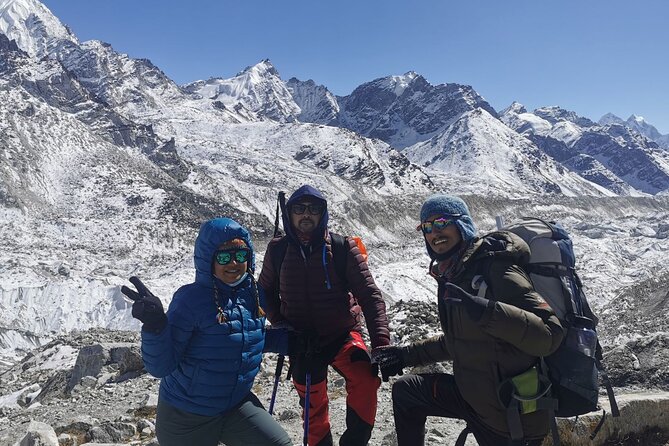
The early climb to Kala Patthar is one of the hardest and most rewarding parts of the route. You walk uphill for two to three hours to 5,545 meters, or 18,192 feet.
Kala Patthar means black rock in Nepali. From the summit, the itinerary promises views across the Khumbu Glacier and toward Everest, Nuptse, Changtse, and Lhotse. This is the morning for which many people are willing to endure the long approach.
After returning to Gorakshep, you descend all the way toward Pangboche at 4,320 meters. This is a demanding day because it combines an early high climb with many hours of downhill walking.
The reward is lower altitude by night. After reaching the highest points of the trek, dropping back down gives your body a welcome break.
Days 11 and 12: The long return to Lukla
Day 11 takes you from Pangboche back to Namche Bazaar. The route covers about 13 to 15 kilometers and takes seven to eight hours, with plenty of ups and downs.
You pass through Tengboche for lunch and walk among rhododendron and juniper trees. The route is also described as a place where you may see various animals and birds, adding a different feel from the bare, rocky ground near Base Camp.
Day 12 is the final mountain walking day. You descend about 16 kilometers over six to seven hours, following the Dudh Koshi River and crossing several suspension bridges before reaching Lukla at 2,800 meters.
A farewell celebration with the trekking crew is planned for the evening. That small detail matters. The trek is not only about reaching a famous point. It also depends on the people who carry bags, guide you over rough ground, and keep the schedule moving.
Days 13 and 14: Back to Kathmandu and home
You take an early flight from Lukla to Kathmandu, with a flight time of about 35 minutes. Once back at 1,350 meters, you can explore Kathmandu or use the day to rest.
Your final morning is open for a stroll or souvenir shopping. At the scheduled time, the operator drives you to Tribhuvan International Airport.
The return flight and mountain transport are among the parts that need flexibility in any trek plan, but the information provided does not state how delays are handled. Ask about this before departure, especially if you have a tight international connection.
Guides, porters, and the private format
This is a private activity, so only your group participates. That gives you more control over pace and rest stops than a large shared group might provide, although the itinerary still has fixed distances and overnight points.
You receive an English-speaking guide and one porter for every two clients. That means you should not plan to hand over every item you own. Pack carefully and keep personal essentials accessible.
Bimal is praised for organizing the trip and helping with Kathmandu arrangements, including restaurant and accommodation suggestions. Bimal and Pramish are also praised for keeping a group entertained and supported during the trek. Ngawang is named as a guide who helped create a positive experience.
Those details suggest that personal attention is a major strength of this operator. You should still ask who your assigned guide will be and how much luggage the porter carries.
Who should book this trek?
This route suits you if you have moderate physical fitness, enjoy long days on foot, and want a supported trek rather than a fully independent trip. You need to be comfortable with tea house accommodation, basic mountain services, steep climbs, rocky trails, and very high altitudes.
It is not a good choice if you want a relaxed holiday with short walks and hotel comforts. The 15-kilometer Base Camp day, the Kala Patthar climb, and the repeated altitude gains require real preparation.
The package is especially useful if you want permits, transport, guides, porters, and accommodation organized in one booking. It also works well for solo clients or private groups, since the activity is not described as a large shared departure.
Should you book the Everest Base Camp Trek?
Book it if you want a carefully structured route with two acclimatization days, tea house accommodation, private transfers, permits, a guide, and porter support included. The strongest parts are the patient altitude schedule, the spectacular high points at Base Camp and Kala Patthar, and the personal support associated with Bimal, Pramish, and Ngawang.
Think twice if your budget does not allow for food, drinks, insurance, equipment, tips, and possible personal expenses. You also need to be honest about your fitness. This trek offers a superb Himalayan goal, but it asks you to earn it one slow step at a time.
Free cancellation is available if you cancel at least 24 hours before the local start time. Cancellations or changes made later are not accepted for a refund.
FAQ
How long is the Everest Base Camp Trek?
The trek lasts approximately 14 days, including time in Kathmandu, the flight to Lukla, the mountain route, the return flight, and departure arrangements.
What is the highest point on the itinerary?
Kala Patthar is the highest listed point at 5,545 meters, or 18,192 feet. Everest Base Camp is listed at 5,364 meters.
Is airport pickup included?
Yes. Airport pickup and drop-off by private transport are included.
Where does the experience start?
The stated meeting point is Happyland Treks on Paknajol Marg in Kathmandu. The listed start time is 6:45 a.m.
What accommodation is included?
The package includes two nights in Kathmandu with breakfast and 11 nights in tea houses along the trekking route.
Are trekking permits and entry fees included?
Yes. Trekking permits, entry fees, government taxes, and local taxes are included.
Is a guide provided?
Yes. An English-speaking guide is included. The package also includes one porter for every two clients.
Are meals included?
Dinner, welcome drinks, a farewell dinner, and breakfast in Kathmandu are listed as included. Food and drinks in the mountains are not included, so you should budget separately for those costs.
What fitness level is required?
The experience states that you should have a moderate physical fitness level. The route includes long walking days, steep climbs, rocky terrain, and altitudes above 5,000 meters.
Recently added around Kathmandu
- Ghorepani Poon Hill Trek★ 5.0 · 16 reviews
- Private Manaslu Circuit Trek at Himalayas★ 5.0 · 3 reviews
- Amazing 1 Day Trekking Experience in Kathmandu Nepal★ 5.0 · 24 reviews
- Ghorepani Poonhill Trek★ 5.0 · 5 reviews
- Upper Mustang Trekking★ 5.0 · 2 reviews
- Upper Mustang Trek★ 5.0 · 5 reviews
- Upper Mustang Trekking★ 3.0 · 2 reviews
- Upper Mustang Trekking★ 5.0 · 4 reviews
Everest Base Camp Treks, compared.




Browse the lists this tour appears in