
REVIEW · KATHMANDU
Private Multi Day Tour Everest Base Camp with Gokyo Lake Trek
The Himalayas reward steady feet. This 18-day private trek links Everest Base Camp, Kala Patthar, and the Gokyo Lakes, giving you a broad look at the Khumbu region rather than a quick out-and-back walk. I like the built-in acclimatization days at Namche and Dingboche, and I like that the price includes meals, local fees, monument fees, airport transfers, and hotel-to-airport transport.
The main caution is that this is a demanding high-altitude trip, not a sightseeing holiday with a few walks added. I would also confirm exactly what the $3,000 price includes for guides, porters, domestic flights, lodging, and permits, since some of those details are described in the program but not clearly listed in the inclusions.
Key points at a glance
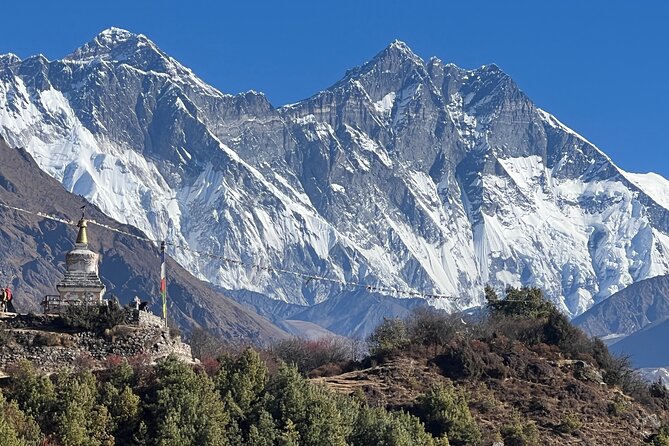
- Two classic viewpoints: Kala Patthar gives you a close view toward Everest, while Gokyo Ri opens wide views toward Everest, Cho Oyu, Lhotse, and the Gokyo Valley.
- A private arrangement: Only your group takes part, which allows the walking pace and daily questions to be handled more personally.
- Acclimatization is built in: Rest days at Namche Bazaar and Dingboche help you adjust before the highest sections.
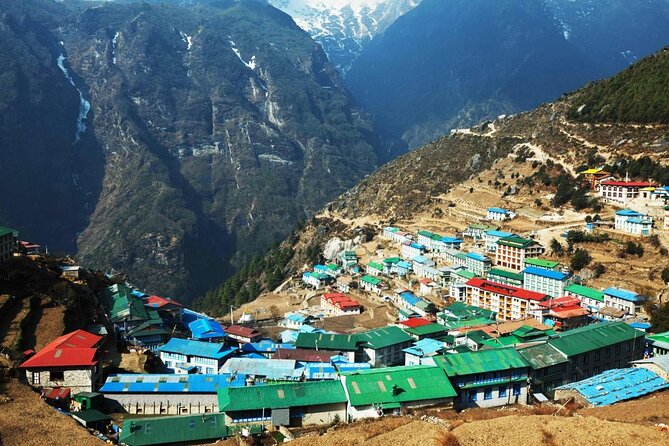
- Sherpa culture is part of the route: You visit Namche, Khumjung, Tengboche, Pangboche, and other villages, with time around monasteries, mani stones, markets, and local homes.
- The price includes many basics: Meals, airport transfers, an air-conditioned vehicle, entrance fees, government fees, and local fees are included.
- Weather can affect flights: The Kathmandu to Lukla and Lukla to Kathmandu flights depend on suitable conditions.
Why this route is more than an Everest Base Camp walk
Many people picture Everest Base Camp as a single goal, but this trip gives you several different rewards. You walk through pine forest near the Dudh Koshi River, pass suspension bridges, visit Sherpa villages, reach the Khumbu Glacier, and then cross toward the turquoise Gokyo Lakes.
The route also adds two major high points. Kala Patthar is the famous viewpoint near Gorakshep, while Gokyo Ri gives you a different angle on the Himalayan peaks. You do not simply walk to Base Camp and turn around. You cross from the Everest side toward Gokyo, then return through Phortse Thanga and Phakding.
That wider route is the biggest reason to consider this program. It takes more time and requires stronger fitness, but it offers more variety than a standard Base Camp itinerary.
The private format also matters. You are not placed into a large shared group, so your party can ask questions, pause for water, and discuss the day directly with the guide. The advertised group size is only your own party, although you should confirm how many porters and support staff will accompany you.
More Everest Base Camp Treks in Kathmandu:
- Everest Base Camp Trek – 14 Days
★ 5.0 · 1,499 reviews - Everest Base Camp Trek
★ 5.0 · 842 reviews - Everest Base Camp Trekking
★ 5.0 · 485 reviews
Kathmandu arrival and a useful pre-trek briefing
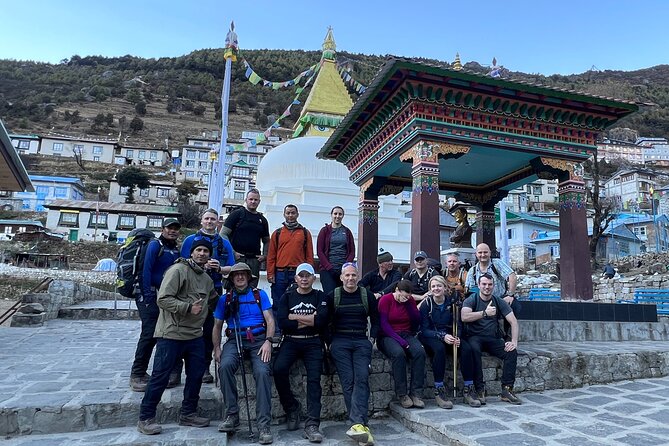
Your trip begins with airport pickup at Tribhuvan International Airport. A representative displays a Nepal Promote Treks & Expedition sign outside the terminal, then transfers you to your hotel by private vehicle.
The first day includes a briefing about the trek. Bring your passport, three passport-sized photos, and a clear copy of your travel insurance policy. This meeting is the right time to ask about the walking pace, accommodation, baggage limits, meals, domestic flights, and what happens if weather delays the Lukla flight.
Kathmandu also gives you a soft landing before the serious walking begins. The final two days return you to the valley, with visits to Boudhanath, Pashupatinath, and Patan Durbar Square. That combination helps frame the trek with both mountain scenery and Nepal’s religious and architectural traditions.
Lukla and Phakding: the trail begins beside the Dudh Koshi
The first trekking day starts with a morning flight from Kathmandu to Lukla, followed by a walk toward Cheplung and Ghat before continuing to Phakding. The day lasts about six hours and reaches Phakding at about 2,600 meters.
This is a sensible first walking stage. The route follows the Dudh Koshi and includes a pleasant introduction to the lower Khumbu region without immediately forcing you into a long, steep climb. You stay overnight in Phakding with breakfast, lunch, and dinner included.
The Lukla flight is practical but weather-sensitive. Poor conditions can affect the schedule, so keep some flexibility in your wider Nepal plans. The tour offers a flight back to Kathmandu on Day 16, but domestic mountain flights are never as predictable as a city bus or a major airline connection.
Phakding to Namche Bazaar and a day around Khumjung
The second trekking day is much longer, listed at about ten hours. You walk through pine forest, cross tributaries, pass Benkar, Chumoa, and Monjo, and complete permit checks before reaching the Tenzing-Hillary Bridge.
The bridge marks a memorable change in the route. After crossing it, the trail climbs toward Namche Bazaar. You may catch views of Thamserku and, depending on conditions, Everest from the approach. The final climb is the kind that makes a gradual pace and frequent water breaks useful.
Day 4 is meant for acclimatization in Namche. You do not simply sit in the lodge all day. The plan uses the high-walk, low-sleep approach, with a hike toward Khumjung and time to see the market, local restaurants, Sagarmatha National Park, and the surrounding Sherpa communities.
Namche is one of the most useful stops on the entire route. It is a busy mountain settlement by Himalayan standards, and it gives you a chance to adjust before the trail climbs higher. The Khumjung visit adds a more village-focused experience than Namche alone.
A few more treks around Kathmandu worth a look
- Annapurna Circuit Trek with Tilicho Lake
★ 5.0 · 368 reviews - Everest Base Camp Trekking – 13 Day
★ 5.0 · 365 reviews - Everest Base Camp Trek
★ 5.0 · 350 reviews - Everest Base Camp Trek -14 Days
★ 5.0 · 321 reviews
Tengboche and Dingboche, with monastery and mountain views
From Namche, the trail climbs toward Kyanjuma, then drops to Phunki Tenga before crossing the Dudh Koshi. The day finishes at Tengboche.
The program highlights an overnight stay in or around a Buddhist monastery temple. I would confirm the exact lodging arrangement before booking, since accommodation details can vary and the program does not name a specific property. Tengboche is an important cultural stop, and the monastery setting gives this section a slower, more reflective character after the steep walking.
The next day descends to Debuche, crosses the Imja Khola, and rises through Pangboche toward Dingboche. Mani stones line parts of the route, and the mountain views open toward Lhotse, Island Peak, and Ama Dablam.
Dingboche sits high enough that the pace needs attention. The day is listed at about 16 hours, but that appears to be an itinerary-duration estimate rather than a realistic walking time. Ask the operator how many hours you should expect on foot, as the difference matters when you are planning rest, meals, and energy.
Dingboche acclimatization and the climb to Lobuche
Day 7 is another acclimatization day. Instead of moving to a new village, you hike toward Nangkartshang Peak above Dingboche. The viewpoint is especially useful for seeing Ama Dablam, with the exact views depending on weather.
This is one of the program’s strongest practical features. High altitude affects people differently, and a planned rest day gives your body time to adjust before the route reaches the Khumbu Glacier and Gorakshep. You can spend the afternoon exploring Dingboche or resting.
The next stage follows the lateral moraine of the Khumbu Glacier toward Lobuche. Along the way, you pass stone memorials for climbers who died on nearby peaks. This is a quiet and sobering part of the route. It also reminds you that the Everest region is not just a scenic walking destination, but a place linked to serious mountaineering.
Lobuche sits near 4,900 meters, and breathing may feel harder here. Keep your pace slow. Your guide should be watching for altitude symptoms, but you also need to speak up quickly if you feel unwell.
Gorakshep, Everest Base Camp, and Kala Patthar
The Base Camp day takes you through Gorakshep, the last settlement in Khumbu on this section of the route. After lunch, you continue over rocky ground, moraine, streams, and glacier terrain toward Everest Base Camp at about 5,364 or 5,365 meters.
Base Camp itself is not a mountain summit and does not provide the clearest view of Everest. Its value comes from reaching the point used by climbers preparing for the South Col route, along with the surrounding glacier and high peaks. The walk is physically tiring because of the altitude and uneven ground.
The following day is dedicated to Kala Patthar, listed at 5,555 meters. The climb is hard, but the viewpoint gives you the close mountain panorama many people hope for, including Everest, Nuptse, Pumori, Cholatse, and Lhotse.
The itinerary lists an 8 am start, but ask the guide whether the timing changes for sunrise conditions. The provided schedule does not promise a sunrise hike, so you should not assume that it does. Either way, Kala Patthar is likely to be one of the hardest and most rewarding sections of the trip.
Crossing toward Dragnag and the Gokyo Lakes
After Gorakshep and Kala Patthar, the route moves toward Dzongla and Dragnag. The Day 11 description is short and somewhat unclear about the exact overnight point, giving an elevation near 4,830 meters and describing a five-hour day.
This is another place where I would ask for a precise route map and named accommodation. The broader plan is clear: you are leaving the main Everest Base Camp path and heading toward the Gokyo Valley. The daily descriptions, however, use several spellings for place names, including Dragnag, Dzongla, and Phorchethanga.
Day 12 brings you to Gokyo after a two-hour walk to Dragnag and a crossing point near 4,700 meters. The descent into the valley leads to the series of Gokyo Lakes, sacred to Hindus and Buddhists. The lakes, glaciers, and high peaks give this section a different feel from the dark rock and moraine around Gorakshep.
Gokyo is a major reason to choose this route. The lakes are not just a second photo stop after Base Camp. They create a calmer setting, with open water and mountain reflections replacing much of the glacier terrain.
Gokyo Ri and the return through Phortse Thanga
The itinerary combines Gokyo Ri with a long day toward Phortse Thanga. It lists roughly ten hours of trekking, so you should expect a demanding stage. Gokyo Ri provides views toward Everest, Cho Oyu, Lhotse, and the Gokyo Valley, and it offers a different perspective from Kala Patthar.
The return route passes through forests, rivers, glaciers, and traditional villages. You have another chance to see Sherpa communities away from the larger Namche market, although the demanding walking schedule may limit long village visits.
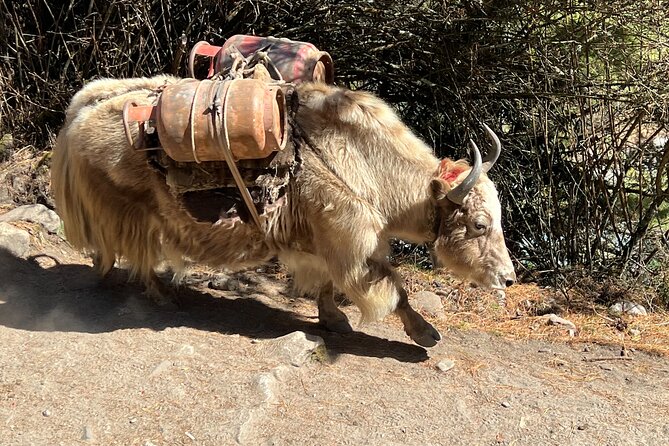
The next section heads toward Phakding through Phorchethanga and lower elevations. It is still described as a tough day, but the descent generally gives your lungs some relief. The route includes mountain scenery, traditional houses, the Dudh Koshi, and the chance to see yaks and other local wildlife.
The place names and elevations in this part of the schedule are not perfectly consistent. That is not unusual in a long trek description, but I would request the final day-by-day route before departure so you know where each night is planned.
Lukla farewell, Kathmandu, and the valley tour
The last trekking day returns you to Lukla along the Dudh Koshi. At the end, the program includes a farewell gathering with the Sherpa guides and porters, local chang beer, and traditional dancing.
This is a fitting close to the mountain section. You have spent more than two weeks moving through villages with a local support team, so a shared celebration gives the trip a human finish. If you do not drink alcohol, the social part still matters, and you can simply enjoy the music and company.
The next morning, a flight returns you to Kathmandu. The afternoon is free, which is useful after the trek. Day 17 is a guided cultural tour of Boudhanath, Pashupatinath, and Patan, followed by airport transfer on Day 18.
The final airport transfer is scheduled about three hours before your flight. The tour includes an air-conditioned vehicle for the road transfers, but international and domestic airfare are not included in the stated price.
Is $3,000 good value?
At $3,000 per person, this is not a budget walk. It is a substantial private trip with airport pickup, private vehicle transfers, meals, entrance and monument fees, government and local fees, accommodation arrangements, a guide, and porter support described across the program.
The value depends on what is confirmed in writing. The inclusions specifically list 15 dinners, 15 lunches, and 17 breakfasts, along with transport and fees. International and domestic flights, travel insurance, and additional services are excluded. Because the itinerary mentions a porter and trekking support but the inclusions do not clearly spell out every staff cost, ask for a full cost sheet before paying.
The strongest praise connected with the operator focuses on a trustworthy owner, a good price, and comfortable transport. That is encouraging, but only two published ratings are shown, so I would treat the feedback as positive but limited rather than as a large body of evidence.
Who should book this trek?
I would recommend it to a fit walker who wants both Everest Base Camp and Gokyo Lakes, and who prefers a private group over a fixed large departure. It suits someone who values local village visits, Buddhist sites, mountain viewpoints, and a slower acclimatization plan.
You should be ready for long days, rough paths, suspension bridges, cold conditions, and elevations above 5,000 meters. Strong physical fitness is explicitly required, and travel insurance is your responsibility.
I would not choose this trip if you want a relaxed holiday, fixed flight certainty, or a short introduction to Nepal. I would also ask detailed questions about guide qualifications, porter arrangements, accommodation, permits, luggage limits, and the exact route between Kala Patthar and Gokyo before making the final decision.
FAQ
How long is the Everest Base Camp and Gokyo Lake trek?
The tour lasts approximately 18 days, including arrival and departure days, the mountain trek, and a guided Kathmandu Valley visit.
Where does the tour begin?
The tour begins at Tribhuvan International Airport in Kathmandu, Nepal. Airport pickup is offered, and the listed start time is 7:15 am.
Is this a private tour?
Yes. Only your group participates in the private tour or activity.
Are meals included?
Yes. The stated inclusions are 15 dinners, 15 lunches, and 17 breakfasts.
Are flights included in the price?
No. International and domestic airfare are not included. The itinerary includes planned flights between Kathmandu and Lukla, but you should confirm how those tickets are arranged and priced.
What fitness level is required?
The tour states that you should have a strong physical fitness level. The route includes high-altitude walking, long days, Everest Base Camp, Kala Patthar at about 5,555 meters, and Gokyo-area trekking near 4,700 meters.
What happens if bad weather cancels the trip?
The experience requires good weather. If poor weather causes cancellation, you are offered a different date or a full refund. The stated cancellation terms allow a full refund when you cancel at least six full days before the start time, with reduced or no refund available closer to departure.
Should you book it?
Book this tour if you want the full Khumbu experience in one private trip: Everest Base Camp, Kala Patthar, Gokyo Lakes, Sherpa villages, Tengboche, and Kathmandu’s major religious sites. The route is demanding, but the two acclimatization days and broad itinerary add real value.
Before booking, get the flight, lodging, guide, porter, permit, and baggage details in writing. If those costs are confirmed as covered or clearly priced, the $3,000 package can be a sensible choice for a well-supported Himalayan adventure.
Recently added around Kathmandu
- Ghorepani Poon Hill Trek★ 5.0 · 16 reviews
- Private Manaslu Circuit Trek at Himalayas★ 5.0 · 3 reviews
- Amazing 1 Day Trekking Experience in Kathmandu Nepal★ 5.0 · 24 reviews
- Ghorepani Poonhill Trek★ 5.0 · 5 reviews
- Upper Mustang Trekking★ 5.0 · 2 reviews
- Upper Mustang Trekking★ 3.0 · 2 reviews
- Upper Mustang Trekking★ 5.0 · 4 reviews
- Upper Mustang Trek★ 5.0 · 5 reviews
Everest Base Camp Treks, compared.






Browse the lists this tour appears in