
REVIEW · KATHMANDU
Mardi Himal Trek
The best mountain days often begin quietly. The 10-day Mardi Himal Trek takes you from Kathmandu to Pokhara, through oak and rhododendron forest, across grassy ridges, and up to close views of Machhapuchhre and the Annapurna range. It offers a less crowded alternative to Nepal’s better-known trekking routes without giving up the high mountain scenery.
I like the mix of forest walking and open ridge trails, which gives the route a pleasing change of pace. I also like the practical support: airport transfers, a guide, porter service, trekking permits, guesthouse stays, a duffel bag, sleeping bag, and down jacket are included. The main consideration is the physical demand. Several days involve five to seven hours of walking, with steep climbs, colder conditions above the tree line, and basic lodge accommodation.
The trek costs $821.34 per person and accepts groups of up to 15 people. That is fair value for a guided Nepal trek with transport, meals, permits, hotels, and equipment support included, though you still need to budget for drinks, some meals, insurance, tips, and personal gear.
Key points before you book
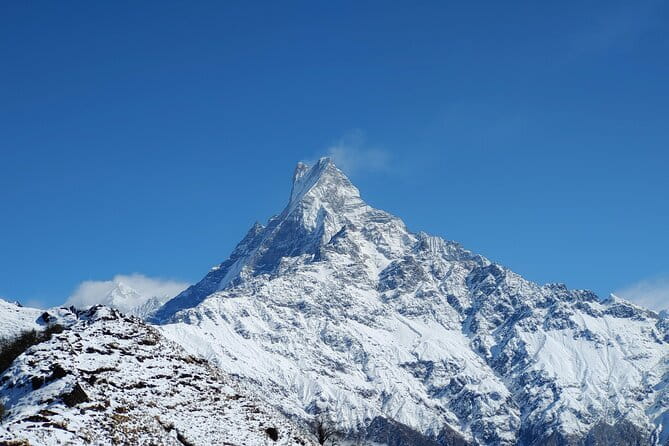
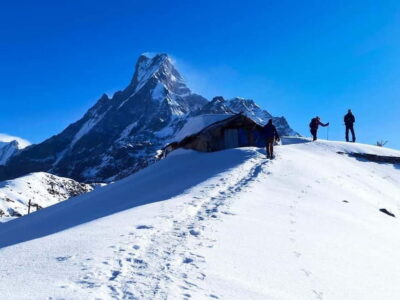
- Mardi Himal Base Camp reaches a high grassy ridge with close Annapurna views, including Machhapuchhre, Annapurna South, and Hiunchuli.
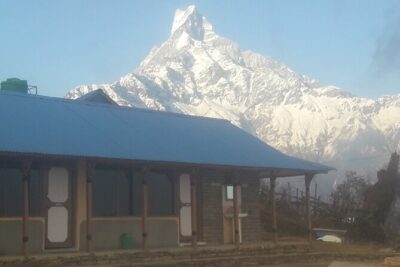
- The route begins near Australian Camp, where clear weather can reveal the Annapurna and Manaslu ranges.
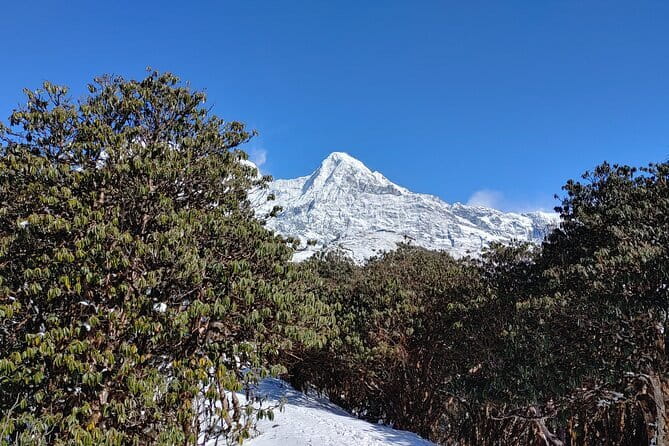
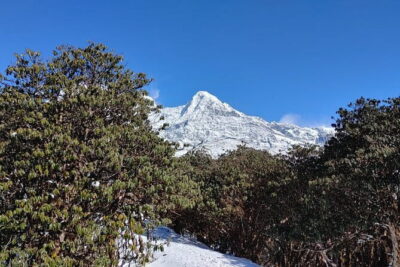
- Forest Camp is one of the quietest parts of the trek, with oak, maple, and rhododendron trees along the trail.
- The trip uses both tourist buses and 4WD transport, so the road days are long but organized.
- A guide, porter, permits, meals, hotels, and trekking equipment support are included, which reduces the amount you must arrange yourself.
- The group limit is 15 people, small enough for a personal feel but not a private trek.
Why Mardi Himal feels different from busier Nepal routes
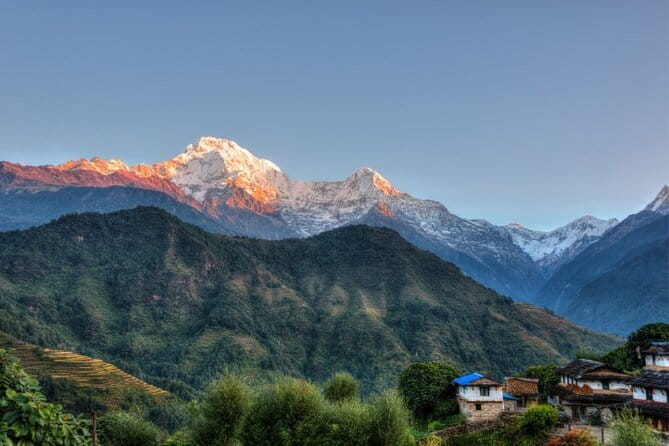
Mardi Himal sits south of the Annapurna Base Camp route, but the walking experience is not the same. Instead of spending the whole trek in one heavily used valley, you move through forests, village paths, open ridges, and high camps. The scenery changes often, and the route can feel pleasantly quiet during favorable trekking seasons.
That quiet is a real part of the appeal. You will not encounter a steady stream of trekkers at every turn. One trekker described having hardly any other tourists along the way, which is exactly the sort of detail that matters if you want time to walk at your own pace and enjoy the views without a busy trail around you.
The route still requires effort. This is not a gentle sightseeing trip with a few short walks added on. You should expect several hours of walking each day, uphill sections, cold temperatures at higher elevations, and simple guesthouse rooms. The published guidance calls for a moderate fitness level, and that is a sensible minimum.
More Mardi Himal Treks in Kathmandu
- Mardi Himal Trek
★ 5.0 · 41 reviews - Mardi Himal Trek Nepal
★ 5.0 · 29 reviews - Mardi Himal Trek – 8 Days | Hidden Gem of the Annapurnas
★ 5.0 · 19 reviews
Day 1: A useful Kathmandu arrival
Your trip begins with an airport pickup at Tribhuvan International Airport. An Ace the Himalaya representative meets you outside the terminal and takes you to your Kathmandu hotel in a private tourist vehicle.
The pre-trek meeting is important. You meet your guide, receive the company duffel bag and cap, and have time to ask practical questions. Bring your passport, three passport-size photographs, and a readable copy of your travel insurance policy. You will also sign a trip form and a non-liability disclaimer.
This first day is less about sightseeing and more about getting organized. Use the meeting to confirm the walking plan, porter arrangements, equipment, and any concerns about your own pace.
Day 2: The long road from Kathmandu to Pokhara
The trip to Pokhara takes about six to seven hours by tourist bus, covering roughly 200 kilometers. It is a long road day, but it gives you an early look at Nepal beyond the capital.
From the bus, you may see green hills, changing villages, mountain ranges, and the Trishuli and Marshyangdi Rivers. Rivulets and roadside scenery fill much of the journey. The bus ride is not luxurious, and traffic can affect the timing, so do not treat the arrival hour as exact.
Once in Pokhara, you are transferred to a hotel. Two nights in Pokhara are included in the package, giving you a useful base before and after the trek. The city is also a welcome change from Kathmandu, with its lakeside setting and calmer pace.
Day 3: Kande to Australian Camp
The first walking day begins with a one-hour jeep ride to Kande. From there, you walk uphill for about three hours to Australian Camp.
Australian Camp is a strong opening point because it gives you mountain scenery before the trail becomes more remote. On a clear day, you can see the Annapurna range, Machhapuchhre, the Manaslu range, and the surrounding green hills. That first broad view helps you understand the scale of the days ahead.
The climb is manageable for anyone prepared for regular uphill walking, but do not underestimate it simply because it is the first day. Your legs are still adjusting to the pack, the trail, and the change in routine. The night is spent in guesthouse accommodation, generally in twin-share or dormitory rooms.
Same trailhead, a longer or shorter day out:
- Everest Base Camp Trek – 14 Days
★ 5.0 · 1,499 reviews - Everest Base Camp Trek
★ 5.0 · 842 reviews - Everest Base Camp Trekking
★ 5.0 · 485 reviews - Annapurna Circuit Trek with Tilicho Lake
★ 5.0 · 368 reviews
Day 4: Into the oak and rhododendron forest
The route from Australian Camp toward Forest Camp takes around six to seven hours. The trail first drops toward Pothana at about 1,950 meters, then climbs again to Deurali at about 2,100 meters.
At Deurali, you turn toward Forest Camp. This section is one of the most appealing parts of the trek. The trail enters a quiet woodland of oak, maple, and rhododendron trees. The forest provides shade and a different mood from the open mountain views at Australian Camp.
The day has a useful rhythm of descent and ascent, but that also makes it tiring. You lose elevation and then have to regain it, so pacing matters. Forest Camp is not a major resort area. Expect basic accommodation, a simple meal, and a quiet evening rather than many comforts.
Day 5: Higher ground, grassy ridges, and Low Camp
The next stage leaves much of the forest behind. After a steep climb, the trail reaches a grassy ridge. In winter, parts of this ridge may be covered in snow, so conditions can change the feel and difficulty of the walk.
The itinerary describes roughly six to seven hours of walking toward Low Camp. The higher you go, the more the mountains seem to move closer. From Low Camp, you can enjoy views toward Annapurna South and Machhapuchhre while having tea and time to adjust to the altitude.
There is a small wording issue in the day-by-day schedule, where Mardi Himal Base Camp appears as the stop even though the description clearly places you at Low Camp. The later days confirm that Low Camp is the overnight point before High Camp and the upper viewpoint. Ask the operator to confirm the exact overnight locations before departure.
Day 6: Climbing above the tree line to High Camp
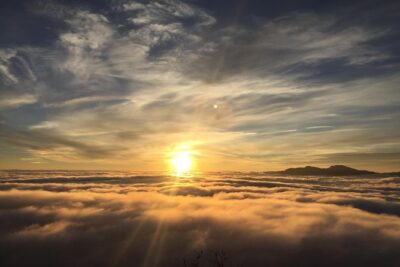
This day begins early so you can see the sunrise over the mountains. After breakfast, you continue across grassy ridges toward High Camp.
The trail climbs throughout the day and takes about four to five hours. Above the tree line, the air becomes colder and the protection from the forest disappears. Winter snow can cover parts of the route, and the temperature drops as you gain height.
High Camp is the practical launching point for the main viewpoint. Accommodation remains basic, and the cold can make the evening feel long. Bring warm layers, use the supplied sleeping bag properly, and keep essential items close rather than buried in your main luggage.
Day 7: The reward at the upper viewpoint
The main walking goal comes early this morning. You leave High Camp and walk for several hours toward the upper viewpoint, also described as Mardi Himal Base Camp.
The reward is a wide view into the Annapurna Sanctuary, with the south face of Annapurna, Hiunchuli, and Machhapuchhre filling the horizon. The close view of Machhapuchhre, also called Fishtail, is one of the strongest reasons to choose this trek. The ridge setting makes the mountain views feel immediate rather than distant.
After spending time at the viewpoint, you return to High Camp for breakfast. You then have lunch and a rest before walking down for about two hours to Low Camp.
This is a demanding day because the early start, climb, cold, and descent all come together. Still, it is also the day that gives the route its purpose. If mountain views are your main reason for coming, this is the stretch you will remember.
Day 8: Descending to Siding and returning to Pokhara
The final trekking day takes you downhill to Siding village. The descent covers a noticeable change in elevation and takes about five hours.
Siding provides a chance to stop for lunch before the road journey begins. From there, a 4WD jeep takes you back to Pokhara. The transition is abrupt: one moment you are walking through mountain villages and forest, and the next you are on a rough road heading toward the city.
That road transfer is useful, but it may not be smooth. The advantage is that you avoid a longer walk out. Once in Pokhara, the group celebrates the completed trek, with time to rest at the hotel.
Day 9: Back to Kathmandu and a farewell meal
The return bus to Kathmandu takes about seven hours. Like the outbound trip, it is a full travel day, but the route offers one last look at Nepal’s hills, rivers, and mountain country.
In Kathmandu, an Ace representative transfers you to your hotel. The evening includes a farewell dinner at a traditional Nepalese restaurant with cultural performances. This is a pleasant closing touch after several nights in basic mountain accommodation.
Because the drive can be long, keep water, snacks, and anything you need during the journey in your daypack. Your larger luggage may not be immediately beside you on the bus.
Day 10: Airport transfer and departure
The final day is simple. An airport representative transfers you from your Kathmandu hotel to Tribhuvan International Airport for your flight home.
The stated start time is 8:00 a.m., but airport transfer timing should be confirmed against your flight schedule. The experience ends at the airport, completing the arranged service.
What the $821.34 price really covers
The price includes more than the walking itself. You receive airport transfers, two hotel nights in Kathmandu, two hotel nights in Pokhara, tourist bus transport between the cities, and tourist vehicle transport for the trekking route.
The trekking package also includes a licensed English-speaking guide, one porter for every two clients, guesthouse accommodation for five nights, trekking permits, nine breakfasts, six lunches, and six dinners. The duffel bag and sun hat are yours to keep, while the down jacket and sleeping bag are supplied for the trek and returned afterward.
That makes the price attractive for someone who wants a supported trip rather than a self-arranged trek. A group of two can also share one porter, which helps keep the cost reasonable.
There are important extra costs. You pay for lunch and dinner in Kathmandu and Pokhara, drinks, international airfare, the Nepal entry visa, personal equipment, travel insurance, and tips for the guide and driver. Tipping is expected, so include it in your planning.
One detail deserves clarification before you pay: the inclusions list mentions airfare from Kathmandu to Lukla and back, but the itinerary uses buses, jeeps, and road transport for the Mardi Himal route. Lukla flights do not appear in the day-by-day plan. Ask Ace the Himalaya to confirm whether this is an accidental leftover item or applies to a different itinerary.
Guide support and the human side of the trek
The strongest praise for this trip focuses on the guiding and support team. Ishwor and Ramesh are specifically praised for creating a safe, friendly experience. Rajan, along with the sherpas Suka and Bizal, also received warm recognition for making the trip enjoyable.
Deepak Neupane is noted for setting a comfortable pace and responding to individual needs. Krish is praised for keeping a first-time trekker safe and cared for. Ram and porter Kismat are remembered for their patience and attention to small details.
Names alone do not guarantee the exact staff on your departure, but they show the kind of service the company aims to provide. If you are new to trekking, tell your guide early about your pace, sleep, health, and comfort needs. Good communication matters more than trying to appear tougher than you feel.
The group limit of 15 is another practical advantage. It is not a private departure, but it is small enough for the guide to keep track of the group and for you to meet fellow trekkers without joining a large procession.
Who should choose this trek?
This route suits you if you want strong Himalayan views but prefer a quieter path than the major Annapurna routes. It is also a good choice if you want a guided introduction to Nepalese trekking, with transport, meals, permits, porter service, and equipment support handled in one package.
You should be comfortable walking five to seven hours on some days. You should also accept basic guesthouses, changing weather, cold mornings, steep sections, long road transfers, and limited control over the daily schedule.
The trek may not suit you if you want private rooms, short walking days, luxury lodge facilities, or a trip with no difficult climbs. The itinerary calls for moderate fitness, but the ridge sections and upper viewpoint still demand preparation.
Should you book the Mardi Himal Trek?
I would recommend it if you want a well-supported mountain route with a quieter feel, strong views of Machhapuchhre and Annapurna, and a clear 10-day plan from Kathmandu. The combination of forest, village, ridge, and high-camp walking gives you more variety than a simple out-and-back route.
Before booking, confirm the exact overnight stops, the Lukla airfare reference, current guide assignment, and what personal equipment you must bring. If you are prepared for long walking days and basic accommodation, the $821.34 price offers solid value. If you want comfort above all else, choose a shorter or more lodge-focused Nepal trip instead.
FAQ
How long is the Mardi Himal Trek?
The experience lasts approximately 10 days, including arrival and departure days, road travel, the trek, and hotel stays in Kathmandu and Pokhara.
Where does the trek begin?
The trip begins with airport pickup at Tribhuvan International Airport in Kathmandu. The walking portion begins near Kande after transport from Pokhara.
How long does the Kathmandu to Pokhara journey take?
The tourist bus journey takes about six to seven hours and covers roughly 200 kilometers.
How many people can join the group?
The maximum group size is 15 people.
What fitness level is required?
A moderate level of physical fitness is required. You should be prepared for several days of walking, including days lasting around five to seven hours and steep uphill sections.
Is a trekking guide included?
Yes. A licensed English-speaking trekking guide is included.
Is porter service included?
Yes. One porter is provided for every two clients.
Are meals included?
Nine breakfasts, six lunches, and six dinners are included. Lunch and dinner in Kathmandu and Pokhara are not included, and drinks are extra.
Is travel insurance included?
No. You must arrange travel insurance that covers emergency high-altitude rescue and evacuation.
What happens if poor weather cancels the experience?
If poor weather causes cancellation, you are offered a different date or a full refund. Standard cancellation allows a full refund if you cancel at least 24 hours before the experience start time.
Recently added around Kathmandu
- Ghorepani Poon Hill Trek★ 5.0 · 16 reviews
- Private Manaslu Circuit Trek at Himalayas★ 5.0 · 3 reviews
- Amazing 1 Day Trekking Experience in Kathmandu Nepal★ 5.0 · 24 reviews
- Ghorepani Poonhill Trek★ 5.0 · 5 reviews
- Upper Mustang Trekking★ 5.0 · 2 reviews
- Upper Mustang Trekking★ 5.0 · 4 reviews
- Upper Mustang Trek★ 5.0 · 5 reviews
- Upper Mustang Trekking★ 3.0 · 2 reviews
Mardi Himal Treks, compared.
Mardi Himal Trek – 8 Days | Hidden Gem of the Annapurnas
Read our review →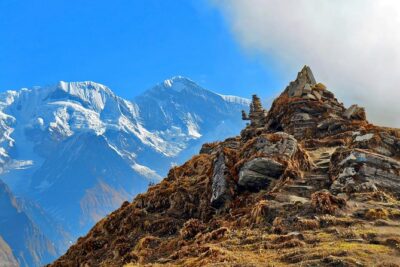
Browse the lists this tour appears in