
REVIEW · POKHARA
Mardi Himal Trek
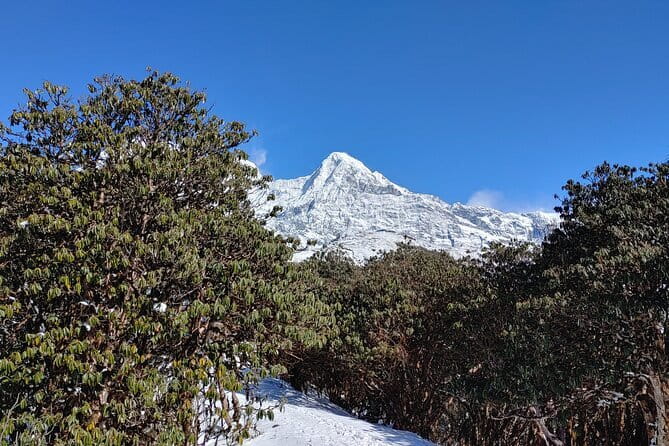
Mountain views arrive early here. The Mardi Himal Trek packs forests, village life, and close views of Machhapuchhre into five days from Pokhara. I like the private format, with your own guide and transport, and I like that the price includes trekking meals, lodging, permits, and porter support. The main caution is the physical demand: you need a moderate fitness level, and several days run about seven hours.
I also like the thoughtful personal support described by past clients, especially from organizer Jayaram and guides such as Lama and Navaraj Nepal. The route is short enough to fit neatly into a Nepal holiday, yet it still reaches the Mardi Himal View Point or Base Camp. Just confirm the meal count and exact overnight stops before paying, since the supplied details list five lunches in one place and four in another.
What makes this trek worth your time
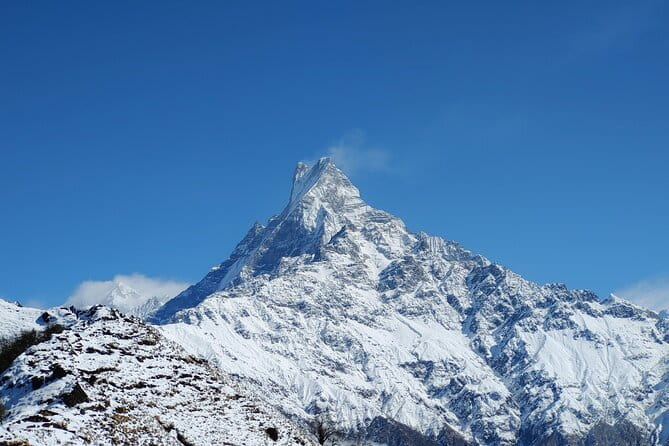
- Machhapuchhre close-up: The route gives you striking views of Fishtail, Annapurna, and Hiunchuli.
- A private five-day format: Your group travels with its own guide rather than joining a large departure.
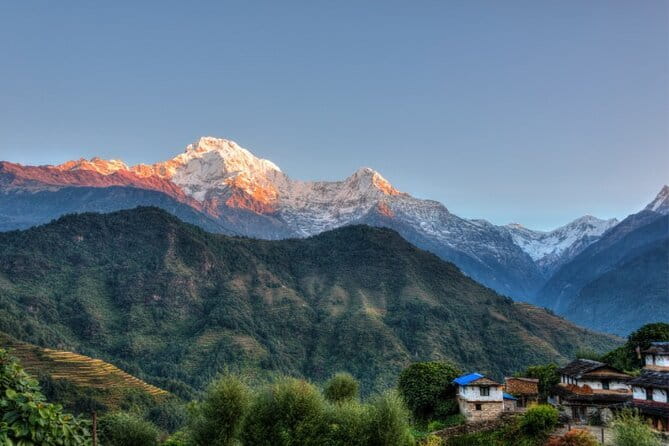
- Village life at Landruk: The final mountain day brings views of homes, farms, and local daily life.
- Useful inclusions: Transport, guide, porter support, lodging, trekking meals, fees, and seasonal fruit after dinner are covered.
- Flexible high-point choice: On the key hiking day, you can choose Mardi Himal Base Camp or the View Point.
- Strong support reputation: Specific guides praised in client feedback include Lama and Navaraj Nepal, while Jayaram receives repeated praise for planning help.
Why the Mardi Himal route works so well from Pokhara
At $399 for about five days, this trek offers a practical package for people who want a proper Himalayan walk without committing to a much longer route. Your price includes private transportation, a government-licensed experienced guide, porter support based on two guests per porter, trekking accommodation, meals, and all fees and taxes.
That matters because mountain costs can add up quickly. Here, you are not only paying for the walking days. You are also paying for the road transfers at the beginning and end, local coordination, food, and someone to help manage the route.
The trek begins and ends in Lakeside Pokhara. Pickup is scheduled for 10:45 a.m., and the tour ends back at your hotel in Pokhara. That makes this easy to attach to a stay beside Phewa Lake, though you should leave some room in your wider Nepal schedule in case weather affects the route.
The private setup is one of the strongest features. You can walk at a pace suited to your group, ask your guide to explain village life, and discuss whether you prefer the View Point or Base Camp on the high day. The tradeoff is that a private trip may feel less social than a large group trek, but you gain control and direct attention.
More Mardi Himal Treks in Pokhara
- Pokhara: 4-Day Mardi Himal Trek
★ 4.9 · 59 reviews - Private Mardi Himal Trek
★ 5.0 · 42 reviews - From Pokhara: 4-Day Mardi Himal Base Camp Trek
★ 4.9 · 31 reviews
Day 1: From Lakeside Pokhara to Dhampus
Your guide picks you up at your Pokhara hotel and drives for about one hour to Dhampus. This is the practical start of the trek, not simply a transfer to a scenic viewpoint. Once you arrive, you begin walking toward the first overnight area.
The full day is listed at about seven hours, so do not treat the first morning as a gentle stroll. Your body may still be adjusting to carrying a daypack and walking on mountain paths. Keep your first-day load light, and place rain protection, water, snacks, and a warm layer where you can reach them quickly.
Dhampus is a useful opening point because the route gets you out of Pokhara without spending a full day on the road. The change from city to mountain village happens quickly. You will begin seeing the local homes and farmland that become a recurring part of the walk.
Accommodation is provided on a double-occupancy basis. That usually means you should expect to share a room with your companion if you book as a pair. If you are traveling alone, ask the provider how room sharing or any single supplement is handled, since that detail is not specified.
Day 2: Forest Camp, Low Camp, and the push toward High Camp
The second-day description includes Lwang Ghalel as the stop, while the route notes describe walking from Forest Camp toward High Camp and passing through Low Camp. Because those details do not line up perfectly, confirm the actual overnight location before departure.
What is clear is that this is a serious walking day of about seven hours. You will move through forested sections and gain access to broad mountain views near Low Camp. The higher you go, the more the route becomes about open mountain scenery rather than village streets and cultivated fields.
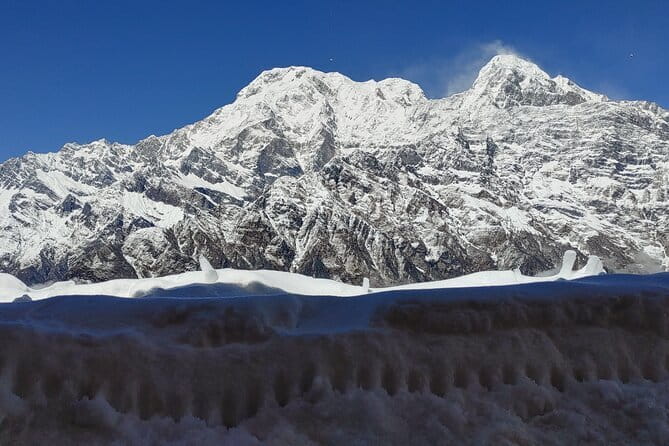
Low Camp is important because it provides a place to pause and look toward the Annapurna range. The views can be excellent, but mountain weather changes quickly. Clouds may hide the peaks, so avoid judging the day only by the first hour. Your guide can help decide when to stop for the best chance of clear views.
The climb toward High Camp is the point where pacing becomes important. You do not need to race. A slow, steady rhythm is more useful than a fast start, especially if you are not used to long uphill days. The trek is marketed for people with moderate fitness, not for complete beginners who have never walked for several hours.
Meals are included during the trek, with breakfast, lunch, and dinner listed as part of the package. Seasonal fruit after dinner is also included on trekking days, a small but welcome touch after a long walk. Personal extras, such as showers, laundry, phone calls, and battery charging, are not covered.
Day 3: Mardi Himal View Point or Base Camp
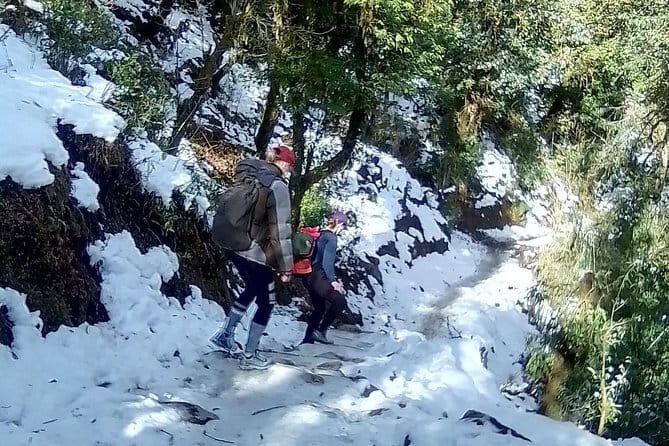
This is the route’s main high point. You hike toward either Mardi Himal View Point or Mardi Himal Base Camp, depending on your preference. The day is again listed at about seven hours, so choosing the higher or longer option may affect how demanding it feels.
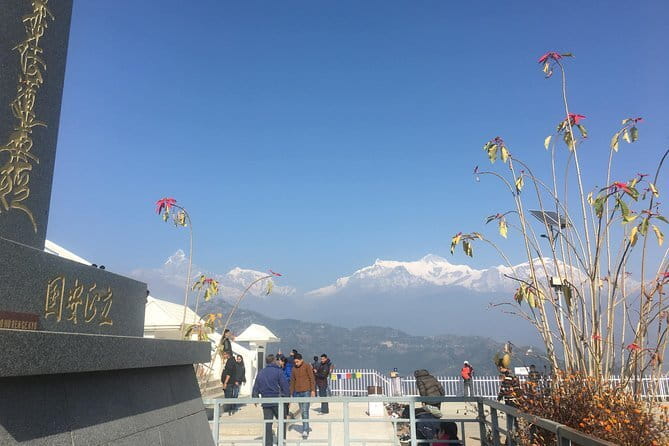
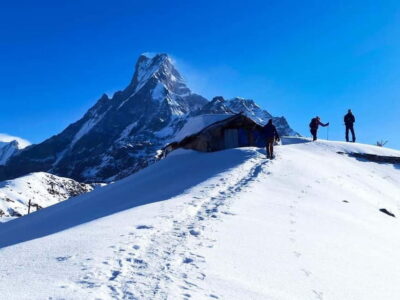
The reward is the mountain view. You are positioned for sights of Machhapuchhre, also called Fishtail, along with Annapurna and Hiunchuli. The appeal is not only the number of peaks, but the way the route brings you close to the dramatic profile of Fishtail.
The View Point may suit you if you want a strong mountain experience while keeping the day more manageable. Base Camp may appeal if reaching a named Himalayan destination matters to you. The supplied details do not explain the exact difference in walking time or difficulty between the two choices, so ask your guide for a same-day recommendation based on weather and your energy.
This is also the day when conditions matter most. The experience requires good weather, and poor conditions can lead to a different date or a full refund if the trip is canceled. Even when the trek goes ahead, cloud can limit the views. Pack for changing conditions rather than relying on a clear Pokhara morning.
Same trailhead, a longer or shorter day out:
- Poon hill Trek 3 days
★ 5.0 · 176 reviews - Trekking in Annapurna/Langtang/Everest/Upper Mustang regions
★ 5.0 · 161 reviews - Pokhara: 4-Day Ghorepani, Poonhill & Ghandruk Mountain Trek
★ 5.0 · 132 reviews - Ghorepani – Poon Hill Trek 3N-4D
★ 5.0 · 125 reviews
Day 4: Descending to Landruk and seeing village life
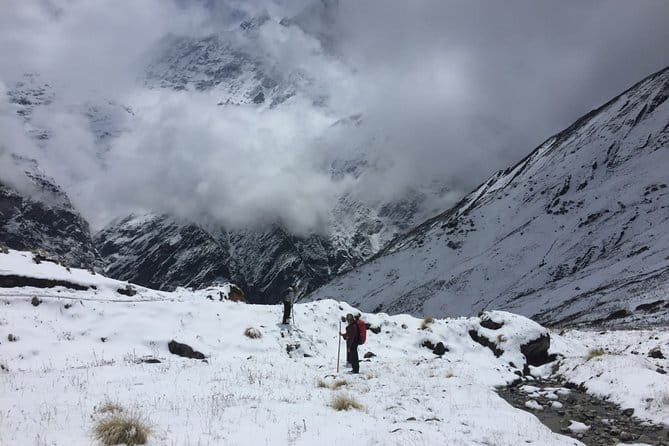
After the high mountain day, the route turns downhill toward Landruk. The stop is described as a picturesque mountain village, with views of local homes, farmland, and the daily way of life. You also get more views of Annapurna South and Hiunchuli.
This day is valuable because it shifts the focus from peaks to people. You are not only walking toward a viewpoint. You are passing through lived-in mountain communities, where fields, houses, and footpaths shape the rhythm of the journey.
The details mention a journey from Badal Danda to Landruk, though the full route description is not provided. You should expect another roughly seven-hour day and a substantial descent. Downhill walking can be hard on knees and ankles, so trekking poles may be worth bringing even though personal equipment is not included.
Landruk is a good place to slow down. The route gives you a chance to notice building styles, farmland, and the way settlements fit along the mountain slopes. Your guide can add much more here than a map can, especially if you ask about homes, crops, and local routines.
Day 5: A short walk to Siwai and the return to Pokhara
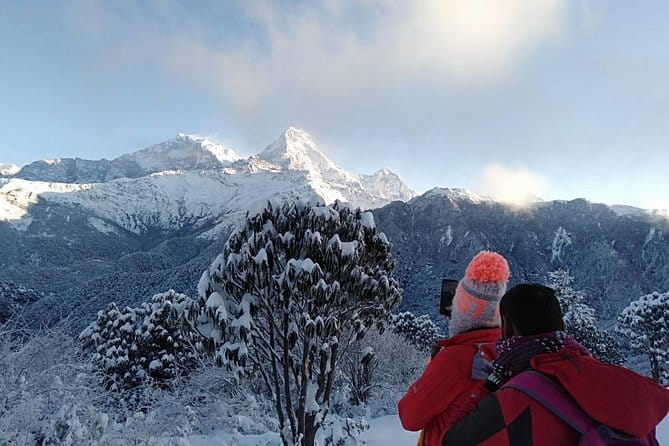
The final trek from Landruk to Siwai takes about one and a half hours. This is much shorter than the previous walking days, which gives you a useful buffer for the road journey back to Pokhara.
Siwai is the endpoint of the hiking portion. From there, private transportation returns you to Lakeside Pokhara, and the experience ends at your hotel. The shorter final walk is a smart design choice. You are less likely to finish the trek exhausted before the transfer.
The supplied itinerary does not give a precise drive time from Siwai to Pokhara. Ask your provider when you should expect to arrive, especially if you have a flight, another tour, or a fixed hotel booking that day.
Guides, porters, and the human side of the trek
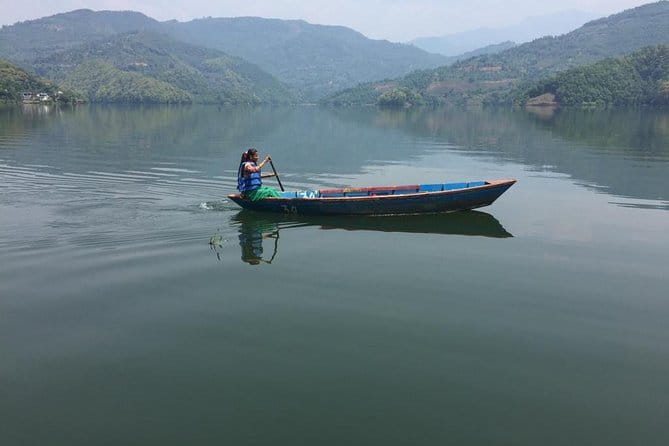
The company provides a government-licensed guide and one porter for every two guests. That ratio is useful because it limits the amount each porter carries while keeping the group small. You should still pack responsibly and keep valuables, documents, medication, and a water bottle in your own daypack.
Personal accounts give particular praise to Jayaram, the founder and organizer, for answering questions and helping with arrangements before the trek. Guides named in the feedback include Lama and Navaraj Nepal, also called Mr Nepal in one account. Their strengths are described as calm support, clear communication, flexibility, and attention to comfort.
Those qualities matter more than a polished sales pitch in the mountains. A guide who listens can make a real difference when you need to adjust your pace, choose between the View Point and Base Camp, or deal with poor weather.
Tips for the guide and porter are expected but not included. You should plan for this extra cost and ask your guide or organizer what local tipping practice is appropriate.
What the $399 package includes, and what it does not
The price includes:
- Private transportation
- A licensed experienced guide
- Porter support for two guests
- Accommodation during the trek
- Five breakfasts, four lunches, and four dinners as stated in the main meal list
- Fees and taxes
- Seasonal fruit after dinner on trekking days
There is a small inconsistency in the meal details: another inclusion line lists five lunches. Confirm this before departure so you know exactly what is covered.
The package does not include trekking equipment, meals or accommodation in Kathmandu and Pokhara, battery charging, laundry, phone calls, showers, or tips. These exclusions are normal for a short Nepal trek, but they affect your actual budget.
The value is strongest if you already have suitable clothing and equipment and are staying in Pokhara before and after the walk. The package saves you from arranging separate road transfers, rooms, food, and a guide. It is less attractive if you want luxury lodging, private rooms, or extensive equipment rental, since those details are not included.
Who should book this trek
This route suits you if you want mountain scenery but have limited time in Nepal. Five days is long enough to feel like a real trek, yet short enough to fit around a wider Pokhara itinerary.
It is a good match for couples, friends, and small private groups who value personal attention. The private format also helps if your group has different walking speeds or wants to choose between Base Camp and the View Point.
You should be comfortable with about seven hours of walking on the first four days. The activity information calls for moderate physical fitness. If you dislike long uphill and downhill days, or if you want a relaxed sightseeing holiday, this may not be the right choice.
The route also suits people who care about villages as much as summits. Landruk, farmland, homes, and local routines give the trek more substance than a simple peak-viewing trip.
Practical advice before you reserve
Start by confirming the exact day-by-day route. The second-day details refer to Lwang Ghalel, Forest Camp, Low Camp, and High Camp, so ask where you sleep each night.
Then confirm the meal count, room arrangements, and whether the View Point or Base Camp carries any extra walking time. Ask what happens if you travel alone, since the included porter ratio is based on two guests.
Pack personal trekking equipment, as none is included. You also need to budget for showers, laundry, phone calls, charging, and tips. Keep your essential items in a small personal bag even if a porter carries your main luggage.
The cancellation terms are fairly useful: cancel at least 24 hours before the local start time for a full refund. Changes made within 24 hours are not accepted. If bad weather or an insufficient minimum number of participants cancels the trek, you can receive a different date or a full refund.
Should you book the Mardi Himal Trek?
I would recommend it if you want a short, private Himalayan trek from Pokhara with strong mountain views and village scenery. The package covers the costly practical pieces, and the named guides and organizer receive repeated praise for support and communication.
I would pause before booking if you need exact itinerary precision, private rooms, or included equipment. Confirm the Day 2 route, meal count, porter arrangement, and high-point choice first. If those answers suit you, $399 is a fair price for five days of guided walking, meals, lodging, transport, and mountain views.
FAQ
Where does the Mardi Himal Trek start and end?
It starts at Lakeside, Pokhara, at your hotel, and ends back at your hotel in Lakeside Pokhara.
What time does the trek start?
Pickup from your hotel is scheduled for 10:45 a.m.
How long is the Mardi Himal Trek?
The experience lasts approximately five days and four nights.
Is transportation included?
Yes. Private transportation is included for the journey from Pokhara to the trekking start and for the return from Siwai to Pokhara.
Are meals included during the trek?
Yes. The package includes trekking meals. The main details list five breakfasts, four lunches, and four dinners, though another line lists five lunches, so confirm the final meal schedule before departure.
Do I need a certain level of fitness?
Yes. You should have a moderate level of physical fitness. The first four days are each listed at about seven hours of trekking, while the final walk from Landruk to Siwai takes about one and a half hours.
What happens if bad weather cancels the trek?
If poor weather causes cancellation, you will be offered a different date or a full refund. The same applies if the minimum number of participants is not met.
Recently added around Pokhara
- Pokhara: Majestic Mardi Base Camp Guided Trek with HotSpring★ 5.0 · 6 reviews
- Pokhara: 9-Day Annapurna Base Camp Trek with Poon Hill★ 5.0 · 6 reviews
- Pokhara: 5-Day Trek to Annapurna Base Camp and Hot Springs★ 5.0 · 4 reviews
- Pokhara: 5-Day Ghorepani and Poon Hill Private Trek★ 5.0 · 4 reviews
- Pokhara: 7-Day Annapurna Base Camp Trek & Hot Spring★ 4.0 · 3 reviews
- Pokhara:4-Day Ghorepani Poon Hill Guided Trek via Ghandruk★ 5.0 · 3 reviews
- Pokhara: 4-Day Poon Hill and Ghandruk Guided Trek★ 5.0 · 14 reviews
- Pokhara: 4-Day Ghorepani, Poonhill & Ghandruk Village Trek★ 5.0 · 6 reviews
Mardi Himal Treks, compared.
Mardi Himal Trek – 8 Days | Hidden Gem of the Annapurnas
Read our review →
Browse the lists this tour appears in