
REVIEW · KATHMANDU
Langtang Valley Trek – 8 days
The Himalaya is closer than you think. This eight-day Langtang Valley Trek gives you pine forests, Tamang villages, high mountain views, and a rewarding climb to Kyanjin Ri without the longer commitment required by Everest or Annapurna routes. I especially like the short 8-day format and the chance to visit Kyanjin Gompa, including its old Swiss cheese factory.
I also like the strong cultural element. You pass through Tamang communities, sleep in local guest houses, and experience a quieter Himalayan route inside Langtang National Park. The main consideration is the road journey to Syabrubesi, which takes seven to eight hours and may feel rough after arriving in Nepal.
The trek reaches 4,773 meters at Kyanjin Ri, so you need moderate fitness and a sensible attitude toward altitude. The itinerary gives you one exploration day at Kyanjin Gompa, but the optional climbs to Kyanjin Ri or Tserko Ri can make that day quite demanding.
Key points before you book
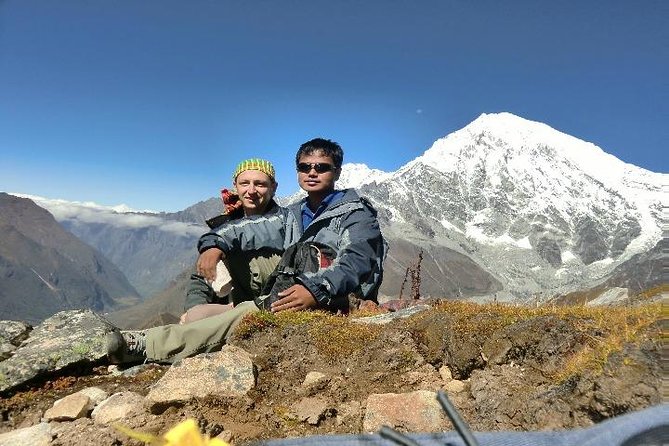
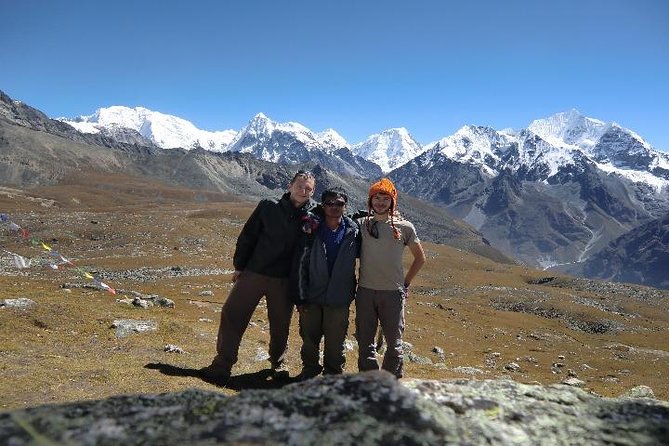
- Kyanjin Ri reaches 4,773 meters: You get a 360-degree mountain panorama with more than 21 snow-capped peaks.
- The route passes through Langtang National Park: Pine, bamboo, and rhododendron forests provide a fine change from bare high-altitude terrain.
- Kyanjin Gompa has more than mountain views: You can visit the monastery and sample cheese from one of Nepal’s oldest Swiss cheese factories.
- Tamang culture is central to the experience: Local villages and warm hospitality are as important as the scenery.
- The $775.36 price covers a lot: Transport, meals, accommodation, permits and services, guides, porters, equipment, airport transfers, and a Kathmandu dinner are included.
- The group is capped at 10 people: That keeps the trip small enough for personal attention without making it a private trek.
Why Langtang works so well in eight days
Langtang is a good choice if you want real mountain walking but have limited time. You leave Kathmandu by road, walk through forest and village country, reach an alpine valley, spend a full day around Kyanjin Gompa, then retrace the route.
You do not get the long approach or busy trail atmosphere associated with some of Nepal’s better-known routes. That does not mean the trek is easy. The altitude rises from 1,420 meters at Syabrubesi to 3,870 meters at Kyanjin Gompa, then higher on the optional viewpoints.
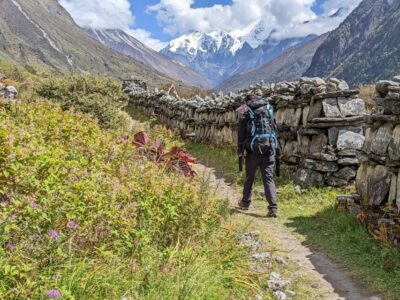
The route also has a pleasing range of scenery. Lower sections bring lush pine, bamboo, and rhododendron forest. Higher up, the trees thin out and the valley opens toward snow-covered peaks. That gradual change gives the trek a clear sense of progress.
Langtang National Park adds another layer. The park was established in 1976 as Nepal’s first protected Himalayan area. You might find signs of wildlife such as red pandas, Himalayan tahrs, and Himalayan black bears, though animal sightings are never guaranteed. The forest is valuable even when the animals stay out of sight.
More Langtang Treks in Kathmandu:
- Langtang Valley Trek
★ 5.0 · 140 reviews - Langtang Valley Trek
★ 5.0 · 61 reviews - 8 Days Tour in Langtang Valley Trek
★ 5.0 · 45 reviews
Day 1: The long road from Kathmandu to Syabrubesi
Your trek begins with a seven to eight-hour bus ride from Kathmandu to Syabrubesi, at 1,420 meters. It is not the glamorous part of the trip, but it gets you directly to the trailhead and avoids adding extra trekking days.
This is a day for patience. A long mountain road can be tiring, so keep water and simple personal items close at hand. The tour includes all transportation for the trek, which keeps the arrangement straightforward.
Syabrubesi is the starting point for the walking days. You are already below the highest villages, so the first hiking stage allows your body to begin adjusting before the serious altitude gains arrive.
Day 2: Syabrubesi to Lama Hotel through forest
The second day covers five to six hours from Syabrubesi to Lama Hotel, at 2,340 meters. This is your first proper walking day, with the trail moving through the forested lower valley.
Pine, bamboo, and rhododendron are the main visual reward here. The forest gives shade and keeps the route feeling sheltered, though the walking still involves steady climbs and descents. The distance is manageable for anyone with moderate fitness, but you should not treat the day as a casual stroll.
Lama Hotel is a practical overnight stop rather than a major sightseeing destination. Its value is in breaking up the ascent and giving you a night at a higher elevation before the valley rises more sharply.
Day 3: Lama Hotel to Langtang village
From Lama Hotel, you walk five to six hours to Langtang village, reaching 3,480 meters. This is one of the important days for altitude, since you gain more than 1,000 meters compared with the previous overnight stop.
The forest begins to give way to more open views as you continue up the valley. You see how the natural setting changes with elevation, and the Tamang communities become an important part of the journey.
Langtang village is not simply a place to sleep. It connects the walk with the people who live in this high valley. The route is known for Tamang hospitality and cultural beauty, so take time to notice the village setting rather than focusing only on the next day.
A few more treks around Kathmandu worth a look
- Everest Base Camp Trek – 14 Days
★ 5.0 · 1,499 reviews - Everest Base Camp Trek
★ 5.0 · 842 reviews - Everest Base Camp Trekking
★ 5.0 · 485 reviews - Annapurna Circuit Trek with Tilicho Lake
★ 5.0 · 368 reviews
Day 4: Langtang village to Kyanjin Gompa
The walk from Langtang village to Kyanjin Gompa takes about four hours and reaches 3,870 meters. The shorter walking time is useful because the altitude is now more serious.
Kyanjin Gompa is the main base for the upper valley. The monastery gives the place its spiritual character, while the surrounding peaks provide the visual drama. This is also where you can visit one of Nepal’s oldest Swiss cheese factories and try the local cheese.
That small food stop gives the day some welcome variety. Himalayan trekking is not only about high passes and viewpoints. A monastery visit and a piece of locally produced cheese help you connect with the place in a more grounded way.
You should use the afternoon to rest, look around, and keep your pace calm. The program includes exploration time on the following day, so there is no need to force every activity into your arrival afternoon.
Day 5: Choose your Kyanjin Gompa day carefully
The fifth day is set aside for exploration around Langtang Valley. This is the most flexible part of the itinerary and one of its strongest features.
Possible outings include:
- Kyanjin Ri, at 4,773 meters
- Tserko Ri, at 4,985 meters
- Langshisa Kharka
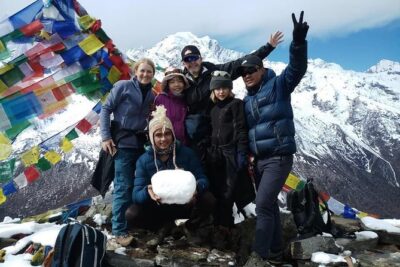
Kyanjin Ri is the clearest choice for a high viewpoint within the stated program. From the top, you can see a 360-degree panorama of more than 21 snow-capped peaks. That view is the trek’s main prize, but the climb should not be underestimated.
Tserko Ri is higher, at 4,985 meters, and may suit hikers who want a harder day and can handle the altitude. Langshisa Kharka offers another way to explore the valley without making the day only about reaching a summit.
Your guide should help match the option to your pace and condition. The itinerary does not require you to complete every optional walk, and that is sensible. At this height, a slower day with good rest can be more rewarding than a rushed attempt at the highest point.
What makes Kyanjin Gompa memorable
Kyanjin Gompa brings several strands of the trek together. You have the spiritual side of the monastery, the food tradition of the cheese factory, and the mountain setting that makes this valley famous.
It is also the place where you feel the full effect of the route’s gradual ascent. You began among lower forest and villages. Now you are surrounded by open alpine country and high peaks. The contrast is one reason Langtang feels so complete despite its short duration.
The altitude is also the central challenge. Kyanjin Gompa sits at 3,870 meters, and the optional ridges go much higher. You need to watch for how you feel, follow your guide’s advice, and avoid treating the viewpoint as a test of pride.
Days 6 and 7: Returning by a different village route
Day 6 takes six to seven hours from Kyanjin Gompa back to Lama Hotel. This is a long descent, and the return can feel harder on tired legs than the climb up. Trekking poles, careful footing, and steady pacing can make the day more comfortable.
The next day runs from Lama Hotel to Syabrubesi via Sherpa Gaon, taking five to six hours. This gives the return journey some variety instead of making it a simple repeat of every step.
Sherpa Gaon adds another cultural stop and helps keep the last walking day interesting. You return to Syabrubesi at 1,420 meters, where the mountain portion of the trip ends.
Day 8: Back to Kathmandu
The final day is another bus journey from Syabrubesi to Kathmandu. The schedule marks the end of the trek back at the Breeze Adventure office on Thamel Marg.
The return drive is part of the practical trade-off of this route. Langtang is relatively close to Kathmandu compared with some other trekking areas, but the road still takes a full day in the itinerary. The upside is that you do not need a domestic flight to reach or leave the trail.
A post-trek celebration dinner in Kathmandu is included. It gives you a relaxed finish after the walking days and means you do not have to arrange every last detail yourself.
What the $775.36 price really covers
At $775.36 per person, the package offers solid value if you want an organized trek rather than a bare guiding service. It includes airport transfers, two nights in a two or three-star Kathmandu hotel with breakfast, mountain guest house accommodation, transport, meals during the trek, and guide and porter services.
It also covers government-authorized guides, porter wages, insurance for the guides and porters, service charges, government taxes, a first aid kit, and a Langtang Valley map. Sleeping bags, down jackets, and crampons are supplied as well.
The meal plan covers breakfast, lunch, and dinner during the trek. You still pay for meals in Kathmandu apart from breakfast, personal shopping, alcoholic drinks, chocolates, tea, coffee, showers, and electronic charging at mountain guest houses.
Tips for the guide and porter are also separate. You should allow for those costs when working out your full budget.
The group size is limited to 10 people. That is a useful middle ground: small enough for the guide to monitor the group, but not priced like a private trek.
The people who shape the experience
The strongest praise connected with this trip focuses on organization, guide support, and friendly staff. Kishwor is repeatedly singled out for practical help and trek planning, while Ishwor is also associated with arranging the eight-day route.
Guides named in personal accounts include Madan and Raz. Raz was praised for supporting a first Nepal trek and for adjusting a longer Langtang and Gosainkunda trip to match fitness and available time. That suggests the company can adapt a plan, though the eight-day route described here remains the standard short option.
The useful point for you is not a promise of a particular guide. Staff assignments can change. The value is having a local team that can help manage route choices, pace, equipment, and daily conditions.
Who should book this trek?
This trip suits you if you want:
- A first Himalayan trek with a manageable eight-day schedule
- Mountain views without committing to a much longer expedition
- A mix of villages, forest, local culture, and high alpine scenery
- A guided trip with accommodation, meals, equipment, and transport arranged
- Optional high viewpoints rather than a required technical summit
- A small group capped at 10 people
It may not suit you if you dislike long bus rides, basic mountain guest houses, or paying separately for showers and charging. You also need moderate physical fitness, and the high altitude around Kyanjin Ri requires care.
The route is described as requiring good weather. If poor weather cancels the trip, you are offered a different date or a full refund. The same applies if the minimum number of participants is not reached. For normal cancellations, you can receive a full refund if you cancel at least 24 hours before the start time.
Should you book the Langtang Valley Trek?
I would book this trek if you want a compact Nepal experience with real altitude, strong scenery, and a human-scale route. The best reasons are the combination of Tamang villages, Langtang National Park, Kyanjin Gompa, and the optional Kyanjin Ri panorama.
I would also choose it over a more famous route if you prefer a quieter setting and do not need a long expedition to feel that you have reached the Himalaya. Just prepare for two long bus days, basic lodge facilities, and the demands of walking above 3,800 meters.
The $775.36 price is attractive because it covers most of the expensive and awkward pieces. If you arrive with reasonable fitness, a flexible attitude, and enough time to respect the altitude, this trek offers a lot of Nepal in eight days.
FAQ
How long is the Langtang Valley Trek?
The trek lasts approximately eight days, including the bus journeys from Kathmandu to Syabrubesi and back.
Where does the trek start and finish?
It starts at Breeze Adventure Pvt. Ltd on Thamel Marg in Kathmandu and finishes back at the same meeting point.
What is the highest point on the standard itinerary?
The optional Kyanjin Ri hike reaches 4,773 meters. Tserko Ri is another optional outing and reaches 4,985 meters.
Is Kyanjin Ri included as a required activity?
Kyanjin Ri is listed as an optional day hike during the exploration day at Kyanjin Gompa. The itinerary does not require you to complete it.
What accommodation is included?
The package includes two nights in a two or three-star hotel in Kathmandu, with breakfast, plus local guest house accommodation in the mountains.
Are meals included?
Breakfast, lunch, and dinner are included during the trek. Meals in Kathmandu are not included except for breakfast at the included hotel.
Is equipment provided?
Sleeping bags, down jackets, crampons, a first aid kit, and a Langtang Valley map are included.
How many people can join the trek?
The maximum group size is 10 people.
Recently added around Kathmandu
- Ghorepani Poon Hill Trek★ 5.0 · 16 reviews
- Private Manaslu Circuit Trek at Himalayas★ 5.0 · 3 reviews
- Amazing 1 Day Trekking Experience in Kathmandu Nepal★ 5.0 · 24 reviews
- Ghorepani Poonhill Trek★ 5.0 · 5 reviews
- Upper Mustang Trekking★ 5.0 · 2 reviews
- Upper Mustang Trekking★ 3.0 · 2 reviews
- Upper Mustang Trekking★ 5.0 · 4 reviews
- Upper Mustang Trek★ 5.0 · 5 reviews
Langtang Valley Treks, compared.

Trekking in Annapurna/Langtang/Everest/Upper Mustang regions
Read our review →
Browse the lists this tour appears in