
REVIEW · KATHMANDU
Private 8 – Day Langtang Trekking
Mountain views come quickly from Kathmandu. This private 8-day Langtang trek takes you from the capital to forests, Tamang villages, glacier country, and Kyanjin Gompa, the valley’s historic monastery. I like the sensible pace, with a full day at Kyanjin for a hike to Kyanjin Ri, and I like that permits, lodges, meals, transport, guides, and porters are included. The main drawback is the long road journey at both ends, especially the roughly six-hour public bus rides.
You spend the trek in Langtang National Park, moving from subtropical woodland into high mountain country without flying to Lukla or committing to a long expedition. The route is private, so your group can work with the guide’s pace and support. Still, this is a real mountain trek, and the rise toward Kyanjin means you should be ready for several hours of walking on uneven, steepening trails.
Key points to know before you book
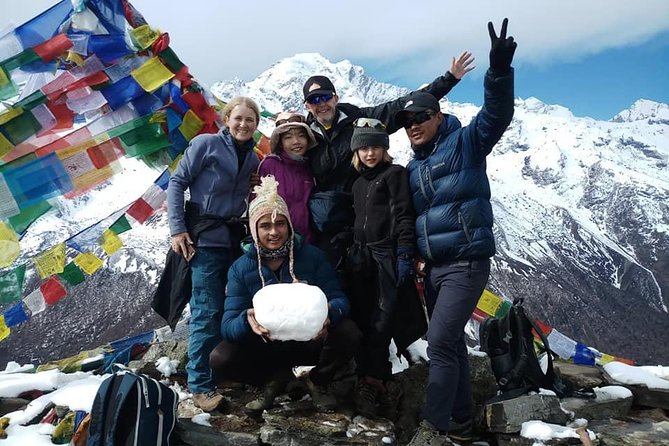
- Kyanjin Ri reaches 4,884 meters, giving you a serious high-altitude objective without adding another trekking day.
- Seven breakfasts, seven dinners, and eight lunches are included, along with lodge accommodation throughout the walk.
- The private format suits families and small groups, with only your party taking part.
- A full Kyanjin day helps the pace, giving you time for the monastery, village, and nearby high viewpoint.
- Transport uses the road between Kathmandu and Syabrubensi, so expect long bus days rather than quick flights.
- Daily oxygen saturation checks, a duffle bag, permits, and emergency evacuation assistance add useful support in the mountains.
Why Langtang works so well for a short Nepal trek
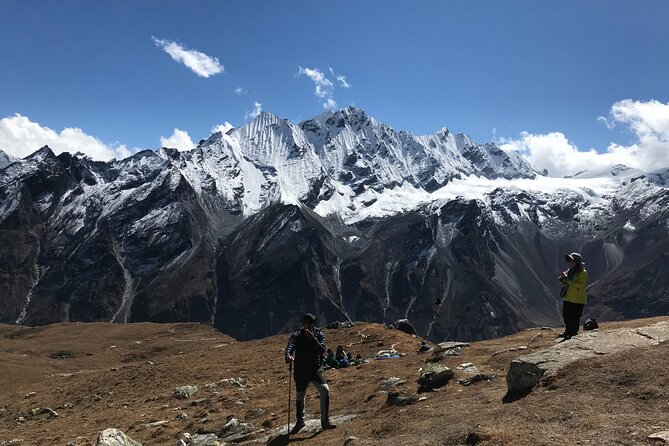
Langtang is one of Nepal’s nearest major trekking areas to Kathmandu. That makes it a practical choice if you want mountain walking but do not have time for a longer Everest or Annapurna trip.
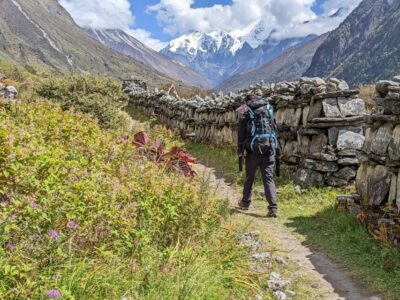
The route also changes character as you climb. You begin beside green hills and forest, then pass through dense woodland, stone-walled settlements, prayer flags, and open high valley scenery. The cultural side matters here. The trek visits Tamang and older Tibetan-influenced communities, so the walk is not only about reaching a viewpoint.
The private setup is especially useful if your group has mixed abilities. You can discuss the day’s pace with the guide rather than simply matching a large group. The company has arranged trips with guides such as Dhan, Tek, Kumar, Laxman, Ritika, and Jangbu, along with porters including Sanjay and Ram. Guide assignments can change, but the repeated praise for careful support, clear communication, and personal service is encouraging.
More Langtang Treks in Kathmandu:
- Langtang Valley Trek
★ 5.0 · 140 reviews - Langtang Valley Trek
★ 5.0 · 61 reviews - 8 Days Tour in Langtang Valley Trek
★ 5.0 · 45 reviews
Day 1: Kathmandu to Syabrubensi by road
The trip begins at 7:15 a.m. from Nepal Alternative Treks & Expeditions in Nagarjun, Kathmandu. You drive toward Syabrubensi, also written as Syafru Bensi in the route details, with about six hours on the road.
This is not a glamorous transfer, but it introduces the hills quickly. You pass green forests, terraced areas, and small settlements as the road leaves the capital behind. The ride gives you a useful first look at rural Nepal before your boots hit the trail.
The practical point is simple: keep this day light. You may be eager to start walking, but the drive takes much of the day. You should also confirm the exact pickup arrangement, since the stated meeting point is the company office rather than a hotel.
Day 2: Forest walking through Langtang National Park
After breakfast, you start the trek toward Lama Hotel. The walk takes about five hours and runs mainly through dense subtropical forest.
The route passes through Bamboo, a well-known stopping point for hikers. Forest trails can be cooler and more shaded than the open valley, but they may also feel damp, uneven, and tiring underfoot. The gradual progression is helpful on your first walking day, though the route is not flat.
This is where a private guide earns their keep. You can ask for short pauses, adjust your pace, and get help with the rhythm of walking uphill. The package includes a government-authorized guide and porters, with their expenses covered.
Day 3: Lama Hotel to Langtang village
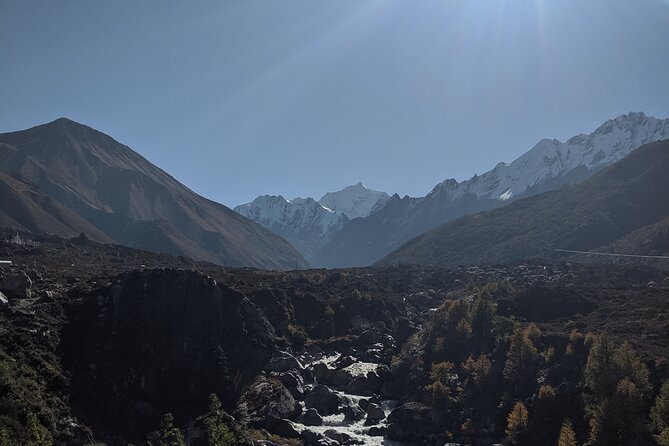
The third day covers about five hours from Lama Hotel to Langtang village. The route begins with a gentler section, then becomes steeper and more demanding as you continue.
You remain among forests for much of the day, but the surroundings begin to open as the valley rises. Langtang village gives the trek a stronger cultural and human character, with traditional settlement patterns and mountain life replacing the lower forest setting.
This is one of the days when you should avoid racing ahead. The itinerary gets harder gradually, and saving energy matters more than arriving early. Your guide can help you judge the pace, while the porters carry the main load.
A few more treks around Kathmandu worth a look
- Everest Base Camp Trek – 14 Days
★ 5.0 · 1,499 reviews - Everest Base Camp Trek
★ 5.0 · 842 reviews - Everest Base Camp Trekking
★ 5.0 · 485 reviews - Annapurna Circuit Trek with Tilicho Lake
★ 5.0 · 368 reviews
Day 4: Langtang village to Kyanjin Gompa
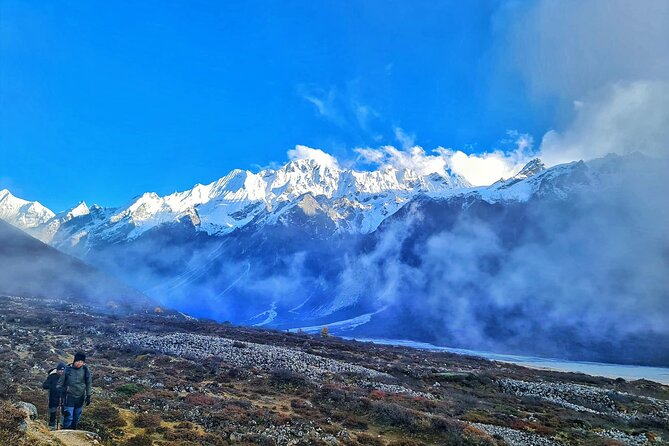
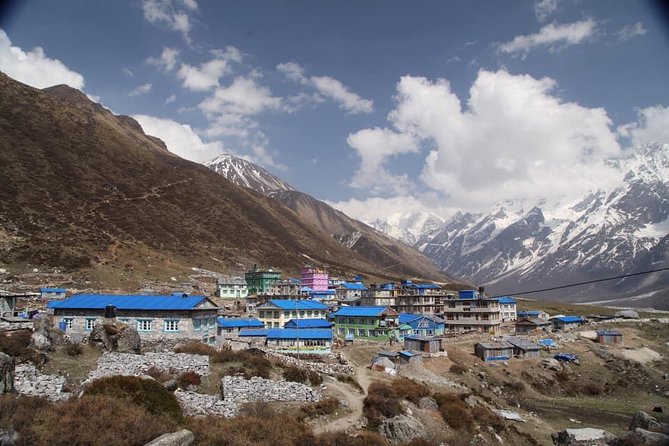
The walk to Kyanjin Gompa takes about three hours, making this one of the shorter trekking days. You ascend past small villages, stone walls, and prayer flags as the valley opens toward higher mountain country.
Kyanjin is the key destination of the trek. The village and monastery sit in the high part of the valley, and the shorter walking time gives you room to look around rather than simply arrive exhausted.
The description identifies Kyanjin Gompa as the oldest monastery in the valley. Its importance is not only architectural. It is the place where the natural and cultural threads of the trek come together, with Buddhist features, local settlement, and high mountain scenery in the same small area.
Because you reach Kyanjin relatively early, use the afternoon sensibly. Walk around, drink plenty of fluids, and keep your energy for the next day. Tea, coffee, boiled water, alcohol, laundry, phone charges, and bar bills are not included, so budget separately for those needs.
Day 5: Kyanjin Gompa and Kyanjin Ri at 4,884 meters
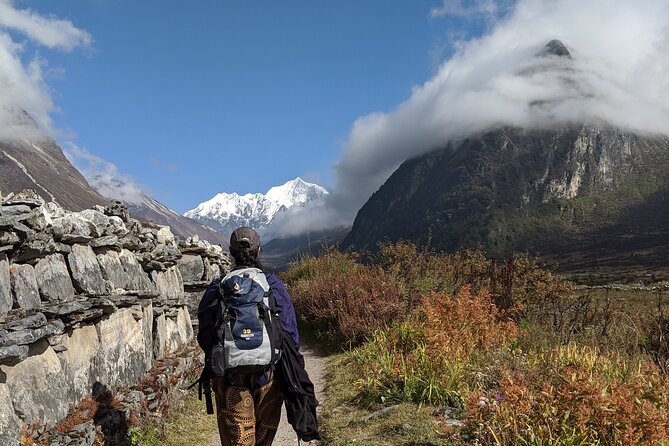
The fifth day is reserved for exploring Kyanjin and the surrounding Langtang area. You can visit the monastery and make the climb to Kyanjin Ri, which reaches 4,884 meters.
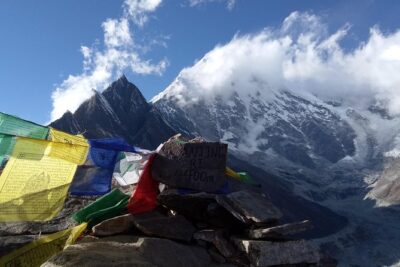
This is the high point of the trip, both literally and practically. A four-hour day may sound short, but altitude makes every climb more demanding. The viewpoint offers broad views of the valley and surrounding mountains, according to the trip description.
The full day is a strong feature. It gives you a chance to make the ascent without carrying your full trekking load, and it leaves room to turn around if conditions or energy levels are poor. A guide can help you decide how hard to push. The experience is private, but safety still depends on respecting your body and following the guide’s advice.
Some past itineraries arranged by the same company included Tserko Ri as well as Kyanjin Ri, but this specific eight-day plan names Kyanjin Ri. Do not assume the higher or alternate climb is included unless you confirm it before departure.
Day 6: Descending through the forest to Lama Hotel
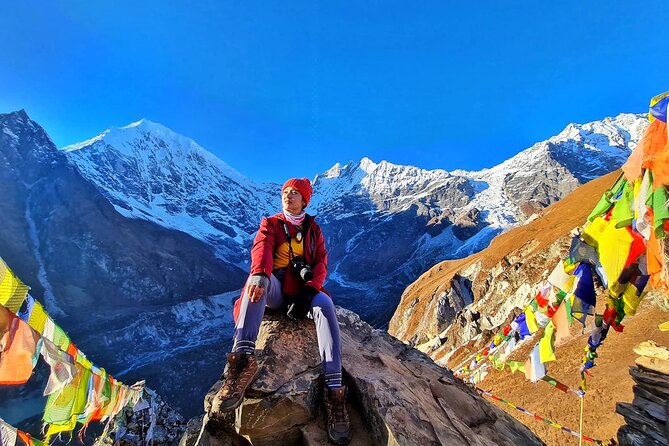
After breakfast, you retrace the route toward Lama Hotel. The day takes about six hours, with much of the walking through rhododendron forest.
Descending is often easier on the lungs than climbing, but it can be harder on knees and ankles. Uneven stone sections and downhill steps deserve attention. Trekking poles may be useful, though the supplied information does not state that they are provided.
The return route also lets you notice details missed on the way up. You are walking through the same national park, but the change in direction and light can make the forest feel different. Keep your rain protection handy, since forest weather can shift even when the valley looks calm.
Day 7: Lama Hotel to Syabrubensi
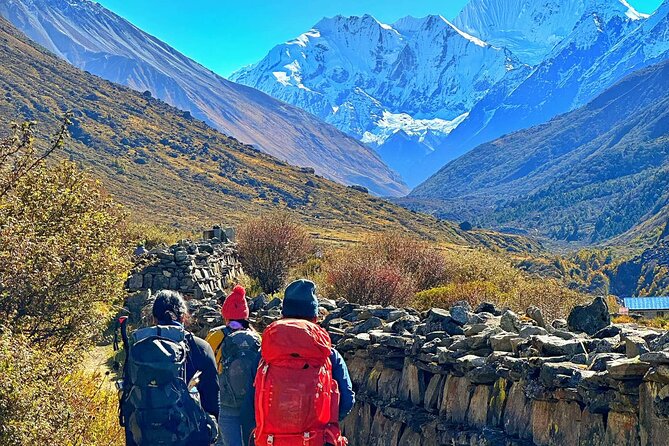
The final walking day takes about five hours as you descend through the forest to Syabrubensi. The route is familiar, but it can feel satisfying to finish the trail under your own power.
You will likely be carrying more personal items than on the first day, since the walking portion is ending. Take care with the downhill sections and do not treat the last day as an easy stroll. Fatigue can make small slips more likely.
The night in Syabrubensi positions you for the return to Kathmandu. Lodge accommodation is included throughout the trek, but the package does not include hotel accommodation in Kathmandu before or after the route.
Day 8: Syabrubensi back to Kathmandu
After breakfast, you board the bus for Kathmandu. The drive takes about six hours and follows the Pashang Lhamu Highway, passing terraced fields and small settlements before continuing along the Trishuli area.
This is another long road day. The return ride may be tiring after a week of walking, but it gives you one more look at the changing hills and river corridors. The tour ends back at the stated meeting point in Kathmandu.
Since the finish is at the meeting point, arrange your next accommodation and luggage plan in advance. Kathmandu lodging and meals are not part of the package.
What the $584.22 price really covers
At $584.22 per person, the value depends on how much organizing you would otherwise do yourself. The price includes:
- Overland transport listed in the route
- A government-authorized trekking guide
- Porters and their expenses
- Lodge accommodation during the trek
- Seven dinners
- Seven breakfasts
- Eight lunches
- Langtang National Park fees
- TIMS and necessary permits
- Trekking map
- Daily oxygen saturation checks
- Duffle bag
- Trek completion certificate
- Emergency rescue evacuation assistance
- Government taxes and service charges
- Public liability insurance
That is a useful bundle for a private trek. You are not paying only for guiding. Major permits, meals, lodging, porter support, and road transfers are already handled.
You still need to pay for Kathmandu accommodation and meals, travel insurance, drinks, boiled water, laundry, phone charges, bar bills, and tips. Travel insurance is particularly important because emergency assistance does not replace your own insurance cover. Ask the provider exactly how evacuation assistance works and make sure your policy covers trekking at the planned altitude.
Tips for the guide and porters are also separate. Set aside money for this before you leave, since it is a normal part of trekking costs in Nepal.
The guide and porter support
Personal service is one of the strongest reasons to consider this company. The owner, Tej, has been directly involved in arranging trips, meeting people before and after the trek, and adjusting plans to suit different abilities and preferences.
Past trips have used guides including Dhan, Tek, Kumar, Laxman, Ritika, and Jangbu. The praise is consistent for kindness, attention, communication, and practical care. One family walking with a mother particularly valued the support from guide Saroj and porter Sanjay. Another group credited guide Laxman with helping them reach Tserko Ri.
Do not assume a specific guide will be assigned. Instead, ask who is available, what languages they speak, and how many people each porter carries. The package says one guide and porters are included, but it does not state the porter-to-client ratio.
Daily oxygen saturation checks are a helpful routine, though they are not a substitute for careful acclimatization. Tell your guide promptly if you feel unwell, unusually tired, dizzy, or short of breath.
Who should choose this trek?
I would recommend this route to you if you want:
- A private Himalayan trek lasting about one week
- A direct road approach from Kathmandu
- Forest walking and high valley scenery in one trip
- A cultural encounter with Tamang and Tibetan-influenced communities
- A planned high point at Kyanjin Ri
- Included meals, lodges, permits, porters, and guide support
- A flexible experience for a couple, family, or small private group
It may not suit you if you dislike long bus rides, want hotel-style comfort, or prefer a trip with no repeated trail sections. Days 6 and 7 retrace the route toward Syabrubensi, and the road transfers take about six hours each way.
The trek is described as suitable for most participants, but the route becomes steeper and tougher on Day 3, and Kyanjin Ri rises to 4,884 meters. You should be comfortable walking for several hours and prepared for mountain conditions.
Booking details and cancellation
Confirmation is provided at booking, and pickup is offered. The experience starts at 7:15 a.m. from the company office at Raniban Marg 136/205, Nagarjun, Kathmandu.
You can cancel for a full refund up to 24 hours before the start time. Changes made inside that 24-hour window are not accepted, and late cancellations are not refunded. Poor weather or failure to meet the minimum number of participants can lead to a new date, a different experience, or a full refund.
Should you book the Langtang trek?
Book it if you want a compact private trek with a strong mix of forest, culture, monastery visits, and high mountain walking. The included permits, food, lodges, porters, transport, and daily health checks make the $584.22 price reasonable for a supported trip.
Before paying, confirm the guide assignment, porter arrangement, exact vehicle plan, and what happens if road conditions delay the bus. If you accept the long transfers and basic lodge style, this is a practical way to reach Kyanjin Gompa and Kyanjin Ri without committing to a much longer Nepal expedition.
FAQ
Where does the Langtang trek start?
It starts at Nepal Alternative Treks & Expeditions, Post Box No. 8169, House, Raniban Marg 136/205, Nagarjun, Kathmandu. The stated start time is 7:15 a.m.
How long does the experience last?
The trek lasts approximately eight days, including the road journeys between Kathmandu and Syabrubensi.
Is this a private trek?
Yes. Only your group takes part in the private activity.
What is the highest point named in the route?
Kyanjin Ri is the highest named point, at 4,884 meters.
Are meals included?
Yes. The package includes seven breakfasts, seven dinners, and eight lunches.
Is accommodation included?
Lodge accommodation during the trek is included. Hotel accommodation in Kathmandu is not included.
Are permits and national park fees included?
Yes. The Langtang National Park fee, TIMS, and necessary permits are included.
What happens if bad weather cancels the trek?
If poor weather causes cancellation, you are offered a different date or a full refund.
Recently added around Kathmandu
- Ghorepani Poon Hill Trek★ 5.0 · 16 reviews
- Private Manaslu Circuit Trek at Himalayas★ 5.0 · 3 reviews
- Amazing 1 Day Trekking Experience in Kathmandu Nepal★ 5.0 · 24 reviews
- Ghorepani Poonhill Trek★ 5.0 · 5 reviews
- Upper Mustang Trekking★ 5.0 · 2 reviews
- Upper Mustang Trekking★ 3.0 · 2 reviews
- Upper Mustang Trekking★ 5.0 · 4 reviews
- Upper Mustang Trek★ 5.0 · 5 reviews
Langtang Valley Treks, compared.
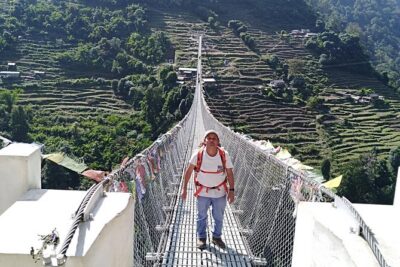
Trekking in Annapurna/Langtang/Everest/Upper Mustang regions
Read our review →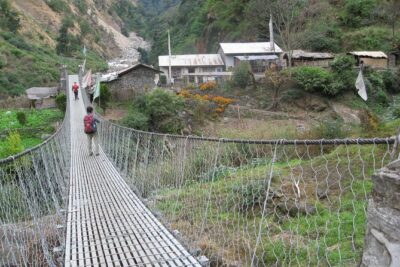
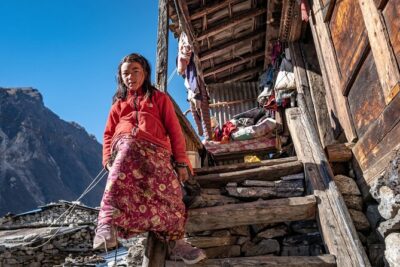
Browse the lists this tour appears in