
REVIEW · KATHMANDU
Langtang Valley Trek
The Himalayas begin surprisingly close to Kathmandu. That is the great appeal of this 10-day Langtang Valley Trek: you reach high mountain country without the longer approach needed for some better-known Nepal routes. I like the steady trail beside rushing rivers, and I like the chance to meet Tamang communities while walking through Langtang National Park.
The package also takes care of the hard planning. A guide, porter, permits, meals, lodges, airport transfers, and transport are included for $830 per person. The main caution is altitude. The itinerary calls the trail easy in places, but Kyanjin Ri reaches 4,773 meters and Chorkari Ri rises to 5,050 meters. Those are serious heights, and the schedule moves quickly.
Key points to know before booking
- Close to Kathmandu: The trek begins after a roughly seven-hour bus ride, rather than a flight to a remote mountain airstrip.
- Two high viewpoints: Kyanjin Ri reaches 4,773 meters, while Chorkari Ri reaches 5,050 meters.
- A strong cultural element: You pass through Tamang settlements and visit the old Buddhist Kyanjin Gompa.
- Full trekking support: A guide and porter are provided, with one porter assigned to every two trekkers.
- Good value at $830: Meals, permits, lodge accommodation, Kathmandu hotel nights, transfers, and staff costs are included.
- A demanding final climb: The lower trail is gradual, but the high-point days require stamina and careful pacing.
Why Langtang Works for a Short Nepal Trek
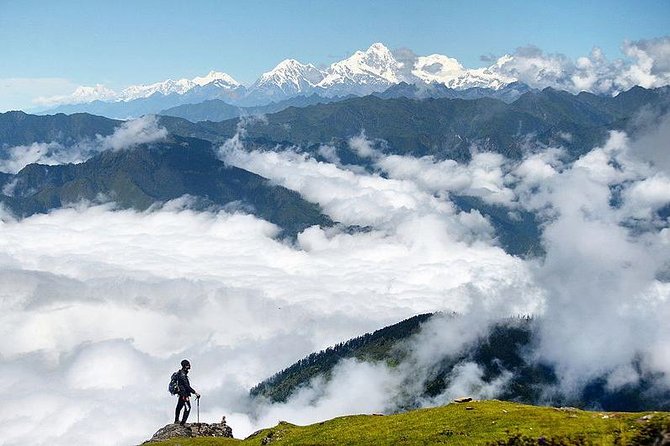
Langtang offers a useful middle ground. You get a genuine Himalayan trek, but the route begins within driving distance of Kathmandu. That makes it appealing if you want mountain views and village life without adding internal flights or a much longer holiday.
The route travels through Langtang National Park, Nepal’s first Himalayan national park. The setting changes as you climb: river corridors give way to pine and mountain vegetation, then to the broad glacial basin around Kyanjin Gompa. The route is also known for its flora and fauna, and one solo trekker arranged the journey partly around birdwatching, recording 25 rare birds.
The word accessible needs a little care here. The trail may be gradual through much of the valley, but access does not mean low altitude. Once you reach Kyanjin Gompa, you are already at about 3,798 meters. The two optional-sounding summit days are central parts of the advertised plan, and both demand a good level of fitness.
More Langtang Treks in Kathmandu:
- Langtang Valley Trek
★ 5.0 · 140 reviews - 8 Days Tour in Langtang Valley Trek
★ 5.0 · 45 reviews - Private 8 – Day Langtang Trekking
★ 5.0 · 29 reviews
What the $830 Price Really Covers
At $830, this is not simply a guiding fee. The price includes two nights in a three-star Kathmandu hotel with breakfast, airport pickup and drop-off by private vehicle, public bus transport between Kathmandu and Syabru Bensi, and lodge accommodation during the trek.
You also receive breakfast, lunch, and dinner with tea or coffee while trekking. A guide and porter are included, along with their salaries, food, lodging, and equipment. Trekking permits, a first aid kit, government taxes, office charges, and a duffle bag are covered too.
That bundle gives the price solid value, especially if you are new to Nepal and do not want to arrange each part separately. The porter ratio is one porter for two trekkers, so you should still pack with restraint. The duffle bag must be returned after the trek.
You will need to budget separately for Kathmandu lunches and dinners, your Nepal entry visa, travel insurance, personal gear, Wi-Fi, hot showers during the trek, tips, and private transport to Syabru Bensi. The scheduled transfer uses a public bus, so do not pay for a private vehicle unless you specifically request one.
Arrival in Kathmandu and the Road to Syabru Bensi
Day one is an arrival day at Tribhuwan International Airport. A private vehicle picks you up, and two nights in Kathmandu are included in the overall package. This gives you a useful buffer before and after the mountain section, although the schedule does not describe a separate sightseeing program in the capital.
On day two, the road heads north to Syabru Bensi. The drive takes about seven hours and uses public bus transport. That is the practical choice for keeping the package affordable, but it is also one of the less comfortable parts of the trip. Road conditions and journey times can vary, so treat this as a full travel day rather than a scenic transfer you can breeze through.
Syabru Bensi sits at about 1,462 meters, low enough to make the first trekking night a sensible starting point. The town is the gateway to the Langtang Valley route. Keep your first evening simple, check your gear, and avoid treating arrival day as a chance to squeeze in extra activity.
Syabru Bensi to Lama Hotel
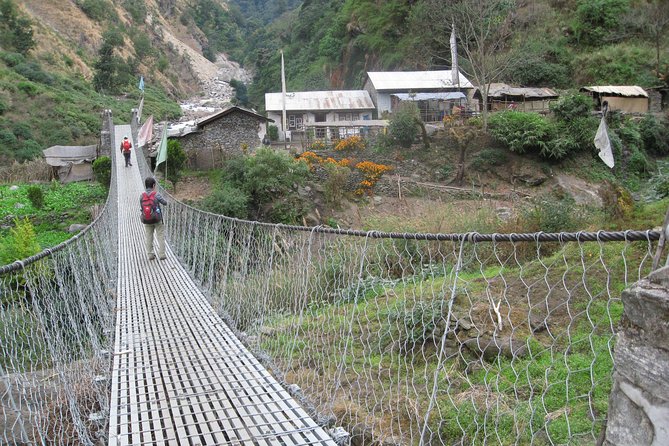
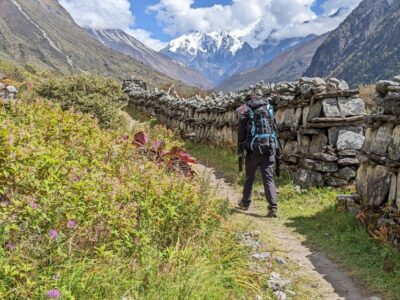
The third day covers about five hours of walking to Lama Hotel at 2,500 meters. This is where the trek begins to feel like a proper Himalayan journey. The trail follows the river, with water moving beside you as the valley tightens and the hills rise.
I like this stage because it gives you time to find your walking rhythm. The elevation gain is noticeable but not extreme, and the route is described as gradual in many sections. You will still encounter uneven ground and sustained uphill walking, so supportive shoes and walking poles can make the day easier.
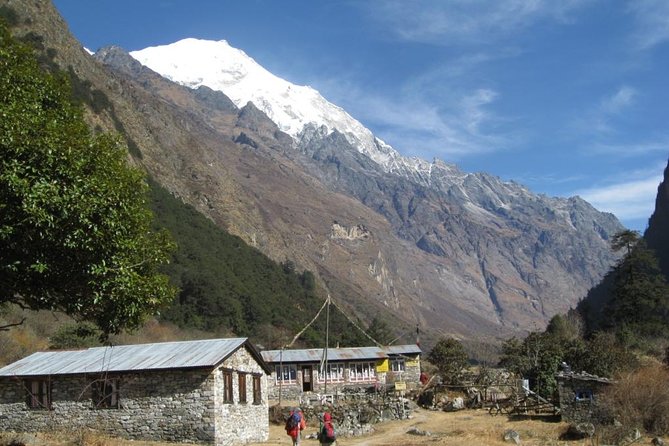
Lama Hotel is not a luxury stop. Accommodation is in the best available twin-sharing lodge, and facilities are basic. Hot showers are not included, and Wi-Fi is not included either. That is normal for this type of trek, but it is worth knowing before you arrive with hotel-style expectations.
A few more treks around Kathmandu worth a look
- Everest Base Camp Trek – 14 Days
★ 5.0 · 1,499 reviews - Everest Base Camp Trek
★ 5.0 · 842 reviews - Everest Base Camp Trekking
★ 5.0 · 485 reviews - Annapurna Circuit Trek with Tilicho Lake
★ 5.0 · 368 reviews
Lama Hotel to Langtang Village
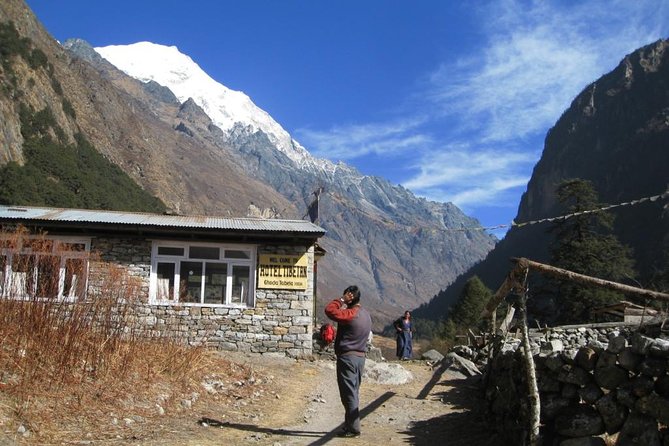
Day four continues for roughly five hours, taking you to Langtang Village at about 3,307 meters. The valley opens as you gain height, and the mountain scenery becomes more pronounced. The trip description highlights views toward Langtang Lirung, which rises to 7,227 meters, along with Ganesh Himal at 7,422 meters and peaks such as Dorje Lakpa.
This is also the point where the cultural character of the route becomes more visible. Tamang villages give the journey a human scale. You are not simply walking toward a viewpoint; you are passing through settlements where mountain life, Buddhist practice, and trekking support all meet.
The altitude begins to matter here. You may feel fine, or you may notice that every uphill section takes more effort. Follow your guide’s pace, drink regularly, and do not confuse a shorter walking day with an easy day.
Kyanjin Gompa and the First High Viewpoint
Day five is the big jump in effort. You leave Langtang Village, climb to Kyanjin Ri at 4,773 meters, and return to Kyanjin Gompa at 3,798 meters. The listed walking time is seven to eight hours.
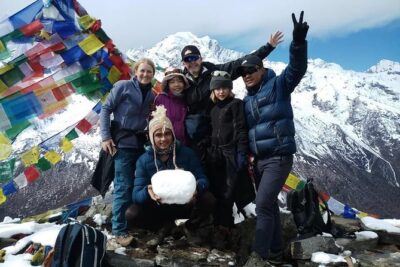
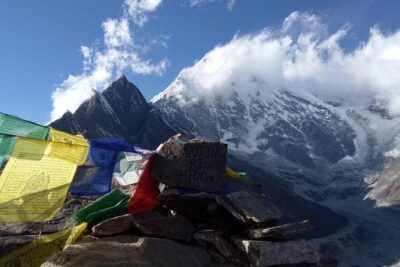
Kyanjin Ri is the main reward: a high viewpoint with broad views of Langtang Lirung and the surrounding peaks. The route passes into the glacial basin of the valley floor, where the scenery becomes more open and severe. It is the kind of place where the mountains feel less like a backdrop and more like the whole reason you came.
The key point is that you climb high and then descend to sleep lower. That makes the day strenuous, but the return to Kyanjin Gompa is important. You do not sleep at the summit. The trip also includes an exploration of the ancient Buddhist Kyanjin Gompa, giving the day more substance than a simple uphill march.
You should treat Kyanjin Ri as a real high-altitude outing. The route may be manageable for someone with moderate fitness, but the height can affect anyone. A slow pace is not a sign of failure here. It is the sensible way to handle the climb.
Kyanjin Gompa and the Chorkari Ri Climb
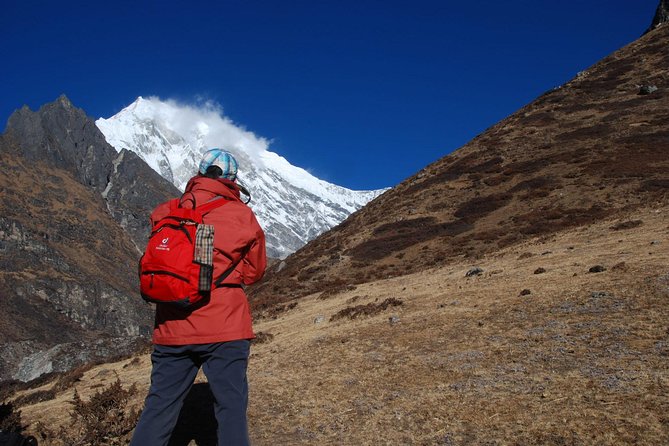
Day six is another long one, with about seven hours of walking. The plan combines exploration around Kyanjin Gompa with a climb of Chorkari Ri, listed at 5,050 meters.
This is the highest point on the itinerary and the day most likely to separate casual walkers from prepared trekkers. You need endurance, comfortable gear, and a willingness to turn back if altitude symptoms become serious. The tour requires a moderate physical fitness level, but I would interpret that as a minimum rather than a promise that the high route will feel moderate.
The benefit of spending time around Kyanjin Gompa is that the high mountain setting does not pass in a blur. You have an exploration day instead of simply arriving, eating, and leaving. The Buddhist monastery, yak cheese, glacial basin, and high peaks give this section a strong sense of place.
The itinerary does not promise a separate acclimatization day beyond this schedule. If you prefer a slower ascent, ask the operator about extending the trek. One mature group arranged a slower custom version with shorter stages and three nights at Kyanjin Gompa, showing that the route can be adjusted for the right group and timeframe.
The Long Return to Syabru Bensi
Day seven reverses the route from Kyanjin Gompa to Lama Hotel, a five to six-hour descent. After two demanding high days, the downhill sounds easy, but long descents can be tiring on knees and ankles. Trekking poles are useful, and you should not rush simply because you are losing altitude.
Day eight continues from Lama Hotel to Syabru Bensi, again taking about five to six hours. The return brings you back to the warmer, lower valley and marks the end of the walking section.
The return route is familiar, but that does not make it dull. You see the trail from a different direction, and the lower altitude can make your legs feel better even as accumulated fatigue sets in. This is also when the value of having a porter and guide becomes clear. Your main task is to walk, monitor your energy, and enjoy the final mountain views.
Guides, Porters, and How the Support Works
The package includes one English-speaking guide and one porter for every two trekkers. Their salary, equipment, meals, and accommodation are covered. Tips are not included, so plan for that separate cost.
The strongest praise for this operation centers on the staff. Guides named in feedback include Prajwal, Deepak Dhakal, Arun, Rajesh, Surya, Navaraj, Santosh, and Nab, while porters such as Bhim, Kamal, Sabin, Tulsi, Ganesh, and Shankar are also singled out for kindness, attentiveness, and practical help.
That matters on a route with high passes and changing conditions. Communication before departure is another strong point, especially from managers Ganga and Baloram. Ganga is praised for answering detailed questions, adjusting plans, and helping solo trekkers shape the trip around their interests.
The group limit is 15 people. That is small enough to avoid the feel of a large procession, though your actual group may be much smaller. Solo departures and private custom arrangements are possible based on the examples provided, but confirm the exact setup before paying.
Comfort, Food, and Small Practical Details
Lodge accommodation is twin sharing and described as the best available. Expect simple rooms and basic mountain facilities rather than polished hotels. The included three-star Kathmandu accommodation is a different level of comfort and gives you a place to reset before or after the trek.
Three meals a day are included during the walking section, with tea and coffee. The route is known for yak cheese, a local specialty worth trying if it is available at your lodges. Kathmandu lunches and dinners are your responsibility.
Hot showers, Wi-Fi, and personal trekking equipment are not included. The sensible approach is to carry the clothing and equipment you need, then use the provided duffle bag for the porter service. Since the duffle must be returned, do not treat it as a souvenir.
Airport pickup and drop-off are by private vehicle, but the route to and from Syabru Bensi uses a public bus. This split keeps costs under control while giving you more comfort at the airport end of the journey.
Who Should Book This Trek?
I would recommend it to a first-time Himalayan trekker who wants a guided route with the main arrangements handled. Several first-time solo walkers found the staff reassuring, and the combination of guide, porter, meals, permits, and accommodation removes much of the planning burden.
It also suits someone with limited holiday time. Ten days is enough to reach the upper valley and high viewpoints, but the schedule is compact. If you want relaxed walking, extra photography time, or more protection against altitude problems, ask about adding days.
This is less suitable if you want a soft adventure with hotel comforts. The high points exceed 4,700 meters, the bus ride is long, and facilities on the trail are basic. You should have moderate fitness and take altitude seriously.
Free cancellation is available if you cancel at least 24 hours before the start time. Weather or minimum group numbers can also cause cancellation, in which case a different date or a full refund is offered. Travel insurance remains your responsibility.
Should You Book the Langtang Valley Trek?
I would book this trek if you want a well-supported route with impressive Himalayan views, strong village contact, and a price that includes most major costs. The communication from the Nepal Hiking Team, the care shown by named guides and porters, and the route’s short distance from Kathmandu are real advantages.
I would not book it without asking about pacing if you are new to altitude or prefer easy days. The valley trail is approachable, but Kyanjin Ri and Chorkari Ri are high climbs, and the itinerary gives you little spare time.
For a fit walker who wants a serious but manageable introduction to Nepal, this is a good choice. Pack lightly, allow for basic lodges, listen to your guide, and view the summit days as optional achievements rather than tests you must force.
FAQ
How long is the Langtang Valley Trek?
The full experience lasts approximately 10 days, including arrival in Kathmandu, the trek, the return drive, and departure.
Where does the trek begin?
The walking section begins at Syabru Bensi, which is reached from Kathmandu by public bus in about seven hours.
What is the highest point on the itinerary?
Chorkari Ri is listed at 5,050 meters. Kyanjin Ri reaches 4,773 meters.
Is transportation included?
Airport pickup and drop-off by private vehicle are included. Transport between Kathmandu and Syabru Bensi is provided by public bus. A private vehicle for that route is not included.
Are meals included?
Breakfast is included during the two Kathmandu hotel nights. Breakfast, lunch, and dinner with tea or coffee are included during the trek. Kathmandu lunches and dinners are not included.
What type of accommodation is provided?
You receive two nights at a three-star hotel in Kathmandu with breakfast. During the trek, accommodation is in the best available twin-sharing lodges.
Is a guide and porter included?
Yes. The package includes one English-speaking guide and one porter for every two trekkers. Their salary, equipment, meals, and accommodation are included.
Do I need travel insurance?
Yes. Travel insurance is not included in the price, so you need to arrange it separately.
Can I cancel for a full refund?
You can cancel for a full refund if you do so at least 24 hours before the experience start time. Weather or minimum group requirements may also lead to a different date or a full refund.
Recently added around Kathmandu
- Ghorepani Poon Hill Trek★ 5.0 · 16 reviews
- Private Manaslu Circuit Trek at Himalayas★ 5.0 · 3 reviews
- Amazing 1 Day Trekking Experience in Kathmandu Nepal★ 5.0 · 24 reviews
- Ghorepani Poonhill Trek★ 5.0 · 5 reviews
- Upper Mustang Trekking★ 5.0 · 2 reviews
- Upper Mustang Trekking★ 3.0 · 2 reviews
- Upper Mustang Trekking★ 5.0 · 4 reviews
- Upper Mustang Trek★ 5.0 · 5 reviews
Langtang Valley Treks, compared.
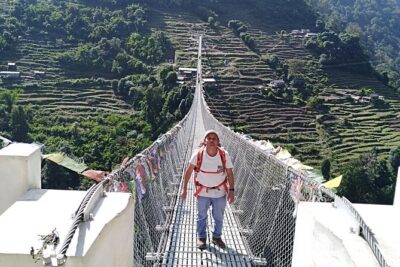
Trekking in Annapurna/Langtang/Everest/Upper Mustang regions
Read our review →
Browse the lists this tour appears in