
REVIEW · KATHMANDU
Langtang Valley Trek
The Himalayas begin with a long road. This 12-day Langtang Valley Trek combines mountain scenery, local village life, monastery visits, and a demanding route through Langtang National Park. You start and finish in Kathmandu, travel by private jeep to the trailhead, and spend most nights in simple local lodges.
I especially like the chance to meet Tamang communities in Gatlang, Thuman, Briddhim, and other villages, rather than rushing straight into the high mountains. I also like the small group limit of 10 people, along with porter support, permits, guide services, and private transport included in the price. The main drawback is the long road journey at the beginning and end, plus several hard walking days that require a moderate fitness level.
The advertised price is $715.59 per person. That is a useful package price for a guided Himalayan trek, but it does not cover meals, drinks, insurance, gear, tips, or emergency evacuation. Read the inclusions carefully before you book, because your final cost will be higher than the headline figure.
Key Points to Know Before You Go
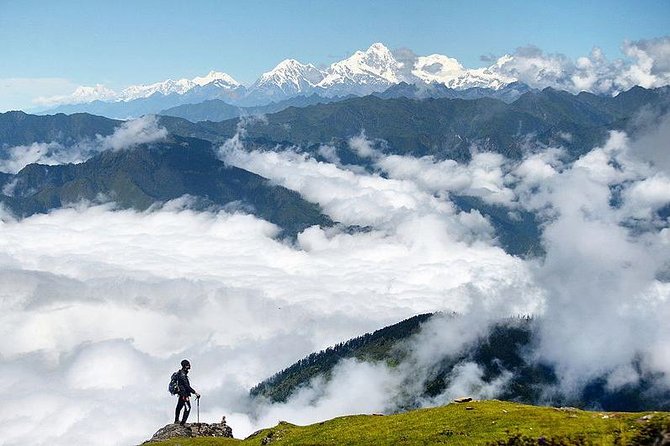
- Kyanjin Gompa is the high point of the trek: You get a short walking day to the village, then a rest day with optional hiking toward Tserko Ri at 5,000 meters.
- Tamang and Tibetan culture shape the route: Gatlang, Thuman, Briddhim, and the settlements near Langtang offer more than mountain views.
- The road to the trailhead takes 8 to 9 hours: You travel by private jeep from Kathmandu to Gatlang, with permits checked before Dhunche.
- The package includes important trekking support: A licensed English-speaking guide, porters, permits, local lodge stays, staff costs, and private transport are covered.
- Meals are not included: The package lists breakfast at the Kathmandu hotel and three breakfasts, but all food and drinks during the trip are otherwise your responsibility.
- Guide service can shape the experience: Hari received praise for making the trek more meaningful, while Norris was noted for adapting the route to suit a person’s needs.
Why Langtang Valley Feels Different
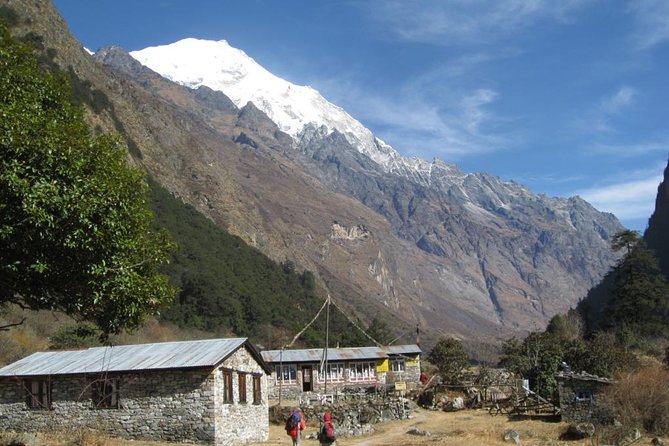
Langtang is often called the Valley of Glaciers, and the name makes sense once the route climbs toward Kyanjin Gompa. The valley brings together pine forests, streams, grazing areas, glaciers, prayer flags, monastery sites, and high peaks such as Langtang Lirung, Langtang II, Ganesh Himal, and the Sanjen ranges.
I like this trek because it is not only a mountain walk. The route passes through working villages where farming, livestock, hospitality, and religious traditions remain part of everyday life. You see terraced fields at lower elevations, forest paths in the middle section, and a much barer high-altitude setting near Kyanjin Gompa.
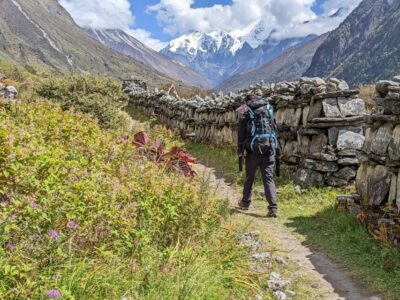
The cultural side is especially strong in Tamang villages influenced by Tibetan traditions. You may see chortens, Mani walls, prayer flags, prayer wheels, and carved stones with religious writing. In Thuman, singing and dancing are part of local culture, while Briddhim offers a closer look at Tamang customs and community life.
This makes Langtang a good choice if you want more than a checklist of mountain viewpoints. You will still get impressive Himalayan scenery, but the route also gives you time to understand how people live in a remote valley.
More Langtang Treks in Kathmandu:
- Langtang Valley Trek
★ 5.0 · 140 reviews - Langtang Valley Trek
★ 5.0 · 61 reviews - 8 Days Tour in Langtang Valley Trek
★ 5.0 · 45 reviews
Day 1: Kathmandu Arrival and Thamel Orientation
Your first day begins with airport pickup. A representative from Asian Heritage Treks and Travels meets you with a sign bearing your name, helps with luggage, and takes you to the hotel in a private vehicle.
The drive toward Thamel gives you an early look at Kathmandu. You pass near Pashupatinath Temple, catch an outside view of the Royal Palace Museum, and see the Garden of Dreams near the road. These are brief glimpses rather than formal sightseeing stops, so do not expect a full city tour on arrival day.
At the hotel, the representative goes over the trip with you. This is the right moment to check your permits, ask about the walking schedule, and confirm what your porter will carry. Your Kathmandu accommodation is listed as Hotel Yatri Suites & Spa or a similar property, with breakfast included.
The arrival day is useful, but it can feel long after an international flight. Keep your evening simple and use it to prepare for the road journey.
Day 2: The Long Drive to Gatlang
The trip to Gatlang takes about 8 to 9 hours by private jeep. That is a substantial amount of time on the road, so comfort and patience matter. The benefit of private transport is flexibility and a smaller group setting, but the road itself remains a major part of the day.
As the route climbs over a ridge, you may see Ganesh Himal, Manaslu, and Annapurna. The drive continues toward Dhunche, where your TIMS card and Langtang National Park permit must be shown at the park gate. Keep these documents accessible rather than buried in your main luggage.
After Dhunche, the road descends for about an hour toward the area of Syabrubesi before continuing toward Gatlang. Gatlang is a Tamang village with terraced hills and a reputation for friendly hospitality. Human settlements become less frequent as you reach higher parts of the park, so this first overnight stop gives you a gentle introduction to the rural side of the trek.
The itinerary describes a route involving Gatlang, Chilime, and the upper trail. Local conditions can affect the exact road and walking sequence, so confirm the day’s trail details with your guide.
Day 3: Forest Paths and Nagthali Views
The walk toward Nagthali takes about seven hours. From the Chilime area, the trail passes through thick forest, where you might see Nepal gray langurs. Wildlife sightings are never guaranteed, but the forest itself is one of the pleasures of this part of the route.
After the trees, the path opens onto grassland with views toward Ganesh Himal, the Langtang range, and the Sanjen ranges. This change from enclosed forest to open high country is one of the day’s best moments.
Nagthali was once used as a meditation center by local monks and priests. That detail gives the place a quiet, reflective character. You are not simply stopping at a viewpoint. You are walking through an area with a religious role in the local community.
Seven hours on foot can feel demanding, especially so early in the trek. Pace yourself, drink regularly, and do not treat the open grassland as a signal that the hard work is finished. The route still involves elevation gain and uneven ground.
A few more treks around Kathmandu worth a look
- Everest Base Camp Trek – 14 Days
★ 5.0 · 1,499 reviews - Everest Base Camp Trek
★ 5.0 · 842 reviews - Everest Base Camp Trekking
★ 5.0 · 485 reviews - Annapurna Circuit Trek with Tilicho Lake
★ 5.0 · 368 reviews
Day 4: Thuman and Briddhim’s Tamang Traditions
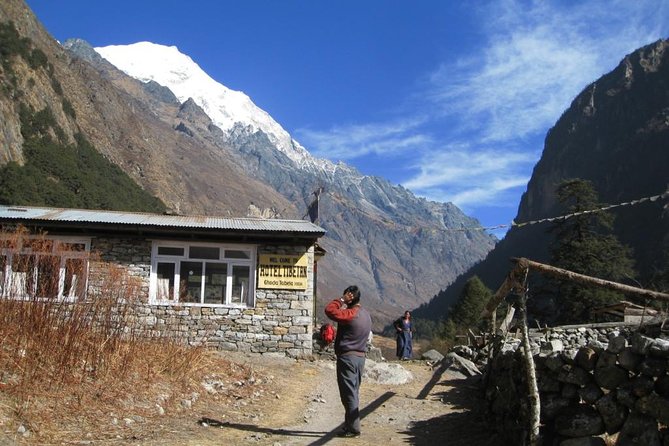
The day starts with roughly an hour of downhill walking to Thuman. This village has Tibetan cultural influence, mountain views, and a reputation for music and dancing. It is a good place to slow down and pay attention to local life instead of treating the settlement as a quick lunch stop.
From Thuman, the trail continues through rhododendron forest and meadows toward Briddhim. The village is another Tamang community with Tibetan connections, and the overnight stay offers an opportunity to see local customs and daily routines.
The walking time is about seven hours. The route is not presented as a technical climb, but the combination of distance, downhill sections, forest paths, and later ascent can tire your legs. Good shoes matter more here than fancy equipment.
I like this section because it gives the trek a human scale. The mountains are always nearby, but the villages, fields, prayer flags, and community traditions keep the experience grounded.
Day 5: Chortens, Mani Walls, and Khanjum
From Briddhim, you walk through forest, terraced fields, and smaller settlements. The route includes Sherpa Gaun, which sits higher and offers broad views of the surrounding peaks.
The climb toward Khanjum passes chortens, Mani walls, and prayer flags. These features are not just scenic decoration. They are part of the religious life of the communities along the path, so give yourself time to notice them and follow local customs around religious objects.
The day takes about six hours and is described as moderate, though the uphill sections can still be tough. You might see birds and Himalayan monkeys in the national park, and the mountain views include Langtang Lirung, Langtang II, Ganesh Himal, and other peaks in the range.
This is a good day to settle into the walking rhythm. You are high enough for impressive views, but still moving through forests and inhabited areas. The combination is one of the trek’s strongest features.
Day 6: The Hard Climb to Langtang Village
The walk from Sherpa Gaun to Langtang Village takes about six to seven hours and gains roughly 1,000 meters. This is one of the trek’s harder days, with a steep forested slope and sustained climbing.
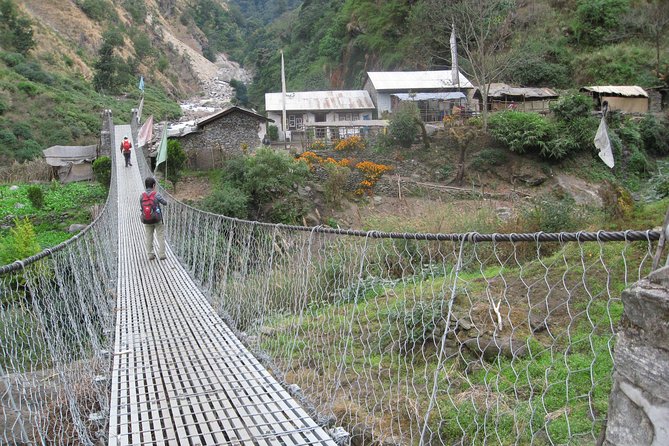
The Langtang River accompanies much of the route. You also cross a stream and pass water-driven prayer wheels, which add a small but memorable cultural detail to a physically demanding day.
Langtang Village is an old settlement with mountain views and a strong sense of place. By this point, the route feels more remote and the settlements are farther apart. The climb is tiring, but reaching the village provides a clear reward.
If you are not used to gaining 1,000 meters in a day, take this section seriously. Walk slowly, listen to your guide, and speak up if you feel unwell. The guide is there not only to lead the way, but also to help you manage the pace and altitude.
Day 7: A Short Walk to Kyanjin Gompa
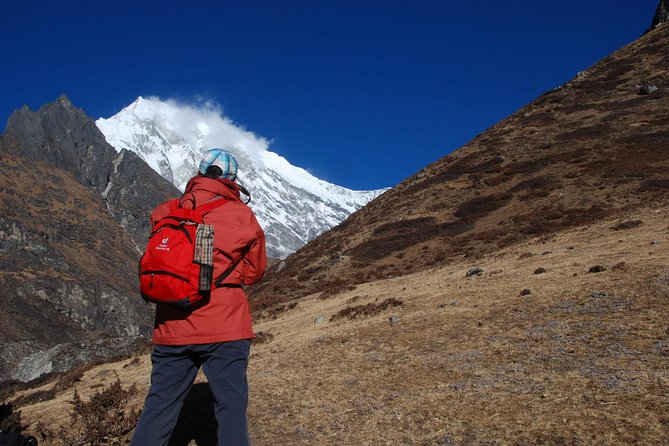
The walk from Langtang Village to Kyanjin Gompa takes about three hours, making it a welcome change after the previous day’s climb. The route brings views of Langtang Lirung and several river crossings.
You also pass a large wall covered with prayers and writing carved into stones. These religious details make the trail feel more personal and connected to the communities that have used it for generations.
Kyanjin Gompa is the main high-altitude base of the trek. Here you can try cheese and curd made from yak milk, a simple local specialty that fits the setting perfectly. The village is also the base for the next day’s optional outing.
The short walking time does not mean the day is unimportant. It gives your body time to adjust to the altitude and leaves room to explore the settlement.
Day 8: Rest Day, Tserko Ri, and the Glacier Area
The rest day at Kyanjin Gompa is designed for altitude adjustment, but it does not have to mean sitting indoors all day. You can explore the village, visit the ancient monastery, see the cheese factory, and walk toward the glacier area.
The optional hike to Tserko Ri reaches about 5,000 meters, the highest point on the route. From there, you can see glaciers, mountains, and the Langtang Valley. The itinerary states that there is no extra cost for these activities, but the hike is still a serious physical undertaking because of the altitude.
You should decide with your guide whether Tserko Ri is suitable for you that day. A rest day can be more valuable than a summit attempt if your body is struggling. The monastery, cheese factory, and nearby surroundings provide worthwhile alternatives.
This is likely to be the visual high point of the trek. The setting is more open and mountainous than the lower villages, and the extra time at Kyanjin Gompa lets you enjoy it without rushing.
Days 9 and 10: Downhill Through Forest to Syabrubesi
Day 9 takes you downhill from the high valley toward Lama Hotel, with about six to seven hours of walking through dense forest. The route passes ethnic Tamang settlements influenced by Tibetan religious practices.
Downhill walking sounds easy, but long descents can be hard on knees and ankles. Trekking poles, careful foot placement, and a steady pace are useful. You will also notice the scenery changing as you lose altitude and return to thicker woodland.
On Day 10, you walk from Lama Hotel to Syabrubesi in about three to four hours. The route continues downhill through lush forest, and the shorter walking day gives you time to enjoy the final stretch.
From Syabrubesi, the drive back to Kathmandu takes roughly six to seven hours. This is another long road day, though private transport makes it more manageable than joining a larger public bus. Expect the return to feel less glamorous than the mountain section. That is normal. The road is the price of reaching a quieter trekking area.
Day 11: A Free Day in Kathmandu
You have a free day in Kathmandu before departure. You can rest, walk around Thamel, or shop for souvenirs.
Optional activities listed for this day include a full-day Kathmandu sightseeing tour, an Everest mountain flight, a Nepalese food cooking workshop, a momo cooking workshop, and a handicraft tour. These are not described as included, so confirm the price before adding one.
A free day is useful after the trek. You can recover from the trail, organize luggage, and enjoy the city at a slower pace. Kathmandu can be polluted, as one published account noted, but its temples, monuments, and old streets still provide plenty to see.
Day 12: Airport Transfer and Departure
After breakfast, the operator assists with your onward travel and transfers you to Tribhuvan International Airport in a private vehicle. The plan is to leave about three hours before your flight.
That extra time is sensible in Kathmandu, where road traffic can affect airport transfers. Keep your passport, flight details, and valuables with you rather than in checked luggage.
What the $715.59 Price Actually Covers
The package price includes private jeep transport between Kathmandu, Gatlang, Syabrubesi, and Kathmandu. It also includes eight nights in local lodges during the trek, three nights in Kathmandu with breakfast, a licensed English-speaking guide, porter support at a ratio of one porter for two trekkers, permits, staff costs, insurance for staff, equipment for staff, and government taxes.
That is a solid base for a 12-day trek. You do not need to arrange the route, permits, guide, porters, or main transfers yourself. The small group limit also gives the trip a more personal feel than a large trekking departure.
The price does not include all meals. Food, drinks, personal costs, tips, upgraded rooms and services, international flights, visa fees, travel insurance, personal hiking gear, donations, and emergency rescue evacuation are excluded. The listed inclusions mention three breakfasts, while the hotel stays in Kathmandu are on a breakfast basis, so ask the operator to clarify exactly which breakfasts are covered.
Your total budget should therefore include daily meals, drinks, tips, insurance, and suitable clothing and equipment. Travel insurance with trekking and emergency evacuation coverage is particularly important, since evacuation insurance is not included.
Who Will Enjoy This Trek Most?
I would choose this route if you want a guided Himalayan experience with a strong cultural element and a manageable group size. It suits people who can handle several six to seven-hour walking days, a 1,000-meter climb, long downhill sections, and an optional hike to 5,000 meters.
It is also a good fit if you prefer local lodges and village contact over resort-style accommodation. The lodging will be practical rather than luxurious, and the food and drinks are paid separately.
You may want a different trip if you dislike long road transfers, want a fully serviced package with meals included, or prefer a shorter and less demanding trek. The route is not a casual sightseeing holiday. The mountain scenery is the reward for putting in the walking.
The small group size is a real advantage. Guides named in the published feedback include Hari, who was praised for adding meaning through his insight, and Norris, who was praised for adjusting the trek to suit individual needs. Guide quality can make a major difference on a route with changing terrain and altitude, so ask who will lead your departure.
Should You Book the Langtang Valley Trek?
Book it if you want Himalayan views, Tamang and Tibetan-influenced village culture, local lodge stays, and a guided route that includes permits, porters, and private transport. Kyanjin Gompa, the yak cheese, monastery visits, prayer walls, and Tserko Ri give the trek plenty of memorable moments.
Before paying, confirm the exact meal allowance, the current trail sequence around Gatlang and Chilime, the assigned guide, porter arrangements, and what emergency support your insurance must provide. If you are comfortable with long drives and serious walking, the $715.59 starting price offers good practical value. If you want an easy holiday, choose something gentler.
FAQ
How long does the Langtang Valley Trek take?
The experience lasts approximately 12 days, including arrival and departure days, the trek, transport between Kathmandu and the trailhead, and a free day in Kathmandu.
Where does the trek begin?
The walking portion begins after transport from Kathmandu toward Gatlang. The route also passes through the Dhunche, Syabrubesi, and Chilime areas.
How long is the drive from Kathmandu to Gatlang?
The drive takes approximately 8 to 9 hours by private jeep.
Is transport included?
Yes. Private jeep transport is included between Kathmandu and Gatlang, and between Syabrubesi and Kathmandu.
What is the highest point of the trek?
The optional hike to Tserko Ri reaches approximately 5,000 meters above sea level.
Is Kyanjin Gompa included?
Yes. The itinerary includes a walk from Langtang Village to Kyanjin Gompa, followed by a rest and acclimatization day there.
Are meals included?
The package includes breakfast at the Kathmandu hotel and lists three breakfasts. Food, drinks, and beverage bills during the trip are otherwise not included.
Is accommodation included?
Yes. The package includes eight nights in local lodges during the trek and three nights at Hotel Yatri Suites & Spa or a similar Kathmandu hotel on a breakfast basis.
What level of fitness is required?
You should have a moderate level of physical fitness. The trek includes walking days of up to seven hours, a climb of about 1,000 meters, and long downhill sections.
Is travel insurance included?
No. International flights, travel insurance, personal hiking gear, and emergency rescue evacuation insurance are not included.
What is the maximum group size?
The maximum group size is 10 people.
Can I cancel for a full refund?
You can receive a full refund if you cancel at least six full days before the experience start time. Cancellations two to six full days ahead receive a 50 percent refund, while cancellations less than two full days before the start time are not refunded.
Recently added around Kathmandu
- Ghorepani Poon Hill Trek★ 5.0 · 16 reviews
- Private Manaslu Circuit Trek at Himalayas★ 5.0 · 3 reviews
- Amazing 1 Day Trekking Experience in Kathmandu Nepal★ 5.0 · 24 reviews
- Upper Mustang Trekking★ 5.0 · 2 reviews
- Ghorepani Poonhill Trek★ 5.0 · 5 reviews
- Upper Mustang Trekking★ 3.0 · 2 reviews
- Upper Mustang Trekking★ 5.0 · 4 reviews
- Upper Mustang Trek★ 5.0 · 5 reviews
Langtang Valley Treks, compared.

Trekking in Annapurna/Langtang/Everest/Upper Mustang regions
Read our review →
Browse the lists this tour appears in