
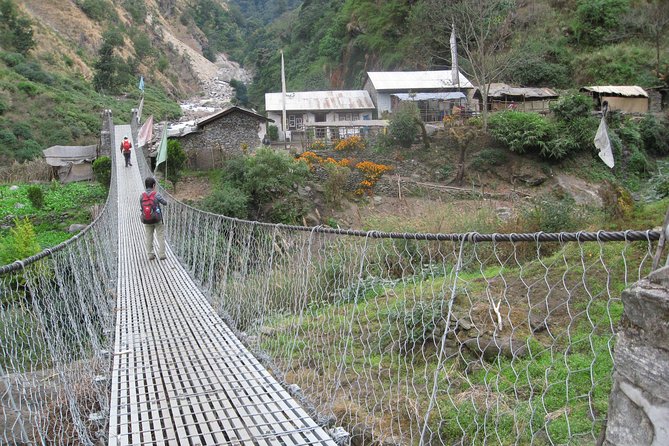
REVIEW · KATHMANDU
Langtang valley trek
Langtang rewards steady walkers. This 8-day private trek pairs a manageable route from Kathmandu with Tamang villages, Buddhist culture, bamboo and rhododendron forests, and high mountain views. I like the personal format, with a guide, porter support, private transport, and the chance to adjust parts of the trip to suit your pace. I also like that meals, accommodation, treated drinking water, and useful cold-weather items are built into the $660 price.
The main consideration is the road and altitude. The drive to Sybrubesi can take seven hours, and the hike to Kyanjin Ri reaches about 4,700 meters. You need moderate fitness, patience for long travel days, and a sensible approach to altitude. The package is practical and fairly priced, but personal insurance, trekking equipment, Wi-Fi, laundry, and Kathmandu meals are extra.
What makes this Langtang trek worth considering
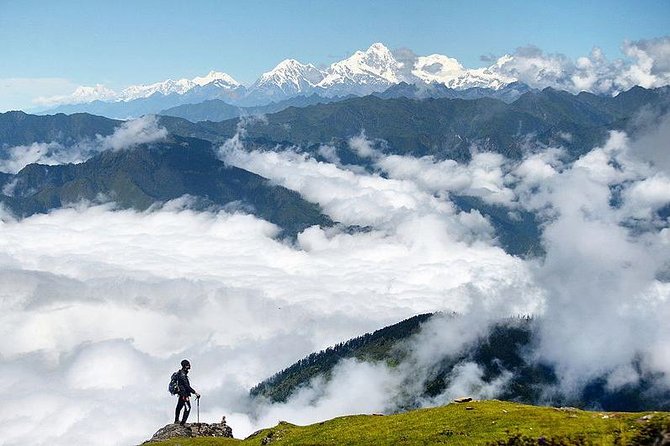
- A private route with named local guides: Deepak, Chhabin, Dinesh, and Bharat have all been associated with trips run by this operator, with particular praise for care, flexibility, and practical support.
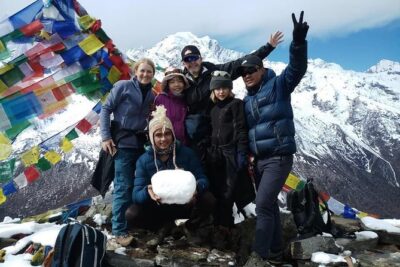
- Kyanjin Ri at 4,700 meters: The high point gives you views toward Langtang Lirung, Ganchenpo Himal, Ganjala Peak, Nyakhang, Yala Peak, and the Ganesh Himal range.
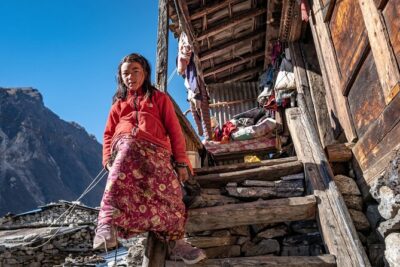
- Tamang and Tibetan Buddhist culture: Villages, festivals, monasteries, and mountain life add much more than scenery to the walk.
- A strong package for the price: Transport, three daily meals on trek, accommodation, guide, porter, taxes, treated water, fruit, and selected gear are included.
- A real mountain test in only eight days: The route is short enough for a limited holiday, but the altitude and long walking days still demand preparation.
- A flexible operator: Previous arrangements have included extended 11-day routes and changes made during a trip, useful if you want a more tailored Nepal holiday.
Why Langtang works well from Kathmandu
Langtang Valley lies north of Kathmandu, not far from the Tibetan border. It offers a taste of high Himalayan trekking without requiring the longer schedule associated with some of Nepal’s better-known routes.
The appeal is the variety. You start among lower hills and forest, then move through Lama Hotel and Langtang village toward Kyanjin Gompa. Along the way, the route passes through communities shaped by Tamang, Gurung, and Tibetan traditions. Buddhist practice is part of daily life, and local festivals include Dumji, Loshar, Dashain, and Tihar.
I like this combination because the trek is not just a march toward a viewpoint. You have forests, villages, mountain pasture, monasteries, and high peaks in one compact trip. The schedule also gives you a clear goal at Kyanjin Gompa, the last main stop, followed by a demanding high viewpoint walk.
The route is best suited to someone with moderate physical fitness. The walking hours are not extreme every day, but the road journey is tiring and the altitude changes quickly. February through May and September through November are identified as the best seasons, offering a sensible window for planning.
More Langtang Treks in Kathmandu:
- Langtang Valley Trek
★ 5.0 · 140 reviews - Langtang Valley Trek
★ 5.0 · 61 reviews - 8 Days Tour in Langtang Valley Trek
★ 5.0 · 45 reviews
Day 1: Landing at Tribhuvan Airport
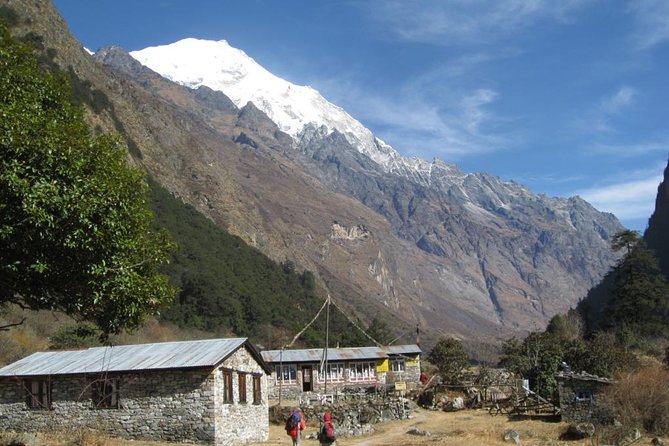
Your trip begins at Tribhuvan International Airport in Kathmandu, with pickup listed for 8:00 am. You are transferred to a hotel, giving you a useful first pause before the mountain section begins.
The arrangement is private, so only your group takes part. That matters if you want a calmer start, need help sorting gear, or want to discuss the walking pace with your guide. Hotel booking assistance in Kathmandu is available if requested, although you should confirm the room arrangements directly before departure.
Do not treat this first day as a sightseeing day unless your flight schedule allows it. The important job is getting organized. The company provides trekking documents and selected equipment, including a T-shirt, down jacket, and duffel bag. The down jacket and duffel bag are refundable after the trek, so clarify the return process when you arrive.
Day 2: The long road to Sybrubesi
The drive from Kathmandu to Sybrubesi takes about six to seven hours and reaches roughly 1,400 meters. This is a full day in a vehicle, not a quick transfer before lunch.
That travel time is the price of reaching the trailhead. You will want a small day bag with water, sunscreen, snacks, and anything you need during the ride. The route is part of the experience, but it may feel rough and slow compared with a standard road journey. The outline gives the drive a seven-hour estimate, so build in patience rather than planning an evening activity in Sybrubesi.
Sybrubesi is the starting point for the walking section. From here, the route moves into the valley, with altitude rising gradually over the next few days. That gradual approach is helpful, since you do not sleep at the highest point immediately.
Day 3: Forest walking to Lama Hotel
The first trek day runs from Sybrubesi to Lama Hotel and takes about four hours. Lama Hotel sits at around 2,400 meters, so this day introduces both walking and a moderate gain in height.
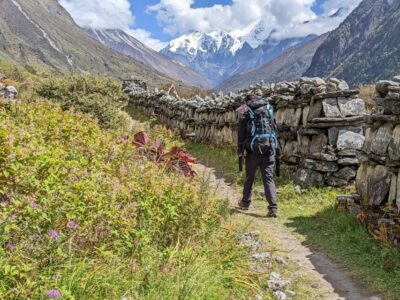
The route is known for bamboo and rhododendron forest. You get a softer start than a bare high-altitude trail, with trees providing a changing setting as the path climbs. The forest section also gives your body time to settle into the rhythm of walking.
Four hours sounds comfortable, but the previous day’s road trip can still be in your legs. I would keep this day steady and avoid treating it as a race. Your guide can help manage the pace, and the private format makes it easier to stop when needed.
Accommodation is included during the trek. The supplied details do not specify the exact lodge standard or room arrangement, so confirm those points if they matter to you. Tea or coffee is included, and meals are covered from breakfast through dinner on the trekking days.
A few more treks around Kathmandu worth a look
- Everest Base Camp Trek – 14 Days
★ 5.0 · 1,499 reviews - Everest Base Camp Trek
★ 5.0 · 842 reviews - Everest Base Camp Trekking
★ 5.0 · 485 reviews - Annapurna Circuit Trek with Tilicho Lake
★ 5.0 · 368 reviews
Day 4: Climbing toward Langtang village
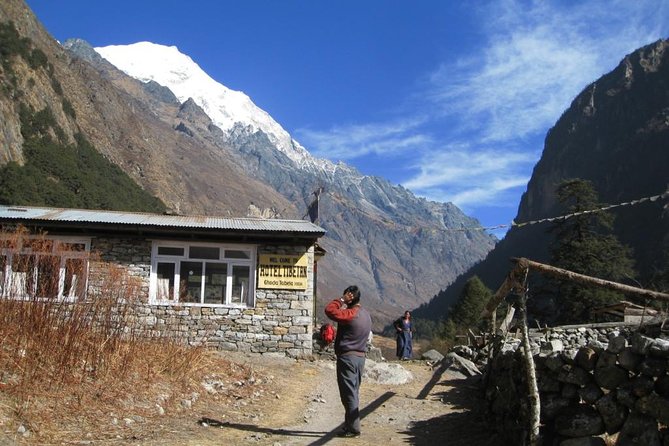
The next section takes about five hours and reaches Langtang village at approximately 3,400 meters. This is where the route begins to feel properly alpine, with more open mountain views and a stronger sense of altitude.
Langtang village is important for both scenery and local life. The area is associated with Tamang, Gurung, and Tibetan communities, and Buddhism shapes the villages and customs. Your guide is valuable here because the cultural details can otherwise pass by as you focus on your feet.
At 3,400 meters, you should pay attention to how you feel. Headache, unusual tiredness, nausea, or poor coordination should not be ignored. The information provided does not promise medical evacuation or specialized medical care, but a first aid kit is included and the guides are intended to support the group. Personal travel insurance remains your responsibility.
The package includes fresh fruit after dinner each day. That is a small but welcome detail after several hours of walking, particularly when you are trying to eat enough at altitude.
Day 5: Reaching Kyanjin Gompa
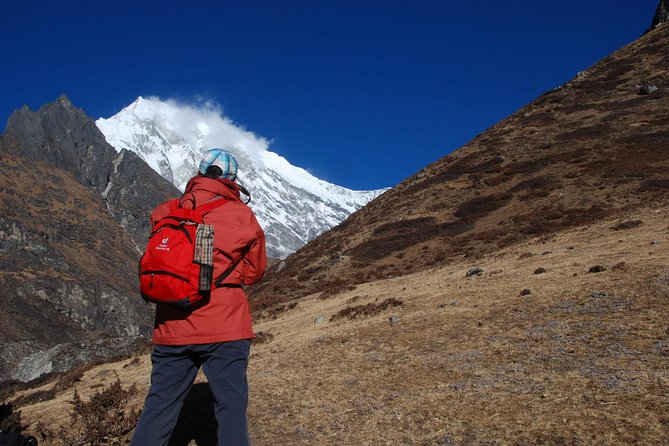
The walk to Kyanjin Gompa takes about three hours and reaches around 3,700 meters. Compared with the previous day, the walking time is shorter, but the altitude makes the effort more serious.
Kyanjin Gompa is the final main stop on this version of the route. It is the base for the next day’s high viewpoint walk, and it gives you time to see the upper valley without having to change accommodation again.
The surrounding peaks include Langtang Lirung at about 7,240 meters, Ganchenpo Himal at about 7,430 meters, Ganjala Peak at about 6,120 meters, Nyakhang at about 6,160 meters, and Yala Peak at about 5,740 meters. You also have views toward the Ganesh Himal range.
The peak names add useful context, but do not expect every mountain to be equally clear. Weather controls the show in the Himalayas. A cloud-covered summit does not make the day a failure, but it is one reason to keep expectations flexible.
Day 6: Kyanjin Ri at 4,700 meters
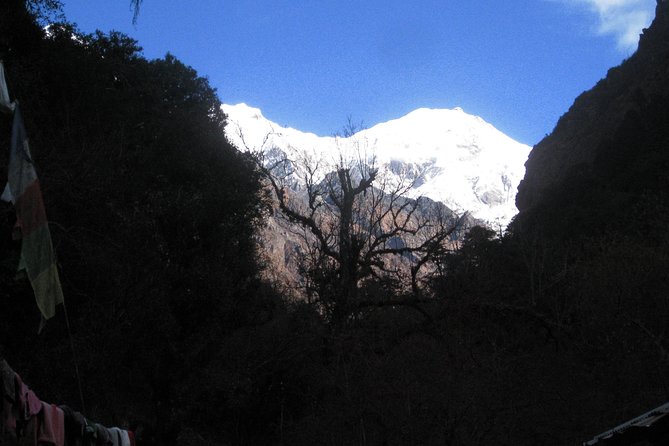
This is the hardest and most rewarding day in the schedule. You hike to Kyanjin Ri viewpoint at about 4,700 meters, then return toward Langtang.
The high point is why many people choose this route. The views reach across the upper Langtang area, and the climb gives you a stronger mountain experience than simply reaching Kyanjin Gompa. At the same time, the altitude is serious. The itinerary calls this a hike and does not give a walking time, so you should ask the operator how long your group is expected to spend on the ascent and descent.
A second option mentioned is Tserko viewpoint. The choice between Kyanjin Ri and Tserko can be discussed with your guide. Do not assume the higher or longer option is automatically better for you. Weather, energy, and altitude symptoms should guide the decision.
Sunscreen is especially important here. The advice from previous trips is simple: bring it. At high altitude, exposed skin can burn quickly, even when the air feels cold. Sunglasses, warm layers, and personal trekking equipment are not listed as included, so pack them yourself or confirm what the provided gear covers.
Day 7: Returning to Sybrubesi
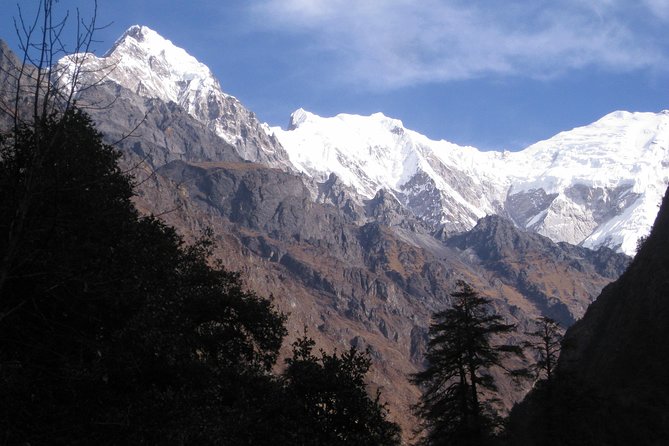
The return walk to Sybrubesi takes about six to seven hours, descending to roughly 1,400 meters. This is the longest walking day in the stated itinerary.
Downhill is not always easy. Knees and feet take a beating, and tired legs can make uneven paths harder. Your guide and porter support are useful here, especially if your pack has become less comfortable or you are carrying souvenirs.
The descent also brings a change in air and vegetation. You leave the high valley behind and return toward the lower forested sections near the road. It is a long day, but the lower elevation should feel easier for many people than the Kyanjin section.
Day 8: Driving back to Kathmandu
The trip ends with a six to seven-hour drive back to Kathmandu, at about 1,300 meters. This is another long road day, so keep your final evening light.
The airport drop-off is scheduled according to your flight details, generally the following day. If you have extra time, the operator can help arrange more time around Kathmandu, Pokhara, Chitwan, or Lumbini, the birthplace of Buddha. Those extensions are not part of the $660 trek, but the option is useful if this is your main Nepal holiday.
What the $660 price really covers
At $660 per person, the value is strongest if you use most of the included services. The package covers private transportation, accommodation, breakfast, lunch, dinner, guide service, porter support, taxes and fees, tea or coffee, treated drinking water, a first aid kit, fresh fruit after dinner, and necessary trip documents.
The T-shirt, down jacket, and duffel bag can reduce the amount of gear you need to purchase, although the details say the down jacket and duffel bag are refundable after the trek. Confirm the exact equipment arrangement before relying on it.
You still pay for international flights, personal insurance, trekking equipment, cold drinks, Wi-Fi, laundry, extra snacks outside the tea houses, Kathmandu lunches and dinners, and staff tips. These exclusions are normal for a trekking package, but they affect your final budget. I would set aside money for personal snacks, drinks, insurance, and gratuities rather than treating $660 as the total cost of the holiday.
Guide support and the private format
The strongest practical feature is the human support. Deepak has been praised for being attentive to safety and responsive to requests. Chhabin has guided a solo trek, while Dinesh and Deepak have been associated with trips that changed direction when guests requested adjustments.
Bharat also helped a group member recover from altitude sickness on a separate Nepal itinerary. That is encouraging, but it is not a substitute for insurance, acclimatization, or honest communication about symptoms.
A private trip gives you more control than a fixed group departure. You can discuss Kyanjin Ri or Tserko, ask for a different pace, and request help with additional time in Nepal. The exact level of flexibility should be confirmed before booking, particularly if you want to extend the walking days beyond this eight-day plan.
Who should book this trek
I would recommend it to you if you want a relatively short Himalayan trek with strong scenery, local culture, and a private guide team. It suits people who can walk for several hours, tolerate long vehicle transfers, and prepare properly for a high viewpoint.
It is less suitable if you want luxury accommodation, short road journeys, reliable Wi-Fi, or a relaxed holiday with little physical effort. It is also not the right choice if you are uncomfortable reaching 4,700 meters or have no time to deal with weather changes.
Nature Explore Trekking receives a five-star overall rating from six published ratings, with praise focused on guide care, honest service, flexibility, and organized support. That record is promising, but I would still ask for current details about accommodation, guide assignment, Kyanjin Ri timing, and equipment before paying.
FAQ
Where does the Langtang Valley Trek start?
The experience starts at Tribhuvan International Airport in Kathmandu, Nepal. Airport pickup is offered, with a listed start time of 8:00 am.
How long does the Langtang Valley Trek take?
The trek lasts approximately eight days. It includes arrival and hotel transfer, the drive to Sybrubesi, the walking route, the return drive to Kathmandu, and airport drop-off based on your flight details.
How high does the trek go?
The highest listed point is Kyanjin Ri viewpoint at approximately 4,700 meters. Kyanjin Gompa is reached at about 3,700 meters.
What meals are included?
Breakfast, lunch, and dinner are included during the trek. Tea or coffee and fresh fruit after dinner are also included. Lunch and dinner in Kathmandu are not included.
Is transportation included?
Yes. Private transportation is included for the airport transfer, the drive between Kathmandu and Sybrubesi, and the return drive to Kathmandu.
Is this a private tour?
Yes. Only your group participates in the private tour or activity.
What physical fitness level is required?
A moderate physical fitness level is recommended. Walking days range from about three to seven hours, and the route includes a high hike to Kyanjin Ri.
What happens if bad weather cancels the trek?
If poor weather causes the experience to be canceled, you are offered a different date or a full refund. You can also cancel for a full refund if you do so at least 24 hours before the start time.
Should you book it?
Book this Langtang trek if you want a compact, guided Himalayan experience with a good list of inclusions and room for personal attention. The price is attractive because it covers the essentials that quickly add up in Nepal, especially transport, meals, accommodation, a guide, porter support, and treated water.
Before booking, confirm the lodge standard, the exact equipment supplied, the plan for the Kyanjin Ri day, and who will guide your group. If you prepare for the altitude, pack sunscreen and proper layers, and accept the long road transfers, this is a strong choice for a first Nepal trek with real mountain scenery and meaningful village contact.
Recently added around Kathmandu
- Ghorepani Poon Hill Trek★ 5.0 · 16 reviews
- Private Manaslu Circuit Trek at Himalayas★ 5.0 · 3 reviews
- Amazing 1 Day Trekking Experience in Kathmandu Nepal★ 5.0 · 24 reviews
- Ghorepani Poonhill Trek★ 5.0 · 5 reviews
- Upper Mustang Trekking★ 5.0 · 2 reviews
- Upper Mustang Trekking★ 5.0 · 4 reviews
- Upper Mustang Trek★ 5.0 · 5 reviews
- Upper Mustang Trekking★ 3.0 · 2 reviews
Langtang Valley Treks, compared.

Trekking in Annapurna/Langtang/Everest/Upper Mustang regions
Read our review →
Browse the lists this tour appears in