
REVIEW · KATHMANDU
Langtang, Gosaikunda and Helambu Trek
Three valleys, one demanding route. This 10-day private trek links the Langtang region, sacred Gosaikunda Lake, and Helambu, making it a strong choice if you want mountain scenery without committing to a longer Himalayan expedition. I especially like the variety of scenery, from rhododendron and bamboo forests to high alpine lakes, and the small private format, with your own guide and porter team. The main caution is altitude: Gosaikunda sits at 4,460 meters, and several days involve five to seven hours of walking.
The $850 price is per group of up to 15 people, which can be excellent value if you are traveling with friends or family. It includes guides, porters, meals, teahouses, transport, Kathmandu lodging, permits and staff costs. Still, you need to budget separately for insurance, bottled or boiled water, showers, battery charging, personal expenses, and meals in Kathmandu.
Key points to know before booking
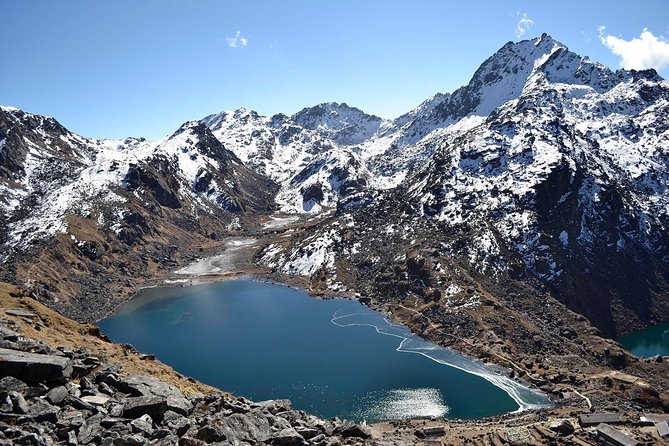
- Gosaikunda reaches 4,460 meters: This is the physical high point of the trip and the part that requires the most care with pacing and altitude.
- Three trekking areas in one route: You move through Langtang, the Gosaikunda lake area, and Helambu rather than repeating a single valley.
- A private trip for your group: Only your party participates, with a government-licensed English-speaking trek leader and assistant guide arrangements based on group size.
- Meals and teahouses are included: Breakfast, lunch and dinner are provided during the trek, while accommodation is in local teahouses.
- Strong guide and porter support: Binod, Ngima Tamang, Ganesh and Rupak are names associated with highly praised support and organization.
- The price works best for groups: At $850 per group of up to 15, the value improves greatly when shared among several people, though the exact group setup should be confirmed before booking.
Why this route is worth considering
Many Nepal treks focus on one famous valley. This route takes a different approach. It joins three well-known trekking areas north of Kathmandu, giving you a changing experience instead of ten days of similar views.
You begin with forest and mountain scenery around the Langtang range. Then the route climbs to Gosaikunda, a sacred group of high-altitude lakes. Finally, it crosses toward Helambu, where the trail drops through forested hills before ending at Sundarijal near Kathmandu.
I like this structure because every section has a clear character. The Langtang side gives you views of snow-covered peaks such as Langtang Lirung. Gosaikunda provides the dramatic high point, both in altitude and scenery. Helambu brings a gentler finish, with lower elevations and a more gradual return toward the Kathmandu Valley.
The route is not a casual walk. You should have a moderate fitness level and be comfortable walking five to seven hours on mountain trails. The highest point is well above 4,000 meters, so physical fitness alone does not remove altitude concerns. You will need to follow your guide’s pace and tell the leader quickly if you feel unwell.
More Langtang Treks in Kathmandu:
- Langtang Valley Trek
★ 5.0 · 140 reviews - Langtang Valley Trek
★ 5.0 · 61 reviews - 8 Days Tour in Langtang Valley Trek
★ 5.0 · 45 reviews
Day 1: Arriving in Kathmandu at 1,320 meters
Your trip begins with arrival at Tribhuvan International Airport. A private vehicle transfer to your Kathmandu accommodation is included, along with airport pickup and drop-off arrangements.
The first night is useful for getting organized rather than sightseeing. You can meet the trekking team, check your equipment and make sure you understand the walking schedule. Three-star hotel accommodation with breakfast is included in Kathmandu.
The package does not include lunch or dinner in the city. It also does not cover extra hotel nights caused by an early arrival, late departure or an early return from the trek. If your international flight schedule requires additional nights, plan for that cost.
Day 2: The long road to Dhunche
The drive from Kathmandu to Dhunche takes about seven to eight hours, with Dhunche at 2,050 meters. This is a full transport day, so do not think of it as a light sightseeing transfer.
The road journey matters because it gets you close to the starting point without adding several walking days. The trade-off is comfort and time. A long mountain road can feel tiring, particularly after an international flight or a busy Kathmandu stay.
Ground transportation is included, and the arrangements list both a comfortable private vehicle and tourist bus service on the Kathmandu to Syabrubesi route. Since the transport wording allows for more than one vehicle type, ask the operator which arrangement applies to your dates and group.
Dhunche is an important staging point. From here, the route begins to feel like a proper mountain trek, with higher elevations ahead and less time spent in urban areas.
Day 3: Climbing from Dhunche to Shin Gompa
The walk to Shin Gompa takes around four to five hours. This is a shorter trekking day than some later stages, but it begins the steady rise toward Gosaikunda.
The route passes through the forest character that defines much of this part of Nepal. Rhododendron and bamboo are major features, and the area is known for wildlife as well as waterfalls. You should expect a mixture of forest walking and mountain views rather than open high-altitude scenery all day.
Shin Gompa is also known as a stopping point before the more serious climb. Teahouse accommodation is included, which means you will stay in a simple local lodge rather than a full-service hotel. Teahouses are practical and social, but facilities can be basic. Personal costs such as showers, charging devices and extra drinks are not included.
A few more treks around Kathmandu worth a look
- Everest Base Camp Trek – 14 Days
★ 5.0 · 1,499 reviews - Everest Base Camp Trek
★ 5.0 · 842 reviews - Everest Base Camp Trekking
★ 5.0 · 485 reviews - Annapurna Circuit Trek with Tilicho Lake
★ 5.0 · 368 reviews
Day 4: Shin Gompa to Gosaikunda at 4,460 meters
This is one of the most important days of the trek. The walk takes approximately five to six hours and ends at Gosaikunda, at 4,460 meters.
The main reward is the setting around the holy lakes. Gosaikunda has religious importance, and the high mountain surroundings give this part of the trek a strong sense of place. You may also see wide views toward Ganesh Himal, Manaslu and the Annapurna range, depending on conditions.
The main issue is altitude. You are moving from 2,050 meters at Dhunche to more than 4,400 meters within a short part of the itinerary. The schedule is demanding, and the pace should be controlled. Your guide is there to monitor the group, but you must also speak up about headache, nausea, unusual tiredness or breathing problems.
Weather can change quickly at this elevation. The trip operates in all weather conditions, so warm layers, rain protection and proper walking shoes are essential. The high point is memorable, but it is not a place to rush through for photographs.
Day 5: Crossing from Gosaikunda to Phedi
The journey from Gosaikunda to Phedi takes about six to seven hours. After the altitude gain of the previous day, this is another demanding stage.
Phedi sits at 3,600 meters, so you remain high even after leaving the lake area. The route continues through exposed mountain terrain before dropping toward lower ground. The day may feel long because of the distance, the uneven trail and the effects of altitude.
This is where porter support has real value. One porter is provided for every two trekkers, and staff costs include their pay, insurance, equipment, food and accommodation. You still need to pack sensibly and respect any baggage limit set by the operator, but you will not be expected to carry every item yourself.
Day 6: Phedi to Tharepati at 3,900 meters
The walk to Tharepati takes five to six hours and keeps you in high country. At 3,900 meters, Tharepati is lower than Gosaikunda but still high enough for cold weather and difficult walking.
This section connects the Gosaikunda area with Helambu. The route is valuable because you are not simply returning by the same road or trail. Instead, you continue across the hills and begin moving toward a different cultural and ecological area.
The scenery should keep changing as the route moves between forest and more open mountain sections. Waterfalls, forest plants and mountain views are among the main attractions of the overall trek, though visibility depends on weather.
Day 7: Tharepati to Kutungsung
The route drops from Tharepati to Kutungsung, with five to six hours of walking. Kutungsung is listed at 2,450 meters, so this is a meaningful descent from the high point.
For many people, the lower elevation brings some relief. You are still walking a substantial distance, but the air should feel easier than around Gosaikunda and Phedi. The changing elevation also shows why this trek feels broader than a single-valley route.
This is a good day to pay attention to your knees and feet. Descending can be harder on joints than climbing, especially after several long days. Trekking poles may help, though they are not listed as part of the included equipment.
Day 8: Kutungsung to Chisopani
The walk to Chisopani takes approximately six to seven hours, and Chisopani sits at 2,250 meters. You are now well below the highest part of the route, but the day remains long.
Chisopani is known as a viewpoint area near Kathmandu, and it provides a scenic final night in the hills. The lower altitude, forest surroundings and closer connection to the Kathmandu Valley give this stop a different feel from the stark high country around Gosaikunda.
I like this staging because it avoids ending the trek with a rushed return to the city. You get one more night in a mountain settlement before walking down to Sundarijal.
Day 9: Chisopani to Sundarijal and back to Kathmandu
The final walk takes you from Chisopani to Sundarijal, at 1,510 meters. From there, you drive back to Kathmandu.
The itinerary does not give a precise walking time for this day, but the route is still part of an active trek, so you should not treat it as a simple transfer. Your legs may be tired after a week of long days.
Sundarijal is a practical endpoint because it brings you close to Kathmandu while allowing you to finish on foot. A private vehicle transfer back to the city is included. A farewell dinner is also part of the package, giving the group a chance to finish together after the mountain section.
Day 10: Departure from Nepal
The final day is set aside for departure. Airport drop-off is included in a private vehicle.
If your flight leaves later, check whether an extra hotel night is needed. Additional accommodation for early arrival, late departure or an early return is excluded, so this is one of the costs to clarify before confirming your plans.
What the $850 group price really covers
At $850 per group of up to 15 people, the price can offer strong value. The package includes much more than guiding alone:
- Airport transfers
- Three-star Kathmandu hotel accommodation with breakfast
- Teahouse lodging during the trek
- Breakfast, lunch and dinner during the trekking days
- Kathmandu farewell dinner
- Ground transportation
- Tourist bus transport listed for the Kathmandu to Syabrubesi route
- English-speaking, government-licensed trek leader
- Assistant trek leader arrangements
- One porter for every two trekkers
- Staff wages, insurance, food, equipment and lodging
- Medical kit carried by the trek leader
- Government and local taxes
The value is strongest when two or more people share the booking. A minimum of two people is required, and the private format means your group is not combined with unrelated participants.
You still need to pay for your Nepalese visa, international flights, travel and rescue insurance, personal phone use, laundry, bar bills, charging, showers, extra porters and bottled or boiled water. Meals in Kathmandu are also separate except for breakfast and the farewell dinner.
Ask for a clear estimate of likely personal spending. Small mountain costs can add up, especially if you want hot showers, extra drinks or regular battery charging.
Guide support and the human side of the trek
The strongest praise connected with this operator centers on organization, kindness, flexibility and guide support. Binod is repeatedly associated with careful planning and a warm, reassuring approach. Ngima Tamang is described as supportive and good with time management, while Ganesh is praised for patience and personal help.
Rupak is also connected with a warm welcome in Kathmandu before the trek continues under mountain guidance. These details matter because a long Himalayan route is not only about scenery. Good timing, clear communication and practical help can make a hard day much easier.
The group receives an experienced English-speaking trek leader who is government licensed. For groups of four trekkers, an assistant guide is provided, and porter service is arranged at one porter for two trekkers. If your group is larger or smaller, confirm exactly how the guide and assistant structure will work.
Who should book this trek?
You should consider this trek if you want:
- A private Nepal trip rather than a large shared departure
- Forest, mountain and high-lake scenery in one route
- A 10-day itinerary from Kathmandu
- Included meals and teahouse accommodation
- Porter support for most of your personal load
- A route with a serious high-altitude section
- Guidance from an English-speaking licensed trek leader
This is less suitable if you want a relaxed holiday with short walks. The route includes several five to seven-hour days and reaches 4,460 meters. It is also not recommended for children aged 10 and under.
You need a current valid passport on the day of travel. The trek operates in all weather, so your clothing should match cold, wet and changing mountain conditions.
Booking, cancellation and practical checks
Confirmation is provided at the time of booking. The experience begins in Kathmandu, and only your group takes part.
You can cancel for a full refund if you do so at least 24 hours before the scheduled start time. Cancellations made less than 24 hours in advance are not refunded, and changes within that period are not accepted. The cut-off follows local time in Nepal.
Before paying, I would confirm the transport arrangement, the baggage allowance, the expected porter load, the number of assistant guides, and how extra nights would be handled. These points are especially useful if your group has more than four people or if you have a late international flight.
Should you book the Langtang, Gosaikunda and Helambu Trek?
I would recommend this trek to fit hikers who want a varied route and are comfortable with high altitude. The combination of Langtang forests, Gosaikunda’s sacred lakes and Helambu’s lower hills gives you more range than a simple out-and-back itinerary.
The $850 group rate is attractive when shared, and the package covers the costly essentials: transport, accommodation, meals, guides, porters and staff support. The main reason to hesitate is the demanding altitude schedule, especially the quick rise toward Gosaikunda and the long days that follow.
Book it if you want a serious but organized Himalayan trek with personal guide support. Choose another option if you prefer a lower-altitude walk, shorter days or more hotel comfort.
FAQ
Where does the trek begin?
The experience begins in Kathmandu, Nepal, with arrival at Tribhuvan International Airport.
How long is the trek?
The full itinerary lasts approximately 10 days, including arrival and departure days.
What is the highest elevation on the route?
Gosaikunda is the highest listed point, at 4,460 meters.
How many people are required to book?
A minimum of two people per booking is required. The private tour can include groups of up to 15 people.
Is accommodation included?
Yes. Three-star hotel accommodation with breakfast is included in Kathmandu, and teahouse accommodation is included during the trek.
Are meals included?
Breakfast, lunch and dinner are included during the trek. Breakfast and a farewell dinner are included in Kathmandu, but other Kathmandu lunches and dinners are not included.
Is a guide included?
Yes. An experienced, English-speaking and government-licensed trek leader is included. Assistant guide arrangements are also provided, with one assistant guide for every four trekkers.
Are porters included?
Yes. Porter service is included at a rate of one porter for every two trekkers.
What is not included in the price?
The price excludes the Nepalese visa, international airfare, excess baggage, travel and rescue insurance, extra Kathmandu hotel nights, personal expenses, charging, showers, bottled or boiled water and extra porters.
Can I cancel for a full refund?
Yes. You can receive a full refund if you cancel at least 24 hours before the experience start time. Cancellations or changes made less than 24 hours before the start are not accepted for a refund.
Recently added around Kathmandu
- Ghorepani Poon Hill Trek★ 5.0 · 16 reviews
- Private Manaslu Circuit Trek at Himalayas★ 5.0 · 3 reviews
- Amazing 1 Day Trekking Experience in Kathmandu Nepal★ 5.0 · 24 reviews
- Upper Mustang Trekking★ 5.0 · 2 reviews
- Ghorepani Poonhill Trek★ 5.0 · 5 reviews
- Upper Mustang Trekking★ 3.0 · 2 reviews
- Upper Mustang Trekking★ 5.0 · 4 reviews
- Upper Mustang Trek★ 5.0 · 5 reviews
Langtang Valley Treks, compared.
Trekking in Annapurna/Langtang/Everest/Upper Mustang regions
Read our review →
Browse the lists this tour appears in