
REVIEW · KATHMANDU
Gokyo-Ranjo Pass Trek On 16 Days (Cheapest Trip On Nepal)
High passes, quiet valleys, huge mountain views. This 16-day trek links Lukla, Namche Bazaar, Khumjung, Gokyo Lake, Gokyo Ri, and Renjo La Pass in one demanding circuit. I like the route’s mix of famous Sherpa centers and quieter high valleys, and I like that it includes acclimatization days instead of rushing straight uphill. The main concern is altitude: you reach 5,483 meters at Gokyo Ri and cross Renjo La at 5,340 meters, so this is not a casual walk.
I also like the practical support, including a private Sherpa guide, porters, trekking permits, meals, hot drinks, a duffle bag, sleeping bag, and down jacket rental. The $2,100 price can be good value for a 16-day private trek with transport and staff included, but you still need personal insurance that covers emergency evacuation, gear, drinks, tips, and some Kathmandu costs.
Key Points Before You Book
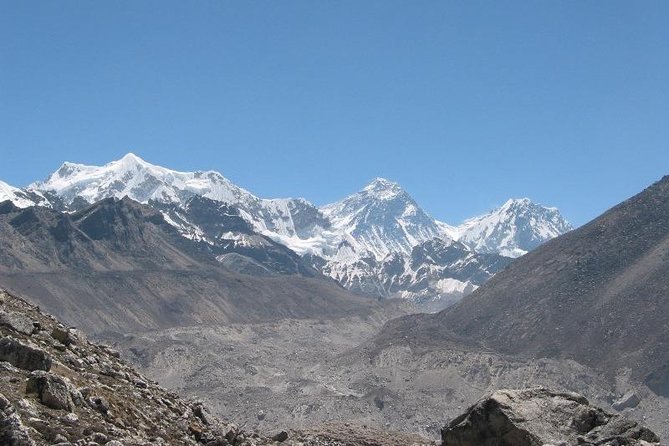
- Gokyo Ri and Renjo La in one circuit: You get two major high points instead of simply walking to Everest Base Camp and turning around.
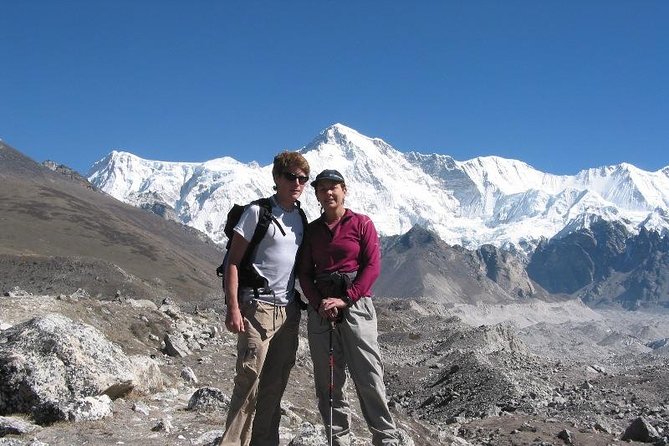
- A quieter route after Namche: The trail through Khumjung, Dole, Machhermo, and Gokyo sees less traffic than the main Everest route.
- Acclimatization is built in: A rest and hiking day at Machhermo gives your body time to adjust before Gokyo Lake and the pass.
- Private group format: Only your own group participates, with an experienced Sherpa guide and porters.
- Substantial support package: Meals, hot drinks, permits, transfers, a half-day heritage tour, and local staff insurance are included.
- Weather can affect the plan: A spare day is held in Kathmandu for a possible Lukla flight delay.
Why This Route Works So Well
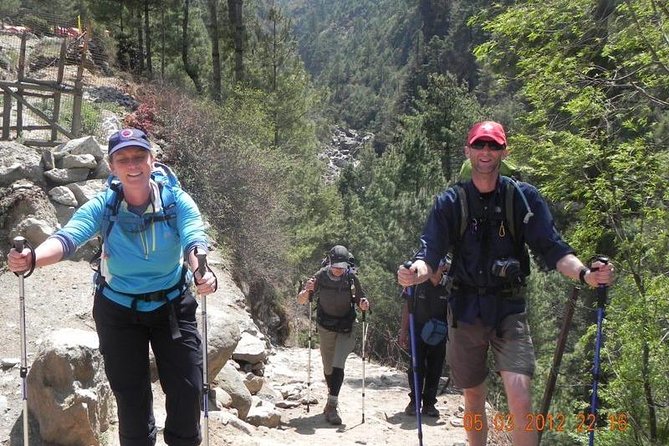
The appeal here is the shape of the route. You begin on the classic approach from Lukla along the Dudh Kosi, then leave the main Everest trail after Namche Bazaar. From there, the route climbs through Khumjung and the Gokyo Valley before reaching Gokyo Ri and Renjo La Pass.
That gives you a fuller view of the Khumbu region without making Everest Base Camp the only goal. You see Sherpa villages, high pastures, glacial lakes, steep mountain valleys, and broad Himalayan viewpoints. The route also has a useful rhythm: lower villages first, gradual altitude gain, rest time, then the hardest high sections.
I especially like the clockwise feel of the journey. You climb toward Gokyo, gain height in stages, cross Renjo La, and then descend toward Lungden and Namche. That is easier to understand and usually more comfortable than trying to force every major climb into a few days.
Still, the route demands real fitness. The itinerary includes several walking days of four to six hours, steep climbs, and thin air above 4,000 meters. You need to be comfortable with long mountain days and able to handle basic trekking conditions.
More Everest Base Camp Treks in Kathmandu:
- Everest Base Camp Trek – 14 Days
★ 5.0 · 1,499 reviews - Everest Base Camp Trek
★ 5.0 · 842 reviews - Everest Base Camp Trekking
★ 5.0 · 485 reviews
Days 1 and 2: Kathmandu Preparation
The trek begins with airport pickup in Kathmandu and a transfer to your hotel. A briefing follows, and the second day is reserved for preparation, packing, and necessary arrangements.
This is more useful than it may sound. A high-altitude trek works better when your bags, clothing, and documents are sorted before the Lukla flight. The package also includes a half-day tour of Kathmandu World Heritage sites with private transport and a guide, giving you some culture before the mountain portion begins.
Your Kathmandu time is not fully covered for meals. Major meals in the capital are excluded, and personal costs such as laundry, phone calls, toiletries, and other purchases are yours to manage. The plan includes three or four hotel nights on a twin-sharing bed-and-breakfast basis, though the wording should be confirmed before booking.
Day 3: Lukla to Phakding
The mountain flight to Lukla is one of the memorable parts of the trip. Lukla sits at about 2,840 meters, and the trek begins there with a relatively short three-hour walk to Phakding at 2,610 meters.
This first walking day gives you a gentle start after the flight. You follow the Dudh Kosi, known as the Milk River, and begin to adjust to the pace of walking with a pack or day bag.
The early meeting time is listed as 5:00 a.m. at Tribhuvan Airport. That means you should expect a very early start and have your gear ready the night before. Mountain flights can be affected by conditions, which is one reason the itinerary keeps an emergency day in Kathmandu later.
Day 4: Phakding to Namche Bazaar
The five-hour trek to Namche Bazaar is the first serious test. Namche sits at approximately 3,440 meters and serves as the main Sherpa trading and service center for the Everest region.
The route follows the river and climbs through the valley toward Namche. The final approach is harder than the previous day because the elevation rises sharply. You should walk steadily here rather than chase the fastest pace.
Namche is more than an overnight stop. It is the gateway to the higher valleys and a useful place to rest, check your equipment, and prepare for the next stage. The route does not give you a full rest day in Namche, so you need to use the evening well.
A few more treks around Kathmandu worth a look
- Annapurna Circuit Trek with Tilicho Lake
★ 5.0 · 368 reviews - Everest Base Camp Trekking – 13 Day
★ 5.0 · 365 reviews - Everest Base Camp Trek
★ 5.0 · 350 reviews - Everest Base Camp Trek -14 Days
★ 5.0 · 321 reviews
Day 5: Khumjung and the Everest View Area
The trek continues to Khumjung at roughly 3,840 meters, with about three hours of walking. The route takes you toward the Everest View Hotel area before reaching Khumjung, a Sherpa village with a quieter feel than Namche.
This is one of the most appealing changes of pace on the route. You leave behind some of the main trail traffic and begin to see the Khumbu from a more local village setting. The walk is shorter than the previous day, but the altitude is higher, so do not mistake distance for difficulty.
Khumjung also helps break up the climb toward the Gokyo Valley. A night here gives you a better adjustment period before the trail rises above 4,000 meters.
Day 6: Khumjung to Dole
The walk to Dole takes about five hours and reaches approximately 4,200 meters. This is where the route clearly enters the Gokyo Valley and begins to feel more remote.
The gain in height is significant, so you should keep your pace controlled. The route may feel less crowded than the main Everest trail, which is a major reason to choose this circuit. You get more space to pay attention to the river valleys, mountain slopes, and changing vegetation without treating the walk as a race.
Dole is also a good point to take stock of your body. Headache, unusual tiredness, nausea, or poor coordination should not be ignored at this height. Tell your guide early if you feel unwell.
Day 7: Dole to Machhermo
The four-hour walk to Machhermo reaches about 4,470 meters. This is a shorter day, but the altitude makes it meaningful. You are now high enough that small problems can become serious if you push too hard.
The route continues through the Gokyo Valley toward the higher settlements. Machhermo is the staging point for the next day’s rest and acclimatization work, so the goal is not simply to arrive quickly.
The support team matters most on days like this. The package includes an experienced Sherpa guide, support Sherpa staff, porters, first-aid equipment, and insurance for the local team. You should still carry your own personal medical and evacuation insurance, since that is not included for you.
Day 8: Acclimatization at Machhermo
The rest day at Machhermo is one of the strongest features of this plan. It includes day hikes and time to rest at 4,470 meters before you continue toward Gokyo Lake.
A rest day does not mean lying in bed all day. The plan calls for hiking, which helps your body adjust while keeping you active. Follow the guide’s pace and keep the day moderate. The aim is to gain useful altitude exposure without exhausting yourself.
This day also gives you a buffer if the previous walking day felt harder than expected. I would not want this itinerary shortened by removing the acclimatization stop. The high pass and Gokyo Ri climb require every bit of adjustment you can get.
Day 9: Machhermo to Gokyo Lake
The four-hour walk to Gokyo reaches about 4,790 meters. This is a major visual reward, with the valley opening toward the famous Gokyo lakes and the high mountain basin.
Gokyo is not just a place to sleep before a viewpoint. It is the launch point for the Gokyo Ri climb and the crossing of Renjo La. The settlement also marks a clear shift into high-altitude trekking, where cold, wind, and limited facilities become part of the experience.
Food and drink are included in the package, including breakfast, lunch, dinner, tea, coffee, hot chocolate, and treated drinking water. Bottled water, soft drinks, beer, and other paid drinks are not included. At this altitude, hot drinks and treated water are much more useful than a long menu of extras.
Day 10: Gokyo Ri, the High Viewpoint
The Gokyo Ri day is the visual high point of the trek. The itinerary gives the summit as 5,483 meters, while the overview describes it as 5,360 meters, so you should ask the company to confirm the exact elevation used in its route notes.
Either figure represents a serious climb. You gain a wide view over the Gokyo Valley and the surrounding Himalayan peaks, with the effort made worthwhile by the scale of the setting. The climb also prepares you mentally for the next day, when you cross Renjo La.
This is likely to be one of the longest and most tiring days even if the itinerary does not give a walking time. Start early, follow your guide’s pace, and keep warm. At high altitude, a slow step is often the smart step.
Day 11: Renjo La Pass to Lungden
Crossing Renjo La at about 5,340 meters is the trek’s most demanding section. The route then descends to Lungden at approximately 4,400 meters, with about six hours of walking.
Renjo La is valued for its broad mountain views and its position away from the busiest Everest path. The pass is not just another summit photo. It is the point where the route links the Gokyo side of the Khumbu with the Bhote Koshi and Lungden side.
The descent is welcome, but it can be hard on tired knees. Trekking poles may be useful, although personal gear is not included. Make sure your footwear is already broken in, since this is a poor place to discover a blister or a rubbing seam.
Days 12 and 13: Lungden to Namche, Then Lukla
The trail drops from Lungden to Namche in about five hours. After the high pass, this lower route should feel more manageable, though your legs may still be tired.
Returning to Namche gives you a familiar service point before the final long trek. The next day, you walk roughly six hours back to Lukla at 2,840 meters. This is a substantial final walking day, so keep some energy in reserve after the pass.
The circuit structure is useful here. You do not simply retrace every step from Gokyo. You return through a different corridor, which gives the route a stronger sense of journey and avoids a dull out-and-back finish.
Days 14 to 16: Kathmandu, Celebration, and Flexibility
On Day 14, you fly from Lukla to Kathmandu and have an evening celebration meal. A farewell dinner is included, which is a pleasant way to mark the end of the mountain section.
Day 15 is a free day and also serves as an emergency day for a delayed Lukla to Kathmandu flight. This is sensible planning. Lukla flights can be affected by weather, and a schedule with no spare time can cause problems with international connections.
Day 16 includes airport transfer for your onward flight or an optional extension. Pickup and private airport, hotel, and airport transfers are included, reducing the need to arrange local transport after a long trek.
What the $2,100 Price Really Covers
At $2,100 per person, the package is not simply paying for a guide and a route. It includes private vehicles for transfers, trekking permits, conservation and national park fees, government taxes, all trekking meals, hot drinks, treated drinking water, porters, support Sherpa staff, and local team insurance.
It also includes a duffle bag, first-aid kit, sleeping bag rental, and down jacket rental. Those items can reduce your packing burden and may save money if you do not already own suitable high-altitude gear.
The value is strongest for someone who wants a private, organized trek rather than arranging each permit, bed, meal, porter, and transfer alone. The price is less complete than it first appears because personal insurance, gear, tips, bottled drinks, Kathmandu meals, international departure taxes, and personal expenses are excluded.
Tip money is not included, so budget for it separately. Also clarify the three-or-four-night hotel wording before payment, and confirm the Gokyo Ri elevation used in the final itinerary.
Guide Support, Group Style, and Practical Fit
This is a private activity, so only your group participates. That gives you more control than a large fixed group, although the pace still needs to respect altitude and safety.
The names Pema and Kami are associated with particularly kind and caring support on this route. If you are assigned either of them, their local experience should be a welcome part of the trip. In any case, ask who your guide will be and how many porters and support staff are assigned to your group.
The trek suits people with strong physical fitness and a good attitude toward long walking days. It is a poor match if you want a soft adventure, dislike early starts, or have no flexibility for flight delays.
You should bring suitable personal trekking clothing, footwear, toiletries, and any medication you need. The rental sleeping bag and down jacket help, but they do not replace a full personal gear plan.
Free cancellation is available up to 24 hours before the start time for a full refund. Changes or cancellations inside that 24-hour window are not accepted or refunded, based on local time.
Should You Book the Gokyo and Renjo La Trek?
I would choose this trek if you want the Everest region without limiting the trip to the standard route. The combination of Khumjung, Gokyo Lake, Gokyo Ri, and Renjo La gives you more variety, quieter sections, and two major high points.
I would also choose it if you value practical support. The inclusions are broad, the private format is useful, and the built-in acclimatization day and Kathmandu buffer make the schedule more sensible.
I would hesitate only if altitude is a serious concern or if your fitness is not ready for six-hour mountain days. Before booking, confirm the hotel-night count, Gokyo Ri elevation, guide assignment, gear sizes, and exactly how flight delays are handled.
For a fit hiker who wants a challenging Everest-region circuit with strong logistical support, this is a worthwhile choice. Just respect the altitude, keep your schedule flexible, and budget for the costs that sit outside the package.
FAQ
Where does the trek start?
The experience begins at Tribhuvan Airport in Kathmandu, Nepal. The listed meeting time is 5:00 a.m.
How long does the trek last?
The full program lasts 16 days, including arrival, preparation, trekking, return to Kathmandu, a free or emergency day, and airport transfer.
Is the trek private?
Yes. Only your own group participates in the private tour or activity.
What are the highest points on the route?
The route includes Gokyo Ri, listed at 5,483 meters in the daily itinerary, and Renjo La Pass at 5,340 meters. The overview gives a different elevation for Gokyo Ri, so confirm the final figure with the provider.
Are meals included?
Breakfast, lunch, and dinner are included during the trek, along with hot drinks and treated drinking water. Major meals in Kathmandu, bottled water, soft drinks, beer, and similar personal purchases are excluded.
Is trekking gear provided?
A trekking duffle bag is provided for each trek member. A sleeping bag and down jacket are available on a rental basis. Personal trekking gear is not included.
What insurance do I need?
You need personal medical and high-risk travel insurance that covers emergency evacuation. Insurance for the local team is included, but your own medical and evacuation coverage is not.
Recently added around Kathmandu
- Ghorepani Poon Hill Trek★ 5.0 · 16 reviews
- Private Manaslu Circuit Trek at Himalayas★ 5.0 · 3 reviews
- Amazing 1 Day Trekking Experience in Kathmandu Nepal★ 5.0 · 24 reviews
- Ghorepani Poonhill Trek★ 5.0 · 5 reviews
- Upper Mustang Trekking★ 5.0 · 2 reviews
- Upper Mustang Trekking★ 5.0 · 4 reviews
- Upper Mustang Trek★ 5.0 · 5 reviews
- Upper Mustang Trekking★ 3.0 · 2 reviews
Everest Base Camp Treks, compared.






Browse the lists this tour appears in