
REVIEW · KATHMANDU
Gokyo Lakes, Gokyo Ri Trekking Package – 10 Days
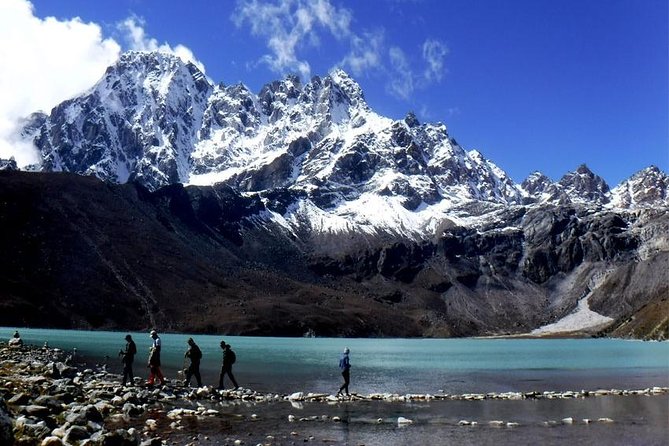
Blue-green lakes and giant peaks make this 10-day trek special. You leave the busier Everest Base Camp route at Kyanjuma and follow a quieter trail through Sherpa villages, birch woods, high valleys, and the Ngozumpa Glacier. I like the close contact with local mountain life, and I like that the route gives you both the calm Gokyo Lakes and a grand mountain viewpoint from Gokyo Ri.
The main drawback is the altitude. Gokyo Ri reaches 5,357 meters, or 17,575 feet, and the climb begins before sunrise after several demanding days on foot. The itinerary includes an acclimatization day, but you still need good fitness, patience, and a willingness to walk uphill at a slow pace.
Key points to know before booking
- Gokyo Ri reaches 5,357 meters: The summit view includes Everest, Lhotse, Makalu, Cho Oyu, Nuptse, and the Ngozumpa Glacier.
- The route leaves the Everest Base Camp trail: You turn toward Mong La Danda instead of continuing toward Tengboche and Base Camp.
- Namche Bazaar is your main acclimatization stop: The day hike includes the Sagarmatha National Park Museum, Khumjung Village, the Everest Viewpoint, and a monastery associated with a supposed Yeti scalp.
- The trip includes flights and ground transfers: You fly from Kathmandu to Lukla, return by air to Manthali, then continue to Kathmandu by road.
- The package costs $1,686.67 per person: Meals, airport transfers, permits and government charges, a first aid kit, and a Kathmandu celebration dinner are included.
- The group can reach 15 people: That is small enough for a personal feel, but not the same as a private trek.
Why Gokyo Lakes Feels Different
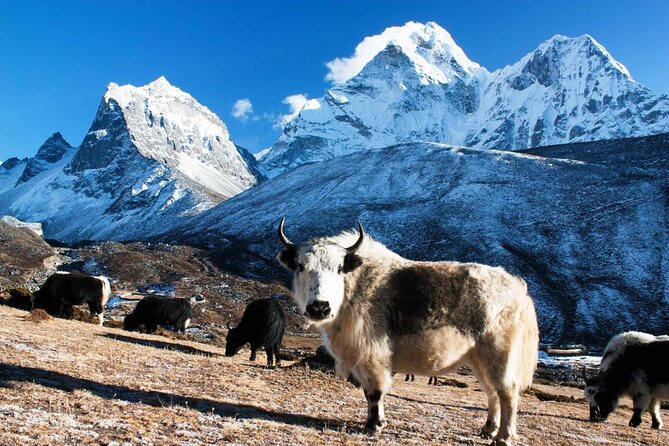
Many people know the Everest region for Base Camp, yet Gokyo offers a different rhythm. You still get famous Himalayan peaks, but the route spends more time beside lakes, glaciers, and high pasture villages. The blue-green water of the Gokyo Lakes looks especially striking against the rough gray walls of the valley.
The route also gives you a useful contrast. Namche Bazaar is lively and well known, while Dole, Machhermo, and Gokyo are quieter settlements where the mountain setting becomes the main attraction. I like this change of pace. You get a taste of the classic Everest route without staying on it for the entire trek.
The most valuable part is not simply reaching a viewpoint. It is the gradual change in scenery. Pine forest gives way to birch and juniper, then to open high-altitude country above the tree line. By the time you reach Machhermo, you can feel how far you have come from Lukla.
More Everest Base Camp Treks in Kathmandu:
- Everest Base Camp Trek – 14 Days
★ 5.0 · 1,499 reviews - Everest Base Camp Trek
★ 5.0 · 842 reviews - Everest Base Camp Trekking
★ 5.0 · 485 reviews
Days 1 and 2: Lukla, Phakding, and Namche Bazaar
Your first morning begins with a flight from Kathmandu to Lukla. The flight itself is part of the opening act, with mountain views appearing as you approach the small airport. From Lukla, the route passes Sherpa villages, farm fields, mani stones, and prayer wheels.
The first walking section reaches the Phakding area, with views toward Kusum Kanguru. The schedule gives this opening stop only about 30 minutes, so you should treat that figure as a brief description rather than a useful estimate of the full day. The exact walking time can depend on the flight, trail conditions, and the overnight arrangement.
Day 2 follows the Dudh Koshi River toward Namche Bazaar. You cross several suspension bridges and pass through Monjo, where you officially enter Sagarmatha National Park. The trail continues through pine forest and along the river before reaching the highest suspension bridge in the Everest region.
The final approach to Namche climbs sharply. You may catch your first sight of Everest before reaching the town, which gives the uphill finish a welcome reward. Namche is the best place on the route to pause, rest, and prepare for higher ground.
Day 3: Acclimatization Around Namche
The third day is not a wasted day. It is a key part of the plan. At higher altitude, the air contains less oxygen, so a short hike followed by a night in Namche gives your body time to adjust.
The route climbs toward the Sagarmatha National Park Museum and the Everest Viewpoint. From the higher ground, you can see Everest, Lhotse, Nuptse, Ama Dablam, and other peaks. The route also includes Khumjung Village, where you can visit the monastery connected with the supposed Yeti scalp.
A tea stop at the famous Everest hotel adds a pleasant pause. I like that this day combines practical acclimatization with culture and scenery. You are not simply walking up and down a hill. You are seeing a Sherpa village, learning about the region, and getting a broader view of the mountains.
Take this day seriously. It is tempting to push harder because you feel excited, but the purpose is to keep the pace controlled. Save energy for Gokyo Ri.
Days 4 and 5: The Quieter Route To Dole And Machhermo
After breakfast, you climb above Namche for views of Kongde Ri before reaching Kyanjuma. Here, the path divides. The Everest Base Camp route continues one way, while the Gokyo Lakes route turns toward Mong La Danda.
The trail to Mong La Danda gives you fine views of Ama Dablam and Thamserku. You then descend to Phortse Thanga for lunch before climbing again through birch and juniper woods to Dole. This is a day of repeated ups and downs, so do not judge it only by distance. The elevation changes make it more tiring than the map may suggest.
The section between Phortse Thanga and Dole is also one of the better places to look for musk deer. Sightings are never guaranteed, but the possibility adds interest to a quiet stretch of trail. Dole itself is a small village with views toward Thamserku.
Day 5 is a gradual uphill walk from Dole to Machhermo, taking about four hours. Cho Oyu comes into view around 15 minutes after leaving Dole, and the route passes the smaller villages of Lafarma and Luza, useful places for a rest.
Machhermo sits above the tree line beside a river. The scenery changes here. You lose much of the woodland and gain wide, open mountain views. After lunch, you can visit the river and explore the village. This is a good place to slow down, drink water, and keep warm.
A few more treks around Kathmandu worth a look
- Annapurna Circuit Trek with Tilicho Lake
★ 5.0 · 368 reviews - Everest Base Camp Trekking – 13 Day
★ 5.0 · 365 reviews - Everest Base Camp Trek
★ 5.0 · 350 reviews - Everest Base Camp Trek -14 Days
★ 5.0 · 321 reviews
Day 6: The Three Lakes And Ngozumpa Glacier
Day 6 brings the route’s main natural attraction. You walk toward the Gokyo Lakes, stopping at a village for tea before continuing through the high valley.
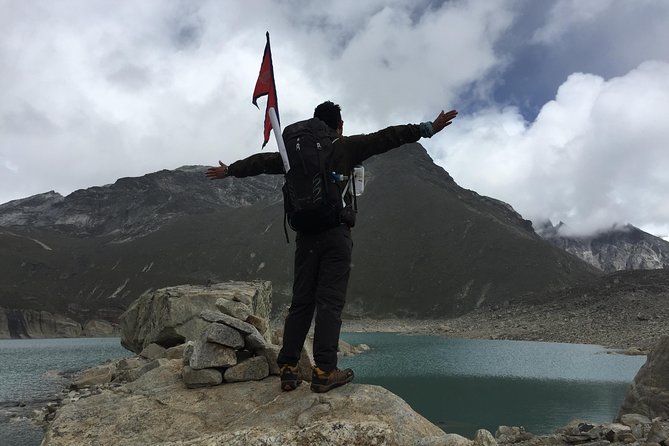
The itinerary describes the first and second lakes as close together, followed by the third lake after another hour of walking. The blue-green water contrasts with the bare rock and steep valley walls. At the third lake, Cho Oyu provides a dramatic backdrop, and you stop for lunch before continuing.
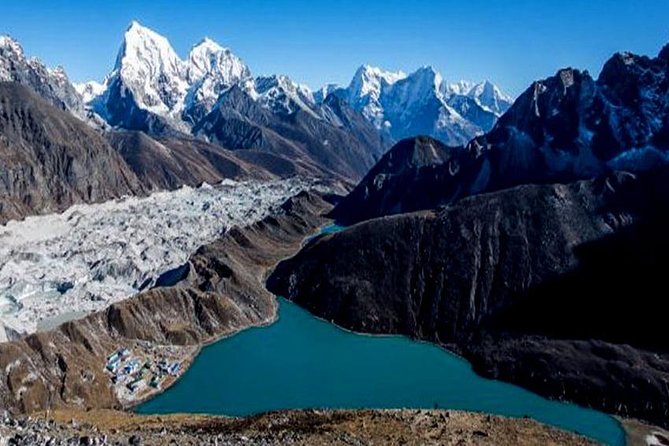
You also walk toward the Ngozumpa Glacier, described as the longest glacier in Nepal. The glacier is changing and melting because of climate change, which makes this more than a scenic photo stop. You are seeing a major feature of the Himalayas at a time when its future is uncertain.
The day ends at Gokyo Village. The settlement is the base for the early climb to Gokyo Ri, so an overnight stay here saves you from starting the summit walk from a lower point. Still, the altitude will be obvious. Move slowly and pay attention to how you feel.
Day 7: The Pre-Dawn Climb To Gokyo Ri
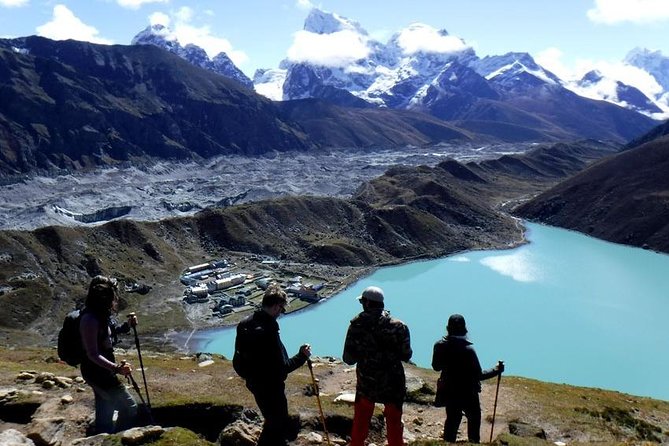
This is the hardest and most memorable morning. You start early with the goal of reaching Gokyo Ri before sunrise. The climb gains about 600 meters and is steep, especially at altitude.
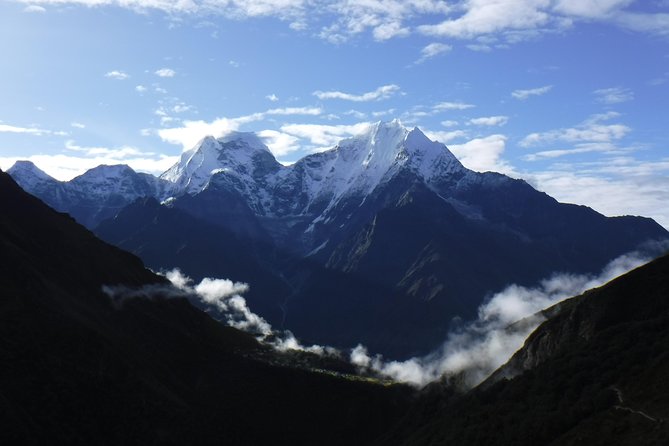
The reward is one of the strongest viewpoints in the Everest region. From the summit, you can see four 8,000-meter peaks: Everest, Cho Oyu, Lhotse, and Makalu. Nuptse and other major peaks add to the panorama, while the Ngozumpa Glacier lies below.
Sunrise changes the mountain colors quickly, so the early start matters. You may feel cold and tired on the climb, but the glowing peaks give you a clear reason to keep moving. The descent returns you to Gokyo Village for breakfast.
After breakfast, you continue down to Machhermo and aim to arrive around lunchtime. This makes the day long and physically demanding. The schedule is efficient, but it does not leave much room for lingering at the summit or moving slowly on the descent.
Days 8 and 9: Back Through Namche To Lukla
Day 8 retraces part of the route through Dole and Phortse Thanga. Most of the walking is downhill, though the 40-minute climb from Phortse Thanga to Mong La Danda breaks up the descent.
From Mong La Danda, the route passes through Kyanjuma and returns to Namche Bazaar. This is your final night in the Everest region, and you have time to explore the town and shop for souvenirs. Namche is a useful place to enjoy a little comfort before the final push to Lukla.
Day 9 begins with mountain views and a downhill trail toward Lukla. You cross six suspension bridges and pass through Sherpa settlements. The route includes the walk to Phakding for lunch, followed by another stretch to Lukla.
The schedule describes roughly three hours after Phakding and about two and a half hours to Lukla, so this is another full walking day. You should expect tired legs by the end. The final night in Lukla gives you time to enjoy a last evening in the Himalayas before flying out.
Day 10: Flight To Manthali And The Road To Kathmandu
The return begins with a walk to Tenzing-Hillary Airport and a morning flight to Manthali. From there, you continue by road to Kathmandu, with the drive taking about five hours.
This transfer is practical but not glamorous. Much of the day goes to the journey, and road conditions can affect the timing. The route passes local villages, giving you one last look at ordinary life outside the mountain trail.
Airport transportation at the beginning and end is included, which is useful after a long trek. You do not need to arrange your own transfer to or from Tribhuvan Airport.
What The $1,686.67 Price Covers
At $1,686.67 per person, this is not a low-cost mountain walk, but the package includes several expensive and important pieces. You receive airport transportation, domestic flights as part of the scheduled route, breakfast, lunch, and dinner, a first aid kit, government taxes, service charges, and a post-trek celebration dinner in Kathmandu.
The listed meal allowance is 10 breakfasts, 10 lunches, and 9 dinners. Alcohol, tea, coffee, chocolate, personal purchases, showers, and electronic charging at guest houses cost extra. Those small charges can add up, so carry some money for them.
The value also depends on the support provided by the local team. Kishwor is described as the office contact who answered questions promptly and kept arrangements moving. Guides named in past trips include Lhakpa, Sarki Sherpa, Pemba, Sushant, and Prem. The strongest praise focuses on friendly guides, reliable planning, and airport pickup through the final drop-off.
The group limit is 15 people. That gives you the advantages of organized support without the scale of a large expedition, though you should not expect the flexibility of a private trek.
Who Should Book This Trek?
You should consider this route if you want high mountain views but prefer a quieter alternative to the standard Everest Base Camp path. It suits people who enjoy walking for several days, sleeping in guest houses, and seeing how the scenery changes with altitude.
You also need moderate physical fitness. The steep climb to Gokyo Ri, repeated uphill sections, suspension bridges, and long return days require preparation. The itinerary includes acclimatization, but it cannot remove the physical demands of high altitude.
This is not the right choice if you want a relaxed sightseeing holiday or a guaranteed sunrise. Flights and the Gokyo Ri climb depend on weather, and the operator notes that poor conditions can force a date change or cancellation.
Free cancellation is available up to 24 hours before the start time. Changes or cancellations inside that period are not refunded, and the experience requires a minimum number of participants.
Should You Book The Gokyo Lakes Trek?
I would choose this trek for the lakes, the quieter route, and the superb Gokyo Ri viewpoint. The itinerary gives you a strong mix of Sherpa villages, mountain scenery, wildlife possibilities, glaciers, and high-altitude walking.
Book it if you are ready for early mornings, basic guest house comforts, extra charges for showers and charging, and a serious climb at 5,357 meters. Skip it if you want a short, easy introduction to Nepal. For fit walkers who want the Everest region without following the most familiar route all the way to Base Camp, this is a strong and well-supported choice.
FAQ
How long is the Gokyo Lakes and Gokyo Ri trek?
The package lasts approximately 10 days, including the flight from Kathmandu to Lukla, the trek, the return flight to Manthali, and the drive back to Kathmandu.
What is the highest point on the trek?
The highest point is Gokyo Ri at 5,357 meters, or 17,575 feet.
Which mountains can you see from Gokyo Ri?
The viewpoint includes Everest, Cho Oyu, Lhotse, and Makalu, along with Nuptse and other Himalayan peaks.
Is there an acclimatization day?
Yes. Day 3 is an acclimatization day based in Namche Bazaar, with a hike to the Sagarmatha National Park Museum, Khumjung Village, and the Everest Viewpoint.
Does the route visit the Gokyo Lakes?
Yes. Day 6 visits the first, second, and third lakes before continuing toward the Ngozumpa Glacier and Gokyo Village.
Is transportation from the airport included?
Yes. Transportation to and from Tribhuvan Airport is included. The route also includes the flight from Kathmandu to Lukla and the return flight to Manthali followed by a drive to Kathmandu.
Are meals included?
Yes. The package includes 10 breakfasts, 10 lunches, and 9 dinners. Alcoholic drinks, tea, coffee, chocolate, and personal purchases are not included.
What fitness level is needed?
The activity requires a moderate level of physical fitness. The steep 600-meter climb to Gokyo Ri and several long uphill or downhill days make preparation important.
What is the cancellation policy?
You can cancel up to 24 hours before the experience begins for a full refund. Poor weather or failure to meet the minimum group size can result in a different date or a full refund.
Recently added around Kathmandu
- Ghorepani Poon Hill Trek★ 5.0 · 16 reviews
- Private Manaslu Circuit Trek at Himalayas★ 5.0 · 3 reviews
- Amazing 1 Day Trekking Experience in Kathmandu Nepal★ 5.0 · 24 reviews
- Ghorepani Poonhill Trek★ 5.0 · 5 reviews
- Upper Mustang Trekking★ 5.0 · 2 reviews
- Upper Mustang Trekking★ 3.0 · 2 reviews
- Upper Mustang Trekking★ 5.0 · 4 reviews
- Upper Mustang Trek★ 5.0 · 5 reviews
Everest Base Camp Treks, compared.






Browse the lists this tour appears in