
REVIEW · KATHMANDU
Gokyo Lakes and Gokyo Ri Trek
The Himalayas save their best views for the climb. This 14-day trek from Kathmandu trades the crowded Everest Base Camp route for turquoise glacial lakes, the Ngozamba Glacier, and a high viewpoint facing Everest, Lhotse, Makalu, and Cho Oyu. I like the quieter Gokyo Valley route and the useful two-night acclimatization rhythm around Namche and Gokyo. I also like the small maximum group size of 10, which should make trail support and lodge arrangements easier.
There is one important catch: this is not a soft option. The itinerary calls for several long walking days, a strenuous climb to Gokyo Ri, and a maximum altitude that demands care. The advertised price is $1,706.67 per person, and you should confirm exactly what is covered beyond the listed meals before booking.
The experience also includes airport pickup in Kathmandu, three days of cultural sightseeing, domestic flights between Kathmandu and Lukla, trekking support, and a farewell dinner. Past praise for this operator has singled out guides and staff such as Krishna, Suresh Guranag, Ramesh, and Tara, though your assigned guide may be different. One especially useful lesson from the feedback is simple: ask about altitude safety and evacuation procedures before you start.
The five details that matter most
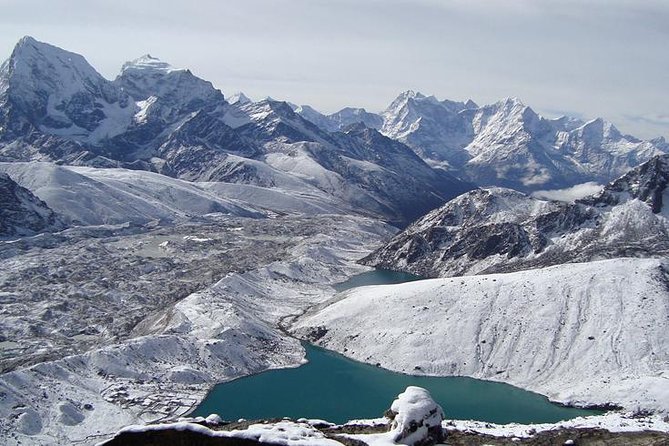
- Gokyo Ri gives you a broad Himalayan view: From the summit, you can see Everest, Lhotse, Makalu, Cho Oyu, Thamserku, and other major peaks, with the Gokyo Lakes and Ngozamba Glacier below.
- This is an alternative to Everest Base Camp: You do not walk to Everest Base Camp on this route. Instead, you spend time in the Gokyo Valley, which offers lakes, moraines, glaciers, and fewer people after Namche.
- Namche is your key adjustment stop: The itinerary includes an acclimatization day with a hike to the Everest View Hotel and nearby Khumjung.
- The trek includes two demanding sections: The route from Namche toward Dole is described as hard, and the Gokyo Ri ascent is continuous and strenuous.
- The group is capped at 10 people: That is a useful size for a mountain trek, especially when weather, altitude, and flight schedules can complicate plans.
- The price includes some meals, but check the rest: Eleven lunches, eleven dinners, and twelve breakfasts are listed. Personal expenses and services outside the offer are not included.
Kathmandu begins with temples, markets, and practical preparation
Your first day is deliberately light. After airport pickup, you check into your Kathmandu hotel, rest from the flight, and have time to walk around Thamel or Durbar Square. Thamel is the practical place to look for missing trekking gear, while its restaurants and shops give you an easy first taste of Kathmandu.
Day two is a full cultural day before the mountains take over. At Pashupatinath Temple, you see one of the most important Hindu religious sites in Nepal. The temple complex is also a UNESCO World Heritage Site, and its spiritual importance is more significant than its role as a sightseeing stop. Dress respectfully and expect an active religious setting rather than a quiet museum.
Boudhanath Stupa offers a different mood. It is Nepal’s largest stupa and an important place for both Hindu and Buddhist worship. The broad circular area around the stupa gives you room to walk, watch prayer rituals, and take in the strong visual rhythm of prayer flags and devotional movement.
Swayambhunath, also called the Monkey Temple, sits above Kathmandu and provides wide views across the city. You will encounter prayer wheels, monks, and monkeys, along with a steep set of steps in parts of the approach. These three stops make the opening useful: you get religious and cultural context before entering the Sherpa region.
More Everest Base Camp Treks in Kathmandu:
- Everest Base Camp Trek – 14 Days
★ 5.0 · 1,499 reviews - Everest Base Camp Trek
★ 5.0 · 842 reviews - Everest Base Camp Trekking
★ 5.0 · 485 reviews
Lukla to Phakding follows the Dudh Koshi
The mountain portion begins with a flight of about 35 minutes from Kathmandu to Tenzing-Hillary Airport in Lukla. The short flight is a major transition, taking you from Kathmandu’s urban streets to the trailhead among green hills and high peaks.
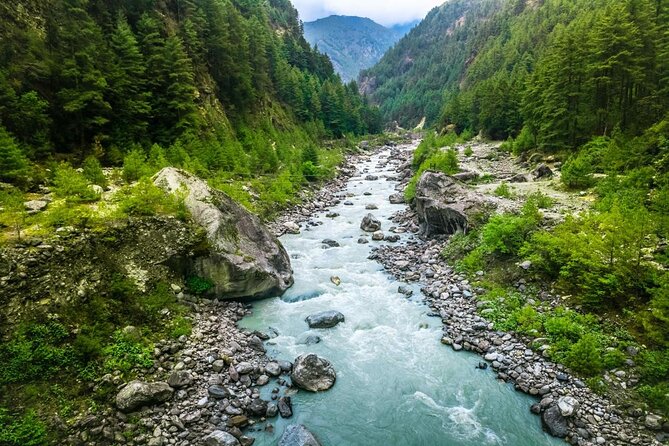
From Lukla, the first walking day runs to Phakding and takes about four hours. The route descends toward Chaurikharka before following the Dudh Koshi Valley. You pass through Lukla’s busy village area, then move into a more open walking rhythm beside the river.
This is a sensible first day because it is short by Himalayan trekking standards. You are already gaining altitude, but the schedule gives your body a chance to begin adjusting. The forest includes rhododendron, fir, and birch, and the Dudh Koshi remains a steady companion.
The itinerary information also places Sagarmatha National Park and the settlement of Dole within this early section, although the day-by-day order is not perfectly clear. In practice, you should ask the operator for the final walking schedule and lodge plan before departure. Mountain itineraries often shift because of weather, flights, and local conditions.
Namche arrives after bridges and a long climb
The trail continues through Sagarmatha National Park, with permits checked at Monjo. You then cross suspension bridges, pass through Jorsale, and follow a wide switchback climb toward Namche Bazaar. The day is listed at about seven hours, making it a clear step up from the walk to Phakding.
The route has plenty to look at: pine forest, the Dudh Koshi, rushing side streams, and views of Thamserku near Benkar. The final approach to Namche is not technically described as difficult, but the climb is sustained. You will feel the altitude more than you did near Lukla.
Namche is the busiest settlement on this route and the main service center in the Khumbu. It is also where the schedule wisely slows down. Your acclimatization day includes a hike to the Everest View Hotel, with views toward Everest, Ama Dablam, Nuptse, and Lhotse. You can also walk toward Khumjung, where the itinerary mentions the Khunde Hospital and the school known as the Schoolhouse in the Clouds.
Staying active on the acclimatization day is useful. The aim is not to exhaust yourself, but to walk high enough during the day and return to Namche for the night. This is also a good place to check your clothing, water supply, and walking pace before the trail becomes more remote.
Namche to Dole is short on distance but serious underfoot
After Namche, the route heads toward Kyangjuma and then Dole. The views open toward Ama Dablam, Thamserku, and Kangtega, and the trail begins to feel more alpine. The route description identifies the Namche to Dole section as hard, even though the total walking time is not extreme.
That warning deserves attention. At this point, the issue is not just distance. You are walking at higher altitude, climbing and descending on uneven trails, and carrying the accumulated tiredness of the first several days. Keep your pace slow and steady. The best day on Gokyo Ri is not won by racing through the lower sections.
The trail passes through rhododendron and pine, with mountain views above the trees. You may see pheasants, mountain goats, or musk deer, though wildlife sightings are never guaranteed. Waterfalls and chortens add interest to the route, and the smaller settlements give you a closer look at life along the trail.
A few more treks around Kathmandu worth a look
- Annapurna Circuit Trek with Tilicho Lake
★ 5.0 · 368 reviews - Everest Base Camp Trekking – 13 Day
★ 5.0 · 365 reviews - Everest Base Camp Trek
★ 5.0 · 350 reviews - Everest Base Camp Trek -14 Days
★ 5.0 · 321 reviews
Machhermo brings a quieter high valley
The route from Dole passes through Lhabarma and Luza before reaching Machhermo. This day takes around six hours and climbs gradually along a ridge above Dole. The summer settlements and sandy spurs give the trail a more exposed appearance than the forested lower sections.
Machhermo sits near streams flowing from Kyajo Ri and Pari Lapche. It is an important overnight stop because it breaks the climb toward Gokyo into manageable stages. You are still walking, but the schedule avoids turning the approach into one exhausting push.
The route is quieter than the trail toward Everest Base Camp, especially after Namche. One useful advantage of the Gokyo route is that you still get fine Himalayan views without following the most famous route all the way to Base Camp.
The Ngozamba Glacier leads into Gokyo Valley
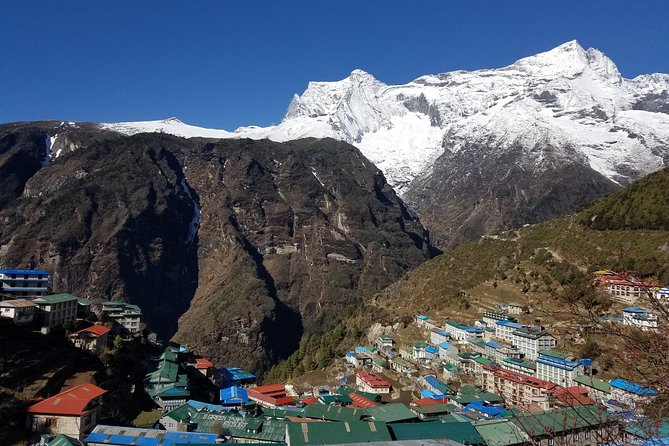
From Machhermo, you climb toward Phangka before descending toward the river and then climbing again to the terminal moraine of the Ngozamba Glacier. This is one of the trek’s most distinctive sections. The ground changes from ordinary valley trail to rough glacial terrain, with rock, moraine, and open mountain views.
An iron bridge marks the entrance to the Gokyo Lakes area. You then pass Longpongo, the first lake, before reaching Taboche Tsho and the other connected lakes. The water’s blue-green color is striking, but the setting is not a polished park. Expect a high, cold, exposed valley shaped by ice and rock.
The walk to Gokyo takes about five hours. That leaves time to settle into the lodge, rest, and prepare for the next morning’s climb. If the weather is clear, the village gives you an excellent base for looking across the valley toward the surrounding peaks.
Gokyo Ri is the trek’s main test
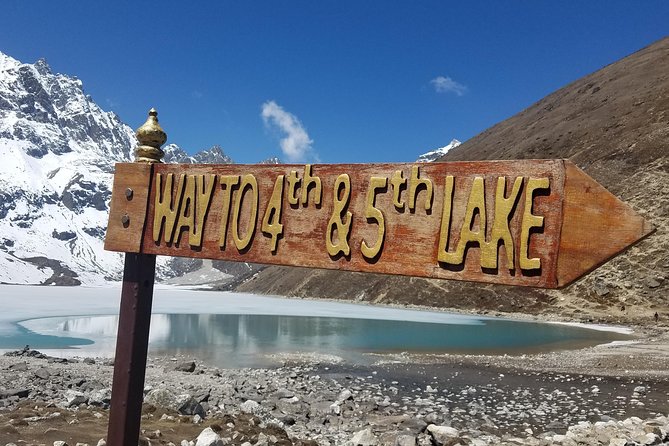
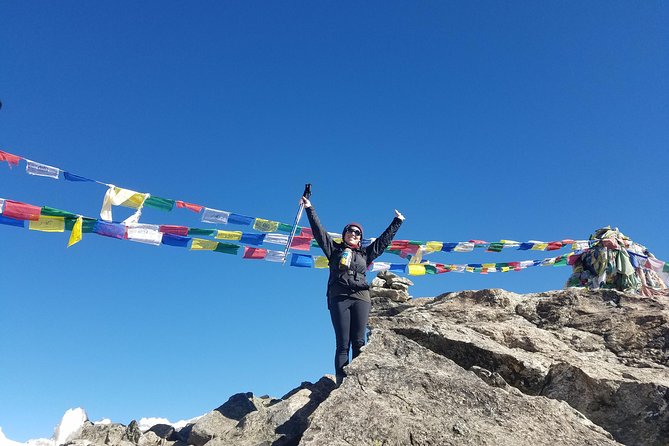
The Gokyo Ri day is listed at about seven hours and includes a continuous, strenuous ascent. You should treat it as the hardest and most important day of the trip. The pace needs to be slow, and you should tell your guide immediately if you develop a headache, nausea, unusual fatigue, or breathing trouble.
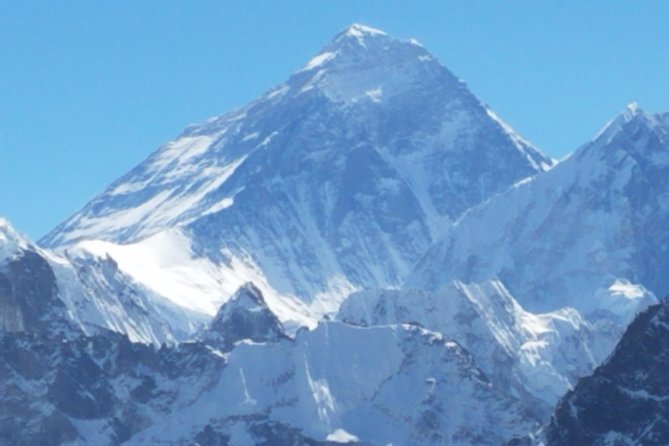
From the summit, the view includes Everest at 8,848 meters, Lhotse at 8,501 meters, Makalu at 8,475 meters, and Cho Oyu at 8,153 meters, along with Thamserku and other peaks. Below you are the Gokyo Lakes and the Ngozamba Glacier. This is the moment that justifies choosing the Gokyo route.
The day also includes a walk toward the fourth lake, Thonak Tsho. That extra section adds another view of the high valley, but do not let the desire to collect every viewpoint overrule your condition. The summit is the main goal, and altitude affects people differently.
A past account connected with the operator described a serious altitude sickness incident that led to a helicopter rescue organized by the guide and company owner. That is not a reason to avoid the trek, but it is a reminder to take altitude seriously. Ask what the plan is if someone becomes ill, and make sure your insurance covers mountain evacuation.
The return to Lukla is easier, but not effortless
The return begins with a gradual descent from Gokyo through Machhermo, Luza, Lhabarma, and Dole. It takes around five hours. Descending usually feels easier on the lungs, but tired knees can make the downhill sections surprisingly demanding.
The next section drops toward Phortse Tenga and then continues through forest toward Namche. You may see more rhododendron, wildflowers, waterfalls, and mountain wildlife on this stretch. Ama Dablam, Thamserku, Kangtega, and the Cho Oyu range remain part of the view.
After a night in Namche, you have a long eight-hour walk to Lukla. The trail follows the Dudh Koshi and passes back through villages, forests, monasteries, chortens, prayer flags, and stonework. The route is familiar by now, but the return perspective can make it feel different.
The overnight in Lukla is important because domestic mountain flights depend on weather. The schedule has you fly back to Kathmandu on day 13, but conditions can change. Keep flexible plans if you have an international flight immediately after this trek.
What the $1,706.67 price really means
At $1,706.67 per person, this is a substantial purchase, but the value depends on the final list of inclusions. The program provides airport pickup, Kathmandu sightseeing, the Lukla flights described in the schedule, trekking arrangements, and meals listed as eleven lunches, eleven dinners, and twelve breakfasts.
The published meal count suggests that food is covered for much of the trip, but personal expenses are not. You should ask about accommodation, guide and porter arrangements, permits, domestic flight charges, drinking water, equipment, and emergency support. Do not assume that an item is included simply because it appears in the day-by-day plan.
A maximum group size of 10 is a positive point. It is small enough for the guide to keep an eye on walking pace and altitude symptoms, while still spreading the operating costs across a group. Pickup offered in Kathmandu also removes one early hassle after a long flight.
The operator has received strong praise for personal care. Names associated with especially positive service accounts include Krishna, Suresh Guranag, Ramesh, and Tara. Since guide assignments can change, use those names as evidence of the company’s service record, not as a promise that one of them will lead your trip.
Who should book this trek?
I would choose this route if you want high Himalayan views, glacial lakes, and a quieter alternative to Everest Base Camp. It suits someone with moderate physical fitness who is willing to train for long walking days and a steep summit climb.
The phrase moderate physical fitness should not fool you into thinking this is easy. The itinerary itself describes the Gokyo Ri ascent as strenuous, and the route from Namche toward Dole can be hard. You need to be comfortable walking for up to eight hours and handling changing weather and altitude.
This is less suitable if your priority is reaching Everest Base Camp itself. It is also not a good match if you want a relaxed sightseeing holiday with only gentle walks. The trip combines Kathmandu culture, mountain flights, village lodges, steep trails, and high-altitude conditions.
Cancellation is free up to 24 hours before the scheduled start time. Inside that window, the payment is not refunded, though poor weather cancellation offers a different date or a full refund.
Should you book the Gokyo Lakes and Gokyo Ri Trek?
Book it if the image that appeals to you is not just Everest, but Everest reflected in high glacial lakes with a massive glacier below. The route gives you a strong mix of Nepalese culture, Sherpa villages, forests, suspension bridges, and serious mountain scenery.
Before paying, get the full inclusion list in writing and ask about altitude procedures, emergency evacuation, guide assignment, and weather-related flight delays. If you accept the physical demands and prepare properly, this is one of the more scenic ways to experience the Everest region without following the entire Base Camp route.
FAQ
How long is the Gokyo Lakes and Gokyo Ri Trek?
The experience lasts approximately 14 days, including Kathmandu sightseeing, the trek between Lukla and Gokyo, the return to Lukla, and airport transfer on the final day.
What is the price per person?
The listed price is $1,706.67 per person.
What meals are included?
The package lists eleven lunches, eleven dinners, and twelve breakfasts. Personal expenses and services outside the offer are not included.
How large is the group?
The activity has a maximum of 10 participants.
Is airport pickup available?
Yes. Pickup is offered, and the itinerary includes transfer from Tribhuvan International Airport to the Kathmandu hotel.
What happens if poor weather cancels the experience?
If poor weather causes cancellation, you will be offered a different date or a full refund.
Recently added around Kathmandu
- Ghorepani Poon Hill Trek★ 5.0 · 16 reviews
- Private Manaslu Circuit Trek at Himalayas★ 5.0 · 3 reviews
- Amazing 1 Day Trekking Experience in Kathmandu Nepal★ 5.0 · 24 reviews
- Ghorepani Poonhill Trek★ 5.0 · 5 reviews
- Upper Mustang Trekking★ 5.0 · 2 reviews
- Upper Mustang Trekking★ 3.0 · 2 reviews
- Upper Mustang Trekking★ 5.0 · 4 reviews
- Upper Mustang Trek★ 5.0 · 5 reviews
Everest Base Camp Treks, compared.




Browse the lists this tour appears in