
REVIEW · KATHMANDU
Gokyo Lakes and Gokyo Ri Trek
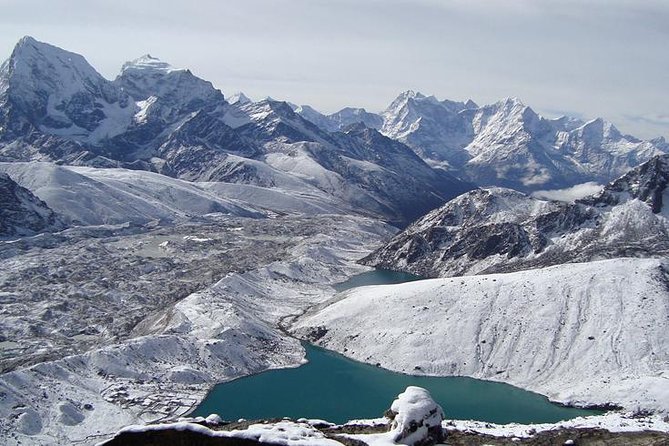
The high Himalaya rewards steady legs. This 12-day trek takes you from Kathmandu to Lukla, Namche Bazaar, Gokyo Valley, and the 5,383-meter summit of Gokyo Ri. Along the way, you see turquoise lakes, the vast Ngozumpa Glacier, Sherpa villages, Buddhist culture, and a wide sweep of Himalayan peaks.
I especially like the scenic Lukla flight and the chance to spend a full acclimatization day around Namche. I also like that the route reaches Gokyo rather than following only the busier Everest Base Camp trail. A guide named Gyanu receives particularly warm praise for his friendly, respectful approach and his skill at explaining local history and culture.
The main drawback is cost clarity. The $999 price covers flights, permits, guides, porters, lodging, and Kathmandu hotel nights, but meals during the trek are extra, as are insurance, personal gear, drinks, tips, and several other daily expenses.
Key Points Before You Book
- Gokyo Ri reaches 5,383 meters, giving you broad views of Everest, Cho Oyu, Makalu, and other giant peaks.
- The 30-minute flight to Lukla saves days of road travel and places you directly at the trailhead.
- Namche acclimatization includes a hike to Everest View Hotel, a sensible pause before higher elevations.
- Gokyo Valley combines lakes, glacier views, and Sherpa culture in a quieter alternative to the standard Everest route.
- A maximum group size of 15 keeps the trip organized while still giving you a social trekking experience.
- The package includes a porter ratio of two clients to one porter, plus staff insurance, equipment, food, and accommodation.
Why Gokyo Valley Is Worth the Effort
The Gokyo route is built around a strong set of sights. The Ngozumpa Glacier is described as the largest glacier in the Himalaya, and the trail reaches the beautiful Gokyo Lakes on its western side. The high point is Gokyo Ri, where you get views toward five peaks above 8,000 meters.
This is not simply a mountain walk from one lodge to the next. You pass through Namche Bazaar and Khumjung, areas closely linked with Sherpa life. The route also gives you a chance to see Buddhist religious traditions and the way mountain communities live at high altitude.
I like the balance here. You get serious Himalayan scenery, but you also get villages, local culture, and time to adjust before the hardest climb. The route is demanding, yet the itinerary avoids rushing straight upward.
You should still take the altitude seriously. The trek climbs from Kathmandu at 1,340 meters to Gokyo Ri above 5,300 meters in a little over a week. A strong level of physical fitness is required, and the itinerary includes long walking days of up to seven hours.
More Everest Base Camp Treks in Kathmandu:
- Everest Base Camp Trek – 14 Days
★ 5.0 · 1,499 reviews - Everest Base Camp Trek
★ 5.0 · 842 reviews - Everest Base Camp Trekking
★ 5.0 · 485 reviews
Day 1: Kathmandu Arrival and Trip Briefing
Your first day begins with arrival at Tribhuvan International Airport in Kathmandu, at about 1,340 meters. A private vehicle picks you up and takes you to your hotel.
The schedule includes trip information, which is useful because the next morning begins early. The stated meeting time is 6:00 am, so you should keep the first evening simple and use it to check your clothing, boots, day pack, water bottle, and batteries.
Kathmandu hotel accommodation is included on a bed-and-breakfast plan. Lunch and dinner in Kathmandu are not included, so budget separately for those meals.
Day 2: Lukla Flight and the Walk to Phakding
The flight from Kathmandu to Lukla takes about 30 minutes. It is one of the memorable parts of the trip because the journey moves quickly from city streets to the mountain trail.
After landing, you trek for about three hours to Phakding, at 2,640 meters. This is a relatively short opening day, which helps you begin walking without placing too much strain on your body immediately after the flight.
The trailhead setting also gives you your first sense of the route’s rhythm. You will be staying in lodges, carrying a day pack, and walking with a local guide and porters. Food is not included during the trek, but your guide will help you order meals.
Day 3: The Trail to Namche Bazaar
The walk to Namche Bazaar takes about six hours and reaches 3,440 meters. This is a fuller trekking day, with a clear rise in altitude and a more demanding pace.
Namche is one of the key stops in the Everest region. It is also the first place on this route where the scale of Sherpa communities becomes especially clear. You have time here to rest and prepare for the higher valleys ahead.
The practical value of Namche is not only its location. It gives your body a chance to adjust before the route climbs above 4,000 meters. Do not treat this stop as wasted time. It is part of the trek’s safety plan.
A few more treks around Kathmandu worth a look
- Annapurna Circuit Trek with Tilicho Lake
★ 5.0 · 368 reviews - Everest Base Camp Trekking – 13 Day
★ 5.0 · 365 reviews - Everest Base Camp Trek
★ 5.0 · 350 reviews - Everest Base Camp Trek -14 Days
★ 5.0 · 321 reviews
Day 4: Acclimatization at Everest View Hotel
The itinerary includes a hike to Everest View Hotel at 3,880 meters, followed by a return to Namche. This is an acclimatization day, not a day off.
Walking higher and sleeping lower is a common way to help your body adjust to altitude. You also get an early mountain panorama without committing to another lodge change. The viewpoint is tied directly to the Everest region, and the day helps you get ready for the climb toward Dole and Gokyo.
I see this as one of the itinerary’s better choices. Some short treks rush upward and leave little room for adjustment. Here, you get a planned pause before the air becomes noticeably thinner.
Day 5: Namche to Dole at 4,130 Meters
The trek to Dole takes about five hours and reaches 4,130 meters. At this point, the route becomes more demanding because the elevation begins to affect your walking speed and energy.
Dole is a useful overnight stop between Namche and the higher Gokyo Valley. You are not expected to reach the lakes in one long push, and that staged approach matters.
Lodge accommodation is provided on a twin-sharing basis. Expect simple mountain lodging rather than hotel comfort. The package covers accommodation and staff costs, but you pay separately for meals, hot and cold drinks, and alcohol.
Day 6: Dole to Machchhermo
The walk to Machchhermo takes roughly four hours and reaches 4,470 meters. It is shorter than the previous day, but the altitude makes every uphill section count.
Machchhermo prepares you for the final approach to Gokyo. The scenery becomes more open and more dominated by glacier-fed valleys and high peaks. You should use this day to watch your energy, drink regularly, and tell your guide if you feel unwell.
The supplied equipment list is extensive for good reason. You need a down jacket, sleeping bag, windproof and waterproof layers, fleece, warm hat, gloves, proper boots, sunscreen, sunglasses, a headlamp, and water treatment equipment. A raincoat or poncho is also required.
Day 7: Machchhermo to Gokyo Lakes
The trek to Gokyo takes about five hours and reaches 4,770 meters. Once there, you explore around the glacier and the lakes.
This is the visual heart of the trek for many people. The Gokyo Lakes sit west of the Ngozumpa Glacier, and the combination of still water, ice, and high peaks gives the valley a different character from the route toward Everest Base Camp.
Gokyo is also the base for the next morning’s climb. You should keep the afternoon calm and prepare your clothing, water, and headlamp. The following day starts with the hardest climb of the trip.
Day 8: Gokyo Ri and the Return to Machchhermo
The climb to Gokyo Ri takes about three hours. The summit reaches approximately 5,383 meters, or 5,386 meters according to the tour description’s rounded figure.
This is the major achievement of the trek. From the top, you can see Mt. Everest, Cho Oyu, Makalu, and a panorama that includes five peaks above 8,000 meters. The view is the reward, but the climb itself should not be underestimated. At this height, a three-hour ascent can feel much longer.
The itinerary then brings you back down to Gokyo before continuing to Machchhermo, with about five hours of downhill walking in total. This makes for a very long day, even though much of the trail is downhill. Good boots, walking poles, and careful foot placement will help.
The return to Machchhermo also means you do not need to sleep at the highest point of the trip. That is a practical choice, especially after the early climb.
Day 9: Machchhermo to Namche via Khumjung
The route returns to Namche through Khumjung Village, with about seven hours of walking. Khumjung is especially important because it is described as the homeland of the Sherpa people.
This section gives the trek cultural weight. You are not only passing through a string of mountain stops. You are moving through communities shaped by Buddhist religion, high-altitude work, and life in the Everest region.
The day is long, so you should not plan on it as an easy descent. Your knees may feel the repeated downhill sections after Gokyo Ri. Walking poles are listed as optional, but I would consider them useful here if you are comfortable using them.
Day 10: Namche to Lukla
The seven-hour trek to Lukla closes the walking portion of the trip. By now, you have crossed the main high-altitude section and are heading back toward the airstrip.
This final walking day can feel surprisingly tiring. Descending does not always mean easy, especially after several days on uneven ground. Keep your day pack light and save enough energy for the last sections of trail.
Your porter arrangement is one porter for every two clients. That offers useful support, but you still need to carry personal essentials such as water, warm layers, medication, camera batteries, and rain protection.
Day 11: Lukla to Kathmandu and Farewell Dinner
You fly from Lukla back to Kathmandu and attend a farewell dinner with the family. The return flight is included in the package, along with airport departure tax for the domestic flights.
The schedule allows you to return to the capital before your international departure the next day. Still, mountain flights can be affected by conditions, so you should avoid arranging an international flight too tightly around the return. The tour provides a separate final day for airport transfer, which gives the plan some breathing room.
Day 12: Airport Transfer and Departure
The final day includes transfer to the international airport for your departure. Private airport pickup and drop-off are included.
You should have your passport, visa documents, insurance details, and flight information ready. Nepal entry visas can be obtained on arrival at Tribhuvan International Airport, according to the tour information.
What the $999 Price Covers
At $999 per person, the trip offers a substantial package for a 12-day Himalayan trek. The price includes:
- Private airport transfers
- Kathmandu hotel accommodation with breakfast
- Kathmandu to Lukla and return airfare
- Twin-sharing lodge accommodation during the trek
- An English-speaking, government-licensed local guide
- Porters and the required local staff
- Staff food, accommodation, salary, insurance, equipment, and medicine
- Sagarmatha National Park and TIMS permits
- A duffle kit bag that you keep
- Surface transfers in Kathmandu
- Government taxes and official expenses
- Farewell dinner
The value is strongest if you need the main arrangements handled in one booking. Flights, permits, guide services, porters, staff insurance, and lodging can be complicated to arrange separately.
You must budget beyond the headline price. Trek meals are not included, and neither are Kathmandu lunches and dinners. You also pay for drinks, alcohol, personal equipment, international flights, the Nepal entry visa, travel insurance with emergency rescue and evacuation, tips, and any cost not specifically listed.
Tips are expected for the trekking staff and driver. Treat that as part of your real trip budget rather than a surprise at the end.
Guide Support and Group Size
The group maximum is 15 people. That is large enough to create company on the trail but small enough for a guide to keep the group together.
The guide is especially important on this route because altitude affects people differently. A local guide can help with meal orders, pacing, route decisions, and cultural context. Gyanu is praised for being friendly and respectful, with a strong ability to explain history and culture. If he is assigned to your departure, his style could add a lot to the experience.
The operator is Broad Adventure P. Ltd. Confirmation is received at booking, and group discounts are offered.
Gear, Fitness, and Daily Comfort
You need strong physical fitness for this trek. The route includes several days of four to seven hours of walking, plus the high climb to Gokyo Ri.
The mandatory checklist includes warm layers, waterproof clothing, technical shirts, trekking pants, wool and cotton socks, gloves, sun protection, a headlamp, water bottle, purifier, day pack, gaiters, first-aid supplies, toiletries, toilet paper, and spare camera batteries.
A proper fitting pair of boots is more important than bringing every optional item. Walking poles, binoculars, reading material, ear plugs, a GPS, and a satellite phone are listed as optional. The note about ear plugs is practical: lodge nights may include barking dogs.
You also need a sleeping bag and down jacket. Do not assume lodge beds will provide everything you need for cold nights at altitude.
Who Should Choose This Trek?
This route suits you if you want a serious Himalayan trek with mountain views, glacier scenery, high lakes, and Sherpa culture. It is a good fit if you prefer Gokyo Valley’s route and do not need to visit Everest Base Camp itself.
It is less suitable if you want a relaxed holiday, dislike basic lodge accommodation, or are not ready for long walking days at high altitude. The price also requires careful budgeting because several important daily costs are excluded.
Free cancellation is available when you cancel at least 24 hours before the experience start time. Changes or cancellations made later are not accepted for a refund.
Should You Book the Gokyo Lakes and Gokyo Ri Trek?
I would book this trek if Gokyo Lakes, Ngozumpa Glacier, and a high viewpoint over Everest matter more to you than a short, easy visit to the region. The route gives you a strong mix of natural scenery, Sherpa villages, Buddhist culture, acclimatization time, and organized support.
Before paying, confirm the meal budget, insurance requirements, porter arrangements, assigned guide, and flight timing. If you are fit, properly equipped, and ready for a demanding week above 4,000 meters, the $999 package offers a practical way to reach one of Nepal’s finest high valleys.
FAQ
How long is the Gokyo Lakes and Gokyo Ri Trek?
The trek lasts approximately 12 days, including arrival and departure days in Kathmandu.
What is the highest point on the trek?
Gokyo Ri is the highest point, at approximately 5,383 meters. The tour information also gives the elevation as 5,386 meters.
Is the flight from Kathmandu to Lukla included?
Yes. The package includes Kathmandu to Lukla and return airfare, as well as airport departure tax.
Are meals included during the trek?
No. Meals during the trek are not included, although the guide will help you order food. Lunch and dinner in Kathmandu are also excluded.
What accommodation is provided?
Kathmandu hotels are included on a bed-and-breakfast basis. During the trek, accommodation is in twin-sharing lodges.
Is travel insurance included?
No. You must arrange travel insurance that covers emergency rescue and evacuation.
What is the maximum group size?
The maximum group size is 15 people. The porter arrangement is one porter for every two clients.
Recently added around Kathmandu
- Ghorepani Poon Hill Trek★ 5.0 · 16 reviews
- Private Manaslu Circuit Trek at Himalayas★ 5.0 · 3 reviews
- Amazing 1 Day Trekking Experience in Kathmandu Nepal★ 5.0 · 24 reviews
- Ghorepani Poonhill Trek★ 5.0 · 5 reviews
- Upper Mustang Trekking★ 5.0 · 2 reviews
- Upper Mustang Trekking★ 3.0 · 2 reviews
- Upper Mustang Trekking★ 5.0 · 4 reviews
- Upper Mustang Trek★ 5.0 · 5 reviews
Everest Base Camp Treks, compared.






Browse the lists this tour appears in