
REVIEW · NEPAL
From Kathmandu Budget: 15 Day Everest Base Camp Trek
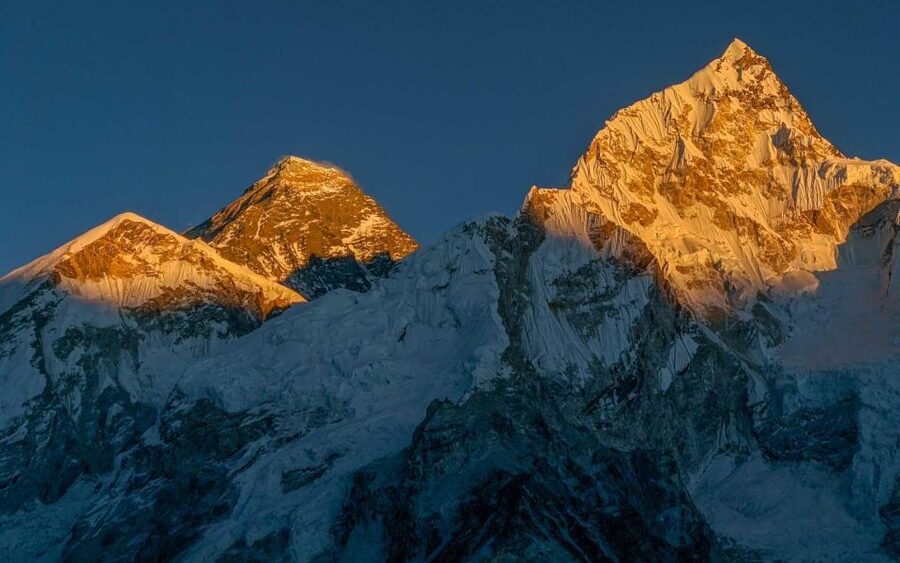
Everest rewards patience, effort, and good boots. This 15-day trek takes you from Kathmandu overland to Salleri, then through Sherpa villages, suspension bridges, Buddhist sites, and high mountain valleys before reaching Everest Base Camp and Kala Patthar. I especially like the private format and the chance to travel with a guide who can adjust the pace to your health.
The two biggest strengths are the spectacular views of Everest, Lhotse, and Nuptse and the personal support provided by guides such as Milan and Krisna. Milan is praised for checking in often, putting health first, and explaining things clearly. The main drawback is the long road journey at both ends. You will spend roughly 10 hours reaching Salleri from Kathmandu, rather than flying straight to Lukla.
At $796 per person, the trek offers strong value if you want permits, guesthouse stays, guide costs, trekking poles, and overland transfers covered. But food, drinks, travel insurance, and emergency rescue are extra, so your final budget will be higher.
Key points to know before booking
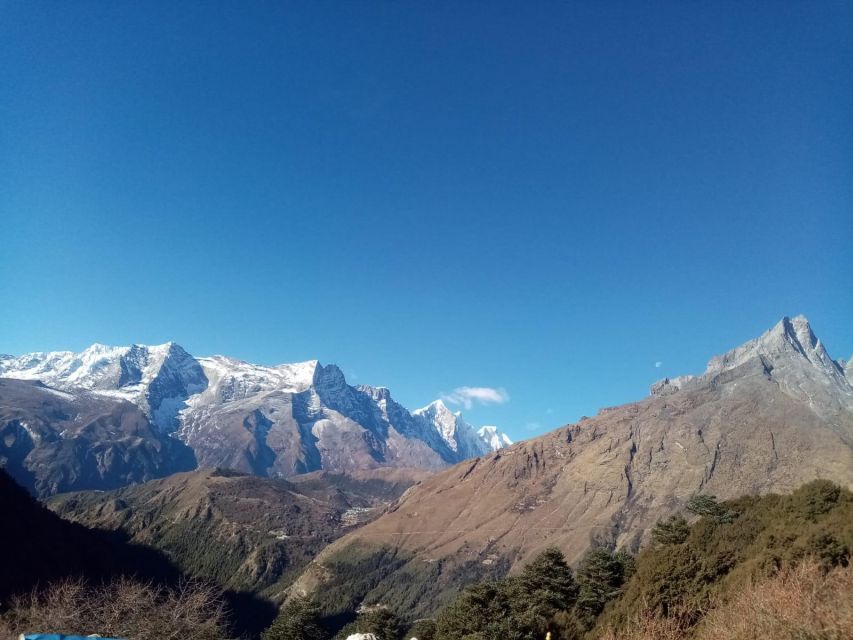
- Kala Patthar is the visual high point: At 5,545 meters, this rocky viewpoint offers some of the best angles toward Everest, Lhotse, and Nuptse.
- The route begins by road: You travel from Kathmandu to Salleri by shared bus or jeep, then continue toward the main Everest trekking route.
- The itinerary builds in acclimatization: A full rest day in Dingboche helps your body adjust before the highest walking days.
- The trek is private, but transport is shared: Your trekking group is private, while the long road transfers may use a shared jeep or bus.
- Guide care is a major strength: The itinerary can be adjusted for health and pace, with Milan and Krisna specifically praised for attentive support.
- The price leaves out key expenses: Meals, drinks, travel insurance, and emergency rescue are not included.
Why this Everest route takes 15 days
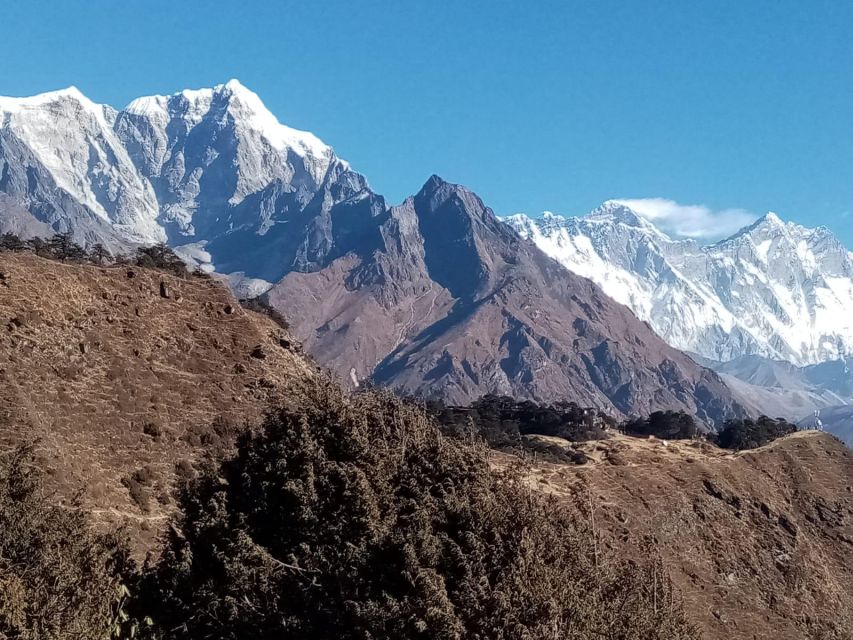
This is not a quick sightseeing trip with a mountain backdrop. You spend two weeks moving through changing elevations, from Kathmandu to Salleri, then through Phakding, Namche Bazaar, Tengboche, Dingboche, Lobuche, Gorak Shep, and back toward Lukla and Salleri.
The route uses a road approach instead of beginning with a flight to Lukla. That can make the trip feel less polished, but it also avoids depending entirely on a short mountain flight. The tradeoff is clear: you save the flight cost, but you spend long hours on rough overland roads.
The itinerary is physically serious. You will walk for five to eight hours on several days, reach altitudes above 5,000 meters, and deal with cold, steep ground and thin air. I would treat the stated walking times as a guide, not a promise. Your pace, health, weather, and trail conditions can all change the day.
More Everest Base Camp Treks in Nepal:
- Everest Base Camp Trek – 14 Days
★ 5.0 · 1,499 reviews - Everest Base Camp Trek
★ 5.0 · 842 reviews - Everest Base Camp Trekking
★ 5.0 · 485 reviews
Days 1 and 2: Kathmandu to Salleri and Surkhe
The first day starts early, with pickup from your Kathmandu-area accommodation. The shared bus or jeep covers about 266.9 kilometers to Salleri and takes around 10 hours. Salleri sits at roughly 2,600 meters, so you begin gaining altitude before the main walking section.
This is the least glamorous part of the trip. Roads can make for a tiring day, and a shared vehicle gives you less control over stops and comfort. Still, the overland route brings you gradually toward the Khumbu region and keeps the trip within a lower budget.
On day two, you continue by jeep from Salleri to Tham Danda, then walk to Surkhe. The full day takes about seven to nine hours. This blend of vehicle travel and walking is useful because it places you nearer to the classic trail without requiring an immediate long trek from Salleri.
Surkhe gives you your first real sense that the road journey is over and the foot journey has begun. Keep your warm layer, water, passport copy, and basic medicines easy to reach. You will not want to unpack your main bag repeatedly during the transfer days.
Days 3 and 4: Surkhe, Phakding, and Namche Bazaar
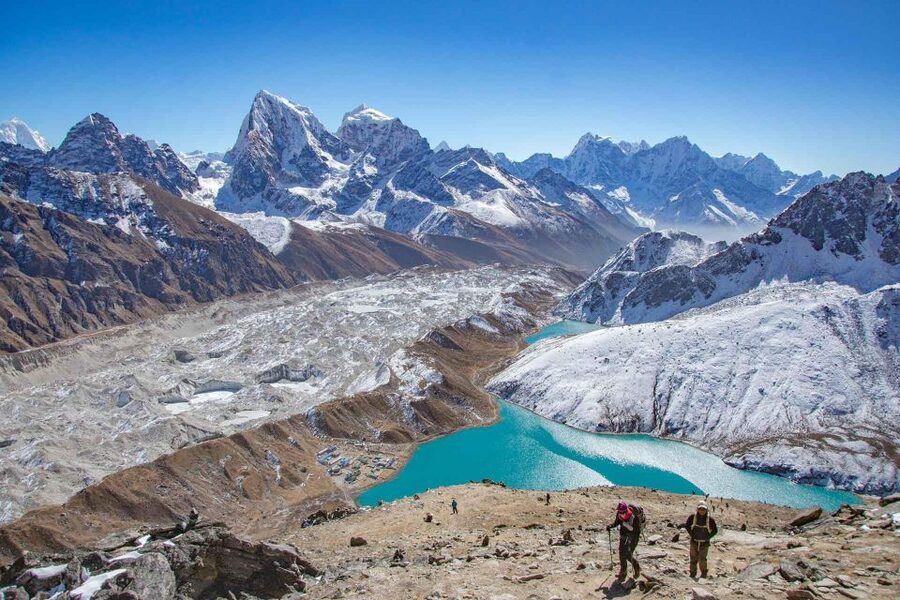
The walk from Surkhe to Phakding takes about six to seven hours. The route introduces the kind of scenery that makes this trek special: forested hills, mountain streams, steep-sided valleys, and traditional settlements.
You will also begin crossing suspension bridges. These bridges are practical links between valleys, but they are memorable in their own right, especially when the river is far below and the mountains fill the distance. If heights bother you, take your time and let faster walkers pass.
Day four leads from Phakding to Namche Bazaar in about six to seven hours, reaching 3,440 meters. This is one of the key days for altitude, since the trail climbs higher and the air becomes noticeably thinner.
Namche is the main settlement and trading center of the Khumbu region. It is a useful place to rest, buy anything you forgot, and notice the shift from lower wooded trails to a more severe mountain setting. I like that the route does not rush straight from Phakding to the highest camps. This gradual rise gives you a better chance to adjust.
Day 5: Tengboche and its important monastery
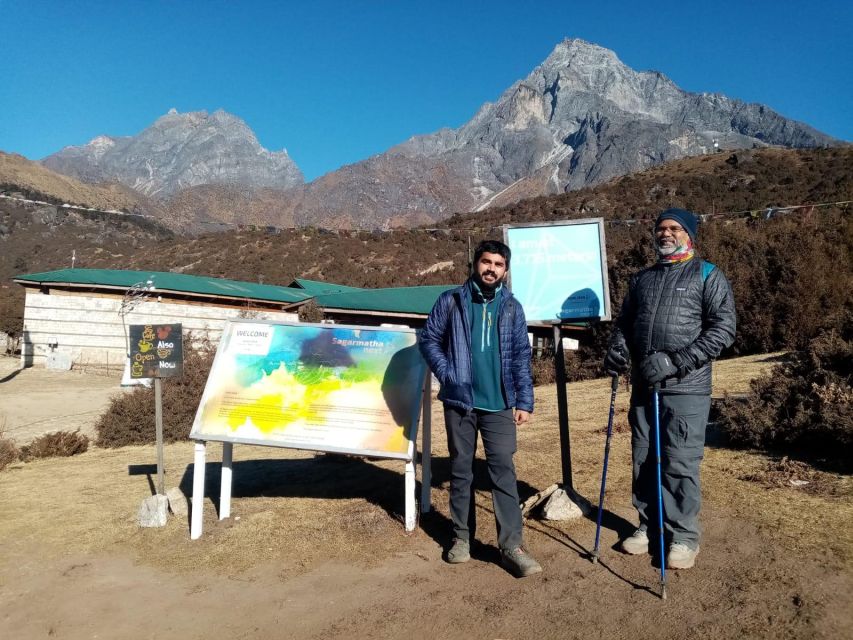
From Namche, you walk about five hours to Tengboche at 3,860 meters. The destination is known for Tengboche Monastery, an important Buddhist site in the region.
This day is less about covering a huge distance and more about experiencing the cultural character of the Khumbu. Prayer flags, monasteries, and Sherpa settlements are part of the journey, not decoration placed around it. Your guide can help explain the local setting, customs, and religious details.
Tengboche is also a good reminder that this trek is about more than reaching a numbered point on a map. The mountain views are a major reason to come, but the villages and Buddhist traditions give the route its human character.
A few more treks around Nepal worth a look
- Annapurna Circuit Trek with Tilicho Lake
★ 5.0 · 368 reviews - Everest Base Camp Trekking – 13 Day
★ 5.0 · 365 reviews - Everest Base Camp Trek
★ 5.0 · 350 reviews - Everest Base Camp Trek -14 Days
★ 5.0 · 321 reviews
Days 6 and 7: Dingboche and the essential rest day
Day six takes you to Dingboche in about five to six hours, reaching 4,350 meters. At this point, the cold and altitude become more demanding, even if the walking distance does not seem extreme on paper.
Dingboche is where the itinerary pauses for a full acclimatization day. That rest day is not wasted time. It gives your body a chance to adjust before the route rises toward Lobuche, Gorak Shep, and Base Camp.
Use the day sensibly. The information provided does not specify a fixed activity, so your guide may help set a suitable pace based on how you feel. Avoid treating the rest day as a chance to prove fitness. The highest sections are still ahead, and conserving energy matters.
The flexible approach praised in connection with guide Milan is especially valuable here. If you feel unwell, slower progress or extra rest may be more sensible than forcing the schedule. At altitude, stubbornness is poor travel planning.
Day 8: Lobuche at 4,910 meters
The trek from Dingboche to Lobuche takes around five hours and climbs to 4,910 meters. You are now close to the high point of the route, and every step can feel more demanding.
Lobuche is a staging point for the Base Camp push. Accommodation is in guesthouses during the trek, but you should keep expectations practical. High-altitude lodging is about shelter, sleep, and basic comfort rather than hotel-style service.
This is a good evening to check your clothing, water, snacks, headlamp, and trekking poles. The following day is long, listed at about eight hours, and includes Everest Base Camp before returning to Gorak Shep.
Day 9: Everest Base Camp and Gorak Shep
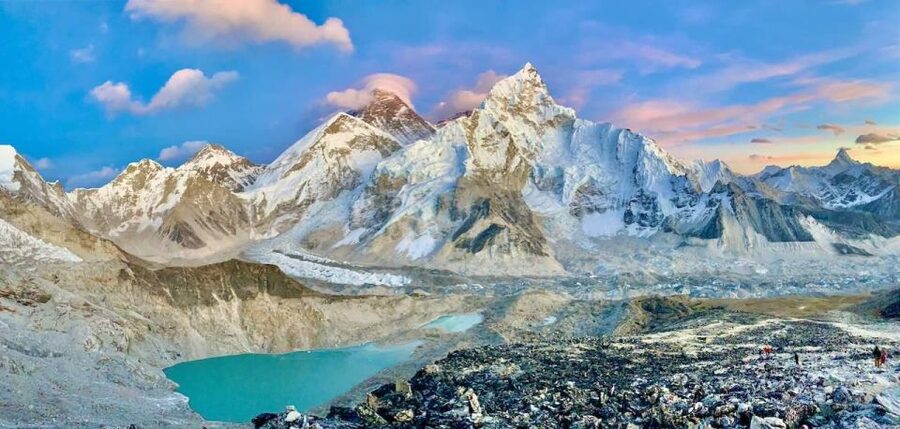
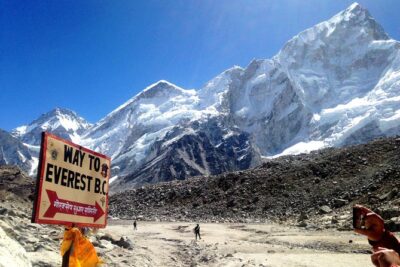
Day nine is the emotional center of the trek. You walk from Lobuche to Everest Base Camp, which sits at about 5,364 meters, then return to Gorak Shep at roughly 5,180 meters. The full day takes around eight hours.
Base Camp is famous because it is the starting point for expeditions attempting Everest. Reaching it gives you a direct connection to the mountain’s climbing history and to the enormous effort required to go higher.
Do not expect the summit view that often appears in travel photographs from Base Camp itself. The best broad view of Everest on this itinerary comes from Kala Patthar the next day. Base Camp is about being at the expedition site, surrounded by immense peaks and high glacial terrain.
The return to Gorak Shep matters. You are not simply arriving at Base Camp and finishing for the day. You still need to walk back at high altitude, so this is likely to be one of the hardest days of the trip.
Day 10: Kala Patthar, the best mountain viewpoint
The climb to Kala Patthar reaches 5,545 meters and takes about seven hours before continuing to Pheriche at 4,120 meters. This is the highest point in the itinerary and the day that delivers the most celebrated views.
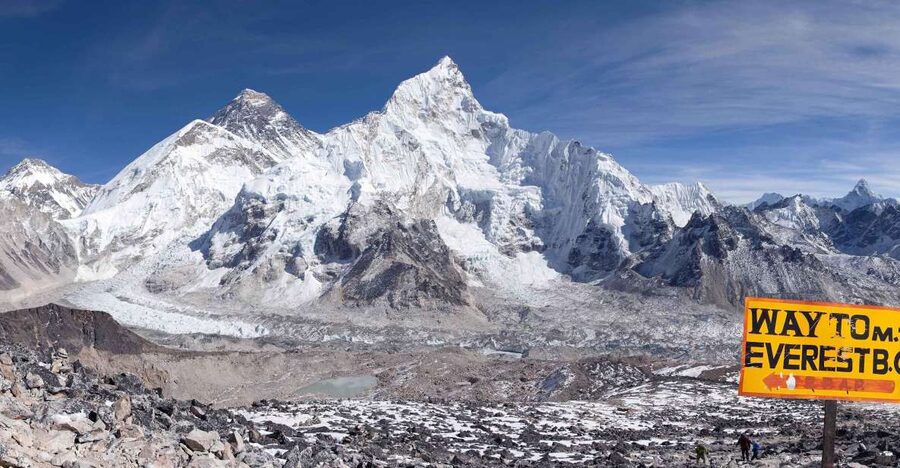
From Kala Patthar, you can look toward Everest, Lhotse, Nuptse, and neighboring peaks. Sunrise or sunset is described as especially striking, so ask your guide about the planned timing. Mountain weather can change quickly, and the clearest view is never guaranteed.
The altitude here is serious. Even strong hikers may feel slow and breathless. Bring warm clothing, use the trekking poles provided, and keep your pace steady. The reward is not just reaching a high number. It is the chance to see Everest in a broad setting rather than from the closer, more enclosed surroundings of Base Camp.
Descending to Pheriche is welcome, but the day remains long. Your legs may feel tired from the climb and descent, so this is another point where an attentive guide matters.
Days 11 to 13: Returning through Panboche and Namche
Day 11 takes you to Panboche at 3,985 meters in about five to six hours. The lower altitude should make breathing easier, although the trail still requires steady walking.
From Panboche, you return to Namche on day 12, a roughly seven-hour trek. The route gives you another chance to notice the villages and mountain scenery you may have passed while focused on gaining altitude. The return direction often feels different because you now understand how much ground you covered.
Day 13 takes you from Namche to Lukla in five to six hours, reaching about 2,860 meters. This is still a substantial walking day, but the descent and lower elevation should help.
The itinerary does not end with a Lukla flight. Instead, the next day uses a shared jeep to Salleri. This is an important detail. If you expected the standard flight connection, clarify the transport plan before booking.
Days 14 and 15: Lukla to Kathmandu by road
Day 14 involves a shared jeep from Lukla to Salleri, taking about seven to eight hours. Day 15 continues from Salleri to Kathmandu by shared jeep or bus, taking around 10 hours.
These final days are not scenic downtime. They are long transport days and may feel tiring after the trek. Their value is financial and practical: the route avoids listing a flight and keeps the package price at $796.
The road return also gives the trip a more complete overland shape. You see how remote the Everest region is and how much effort is required to connect high mountain villages with Nepal’s capital. Still, if comfort and speed are your priorities, this transport arrangement may be the main reason to choose another package.
What the $796 price really covers
At $796 per person, this is a budget-oriented Everest Base Camp trek with useful inclusions. The price covers Kathmandu pickup and drop-off, shared bus or jeep transfers, a private trek, a friendly English-speaking guide, trekking permits, official documents, guesthouse accommodation, a trekking pole, and a first-aid kit carried by the guide.
It also covers the guide’s food, accommodation, personal expenses, and insurance. That removes several costs that can otherwise catch you by surprise.
Food and drinks are not included, so plan to purchase them along the route. Travel insurance is also your responsibility, and emergency rescue must be covered by your policy. This is not a minor footnote. At high altitude, proper insurance is part of the trip cost, not an optional extra.
The included guide support gives the package its strongest value. Milan is praised for checking on health, answering questions in detail, and adjusting the pace when needed. Krisna is described as serious, attentive, and able to adapt to group needs. Those qualities matter more than polished sales language on a physically demanding route.
Who should book this trek?
I would recommend this trek to a fit, determined hiker who wants the classic Everest experience without paying for a private flight connection. You should be comfortable with five to eight hours of walking, cold weather, basic guesthouse accommodation, and high altitude.
The private format suits you if you want direct contact with your guide and some flexibility in pace. It may also work well if you are concerned about health at altitude and want a guide who will listen rather than simply push the schedule.
This is not suitable for pregnant women or wheelchair users, and it is not a casual mountain holiday. Bring warm clothes, hiking shoes, hiking pants, travel insurance, your passport or a copy, and a passport-sized photo. Pets are not permitted.
The best seasons are spring, from March through May, and autumn, from September through November, when conditions are generally more stable and mountain views are often clearer. The trek can run throughout the year, but mountain weather can change quickly in any season.
Free cancellation is available up to 24 hours before the activity for a full refund, and you can reserve now and pay later. Those policies add flexibility, but they do not replace checking the exact departure time and transport arrangements before you commit.
Should you book it?
Book this trek if you want Everest Base Camp and Kala Patthar, value personal guide support, and accept long shared road journeys to keep the cost down. The strongest reasons are the high mountain viewpoints, the Sherpa villages and monasteries, the built-in Dingboche acclimatization day, and the guide flexibility praised in connection with Milan and Krisna.
Think twice if you want a polished, fast-moving itinerary with flights, included meals, or hotel-level comfort. At $796, this is good value for a demanding Himalayan journey, but you need to budget for food, drinks, insurance, and possible rescue coverage. Go in prepared, and the reward is a genuine connection with the Everest region rather than a quick photo stop.
FAQ
How long is the Everest Base Camp and Kala Patthar trek?
The trek lasts 15 days, including road transfers between Kathmandu, Salleri, and Lukla.
What is the highest point on the itinerary?
Kala Patthar is the highest point, at about 5,545 meters. Everest Base Camp is listed at approximately 5,364 meters.
Is food included in the price?
No. Food and drinks are available for purchase but are not included in the $796 price.
Is travel insurance included?
No. You must arrange your own travel insurance. Emergency rescue is also not included and should be covered by your insurance policy.
What languages can the guide speak?
Guiding is available in English, Nepali, and Hindi.
Is this a private trek?
Yes. The trek is arranged as a private group, although the bus or jeep transfers may be shared.
Recently added around Nepal
- Ghorepani Poon Hill Trek★ 5.0 · 16 reviews
- Private Manaslu Circuit Trek at Himalayas★ 5.0 · 3 reviews
- Amazing 1 Day Trekking Experience in Kathmandu Nepal★ 5.0 · 24 reviews
- Ghorepani Poonhill Trek★ 5.0 · 5 reviews
- Upper Mustang Trekking★ 5.0 · 2 reviews
- Upper Mustang Trekking★ 3.0 · 2 reviews
- Upper Mustang Trekking★ 5.0 · 4 reviews
- Upper Mustang Trek★ 5.0 · 5 reviews
Everest Base Camp Treks, compared.




Browse the lists this tour appears in