
REVIEW · KATHMANDU
Everest Short Trek – 5 Days
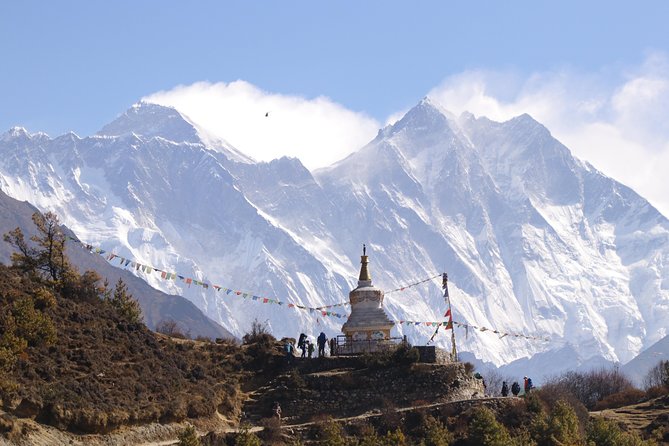
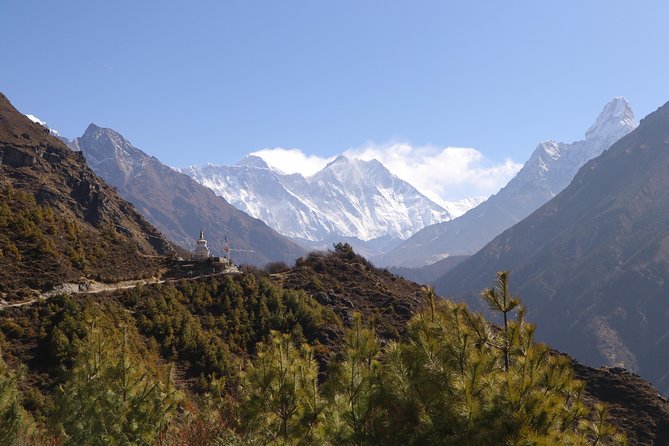
Catch Everest in just five days. This short Nepal trek gives you a quick but meaningful taste of the Khumbu, with a scenic flight from Kathmandu to Lukla, Sherpa villages, and clear mountain views from Namche Bazaar. I especially like the Everest View Hotel hike, where Everest, Lhotse, and Ama Dablam appear together, and the inclusion of flights, meals, permits, lodging, and a trained guide keeps the planning load low.
I also like the small-group format, since this is a private trip rather than a fixed group departure. Guides named in past accounts include Pemba, who was praised for being supportive, and the company contact Sabin, who was described as helpful before and after the trek. The main caution is time: you reach Namche, hike high for views, then turn around quickly, so this is a condensed introduction rather than a leisurely Himalayan walk.
Key points before you book
- The Lukla flight saves days: A 30-minute morning flight carries you from Kathmandu to the trailhead, leaving four walking days in the mountains.
- Namche is the main prize: You spend two nights in the Khumbu market town, with a dedicated hike to about 3,800 meters.
- Everest View Hotel is the high point: The route is designed around views of Everest, Lhotse, Ama Dablam, and nearby peaks.
- Meals and tea-house lodging are included: Breakfast, lunch, dinner, tea, and coffee are covered each day.
- A porter is not included: You must carry your own bag unless you arrange porter support separately.
- The price is $1,076.93 per person: That includes both domestic flights, permits, guide services, accommodation, meals, and airport transfers, but not insurance, equipment, hot drinks, or personal expenses.
Why this five-day trek works
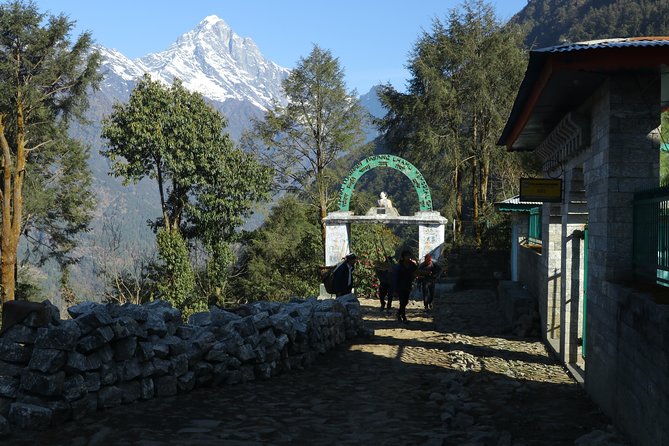
The Everest Short Trek is built for people who want to see the Everest region but cannot give up two weeks for a longer route. You fly from Kathmandu to Lukla, walk to Phakding, continue to Namche Bazaar, climb to a high viewpoint, and return by the same general corridor.
I like that the route does not pretend to deliver the full Everest Base Camp experience. You do not reach Base Camp, Kala Patthar, or the high glacier country. Instead, you get a shorter mountain journey with a real Himalayan setting, local Sherpa villages, Buddhist culture, and a strong chance of seeing Everest from the Namche area.
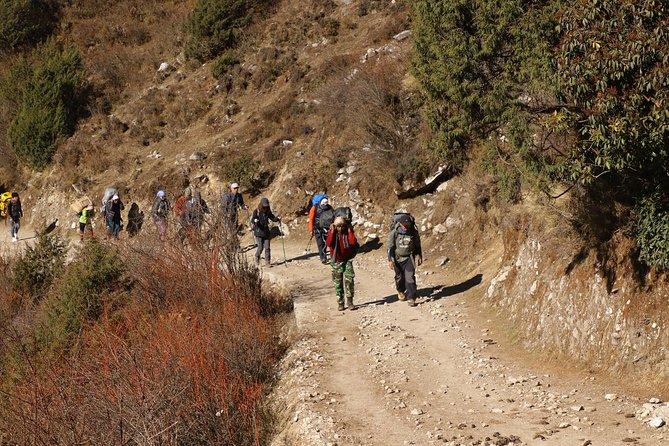
The walking is not technical, but it is not a casual city tour either. The schedule includes several six to seven hour walking days, plus altitude above 3,400 meters. The company describes the required fitness level as moderate, which is a useful guide. You should be ready for uphill and downhill walking on mountain trails, and you should be comfortable carrying your own day pack and possibly your larger bag too.
More Everest Base Camp Treks in Kathmandu:
- Everest Base Camp Trek – 14 Days
★ 5.0 · 1,499 reviews - Everest Base Camp Trek
★ 5.0 · 842 reviews - Everest Base Camp Trekking
★ 5.0 · 485 reviews
Day 1: Kathmandu to Lukla, then Phakding at 2,612 meters
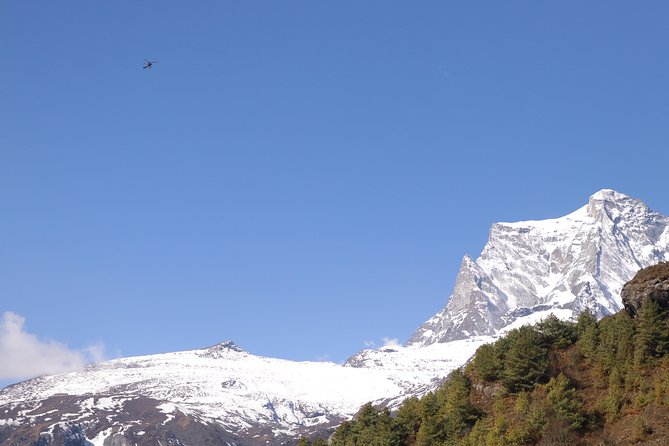
Your first morning starts early at Tribhuvan International Airport. The included flight to Tenzing Hillary Airport in Lukla takes about 30 minutes, and the mountain views begin almost at once.
Lukla is the practical gateway to the Everest region. The short flight is a major part of the experience, not just a transfer. Once you land, you begin walking toward Phakding, at approximately 2,612 meters, with the day’s trek taking about three to four hours.
This opening day is useful because it eases you into the route instead of sending you straight into the highest sections. You get a first look at mountain villages and the local way of life, while your body begins adjusting to higher ground.
Phakding is a stopping point rather than the main attraction. The value is in the transition: city to mountain airport, airport to trail, and trail to tea house. You sleep in a mountain tea house, with accommodation included in the package.
The early flight does mean an early start, and air travel in the mountains is always the part of the schedule most vulnerable to change. The supplied plan promises the flight, but no short Himalayan program can remove the practical uncertainty of mountain aviation. Keep your schedule flexible after the trek if possible.
Day 2: The long walk to Namche Bazaar
Day two is the hardest walking day for many people because it combines distance, uphill sections, and a clear gain in altitude. You walk for roughly six to seven hours toward Namche Bazaar, reaching about 3,440 meters.
The route passes through Sagarmatha National Park, the protected area surrounding the Everest region. The park fee is included, along with the local permit, so you do not need to handle those charges separately during the walk.
Namche is more than a place to sleep. It is the main trading and resting town in the Khumbu, and it gives you your first strong sense of how mountain communities function along the Everest route. The town is tied to Sherpa culture and Buddhist traditions, while daily life still revolves around farming, trade, trekking, and the movement of supplies.
This is also where the trip begins to feel properly high. At 3,440 meters, you may notice that the uphill pace feels slower than expected. I would treat this day as a steady walk, not a race. Your guide matters here, since a good guide can help you keep a sensible pace and recognize when you need water, food, or a break.
Past accounts of this operator give particular credit to guides such as Pemba, described as kind, understanding, and supportive throughout the trek. That kind of personal care can matter more than polished paperwork once you are tired and climbing.
Namche is the trip’s central base. You sleep there for two nights, which is a sensible choice for a short route because it gives you time to reach a higher viewpoint without packing and unpacking every morning.
Day 3: Everest views from about 3,800 meters
The third day is the visual centerpiece. You hike up to the Everest View Hotel area at about 3,800 meters, then return to Namche. The walk takes roughly four to five hours.
The key point is that this is a high-viewpoint day, not a summit attempt. You gain altitude for the panorama, then return to the lower sleeping altitude of Namche. From the viewpoint, the planned mountain views include Mount Everest, Lhotse, and Ama Dablam, along with other Himalayan peaks.
Ama Dablam is often one of the most memorable peaks in this part of Nepal because of its distinctive shape. Everest is the famous name, but the surrounding mountains help make the view feel grand rather than narrowly focused on one summit.
I like this arrangement because it gives the short trek a clear purpose. You are not spending every day simply walking toward the next lodge. You have a dedicated morning and afternoon for mountain scenery, photographs, and time to appreciate the high country.
Still, do not expect perfect views on demand. The information provided promises striking mountain panoramas as part of the route, but weather can affect what you see on any given day. The hike remains worthwhile as an acclimatization walk and a chance to experience the upper Khumbu, even if cloud softens the famous peaks.
After the viewpoint, you return to Namche for another night. That return is important. You get a high walk without having to sleep at 3,800 meters, which keeps this short schedule more manageable.
A few more treks around Kathmandu worth a look
- Annapurna base camp trek 5 Days
★ 5.0 · 252 reviews - Kathmandu to Annapurna Base Camp (ABC) 5-Day Trek
★ 5.0 · 102 reviews - 5 Day Private Guided Trekking in Annapurna Base Camp
★ 5.0 · 25 reviews - Ghorepani – Poon Hill Trek – 5 DAYS
★ 5.0 · 13 reviews
Day 4: Returning to Lukla
Day four takes you back to Lukla, with approximately six to seven hours on foot. The route reverses much of the approach, but the experience can feel different because you now understand the villages, river crossings, hills, and mountain corridors you passed earlier.
Downhill walking is not automatically easy. It can place strain on knees and feet, especially after the high viewpoint day. Good footwear and a sensible pace will help, and this is another day when your guide’s support is useful.
The return to Lukla also brings a practical change in mood. You have seen the main view near Namche, and now the route is about getting back to the airport for the final flight. I would see this as a satisfying closing walk, but not a day for lingering in Namche or adding side trips. The five-day plan leaves little spare time.
You spend the night in Lukla before flying back to Kathmandu. Since the package includes accommodation in mountain tea houses, that overnight stay is part of the planned trek rather than an extra charge.
Day 5: Lukla to Kathmandu
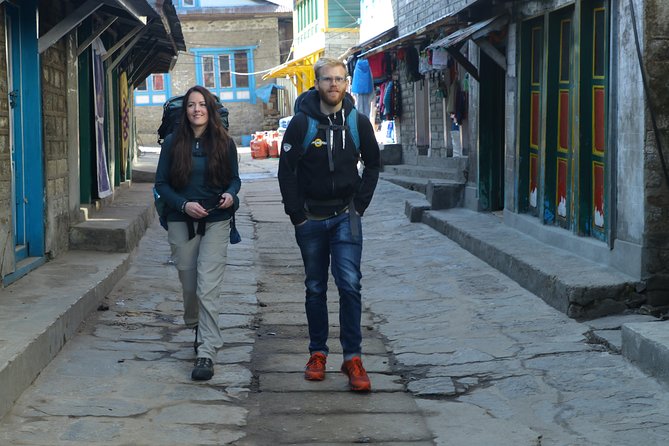
The final day is a return flight from Lukla to Kathmandu, followed by transfer to your hotel. The flight itself is short, but it gives you one last aerial look at the terrain you crossed on foot.
Airport pickup and drop-off are included at both ends of the trip. That is useful after several days of walking, when arranging transport yourself would be one more task to manage.
The return flight also highlights one of the tour’s practical limits. The plan depends on domestic air travel at both ends, so a delay could affect your schedule. The supplied information does not include a built-in spare day, and that matters if you have an important international flight immediately afterward. I would avoid placing a nonrefundable connection too close to the scheduled return.
What the $1,076.93 price covers
At $1,076.93 per person, this is not a budget walk, but the price includes several costly and time-consuming pieces:
- Round-trip Kathmandu to Lukla flights
- Airport pickups and drop-offs
- Tea-house accommodation
- Breakfast, lunch, and dinner every day
- Tea and coffee
- Sagarmatha National Park entry
- Local permit
- An English-speaking, trained trekking guide
- The guide’s salary, food, accommodation, equipment, and transportation
That package gives the price real value. The domestic flights alone are a major part of the trip, and handling permits, airport transfers, meals, and guide support makes this easier than assembling the same route yourself.
You still need to budget for hot and cold drinks, laundry, phone calls, battery charging, bar bills, hot showers, and boiled water. Your travel insurance is also your responsibility. Personal trekking equipment is not included, though it can be rented in Kathmandu.
The biggest extra cost to think about is porter support. A porter is not included, so you carry your own main luggage unless you arrange one separately. For a short trek, some people may be comfortable packing lightly, but you should not assume your guide will carry your bag.
Food, lodging, and mountain comfort
Meals are included three times a day, with tea and coffee also covered. That gives you a simple and predictable food arrangement throughout the route.
The accommodation is in mountain tea houses. You should think of these as practical trekking lodges, not city hotels. The information does not promise private rooms, luxury facilities, or a particular bathroom setup, so pack with basic mountain accommodation in mind.
Hot showers, hot drinks, boiled water, phone calls, and battery charging are extra. Those small charges can add up, especially if you want frequent showers or need to recharge several devices. Carry some spending money for personal costs, even though the core meals and lodging are already paid.
The tea-house setting is part of the appeal. You are not sealed inside a resort. You are moving through the same type of accommodation used by people walking the wider Everest route, with daily life shaped by altitude, weather, supply access, and the trail.
Guides, private arrangements, and the human side
This is a private activity, so only your group takes part. That gives you more control over pace and breaks than a large fixed departure, though the exact group size is not provided.
The guide is included as a full service, not simply as someone who points toward the path. The package covers the guide’s salary, food, sleeping arrangements, equipment, and transport. You have an English-speaking guide trained for the route, which is especially useful when the walking day is long or you need help adjusting your pace.
Names associated with previous trips include Pemba and Sabin. Pemba received praise for being supportive during the trek, while Sabin was described as responsive and helpful in organizing the wider Nepal arrangements. At the same time, one account raised an unresolved problem with the operator. That is a useful reminder to keep all arrangements and promised fixes in writing before departure.
I would ask clear questions about luggage, possible flight delays, and what happens if the weather affects the Lukla flight. The operator has received an overall rating of 4 from four submitted accounts, with several strong comments about organization and support, but the feedback is not uniformly positive.
Who should choose the Everest Short Trek
I think this route suits you if you want:
- A first taste of the Everest region
- A private trip with a guide
- A short break from a Kathmandu visit
- Mountain views without committing to Everest Base Camp
- Included flights, permits, meals, and tea-house lodging
- A planned route with limited preparation work
It may not suit you if you want a slow cultural journey, a longer stay in Sherpa villages, or a full trek to Everest Base Camp. Five days gives you the headline experience, but not much spare time.
You should also think carefully about your fitness. The tour is described as suitable for people with moderate fitness, but six to seven hour walking days at altitude still require preparation. I would practice long walks before arriving, pack light, and allow yourself to walk slowly.
Should you book it?
Book this Everest Short Trek if your priority is a compact, organized route to Namche and a high viewpoint with views toward Everest. The included flights, meals, permits, guide, accommodation, and transfers make the $1,076.93 price easier to justify, especially if you value having the main arrangements handled for you.
Think twice if you need a relaxed schedule, dislike carrying your own luggage, or have a tight international flight connection after returning to Kathmandu. The best reason to choose this trip is its focus: Lukla, Phakding, Namche, the Everest View Hotel, and back again. It is a quick mountain encounter, not the complete Everest experience.
FAQ
How long is the Everest Short Trek?
The trek lasts approximately five days, including the flights between Kathmandu and Lukla.
What is the highest point on the route?
The planned hike reaches the Everest View Hotel area at about 3,800 meters, or 12,467 feet.
Are flights from Kathmandu to Lukla included?
Yes. Both the Kathmandu to Lukla and Lukla to Kathmandu flights are included.
Are meals included?
Yes. Breakfast, lunch, and dinner are included every day, along with tea and coffee.
Is a porter included?
No. Porter service is not included, so you need to carry your own luggage unless you arrange porter support separately.
Is travel insurance included?
No. Personal travel insurance is not included and must be arranged by you.
Recently added around Kathmandu
- Ghorepani Poon Hill Trek★ 5.0 · 16 reviews
- Private Manaslu Circuit Trek at Himalayas★ 5.0 · 3 reviews
- Amazing 1 Day Trekking Experience in Kathmandu Nepal★ 5.0 · 24 reviews
- Ghorepani Poonhill Trek★ 5.0 · 5 reviews
- Upper Mustang Trekking★ 5.0 · 2 reviews
- Upper Mustang Trek★ 5.0 · 5 reviews
- Upper Mustang Trekking★ 3.0 · 2 reviews
- Upper Mustang Trekking★ 5.0 · 4 reviews
Everest Base Camp Treks, compared.




Browse the lists this tour appears in