
REVIEW · KATHMANDU
Everest Gokyo Trek Multi Day Private Tour with Pickup
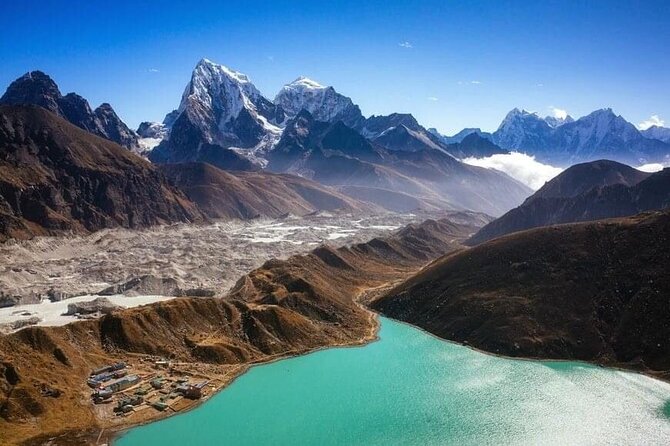
The high Himalaya rewards steady feet. This 14-day private trek links Gokyo Valley, Gokyo Ri, Chola Pass, Everest Base Camp, and Kala Patthar, with views toward Everest, Lhotse, Makalu, and Cho Oyu. I like the route’s variety, especially the turquoise Gokyo lakes and the tougher crossing of Chola Pass. I also like the small-group setup and the reported care from guide Phuri, assistant Porsu, and porters Diwa and Dilu.
The main caution is that the schedule is physically demanding and the final day provided ends at Pheriche, not Kathmandu. You should also clarify transport, meals, permits, and the return route before paying, since the published plan contains a few mixed place names and flight details.
Five things to know before choosing this trek
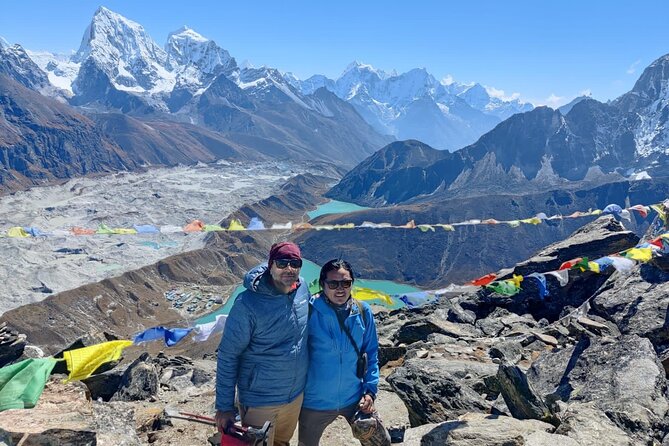
- Gokyo Ri reaches 5,414 meters, giving you a wide mountain panorama before the route turns toward Everest Base Camp.
- Chola Pass rises to about 5,320 meters, with glacial moraine, steep trails, and an early start from Thagnak.
- The price is $1,990 per person, but the supplied details do not spell out every inclusion, so ask for a written cost breakdown.
- The trek is private, meaning only your group participates, with pickup offered and a stated meeting time of 6:15 a.m.
- The guide team receives strong praise, especially for advance meal planning and helping the group stay on schedule.
- High-altitude insurance is required, and you must bring aviation rescue and medical insurance plus high-altitude medicine.
Why the Gokyo and Chola Pass route is special
Many Everest-area treks focus on the Base Camp trail. This one takes a more varied path through the Gokyo Valley before joining the Everest route. That gives you two very different mountain experiences: quiet glacial lakes and high passes first, then the famous Base Camp and Kala Patthar section.
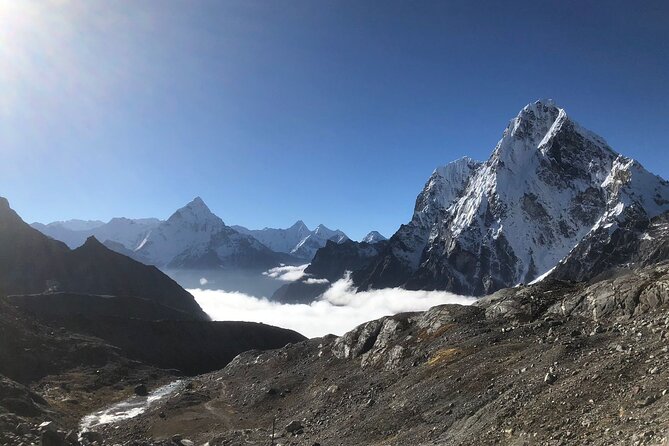
The mountain list is impressive. From the route, you may see Everest at 8,848 meters, Lhotse at 8,516 meters, Makalu at 8,414 meters, and Cho Oyu at 8,201 meters. Ama Dablam, Thamserku, Khantega, Cholatse, Taboche, and Nuptse add plenty of detail to the skyline.
I especially like that the trip does not treat Everest Base Camp as the only prize. Gokyo’s five lakes, the Ngozumpa Glacier, and the view from Gokyo Ri give the trek its own identity. You also get Chola Lake and the stark scenery around Chola Pass, though those sections demand more care than the easier valley walks.
The route is not a gentle sightseeing holiday. You walk for several hours on most days, sleep at high altitude, and face cold, thin air, rocky paths, and possible weather delays. A moderate fitness level is listed as necessary, but I would read that as a minimum. The Chola Pass day and the Gorak Shep to Everest Base Camp day are especially long.
More Everest Base Camp Treks in Kathmandu:
- Everest Base Camp Trek – 14 Days
★ 5.0 · 1,499 reviews - Everest Base Camp Trek
★ 5.0 · 842 reviews - Everest Base Camp Trekking
★ 5.0 · 485 reviews
Kathmandu preparation, Pashupatinath, and the road to Manthali
Your first day begins in Kathmandu, with time at Pashupatinath Temple. This important Hindu sanctuary is dedicated to Lord Shiva and gives you an early look at the spiritual side of Nepal. Admission is not included, and the schedule says arrival at the hotel, a possible gear check, and the temple visit may all fit into the day.
That gear check matters. You should use it to confirm warm layers, gloves, head protection, trekking shoes, and anything needed for high altitude. The supplied details do not state exactly what equipment the company provides, so ask before arrival.
Day two includes Swayambhu, shopping, preparation, and a four to five-hour drive from Kathmandu to Manthali, also called Ramechhap. You spend the night at a lodge there before the Lukla flight. This road transfer is not glamorous, but it is important because Lukla flights may operate from Manthali rather than Kathmandu.
The start time is listed as 6:15 a.m. You will want to be ready early, especially on the Manthali transfer day. The schedule says the flight to Lukla takes about 20 minutes and describes it as a helicopter flight. Because the wording also refers to a regular flight, confirm the exact aircraft, departure point, luggage limit, and weather procedure with Higher Path Treks before the trip.
Lukla to Namche, with your first real mountain days
From Lukla, you walk three to four hours to Phakding at about 2,630 meters. This is a sensible first walking day because it is shorter than many later stages. You spend the night in a tea house, and the route begins beside the Dudh Koshi River.
The next day takes you from Phakding to Namche Bazaar at about 3,450 meters. The walk is listed at six to seven hours, although one section of the schedule gives a shorter figure, so you should treat the longer estimate as the safer planning guide. You pass through river country with views toward Thamserku and Kusum Kanguru.
Namche is more than a stop for sleep. It is a historic trading hub on a mountain slope, known for yak cheese and butter. It is also the point where altitude becomes a serious concern. You gain height quickly, so the rest day here is not wasted time.
The acclimatization day includes a hike to Everest View Hotel at about 3,800 meters. The listed walking time is three to four hours. From this area, you may see Everest, Lhotse, Ama Dablam, Thamserku, and Khantega, along with many other peaks.
I like this rest-day plan because it keeps you active without moving your sleeping altitude. You can also see how you feel before the route goes higher. The schedule mentions the monastery at Khumjung and its purported Yeti scalp, though the main focus remains the mountain view and acclimatization.
Mong La, Phortse Tanga, and the move toward Gokyo
After Namche, the route heads toward Mong La and Phortse Tanga. The schedule describes a walk from Namche over Mong La Pass at about 3,960 meters, followed by a night at Phortse Tanga around 3,600 meters. This is a five to six-hour day.
Mong La is singled out as a good lunch stop with broad views. That is useful practical information: you may want to slow down here, eat properly, and enjoy the setting before descending. The route is not simply uphill all day, but the repeated ups and downs can feel tiring at altitude.
The next section reaches Dole at about 4,032 meters after three to four hours. You walk through woodland, where musk deer may be seen. The supplied day headings mix Dole, Machhermo, and Phortse Tanga, so do not rely on the labels alone. Ask for the final day-by-day route and sleeping villages in writing.
From Dole, the schedule continues to Machhermo at about 4,380 meters, with six to seven hours of walking. You gain height through a valley with views toward Taboche and Cholatse. The route has regular climbs and descents, and the air will feel noticeably thinner than it did around Namche.
Machhermo is a sensible staging point before Gokyo. The next day takes you to Gokyo at about 4,750 meters, passing three of the beautiful Gokyo lakes. The walk is again listed at six to seven hours. At this height, steady pacing is more valuable than speed. You should expect a simple tea house night and limited comfort compared with Kathmandu.
A few more treks around Kathmandu worth a look
- Annapurna Circuit Trek with Tilicho Lake
★ 5.0 · 368 reviews - Everest Base Camp Trekking – 13 Day
★ 5.0 · 365 reviews - Everest Base Camp Trek
★ 5.0 · 350 reviews - Everest Base Camp Trek -14 Days
★ 5.0 · 321 reviews
Gokyo Lakes and the climb to Gokyo Ri
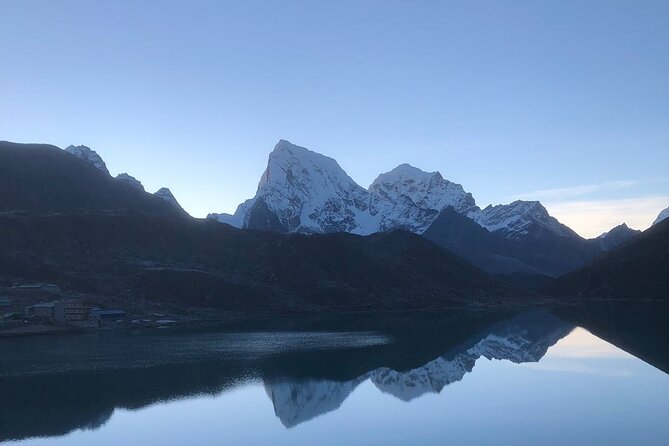
Gokyo is the scenic centerpiece of the first half of the trek. The valley contains five lakes, and the route also reaches the Ngozumpa Glacier, described as Nepal’s largest glacier. The water, ice, rock, and high peaks create a very different setting from the greener lower valley.
The morning climb to Gokyo Ri reaches about 5,414 meters. You return to Gokyo for breakfast before walking onward to Thagnak at about 4,695 meters. The day is listed at four to five hours after the summit climb, but the early ascent makes it a demanding morning.
This is one of the days where the private format can help. A guide can adjust the pace, watch how you are handling the altitude, and help organize the timing. Still, a private trip does not remove the physical challenge. You need to climb slowly and tell the guide promptly if you feel unwell.
The walk toward Thagnak includes the Ngozumpa Glacier. The schedule warns of loose rock and occasional rockfall, so this is not a place for casual wandering or headphones. Follow the guide’s instructions and keep your attention on the trail.
Chola Pass, the hardest day of the trip
The crossing from Thagnak to Dzongla is likely the most demanding day. The start may be as early as 4:00 or 4:30 a.m., with the exact breakfast and departure time set by your guide. You cross Chola Pass at roughly 5,320 meters and then continue to Dzongla at about 4,828 meters.
The walk takes six to seven hours according to the schedule. The route includes glacial moraine, tricky trails, steep sections, and exposed mountain terrain. The early start is designed to give you a better chance of crossing before conditions worsen, but it also means you begin in darkness and cold.
This day needs the right attitude. You may be excited by the pass, but the safest approach is patient and careful. Good boots, warm gloves, a headlamp, water, and layers are practical necessities. The exact equipment list is not provided, so confirm what you need before departure.
From Dzongla to Lobuche, the walk takes four to five hours, with Lobuche at about 4,919 meters. The route includes views of Cholatse, Chola Lake, Ama Dablam, and Nuptse. After the effort of the pass, this shorter day gives you a little room to recover, though you are still sleeping high.
Everest Base Camp and the long day at Gorak Shep
The route from Lobuche to Gorak Shep reaches about 5,160 meters and takes around three hours. After lunch, you continue to Everest Base Camp at about 5,360 meters, then return to Gorak Shep. The round trip to Base Camp is listed at two to three hours out and about two hours back, making this an eight-hour day overall.
This is a demanding schedule, but it gives you the famous destination without removing the walking challenge. At Base Camp, you are beside the Khumbu Glacier and the staging ground used by Everest expeditions. The view is not the same as the classic summit image, since Everest itself is partly hidden from Base Camp, but the location carries real meaning.
You should not expect a paved viewpoint or a quick photo stop. The trail is rocky, the air is thin, and the return walk can feel harder than the outward journey. Good pacing and an early lunch are important.
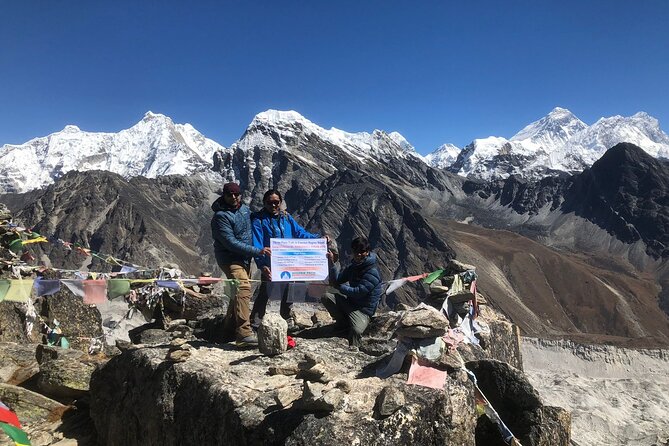
The next morning begins around 4:30 or 5:00 a.m. with the climb to Kala Patthar, about 5,545 meters. You return to Gorak Shep for breakfast, then walk onward to Pheriche. Kala Patthar is the high viewpoint of the trip, and the early timing is intended for mountain views in the morning light.
The published 14-day plan ends with the walk to Pheriche. It does not provide the later return to Namche, Lukla, and Kathmandu. This is the biggest point to clarify before booking. Ask exactly how many additional days are required, where you sleep after Pheriche, and how the return transport is arranged.
What $1,990 buys in practical value
At $1,990 per person, this is a serious purchase, but the route covers two major high-altitude areas and includes private guiding. You are paying for a long mountain program, not simply a Base Camp transfer. The Gokyo lakes, Gokyo Ri, Chola Pass, Everest Base Camp, and Kala Patthar give the price more value than a shorter single-route trek.
The strongest service detail is the planning by the guide team. One direct account praises the main guide and assistant for arranging tea house meals in advance and using time carefully. Phuri, Porsu, Diwa, and Dilu are specifically named as the team that helped one group complete and enjoy its Everest Base Camp trek.
Still, the price should not be judged until you know what it includes. Ask about accommodation, meals, porter support, domestic flights or helicopter transport, permits, guide costs, equipment, and the return journey. The information provided confirms tea house and lodge nights, but it does not give a full inclusion list.
Food needs should be manageable. Tea houses have menus for vegetarian, vegan, and gluten-free diets, with the same stated price. You should tell the company about your needs before the trek and carry any personal snacks you rely on.
You also need aviation rescue and medical insurance. The additional information says you must bring high-altitude medicine, so speak with a medical professional before setting out. Weather can cancel the experience, in which case you are offered another date or a full refund.
Who should book this private trek?
I would choose this route if you want more than the standard Everest Base Camp walk and you are prepared for Chola Pass. It suits people who value a private guide team, dramatic mountain views, and a route with both lakes and famous Everest landmarks.
It is less suitable if you want a relaxed schedule, dislike early starts, or have little experience with long walks at high altitude. The trek repeatedly reaches above 4,000 meters and climbs above 5,500 meters on Kala Patthar.
The two strongest reasons to book are the route design and the guide support. The two strongest reasons to pause are the demanding altitude profile and the unclear final return plan. Get those transport and inclusion details settled before you commit.
FAQ
How long is the Everest Gokyo Trek Multi Day Private Tour?
The experience is listed as approximately 14 days. The supplied schedule ends in Pheriche on Day 14, so you should confirm the full return plan to Kathmandu before booking.
What is the highest point on the trek?
Kala Patthar is listed at about 5,545 meters. Gokyo Ri reaches about 5,414 meters, and Chola Pass reaches about 5,320 meters.
Does the tour include pickup?
Yes. Pickup is offered, and the stated meeting time is 6:15 a.m.
Is this a private tour?
Yes. Only your group participates in the activity.
Are vegetarian, vegan, and gluten-free meals available?
Yes. Tea houses have menu options for vegetarian, vegan, and gluten-free diets, with the same stated price.
What happens if bad weather cancels the experience?
Because the trek requires good weather, you are offered a different date or a full refund if poor weather causes cancellation. You can also cancel for a full refund if you do so at least three full days before the start time.
Should you book it?
Book this trek if you want the Gokyo lakes, Gokyo Ri, Chola Pass, Everest Base Camp, and Kala Patthar in one private route, and you are ready for long, high-altitude days. The guide team’s reported attention to meals and timing adds real value.
Before paying $1,990, get the final itinerary, return route, flight details, inclusions, and equipment requirements in writing. If those points are clear, this is a strong choice for a fit hiker who wants a fuller Everest-region experience rather than the most straightforward Base Camp walk.
Recently added around Kathmandu
- Ghorepani Poon Hill Trek★ 5.0 · 16 reviews
- Amazing 1 Day Trekking Experience in Kathmandu Nepal★ 5.0 · 24 reviews
- Private Manaslu Circuit Trek at Himalayas★ 5.0 · 3 reviews
- Ghorepani Poonhill Trek★ 5.0 · 5 reviews
- Upper Mustang Trekking★ 5.0 · 2 reviews
- Upper Mustang Trekking★ 3.0 · 2 reviews
- Upper Mustang Trekking★ 5.0 · 4 reviews
- Upper Mustang Trek★ 5.0 · 5 reviews
Everest Base Camp Treks, compared.






Browse the lists this tour appears in