
REVIEW · KATHMANDU
Everest Basecamp Trek: 14 days
The Himalayas make every step count. This 14-day Everest Base Camp trek combines Lukla flights and Sherpa villages with the big reward of reaching Everest Base Camp and watching sunrise from Kala Patthar. I like that the plan includes proper acclimatization in Namche Bazaar and Dingboche, rather than treating high altitude as a minor detail. I also like the practical inclusions: permits, flights, porters, meals, airport transfers, and an English-speaking trekking guide.
The main drawback is the physical demand. You need moderate fitness, and the route reaches high altitude quickly after Lukla. The schedule also contains a small gap in its written sequence, with the Phakding to Namche walk described before Phakding is clearly shown as an overnight stop, so I would confirm that detail with Iconic Holiday Nepal before paying.
Key points to know before booking
- Fourteen days includes Kathmandu, the trek, and return travel: You get two nights in a tourist-standard Kathmandu hotel and 11 nights in Everest-region guesthouses.
- Lukla flights are included: The route uses round-trip airfare between Kathmandu and Lukla, though the departure airport may be Kathmandu or Manthali depending on flight conditions.
- Acclimatization is built into the route: Rest days in Namche Bazaar and near Dingboche help your body adjust before the highest walking days.
- Kala Patthar is the best mountain-view point: The pre-sunrise climb offers the closest view of Mount Everest on this route.
- Porter support keeps your load manageable: One porter is provided for every two clients, a useful benefit on a long high-altitude walk.
- The price covers a lot, but not everything: At $1,650 per person, you still need to budget for Kathmandu lunches and dinners, drinks, insurance, evacuation cover, and tips.
What the $1,650 price really covers
At $1,650 per person, this trek is not a bare-bones walking package. The cost includes round-trip flights between Kathmandu and Lukla, permits, private transportation, airport transfers, a licensed English-speaking guide, porters, 14 breakfasts, 11 lunches, and 11 dinners.
Your accommodation is also arranged for the full route: two nights in a tourist-standard hotel in Kathmandu and 11 nights in twin-sharing guesthouses in the Everest region. That matters because arranging beds, flights, permits, and staff separately would take time and would leave you handling the route yourself.
Still, the price is not all-inclusive. You pay for lunch and dinner in Kathmandu, drinks of any kind, bottled and boiled water, international airfare, airport departure tax, travel insurance, high-altitude emergency evacuation coverage, and tips. At altitude, small daily purchases can add up, so I would plan this extra budget before arrival.
The porter system is worth noting. One porter serves every two clients, which usually means you can walk with a lighter daypack instead of carrying all your clothing and equipment. You remain responsible for packing sensibly, since the information provided does not specify a baggage allowance or a maximum porter load.
The private format is another useful feature. Only your group takes part, so you are not tied to a large public departure. Group discounts are offered, although the exact savings are not provided. Ask for the discount before booking if you are traveling with friends or family.
More Everest Base Camp Treks in Kathmandu:
- Everest Base Camp Trek – 14 Days
★ 5.0 · 1,499 reviews - Everest Base Camp Trek
★ 5.0 · 842 reviews - Everest Base Camp Trekking
★ 5.0 · 485 reviews
Day 1: Kathmandu arrival and four hours in Thamel
Your trip begins at Tribhuvan International Airport, where the Iconic Holiday team meets you with a sign showing your name and the company name. A private vehicle then transfers you to Thamel, Kathmandu’s main visitor district.
Thamel is a practical first stop, not just a place to sleep. You can find trekking companies, restaurants, hotels, nightlife, and shops for last-minute purchases. This is the sensible time to check that you have the essentials for the walk, since the following morning is an early start toward Lukla.
The planned Thamel visit lasts about four hours, with admission included in the sense that there is no separate attraction ticket. Do not expect a guided museum visit or a formal sightseeing program here. Thamel is mainly your base for food, errands, and a first taste of Kathmandu.
Your Kathmandu hotel stay includes breakfast, but lunch and dinner are your own expense. The airport pickup and private transfers remove one layer of hassle after an international flight, especially if you arrive tired or late.
Day 2: Flying from Kathmandu or Manthali to Lukla
The flight to Lukla is one of the memorable parts of the trip before the walking even starts. The route is short, listed at about 30 minutes, but the views are described as a major feature. Depending on flight conditions during your trip, you may depart from Kathmandu airport or Manthali airport.
That change matters. If the flight operates from Manthali, your transfer time and morning schedule can be different from what you expect from a Kathmandu departure. Ask the operator for the confirmed departure airport and pickup time shortly before the trek.
Lukla Airport serves the Everest region and becomes especially busy during the trekking season. Once you arrive, the setting changes quickly from city travel to mountain walking. The airport is known for its difficult terrain and demanding approach, so you should expect a more serious start than the short flight time suggests.
The written schedule gives about 40 minutes at Lukla. Treat this as an arrival and orientation period rather than a full sightseeing stop. The route information also refers to Phakding in the next walking stage, but does not clearly list the Lukla to Phakding walk or the overnight stop. That is the one detail I would have clarified in writing before departure.
Days 3 and 4: Namche Bazaar and the first acclimatization break
The route from Phakding toward Namche Bazaar is described as a demanding uphill walk. You cross suspension bridges, pass small settlements, and follow a trail through mountain scenery toward the main trading center of the Khumbu region.
Namche Bazaar is more than a stopping point. It is one of the more developed places on the route, with hotels, restaurants, and tea houses. The plan gives you two days here, which is good mountain judgment. You gain altitude quickly in the first stages, and a rest day gives your body time to adjust.
The acclimatization day includes an early hike toward Syangboche. The planned outing lasts about six hours. This is not a day of doing nothing. You climb high enough to help your body adjust, then return to Namche for a lower night.
I like this part of the program because it gives you time to experience Namche rather than simply passing through. You can use the break to organize your pack, eat a proper meal, and prepare for the quieter villages ahead. The drawback is that the route is already physically serious by this point. If the uphill walking from Phakding feels hard, you should tell your guide early rather than trying to hide it.
A few more treks around Kathmandu worth a look
- Annapurna Circuit Trek with Tilicho Lake
★ 5.0 · 368 reviews - Everest Base Camp Trekking – 13 Day
★ 5.0 · 365 reviews - Everest Base Camp Trek
★ 5.0 · 350 reviews - Everest Base Camp Trek -14 Days
★ 5.0 · 321 reviews
Days 5 and 6: Tengboche monastery and Pangboche
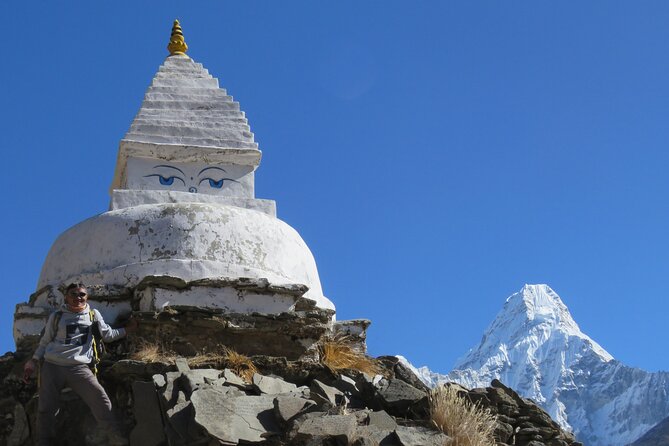
From Namche, the trail heads toward Tengboche. The route first descends toward the Dudh Kosi Valley before climbing again through Phungi Thangka and along the Imja Khola. The planned walking time is about six hours.
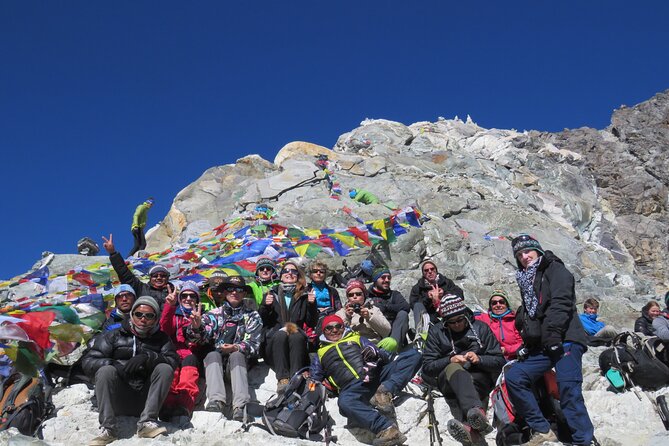
This is one of the most scenic sections of the trip, with suspension bridges, river valleys, and high mountain views. The steady climbs can be tiring, but the change in setting makes the effort worthwhile. You are no longer walking through a town with many services. The route feels more remote as you move toward higher villages.
Tengboche is best known for its monastery. On the following morning, you have time to explore Tengboche Gompa before continuing. The visit is listed at about two hours, so it is not a rushed photo stop.
After the monastery, the route descends to the Imja River and passes Pangboche, with prayer flags and mountain settlements along the way. The combination of religious site and daily village life gives this trek more character than a simple peak-viewing trip.
The main practical point is to pace yourself. You are walking for several hours at a time, and descents can be just as tiring as climbs. Good footwear and a controlled pace matter more than racing ahead.
Day 7: Dingboche and the Nangkartshang Peak acclimatization walk
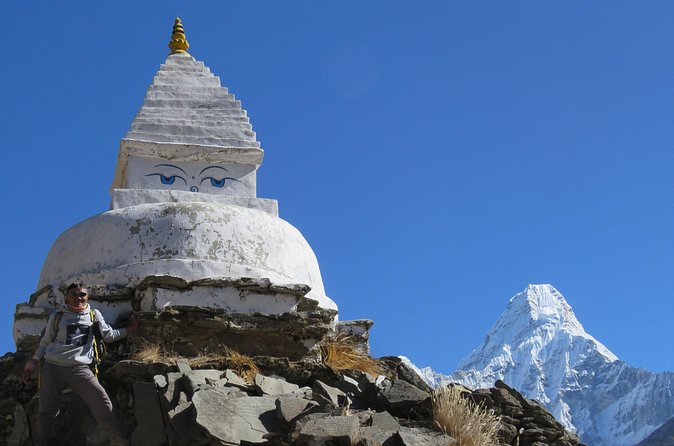
The next acclimatization period takes place around Dingboche, with a short hike toward Nangkartshang Peak. The listed walking time is about one hour, though the purpose is more important than the distance. You are giving your body another chance to adjust before moving higher.
The description calls this a rest day, but you should think of it as active rest. A short climb helps you spend time at altitude while keeping the day manageable. The surrounding scenery becomes barer as the route leaves the lower forests behind.
Dingboche is a key point in the schedule because the next stages lead toward Dughla, Lobuche, Gorak Shep, and Base Camp. If you feel headaches, unusual tiredness, or other symptoms of altitude sickness, this is the time to speak with your guide. The tour includes a first-aid-trained guide, but travel insurance and high-altitude evacuation cover are not included, so you need to arrange those yourself.
Day 8: Dingboche to Dughla and beyond
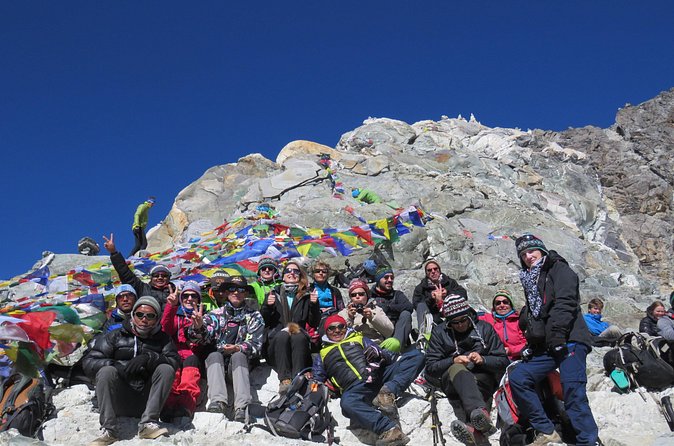
Leaving Dingboche, you walk through open fields toward Dughla. The trail becomes steeper and follows a glacial route. From there, the path continues toward the higher settlements on the way to Lobuche.
The description does not give a precise duration or clearly state the overnight village for this day, so this is another detail worth confirming. It is likely one of the longer and more demanding sections because you are gaining altitude while walking on increasingly rough ground, but I would rely on the operator for the exact daily plan rather than guessing.
This is the stage when the trek changes from a demanding village walk into a high-altitude route. Expect less comfort, fewer services, and a greater need to drink enough water. Since beverages and both bottled and boiled water are excluded, ask your guide how water will be handled before setting out.
Day 9: Everest Base Camp from Lobuche
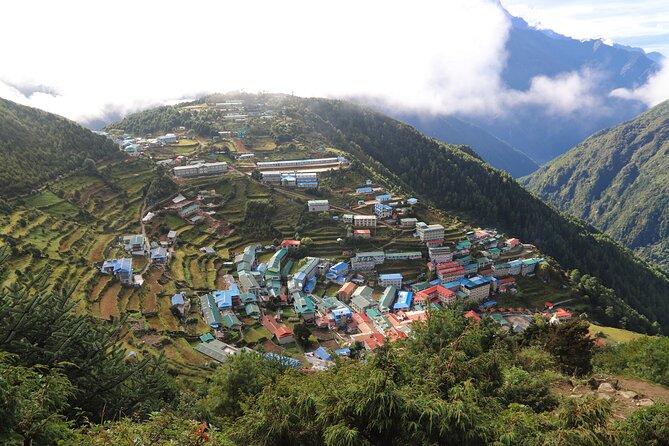
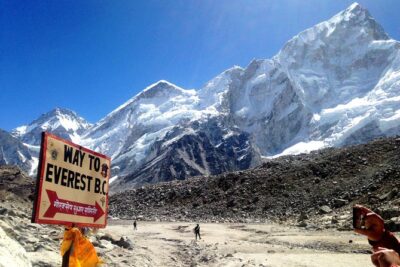
The goal finally comes into view. From Lobuche, the trail climbs beside the Khumbu Glacier toward Gorak Shep, a settlement associated with earlier Everest Base Camp routes. From there, you continue toward Everest Base Camp.
The listed Base Camp visit is about two hours. That is enough time to reach the site, take in the glacier setting, and enjoy the achievement without pretending that this is an easy stroll. The route includes a steep ascent along the Khumbu Glacier, so footing and pace matter.
Base Camp itself is not the best place for a broad view of Mount Everest. The next morning’s climb to Kala Patthar is designed for that. Base Camp is about reaching a famous point on the expedition route and seeing the glacier environment up close.
You should also understand that the schedule places you at very high altitude by this point. The climb can feel slow. That is normal. I would rather arrive steadily and safely than chase a timetable for a photograph.
Day 10: Pre-sunrise Kala Patthar
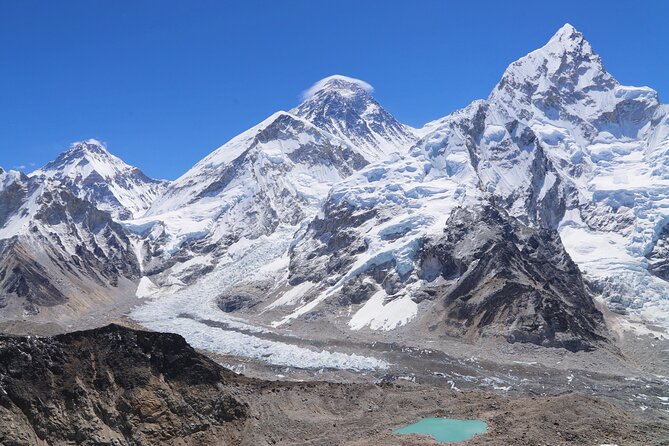
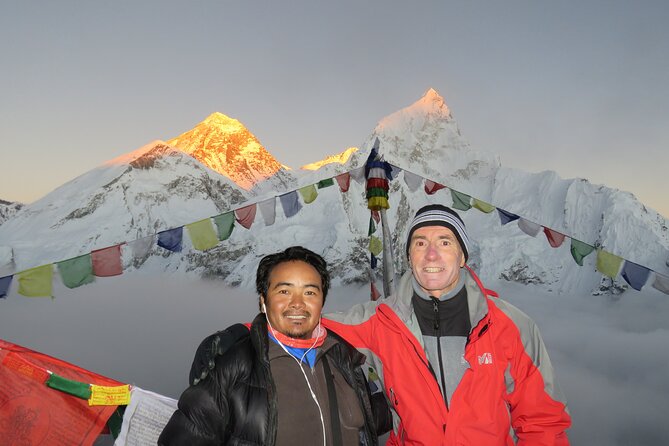
Kala Patthar is the visual high point of the trek. You leave before sunrise and climb above Gorak Shep to a famous viewpoint with a close panorama of Mount Everest.
The listed hike takes about two hours, but the early start and altitude make it more demanding than the time suggests. The reward is the changing light over the high peaks, with the best view of Everest available on this route.
Bring warm clothing and keep your daypack light. The information does not specify equipment rental or clothing supplies, so you should arrive prepared for a cold pre-sunrise walk. After Kala Patthar, you return for breakfast and begin the descent.
Days 11 and 12: Retracing the route to Namche and Lukla
The return route follows much of the same trail, passing through Pangboche and Tengboche before heading back toward Namche Bazaar. The familiarity can be useful because you know what the path involves, but descending on tired legs still requires care.
From Namche, the trail drops steeply at first, then enters a forested route through smaller settlements. You cross the Dudh Kosi several times on suspension bridges before continuing toward Lukla.
The return days are not filler. Downhill walking places pressure on knees, ankles, and feet, especially after the long climb to Base Camp. Trekking poles may be helpful, though the tour does not state that they are supplied.
The scenery also changes as you descend. You move from bare, high-altitude ground back toward greener lower sections. The route offers a useful contrast with the ascent, even though you are repeating many of the same villages.
Day 13: Lukla to Kathmandu
The early flight returns you to Kathmandu. The aerial views can be striking, and the flight itself is another memorable part of the route.
Weather can affect mountain flights, and the schedule does not state how delays are handled. Keep your international departure plans sensible, with enough time between the Lukla return and any onward flight. The included airport transfer takes you to your Kathmandu hotel after landing.
You have the remainder of the day to rest or enjoy Kathmandu. Remember that lunch and dinner in the city are not included.
Day 14: Airport transfer and departure
The final day is simple. A representative takes you to the airport according to your departure time. Airport transfers on a tourist vehicle are included.
The tour offers confirmation at booking and allows cancellation up to 24 hours before the experience for a full refund. Still, the most important preparation is not the cancellation rule. Arrange travel insurance with high-altitude emergency evacuation cover, since that protection is specifically excluded from the price.
Who should book this Everest Base Camp trek?
I would recommend this trip to someone who wants a structured Everest Base Camp route with flights, permits, guides, porters, meals, and accommodation arranged in advance. It suits you if you are comfortable walking for several hours over uneven ground and can handle a moderate fitness challenge at high altitude.
The private format is a good fit for couples, families, or small groups who prefer to walk with their own party. The two acclimatization periods are also a strong point for anyone who wants a more measured schedule rather than a rushed ascent.
I would hesitate to recommend it to anyone looking for a soft adventure or a comfortable sightseeing holiday. The route includes steep sections, early starts, simple guesthouse accommodation, suspension bridges, and high-altitude walking. The unclear Phakding section and the possibility of departing from Manthali also mean you should ask practical questions before booking.
Should you book it?
Book this trek if you want the major Everest route highlights in a two-week format and value having the difficult logistics handled for you. The $1,650 price is solid for the included flights, permits, guide, porters, meals, transfers, and 13 nights of accommodation, provided you budget separately for insurance, drinks, Kathmandu meals, and tips.
Before confirming, ask for the exact Phakding overnight plan, the likely flight departure airport, baggage rules for porters, and the expected accommodation on each night. If those details are clear and you are prepared for the altitude, this is a well-organized way to reach Everest Base Camp, with Kala Patthar providing the strongest mountain view of the trip.
FAQ
How long is the Everest Base Camp Trek?
The experience lasts approximately 14 days, including arrival and departure days in Kathmandu, the trek, Lukla flights, and airport transfers.
What is included in the tour price?
The price includes private transportation, permits, round-trip airfare between Kathmandu and Lukla, two nights in a tourist-standard Kathmandu hotel with breakfast, 11 nights of twin-sharing guesthouse accommodation, airport transfers, an English-speaking licensed trekking guide, porters, breakfasts, lunches, and dinners as specified.
Are flights between Kathmandu and Lukla included?
Yes. Round-trip airfare between Kathmandu and Lukla is included. Depending on flight conditions during your trip, the departure may operate from Kathmandu airport or Manthali airport.
Is this a private tour?
Yes. Only your group participates in the activity. Group discounts are also offered, although the discount amount is not specified.
What fitness level is required?
The tour states that you should have a moderate level of physical fitness. The route includes uphill walking, steep sections, suspension bridges, high-altitude trails, and several days of walking for about six hours.
Are meals included in Kathmandu?
Breakfast is included during the two Kathmandu hotel nights. Lunch and dinner in Kathmandu are not included. Drinks, including bottled and boiled water, are also excluded.
Is travel insurance included?
No. You must arrange your own travel insurance, including high-altitude emergency evacuation coverage. Tips for trekking staff and the driver are also not included.
Recently added around Kathmandu
- Ghorepani Poon Hill Trek★ 5.0 · 16 reviews
- Amazing 1 Day Trekking Experience in Kathmandu Nepal★ 5.0 · 24 reviews
- Private Manaslu Circuit Trek at Himalayas★ 5.0 · 3 reviews
- Ghorepani Poonhill Trek★ 5.0 · 5 reviews
- Upper Mustang Trekking★ 5.0 · 2 reviews
- Upper Mustang Trekking★ 3.0 · 2 reviews
- Upper Mustang Trekking★ 5.0 · 4 reviews
- Upper Mustang Trek★ 5.0 · 5 reviews
Everest Base Camp Treks, compared.




Browse the lists this tour appears in