
REVIEW · KATHMANDU
Everest Base Camp Yoga Trek – 15 Days
The mountains become your yoga studio. I like the way this 15-day trip joins a serious Everest Base Camp trek with daily yoga and a spiritual guide. I also like the useful Kathmandu introduction, the small maximum group of eight, and the careful acclimatization plan.
The main caution is simple: this is still a demanding high-altitude trek, not a gentle wellness holiday. Altitude, cold, steep trails, basic mountain lodging, and possible flight delays all come with the territory. The $1,699 price offers good value if you want guiding, meals, permits, accommodation, airport transfers, and yoga organized in one package.
Key points worth knowing
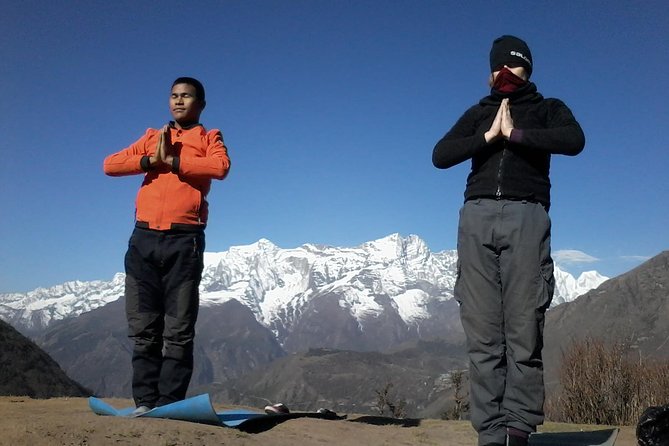
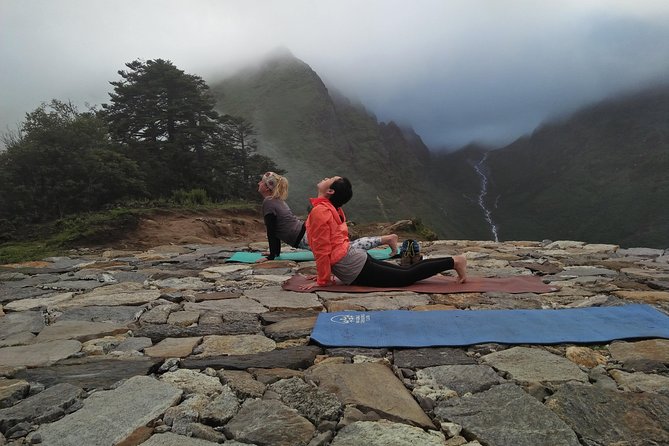
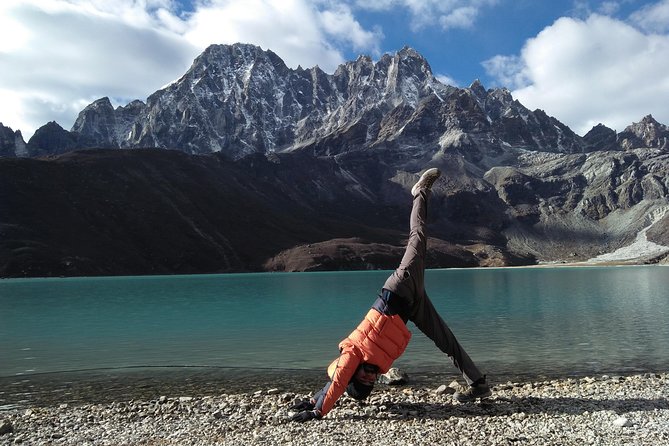
- Daily yoga in the Himalaya: A yoga instructor travels with the guide and group, beginning each day by centering the body and mind.
- Everest Base Camp plus Kala Patthar: You reach Everest Base Camp and climb Kala Patthar for close views of Everest, Khumbu Glacier, Pumori, Lhotse, Nuptse, and Changtse.
- Two acclimatization days: Namche Bazaar and Dingboche provide short hikes and rest before the highest section.
- Kathmandu sightseeing included: Swayambhunath, Boudhanath, and other cultural sites provide a useful start before the mountain trek.
- Small advertised group: The maximum is eight people, a helpful size for a strenuous route and personal support.
- Strong guide feedback: Guides including Nirmal, Sonam Jangbu Sherpa, Anil, Ram, and Dipak are praised for patience, care, organization, and quick communication.
Why yoga changes the Everest Base Camp experience
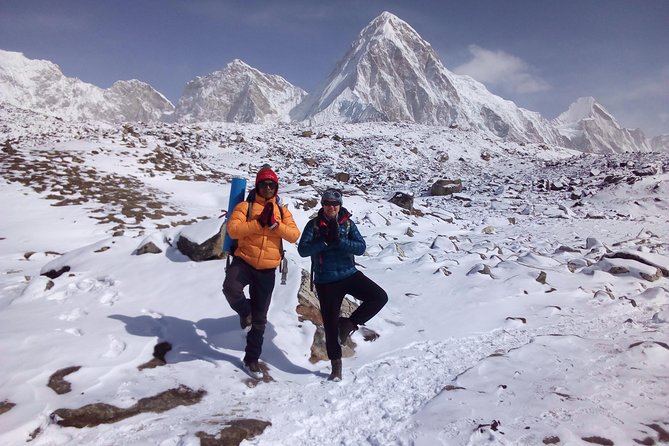
Most people come to the Khumbu region for the mountains. This trip asks you to pay attention to the journey between those mountain views.
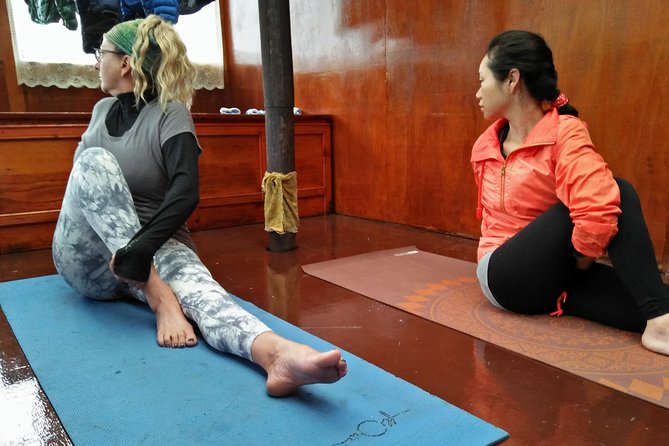
The yoga practice begins each day with centering and awareness. The supplied details do not give a fixed class length, style, or exact schedule, so you should ask before booking if you need a particular form of yoga. Still, the idea has real value. A slow morning practice can help you notice how your breathing, balance, and energy change as you climb.
The instructor travels with you for the full trek and acts as a spiritual guide. That gives this departure a different character from a standard guided walk to Base Camp. You are not simply ticking off villages and elevations. You are being encouraged to pause, breathe, and take in the setting.
I would not treat yoga as preparation for the physical work. It does not remove the need for stamina, warm clothing, good footwear, or sensible altitude habits. The walking days remain long and the air becomes thin. Think of yoga as a mental and physical complement to the trek, not a substitute for training.
More Everest Base Camp Treks in Kathmandu:
- Everest Base Camp Trek – 14 Days
★ 5.0 · 1,499 reviews - Everest Base Camp Trek
★ 5.0 · 842 reviews - Everest Base Camp Trekking
★ 5.0 · 485 reviews
Days 1 and 2: A gentle start in Kathmandu
Your arrival day is practical. A representative meets you at Tribhuvan International Airport, helps with the transfer, and takes you to your hotel. Dinner is included, giving you a chance to settle in without searching for food after an international flight.
The second day introduces Kathmandu’s religious and cultural side. At Swayambhunath, also called the Monkey Temple, you see a site where Hindu and Buddhist traditions meet, along with a broad view over the city. It is a useful first stop because it gives you cultural context before you reach the Buddhist communities of the Khumbu.
Boudhanath Stupa is another major highlight. The large white dome, prayer activity, Tibetan community, Sherpas, and steady movement around the stupa offer a calm contrast to Kathmandu’s traffic. You can observe people turning prayer wheels, walking clockwise, and pausing for devotion.
The itinerary also refers to a Hindu site, though the supplied description cuts off before naming it. Ask the operator for the complete sightseeing schedule. Kathmandu is not just a staging point here. It gives you a first look at the religious traditions that continue along the mountain route.
Days 3 and 4: Lukla, Phakding, and the first hard climb
The mountain section begins with an early flight from Kathmandu to Lukla. The flight is part of the adventure, with views of green hills, rivers, terraced fields, valleys, and distant peaks. You land at Tenzing-Hillary Airport, then begin walking toward Phakding.
The first trek is an introduction rather than an immediate endurance test. You follow a route used by local communities and trading groups, with the guide setting the pace. Phakding provides the first night in the trekking region.
The next day follows the Dudh Koshi River toward Namche Bazaar. You pass through Benkar, with views of Thamserku and the sacred Khumbila Peak, then continue through Monjo, the entrance to Sagarmatha National Park.
The trail includes forests, waterfalls, prayer wheels, villages, and suspension bridges. At Larja Dobhan, the Dudh Koshi and Bhote Koshi meet, and the route crosses a high bridge before the sustained climb to Namche.
This day can feel tougher than the mileage suggests. The climb to Namche is steep, and you are also adjusting to a much higher altitude. Your guide’s job is not just to point out peaks. It is to keep the pace sensible and watch how you are responding.
Day 5: Namche Bazaar and smart acclimatization
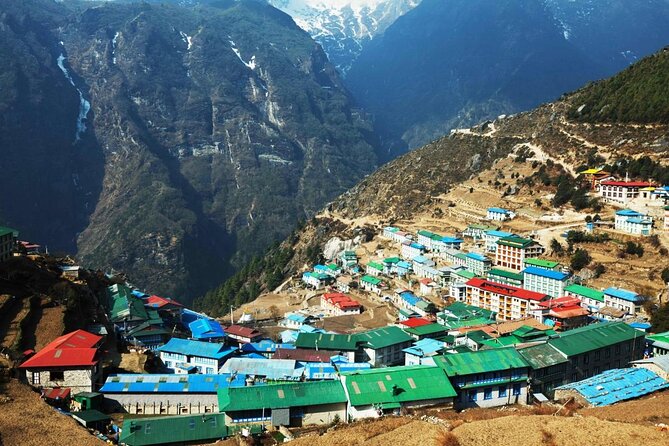
Namche is more than a stop for food and sleep. It is the main trading center of the Khumbu, with shops, mountain supplies, cafes, local restaurants, and a Saturday market. The town’s horseshoe shape and mountain setting make it one of the most memorable places on the route.
The planned rest day includes a visit to the Sherpa Cultural Museum. You can learn about mountaineering, local customs, Himalayan plants and animals, geography, and the people who live in this region.
A short morning hike is also planned. The Everest View Hotel is mentioned as a possible destination, offering a broad mountain panorama. The value of this hike is not only the view. Walking higher and sleeping lower helps your body adjust before the route continues upward.
Use this day wisely. It is tempting to shop, eat heavily, or stay in bed, but gentle movement is more useful. The yoga session may also help you loosen stiff legs after the first demanding walking days.
A few more treks around Kathmandu worth a look
- Annapurna Circuit Trek with Tilicho Lake
★ 5.0 · 368 reviews - Everest Base Camp Trekking – 13 Day
★ 5.0 · 365 reviews - Everest Base Camp Trek
★ 5.0 · 350 reviews - Everest Base Camp Trek -14 Days
★ 5.0 · 321 reviews
Days 6 and 7: Tengboche, Pangboche, and Dingboche
From Namche, the trail climbs through Kenjoma and Sanasa. Sections are fairly level, and you may see Everest for the first time from the route. Forest, bridges, prayer wheels, and views of the Dudh Koshi make this a varied walking day.
After the junction toward Gokyo, you descend to Phunke Tenga, then climb steeply toward Tengboche. This is one of the route’s key cultural and scenic stops. The monastery setting and views toward Everest, Ama Dablam, Lhotse, and Nuptse give the day a strong sense of arrival in the high Himalaya.
The following day leads through Deboche and across the Imja River toward Pangboche. The route passes alpine vegetation and offers chances to see musk deer, Himalayan monal, and blue sheep. At upper Pangboche, an old stupa surrounded by trees makes a worthwhile pause.
Beyond Pangboche, the trees thin out and the route becomes more open and austere. Scrub juniper and tundra replace the lower forests as you reach Dingboche. This change is gradual but noticeable. You are now walking in a colder, higher world.
Day 8: Dingboche gives your body time
Dingboche is the second major acclimatization stop. The plan includes short hikes to higher ground, which is far more useful than rushing onward.
One option is Nangkartshang Gompa. The hike gives wide views and a chance to see religious paintings, Thangka art, and a Yeti scalp and hand kept at the site. Another option is a hill behind Dingboche, with views toward several six-thousand-meter peaks.
The exact choice may depend on weather, group energy, and the guide’s judgment. That flexibility matters. At this height, a rigid schedule is less useful than careful pacing.
This is also a good point to check your body honestly. Headaches, nausea, unusual fatigue, or trouble sleeping should be taken seriously. The itinerary itself warns about acute mountain sickness later in the trip. You should always tell the guide how you feel rather than trying to prove toughness.
Days 9 and 10: Lobuche, memorials, and Everest Base Camp
The route from Dingboche climbs gradually through grazing areas, chortens, Mani walls, and stupas. Taboche Peak and Ama Dablam remain in view as the valley opens toward the Khumbu Glacier.
You reach Dughla, the last settlement before Lobuche. Above Dughla is Chukpo Lari, a high ridge covered with memorials to climbers who died on Himalayan expeditions. This can be an emotional section of the trek. The stones and plaques turn the mountain scenery into a place of memory, not just a photo stop.
The next day begins early from Lobuche. You cross rocky ground beside the lateral moraines of the Khumbu Glacier and pass the Italian research center. The trail is uneven, with ice formations and possible crevasse areas nearby, so this is a day for steady feet and close attention.
Gorakshep is the lunch stop and overnight base. From there, you continue toward Everest Base Camp over rocky glacial terrain. Base Camp itself changes with the climbing season, and it is not a permanent village or summit. It is the staging area used by expeditions attempting Everest.
Reaching it is still a major achievement. The route is physically demanding, and the setting, surrounded by glaciers and high peaks, gives the day its force. Your yoga practice may be shorter or gentler here, depending on conditions. The supplied details do not promise a specific session at Base Camp, so confirm how the instructor handles the highest days.
Day 11: Kala Patthar brings the best mountain view
Kala Patthar is often the visual high point of the trip. You leave Gorakshep before sunrise and climb a brown hill that looks small beside the surrounding peaks but feels serious at altitude.
From higher on the ridge, you can see Everest, Pumori, Lhotse, Nuptse, Changtse, and the Khumbu Glacier. Sunrise adds changing color to the peaks, while the cold and thin air make the climb demanding.
This is a good day to protect your energy. Carry only what you need, dress in layers, and move slowly. After the viewpoint, you return toward the lower settlements. The descent is welcome, but your knees and ankles may feel the strain.
Days 12 to 15: The long return to Kathmandu
The return route follows the Dudh Koshi corridor and eventually brings you back toward Namche. Much of the walking is downhill, though that does not make it easy. Descending steep, uneven paths can be hard on tired legs.
You share the route with porters, local people, animals, and other trekking groups. Give way to yak caravans and keep to the safer side of suspension bridges. Prayer flags, waterfalls, monasteries, forests, and villages provide fresh interest on the way back.
The supplied itinerary has some unclear wording around Days 12 and 13. Day 12 describes travel from Periche toward Namche, while Day 13 describes leaving Sagarmatha National Park at Monjo and continuing through Phakding, Ghat, Nurning, and Cheplung, but then refers again to Namche. Since the next day requires the Lukla flight, ask Trekking Planner to confirm the exact overnight stops before you pay.
Day 14 is the return flight from Lukla to Kathmandu, usually planned early because weather can disrupt flights. The flight takes about 35 minutes when it operates, and you are transferred back to your hotel on arrival. Breakfast, lunch, dinner, and the Kathmandu overnight stay are included for this part of the schedule.
Day 15 is for departure. You have time for final shopping before airport transfer, with the operator advising arrival at least three hours before your flight.
What the $1,699 price covers
At $1,699 per person, the package offers solid value for a fully arranged Everest Base Camp trip. Accommodation, airport transfers, local guiding, national park fees, taxes, departure charges, breakfast for all 15 days, and 12 lunches and dinners are included.
Coffee and tea are included as well. Alcohol and drinks are not, so budget extra for those purchases. The package also includes the brokerage fee connected with the booking platform.
The strongest value comes from having the yoga instructor, guide, transport, permits, meals, and hotel arrangements handled together. You are not building the trip piece by piece while dealing with high-altitude logistics.
The price does not mean luxury. Mountain accommodation can be basic, and the itinerary does not describe room standards in detail. I would ask about tea house quality, room sharing, hot showers, charging, luggage limits, and what happens if a Lukla flight is delayed.
How the guides and support affect the trip
The company’s strongest praise centers on organization and personal care. Dipak is repeatedly described as quick to answer messages and closely involved with arrangements in Kathmandu. That matters when flights shift, luggage goes missing, or plans need adjustment.
Nirmal receives especially warm praise for keeping groups safe, cheerful, and supported. Sonam Jangbu Sherpa is praised for compassion, area knowledge, and professionalism. Other named guides include Anil, Ram, Ganesh, Pemba, Suman, Abhishek, and Dibash.
One useful detail comes from a solo woman who had concerns about cold weather, vegan food, and traveling alone. She describes Dipak, the yoga instructor Anil, and guide Ram as attentive to her needs. That does not guarantee the same staff on your departure, but it suggests the company has experience with different dietary and personal requirements.
The advertised group limit is eight. Some past company departures involved larger groups, so confirm that this specific yoga trek will follow the stated limit.
Who should book this trek?
I would choose this trip if you want Everest Base Camp with a reflective, structured rhythm. It suits people who value cultural stops, guided support, and a daily yoga practice as much as the famous mountain views.
You should also be comfortable with long walking days, cold conditions, rough paths, and altitude. The minimum age is 18, and a moderate level of physical fitness is required.
I would not book it if you want a relaxed yoga retreat with warm rooms, flexible mornings, and little physical strain. The name includes yoga, but the main event is still a high-altitude trek.
Free cancellation is available when you cancel at least 24 hours before the start time. Inside that window, the payment is not refunded, and changes are not accepted.
Should you book the Everest Base Camp Yoga Trek?
Book it if daily yoga, a small group, Kathmandu culture, and strong logistical support appeal to you. The combination gives the classic Everest route a more thoughtful pace, while the included meals, permits, transfers, guide, and accommodation keep the $1,699 price reasonable.
Before booking, confirm the yoga schedule, accommodation details, exact return-day overnight stops, and the plan for weather delays at Lukla. If you prepare for a serious trek rather than a soft wellness break, this could be a memorable way to reach Everest Base Camp with both body and mind engaged.
FAQ
How long is the Everest Base Camp Yoga Trek?
The experience lasts approximately 15 days, including arrival and departure days in Kathmandu.
What is the price?
The listed price is $1,699 per person.
Is airport pickup included?
Yes. Pickup from Tribhuvan International Airport is provided on arrival, and airport departure assistance is included at the end.
Is yoga included every day?
The experience is described as beginning each day with yoga led by an instructor who travels with the group and guide. The exact class length and style are not provided.
What places are visited in Kathmandu?
The sightseeing program includes Swayambhunath, also called the Monkey Temple, and Boudhanath Stupa. It also includes a Hindu site, though the supplied details do not name it.
Does the trek reach Everest Base Camp?
Yes. The route reaches Everest Base Camp from Gorakshep and also includes an early morning climb to Kala Patthar.
Are meals included?
Breakfast is included for all 15 days. The package also includes 12 lunches and 12 dinners, plus coffee and tea.
What is the maximum group size?
The advertised maximum is eight people.
Can I cancel for a full refund?
Yes, if you cancel at least 24 hours before the experience start time. Cancellations made within 24 hours are not refunded.
Recently added around Kathmandu
- Ghorepani Poon Hill Trek★ 5.0 · 16 reviews
- Private Manaslu Circuit Trek at Himalayas★ 5.0 · 3 reviews
- Amazing 1 Day Trekking Experience in Kathmandu Nepal★ 5.0 · 24 reviews
- Ghorepani Poonhill Trek★ 5.0 · 5 reviews
- Upper Mustang Trekking★ 5.0 · 2 reviews
- Upper Mustang Trekking★ 3.0 · 2 reviews
- Upper Mustang Trekking★ 5.0 · 4 reviews
- Upper Mustang Trek★ 5.0 · 5 reviews
Everest Base Camp Treks, compared.






Browse the lists this tour appears in