
REVIEW · KATHMANDU
Everest Base camp Trekking
The Himalayas demand your full attention. This 14-day Everest Base Camp trek from Kathmandu takes you through Sherpa villages, Buddhist monasteries, high mountain valleys, glaciers, and Sagarmatha National Park before reaching the base of Mount Everest. I especially like the small maximum group of 10 and the fact that a licensed guide, permits, sleeping bag, down jacket, airport transfers, and tea house lodging are included.
I also like the two acclimatization days, one in Namche Bazaar and one in Dingboche. Those pauses are not wasted time. They give you room to adjust to altitude and enjoy the villages instead of simply marching uphill. The main drawback is cost clarity: at $1,340 per person, meals, drinks, travel insurance, Nepal visa fees, and staff tips are extra, and the supplied itinerary does not show every day from Day 9 through Day 14.
- Lukla starts the walking adventure: You fly from Kathmandu to Lukla, then walk to Phakding on the first trekking day.
- Namche and Dingboche include acclimatization days: This is important on a route reaching more than 5,000 meters.
- Tea house lodging is included for 10 nights: You sleep in simple mountain accommodation rather than camping.
- A licensed guide leads the trek: Past departures have included guides named Raju, DB, and Kumar, with porter support also arranged on some trips.
- The group is capped at 10 people: That should make communication and pacing easier than on a large commercial departure.
- Insurance is not optional: You must carry coverage for medical treatment and emergency evacuation and show proof on the first day.
What the $1,340 Price Really Covers
The price is reasonable for a guided Everest Base Camp trek, but you need to read the inclusions carefully. The package includes 10 nights of tea house lodging during the mountain portion, national park fees, local taxes, a government-licensed professional guide, the guide’s food, lodging, salary, insurance, and equipment. A sleeping bag and down jacket are also provided on rent.
That package removes several costs that can add up quickly. You do not need to arrange a guide independently, negotiate permits, or carry your own rented cold-weather items from home. Hotel pickup and drop-off are included, which is useful after a long international flight and again at the end of the trek.
The price does not include meals or drinks. You also pay for your Nepal visa, personal travel insurance, and tips for the guide and staff. You should budget for these before deciding that $1,340 is the complete cost.
Accommodation in Kathmandu is not clearly described as part of the package. The first day includes airport pickup, hotel transfer, trek preparation, and a welcome dinner, but the inclusion list specifically identifies 10 tea house nights in the mountains. Ask the operator to confirm exactly which Kathmandu nights are covered.
A different guide language costs an additional $250 per group. The standard arrangement is an English-speaking guide. That extra charge is for a group, not necessarily for each person, but confirm the final amount before booking.
Day 1 in Kathmandu: Airport Pickup and Trek Preparation
Your arrival day is designed to keep things simple. A representative from Nepal Horizon Treks and Expedition meets you at Tribhuvan International Airport and takes you to your hotel.
Later, you have a trip discussion with the management and trek leaders. This is the time to check your equipment, ask about the walking schedule, and confirm the practical details of the route. You also receive a welcome dinner in a typical Nepali restaurant with cultural performances.
This opening is useful because Everest Base Camp is not a trip where you want unanswered questions. Give the company your arrival flight details in advance. The pickup is offered, but the operator needs those details to arrange it.
More Everest Base Camp Treks in Kathmandu:
- Everest Base Camp Trek – 14 Days
★ 5.0 · 1,499 reviews - Everest Base Camp Trek
★ 5.0 · 842 reviews - Everest Base Camp Trekking
★ 5.0 · 485 reviews
Day 2: Kathmandu to Lukla, Then Phakding
The route begins with a flight from Kathmandu to Lukla. From Lukla, you trek about 8 kilometers to Phakding, with three to four hours of walking. Phakding sits at roughly 2,651 meters.
This is a sensible first walking day. It is short compared with later stages and gives you time to settle into the rhythm of mountain travel. You will begin seeing the Sherpa villages and white rivers that define the lower part of the route.
The flight is a key part of the schedule because Lukla is the trailhead for this trek. A short flight gets you quickly into the Khumbu region, but it also means your walking begins at altitude rather than gradually climbing from low ground. Your guide will be important from the first day as you adjust.
Day 3: Phakding to Namche Bazaar
The walk from Phakding to Namche Bazaar covers about 11 kilometers and takes five to six hours. Namche sits at approximately 3,438 meters, a major rise from Phakding.
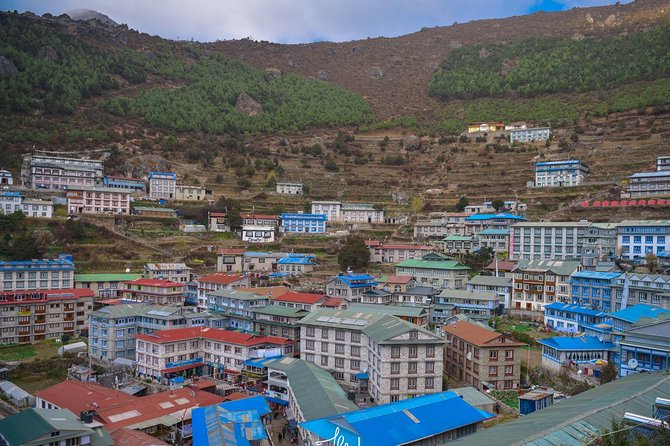
Namche is more than an overnight stop. It is the main Sherpa trading center on this route, and it gives the trek a welcome change of pace. You can expect a village environment shaped by trekking, local commerce, and mountain life.
The route also enters the higher part of the Khumbu region, so the walk can feel harder than the distance suggests. The sensible approach is to follow the guide’s pace, drink regularly, and avoid treating Namche as a place to rush through.
Day 4: Acclimatization in Namche Bazaar
The first acclimatization day is one of the strongest parts of this itinerary. You remain at around 3,440 meters rather than gaining more height immediately.
The supplied plan does not specify a particular side walk or viewpoint, so you should ask your guide what the day will include. The value is clear even without a fixed excursion: your body gets more time to adjust before the trail climbs toward Tengboche and Dingboche.
This is also a good day to organize your pack. Keep warm layers, water, snacks, and personal medication easy to reach. The sleeping bag and down jacket supplied by the operator reduce the amount of bulky cold-weather gear you need to bring.
A few more treks around Kathmandu worth a look
- Annapurna Circuit Trek with Tilicho Lake
★ 5.0 · 368 reviews - Everest Base Camp Trekking – 13 Day
★ 5.0 · 365 reviews - Everest Base Camp Trek
★ 5.0 · 350 reviews - Everest Base Camp Trek -14 Days
★ 5.0 · 321 reviews
Day 5: Namche to Tengboche
The trek to Tengboche covers about 10 kilometers and takes five to six hours. The village is at roughly 3,870 meters.
This section brings you deeper into the high Khumbu and toward one of the route’s best-known Buddhist settings. The itinerary specifically highlights Buddhist monasteries, Sherpa villages, Himalayan peaks, glaciers, plants, animals, and birds in Sagarmatha National Park.
Tengboche combines scenery with culture, which is one reason this trek is more than a simple mountain walk. You are not only counting altitude and distance. You are moving through the home region of the Sherpa people and seeing how monasteries and villages fit into the route.
Day 6: Tengboche to Dingboche
From Tengboche, you walk about 9 kilometers to Dingboche. The trip takes five to six hours, and Dingboche is at approximately 4,360 meters.
At this height, the numbers matter. The distance is shorter than the Phakding to Namche stage, yet the climb can feel more demanding because the air is thinner. A moderate level of physical fitness is required, and this is not a sightseeing walk with easy transport between stops.
Dingboche is a high mountain settlement and an important staging point before the trail heads toward Lobuche. Your guide can help you judge how quickly to walk and when to rest. Do not be embarrassed by a slow pace. At altitude, steady is smart.
Day 7: Acclimatization in Dingboche
The second acclimatization day comes at about 4,360 meters. This pause is even more important than the one at Namche because the route is now entering very high country.
The exact activities are not listed, so ask for the day’s plan. You will likely use the time to rest, walk locally, and prepare for the longer high-altitude stages ahead, but the operator should confirm the details.
This day also shows that the itinerary has been designed with altitude in mind. A faster schedule might look attractive on paper, but it would give you less time to adjust before reaching Lobuche and Gorak Shep.
Day 8: Dingboche to Lobuche
The walk to Lobuche is about 7 kilometers and takes five to six hours. Lobuche is at approximately 4,940 meters.
Short distances become serious at this altitude. You may be walking for the same number of hours as earlier in the trip, but every uphill section asks more of you. The route leads toward the stark upper Khumbu, where the vegetation becomes less prominent and the mountain setting takes over.
This is a day for patience. Keep your expectations realistic and let the guide manage the pace. The package includes the guide’s food, accommodation, insurance, salary, and equipment during the trek, so you are paying for more than route finding. You are also paying for organized support in a demanding environment.
Day 9: Lobuche to Gorak Shep and Everest Base Camp
Day 9 takes you from Lobuche to Gorak Shep, at about 5,170 meters, followed by a visit to Everest Base Camp. The listed distance and timing are cut off in the supplied itinerary, so you should request the full schedule before booking.
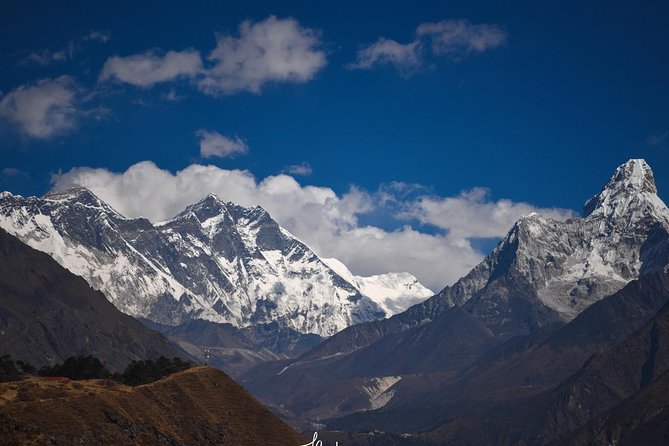
This is the emotional center of the trek. You are walking to the base of Mount Everest, listed here at 8,848 meters, through the high Khumbu with views of peaks and glaciers around you.
It is important to understand what reaching Base Camp means. You arrive at the base used by Everest expeditions, but the famous summit view of Everest may not be the same from Base Camp as from other points on the route. The achievement is the journey, the altitude, and the place itself, not simply a single postcard view.
Gorak Shep is also the highest overnight point listed in the schedule. At this elevation, cold, fatigue, and altitude can change the character of the day. You should be ready for a physically demanding stage and follow your guide’s instructions closely.
The Missing Final Days Matter
The published plan says the experience lasts approximately 14 days, but the supplied detail stops during Day 9. That leaves the return route and final Kathmandu arrangements unclear.
Before paying, ask for the complete Day 9 to Day 14 schedule. Confirm where you sleep after visiting Base Camp, how the descent is arranged, whether the return flight from Lukla is included, and how the final airport drop-off works.
This is not a minor paperwork issue. Mountain schedules can be shaped by weather and flight conditions, so you should know the planned route and the company’s approach to changes. The listing confirms hotel pickup and drop-off, but it does not spell out every transfer after the Base Camp visit.
Guides, Porters, and Personal Service
The strongest pattern in the supplied feedback is praise for the company’s organization and personal care. Dipendra, the managing director, is repeatedly described as friendly, supportive, available, and helpful before, during, and after the trek.
Past trips have included guides such as Raju, DB, and Kumar. Kumar was especially praised for answering questions and creating a sense of safety. One group also traveled with a porter named Yambo. Staff names can change, so request your guide’s name and role before departure.
The company has also handled groups of eight and nine people, while the stated maximum is 10. That is large enough for a social trip but small enough that the guide should be able to notice when someone is struggling.
You should still ask whether porter service is included for your specific booking. The inclusion list clearly covers the professional guide, but it does not separately state that a porter is included for every departure.
Tea Houses, Food, and What to Pack
Ten nights of tea house accommodation are included during the mountain trek. Tea houses offer a practical way to sleep along the route, but they are not a substitute for city hotels. Expect simple mountain lodging and plan for basic comfort.
Meals and drinks are not included. Bring enough spending money for food, hot drinks, and other personal purchases along the way. The package provides a sleeping bag and down jacket on rent, which is helpful, but you should confirm their condition and suitability before leaving Kathmandu.
Pack for changing conditions. You need proper walking clothing, warm layers, sturdy footwear, personal medication, and a way to protect important documents. Your insurance must cover medical expenses and emergency evacuation, and proof must be shown to the tour leader on the first day.
Who Should Book This Trek?
This trek suits you if you want a guided route to Everest Base Camp, enjoy long days on foot, and appreciate local cultural contact alongside mountain scenery. It is also a good fit if you prefer a small group and want the company to arrange permits, a guide, airport transfers, and key equipment.
It is less suitable if you want a relaxed holiday, dislike basic lodging, or are not prepared for high altitude. The minimum age is 10, but age alone does not determine readiness. The stated requirement is moderate physical fitness, and every participant should take the altitude seriously.
The company receives a 5 rating from 15 submitted ratings, with 100 percent recommending the experience. That is encouraging, especially alongside the repeated praise for Dipendra and the guides, but it does not remove the need to check the missing final-day details.
My Verdict on Nepal Horizon Treks
I would consider booking this trek if the operator confirms the full 14-day schedule and gives a clear answer about Kathmandu lodging, return flights, porters, meals, and final transfers.
The best reasons to choose it are the two acclimatization days, the small group limit, and the strong record of personal support associated with Dipendra and several guides. The main caution is not the route itself. It is the need to clarify what the $1,340 price includes beyond the listed mountain services.
You can cancel for a full refund if you do so at least 24 hours before the experience start time. Changes or cancellations made inside that period are not accepted for a refund. That policy gives you some flexibility, but your insurance remains essential because mountain conditions and medical needs are separate from the booking terms.
FAQ
Where does the Everest Base Camp trek begin?
The experience begins in Kathmandu, Nepal. Airport pickup is offered from Tribhuvan International Airport.
How long is the Everest Base Camp trek?
The experience lasts approximately 14 days.
What is the price per person?
The listed price is $1,340 per person.
What is the maximum group size?
The tour accepts a maximum of 10 travelers.
What is the minimum age?
The minimum age is 10 years.
Is a guide included?
Yes. A government-licensed professional guide is included, along with the guide’s food, accommodation, salary, insurance, and equipment during the trekking period.
Are meals and drinks included?
No. Meals and drinks are excluded from the listed price.
Is travel insurance required?
Yes. You must have insurance covering medical expenses, including emergency evacuation, and show proof to the tour leader on the first day.
Can I cancel for a full refund?
Yes. You can cancel at least 24 hours before the experience start time for a full refund. Cancellations or changes made less than 24 hours before the start time are not accepted.
Recently added around Kathmandu
- Ghorepani Poon Hill Trek★ 5.0 · 16 reviews
- Private Manaslu Circuit Trek at Himalayas★ 5.0 · 3 reviews
- Amazing 1 Day Trekking Experience in Kathmandu Nepal★ 5.0 · 24 reviews
- Ghorepani Poonhill Trek★ 5.0 · 5 reviews
- Upper Mustang Trekking★ 5.0 · 2 reviews
- Upper Mustang Trekking★ 3.0 · 2 reviews
- Upper Mustang Trekking★ 5.0 · 4 reviews
- Upper Mustang Trek★ 5.0 · 5 reviews
Everest Base Camp Treks, compared.




Browse the lists this tour appears in