
REVIEW · KATHMANDU
Everest Base Camp Trekking
Everest begins with an early alarm. This private 12-day trek takes you from Kathmandu to Lukla, through Sherpa villages and Sagarmatha National Park, and onward to Everest Base Camp with the main practical work arranged for you. I like the private format, which lets your group set a steadier pace, and I like that permits, teahouses, meals, guides, porters, and airport transfers are included.
The route also builds in acclimatization at Namche Bazaar, a vital pause before the higher villages. The main concern is the demanding schedule: you reach Base Camp on a long, high-altitude day, and the package does not include travel insurance, personal gear, drinks, showers, tips, or emergency evacuation costs.
Key points to know before you book
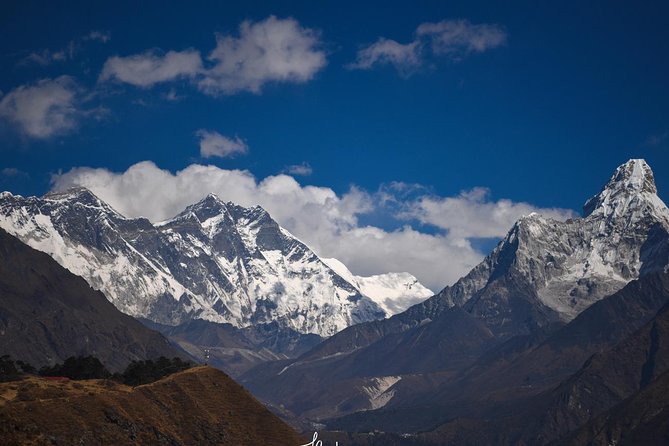
- A 12-day route to Everest Base Camp: You fly from Kathmandu to Lukla, trek through Namche Bazaar, Tengboche, Dingboche, Lobuche, and Gorakshep, then return by the same general route.
- Private group travel: Only your own group takes part, so your guide can adjust the pace and respond to changing needs.
- Teahouse accommodation: Nights are spent in simple mountain lodges, with breakfast, lunch, and dinner chosen from available menus.
- Strong logistical support: Permits, national park fees, TIMS registration, airport transfers, porters, government taxes, and guide services are covered.
- High-altitude preparation matters: The route reaches Gorakshep at about 5,164 meters and Kalapatthar at roughly 5,545 meters, so fitness and careful pacing are essential.
- Pack light and pack properly: Your trek bag should weigh no more than 15 kilograms, and waterproof footwear, warm layers, sun protection, and walking poles are strongly advised.
Why this Everest trek works well for independent-minded hikers
The Everest Base Camp route is famous, but fame does not make it easy. You still walk for several hours most days, sleep in basic teahouses, deal with cold nights, and climb to an altitude where your body may object to every step. What this trip removes is much of the organizing burden.
At $1,998 per person, the price includes a great deal of support. You receive airport, hotel, and airport transfers by private vehicle, a licensed trekking guide, porters, accommodation, meals, permits, park fees, a TIMS card, medical supplies, and government taxes. A duffel bag is available if requested before booking, and the package also includes a T-shirt for men, a pashmina shawl for women, and trekking certificates.
I see the value most clearly if you are coming to Nepal for the first time. You do not need to arrange every lodge, calculate porter costs, handle park paperwork, or work out how to move from the airport to your hotel and back again. The owner, Puru, is described as responsive before and during trips, with travelers praising his availability for questions and changes.
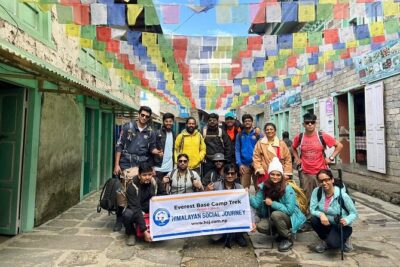
The private setup is useful for solo hikers, couples, and small groups with similar fitness levels. It is also easier to speak openly about headaches, tired legs, or a slower pace when you are not trying to keep up with a large commercial group.
There is a catch. This is not a luxury trek. Teahouses are practical rather than plush, and hot water, showers, drinks, charging, laundry, and snacks cost extra. The included meals are chosen from menus, but that does not mean every lodge offers the same range or comfort.
More Everest Base Camp Treks in Kathmandu:
- Everest Base Camp Trek – 14 Days
★ 5.0 · 1,499 reviews - Everest Base Camp Trek
★ 5.0 · 842 reviews - Everest Base Camp Trekking
★ 5.0 · 485 reviews
Day 1: the short flight to Lukla and the walk to Phakding
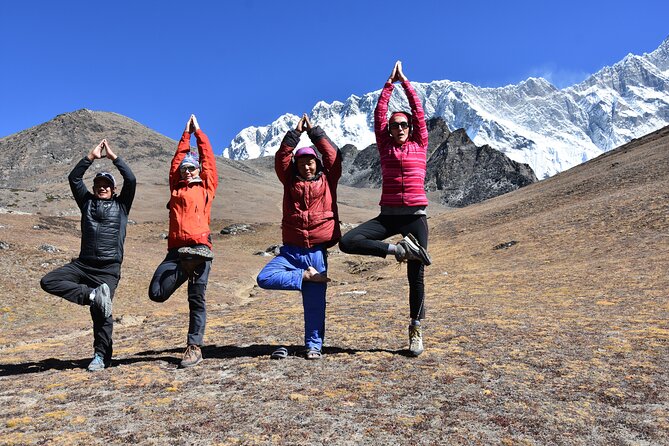
The trip begins with a flight from Kathmandu to Lukla, listed as taking about 25 minutes. The meeting time is 1:15 am at Thamel in Kathmandu, which tells you something important: this is an early start, and flight schedules in the mountains can shape the entire day.
From Lukla, you trek for about three to four hours to Phakding. This first walking day is relatively short by Everest standards, giving you an introduction to the trail without immediately demanding a huge effort. You spend the night in a teahouse.
Lukla flights are one of the practical pressure points of this route. The package includes the flight connection in the itinerary, but weather can disrupt mountain air travel. The company has helped with rebooking and alternative arrangements on other Nepal trips, but you should still carry insurance that covers trekking delays and emergency evacuation.
Day 2: walking to Namche Bazaar
The route from Phakding to Namche Bazaar takes about three to four hours according to the schedule, although the day is listed as around seven hours in total. That difference probably reflects breaks, trail conditions, and the demanding approach to the main Sherpa town.
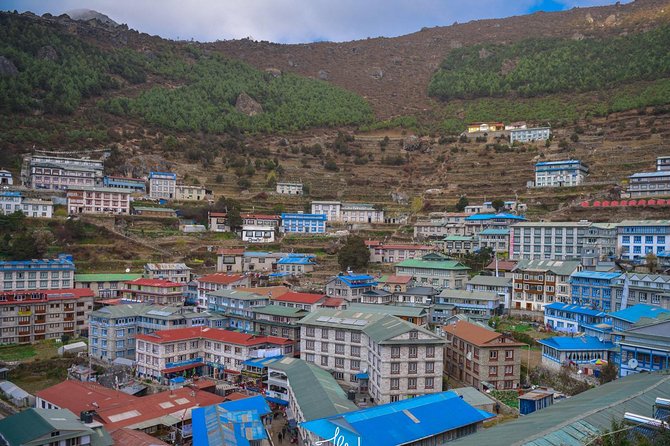
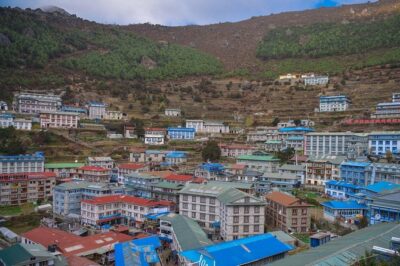
Namche is more than a stopping point. It is the main trading and supply center for the Everest region, and it is where the trail begins to feel properly high and remote. You spend the night in a teahouse, then remain in Namche for the following day.
The first stretch follows the Dudh Kosi valley, with suspension bridges and steady uphill walking. I would treat this as the day to settle into your pace. Fast walking here does not earn you anything later.
Day 3: acclimatization in Namche Bazaar
An acclimatization day can feel like lost time when you have a fixed goal, but it is one of the most useful parts of the itinerary. You have about two hours of activity listed, leaving time to rest and let your body adjust.
The schedule does not specify the exact acclimatization walk. Your guide can explain the plan, but you should expect a shorter outing rather than a full trekking day. Namche is a good place to check your boots, sort your bag, charge devices if available, and buy any last-minute snacks or warm clothing.
This is also where the private arrangement helps. If you are feeling strong, you can discuss a little more walking. If you have a headache or feel unwell, you have a better chance of getting sensible attention than you might in a large group.
A few more treks around Kathmandu worth a look
- Annapurna Circuit Trek with Tilicho Lake
★ 5.0 · 368 reviews - Everest Base Camp Trekking – 13 Day
★ 5.0 · 365 reviews - Everest Base Camp Trek
★ 5.0 · 350 reviews - Everest Base Camp Trek -14 Days
★ 5.0 · 321 reviews
Day 4: Tengboche Gompa and the night near Deboche
From Namche, you walk toward Tengboche Gompa and continue to Deboche, taking about four to five hours of trekking and around six hours for the day. Tengboche is one of the most memorable cultural stops on the route, with its important Buddhist monastery and wide mountain views.
The overnight stay is in Deboche rather than Tengboche itself. That can make the day feel less like a sightseeing visit and more like a working trek, but the monastery remains a key point of the route.
I like this section because it combines scenery with Sherpa culture. You are not simply walking toward a famous mountain. You are passing through communities shaped by Tibetan Buddhism, trade, farming, tourism, and life at high altitude.
Day 5: Deboche to Dingboche
The walk from Deboche to Dingboche takes about five to six hours. Dingboche sits high enough that the effect of altitude becomes more obvious, even if you have been feeling fine so far.
This is a day to slow down. The trail may not look technically difficult, but altitude makes ordinary slopes feel longer. Drink regularly, protect your skin from strong sun, and tell your guide about any symptoms instead of trying to hide them.
The package includes a guide trained in wilderness first aid and altitude sickness awareness, along with group medical supplies. That is reassuring, but it does not replace travel insurance or a personal decision to turn back if you become ill.
Day 6: Duglha and the approach to Lobuche
The itinerary describes a walk from Dingboche to Duglha in about three to four hours, followed by an overnight stay. It also lists the Duglha to Lobuche section separately, with Lobuche at about 4,940 meters and a six-hour day.
There is a numbering inconsistency in the schedule, but the intended route is clear: you pass through Duglha and continue toward Lobuche before reaching Gorakshep. Ask the operator to confirm the exact overnight sequence and daily distances before departure.
This section is physically serious. The air is thin, the villages are more basic, and the trail can feel exposed. You should not judge your condition by how you felt at Namche. Altitude often reveals itself gradually.
Day 7: Lobuche to Gorakshep and Everest Base Camp
The route from Lobuche to Gorakshep, followed by the walk to Everest Base Camp and return to Gorakshep, takes about six hours in total according to the plan. This is the emotional center of the trek and one of the hardest days.
Gorakshep is the last overnight settlement on the route in this itinerary. From there, you continue to Everest Base Camp, take in the glacier and surrounding peaks, and walk back to the teahouse for the night.
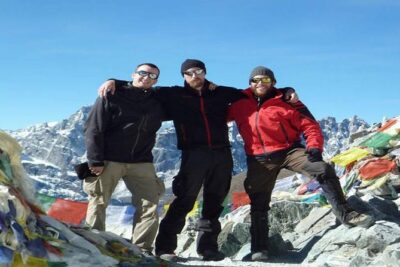
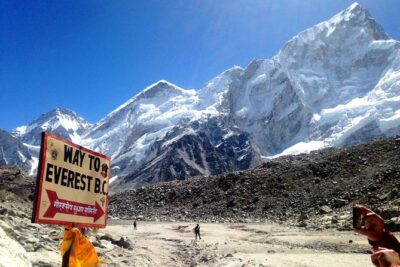
Base Camp itself is not a viewpoint with a full panorama of Mount Everest. The great mountain is better seen from Kalapatthar the following morning. Base Camp is valuable for the sense of place: you are standing at the starting point for expeditions on the southern side of Everest.
You need to be realistic about this day. Six hours at altitude is not equivalent to six hours at home. Leave your ego at the lodge, follow the guide’s pace, and keep enough energy for the return.
Day 8: Kalapatthar and the descent to Pheriche
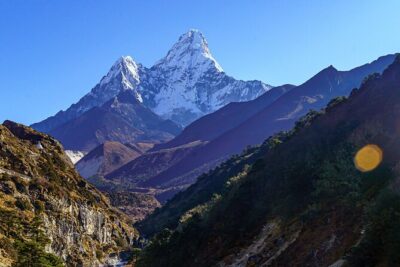
The next day takes you from Gorakshep to Kalapatthar, then down to Pheriche, for about six to seven hours. Kalapatthar is the main viewpoint of the trip, giving you the best planned chance to see Mount Everest along with the surrounding Himalayan peaks.
The climb to the viewpoint is early and steep, but the effort is worthwhile for the mountain views. Afterward, the descent to Pheriche should feel easier on your breathing, though tired knees can make downhill walking surprisingly tough.
Pheriche is an important recovery point. You are still high, but you have begun losing altitude. The return journey is not just a repeat of the outward route. It lets you notice how quickly the scenery changes as the air becomes thicker and vegetation begins to return.
Days 9 to 11: walking back to Lukla
From Pheriche, you trek to Tengboche in about five to six hours. You then continue from Tengboche to Monjo, also listed at five to six hours, before making the final four to five-hour walk from Monjo to Lukla.
These days are less glamorous than Base Camp, but they are part of the achievement. You are tired, and the trail still includes climbs. The descent is not an effortless stroll.
Tengboche gives you another chance to appreciate the monastery and surrounding scenery. Monjo sits near the entrance area of Sagarmatha National Park, and the return through the lower villages offers a different view of the route you climbed earlier.
You spend the final trekking night in Lukla. This buffer is useful because it places you near the airport before the flight back to Kathmandu, though weather can still affect departure.
Day 12: returning to Kathmandu
The final day is the flight from Lukla to Kathmandu. The itinerary ends back at the meeting point, and airport, hotel, and airport transfers by private vehicle are included as part of the package.
Keep your schedule flexible after the trek. The supplied information does not promise a specific flight buffer, and mountain air travel is weather dependent. Do not plan an important international connection immediately after landing in Kathmandu.
Teahouses, meals, porters, and daily comfort
Teahouse accommodation is included for the trekking portion. You should picture simple lodge rooms and shared facilities rather than hotel service. Hot showers, hot water, charging, laundry, alcoholic drinks, and other beverages are not included.
Breakfast, lunch, and dinner are chosen from the menu during the trek. That arrangement gives you choice, but your options will depend on the lodge and the day. Snacks, sweets, personal drinks, and bar bills are your responsibility.
One porter is provided for every two trekkers. Porters receive food, accommodation, salary, equipment, clothing, medicine, and accidental insurance through the operator. You should still pack carefully, keep valuables with you, and stay within the 15-kilogram trek-bag limit.
The company supplies a first aid kit and has guides trained in wilderness first aid and altitude sickness. You must provide your own travel insurance, and it should include emergency evacuation coverage for trekking above 5,500 meters.
What to pack for this route
The equipment list is practical and fairly demanding. Bring waterproof, high-ankle trekking shoes with good grip, spare laces, camp shoes, warm layers, a heavy down or Gore-Tex jacket, thermal underwear, gloves, wool socks, a sun hat or wool cap, sunscreen, lip balm, and at least one walking stick.
The suggested bag size is 60 to 70 liters, with comfortable shoulder straps, a frame, and a rain cover. Lining it with a plastic bag is a simple way to protect clothing from rain or damp lodge rooms.
Do not overpack. You need warm clothing at altitude, but every extra kilogram is carried uphill by someone. The supplied limit of 15 kilograms is a useful discipline rather than a nuisance.
How much value you get for $1,998
The price is competitive when you add up the included services. Airport transfers, permits, park entry, TIMS registration, accommodation, three daily meals, guide and porter support, government taxes, office service charges, medical supplies, and the mountain flight are all part of the arrangement.
You still need to budget for Nepal’s entry visa, international flights, Kathmandu sightseeing, drinks, showers, hot water, charging, laundry, personal snacks, gear, insurance, and staff tips. Those extras can add up, especially if you want frequent showers, hot drinks, and electronic charging.
I would compare this package by asking what is actually included, not just comparing the headline price. The value is strongest for anyone who wants one company handling the route from Kathmandu through Lukla and back, with a private group and direct support from an established local team.
Who should book this trek?
This trek suits fit hikers who already have some walking experience and are comfortable with long days at high altitude. It is particularly appealing if you want a private trip, prefer a guided route, or do not want to arrange lodges and porters yourself.
It can work for solo hikers, couples, and small groups. Past trips have included solo participants, and guides named in the company’s operations include Sitaram, Suresh, Phuldin, Shiva, and Ram. The exact guide assigned to your trek should be confirmed before you go.
I would hesitate to recommend it to anyone expecting an easy holiday, polished hotel rooms, or a relaxed sightseeing timetable. The route is physically demanding, and the short 12-day schedule leaves less room for delays or extra acclimatization than a longer itinerary.
Should you book the Above the Himalaya Everest trek?
Book it if you want a private, well-supported route to Everest Base Camp and value having permits, meals, porters, teahouses, and transfers arranged in one price. The strongest reasons to choose it are the personal attention, the company’s reported ability to handle changes, and the clear support structure on the trail.
Before paying, confirm the exact daily sequence around Duglha and Lobuche, ask which guide will lead your group, check what happens if Lukla flights are delayed, and verify the duffel bag request. Buy evacuation insurance, prepare for basic accommodation, and treat the altitude seriously.
If those conditions suit you, this is a practical way to reach Base Camp without turning every detail into a separate task.
FAQ
How long is the Everest Base Camp trek?
The experience lasts approximately 12 days, including flights between Kathmandu and Lukla and the trekking route to Everest Base Camp.
Where does the trek start?
The meeting point is in Thamel, Kathmandu, Nepal. The listed start time is 1:15 am.
Is airport pickup included?
Yes. Airport, hotel, and airport transfers by private vehicle are included.
Is this a private trek?
Yes. Only your own group participates in the activity.
What accommodation is provided?
Teahouse or lodge accommodation is provided during the trekking section.
Are meals included?
Yes. Breakfast, lunch, and dinner are included during the trek, with meals selected from the available menu.
Are permits and park fees included?
Yes. The package includes necessary permits, government taxes, Sagarmatha National Park fees, and the TIMS card fee.
Is travel insurance included?
No. You must arrange your own travel insurance, and it should include emergency evacuation coverage while trekking above 5,500 meters.
Can I cancel for a full refund?
You can cancel for a full refund if you do so at least 24 hours before the experience start time. Cancellations or changes made less than 24 hours beforehand are not accepted for a refund.
Recently added around Kathmandu
- Ghorepani Poon Hill Trek★ 5.0 · 16 reviews
- Private Manaslu Circuit Trek at Himalayas★ 5.0 · 3 reviews
- Amazing 1 Day Trekking Experience in Kathmandu Nepal★ 5.0 · 24 reviews
- Upper Mustang Trekking★ 5.0 · 2 reviews
- Ghorepani Poonhill Trek★ 5.0 · 5 reviews
- Upper Mustang Trekking★ 3.0 · 2 reviews
- Upper Mustang Trekking★ 5.0 · 4 reviews
- Upper Mustang Trek★ 5.0 · 5 reviews
Everest Base Camp Treks, compared.
Browse the lists this tour appears in