
REVIEW · KATHMANDU
Everest Base Camp Trekking 16 Days
The high Himalaya starts with a small plane. This 16-day Everest Base Camp trek combines Kathmandu’s major sights, a scenic flight to Lukla, Sherpa villages, Sagarmatha National Park, and the famous walk to Base Camp. I like the two acclimatization days, which give your body a better chance to adjust, and I like the chance to meet guides such as Shiva, Keshab, and Rajesh, who have been praised for their care and good company.
The main caution is simple: this is a serious high-altitude trek, not a long sightseeing walk. The $800 price looks appealing, but you should confirm exactly what is included, since the Kathmandu sightseeing admission fees are not included and the published schedule has a few unclear details around the Base Camp and Kala Patthar days.
Key points to know before booking
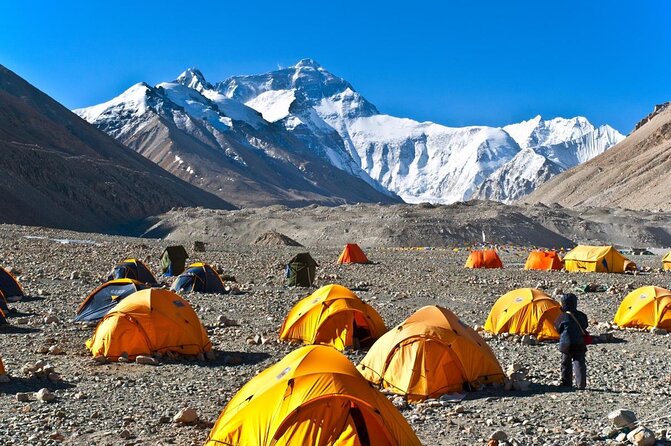
- Kala Patthar is the big mountain-view prize: An early start brings close views of Everest, Lingtren, Khumbutse, and Changtse.
- Two acclimatization stops help: You spend rest days in Namche Bazaar and Dingboche, with optional hikes to Khumjung, Nagarjun Hill, or Chukkhung Valley.
- The route follows the classic Khumbu trail: You pass Phakding, Namche, Tengboche, Pangboche, Lobuche, Gorak Shep, and Everest Base Camp.
- Kathmandu sightseeing is included in the schedule: The city tour covers Durbar Square, Pashupatinath, Swayambhunath, and Bouddhanath.
- This is a private trip: Only your own group participates, and pickup at the airport is offered.
- The price needs careful checking: The advertised cost is $800 per person, but the supplied information does not spell out every inclusion.
Kathmandu begins the trip with temples and preparation
Your first day is gentle. A Vyas Treks & Expedition representative meets you at Tribhuvan International Airport and takes you to your hotel. You have time to rest or visit the company office, then meet the team at a welcome dinner featuring Nepalese food.
That dinner is more than a polite greeting. It gives you an early chance to ask about walking times, equipment, weather, and the high-altitude sections ahead. If you are new to trekking, use this time well. A few clear questions in Kathmandu can prevent confusion later.
Day two gives you a useful introduction to Kathmandu. The guided route visits Kathmandu Durbar Square, Pashupatinath, Swayambhunath, and Bouddhanath. Each place offers a different side of the city: royal courtyards, Hindu worship, Buddhist prayer, and the great stupa at Bouddhanath.
Admission fees for this sightseeing day are not included, so budget for them separately. In the afternoon, the climbing leader checks your equipment, introduces the group, and discusses the trek at the office. This is a practical day, not filler. You are seeing important religious sites while getting ready for a demanding walk.
More Everest Base Camp Treks in Kathmandu:
- Everest Base Camp Trek – 14 Days
★ 5.0 · 1,499 reviews - Everest Base Camp Trek
★ 5.0 · 842 reviews - Everest Base Camp Trekking
★ 5.0 · 485 reviews
The Lukla flight is short, scenic, and weather dependent
Day three starts with a flight of about 40 minutes from Kathmandu to Tenzing-Hillary Airport in Lukla. The air route is famous for its mountain views, and Lukla’s position on a hillside gives the arrival a dramatic feel.
From Lukla, you meet the rest of the crew and begin walking. The first section descends gradually through Cheplung, where you may see Khumbila, a sacred mountain that has never been climbed. You then continue to Phakding, with about five hours of activity listed for the day.
The important practical point is that the trek depends on mountain weather. The cancellation terms specifically allow a different date or a full refund if poor weather cancels the experience. That protection is useful, but you should still keep your schedule flexible around the flights.
Phakding to Namche brings the first hard climb
The walk from Phakding to Namche Bazaar takes about six hours. You follow pine forest, cross the Dudh Koshi River, pass through Monjo, and enter Sagarmatha National Park. Suspension bridges and river valleys make this a memorable introduction to the Khumbu region.
The final climb into Namche is the first serious test. The route rises steeply, and the altitude begins to matter. If weather allows, you may get early views of Everest and Lhotse before reaching the town.
Namche Bazaar is not a quiet mountain hamlet. It is the main center of the region, with government offices, shops, restaurants, ATMs, internet cafes, and a colorful market. That mix makes the town useful and interesting. You can buy small supplies, contact home, and see how Sherpa life connects with the trekking economy.
Namche’s rest day has real value
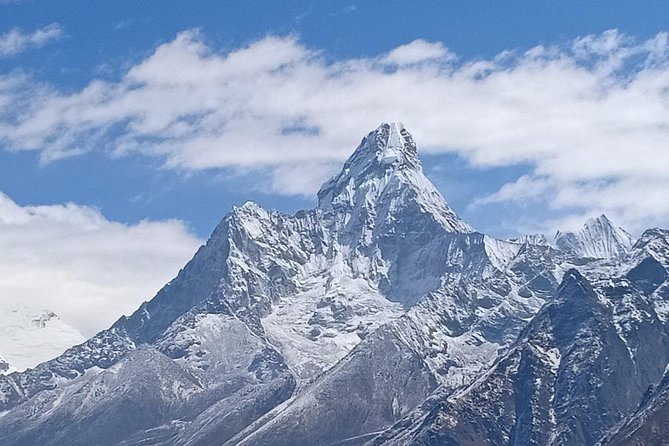
The Namche acclimatization day is one of the strongest parts of the plan. You do not simply sit indoors. A guide can take you toward Sagarmatha National Park for sunrise views of Everest, Lhotse, Nuptse, Ama Dablam, Thamserku, and Kongde.
You can also walk to Khumjung village, a Sherpa settlement at about 12,401 feet. The visit includes views of the village, Khumjung Hillary School, local Buddhist traditions, and high-altitude plant and animal life. The day is listed at about five hours, so it still gives your body work without sending you higher for a full trekking day.
I would treat this rest day seriously. Walk slowly, drink enough, and do not turn the optional hike into a race. The purpose is to help you continue safely, not to collect the most distance.
A few more treks around Kathmandu worth a look
- Annapurna Circuit Trek with Tilicho Lake
★ 5.0 · 368 reviews - Everest Base Camp Trekking – 13 Day
★ 5.0 · 365 reviews - Everest Base Camp Trek
★ 5.0 · 350 reviews - Everest Base Camp Trek -14 Days
★ 5.0 · 321 reviews
Tengboche offers the route’s best spiritual pause
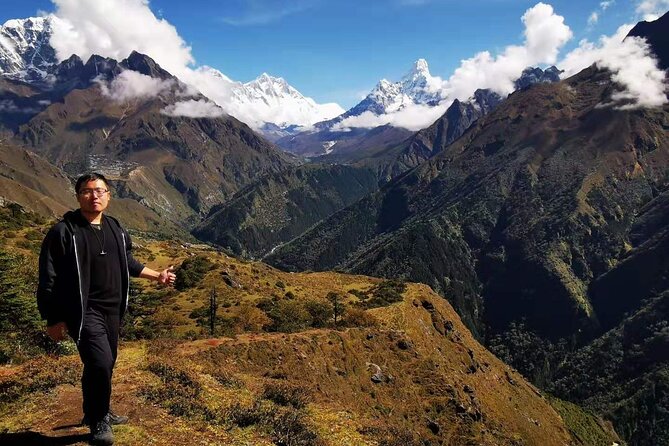
From Namche, the trail descends toward the Dudh Koshi River before climbing through rhododendron forest to Tengboche. The six-hour day includes views of Everest, Lhotse, Nuptse, Ama Dablam, Thamserku, and Kongde.
Tengboche Monastery is the main stop. It is the largest monastery in the region, and the setting gives you time to pause and look beyond the physical challenge of the trek. The prayer flags, mountain views, and religious setting add meaning to what could otherwise become a long sequence of climbs and meals.
The descent followed by a climb can feel harder than the distance suggests. You should save energy for the uphill section rather than rushing the morning.
Pangboche and Dingboche show life above the tree line
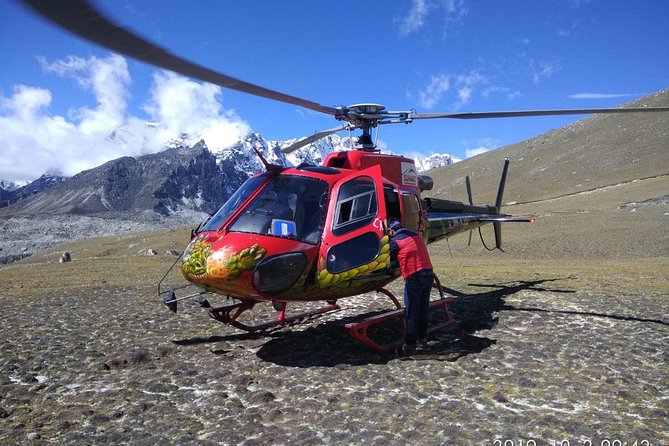
Day seven passes through forest, crosses the Imja River, and continues to Pangboche. The upper trail gives more open Himalayan views, and Pangboche Monastery adds another cultural stop.
The route then follows the Imja Valley and Lobuche River toward Dingboche. Here, fields are enclosed by stone walls to protect barley, buckwheat, and potatoes from cold winds and grazing animals. These walls are a practical reminder that mountain communities are not simply set dressing for a trek. People farm, worship, study, and work in difficult conditions.
Dingboche is another important acclimatization stop. You can take a hike toward Nagarjun Hill or Chukkhung Valley, with views of Makalu, Lhotse, Cholatse, Tawache, and Ama Dablam. The listed walking time is about five hours.
At this height, the best approach is steady and conservative. If you feel unwell, tell your guide. The schedule matters less than reaching the next stage safely.
Lobuche marks the route’s solemn high point
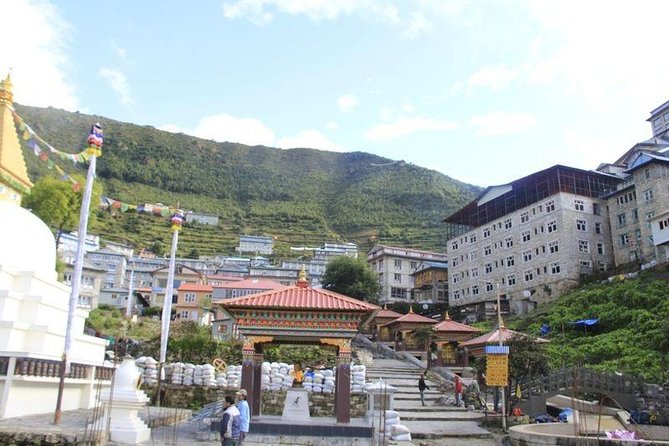
The walk to Lobuche takes about five hours. You climb gradually to Duglha, at the end of the Khumbu Glacier’s terminal moraine, then take a steeper trail to Chupki Lhara.
Here, stones and prayer flags honor Scott Fischer and Babu Chiri Sherpa, who died during Everest missions. This section gives the trek a serious pause. Everest is not only a symbol of achievement. It is also a place where ambition, risk, and loss are part of the story.
Beyond the memorials, the trail follows the Khumbu Glacier moraine. Khumbutse, Lingtren, Pumori, and Mahalangur Himal come into view. The route then becomes easier as you follow the valley into Lobuche.
Everest Base Camp is dramatic, but Kala Patthar gives the better view
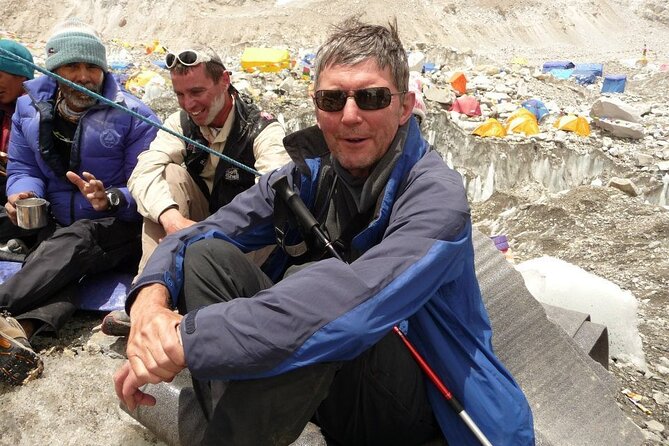
The walk from Lobuche to Everest Base Camp and back to Gorak Shep is listed at about six hours. You pass the area of the former Gorak Shep Lake, memorials connected with Indian mountaineers, rocky ground, moraine, and streams.
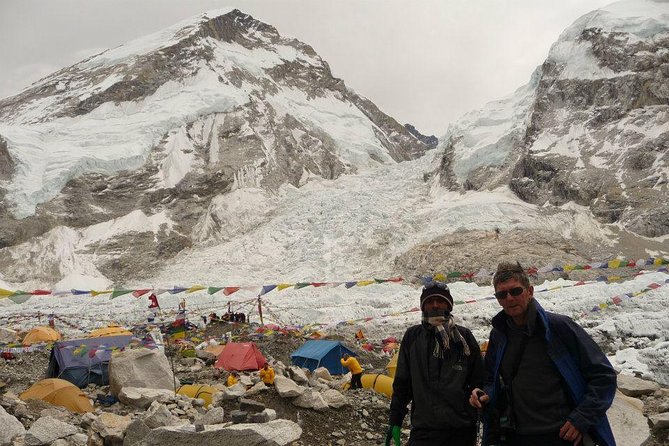
The high altitude makes this day strenuous. The path can be confusing in places, so staying close to your Sherpa guide matters. At Base Camp, brightly colored expedition tents may appear against the gray rock and ice, especially during the spring climbing season. You can see Nuptse, Khumbutse, and Pumori from the area.
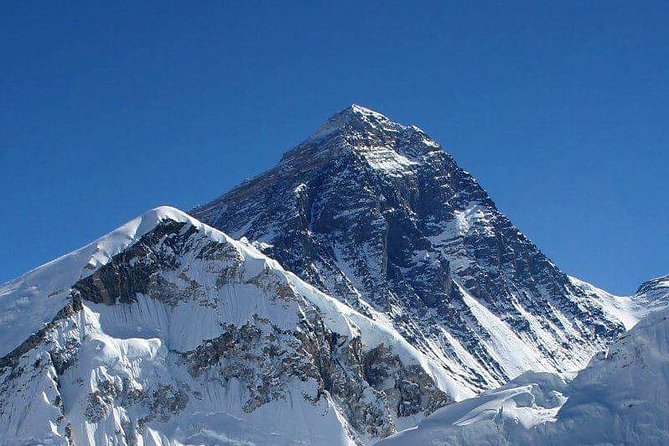
It is worth knowing what Base Camp is and is not. You reach the famous destination, but Mount Everest itself is not necessarily the best framed view from there. Kala Patthar usually delivers the more impressive panorama.
The next morning begins before dawn, with temperatures listed around minus 10 to minus 14 degrees Celsius and a chance of strong wind. From Kala Patthar, you get close, wide views of Everest, Lingtren, Khumbutse, and Changtse. The early start is uncomfortable, but the reward is the mountain scene most people picture when they think of an Everest trek.
The schedule says you return toward Pheriche after Kala Patthar. It also contains a partial note about people visiting Base Camp that day, so ask the operator to confirm the exact order before departure. Clear timing matters at this altitude.
The return route is easier on the eyes, not always on the legs
After the high point, you descend through rhododendron and juniper, cross a prayer-flag bridge over the Dudh Koshi, and follow the gorge through pine forest. You might see colorful pheasants and mountain goats.
The route passes Sansa, where you can again see Ama Dablam, Thamserku, and Nuptse, before continuing through forest to Namche Bazaar. The listed walking time is about six hours. Descending feels welcome, but tired knees and rocky ground still require care.
The following day takes you from Namche to Phakding in about five to six hours. Open sections, pine forest, snow-covered peaks, prayer stones, and prayer flags keep the return walk from feeling like a simple retracing of steps.
Phakding to Lukla is another five-hour day. The trail drops steeply in places, and shaky legs must deal with rocky terrain and suspension bridges over fast-flowing rivers. Reaching Lukla gives you a natural pause to look back at the past two weeks.
The final Kathmandu day gives you breathing room
You take an early flight from Lukla to Kathmandu on day 15. Once back in the city, you can rest, shop for souvenirs, or ask the guides for help exploring other areas.
That extra city day is useful because mountain flights can be disrupted by weather. It also gives you time to shift from cold mornings and basic trail routines back to urban Nepal. The final day includes airport transport about three hours before your scheduled flight.
Pickup is offered at the start, and airport transfer is also part of the stated plan at the end. Still, confirm the exact transport arrangements and flight timing before you go.
What $800 means for value
At $800 per person, the trip is priced attractively for a 16-day program that includes airport pickup, Kathmandu sightseeing, domestic flights in the schedule, guided trekking, accommodation arrangements, and a welcome dinner. However, the supplied details do not clearly list every included cost.
The Kathmandu sightseeing admissions are specifically excluded. The information also does not spell out all meals, permits, insurance, gear rental, porter arrangements, or extra accommodation costs. Do not assume those items are covered because the general price sounds broad. Ask for a written list.
The private format is useful if you want your own group rather than a large shared departure. Group discounts may reduce the cost for several people, so it is worth asking for the price for your group size.
The company has received strong praise for its guides. Shiva was described as kind, helpful, and good company. Keshab was praised for handling food, accommodation, and support throughout the trek. Rajesh also received warm praise as a guide during a difficult period. These personal relationships matter on a high-altitude route.
There are also warnings about communication and refunds. One unhappy customer reported that a trip ended two days early and that a promised refund did not arrive. Another described problems with the company owner after payment, although the guide was praised. These accounts do not erase the positive experiences, but they make written confirmation especially important.
Who should choose this Everest trek?
I would consider this trip if you want the classic Everest route, prefer a private group, and have moderate physical fitness. You should be comfortable walking roughly five to six hours on many days, including steep climbs, rocky descents, cold mornings, and thin air.
The program suits someone who wants more than mountain views. You get Kathmandu’s major religious sites, Sherpa villages, monasteries, memorials, agricultural fields, and Sagarmatha National Park. The route also gives you two planned acclimatization days, which is a major practical benefit.
I would hesitate if you need a tightly specified package with every cost already listed. I would also think twice if you have limited time flexibility, because the Lukla flights depend on weather and the high-altitude schedule can be affected by conditions.
Cancellation is free up to 24 hours before the start time. Inside that window, the payment is not refunded. If poor weather cancels the experience, you are offered another date or a full refund.
Should you book it?
Book this Everest Base Camp trek if the classic route, private format, and $800 starting price fit your plans, and if you are willing to verify the details before paying. The strongest reasons are the well-spaced acclimatization days, the Sherpa cultural stops, and the chance to reach Base Camp and Kala Patthar on one continuous journey.
Before booking, ask for the full inclusion list, the exact Base Camp and Kala Patthar schedule, refund procedures, and what happens if a flight is delayed. If the answers are clear, this can be a good-value way to reach one of Nepal’s great mountain destinations. If the answers remain vague, choose a better-documented option.
FAQ
How long is the Everest Base Camp trek?
The experience lasts approximately 16 days, including arrival and departure days, Kathmandu sightseeing, flights between Kathmandu and Lukla, the trek, acclimatization days, and the return to Kathmandu.
What is the price?
The listed price is $800 per person. Group discounts are offered, but the supplied information does not specify the discount amount.
Is airport pickup included?
Yes. A Vyas Treks & Expedition representative picks you up at Tribhuvan International Airport on arrival. Airport transport is also arranged for your departure.
Is this a private tour?
Yes. Only your own group participates in the tour.
Which places are visited in Kathmandu?
The city tour includes Kathmandu Durbar Square, Pashupatinath, Swayambhunath, and Bouddhanath. Kathmandu sightseeing admission fees are not included.
Where does the trek begin?
The trekking section begins in Lukla after a flight of about 40 minutes from Kathmandu to Tenzing-Hillary Airport.
Are there acclimatization days?
Yes. You spend an acclimatization day in Namche Bazaar and another in Dingboche. Optional hikes include Khumjung village, Nagarjun Hill, and Chukkhung Valley.
What is the cancellation policy?
You can cancel at least 24 hours before the experience for a full refund. Cancellations within 24 hours are not refunded. If poor weather cancels the experience, you are offered another date or a full refund.
Recently added around Kathmandu
- Ghorepani Poon Hill Trek★ 5.0 · 16 reviews
- Amazing 1 Day Trekking Experience in Kathmandu Nepal★ 5.0 · 24 reviews
- Private Manaslu Circuit Trek at Himalayas★ 5.0 · 3 reviews
- Ghorepani Poonhill Trek★ 5.0 · 5 reviews
- Upper Mustang Trekking★ 5.0 · 2 reviews
- Upper Mustang Trekking★ 3.0 · 2 reviews
- Upper Mustang Trekking★ 5.0 · 4 reviews
- Upper Mustang Trek★ 5.0 · 5 reviews
Everest Base Camp Treks, compared.






Browse the lists this tour appears in