
REVIEW · KATHMANDU
Everest Base Camp Trekking 14 days
The world’s highest mountain awaits. This 14-day Everest Base Camp trek combines a scenic flight to Lukla, Sherpa villages, Buddhist monasteries, high mountain trails, and a demanding walk to 5,364 meters. I like the careful acclimatization plan, with rest days in Namche Bazaar and Dingboche, and I like that meals, lodges, flights, porters, and a licensed guide are included.
The main caution is altitude. You spend several nights above 4,000 meters, and the walk to Base Camp is long and tiring. Flights to Lukla can also be delayed by weather, so you need patience, good insurance, and a flexible attitude.
Key Points Before You Book
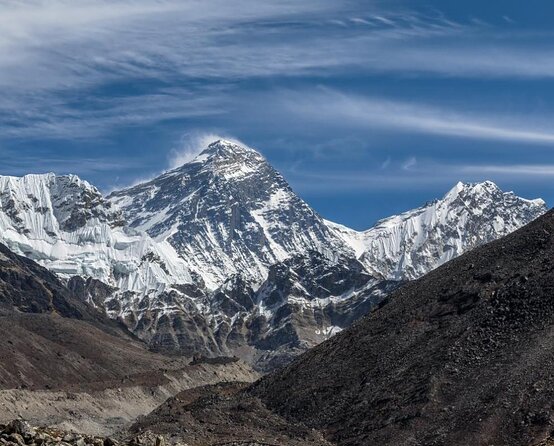
- The route reaches 5,364 meters: Everest Base Camp is the main goal, with an optional early hike to Kala Patthar at about 5,545 meters for the finest mountain views on the itinerary.
- Two acclimatization days help: You spend a full day around Namche Bazaar and another around Dingboche before heading higher.
- The price covers major costs: At $1,440 per person, the package includes Kathmandu hotel nights, domestic flights, trekking lodges, three meals a day during the trek, a guide, and porter support.
- Expect simple mountain lodging: Tea houses use twin-share rooms, and bathrooms may be private or shared. Hot showers and battery charging cost extra.
- The group is limited to 12 people: That is small enough for a more personal trip while still keeping the price below many private arrangements.
- The most praised service is the staff: Guides named in past trips include Ramesh, Bishnu Tamang, and Lakpa. The strongest comments focus on organization, kindness, and safety.
What the $1,440 Price Really Covers
At first glance, $1,440 is a significant price for a two-week trip. Once you separate the pieces, it becomes a reasonable package for a supported Everest trek.
You get two nights in a three-star Kathmandu hotel, with breakfast, plus airport pickup and drop-off. The Kathmandu to Lukla and return flights are included, along with airport taxes. Those flights are essential because the road does not take you directly to the trailhead.
During the trek, the price includes local lodge accommodation and breakfast, lunch, and dinner each day. A licensed English-speaking trek leader accompanies the group, and one insured porter is assigned for every two people. Staff wages, food, accommodation, domestic flights, and insurance are included for the trekking team.
A sleeping bag and trekking map are provided. You return the sleeping bag after the trip, which saves you from buying or carrying one from home.
You still need to budget for a Nepal visa, international flights, travel and health insurance, emergency helicopter rescue insurance, drinks, bottled or mineral water, hot showers, battery charging, tips, and meals in Kathmandu beyond the included breakfasts. A single room supplement costs $100.
The value is strongest if you want a fairly organized trip and do not want to arrange each lodge, meal, flight, porter, and permit yourself. It is not a luxury trek. You are paying for logistics and support, not polished rooms or hotel-style service in the mountains.
More Everest Base Camp Treks in Kathmandu:
- Everest Base Camp Trek – 14 Days
★ 5.0 · 1,499 reviews - Everest Base Camp Trek
★ 5.0 · 842 reviews - Everest Base Camp Trekking
★ 5.0 · 485 reviews
Kathmandu Arrival and the Early Morning Start
Day one is deliberately light. A representative meets you at the airport and takes you to the Kathmandu hotel. After you freshen up, the team provides trip information and gives you time for last-minute shopping.
The package includes a welcome dinner and a farewell dinner. Lunch and dinner in Kathmandu are not otherwise included, so keep some Nepalese rupees or small cash available.
The meeting time is 6:30 am. That early start matters on the Lukla flight day, when you need to be ready for airport transfers and changing flight conditions. The trip provider offers mobile tickets and confirmation at booking, making the basic arrival process straightforward.
Use Kathmandu for practical preparation. Check your boots, charge batteries, organize your duffel, and buy anything missing before heading into the Khumbu region. The suggested equipment list is long because conditions change quickly at altitude.
Lukla to Phakding: A Short First Walk
The flight from Kathmandu to Lukla takes about 40 minutes. The landing strip at Lukla is the famous gateway to the Everest region, but the schedule is controlled by mountain weather. Delays are possible, and your return flight can also be affected.
From Lukla, you walk for about three to four hours to Phakding at 2,652 meters. This is a useful first day because you begin walking without immediately pushing to a very high elevation.
The route follows the Dudh Kosi valley. You sleep in a local guesthouse and receive all three meals. The lodging is basic, but the early stop lets your body begin adjusting before the harder climb to Namche Bazaar.
Namche Bazaar and Two Useful Acclimatization Stops
On day three, the trail climbs to Namche Bazaar at 3,440 meters. The walk takes about five to six hours and passes through Monjo, the entrance point for Sagarmatha National Park.
Namche is more than a mountain village. You can find government offices, ATMs, internet cafes, shops, restaurants, a bakery, and a colorful market. It is one of the last places on the route where you can handle practical errands with relative ease.
The full acclimatization day is well used. The planned outing includes the Everest View Hotel, Khumjung and Khunde valleys, a Hillary museum, and a local school. You gain altitude during the day and return to Namche to sleep, which is a sensible pattern for adjusting.
I especially like this pause because it gives the trek some human texture. You are not simply marching toward Base Camp. You see Sherpa communities, monasteries, schools, shops, and daily life in the Khumbu.
A few more treks around Kathmandu worth a look
- Annapurna Circuit Trek with Tilicho Lake
★ 5.0 · 368 reviews - Everest Base Camp Trekking – 13 Day
★ 5.0 · 365 reviews - Everest Base Camp Trek
★ 5.0 · 350 reviews - Everest Base Camp Trek -14 Days
★ 5.0 · 321 reviews
Tengboche Monastery and the Walk to Dingboche
From Namche, the trail leads to Tengboche, also spelled Tyangboche, at about 3,867 meters. The walk takes five to six hours. The main cultural stop is the old Tengboche Monastery, one of the most important Buddhist sites along the route.
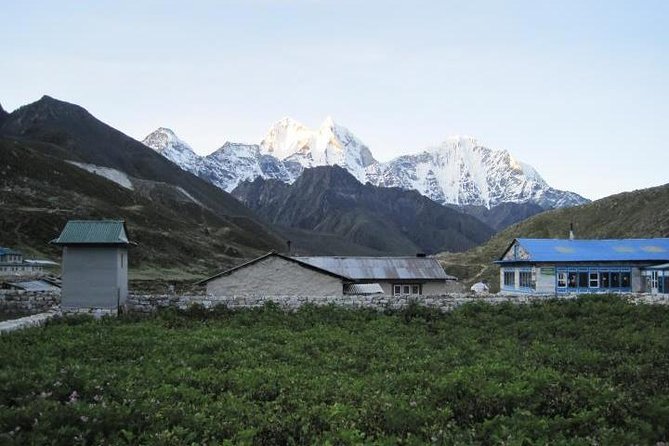
The next day takes you to Dingboche at about 4,360 meters. The trail passes through rhododendron forest and opens to views of Ama Dablam and Thamserku. Ama Dablam is one of the most recognizable peaks in the region, and its sharp profile gives this section much of its visual appeal.
Dingboche marks a real change in the trip. The air is thinner, nights are colder, and the walking feels harder even when the distance is not extreme. You get another acclimatization day here, with hiking around Dingboche and Chhukung.
That rest day is not wasted time. At this altitude, a slower schedule is part of the safety plan. The itinerary does not rush directly from Namche to Base Camp, and that is one of its strongest features.
Lobuche and the Khumbu Glacier
Day eight takes you to Lobuche at about 4,940 meters. The listed walking time is two to four hours, though the high elevation can make a short day feel substantial.
The route climbs beside the Khumbu Glacier, with broad mountain views in several directions. You are now approaching the serious upper section of the trek. Accommodation remains in a tea house, and meals continue to be included.
At this point, comfort becomes basic. Twin-share rooms are standard, and bathrooms may be shared. Hot water is available for an extra fee, and charging a phone or camera battery can also cost extra. Pack a headlamp, spare batteries, wet wipes, and a warm sleeping bag instead of expecting hotel conveniences.
Everest Base Camp from Gorak Shep
The longest and most demanding day is day nine. You walk from Lobuche to Gorak Shep at about 5,170 meters, leave your luggage there, eat lunch, and continue to Everest Base Camp at 5,364 meters.
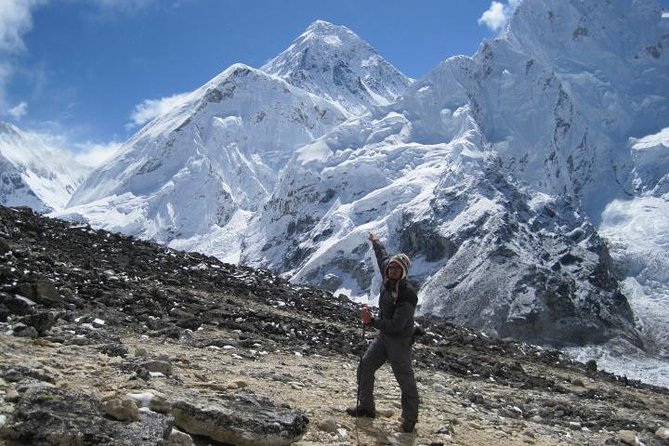
The full outing takes about eight to nine hours. The trail reaches the Khumbu Icefall area, with views toward Everest and nearby peaks. Base Camp is a powerful destination, but it is important to understand what you will see: this is the approach area used by expeditions, not a summit viewpoint and not a comfortable resort.
You return to Gorak Shep for the night. The combination of distance and altitude makes this a day to take slowly. Stay close to the guide, drink regularly, and do not treat the schedule as a race.
Altitude sickness is a serious concern on this route. The guide carries a first aid kit, and the equipment list suggests discussing Diamox with a medical professional before the trip. Travel and health insurance with emergency helicopter rescue cover is strongly recommended and is not included in the package.
Kala Patthar and the Long Return
Day ten offers an optional early hike to Kala Patthar. The itinerary lists the elevation as roughly 5,545 meters, with another reference to 5,555 meters. From the top, you can see the south face of Everest, Changtse, Mount Pumori, and sections of the western ridge route.
This is the best high viewpoint in the program, but it is also an exhausting addition after the Base Camp walk. If you are feeling unwell, skipping it is the sensible choice. The itinerary then returns to Gorak Shep before descending to Pheriche at about 4,730 meters.
The descent feels easier for many people because the air gradually thickens. Still, the trail is rough, and tired knees can make downhill walking difficult. Trekking poles are a good idea, especially on the return.
From Pheriche, you walk back to Tengboche in four to five hours. The following day continues to Lukla in about five to six hours. The return uses familiar sections of trail, but the lower altitude and the sense of completing the goal can make the final days more enjoyable.
Food, Tea Houses, and Daily Comfort
Three meals are provided each trekking day from a selected menu based on what the lodge has available. The food is described as local, healthy, and often prepared with ingredients grown by local families.
Do not expect elaborate presentation. Meals are practical fuel for long walking days. Drinks, bottled water, cold drinks, alcoholic beverages, and other beverages cost extra. Water purification tablets are included on the recommended packing list, so bring a reliable way to treat water.
Kathmandu accommodation is more comfortable, with a three-star hotel and breakfast. In the mountains, tea houses are simple and usually use twin-share rooms. Some locations have private bathrooms, while others rely on shared facilities.
Hot water may be available, but it usually costs extra during the trek. Battery charging can also carry a fee, so conserve power and bring spare batteries or a portable charger if you have one.
The Guides and Porter Arrangement
The personal service is one of the best reasons to consider this trip. Past itineraries have included guides named Ramesh and Bishnu Tamang, with Lakpa working as a porter on one trip. Bishnu Tamang was described as having more than 25 years of guiding experience, while Ramesh was praised for being helpful and attentive to safety.
The arrangement provides one porter for two people. That makes a proper duffel bag important. Keep your daypack light with water, warm layers, rain protection, snacks if you want them, sunscreen, a camera, and personal medicines.
Tips for the guide, porter, and driver are not included. You should plan for these separately and ask the operator for current local guidance before departure.
The small maximum group size of 12 is another useful feature. It should make communication easier than on a large commercial departure, though the actual feel of the group depends on the booking.
Who Should Choose This Trek?
This trip suits you if you want Everest Base Camp with the main arrangements handled for you. It is a good fit for someone who values a local guide, porter support, included meals, and a clear acclimatization schedule.
You need moderate physical fitness and a willingness to walk for several hours on consecutive days. The route is not suitable for someone seeking a relaxed sightseeing holiday or comfortable hotel rooms every night.
You should also be comfortable with uncertainty. Weather can delay Lukla flights, and an early return, late departure, or extra Kathmandu night can create costs outside the package. Good insurance and a few spare days are sensible, even though the advertised schedule is 14 days.
Spring, from March through May, and autumn, from September through November, offer the best stated conditions and mountain views. Winter can bring fewer people but harsher temperatures. The June through August monsoon period brings rain, though it may appeal to someone interested in mountain plants.
Should You Book This Everest Base Camp Trek?
I would choose this trek if I wanted a well-supported first Everest Base Camp experience without paying for a private luxury program. The price covers the major moving parts, and the two acclimatization days show good practical judgment.
I would not book it without insurance, warm gear, and a realistic view of tea house conditions. Before paying, confirm current Lukla flight arrangements, the exact guide assignment, meal details, and how weather delays are handled.
The strongest reason to book is the combination of organized support and local contact. The strongest reason to hesitate is the altitude and the limited comfort. If you are ready for both, this is a solid way to reach Everest Base Camp and experience the Sherpa communities along the trail.
FAQ
How long is the Everest Base Camp trek?
The scheduled experience lasts 14 days, including arrival and departure days in Kathmandu.
What is the highest point on the itinerary?
Everest Base Camp is listed at 5,364 meters. The optional Kala Patthar hike reaches about 5,545 meters, with another itinerary reference listing 5,555 meters.
Are flights between Kathmandu and Lukla included?
Yes. The Kathmandu to Lukla and Lukla to Kathmandu flights, including airport taxes, are included.
What meals are included?
Breakfast, lunch, and dinner are included during the trek. Kathmandu hotel breakfasts are also included. Lunch and dinner in Kathmandu are not included.
Is accommodation private?
No. Trekking accommodation is generally in twin-share tea house or lodge rooms. Some locations have private bathrooms, while others use shared bathrooms.
Is travel insurance included?
No. Travel and health insurance, including emergency helicopter rescue insurance, must be arranged separately. The operator strongly recommends emergency rescue coverage.
Recently added around Kathmandu
- Ghorepani Poon Hill Trek★ 5.0 · 16 reviews
- Private Manaslu Circuit Trek at Himalayas★ 5.0 · 3 reviews
- Amazing 1 Day Trekking Experience in Kathmandu Nepal★ 5.0 · 24 reviews
- Upper Mustang Trekking★ 5.0 · 2 reviews
- Ghorepani Poonhill Trek★ 5.0 · 5 reviews
- Upper Mustang Trekking★ 3.0 · 2 reviews
- Upper Mustang Trekking★ 5.0 · 4 reviews
- Upper Mustang Trek★ 5.0 · 5 reviews
Everest Base Camp Treks, compared.






Browse the lists this tour appears in