
REVIEW · KATHMANDU
Everest Base Camp Trekking – 12 Days
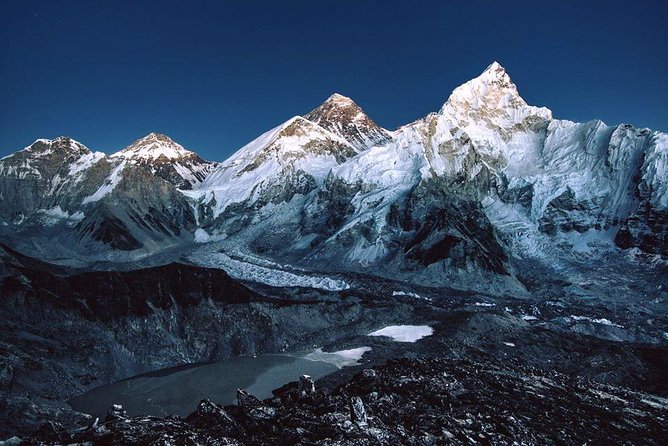
The world’s highest mountain is only part of the story. This 12-day trek takes you from Kathmandu to Lukla, through Sherpa villages and Buddhist monasteries, and up to Everest Base Camp, with two planned acclimatization days to help your body handle the altitude. I like the local Sherpa guide and porter support, and I like that permits, lodge rooms, staff costs, and Lukla flights are included in the $1,900 price.
The main concern is the tight schedule. You reach Gorak Shep and Everest Base Camp on day eight, climb Kala Pattar the next morning, and then make a long descent toward Namche. Strong fitness and flexible travel plans matter here, especially because weather can delay flights between Kathmandu and Lukla.
Key points to know before booking
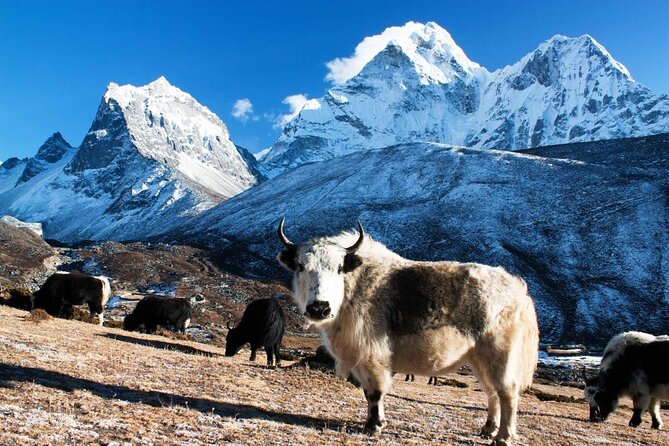
- Lukla starts the real adventure: The trek begins with a 45-minute mountain flight from Kathmandu, followed by a short walk to Phakding.
- Two acclimatization days are built in: You spend one day around Namche and another around Dingboche, with optional hikes to Khumjung, Chhukung Valley, or Nagerjun.
- The highest point is Kala Pattar: At 5,545 meters, this climb is higher than Everest Base Camp and provides the trip’s major high-altitude viewpoint.
- Tea houses keep the trip local: Eleven nights are in twin-share lodge rooms, with simple beds, family-run hospitality, and meals along the trail.
- The price covers major essentials: Round-trip Lukla airfare, permits, an English-speaking licensed guide, porters, accommodation, staff expenses, and taxes are included.
- Flight delays can reshape the trip: Mountain weather may cancel or postpone flights, so one or two extra days at the end of your Nepal visit are strongly advised.
Why this 12-day route works
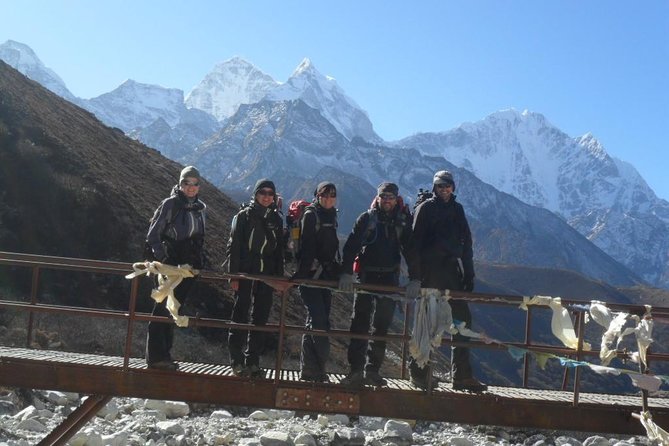
The classic Everest Base Camp route is appealing because it gives you more than a mountain finish line. You pass through villages such as Phakding, Namche Bazaar, Tengboche, Dingboche, Lobuche, and Gorak Shep, with snowy peaks visible along the way.
I especially like the balance between walking and cultural stops. Buddhist prayer wheels, mani stones, stupas, and monasteries are part of daily life in the Khumbu region. The trail is not simply a long march toward Everest. It is also a passage through Sherpa communities and high mountain traditions.
That said, 12 days is a brisk schedule for an itinerary reaching more than 5,500 meters. The walking distances are manageable for a fit person, but the altitude changes the effort. A six-hour walk at 3,500 meters can feel very different from a six-hour walk at sea level.
The route includes two acclimatization days, which is essential. At Namche, you hike around Khumjung. At Dingboche, you can choose the Chhukung Valley or Nagerjun. These are not rest days in the usual sense. The point is to climb higher during the day and sleep lower afterward, giving your body time to adjust.
More Everest Base Camp Treks in Kathmandu:
- Everest Base Camp Trek – 14 Days
★ 5.0 · 1,499 reviews - Everest Base Camp Trek
★ 5.0 · 842 reviews - Everest Base Camp Trekking
★ 5.0 · 485 reviews
Day 1: Kathmandu to Lukla, then Phakding
The trip begins with a 45-minute flight from Kathmandu to Lukla. Lukla is the gateway to the Khumbu region, and this flight sets the tone immediately: mountain travel here depends on weather, timing, and patience.
After landing, you walk about 8 kilometers to Phakding, at 2,610 meters. The four-hour trek is relatively gentle compared with what follows, making it a sensible first day after the flight.
Phakding is your first night in a tea house. Rooms are generally simple, with two narrow beds in a twin-share room. The point is warmth, food, and a place to sleep, not hotel comfort.
Day 2: The climb to Namche Bazaar
The 11-kilometer walk to Namche Bazaar takes about six to seven hours and reaches 3,441 meters. You pass through Monjo and Jorsale before continuing toward the main Sherpa trading town of the Khumbu.
Namche is one of the most important stops on the route because it serves as both a cultural center and an acclimatization base. The climb is a major step up from Phakding, so the pace should be controlled. I would not treat this day as a race.
The town gives you a useful change of pace from the smaller villages. You have an overnight stay here, followed by the first acclimatization day, which helps break up the ascent.
Day 3: Khumjung acclimatization day
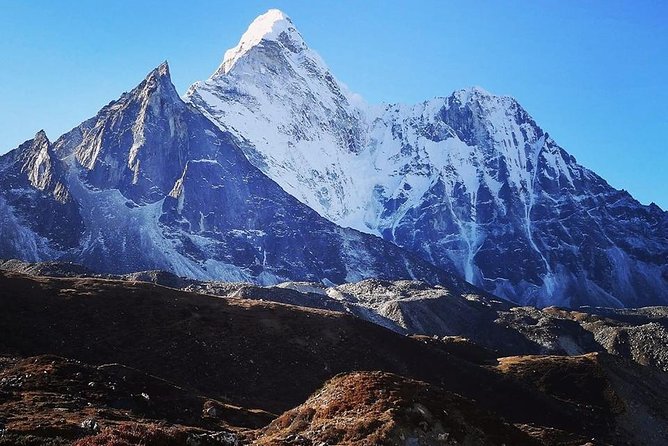
The planned hike around Khumjung covers about 4 kilometers and takes three to four hours, reaching 3,790 meters. This is a short day by distance, but it has a serious purpose.
You are gaining height without moving your sleeping altitude too far upward. The route also lets you see more of the area around Namche rather than spending the entire day indoors.
I like this part of the program because it treats altitude as a real concern instead of an afterthought. Still, you should remember that a short hike does not make altitude sickness impossible. Walk slowly, take breaks, and tell your guide if you feel unwell.
A few more treks around Kathmandu worth a look
- Annapurna Circuit Trek with Tilicho Lake
★ 5.0 · 368 reviews - Everest Base Camp Trekking – 13 Day
★ 5.0 · 365 reviews - Everest Base Camp Trek
★ 5.0 · 350 reviews - Everest Base Camp Trek -14 Days
★ 5.0 · 321 reviews
Day 4: Tengboche and its monastery setting
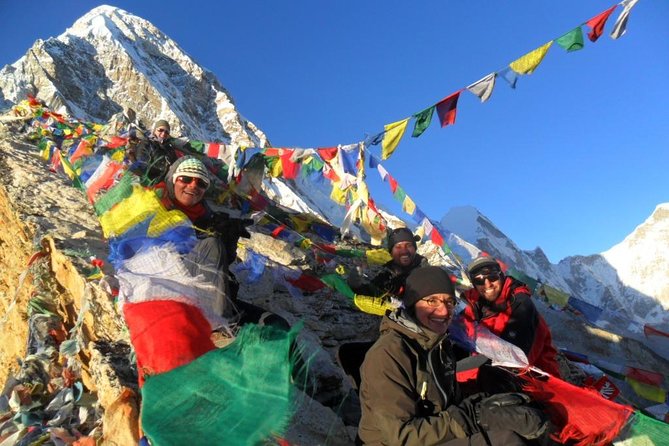
The trail to Tengboche covers about 11 kilometers in five to six hours. At 3,864 meters, Tengboche is only slightly higher than Namche, but the route continues to provide wide mountain views and a gradual rise.
Tengboche is known for its monastery setting, making it one of the most meaningful cultural stops on the trek. Buddhist practice is visible throughout this part of Nepal, from prayer wheels to mani stones and stupas.
There is a simple etiquette rule worth remembering. Pass religious objects with your right side nearest to them, moving clockwise. Do not sit or stand on mani stones, stupas, worship tables, or other religious symbols.
Day 5: Dingboche at 4,400 meters
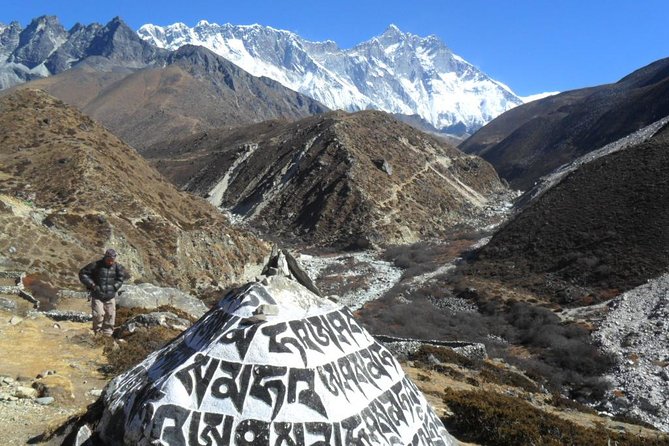
The walk to Dingboche is about 10 kilometers and takes roughly five hours. At 4,400 meters, the altitude becomes much more noticeable, even though the distance is not extreme.
Dingboche is another important overnight stop because the next day is set aside for acclimatization. You will be spending more time above 4,000 meters, so steady pacing matters more than speed.
The tea house system is particularly useful here. Meals are prepared where you stay, and the dining area provides a place to rest after walking. Accommodation remains basic, but that simplicity is part of the experience and keeps you close to local life.
Day 6: Chhukung Valley or Nagerjun
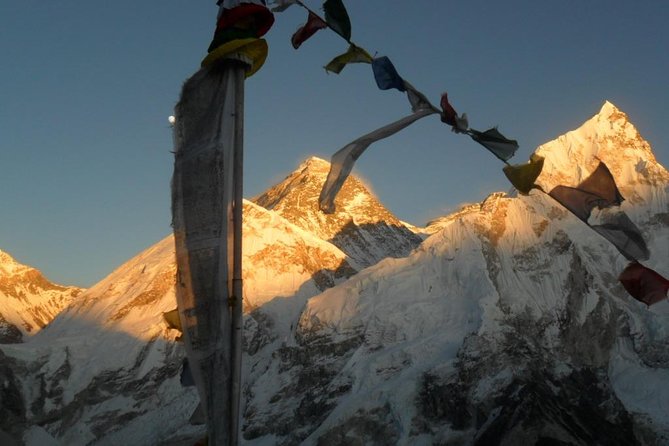
The second acclimatization day includes a three to four-hour hike of about 4 to 5 kilometers. You can choose the Chhukung Valley or Nagerjun, with the route reaching around 4,850 meters.
This is a valuable day because the following stages push higher and become more demanding. I would use it to walk slowly, drink regularly, and pay attention to how your body responds.
The itinerary gives you a choice of hike, but it does not provide enough detail to promise a particular route or view. Your guide will be the right person to explain the day’s conditions and recommend the sensible option.
Day 7: Lobuche and the high route
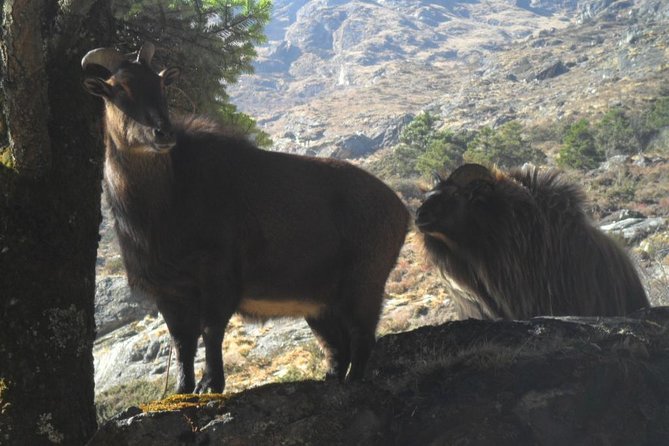
The trail to Lobuche is approximately 11 kilometers and takes about six hours. At 4,915 meters, the air is thin and the walk can feel much harder than the distance suggests.
This is one of the days when the value of an experienced licensed guide becomes clear. A guide can help set a slow pace, monitor the group, and advise you if symptoms appear.
Lobuche is a practical stop before the push to Gorak Shep. Do not expect a relaxed hiking day here. Keep your pack light, use the porter service wisely, and save energy for the next morning.
Day 8: Gorak Shep and Everest Base Camp
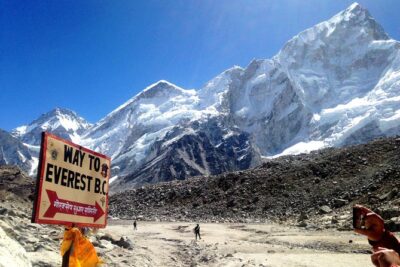
Day eight is the main goal for many people. You walk to Gorak Shep at 5,130 meters, then continue on a day hike to Everest Base Camp. The full distance is listed at about 12 kilometers, taking around eight hours.
This is a long, high-altitude day. You are not simply walking to a sign and turning around on flat ground. The route to Base Camp and back to Gorak Shep requires patience, especially when each uphill step feels slower.
Gorak Shep is your overnight base, and the accommodation is likely to feel more basic than in lower villages. The reward is being close to the final climb toward Kala Pattar and having the Everest Base Camp walk built into the schedule.
Day 9: Kala Pattar, then Pheriche
The itinerary reaches its highest point on the climb to Kala Pattar, at 5,545 meters. You then descend to Pheriche, at 4,371 meters, with a total distance of about 15 kilometers over seven hours.
Kala Pattar is higher than Everest Base Camp, and this ascent is one of the hardest parts of the trip. The itinerary presents it as a major viewpoint, but the supplied details do not promise a particular sunrise or weather condition. Mountain views depend on the day.
The descent to Pheriche is welcome from an altitude perspective, but it is still a long day. Your legs have already worked hard at high elevation, so good footwear and a measured pace are important.
Days 10 to 12: A fast return to Kathmandu
Day 10 takes you back to Namche, covering about 18 kilometers in six to seven hours. Much of the route is downhill or follows ground already covered, but 18 kilometers is still a substantial day.
Day 11 continues to Lukla, with about 19 kilometers of walking over six to seven hours. This is another long stage, and it leaves little spare time if the group has fallen behind.
Day 12 is the return flight from Lukla to Kathmandu. The listed flight time is about 45 minutes, but the schedule is not fully in your control. Bad weather can delay or cancel domestic mountain flights, so I would keep one or two extra days at the end of the wider Nepal trip.
If a flight is canceled, the operator says it will try to place you on the next possible flight. A helicopter can be arranged in an emergency or upon request, but the stated cost is around $3,500 and can carry four to five people per flight. That cost is not included.
Tea houses, meals, and daily comfort
The package includes 11 nights in local lodges with twin-share rooms. You should expect clean, simple accommodation with two narrow beds rather than private hotel-style comfort.
The family-run tea houses are one of the better parts of the route. They offer a direct connection with local communities, and the hospitality is an important part of the Khumbu experience. You will be welcomed warmly, but you should still pack with limited facilities in mind.
Three meals a day are included during the trek. Breakfast and dinner are served at the lodge where you sleep, while lunch is taken at a tea shop along the route. Food is described as simple, freshly cooked, and hygienic, with Nepali, Tibetan, Sherpa, and international choices.
Drinks are extra. That includes soft drinks, mineral water, boiled water, and beer. Boiled water costs a small additional fee, and purification tablets are recommended. Bottled water is available in many places, but plastic disposal is a concern, so reusable bottles and water treatment are the more responsible choice.
Lunch and dinner in Kathmandu are not included. A budget of $10 to $14 per meal at tourist restaurants is suggested for city meals. Accommodation in Kathmandu is also separate, so you need to add those costs before judging the total price.
What the $1,900 price really includes
At $1,900 per person, the price is not just paying for a walking route. It includes round-trip airfare between Kathmandu and Lukla, airport tax, required permits, Sagarmatha National Park fees, TIMS permits, and other official documentation.
You also receive an English-speaking Sherpa guide who is government trained and licensed. One porter is provided for every two trekkers, and staff costs include salaries, insurance, equipment, food, and accommodation. A duffle bag and first aid medicine kit are included as well.
That is a strong package for a high-altitude trek, provided you understand what remains outside the price. Personal travel insurance, the Nepal entry visa, city accommodation, city meals, beverages, and customary tips are extra.
The porter arrangement is particularly useful. You still need to carry a day pack with personal essentials, but you do not have to carry the full load for 12 days.
Guides, pace, and group experience
The activity is private, meaning only your group participates. That can make a major difference on a demanding route. Your guide can set the pace around your group rather than matching a large mixed party.
One named guide in the feedback is Tenzin, a female guide who led two women on the trek. That detail is useful if you prefer a female guide or want to ask the company about guide preferences when booking. The wider package promises English-speaking, licensed Sherpa guides, but a specific guide should not be assumed unless confirmed.
The pace was described as slow and leisurely, which is exactly what I would want at altitude. Do not confuse a slow pace with an easy trek. The itinerary still includes long days, steep climbs, and several nights above 4,000 meters.
Fitness, insurance, and safety planning
The operator requires a strong physical fitness level. The supplied guidance also says that a reasonable level of fitness should make the trek manageable, but these points are not contradictory. You do not need to be an elite athlete, yet you do need to prepare for repeated walking days at altitude.
Training should focus on long uphill walks, steady downhill walking, and carrying a day pack. The most demanding portions are not always the longest by distance. Thin air can make a moderate climb feel serious.
Personal travel insurance is not included, and suitable cover is strongly recommended. Your policy should include emergency evacuation, injury, medical treatment, lost baggage, and liability, along with the activities you plan to undertake in Nepal.
A helicopter evacuation can be organized in an emergency, but you should not assume the cost is covered unless your policy confirms it. Read the policy carefully before you leave home.
Best seasons and weather risks
The preferred seasons are September through December and March through May. These months are described as offering sunny, warm conditions and strong mountain views.
June through August can also be beautiful, but monsoon rain may affect the trek. The most immediate weather concern is often the flight to Lukla, since poor conditions can create long airport waits or cancellations.
The cancellation policy is strict for personal changes: the experience is non-refundable and cannot be amended for any reason. If poor weather cancels the activity, you are offered a different date or a full refund. If the minimum number of participants is not met, you are offered a different date or experience, or a full refund.
Should you book this Everest Base Camp trek?
I would choose this trek if you want a classic Everest Base Camp route with major logistics handled in advance. The inclusion of flights, permits, tea house accommodation, a licensed guide, porters, and staff support gives the $1,900 price real value.
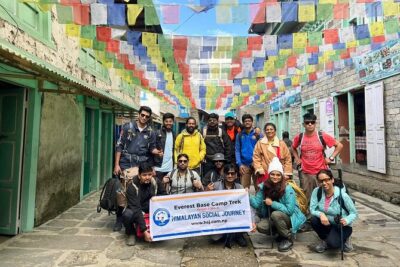
This is best for someone who can walk for six to eight hours, accept basic lodging, and stay flexible when mountain weather changes plans. It is also a good fit if you like the idea of a private group and want the option of a female guide such as Tenzin.
I would think twice if you have a fixed onward flight immediately after day 12, dislike shared rooms, or expect a relaxed holiday. Build in extra time, arrange strong insurance, and treat the acclimatization days as essential rather than optional. If you can accept those conditions, this route offers a direct and well-supported way to reach Everest Base Camp while seeing much more than the mountain itself.
FAQ
How long is the Everest Base Camp trek?
The experience lasts approximately 12 days, beginning in Kathmandu and ending back at the Kathmandu meeting point after the return flight from Lukla.
Where does the trek begin?
The meeting point is in Thamel, Kathmandu. The trekking portion begins after the flight from Kathmandu to Lukla.
Is accommodation included?
Yes. Eleven nights in local lodges are included, using twin-share rooms. Accommodation in Kathmandu is not included.
Are meals included during the trek?
Yes. Three meals a day are included during the Everest Base Camp trek. Lunch and dinner in the cities are not included.
Are flights to Lukla included?
Yes. Round-trip airfare between Kathmandu and Lukla is included, along with airport tax.
What permits and fees are included?
Sagarmatha National Park fees, TIMS permits, required permits, official documentation, and government and local taxes are included.
What level of fitness is required?
You should have a strong physical fitness level. The itinerary includes several six to eight-hour walking days and reaches altitudes above 5,500 meters.
What happens if the Lukla flight is delayed or canceled?
Mountain weather can delay or cancel flights. The operator will try to place you on the next possible flight, but you are responsible for extra costs during delays. One or two additional days at the end of your Nepal trip are advised.
Recently added around Kathmandu
- Ghorepani Poon Hill Trek★ 5.0 · 16 reviews
- Private Manaslu Circuit Trek at Himalayas★ 5.0 · 3 reviews
- Amazing 1 Day Trekking Experience in Kathmandu Nepal★ 5.0 · 24 reviews
- Ghorepani Poonhill Trek★ 5.0 · 5 reviews
- Upper Mustang Trekking★ 5.0 · 2 reviews
- Upper Mustang Trekking★ 3.0 · 2 reviews
- Upper Mustang Trekking★ 5.0 · 4 reviews
- Upper Mustang Trek★ 5.0 · 5 reviews
Everest Base Camp Treks, compared.




Browse the lists this tour appears in