
REVIEW · KATHMANDU
Everest Base Camp Trek
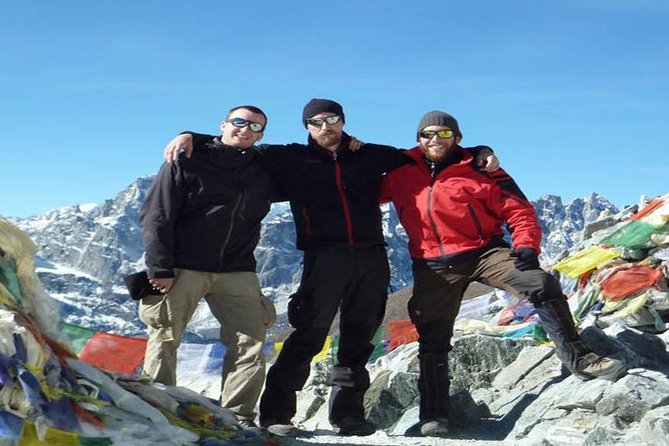
The mountains start before the trail. This 15-day Everest Base Camp trek combines the famous Lukla flight, Sherpa villages, high Himalayan views, and a guided route to the foot of Everest. I like that your guide and porters handle the daily practical work, and I like the built-in acclimatization days at Namche and near 5,000 meters. The main catch is altitude: this is a serious physical challenge, not a scenic stroll with a few hills.
The price of $1,408 per person covers a great deal, including domestic flights, permits, meals, accommodation, porters, a sleeping bag, down jacket, and airport transfers. I also like that this is a private small-group trip, so your pace can be adjusted. Still, international flights, insurance, emergency evacuation, personal drinks, hot showers, and other extras remain your responsibility.
Key points to know before booking
- Lukla begins the adventure: The short flight from Kathmandu is exciting, weather-dependent, and central to the whole route.
- Two acclimatization days matter: Rest days include optional hikes to places such as Khumjung, Khunde, the Everest View Hotel area, Thame, and Nagarkhang Peak.
- Porters carry the main load: You receive a duffle bag, down jacket, and four-season sleeping bag, while porters carry your trek gear.
- The hardest section comes late: Glacial walking, steep climbs, cold, and thin air make the approach to Base Camp demanding.
- Kalapatthar provides the big view: The early climb is tough, but it is the trip’s major viewpoint for Himalayan peaks.
- A spare Kathmandu day protects the schedule: Lukla flights can be delayed or canceled by weather, so the final free day is useful insurance.
Why this Everest trek works for the right person
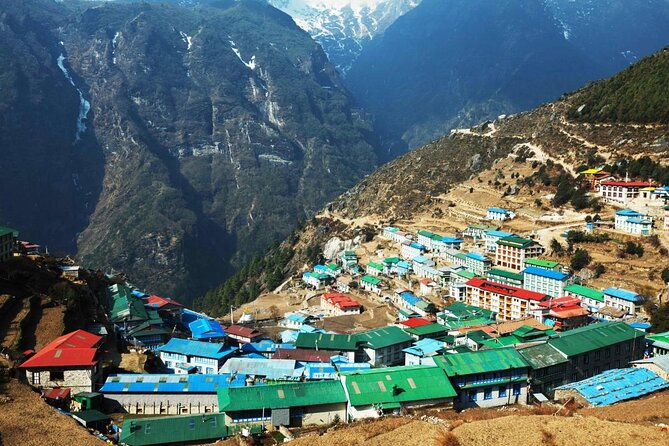
Everest Base Camp is famous for good reason. You get a route through the Khumbu region, home to Sherpa communities, pine forests, suspension bridges, glaciers, and huge Himalayan peaks. The walking is demanding, but you are not left to solve every problem alone.
Your guide organizes the route, meals, accommodation, pacing, and practical details. Porters carry the heavier gear. The package also includes a first-aid kit carried by the guide, national park entry, the TIMS registration card, domestic airline tickets for you and your guide, and airport transfers before and after the trek.
That arrangement has real value. A self-organized trek can appear cheaper at first, but permits, flights, gear, transport, porters, meals, and lodging add up quickly. Here, much of the difficult planning is bundled into one price.
The trip is private, so only your group takes part. That makes a difference on a high-altitude route. If you need a slower walking pace, extra rest, or a little more time at a stop, a private group gives the guide more room to adjust than a large fixed party.
Still, private does not mean easy. You need a moderate level of physical fitness, and the altitude is the central challenge. The route climbs high enough that even a fit person may find the air difficult. Good pacing and the planned rest days are not luxuries. They are part of the safety plan.
More Everest Base Camp Treks in Kathmandu:
- Everest Base Camp Trek – 14 Days
★ 5.0 · 1,499 reviews - Everest Base Camp Trek
★ 5.0 · 842 reviews - Everest Base Camp Trekking
★ 5.0 · 485 reviews
Kathmandu arrival and the short flight to Lukla
Your first day is deliberately light. An airport representative meets you with a name card and takes you by private vehicle to your hotel in Kathmandu. The listed welcome takes about 30 minutes, leaving you time to recover from your international journey.
Kathmandu is described as a city of temples and the gateway to the Himalayas. The first night is not about sightseeing at a frantic pace. It is about getting settled, meeting the team, and preparing for the early mountain start.
Day two brings the memorable flight to Lukla, followed by the walk toward Phakding. The flight takes about 30 minutes, and the approach is part of the experience. You get your first sweeping mountain views, but you also need to accept that this is a weather-sensitive connection.
That is why the return schedule includes a spare day in Kathmandu. Lukla flights may be delayed or canceled in poor weather. The free day is not wasted time. It gives the operator room to move you back to Kathmandu without placing your international departure at immediate risk.
After landing at Lukla, you begin walking. The first day on foot is listed at about four hours, a sensible introduction before the route becomes more demanding. The walking takes you into the Everest region rather than dropping you straight into its hardest climbs.
Monjo, Jorsalle, and the first serious trail work
The next stage begins with a gentle ascent toward Monjo. You stop at Jorsalle for lunch, then continue through pine forests toward the Hillary Bridge.
Crossing a high suspension bridge is one of those simple moments that feels larger than it sounds. The bridge marks a shift from the easier opening section to steeper trail work. After crossing, the path rises sharply toward the higher villages.
You should expect uneven ground, climbs, and a steady walking rhythm rather than a race. Your guide sets the pace, and the private format makes it easier to avoid pushing too hard early in the trip.
This is also where the support system begins to show its value. You are carrying only your personal day needs while porters handle the main duffle bags. That leaves you more energy for the trail, the views, and the altitude.
Two acclimatization days that earn their place
One of the strongest parts of the schedule is the use of two acclimatization days. The first offers options including hikes toward Khumjung and Khunde, the Everest View Hotel area, Thame, or Sagarmatha National Park areas.
The point is not to sit indoors all day. A short hike followed by a return to the same sleeping elevation helps your body adjust while keeping you active. You may choose an option based on your condition and the guide’s advice.
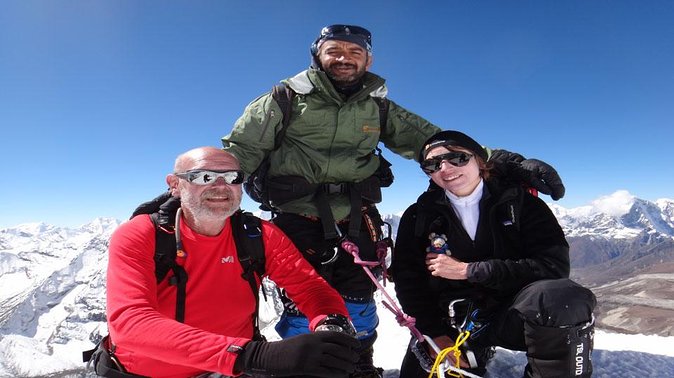
The second acclimatization day includes a hike to Nagarkhang Peak at about 5,000 meters. From the summit, you can see a broad collection of Himalayan peaks. This is a major day physically, despite the word rest appearing on the schedule.
I would treat both days seriously. A hike at altitude can be harder than its distance suggests. The benefit is that you get a high point without also needing to carry on to a new overnight stop afterward.
The team’s attention to pacing is a recurring strength. Guests specifically praised guides named Lok, Khila, Lal, Hari, Ossman, and Namraj for care, encouragement, safety, and adapting the walking pace. You are not guaranteed one particular guide, but the repeated praise for individual attention is an encouraging sign.
A few more treks around Kathmandu worth a look
- Annapurna Circuit Trek with Tilicho Lake
★ 5.0 · 368 reviews - Everest Base Camp Trekking – 13 Day
★ 5.0 · 365 reviews - Everest Base Camp Trek
★ 5.0 · 350 reviews - Everest Base Camp Trek -14 Days
★ 5.0 · 321 reviews
Kyanjuma, Pangboche, and Sherpa country
After acclimatization, the trail rises toward the national park headquarters and continues to Kyanjuma. There may be a short tea stop before the route descends to Phungi Thanga for lunch.
Then comes a river crossing over the Dudh Koshi, followed by more climbing. The rhythm of this day is typical of Himalayan trekking: gain height, lose some of it, cross a river, and climb again. The trail does not always reward you with a neat upward line.
Day six follows the Imja Khola toward Pangboche, at 3,930 meters. Pangboche is associated with renowned Everest climbers and is described as home to brave Sherpas. This is an important cultural part of the walk, not just another overnight stop.
The package promises exposure to Sherpa culture, and this is where that promise feels most grounded. You pass through villages that support life and mountaineering in a difficult high-altitude setting. The experience is not a museum visit. It comes through the people, homes, trails, and daily systems of the region.
You should also expect a simpler style of accommodation and dining than you would find in Kathmandu. The package covers breakfast, lunch, and dinner on most trek days, but personal drinks, bars, hot showers, laundry, telephone use, and snacks are extra.
Dughla Pass and the approach to Base Camp
As you move closer to Everest Base Camp, the route follows the ridge above Pheriche before reaching Dughla. Lunch comes at Dughla, followed by a steep climb to Dughla Pass.
This is one of the days when the altitude becomes hard to ignore. The climb is steep, and the air is thin. You need patience here. Short steps and regular pauses are more useful than trying to maintain your low-altitude walking speed.
The next day begins easily enough, with a walk toward the glaciers. Once the route climbs onto the glacial section, the footing becomes harder and the low oxygen adds another layer of work.
This is the point where a good guide matters most. The guide carries a first-aid medical kit and manages the group’s pace, while porters continue to handle the main loads. You still need to tell the guide honestly how you feel. A package can organize support, but it cannot remove the physical demands of altitude.
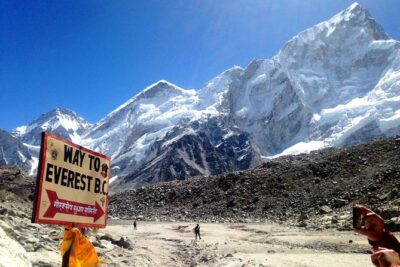
Reaching Everest Base Camp is the emotional high point for many people. The route itself is more important here than comfort or speed. You have crossed high ground, moved through Sherpa villages, and walked into a glacial world beneath some of the highest peaks on earth.
The exact character of Base Camp can vary with season and conditions, and the supplied schedule does not promise a particular camp setup. What it does provide is the organized route, guide support, meals, and accommodation needed to reach the area.
Kalapatthar before sunrise
The early climb to Kalapatthar is the trip’s great viewpoint day. You start before sunrise, and the ascent is described as difficult but worthwhile.
Kalapatthar is known as a major viewpoint in the Khumbu Valley, with towering Himalayan peaks filling the view. The early start is chosen for the light, but it also means cold conditions and a demanding climb when your body is already tired from the approach to Base Camp.
I would not judge this day by speed. The reward comes from reaching the viewpoint and seeing the mountains change color as the sun comes up. You should carry only what you need for the climb and rely on your guide for pacing.
After Kalapatthar, the route turns back. This matters psychologically. The highest point of the trip is not the end of the walking. You still need to descend through the same high country before reaching lower villages and Lukla.
The long return through Tengboche and Phakding
The return route passes through Debuche and Tengboche before a steep descent to Phungi Thanga for lunch. The trail then climbs again toward Kyanjuma.
That up-and-down pattern can surprise you. Descending from altitude sounds easy, but steep drops are hard on tired knees, and every valley crossing may require another climb. The views remain rewarding, but the body is ready for lower ground.
The following day includes a steep descent to Jorsalle, then continues toward Phakding for lunch. From there, you carry on to Lukla, where the walking section ends.
The schedule describes the walking portion as an 11-night, 12-day trek, while the full program lasts about 15 days. The difference comes from the Kathmandu arrival, return flight, buffer day, and final airport transfer. You should read the trip as a full travel plan, not as 15 continuous days on foot.
What the $1,408 price really covers
At $1,408 per person, the value depends on how much support you want. This is not simply a guide fee. The price includes:
- Private airport transfers before and after the trek
- Kathmandu to Lukla and return flights, including the guide’s ticket
- Everest National Park entry and TIMS registration
- An English-speaking, government-licensed guide
- Porters with their meals, accommodation, salary, and insurance
- An assistant guide for groups larger than six
- A down jacket, four-season sleeping bag, and duffle bag
- Breakfast on 14 days, lunch on 11 days, and dinner on 12 days
- Government taxes, local charges, and company service costs
That is a strong bundle for someone who does not already own high-altitude gear or want to arrange porters and permits separately. The supplied equipment is loaned and must be returned after the trip.
You still need to budget for international airfare, a Nepal visa, travel and medical insurance, emergency evacuation, drinks, hot showers, laundry, phone use, snacks, and personal purchases. Costs caused by natural disasters or other events outside the operator’s control are also excluded.
The most important missing item is insurance. Do not treat the included first-aid kit as a replacement for travel and medical coverage. Emergency evacuation is specifically excluded, so your policy should address the type of high-altitude activity you are booking.
Who should book this trek
I would recommend this trip to someone who wants the famous Everest route with practical support already arranged. It suits you if you value a private small group, want porters to carry the main gear, and prefer a guide to organize the daily details.
It is also a good match if you appreciate a measured pace. The schedule includes two acclimatization days, a return buffer in Kathmandu, and guides who are praised for care and encouragement.
I would be cautious if you dislike uncertain flight schedules, basic mountain conditions, steep trails, or long days in thin air. The Lukla flight can be delayed, and weather may affect plans. The high sections are physically demanding, especially around Dughla, the glaciers, Base Camp, and Kalapatthar.
The cancellation terms are fairly clear. You can receive a full refund if you cancel at least six full days before the start time. Cancellations two to six full days ahead receive 50 percent, while cancellations less than two full days ahead are not refunded. If poor weather cancels the experience, you are offered another date or a full refund.
Should you book it?
Book this Everest Base Camp trek if you want the classic route with guides, porters, meals, permits, gear, and domestic flights bundled into one price. The strongest reasons are the private format, careful acclimatization plan, and repeated praise for guides such as Lok, Khila, Lal, Hari, and Ossman.
Skip it if you want a soft adventure or a fixed schedule with no weather risk. Everest Base Camp demands effort, patience, and sensible insurance. For a fit person who accepts those conditions, this package offers a practical way to reach one of the world’s most famous mountain destinations without handling every detail alone.
FAQ
How long does the Everest Base Camp trek take?
The full program lasts about 15 days. The walking portion is described as an 11-night, 12-day trek, with Kathmandu arrival and departure days plus a spare day for possible Lukla flight delays.
Where does the experience begin?
The experience begins in Kathmandu, Nepal. An airport representative meets you on arrival and transfers you to your hotel by private vehicle.
Is airport pickup included?
Yes. Private airport pickup and drop-off services are included before and after the trek.
Are the Kathmandu to Lukla flights included?
Yes. Domestic airline tickets between Kathmandu and Lukla are included for you and your guide.
Are porters provided?
Yes. Strong, experienced Sherpa porters are included, along with their meals, accommodation, salary, and insurance.
What trekking gear is supplied?
A down jacket, four-season sleeping bag, and duffle bag are supplied for the trip. These items must be returned after the trek.
Are meals included?
Breakfast is included for 14 days, lunch for 11 days, and dinner for 12 days. Personal drinks, snacks, bars, and other extras are not included.
What level of fitness is required?
A moderate level of physical fitness is required. The route includes steep climbs, high-altitude walking, glacial sections, and an early climb to Kalapatthar.
What happens if bad weather cancels a Lukla flight or the experience?
If poor weather causes the experience to be canceled, you are offered a different date or a full refund. The schedule also includes a free day in Kathmandu to help manage possible Lukla flight delays or cancellations.
Recently added around Kathmandu
- Ghorepani Poon Hill Trek★ 5.0 · 16 reviews
- Private Manaslu Circuit Trek at Himalayas★ 5.0 · 3 reviews
- Amazing 1 Day Trekking Experience in Kathmandu Nepal★ 5.0 · 24 reviews
- Ghorepani Poonhill Trek★ 5.0 · 5 reviews
- Upper Mustang Trekking★ 5.0 · 2 reviews
- Upper Mustang Trekking★ 3.0 · 2 reviews
- Upper Mustang Trekking★ 5.0 · 4 reviews
- Upper Mustang Trek★ 5.0 · 5 reviews
Everest Base Camp Treks, compared.
Browse the lists this tour appears in