
REVIEW · KATHMANDU
Everest Base Camp Trek with Chopper Return to Lukla
The mountain route is only half the story. This nine-day Everest Base Camp trip combines a classic Himalayan trek with a helicopter ride from Gorekshep to Lukla, saving you the long return walk. I like the included Lukla flights and the practical support package, especially the licensed English-speaking guide, shared porter, meals, sleeping bag, duffel bag, and emergency helicopter standby. The main caution is that the schedule is demanding, and the booking price does not cover Kathmandu lodging, insurance, drinks, personal expenses, or guide and porter tips.
You begin early, with a 6:00 am pickup in Kathmandu, then fly to Lukla and walk beside the Dudh Koshi River toward Phakding. The trip earns extra appeal from the guides, with KB and Raj receiving especially warm praise for making the hike more enjoyable. Still, only two ratings are shown, and one past customer raised concern about an extra 4 percent card charge, so I would confirm all payment terms before you commit.
Key Things to Know Before You Book
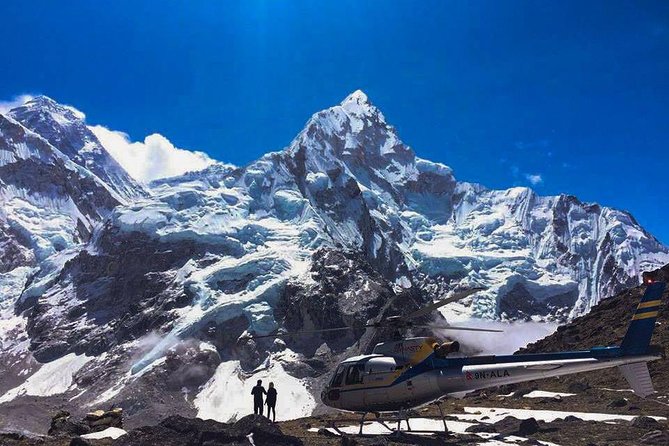
- The return skips the long walk back: A helicopter transfer from Gorekshep to Lukla is included, a major time saver after reaching the Everest Base Camp area.
- You start with a short first trekking day: After flying into Lukla, you walk about three to four hours beside the Dudh Koshi River to Phakding.
- The package covers the core trek costs: Meals, guesthouse stays, guide service, shared porter support, trekking gear, domestic flights, and a map are included.
- The mountain setting brings real physical demands: Cold temperatures, strong winds, suspension bridges, and altitude make this more than a sightseeing stroll.
- The group is capped at 15 people: That is small enough for the guide to remain involved, while still large enough to share the cost of porter support.
- You need moderate fitness and careful planning: The minimum age is 10, passport details are required for every participant, and dietary needs should be supplied when booking.
Why This Route Works for a Short Everest Trek
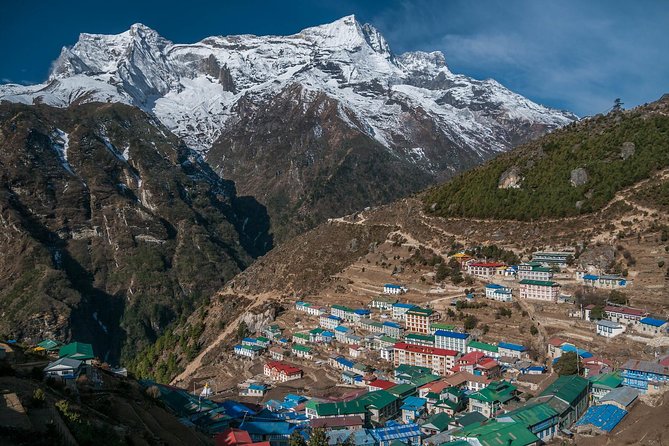
A normal Everest Base Camp trek requires walking back toward Lukla after reaching the high point. This version changes that rhythm. You still get the slow approach through mountain villages, river valleys, suspension bridges, and colder high-altitude sections, but the return from Gorekshep to Lukla is by helicopter.
That choice matters most if you have limited holiday time or if the return walk sounds less appealing than the climb toward Base Camp. You do not lose the trekking experience on the way up, but you reduce the number of days spent retracing your steps.
The trip lasts about nine days, which is a compact schedule for a high-altitude trek. I would treat the approximate wording seriously. Mountain flights and helicopter movements can be affected by conditions, and a nine-day plan leaves less spare time than a slower itinerary.
You should also understand what the helicopter transfer does and does not mean. It is listed from Gorekshep to Lukla, not directly from Everest Base Camp to Kathmandu. The package also includes the domestic Lukla to Kathmandu flight, so the return plan appears to use the helicopter to reconnect with Lukla, followed by the scheduled flight back to the capital.
More Everest Base Camp Treks in Kathmandu:
- Everest Base Camp Trek – 14 Days
★ 5.0 · 1,499 reviews - Everest Base Camp Trek
★ 5.0 · 842 reviews - Everest Base Camp Trekking
★ 5.0 · 485 reviews
Day One Begins Before Sunrise in Kathmandu
Your day starts at 6:00 am with pickup in Kathmandu. The drive to the airport takes about 20 minutes from Thamel, according to the supplied details. That is convenient if you are staying in the Thamel area, but you still need to be ready early, with your passport information and trekking gear organized the night before.
The package includes pickups and drops, along with a pre-trekking coffee meeting. That meeting is useful for checking the basic plan, meeting your guide, and raising dietary or equipment questions before you leave the city.
A practical point: accommodation in Kathmandu is not included. Neither are breakfast, lunch, or dinner in Kathmandu. You will need to arrange your own city hotel and city meals before or after the trek.
The trip requires each participant’s passport name, passport number, expiry date, and country of issue at booking. That is routine for the flights and permits connected with an organized trek, but it is still worth checking every spelling carefully.
Flying to Lukla and Walking to Phakding
The first major thrill is the domestic flight to Lukla, known here as the gateway to Everest. Once you arrive, breakfast is scheduled in Lukla before the walk begins.
The opening trek follows the Dudh Koshi River toward Phakding and lasts around three to four hours. That shorter first day gives you a gentler introduction to walking with a pack, though you should not mistake it for an easy city hike. You are entering a cold, high mountain environment, and the route includes suspension bridges and changing temperatures.
This section is valuable because you begin adjusting to the trekking rhythm without immediately facing the longest walking day. You can get a feel for your guide, your porter arrangement, and the way the group moves.
The description does not provide a full day-by-day list of villages or overnight stops after Phakding. I would ask for the exact daily plan before booking, including where you sleep each night, the expected walking hours, and how altitude gain is managed. Those details matter greatly on a short Everest schedule.
The Trek Toward Everest Base Camp
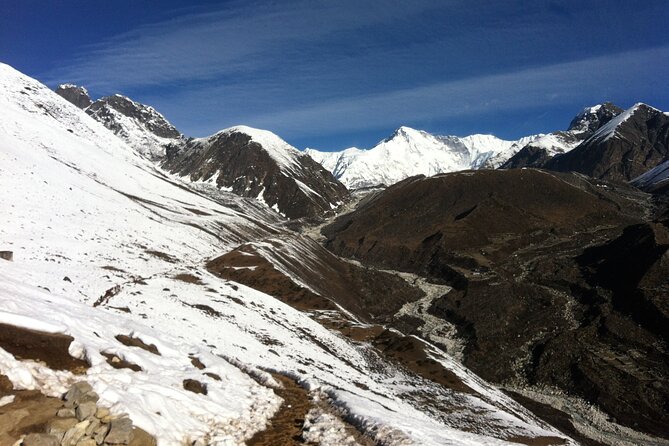
After Phakding, the route continues toward the Everest Base Camp area. The supplied information emphasizes suspension bridges, cold air, strong winds, river scenery, and Himalayan cultural life rather than naming every stop. That gives you a clear sense of the experience, but not enough detail to judge every day’s difficulty.
You should expect the walking to become harder as the route gains altitude. The tour is designed for people with a moderate level of physical fitness, and that wording should guide your decision. You need to be comfortable walking for several hours over uneven mountain paths in cold conditions.
The shared porter system is one porter for two trekkers. That can make the trek easier on your back, but you should pack with restraint and confirm the baggage limit. Excess baggage charges are not included, and personal porters beyond the stated arrangement cost extra.
I like that a sleeping bag and duffel bag are included. Those items can be awkward to arrange on your own, especially if you are flying into Nepal for this one trek. An area trekking map is also supplied, which helps you understand the route instead of simply following along without a sense of place.
Guesthouse accommodation is included during the trek. The details do not specify room types, bathroom arrangements, or heating, so ask before departure if those points affect your comfort. In the Himalaya, a guesthouse is practical shelter, not a city hotel.
A few more treks around Kathmandu worth a look
- Annapurna Circuit Trek with Tilicho Lake
★ 5.0 · 368 reviews - Everest Base Camp Trekking – 13 Day
★ 5.0 · 365 reviews - Everest Base Camp Trek
★ 5.0 · 350 reviews - Everest Base Camp Trek -14 Days
★ 5.0 · 321 reviews
Guides, Porters, and the Human Side of the Walk
The strongest personal praise centers on the guides. KB and Raj were singled out for helping make the hike more enjoyable, and the porters were described as friendly and consistently cheerful on the trail.
That kind of support matters. A good guide does more than lead the way. You need someone who can keep the group moving, explain what you are seeing, and respond sensibly when the cold, wind, or altitude makes the day harder.
The trip includes a licensed English-speaking guide and one shared porter for every two trekkers. Tips are not included, so you should budget for them. The listing also refers to guides and sherpas separately in the exclusions, which is another reason to ask how tipping is handled for each member of the support team.
The group maximum is 15 people. That is not a private trek, but it is a manageable size. You may get a more social experience than with a solo guide, while avoiding the feel of a very large hiking group.
Food, Guesthouses, and What the $2,000 Covers
The price is $2,000 per person. That is a substantial amount, but the included items cover many of the expensive and complicated parts of this route.
You receive:
- Kathmandu airport pickups and drops
- The pre-trekking coffee meeting
- Domestic flights between Kathmandu and Lukla
- Meals during the trek
- Guesthouse accommodation during the trek
- An English-speaking licensed guide
- One shared porter for two trekkers
- Sleeping bag, duffel bag, and trekking map
- Helicopter transfer from Gorekshep to Lukla
- Emergency helicopter standby
- A trip accomplishment certificate
- Farewell dinner
- Breakfast, lunch, and dinner listed as part of the package
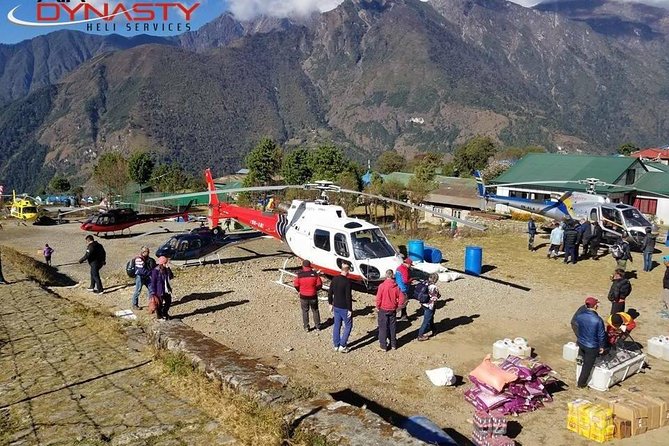
The helicopter return is the biggest value feature. Helicopter time is costly, and including it removes several walking days from the return journey. Emergency standby also offers reassurance, although you should ask what conditions and circumstances trigger that service and what costs, if any, fall outside the package.
The price does not include Kathmandu accommodation or meals, travel insurance, drinks, alcohol, laundry, phone calls, extra porters, souvenirs, optional sightseeing, excess baggage, or tips. Those costs can add up, so your real trip budget should be higher than $2,000.
One payment warning deserves attention. A past customer reported being charged an additional 4 percent for card payment. That may depend on the payment method or booking arrangement, but I would request the final total in writing before paying.
Gorekshep to Lukla by Helicopter
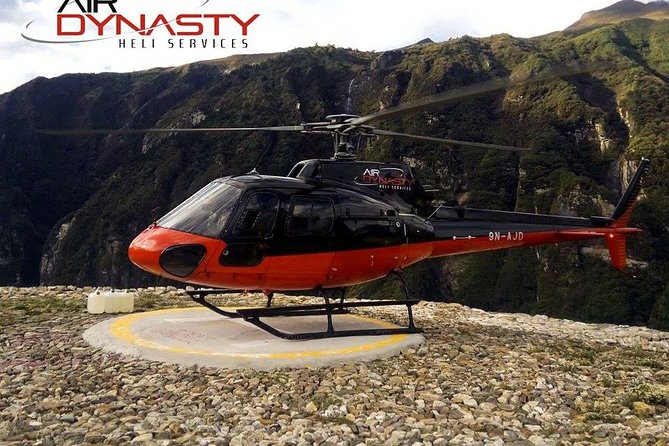
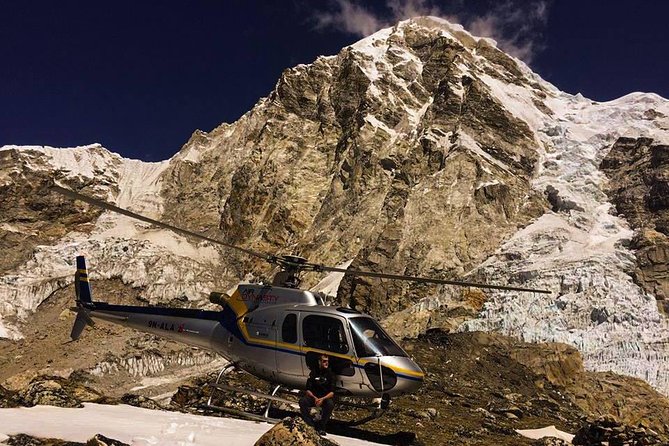
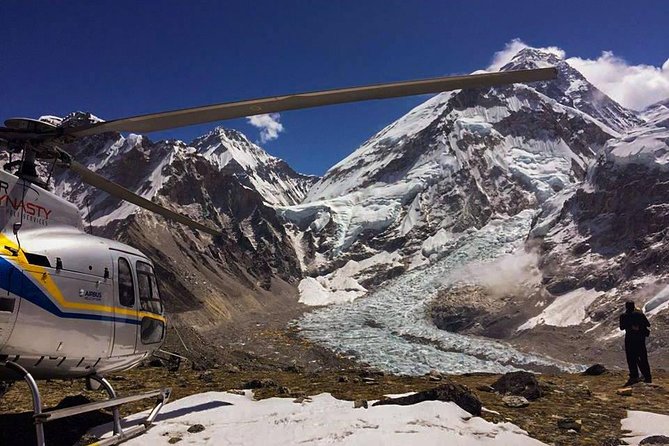
The return flight from Gorekshep is the trip’s defining feature. After reaching the high point of the trek, you board a helicopter for Lukla instead of walking the full route back.
That gives you a different view of the Himalaya and saves time, energy, and several days of repeated trail. If your main goal is reaching Everest Base Camp rather than completing a round-trip walk, this is a sensible design.
The helicopter is also the part most exposed to mountain conditions. The tour includes standby helicopter support for emergencies, but that should not be read as a promise that every planned flight will operate on schedule. Ask how weather delays are handled, especially if you have an onward flight from Kathmandu.
Because the trip includes both the helicopter transfer and a domestic airplane segment, you should keep some flexibility around your international travel plans. The supplied details do not promise compensation for missed international connections, so travel insurance is essential even though it is not included.
Fitness, Age, Weather, and Daily Comfort
The minimum age is 10, but the more useful requirement is moderate physical fitness. A child who meets the age rule may still find the cold, wind, long walking days, and altitude difficult.
The experience is not recommended for children under 4. Service animals are allowed, and the minimum drinking age is stated as 16. You should also provide any dietary requirements when booking because meals are included during the trek.
Cold temperatures and strong winds are specifically part of the challenge. Bring clothing that lets you adjust as conditions change, but the supplied information does not provide a packing list, so ask the operator what personal gear is expected.
Travel insurance is not included. For a trek involving domestic mountain flights, a helicopter transfer, and high-altitude walking, insurance is one of the most important extra purchases. Confirm that the policy covers trekking at the planned altitude, emergency evacuation, and weather-related disruption before you leave.
Booking Confidence and the Small Review Sample
The available rating is 4 out of 5 from two reviews, so I would treat it as encouraging but limited. The positive points are clear: the trekking itself was praised, the guides and porters received strong personal approval, and KB and Raj were named as especially good companions on the route.
The concerns are also useful. One customer liked the Everest Base Camp trek but said they would choose a different company, with the reported 4 percent card charge forming part of the complaint. That does not prove a wider problem, but it is enough reason to confirm fees, inclusions, guide arrangements, and refund terms directly.
Free cancellation is available if you cancel at least 24 hours before the experience starts. Changes or cancellations made inside that 24-hour window are not accepted for a refund, and the cutoff follows local time.
Who Should Choose This Trek?
I would recommend this trip to you if you want the classic approach to Everest Base Camp but do not want to spend the same number of days walking back to Lukla. It also suits people who value a bundled arrangement with flights, meals, guesthouses, guide service, porter support, trekking gear, and helicopter transport in one price.
It may suit you if you are comfortable with a group of up to 15 and prefer the reassurance of an emergency helicopter standby arrangement. The included farewell dinner and accomplishment certificate add a pleasant finish, though they are less important than the route, safety planning, and guide quality.
I would be cautious if you need a slow acclimatization schedule, a detailed daily itinerary before paying, or a luxury standard in mountain accommodation. The nine-day duration is approximate, and the supplied information does not spell out each day’s altitude gain or overnight location.
Should You Book the Everest Base Camp Chopper Return?
Book it if you want a time-efficient Everest Base Camp trek with strong practical coverage and a helicopter return from Gorekshep. The package offers real value through included domestic flights, meals, guesthouses, porter support, equipment, and the costly return helicopter.
Before paying, ask for the complete daily route, altitude schedule, baggage allowance, card-payment total, emergency procedures, tipping guidance, and weather-delay policy. If those answers are clear and you have the fitness, insurance, and time flexibility required, this is a compelling way to reach Everest Base Camp without walking the entire route twice.
FAQ
How long is the Everest Base Camp trek with helicopter return?
The experience lasts approximately nine days.
Where does the experience start?
It starts in Kathmandu, Nepal, at the listed meeting point in Kathmandu 44600.
What time does the tour start?
The scheduled start time is 6:00 am.
Is hotel pickup available?
Yes. Pickup and drop-off are included, and the drive from Thamel to the airport takes about 20 minutes.
How do I get from Kathmandu to Lukla?
You fly from Kathmandu to Lukla by domestic airplane. Breakfast is scheduled in Lukla after arrival.
How long is the first trek from Lukla to Phakding?
The first walking section takes approximately three to four hours and follows the Dudh Koshi River.
Is the return from Gorekshep to Lukla included?
Yes. A helicopter transfer from Gorekshep to Lukla is included in the package.
Are meals included?
Breakfast, lunch, and dinner are included during the trek. Meals in Kathmandu are not included.
Is accommodation included?
Guesthouse accommodation during the trek is included. Accommodation in Kathmandu is not included.
What level of fitness is needed?
You should have a moderate level of physical fitness. The trip includes walking in cold temperatures and strong winds, along with suspension bridges and high-altitude conditions.
What is the minimum age?
The minimum age is 10. The activity is not recommended for children under 4.
Is travel insurance included?
No. Travel insurance is not included, so you need to arrange it separately.
Is the group private?
No. The activity can include a maximum of 15 people.
Can I cancel for a full refund?
Yes, if you cancel at least 24 hours before the scheduled start time. Cancellations made less than 24 hours before the start are not refundable.
Are guide and porter tips included?
No. Tips for the guide and sherpa are not included.
Recently added around Kathmandu
- Ghorepani Poon Hill Trek★ 5.0 · 16 reviews
- Private Manaslu Circuit Trek at Himalayas★ 5.0 · 3 reviews
- Amazing 1 Day Trekking Experience in Kathmandu Nepal★ 5.0 · 24 reviews
- Upper Mustang Trekking★ 5.0 · 2 reviews
- Ghorepani Poonhill Trek★ 5.0 · 5 reviews
- Upper Mustang Trekking★ 3.0 · 2 reviews
- Upper Mustang Trekking★ 5.0 · 4 reviews
- Upper Mustang Trek★ 5.0 · 5 reviews
Everest Base Camp Treks, compared.






Browse the lists this tour appears in