
REVIEW · KATHMANDU
Everest Base Camp Trek with Chopper Return To Kathmandu
Eight days can reach the world’s highest base camp. This trip combines a private trek to Everest Base Camp with a helicopter flight from Gorak Shep back to Kathmandu, cutting out the long return walk. I like the steady route through Phakding, Namche Bazaar, Tengboche, Dingboche, and Lobuche, and I like that meals, permits, a porter, gear, flights, and tea-house lodging are bundled into the $2,600 price. The main catch is the altitude: the schedule is quick, the walks are long, and the stay at Everest Base Camp lasts only 20 to 25 minutes because of the cold and wind.
This is a practical choice if you want the classic Everest route but cannot spare two or more weeks. The helicopter return saves several days of walking and gives you a memorable aerial look at the Himalayan peaks. Still, this is not a soft adventure. You need moderate fitness, patience with mountain weather, and a willingness to sleep in basic tea houses rather than Kathmandu hotels during the trek.
The key points at a glance
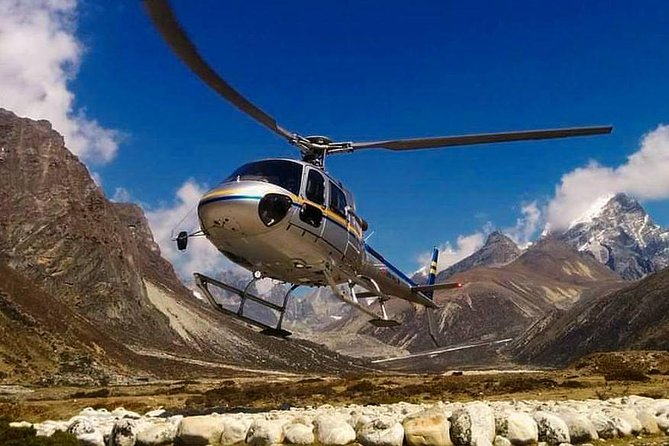
- Eight days from Kathmandu to Everest Base Camp: You fly to Lukla, walk up the Khumbu Valley, visit Kala Patthar, and return by helicopter.
- Private trekking with shared helicopter service: Your walking group is private, while the helicopter portion may be shared with other passengers.
- Kala Patthar adds the big mountain view: At 5,545 meters, this viewpoint offers a broad panorama of Everest, Lhotse, Nuptse, Pumori, and Lobuche West.
- The package covers most trail costs: Flights, permits, meals, tea-house lodging, a guide, porter support, sleeping bag, and duffel bag are included.
- Altitude is the serious issue: The plan includes one acclimatization day in Namche Bazaar, but the ascent remains demanding.
- Weather can change the plan: Helicopter operations require suitable conditions, and poor weather can lead to a new date or a full refund.
Why this short Everest route works
The usual Everest Base Camp experience is built around the return journey. You walk up, reach base camp, then walk all the way back down. This version removes that second half.
That matters if you have limited time, dislike repeating the same trail, or want to spend more of your Nepal visit in Kathmandu or elsewhere. It also turns the final morning into a memorable flight over the mountains instead of another week on foot.
The route is still long enough to feel like a real Himalayan trek. You do not simply fly to base camp, take a photograph, and leave. You follow the Dudh Koshi River, cross suspension bridges, pass mani walls, visit Tengboche Monastery, and spend several nights moving through high mountain villages.
I also like the way the package handles basic equipment. A sleeping bag and duffel bag are supplied, and one porter is assigned to share between two trekkers. That can reduce the amount you personally carry, though you should still pack carefully and keep essential items with you.
The $2,600 price is not cheap, but it includes the expensive parts of this trip. Domestic flights, the helicopter return, permits, staff costs, food, accommodation, airport transfers, and equipment are all included. The price becomes less attractive if you need extra nights in Kathmandu, private hotel upgrades, drinks, bottled water, laundry, or additional sightseeing.
More Everest Base Camp Treks in Kathmandu:
- Everest Base Camp Trek – 14 Days
★ 5.0 · 1,499 reviews - Everest Base Camp Trek
★ 5.0 · 842 reviews - Everest Base Camp Trekking
★ 5.0 · 485 reviews
Day 1: Lukla to Phakding beside the Dudh Koshi
The day begins early, with a 6:15 a.m. start and a drive of about 20 minutes from Thamel to the airport. You fly from Kathmandu to Lukla, the main entry point for the Everest region, then have breakfast before starting the trek.
The first walk to Phakding takes about three to four hours. The route follows the Dudh Koshi River, giving you a relatively gentle introduction to the trail after the flight. Phakding is only the first night, but it is useful because your body begins adjusting to the higher altitude without a major mileage challenge.
You should keep this morning flexible. Domestic mountain flights are part of the trip, and the plan depends on weather and flight availability. The tour includes the Kathmandu to Lukla flight and departure taxes, but not extra accommodation or meals in Kathmandu if the schedule changes.
Day 2: The long climb to Namche Bazaar
The walk from Phakding to Namche Bazaar takes about six hours. You pass through pine and rhododendron forest and cross suspension bridges as the trail climbs deeper into the Khumbu Valley.
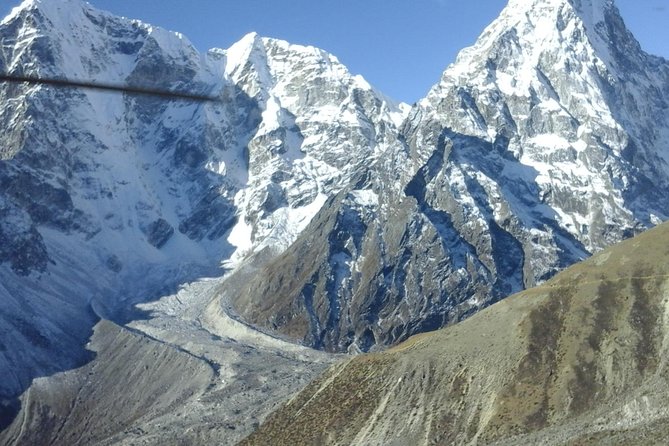
This is the day when the trek begins to feel serious. Namche is higher than Phakding, and the climb can be tiring even for fit walkers. The reward is the setting, with mountain views appearing around the trail and the first notable glimpse of Everest near the Nuptse and Lhotse ridge.
One stop is listed as Irish Pub, but the important part of this day is the route into Namche rather than the stop itself. Namche is the main trading center of the region, and it is also the best place on the route to pause before going higher.
Day 3: Acclimatization around Namche Bazaar
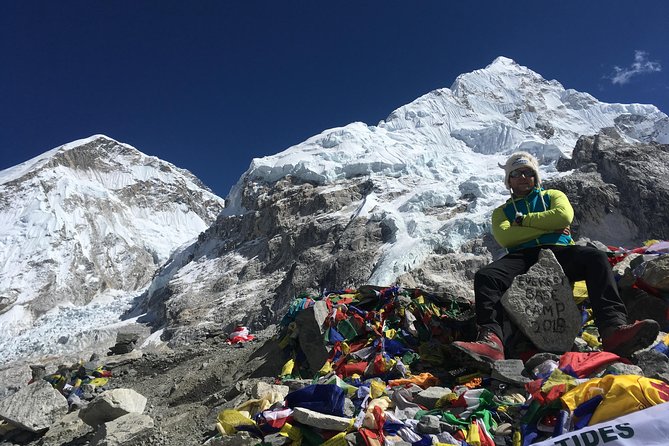
The third day is not a rest day in the lazy sense. It is an acclimatization day, designed to let you sleep at the same altitude while taking a higher walk during the day.
You can hike toward Syangboche Airport, one of the highest airports in the world, and continue toward the Hotel Everest View. From there, the itinerary gives you views toward Everest, Tawache, Lhotse, and Ama Dablam. The walk is valuable because it helps your body adjust and gives you a chance to see the mountains without carrying a full pack toward the next village.
Later, you can visit the Everest Photo Gallery and Sherpa Culture Museum. These visits add useful local context to a trek that could otherwise become a string of tea houses and mountain photographs.
I would take this day seriously. The route climbs quickly over the following days, and there is no substitute for proper acclimatization. An acclimatization walk does not remove altitude risk, but skipping it would make the schedule harder.
A few more treks around Kathmandu worth a look
- Annapurna Circuit Trek with Tilicho Lake
★ 5.0 · 368 reviews - Everest Base Camp Trekking – 13 Day
★ 5.0 · 365 reviews - Everest Base Camp Trek
★ 5.0 · 350 reviews - Everest Base Camp Trek -14 Days
★ 5.0 · 321 reviews
Day 4: Tengboche and the Khumbu’s major monastery
The trail from Namche to Tengboche takes about five to six hours. The route offers mountain views and then reaches Tengboche, home to the largest monastery in the Khumbu region.
Tengboche is one of the most meaningful stops on this trek. The monastery gives the journey a cultural center, not just a scenic one. If your timing falls in October, the area is associated with the Mani Rimdu festival, an important Sherpa Buddhist celebration.
The walk is not simply an uphill push. You descend in places before climbing again, so the day can feel longer than the distance suggests. After several days on foot, this is also the point where a good pair of boots and sensible pacing begin to matter even more.
Day 5: Dingboche, suspension bridges, and mani walls
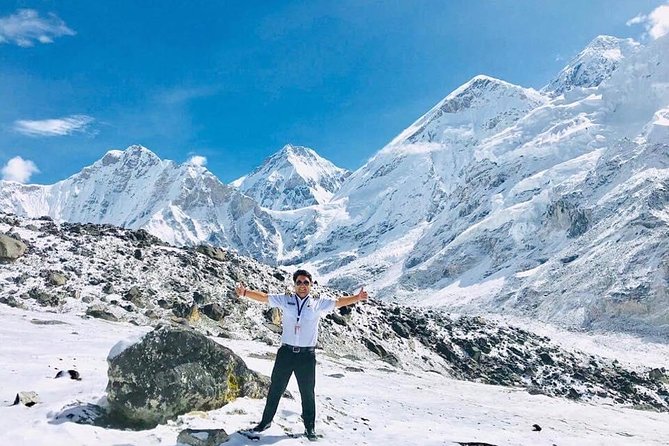
From Tengboche, you continue toward Dingboche, with roughly six to seven hours of walking. The route crosses the Imja Khola on a suspension bridge and passes rows of mani walls, stone structures carved or marked with Buddhist prayers.
Dingboche is an important high-altitude settlement and a common base for people heading toward Everest Base Camp. The scenery becomes more open as the route leaves much of the lower forest behind. You will notice the trail feeling more exposed and the air thinner.
This is a demanding day because the walking time is long and the altitude keeps rising. You should not judge the day only by distance. At this height, a modest climb can take real effort, especially if you have not slept well.
Day 6: Lobuche and the memorials at Thokla Pass
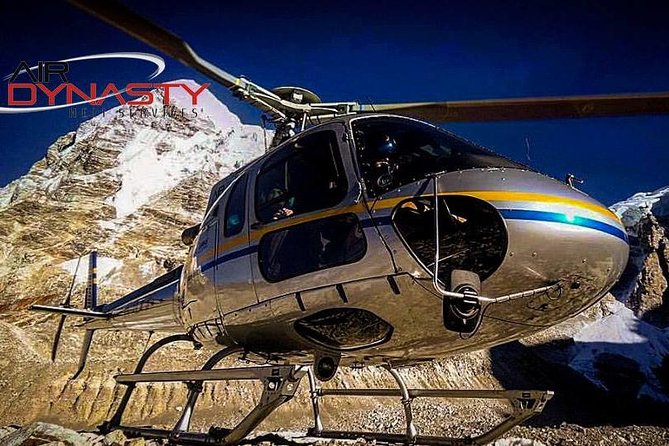
The walk from Dingboche to Lobuche takes about six hours. It begins with a gentle climb through yak-grazing areas and alpine vegetation before reaching Dughla.
The mountain views include Tawoche, Cholatse, and Ama Dablam. The most solemn part of the day comes at Thokla Pass, at about 4,830 meters. A short but steep climb leads past memorials dedicated to mountaineers who died during Everest expeditions. Prayer flags mark the area, adding a quiet and respectful mood to the route.
This is one of the strongest parts of the trek because the place connects the beauty of the mountains with the danger of climbing them. You should take your time here. The memorial area is not a quick scenic stop, and the climb to it can feel hard at altitude.
Lobuche is also where the high-altitude character of the trip becomes unmistakable. Accommodation is in the best available tea houses on a twin-sharing basis, but you should not expect the comforts of a city hotel.
Day 7: Gorak Shep and Everest Base Camp
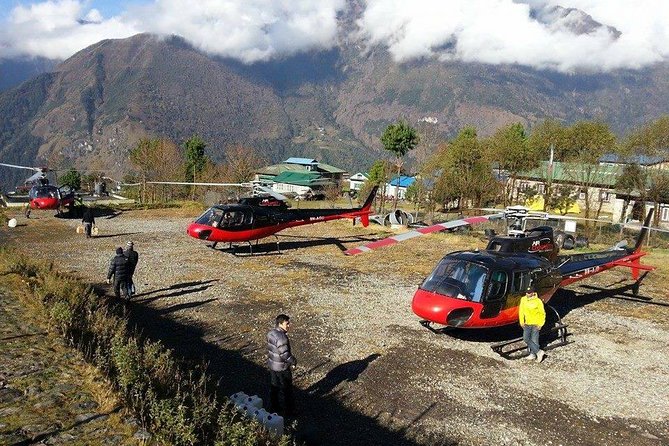
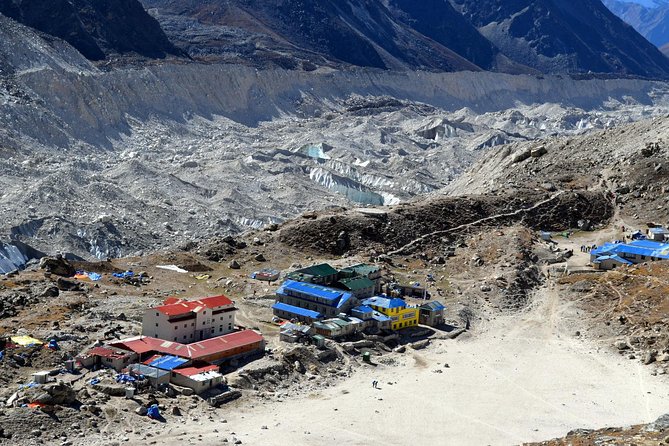
The walk from Lobuche to Gorak Shep takes about six hours. Along the way, you can see the Khumbu Glacier, a huge tongue of ice descending from the slopes below Everest.
Gorak Shep is the final settlement before the base camp visit. After lunch, you continue to Everest Base Camp. The walk is not a simple viewpoint stroll. The trail passes through high, rocky terrain, and the altitude can make every step slower.
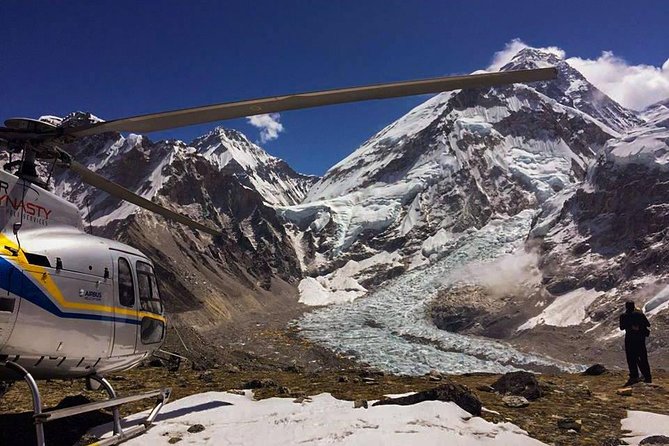
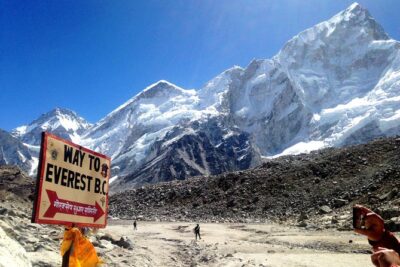
The planned stay at base camp is only 20 to 25 minutes. That may sound brief, but it is a sensible limit in cold, windy conditions. Everest Base Camp is famous, yet it does not provide the broadest mountain view in the region. Its value is standing at the starting point used by expeditions and seeing the Khumbu Glacier and surrounding climbing terrain.
If you expect to see the summit of Everest from base camp itself, adjust your expectations. The strongest panoramic view comes the following morning from Kala Patthar.
Day 8: Kala Patthar and the helicopter flight home
The final morning begins with an early hike to Kala Patthar, followed by breakfast back at Gorak Shep. At 5,545 meters, Kala Patthar is the highest point on this route and the place for the most expansive mountain panorama.
From the viewpoint, you may see Pumori, Lobuche West, Nuptse, Lhotse, and Everest, along with a broad sweep of Himalayan peaks. Prayer flags mark the summit area. The walk to the viewpoint and back is listed at about 40 minutes, though your actual pace will depend on altitude, weather, and trail conditions.
After breakfast, you take a helicopter from Gorak Shep to Kathmandu. The flight is more than transportation. It gives you a final aerial view of the valleys, glaciers, and peaks you crossed on foot.
The helicopter return is also the trip’s main uncertainty. Poor weather can stop or delay flights. The stated policy offers a different date or a full refund if the experience is canceled because of weather, but you should still avoid arranging an important same-day international connection unless you have plenty of time.
What the $2,600 price really covers
At first glance, $2,600 is a substantial fare for an eight-day trip. I see the value in the number once the included pieces are separated.
You receive airport pickup and drop-off in an air-conditioned vehicle, a Kathmandu to Lukla flight, an English-speaking guide, permits and paperwork, full-board meals during the trek, tea-house lodging, and the helicopter from Gorak Shep to Kathmandu. Staff costs, including food, accommodation, salaries, equipment, and air tickets, are also included.
The package supplies a sleeping bag and duffel bag, plus one porter shared between two trekkers. That arrangement is practical and common for a supported trek, but it means you should confirm how much luggage you may send with the porter and what you must carry yourself.
Eight breakfasts, eight lunches, and seven dinners are included. Kathmandu meals and lodging are not included, nor are visa fees, drinks, bottled or boiled water, laundry, phone calls, bar purchases, or entrance fees for sightseeing in Kathmandu.
The price also does not cover extra nights caused by an early arrival or late departure. That matters in Nepal, where weather and flight schedules can change. Set aside a buffer in both your budget and your calendar.
The private trek and shared helicopter arrangement
The trip describes the walking portion as private, meaning only your group participates in the trek and guiding arrangement. The helicopter is described as shared, so you should understand that the private experience does not necessarily extend to the flight.
That split can be a good compromise. You get more personal attention on the trail while avoiding the full cost of chartering an entire helicopter. It also means the flight may involve other passengers and operational adjustments.
An English-speaking guide is included. The information provided does not give the guide’s name, so ask for the assigned guide’s details before departure if that matters to you.
Master Himalaya has also arranged highly customized trips for people with very limited time. One five-day Everest itinerary included helicopter flights, accommodation coordination, airport pickup, and porter support. Another booking involved a stay at Kathmandu’s Yak and Yeti hotel. Those examples suggest the company can handle add-ons and hotel preferences, but they are not part of the $2,600 base package unless specifically arranged.
Fitness, comfort, and altitude
You need moderate physical fitness for this trip. Several days involve five to seven hours of walking, and the route reaches 5,545 meters at Kala Patthar.
The biggest challenge is not technical climbing. No mountaineering skill is described as necessary. The difficulty comes from sustained walking, steep sections, cold, wind, basic accommodation, and thin air.
You should be ready for:
- Long walking days from six to seven hours
- A short, steep section at Thokla Pass
- Cold and windy conditions at Everest Base Camp
- Twin-sharing tea-house rooms
- Full-board meals during the trek
- Basic personal expenses for water, drinks, laundry, and communication
- Possible flight changes caused by weather
The itinerary includes only one formal acclimatization day, at Namche Bazaar. That makes pacing important. Walk slowly, follow your guide’s instructions, and do not treat the schedule as a race.
Who should book this Everest Base Camp trek?
I would recommend this trip to someone who wants the classic Everest route but has only about a week in the mountains. It suits a fit first-time trekker who wants support with permits, meals, lodging, porter service, gear, and transport.
It also suits a parent and adult child or a small private group. The operator has arranged a five-day trek for a father and son, showing that the company can adapt plans for people working with tight schedules.
I would be more cautious if you want a slow, highly flexible trek with several extra acclimatization days. The schedule is efficient, not leisurely. It is also not the right choice if you dislike basic tea-house accommodation or need a guaranteed helicopter departure at a precise hour.
Book with extra time around the helicopter return. The weather policy is fair, with a new date or full refund if poor weather cancels the experience, but a refund does not replace a missed onward flight or hotel reservation.
Should you book it?
Book this trek if your priority is reaching Everest Base Camp in a short, well-supported schedule and avoiding the long walk back to Lukla. The package covers enough major costs to make the price reasonable, and the combination of private trekking, Kala Patthar, and helicopter return gives you both the walking experience and the aerial finish.
Think twice if you want a slow ascent, more acclimatization days, or a cheaper trip built around local buses and a full return trek. For the right person, this is a sharp and efficient way to see the Everest region. Just respect the altitude, expect simple lodging, and leave room for mountain weather.
FAQ
How long is the Everest Base Camp trek with helicopter return?
The experience lasts approximately eight days. It includes the flight from Kathmandu to Lukla, trekking through the Khumbu Valley, a visit to Everest Base Camp, the Kala Patthar hike, and a helicopter flight from Gorak Shep to Kathmandu.
Is the helicopter flight private?
The trekking portion is private for your group, but the helicopter return is described as shared. Ask the operator for the exact flight arrangement before departure.
What meals are included?
Breakfast, lunch, and dinner are included during the trek. The package lists eight breakfasts, eight lunches, and seven dinners. Meals in Kathmandu are not included.
Is accommodation included?
Tea-house accommodation during the trek is included on a twin-sharing basis. Accommodation in Kathmandu and extra nights caused by early arrival or late departure are not included.
What equipment is supplied?
A sleeping bag and duffel bag are supplied for use during the trek. One porter is shared between two trekkers.
What happens if bad weather cancels the trip?
If poor weather cancels the experience, you are offered a different date or a full refund. The helicopter operation depends on suitable weather conditions.
Recently added around Kathmandu
- Ghorepani Poon Hill Trek★ 5.0 · 16 reviews
- Private Manaslu Circuit Trek at Himalayas★ 5.0 · 3 reviews
- Amazing 1 Day Trekking Experience in Kathmandu Nepal★ 5.0 · 24 reviews
- Ghorepani Poonhill Trek★ 5.0 · 5 reviews
- Upper Mustang Trekking★ 5.0 · 2 reviews
- Upper Mustang Trekking★ 3.0 · 2 reviews
- Upper Mustang Trekking★ 5.0 · 4 reviews
- Upper Mustang Trek★ 5.0 · 5 reviews
Everest Base Camp Treks, compared.




Browse the lists this tour appears in