
REVIEW · KATHMANDU
Everest Base Camp Trek Via Gokyo Lake and Cho La Pass
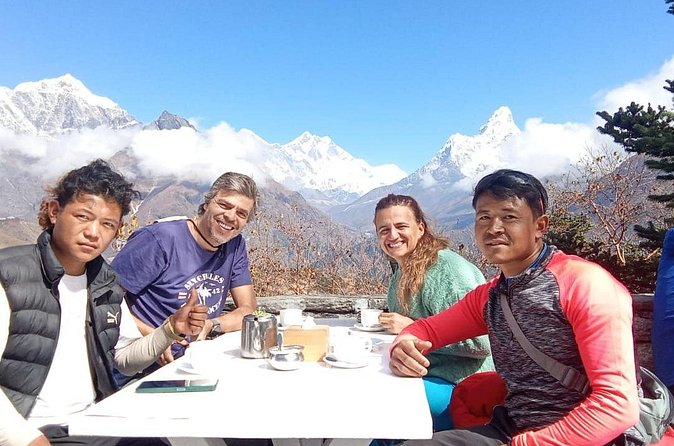
The best Himalayan routes take the long way. This 14-day private trek combines Everest Base Camp, the classic goal, with the quiet Gokyo Valley and the demanding Cho La Pass crossing. I like the route because you see Everest from several angles, and because Gokyo’s high lakes provide a calmer counterpoint to the busy base camp trail.
I also like the practical setup. Round-trip flights to Lukla, teahouse lodging, meals, permits, airport transfers, a licensed guide, and porter support are included. The main concern is the price of $1,000 per person: it offers solid value if all flights and services run as planned, but you still need to budget for insurance, gear, tips, showers, Wi-Fi, charging, and possible extra hotel nights.
This is not a gentle introduction to mountain walking. You will spend two weeks at altitude, cross an icy pass, and face long days on rough trails. The reward is a broad Himalayan experience with Sherpa villages, monasteries, memorials, glaciers, high lakes, and some of Nepal’s biggest mountain views.
Key points to know before booking
- Cho La Pass changes the entire trek: The crossing adds a challenging glacier pass between the Everest Base Camp area and Gokyo Valley.
- Gokyo gives you a quieter side of Everest: The lakes, high viewpoints, and views toward Cho Oyu and Makalu add variety beyond the standard route.
- The $1,000 price covers the main framework: Flights, meals, permits, lodging, guide, porter support, and transfers are included.
- Altitude is the real test: Namche, Dingboche, Lobuche, Gorak Shep, and Gokyo all come at progressively higher elevations.
- Guide and porter support matter: A porter ratio of one for every two people reduces the weight you carry on steep days.
- The schedule is private, but not luxurious: You get twin-sharing teahouses and warm local hospitality, not resort comforts.
Day 1: Kathmandu arrival and a useful gear check
Your guide meets you at Tribhuvan International Airport with a sign bearing your name. That small detail matters after a long international flight, especially if Kathmandu is your first visit to Nepal.
The first day includes airport transfer, a trek briefing, and a gear check. Use this time well. The itinerary moves quickly after Kathmandu, and it is much easier to replace missing socks, rent poles, or adjust your pack in the capital than in the Khumbu.
One night in Kathmandu with breakfast is included. Lunch and dinner are not, so plan for those separately. The trip ends back in Kathmandu on Day 14, with free time for rest, shopping, or an optional massage.
More Everest Base Camp Treks in Kathmandu:
- Everest Base Camp Trek – 14 Days
★ 5.0 · 1,499 reviews - Everest Base Camp Trek
★ 5.0 · 842 reviews - Everest Base Camp Trekking
★ 5.0 · 485 reviews
Day 2: Flying to Lukla and walking to Phakding
The morning flight to Lukla is scenic and short, placing you at the start of the Everest trekking route. From Lukla, you begin walking through Sherpa villages toward Phakding.
This first walking day helps you shift from city time to trail time. The Dudh Koshi area introduces you to suspension bridges, stone paths, hillside settlements, and the steady rhythm of teahouse trekking.
Flight schedules in the Himalayas depend on weather, so keep your plans flexible. The package includes the domestic flight, but it does not include extra hotel nights if delays or an early return become necessary.
Days 3 and 4: Namche Bazaar, the first real altitude test
The route enters Sagarmatha National Park as you cross suspension bridges and climb toward Namche Bazaar. You may catch your first view of Everest, though the mountain does not yet dominate every scene.
Namche is more than a stopping point. It is the commercial and social center of the Khumbu, with local shops, a market, a Sherpa museum, and teahouses where you can rest before the higher trail.
Day 4 is set aside for acclimatization. The optional hike to Everest View Hotel reaches about 3,880 meters and gives you a strong mountain panorama without moving your sleeping elevation higher. I consider this one of the most useful days on the schedule. You get a view, some exercise, and time for your body to adjust.
Do not treat the rest day as wasted time. It is one of the reasons the itinerary can work at altitude. Namche is also a good place to check your clothing, charge devices if needed, and ask your guide about the days ahead.
Day 5: Tengboche monastery and forest trails
From Namche, the trail heads toward Tengboche through pine forest, with views of Thamserku and Everest along the way. The walking is scenic, but it is not simply a mountain photo stop. The forest, river crossings, and changing views make this section feel varied.
Tengboche Monastery is the cultural highlight of the route. Its presence gives the trek a clear connection to Sherpa Buddhist life, rather than making the journey only about reaching a famous point on a map.
The day is listed as a long one, so start with enough time and keep your pace steady. The best approach is simple: do not race the strongest person in the group. At altitude, a calm pace is more useful than an impressive first hour.
A few more treks around Kathmandu worth a look
- Annapurna Circuit Trek with Tilicho Lake
★ 5.0 · 368 reviews - Everest Base Camp Trekking – 13 Day
★ 5.0 · 365 reviews - Everest Base Camp Trek
★ 5.0 · 350 reviews - Everest Base Camp Trek -14 Days
★ 5.0 · 321 reviews
Day 6: Pangboche and the approach to Dingboche
The trail crosses the Imja Khola and passes through Pangboche before reaching Dingboche. Here, you begin to feel the altitude in a more serious way.
Dingboche is an important overnight stop because the route is now well above the lower valleys. You may notice that short climbs require more effort, and that a normal walking pace feels unusually slow. That is expected. Tell your guide if you have a headache, unusual tiredness, or other symptoms.
The guide is one of the most valuable parts of this arrangement. Positive feedback about Marvel Treks often focuses on guides who reassure tired hikers, help with difficult moments, and keep the group feeling cared for. One past guide, Shisir, was especially praised for calm support, while another, Udio, was described as friendly and helpful on a separate Nepal trek. Guide quality matters greatly here, so use yours actively rather than treating the guide as someone who only points out the trail.
Day 7: Lobuche and the memorials
The walk to Lobuche continues through alpine terrain. The trees are largely gone, and the surroundings feel more exposed and severe.
Along the way, you pass memorials to climbers who died in the Everest region. These stone memorials add a quiet, human side to the trek. They remind you that the route is not only a scenic walk or a personal challenge. For many families and climbing communities, these mountains carry real loss.
The gradual climb to Lobuche is not long by ordinary hiking standards, but altitude changes the calculation. Keep your layers accessible, drink regularly, and avoid using the remaining energy for unnecessary speed.
Day 8: Gorak Shep and Everest Base Camp
From Lobuche, you continue to Gorak Shep and then follow the Khumbu Glacier toward Everest Base Camp. The route is rocky, exposed, and physically demanding, with the glacier and huge peaks providing a dramatic setting.
Reaching base camp is the emotional center of the trek for many people. It is a place to pause, take photographs, and appreciate the effort required to reach it. You do not sleep at base camp. After spending time there, you return to Gorak Shep.
This is an eight-hour day in the stated schedule, and the combination of distance and altitude can make it feel longer. Base camp itself does not offer a single sweeping view of Everest, which is why the next morning at Kala Patthar is so important.
Day 9: Kala Patthar, then Dzongla
You begin early for the sunrise view from Kala Patthar. This is generally the strongest viewpoint for seeing Everest on the itinerary, along with the surrounding Khumbu peaks.
The climb is not technically described as a mountaineering ascent, but the height makes it hard. Move slowly and listen to your guide. The view is the reward for an early start, cold conditions, and thin air.
After returning, you trek down to Lobuche and continue toward Dzongla. This is a demanding transition day because it combines the early viewpoint climb with more walking. Dzongla positions you for the Cho La crossing, so the schedule now shifts from classic Everest-route trekking to a more adventurous high-pass route.
Day 10: Crossing Cho La Pass into Gokyo Valley
Cho La is the most challenging part of the trek. You cross early in the morning, when conditions are expected to be more stable, then descend into the quieter Gokyo Valley.
The pass involves icy terrain and should be treated with respect. Good boots, warm clothing, and trekking poles are especially important here. Personal gear is not included, though you can rent equipment in Kathmandu.
This day is one reason to choose the route instead of a standard Everest Base Camp itinerary. You trade some simplicity for a major change of scenery and a stronger sense of adventure. At the same time, the pass adds risk and physical strain. If you want an easy, predictable trek, choose the classic route instead.
The itinerary states that the experience requires good weather. That is particularly important for a pass crossing, where conditions can force a change of plan.
Days 11 and 12: Gokyo Lakes and the return to Namche
After reaching Gokyo, you have time for a morning climb to panoramic views of Everest, Cho Oyu, and Makalu. You also visit the third and fourth Gokyo Lakes.
This section provides a welcome contrast to the base camp trail. The lakes and broad mountain views create a quieter, more reflective part of the trip. You still face altitude and cold, but the setting feels less focused on a single destination.
The descent then leads through Machhermo, Dole, and Khumjung before returning to Namche Bazaar. A hot shower and proper rest at Namche will feel well earned. Personal showers, Wi-Fi, and battery charging are not included, so expect to pay directly at teahouses when those services are available.
Days 13 and 14: Returning through the Dudh Koshi valley
The final trekking day follows the Dudh Koshi River back toward Lukla. After nearly two weeks on foot, the last day can feel both easy and surprisingly tiring. Descending uses different muscles, and the trail may be familiar without feeling effortless.
The early flight from Lukla returns you to Kathmandu on Day 14. The package includes airport transfers and the domestic flight. Your trip concludes at the Kathmandu meeting point, though an optional hotel night or transfer can be arranged according to the stated plan.
Keep your international departure separate from this return flight if possible. The itinerary does not include extra accommodation caused by flight disruption, so a little flexibility is sensible.
What the $1,000 price really covers
At $1,000 per person, the package is strong value for a guided Himalayan trek because it includes the costly logistical basics:
- Round-trip Kathmandu to Lukla flights
- One Kathmandu hotel night with breakfast
- Twelve nights in twin-sharing teahouses
- Breakfast, lunch, and dinner during the trek
- Licensed English-speaking guide
- Porter support at a ratio of one porter for every two people
- Sagarmatha National Park and TIMS permits
- Airport transfers
- Trekking duffel bag
- Government taxes and service charges
You still need to pay for international flights, a Nepal visa, Kathmandu meals, travel insurance, personal equipment, guide and porter tips, and personal teahouse expenses. Insurance is mandatory, and it should be suitable for a high-altitude trek.
Food is one of the practical strengths of the package. Previous praise for Marvel Treks has specifically highlighted well-organized trips and good food. You should not expect restaurant variety at every stop, but having meals included removes daily planning and makes the budget easier to control.
Comfort, group size, and the private format
This is a private activity, so only your group participates. That can make a big difference on long days. Your guide can respond to your pace and help you manage difficult sections without waiting for a large mixed group.
The accommodation is twin-sharing teahouse lodging. That means basic rooms and local hospitality, not private luxury. Hot showers, Wi-Fi, and charging usually cost extra when available, so carry enough power for your needs and keep expectations modest.
The included porter ratio is also useful. You still carry a daypack, but you do not need to carry all your trekking equipment. Pack carefully anyway. A lighter personal bag makes steep climbs and the Cho La crossing much easier.
Who should book this trek?
I would recommend it to a fit hiker who wants more than the standard Everest Base Camp route. You should be comfortable with several consecutive walking days, basic teahouse accommodation, high-altitude conditions, and a demanding pass crossing.
It suits you especially well if you want:
- Everest Base Camp plus Gokyo Lakes
- A route with strong cultural stops
- A private group and guide support
- Meals, permits, flights, and lodging arranged in one package
- A serious mountain challenge without arranging every detail yourself
I would not choose it for a first-ever walking holiday unless you already have good fitness and understand the altitude issue. It is also a poor match if you need guaranteed flight times, hotel-style comfort, or a relaxed schedule with short walking days.
Cancellation is free up to 24 hours before the start time for a full refund. Changes made inside that period are not accepted, and poor weather or failure to reach the minimum number of participants can lead to a new date, an alternative experience, or a full refund.
Should you book the Everest Base Camp via Gokyo route?
Book it if you want the full Khumbu experience rather than only the famous base camp name. The combination of Everest views, Kala Patthar, Gokyo Lakes, Cho La Pass, Tengboche Monastery, and Sherpa villages gives you much more variety than a simple out-and-back route.
The main decision is your tolerance for difficulty. If you are ready for altitude, cold, basic lodging, and a serious pass crossing, the $1,000 package covers the core services at a sensible price. If you want a softer trek, choose a route without Cho La. For the prepared hiker, this is a demanding but rewarding way to see several sides of the Everest region.
FAQ
How long is the Everest Base Camp trek via Gokyo Lake and Cho La Pass?
The trek takes approximately 14 days, including arrival and departure arrangements in Kathmandu, domestic flights, and the walking route.
What is included in the $1,000 price?
The price includes round-trip Kathmandu to Lukla flights, one Kathmandu hotel night with breakfast, twelve teahouse nights, all trekking meals, a licensed English-speaking guide, porter support, permits, airport transfers, a trekking duffel bag, taxes, and trekking service charges.
Is travel insurance included?
No. Travel insurance is not included, and it is mandatory for this experience.
Is personal trekking equipment provided?
No. Boots, jackets, trekking poles, and other personal gear are not included. Equipment can be rented in Kathmandu.
Is this a private trek?
Yes. Only your group participates in the activity.
How are porters assigned?
The stated porter support is one porter for every two people.
What are the main highlights of the route?
The route includes Namche Bazaar, Tengboche Monastery, Everest Base Camp, Kala Patthar, Cho La Pass, Gokyo Valley, and the third and fourth Gokyo Lakes.
Are meals included during the trek?
Breakfast, lunch, and dinner are included during the trek. Lunch and dinner in Kathmandu are not included.
Can I cancel for a full refund?
You can cancel at least 24 hours before the experience start time for a full refund. Cancellations or changes made less than 24 hours beforehand are not accepted for a refund.
Recently added around Kathmandu
- Ghorepani Poon Hill Trek★ 5.0 · 16 reviews
- Private Manaslu Circuit Trek at Himalayas★ 5.0 · 3 reviews
- Amazing 1 Day Trekking Experience in Kathmandu Nepal★ 5.0 · 24 reviews
- Ghorepani Poonhill Trek★ 5.0 · 5 reviews
- Upper Mustang Trekking★ 5.0 · 2 reviews
- Upper Mustang Trekking★ 3.0 · 2 reviews
- Upper Mustang Trekking★ 5.0 · 4 reviews
- Upper Mustang Trek★ 5.0 · 5 reviews
Everest Base Camp Treks, compared.






Browse the lists this tour appears in