
REVIEW · KATHMANDU
Everest Base Camp Trek from Salleri (Overland)
Skip the Lukla flight at the start. This 17-day Everest Base Camp trek reaches the Khumbu by road from Kathmandu, then follows a quieter approach through Salleri, Nunthala, Puiyan, and Phakding before joining the classic route. I like the overland beginning, which gives you more time among hills, rivers, forests, and villages, and I like that meals, teahouses, porters, licensed leadership, and the return flight are included. The main drawback is that the trip still finishes with a Lukla flight, so you avoid only the outbound flight, not air travel altogether.
I also like the private format, with only your own group taking part and a maximum group size of 15. The price of $1,500 per group can be good value for two or more people because it covers a guide, porter support, staff costs, food, lodging on trek, transport, and the domestic flight. Still, you should be ready for long walking days, basic mountain accommodation, high altitude, and extra costs for showers, Wi-Fi, charging, water, tips, and personal purchases.
Key points before you book
- Road access from Kathmandu: An 8 to 9-hour drive reaches Salleri, letting you avoid the Kathmandu to Lukla flight at the start.
- A quieter first trekking section: The route through Nunthala and Puiyan offers a less-used approach before joining the busy Everest trail at Phakding.
- Classic high-altitude milestones: Namche Bazaar, Tengboche, Dingboche, Lobuche, Everest Base Camp, and Kala Patthar all feature in the plan.
- Two useful acclimatization stops: You spend a day around Namche and another at Dingboche, including a hike to Nagarjun Hill at 5,080 meters.
- Porter support included: One porter is provided for every two trekkers, with staff insurance, food, accommodation, and equipment covered.
- The return uses Lukla: After trekking back to Lukla, you fly to Kathmandu in about 35 minutes before departure.
Why the Salleri approach changes the trek
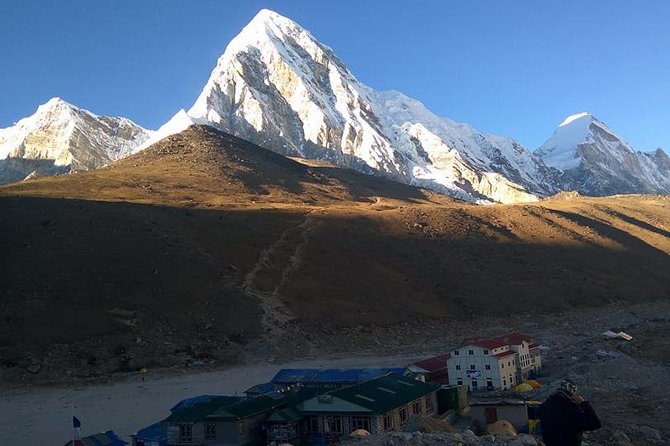
Most people picture Everest Base Camp beginning with a small plane to Lukla. This route takes a different path. You drive from Kathmandu to Salleri, at 2,309 meters, then walk north through a quieter section of the Solukhumbu region.
That road journey takes 8 to 9 hours, so it is not a small transfer. You will spend much of the day in a private vehicle, and road conditions can make the trip feel tiring before the first walking stage begins. In return, you get a gradual introduction to the region instead of stepping straight from an airport into the main trekking corridor.
The opening walk passes through Nunthala and Puiyan before reaching Phakding. This section is useful if you want the trip to feel like a journey through the lower hills, rather than simply a march toward the famous sights. You will see more of the transition from lower elevations to the high Khumbu, with hills, river valleys, forests, and changing scenery close to the trail.
The trade-off is time. The Salleri route adds road travel and several walking days before the classic Everest Base Camp path. If your only goal is to reach Base Camp as quickly as possible, a Lukla start would be more direct. If you prefer a longer approach and want to avoid flying into Lukla at the beginning, this route makes sense.
More Everest Base Camp Treks in Kathmandu:
- Everest Base Camp Trek – 14 Days
★ 5.0 · 1,499 reviews - Everest Base Camp Trek
★ 5.0 · 842 reviews - Everest Base Camp Trekking
★ 5.0 · 485 reviews
Days 1 and 2: Kathmandu to Salleri
Your first day is for arrival at Tribhuvan International Airport in Kathmandu. A private vehicle takes you to the hotel you have booked, and the package includes airport pickup. The included Kathmandu stay is at a 3-star hotel with breakfast.
Lunch and dinner in Kathmandu are not included, and neither are extra hotel nights caused by early arrival, late departure, or an early return from the mountains. I would check your international flight times carefully before booking, since those additional nights are your responsibility.
Day 2 is the long drive to Salleri. The private vehicle is included, which is more comfortable than arranging transport yourself, especially with trekking bags. The road day may be the least glamorous part of the trip, but it gets you into the Everest region without taking the outbound Lukla flight.
Salleri sits at 2,309 meters, so the trek begins at a useful elevation rather than in the lowlands. You will still need to pace yourself once walking starts. A current valid passport is required on the day of travel, and the Nepalese visa fee is not included.
Days 3 to 5: Nunthala, Puiyan, and Phakding
The walk from Salleri to Nunthala takes about 5 to 6 hours. At 2,190 meters, Nunthala is not yet a high-altitude stop, but it marks the start of the proper mountain rhythm: walk during the day, eat at a teahouse, and sleep simply at night.
The next stage reaches Puiyan at 2,300 meters after 6 to 7 hours. This is another moderate elevation, but the walking time is substantial. You should think less about the final altitude on these days and more about building a steady pace. The point is not to race. It is to arrive with energy left for the higher sections.
Day 5 takes you to Phakding, at 2,652 meters, in another 6 to 7 hours. Here the route joins the better-known Everest Base Camp corridor. This is an important change in feel: the quiet opening route gives way to the standard path toward Namche Bazaar.
The route description emphasizes hills, rivers, forests, and close-up scenery. That makes these first walking days appealing for anyone who values the approach itself. The possible downside is that you have already completed several long stages before reaching the best-known villages.
Days 6 and 7: Namche Bazaar at 3,440 meters
The walk from Phakding to Namche takes 6 to 7 hours and reaches 3,440 meters. Namche Bazaar is one of the key stops on any Everest Base Camp route, and the schedule wisely includes a full day hike around it.
That extra day matters. Instead of gaining altitude every day without pause, you have time to walk around Namche and adjust before going higher. The itinerary does not specify the exact day-hike route, so you should ask the guide what the plan will be and how strenuous it is.
Namche is also the point where the trek begins to feel more demanding. You may notice the thinner air, and the next stages climb well above 4,000 meters. The day hike is not a free day in the usual sense. It is part of the altitude plan, so use it to walk steadily, drink what you need, and avoid treating it as a hard test.
The private format is useful here. You are not tied to a large group’s pace, although your actual timetable will still depend on the guide, conditions, and how the group is coping.
A few more treks around Kathmandu worth a look
- Annapurna Circuit Trek with Tilicho Lake
★ 5.0 · 368 reviews - Everest Base Camp Trekking – 13 Day
★ 5.0 · 365 reviews - Everest Base Camp Trek
★ 5.0 · 350 reviews - Everest Base Camp Trek -14 Days
★ 5.0 · 321 reviews
Days 8 to 10: Tengboche and Dingboche acclimatization
Day 8 takes you from Namche to Tengboche, at 3,880 meters, in 4 to 5 hours. This is a shorter walking day than several earlier stages, which gives you a little breathing room as the altitude rises.
Tengboche is one of the memorable stops on the route, not simply a place to sleep. The itinerary gives you time to arrive without the pressure of an exceptionally long day. From here, the trek continues to Dingboche, at 4,410 meters, in 6 to 7 hours.
Dingboche is followed by another acclimatization day. The scheduled hike climbs Nagarjun Hill to 5,080 meters and takes about 4 to 5 hours. This is a serious high-altitude walk, even though it is not a full travel day. The gain is that you can go higher during the day and then return to Dingboche rather than sleeping at the higher point.
You should not treat this hike as optional sightseeing unless the guide advises otherwise. It is one of the trip’s main opportunities to prepare for Lobuche, Gorakshep, Base Camp, and Kala Patthar. At these elevations, a moderate physical fitness level is essential. The experience is not recommended for children aged 10 and under.
Days 11 to 13: Lobuche, Everest Base Camp, and Kala Patthar
The trek from Dingboche to Lobuche takes 4 to 5 hours and reaches 4,930 meters. By now, the walking distances may look manageable on paper, but the altitude changes the effort. You should expect a slower pace and less energy than you would have at home.
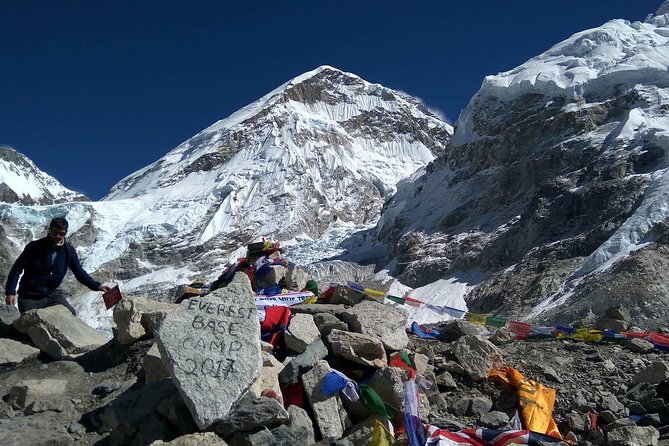
Day 12 is the big target: a 7 to 8-hour walk to Everest Base Camp at 5,364 meters, followed by the return to Gorakshep at 5,180 meters. This is a long day at high altitude, so the guide’s pacing and your own discipline matter more than speed.
The schedule places you back in Gorakshep rather than ending at Base Camp. That is practical because the route continues early the next morning toward Kala Patthar. Accommodation in this part of the trek is teahouse accommodation, so keep your expectations modest. The package covers the room and meals, but personal comforts such as showers, Wi-Fi, charging, and bottled or boiled water cost extra.
Day 13 starts early with the climb to Kala Patthar, at 5,545 meters, then continues down to Pheriche, at 4,200 meters. The complete day takes 7 to 8 hours. This is the highest point on the planned route and one of the hardest mornings.
The itinerary calls the destination Kala Patthar, while the actual value of the stop is the high mountain viewpoint and the sense of reaching the top of the trek. Do not confuse this with Everest Base Camp itself. They are separate stops, and the schedule includes both.
Days 14 to 17: Returning through Namche and Lukla
After the high point, the route descends to Namche in 6 to 7 hours. Dropping from Pheriche to 3,440 meters should feel different from climbing upward, but your legs will still be carrying several demanding days.
Day 15 continues to Lukla, at 2,860 meters, in 6 to 7 hours. This is where the overland concept ends. You avoid the flight from Kathmandu to Lukla, but the return still uses a domestic flight.
On Day 16, the Lukla to Kathmandu flight takes about 35 minutes. The tour includes this flight, along with ground transport in Kathmandu. The final day is departure from Tribhuvan International Airport.
The flight is an important planning detail. The itinerary gives you one day for the flight and one day for international departure, which is sensible on paper. You should still confirm how the operator handles extra nights if the flight schedule changes, since any added Kathmandu accommodation is not included.
What the $1,500 group price covers
At $1,500 per group of up to 15, the value depends heavily on how many people are sharing the booking. For a small private group, the fixed price can be attractive. For two people, it works out to $750 each before personal spending. For a larger group, the per-person cost drops further.
The package includes a lot of the expensive moving parts:
- Airport pickup and drop-off in a private vehicle
- Kathmandu hotel accommodation with breakfast
- Teahouse accommodation during the trek
- Breakfast, lunch, and dinner during the trek
- Farewell dinners
- Private ground transport listed in the schedule
- Lukla to Kathmandu airfare
- An English-speaking, government-licensed trek leader
- One porter for every two trekkers
- Staff wages, insurance, food, accommodation, and equipment
- A medical kit carried by the trek leader
- Government and local taxes
That porter ratio is worth noticing. One porter for two trekkers means you will not necessarily carry every item yourself, but you should ask about the luggage weight limit and what you are expected to carry during the day. Those details are not provided here.
You should budget separately for the Nepalese visa, international flights, excess baggage, Kathmandu lunches and dinners, extra hotel nights, rescue and travel insurance, Wi-Fi, calls, laundry, bar bills, battery charging, showers, extra porters, water, and tips. Tips for the guide, porters, and driver are not included.
Guides, support, and the personal feel
The trip is led by an experienced, English-speaking, government-licensed trek leader. Staff costs and a medical kit are included, which gives the package a more complete support structure than a bare-bones trek.
The strongest personal praise connected with Mount Mania focuses on the warmth and care of the people involved. Names associated with those positive experiences include Rupak, Binod, and Ballaram. Rupak is described as treating clients like family, while Binod and Ballaram are praised for being kind, supportive, and encouraging.
You should not assume one of these specific people will lead your departure unless the company confirms it. Still, the names are useful when you contact the operator. Ask who your guide will be, how many porters are assigned, and what the daily process is if someone has trouble with altitude.
The tour requires at least two people per booking and is private, so it suits friends, couples, and families with older, fit children better than solo hikers. The stated minimum age guidance is clear: it is not recommended for children aged 10 and under.
What to pack and what to budget
The trek operates in all weather, so appropriate clothing is not optional. Bring layers suitable for changing temperatures, a reliable rain layer, warm clothing for the high camps, and practical footwear for long walking days.
The provided information does not specify a full equipment list, so ask the operator about sleeping bags, luggage limits, and any gear included or available for hire. Do not assume that every mountain item is covered by the price.
Cash planning matters too. Personal services such as hot showers, charging, Wi-Fi, laundry, and water are extra. The package includes meals during the trek, but not every drink or convenience around those meals. Travel and rescue insurance is also your responsibility, and it should match the altitude and activity.
The free cancellation policy allows a full refund when you cancel at least 24 hours before the local start time. Changes or cancellations inside that period are not accepted for a refund.
Who should choose this Everest Base Camp route?
I would choose this trek if you want the Everest Base Camp goal but prefer to begin by road. The approach through Salleri gives the trip more stages, more lower-hill scenery, and a less direct start than the standard Lukla itinerary.
It suits people with moderate physical fitness who can manage repeated 4 to 8-hour walking days and high-altitude stops above 5,000 meters. It also suits anyone who values included support, since meals, teahouses, a licensed leader, porter service, staff costs, and the return flight are all part of the package.
I would think twice if your schedule is tight, you dislike long road journeys, or you want to avoid flying entirely. This route skips the outbound Lukla flight but still ends with a Lukla to Kathmandu flight. I would also ask detailed questions before booking about baggage limits, the assigned guide, the hotel name in Kathmandu, and arrangements for flight disruption or early return.
Should you book it?
Book this Salleri Everest Base Camp trek if you want a private, supported Himalayan trip with a longer overland approach and a clear acclimatization plan. The fixed $1,500 group price can be strong value, particularly for several people sharing the booking.
Skip it if you want the shortest possible route, full control over personal costs, or no domestic flight. For the right group, the combination of quieter early walking, famous Everest stops, experienced staff, and included logistics makes this a practical way to reach Base Camp without starting in an airport queue at Lukla.
FAQ
How long is the Everest Base Camp trek from Salleri?
The full program lasts approximately 17 days, including arrival in Kathmandu, the Salleri road transfer, the trek, the Lukla flight back to Kathmandu, and final departure.
Does the tour include the flight from Kathmandu to Lukla?
No. The route travels by private vehicle from Kathmandu to Salleri at the beginning. It includes a domestic flight from Lukla to Kathmandu at the end.
What is included in the $1,500 price?
The price includes the listed airport transfers, 3-star Kathmandu accommodation with breakfast, teahouse lodging, meals during the trek, farewell dinners, ground transport, the Lukla to Kathmandu flight, a licensed English-speaking trek leader, porter service, staff costs, a medical kit, and government and local taxes.
Are Kathmandu lunches and dinners included?
No. Lunch and dinner in Kathmandu are not included. Breakfast is included with the Kathmandu hotel stay.
Is travel insurance included?
No. Travel and rescue insurance are not included, so you need to arrange them separately.
What is the cancellation policy?
You can receive a full refund if you cancel at least 24 hours before the experience start time. Cancellations or changes made less than 24 hours beforehand are not accepted for a refund.
Recently added around Kathmandu
- Ghorepani Poon Hill Trek★ 5.0 · 16 reviews
- Private Manaslu Circuit Trek at Himalayas★ 5.0 · 3 reviews
- Amazing 1 Day Trekking Experience in Kathmandu Nepal★ 5.0 · 24 reviews
- Ghorepani Poonhill Trek★ 5.0 · 5 reviews
- Upper Mustang Trekking★ 5.0 · 2 reviews
- Upper Mustang Trekking★ 3.0 · 2 reviews
- Upper Mustang Trekking★ 5.0 · 4 reviews
- Upper Mustang Trek★ 5.0 · 5 reviews
Everest Base Camp Treks, compared.




Browse the lists this tour appears in