
REVIEW · NEPAL
Everest Base Camp Trek: A short EBC Trek to Iconic Himalaya
The mountains begin before the walking does. This 9-day Everest Base Camp trek takes you from Kathmandu to Lukla, through Sherpa villages and high Himalayan valleys, and finally to the foot of Everest at 5,364 meters. I like the direct route to the big sights, especially the views of Everest, Lhotse, Nuptse, and Ama Dablam. I also like that the price of $681 includes meals, a guide, park fees, trekking gear such as a sleeping bag and down jacket, and airport transfers.
The main caution is the pace. You need to walk about four to five hours a day, often at high altitude, and the itinerary leaves little spare time for acclimatization or weather delays. I especially appreciate the attentive coordination credited to Sobit and the guide support praised by Sydney, who completed the route with guide Ramesh, but you should still consider adding one or two days if you are new to high-altitude trekking.
Five things to know before you book
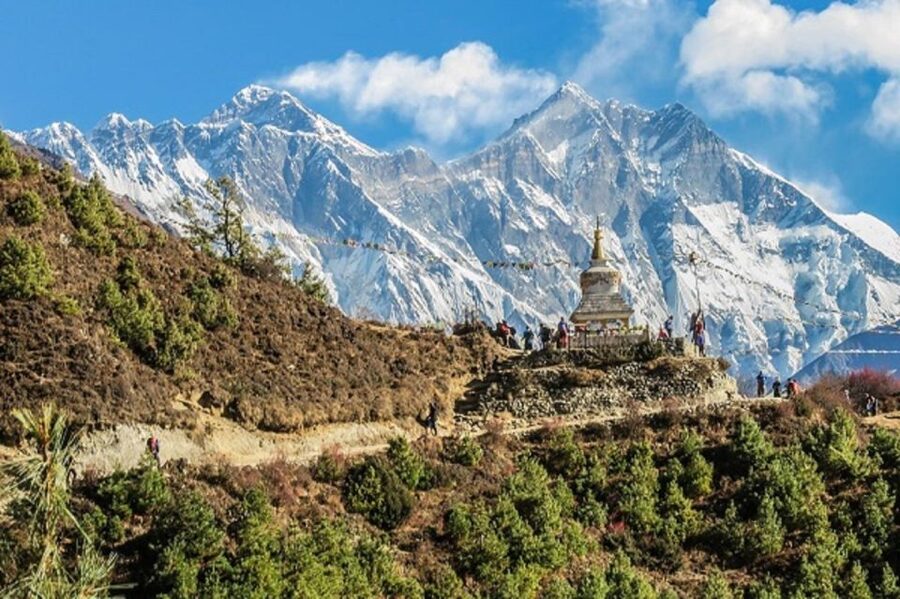
- The trek reaches 5,364 meters at Everest Base Camp: The altitude is the central challenge, not just the distance.
- Kala Patthar reaches 5,545 meters: This early morning climb provides the route’s major sunrise viewpoint.
- The return flight can shift to Ramechhap: High air traffic may mean a roughly four-hour road journey before flying to Lukla.
- Flights are not included in the $681 price: Kathmandu to Lukla and Lukla to Kathmandu must be paid separately.
- The route includes Sherpa cultural stops: Namche Bazaar and Tengboche offer more than mountain views, with local traditions and the important Tengboche Monastery.
- The schedule can be customized: One or two extra acclimatization days in Namche Bazaar or Dingboche can make a major difference.
What the 9-day Everest Base Camp route is really like
This is a short version of the classic Everest Base Camp route. You cover about 130 kilometers round trip, beginning with a flight to Lukla and ending with a trek back to Lukla before flying to Kathmandu.
The route is designed for physically fit people. You should be ready to walk four to five hours per day, with some days lasting six to eight hours. The challenge grows as the air thins. A walk that feels ordinary near Lukla can feel demanding around Lobuche or Gorak Shep.
I like that the route does not waste time on side trips. You reach the best-known points of the Khumbu region: Namche Bazaar, Tengboche, Dingboche, Lobuche, Gorak Shep, Everest Base Camp, and Kala Patthar. The tradeoff is that this schedule is tight. If your body needs more time to adjust, speed is not your friend.
The operator can add one or two days, especially around Namche Bazaar and Dingboche. That is the sensible choice for a beginner, for anyone unsure about high altitude, or for anyone who wants to enjoy the villages rather than simply push through them.
More Everest Base Camp Treks in Nepal:
- Everest Base Camp Trek – 14 Days
★ 5.0 · 1,499 reviews - Everest Base Camp Trek
★ 5.0 · 842 reviews - Everest Base Camp Trekking
★ 5.0 · 485 reviews
Day 1: Lukla to Phakding and the first Himalayan steps
Your day begins with an early flight from Kathmandu to Lukla. If air traffic is high, you may first travel by road for about four hours to Ramechhap, then take the flight from there. This change matters because it makes an already early start even earlier.
Lukla is the gateway to the Khumbu trek. From the airstrip, you begin walking toward Phakding at 2,610 meters. The trek takes about three hours, making this a relatively gentle first day by the standards of the route.
The short distance gives you time to settle into the walking rhythm and meet the guide and support team. You will stay in a standard trekking guesthouse or lodge. Food during the trek includes breakfast, lunch, and dinner, with some seasonal fruit items.
Do not treat this as a sightseeing day only. Even at this lower elevation, you are beginning a steady climb. Keep your pace easy, drink the beverages you have planned for, and save energy for the days ahead.
Day 2: Phakding to Namche Bazaar
The walk to Namche Bazaar takes about six to seven hours and brings the first serious gain in elevation. Namche sits at 3,440 meters and is one of the key settlements on the route.
The trail passes through mountain scenery, suspension bridges, and forested sections with rhododendrons. The bridges add a touch of drama, but the larger test is the climb toward Namche. You will feel the difference between walking at the start of the day and walking near the end.
Namche is more than a stopover. It is the main trading and service center of the Khumbu region and an important place to adjust to altitude. The schedule describes acclimatization around Namche, though the nine-day version is very compressed. If you can add a day here, I would strongly consider it.
Use the extra time to walk slowly, rest, and let your body catch up. This is also one of the best places to appreciate the Sherpa character of the region. The trek is not only about reaching a mountain base camp. It is also about passing through communities that have shaped life in the Khumbu for generations.
Day 3: Namche Bazaar to Tengboche and its monastery
The route from Namche to Tengboche takes about five to six hours. Tengboche sits at 3,860 meters and is known for its monastery, one of the cultural landmarks of the trek.
This is an excellent day for balancing scenery and culture. You get more views of the Himalayan giants, including Ama Dablam, while the monastery gives the walk a spiritual setting. The mountain scenery can be loud and dramatic, but Tengboche asks you to slow down and pay attention to the quieter side of the region.
The altitude is now becoming a real factor. You may still feel strong after Namche, but do not confuse fitness with acclimatization. A fit person can still become unwell at altitude.
The itinerary lists an acclimatization day in connection with the Namche section, while the overall schedule continues through Tengboche and Dingboche. Because the exact pacing can be customized, confirm before departure where your extra rest day will be placed.
A few more treks around Nepal worth a look
- Annapurna Circuit Trek with Tilicho Lake
★ 5.0 · 368 reviews - Everest Base Camp Trekking – 13 Day
★ 5.0 · 365 reviews - Everest Base Camp Trek
★ 5.0 · 350 reviews - Everest Base Camp Trek -14 Days
★ 5.0 · 321 reviews
Day 4: Tengboche to Dingboche
The walk to Dingboche takes about five to six hours and reaches 4,410 meters. The route moves farther above the tree line, so the scenery begins to feel more open and exposed.
Dingboche is another important acclimatization point. It is also the place where the mountains begin to feel less like a backdrop and more like the main event. Lhotse, Nuptse, and Ama Dablam shape the views, while the high valley gives you a clear sense of how far you have climbed.
The itinerary includes acclimatization at Dingboche, but the short overall duration means you should ask how that rest period is handled. Adding one day here is especially useful if you have never slept above 4,000 meters.
You do not need to prove anything by rushing. A slow pace, regular rest, and close attention to how you feel will serve you better than trying to match someone else’s speed. Your guide is there throughout the trek, so tell the guide early if you have symptoms or need a slower pace.
Day 5: Dingboche to Lobuche at 4,910 meters
The walk from Dingboche to Lobuche takes about five to six hours. At 4,910 meters, Lobuche is high enough that every small effort can feel larger.
This section is less about villages and more about the high mountain setting. The route steadily moves toward the Khumbu Glacier area, with the scale of the surrounding peaks becoming more impressive as the air becomes thinner.
The day can feel manageable at the start and tiring by the end. That is normal at this elevation, but it is also why the schedule is better suited to people who are already comfortable with long walks and physical effort.
Your included sleeping bag and down jacket are useful here, especially because temperatures can be cold at night. You should still bring your own warm clothing, thermal layers, gloves, socks, hiking pants, jacket, and sturdy hiking shoes.
Day 6: Gorak Shep and Everest Base Camp
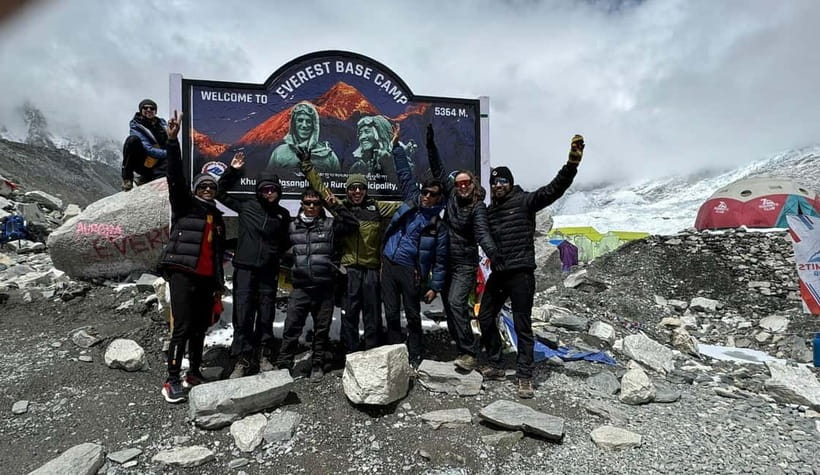
This is the longest and most important day of the outward route. You walk from Lobuche to Gorak Shep at 5,140 meters, then continue to Everest Base Camp at 5,364 meters. The full day takes about seven to eight hours, followed by a return to Gorak Shep for the night.
The trail follows the high valley toward the Khumbu Glacier. At Base Camp, you reach the symbolic goal of the trek, with views toward the Khumbu Icefall, a huge glacial feature that gives this part of the route its drama.
Keep your expectations realistic. Everest Base Camp is a working staging area for climbing expeditions, not a summit viewpoint, and the mountain itself may not appear in the way you imagine from the camp. The route’s best broad view of Everest comes from Kala Patthar the next morning.
This day requires patience. The altitude makes the walk slow, and the return to Gorak Shep still requires effort after you have reached your main goal. I would keep your pack light, follow your guide’s pace, and resist the temptation to sprint the final section.
Day 7: Kala Patthar at sunrise, then down to Pheriche
You start early for the climb to Kala Patthar at 5,545 meters. This is the highest point in the itinerary and the best place on the route for a wide Himalayan panorama, including Mount Everest and neighboring peaks.
The sunrise timing is part of the reward, but the climb is demanding. At this height, even a short uphill section can feel slow. Bring your warmest layers, gloves, and a jacket, since you will be outside early in the day.
After Kala Patthar, you descend to Pheriche at 4,371 meters. The total walking time is about seven to eight hours. The descent lowers the altitude, which usually feels welcome, but tired legs can make the long day difficult.
This is a day where the itinerary’s speed becomes clear. You have reached the highest point, taken in the major view, and still need to make a substantial descent. If you want more time for photographs, rest, or simply enjoying the view, an added day earlier in the route can give you more breathing room.
Day 8: Pheriche back to Namche Bazaar
The walk from Pheriche to Namche takes about six to seven hours. You are descending overall, but the trail is not a straight downhill path. Expect continued walking effort as you pass back through the Khumbu.
This part of the route often feels different from the ascent. You recognize places you passed quickly on the way up, and the lower altitude may bring back some energy. Namche provides a welcome stop before the final push to Lukla.
The return journey also gives you another chance to notice the villages, bridges, forests, and mountain views that may have passed in a blur during the climb. I like that the route returns through the same major settlements, because the experience changes once you know what the high section demanded.
Day 9: Namche to Lukla and the flight back
The final walking day takes about six to seven hours from Namche to Lukla. By now, your legs have completed a long journey, and the trail back to the airstrip may feel both satisfying and surprisingly tiring.
After reaching Lukla, you fly back to Kathmandu. Mountain weather can disrupt flights, so you should allow at least one buffer day before your international departure. This is not an optional bit of trip planning. A delay in Lukla can affect the rest of your schedule.
The package includes airport pickup and departure-related support for trekking trips, but the Kathmandu to Lukla and Lukla to Kathmandu flights themselves are not included in the $681 price. Confirm the flight arrangement and cost before booking, especially if you are comparing the total price with other companies.
What the $681 price includes, and what it does not
At $681 per person, the trek can offer solid value if you need a guide, meals, park permits, and basic trekking equipment arranged together.
Included items cover:
- A trekking guide throughout the route
- Standard guesthouse or trekking lodge accommodation
- Breakfast, lunch, and dinner during the trek
- Seasonal fruit items
- Sagarmatha National Park entrance fee
- Pasang Lhamu Rural Municipality entrance fee
- TIMS
- Sleeping bag, down jacket, duffle bag, and trekking pole if needed
- Airport transfers related to the trekking trip
- A T-shirt or cap and a trip certificate
- A cultural show and farewell dinner in Kathmandu
- Service charges, official expenses, and government taxes
The important exclusions are the Kathmandu hotel, personal gear, drinks, water, laundry, communication, personal spending, and the flights between Kathmandu and Lukla.
The company can arrange the flights, hotels, and porters on request, but you should ask which of these create extra charges. The price is not the full cost of the holiday. It is the core trekking package, with transport and personal expenses added separately.
Guides, porters, and the human side of the trek
The human support on a high-altitude trek matters as much as the route. The strongest praise here goes to the guide and coordination team. Ramesh is specifically praised for being attentive, while Palden is described as a kind and capable guide working with friendly porters. Sobit is credited with helping coordinate the trip from Kathmandu.
That kind of support is valuable when flights change, when you need help understanding the day’s route, or when altitude makes a simple decision harder. I would confirm in advance whether a porter is included or simply available by request, since the supplied details place porter arrangement under the request-based services.
You can also request support in several languages, including English, Chinese, Korean, Russian, Traditional Chinese, and Japanese. Ask about guide language when you book so expectations are clear.
Who should choose this trek?
This trip suits you if you want a direct route to Everest Base Camp and already have a good level of fitness. You should be comfortable walking for several hours each day, including at elevations above 4,000 meters.
It is less suitable if you want a relaxed schedule, dislike early starts, or have never prepared for high altitude. Beginners are specifically advised to add extra days. The route is not suitable for wheelchair users, babies under one year, or people over 95.
I would also be cautious about choosing the nine-day version if your international flight schedule is fixed and leaves no room for delay. The return flight from Lukla is weather dependent, and the itinerary itself has little spare time.
Should you book the 9-day Everest Base Camp Trek?
Book it if you want the main Everest Base Camp route in a compact format, value having a guide and meals organized, and are ready for long days at high altitude. The strongest reasons to choose it are the classic route, the Sherpa villages, Tengboche Monastery, the Khumbu Icefall, and the sunrise climb to Kala Patthar.
Choose a longer version if you are new to altitude, want time to rest in Namche Bazaar and Dingboche, or prefer a calmer pace. Before paying, confirm the flight cost, porter arrangements, Kathmandu hotel needs, exact acclimatization days, and your buffer day after returning to Lukla.
For a fit trekker with limited time, this is a focused and ambitious way to reach Everest Base Camp. For everyone else, adding one or two days is likely to make the experience safer, more comfortable, and much more enjoyable.
FAQ
How long is the Everest Base Camp Trek?
The trek lasts 9 days, including flights from Kathmandu to Lukla and back. The walking route covers approximately 130 kilometers round trip.
What is the highest point on the trek?
Kala Patthar is the highest point at 5,545 meters. Everest Base Camp reaches 5,364 meters.
Is the Kathmandu to Lukla flight included in the price?
No. The Kathmandu to Lukla and Lukla to Kathmandu flights are not included in the $681 price.
Can the flight leave from somewhere other than Kathmandu?
Yes. During periods of high air traffic, the flight may depart from Ramechhap. You may then need a road transfer of about four hours from Kathmandu to Ramechhap.
What meals are included?
Breakfast, lunch, and dinner are included during the trek. Some seasonal fruit items are also provided.
Is accommodation included?
Standard trekking guesthouse or trekking lodge accommodation is included during the trek. Hotels in Kathmandu before and after the trek are not included.
Is a guide included?
Yes. An experienced trekking guide is provided throughout the trek.
Can I add acclimatization days?
Yes. One or two extra days can be added, especially in Namche Bazaar and Dingboche.
What equipment is provided?
A sleeping bag, down jacket, duffle bag, and trekking pole are available if needed. You must bring personal adventure gear and clothing such as hiking shoes, warm layers, gloves, socks, and thermal clothing.
Can I cancel the booking?
You can cancel up to 24 hours in advance for a full refund. The trip also offers a reserve-now-and-pay-later option.
Recently added around Nepal
- Ghorepani Poon Hill Trek★ 5.0 · 16 reviews
- Private Manaslu Circuit Trek at Himalayas★ 5.0 · 3 reviews
- Amazing 1 Day Trekking Experience in Kathmandu Nepal★ 5.0 · 24 reviews
- Ghorepani Poonhill Trek★ 5.0 · 5 reviews
- Upper Mustang Trekking★ 5.0 · 2 reviews
- Upper Mustang Trekking★ 3.0 · 2 reviews
- Upper Mustang Trekking★ 5.0 · 4 reviews
- Upper Mustang Trek★ 5.0 · 5 reviews
Everest Base Camp Treks, compared.






Browse the lists this tour appears in