
REVIEW · KATHMANDU
Everest Base Camp Trek
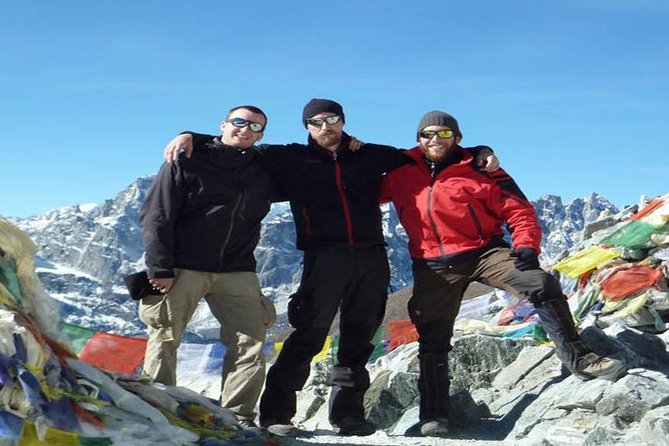
The mountain earns every step. This 15-day Everest Base Camp Trek combines a private guide, teahouse lodging, full-board meals, permits, domestic flights, and time to adjust to the altitude, so you can focus on the trail rather than daily arrangements. I especially like the built-in acclimatization days at Namche Bazaar and Dingboche, and I like that a down jacket, sleeping bag, duffel bag, and first-aid equipment are supplied. The main catch is simple: this is a serious high-altitude trek, not a scenic stroll.
The $1,690 price is strong for what it includes, particularly the Kathmandu airport transfers, Lukla flights, accommodation, meals, guide, permits, and emergency assistance. You should still budget for insurance, drinks, tips, a Nepal visa, personal expenses, and possibly a porter. The private format also gives you more say in the pace, but you need moderate fitness and a willingness to walk on rugged paths for several hours most days.
Key points to know before booking
- The route reaches 5,400 meters at Everest Base Camp, with the highest panoramic viewpoint at Kala Patthar.
- Two acclimatization days are built in, one at Namche Bazaar and another at Dingboche.
- Your $1,690 package covers the major trek costs, including domestic flights, permits, guide, food, lodging, and airport transfers.
- The trek is private, so only your group participates, with personal attention from an English-speaking mountain guide.
- The best Everest view comes from Kala Patthar, not from Base Camp itself, where the Khumbu Icefall and surrounding peaks take center stage.
- Weather can disrupt Lukla flights, so keep flexibility in your schedule and carry travel insurance that covers helicopter evacuation.
What the $1,690 price really covers
The price works because it bundles nearly every large expense once you arrive in Nepal. You receive airport pickup and drop-off in Kathmandu, hotel accommodation in the capital, guesthouse accommodation during the walk, full-board meals, permits, a licensed English-speaking guide, and domestic flights between Kathmandu or Ramechhap and Lukla.
The company also supplies a sleeping bag, duffel bag, and down jacket. That saves you from buying bulky cold-weather equipment for one trip. A first-aid kit and pulse oximeter are included as well, allowing the guide to monitor oxygen saturation and other basic signs at altitude.
Porters are not included. You can add one when booking, and this is worth considering if you want to keep your personal load light. The guide carries responsibility for the group, but that does not mean you should expect the guide to carry all your luggage.
The package does not cover your international flights, Nepal visa, travel insurance, drinks, laundry, internet, phone use, or tips. The most important omission is insurance for helicopter evacuation. At this altitude, that is not a corner to cut.
More Everest Base Camp Treks in Kathmandu:
- Everest Base Camp Trek – 14 Days
★ 5.0 · 1,499 reviews - Everest Base Camp Trek
★ 5.0 · 842 reviews - Everest Base Camp Trekking
★ 5.0 · 485 reviews
Kathmandu arrival and the short flight to Lukla
Day one is deliberately easy. A company representative meets you at Kathmandu International Airport and takes you to your hotel. This personal welcome has been a strong part of the company’s service, with owner Khum Subedi often meeting people himself and helping with pre-trek questions, packing advice, and arrangements.
The following morning begins early, with a listed start time of 6:15 am. You transfer to the airport for the roughly 30-minute flight to Lukla. Depending on operating conditions, flights may use Kathmandu or Ramechhap, with ground transfers included in the package.
Lukla’s airstrip is the gateway to the Khumbu. From there, the first walk is gentle by Himalayan standards. You follow the Dudh Koshi River on paved footpaths, passing teahouses, green conifers, and small settlements before reaching Phakding at 2,610 meters after about four hours.
This first day is useful because it gets you walking without forcing a major altitude gain. Phakding is a small village of about 30 houses, split along the river. You will already feel the rhythm of the trek: a steady path, tea stops, luggage movement, and simple overnight lodging.
Namche Bazaar gives you your first Everest view
Day three leads through Monjo and into Sagarmatha National Park. Your guide handles the permit checks, including the Sagarmatha National Park entry permit and the TIMS card. This is also the day the route becomes tougher.
The climb toward Namche Bazaar gains roughly 590 meters and takes about five hours. Halfway up, you may get your first sight of Everest and Lhotse. Thamserku and Kwangde appear near Namche, while Khumbila, a sacred mountain for the Sherpa people, rises to the west.
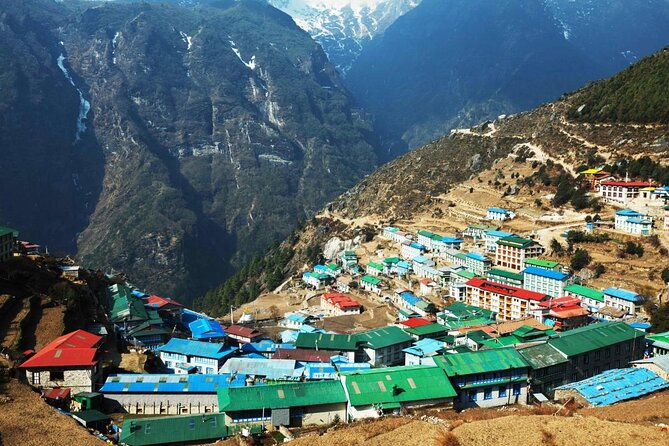
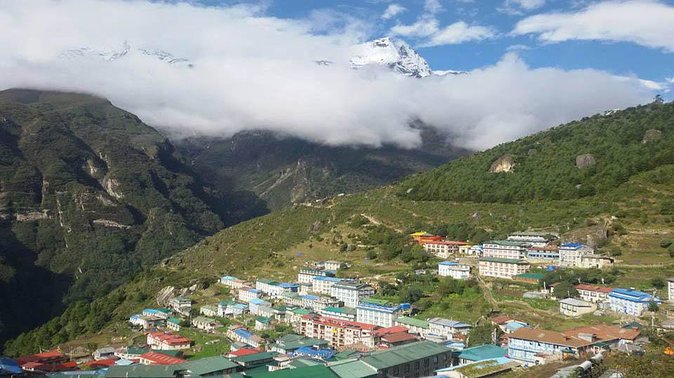
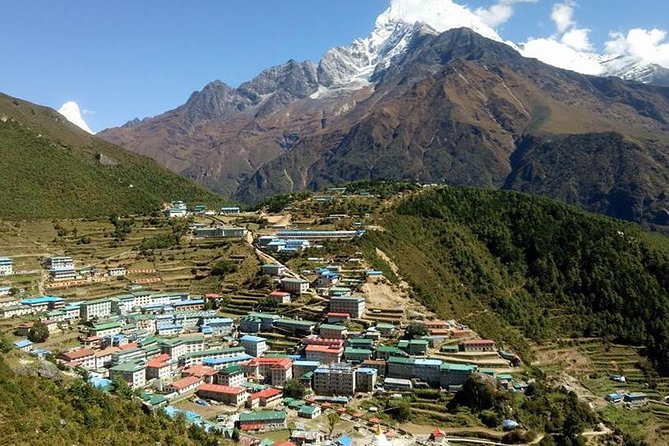
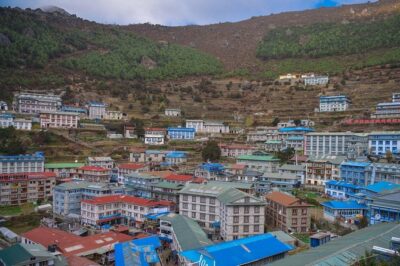
Namche is more than a stopping point. It is the main gateway to the Khumbu and the place where you begin to feel the altitude. The town sits in a curved bowl of steep hills, with shops, teahouses, and places to rest. The itinerary includes two nights here, which is exactly the right idea for a route climbing this high.
Your acclimatization day offers several choices. You can walk to Khumjung, visit the local school and hospital, go toward Thame, or climb toward the Shyangboche airstrip and the Everest View Hotel. The walk to Khumjung gives you more contact with Sherpa village life. The Everest View Hotel provides a high viewpoint, though the altitude can make even a short outing feel demanding.
Do not treat this as a wasted day. You are building the adjustment your body needs for the harder stages ahead. The private format is useful here because your guide can help select an outing that matches how you are feeling.
Tengboche brings monasteries and huge mountain views
From Namche, the trail rises and falls through the Dudh Koshi valley before climbing again to Tengboche, also written as Tyangboche, at 3,870 meters. This is about a six-hour walking day.
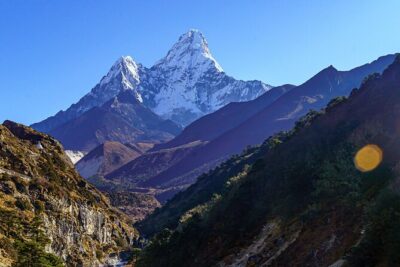
The route first descends to the river at roughly 3,550 meters, then climbs toward the monastery. The effort pays off with wide views of Everest, Lhotse, Ama Dablam, and Thamserku. Tengboche Monastery is the cultural heart of this part of the route, and you may enter to listen to monks chanting mantras.
This stop adds meaning to the trek. You are not simply moving between mountain lodges. You are passing through a Sherpa Buddhist region where monasteries, prayer practices, and village life remain part of the setting. Keep your behavior respectful, especially during religious activity.
A few more treks around Kathmandu worth a look
- Annapurna Circuit Trek with Tilicho Lake
★ 5.0 · 368 reviews - Everest Base Camp Trekking – 13 Day
★ 5.0 · 365 reviews - Everest Base Camp Trek
★ 5.0 · 350 reviews - Everest Base Camp Trek -14 Days
★ 5.0 · 321 reviews
Dingboche and a second acclimatization day
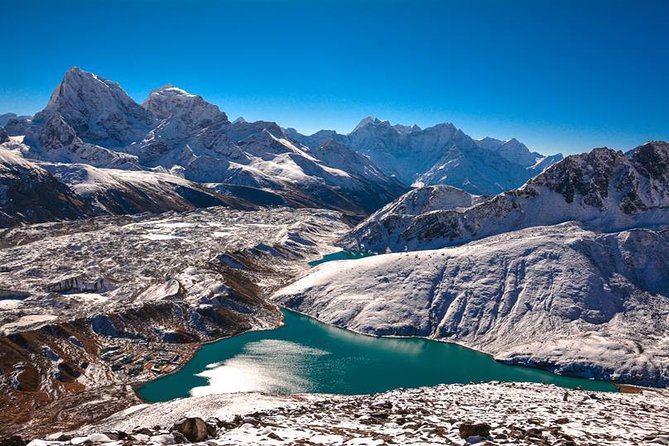
The next six-hour walk follows wooded sections and the Imja Khola valley toward Pangboche. The village has an old gompa above it, described as the oldest monastery in the region and linked to the arrival of Buddhism in Khumbu.
You then climb to Dingboche at 4,360 meters. The views of Ama Dablam and Island Peak become more imposing as trees thin out. Dingboche is an important turning point, because the route now feels colder, barer, and more exposed.
Day seven is another acclimatization day. You can walk toward Chhukung, where Mt. Makalu, Island Peak, and Peak 38 come into view, or make a higher outing toward Nangkartshang Peak. The itinerary presents these as options, and your guide can help match the choice to your energy and altitude response.
This is one of the strongest parts of the schedule. Some fast itineraries reduce rest days, but here the extra time gives you a better chance to continue safely. You should still understand that acclimatization lowers risk but does not remove it.
Lobuche and the stark upper valley
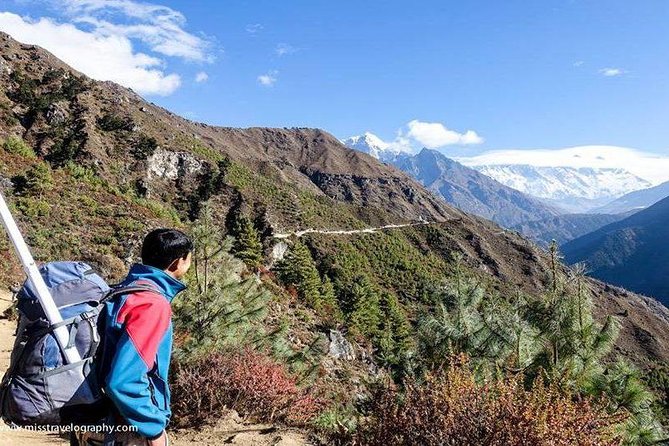
The walk to Lobuche takes about six hours. The trees largely disappear, and the route becomes rocky and barren. At this point, the snowy peaks do much of the talking.
The trail joins the path below Thukla and offers views across the valley toward Cholatse. After a steep section, Lobuche gives you dramatic views of Tawache and Nuptse, which tower almost two kilometers overhead.
This is a demanding day even if the distance does not seem extreme on paper. High altitude slows your pace, and the rocky surface requires attention. Keep your walking rhythm steady, drink regularly, and tell your guide promptly if you develop concerning symptoms.
Everest Base Camp is not the best Everest viewpoint
Day nine is the longest push so far, listed at about eight hours. You walk beside the Khumbu Glacier to Gorak Shep, where you stop for lunch before continuing to Everest Base Camp at approximately 5,400 meters.
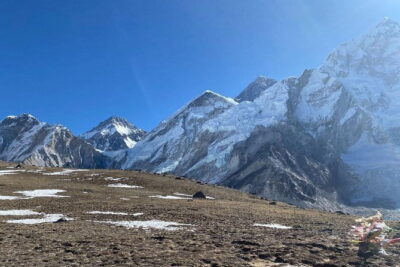
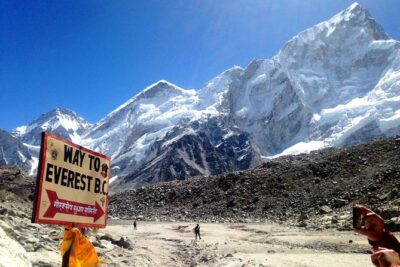
Base Camp itself does not provide the classic view of Everest’s summit. Instead, you see Khubutse, Pumori, Changtse, and the Khumbu Icefall. That is not a disappointment. The icefall is one of the most striking features of the route, and standing at the base camp marker gives the trek its emotional payoff.
The walk is physically demanding, especially after the long approach to Gorak Shep. You should not expect much comfort at this point. Conditions are basic, the air is thin, and the return to your overnight stop adds to the fatigue.
Kala Patthar is the visual high point
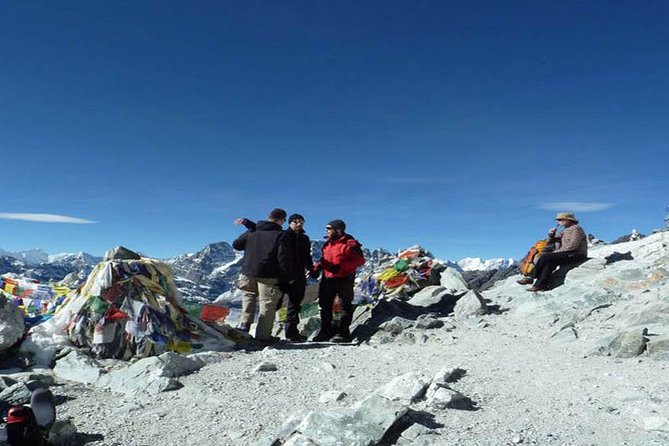
The next morning brings the climb to Kala Patthar, or Black Rock. This is the place for the grand Everest panorama, with views toward Everest, Lhotse, Nuptse, Pumori, Changtse, and many other peaks.
The summit reaches roughly 5,545 meters, higher than Everest Base Camp. The itinerary lists an eight-hour day and then begins the return toward Pheriche and the lower trail. Sunrise or early morning light is often the reason people aim for Kala Patthar early, but the precise timing depends on the guide, conditions, and the group’s pace.
The supplied schedule compresses this section slightly. It says you descend to Pheriche and retrace your route to Lukla, but the following days clearly break the return into stages through Tengboche, Namche, and Lukla. Ask for the exact overnight stops before departure so you understand the daily plan.
The return through Tengboche, Namche, and Lukla
The descent begins through Pangboche and Tengboche, with views of Ama Dablam and Lhotse. You pass through rhododendron and pine forest, cross the Imja Khola and Dudh Koshi, and continue via Phungi Tenga, Sansa, and Kyanjuma before reaching Namche.
Going down is easier on your lungs but can be hard on your knees. The rocky path and repeated steps still require care. The return also gives you a different view of places that felt difficult on the way up, and the forest sections can feel like a welcome change after the bare upper valley.
The next walking day follows Sherpa villages and crosses the Tenzing and Hillary suspension bridge before reaching Lukla after about seven hours. The itinerary has a small timing error for the previous day, listing seven minutes, which is clearly not a realistic trekking duration. Confirm the final schedule with the operator rather than relying on every displayed time.
An early flight returns you to Kathmandu in about 30 minutes. Lukla weather can delay flights, so keep a buffer in your international travel plans. The company has arranged helicopter returns for people facing flight problems, but any such cost should be checked against your insurance and the conditions of your booking.
Your final Kathmandu day
Day fourteen is open for your own plans. You can visit Pashupatinath, Swayambhunath, Boudhanath, and Bhaktapur Durbar Square, or spend time in Thamel buying souvenirs.
This extra day is useful for more than sightseeing. It gives you breathing room after the trek and some protection against a delayed return from Lukla. Day fifteen ends with an airport transfer and farewell from the company representative.
How the guide and support system affect the trip
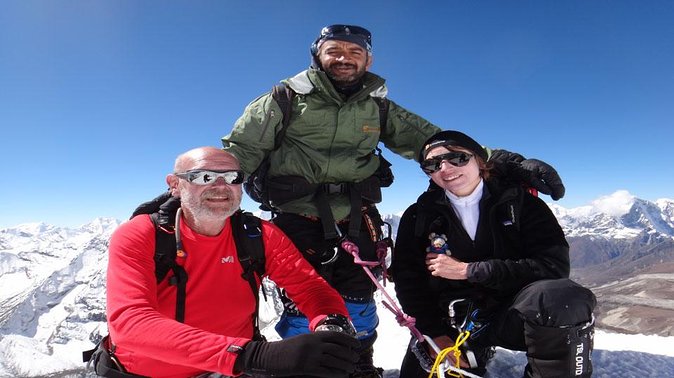
The company assigns one licensed English-speaking mountain guide, including the guide’s food, equipment, and insurance. A private trek can make a real difference when someone needs a slower pace, a rest, or a change to the acclimatization outing.
Khum Subedi, the company owner, has been praised for staying in touch before departure, sometimes using WhatsApp video calls to explain what to bring. Guides and porters named in customer feedback include Sumba Sherpa, Locksman, Ongchhu, Chandra, Raz, Razz, Raj, and Megendra. Your assigned team may differ, but the repeated praise focuses on warm communication, quick replies, route support, and calm handling of difficult situations.
The strongest safety detail is the stated willingness to help arrange rescue or evacuation in a worst-case situation. That support is valuable, but it is not a substitute for your own insurance. A helicopter flight can be expensive, and the package specifically excludes travel insurance.
Who should book this trek?
You should consider this trip if you want the classic Everest route with logistics handled, prefer a private group, and have moderate fitness. It is a good fit if you value cultural stops, mountain views, simple guesthouses, and a guide who can help manage the daily details.
You should think twice if you dislike early starts, basic accommodation, long uphill walks, cold conditions, or uncertain flight schedules. The route reaches extreme altitude, and the main attraction cannot be separated from the physical strain.
Cancellation is free up to 24 hours before the start time. Inside that window, the payment is not refunded. If bad weather cancels the experience, you are offered another date or a full refund.
Final decision: good value for a serious trek
I would recommend this trek to a fit, prepared hiker who wants the standard Everest Base Camp route without arranging every permit, meal, bed, flight, and transfer independently. The $1,690 price is persuasive because it includes the costly practical pieces and useful cold-weather equipment.
Book it if the private guide, acclimatization days, and airport support matter to you. Add a porter if you do not want to carry your own trek luggage, purchase evacuation insurance, and leave extra time around the Lukla flights. If you do those things, this is a well-priced and thoughtfully paced way to reach Everest Base Camp and see the Himalayas at their most dramatic.
FAQ
How long does the Everest Base Camp Trek take?
The experience lasts approximately 15 days, including arrival and departure in Kathmandu, the trek, domestic flights, and a final sightseeing day.
What is the price?
The listed price is $1,690 per person.
Is this a private trek?
Yes. Only your group participates, and the package includes one professional, licensed, English-speaking mountain guide.
Are meals included?
Yes. Breakfast, lunch, and dinner are included during the trek, described as full board.
Is accommodation included?
Yes. You receive hotel accommodation in Kathmandu and guesthouse accommodation during the trek.
Are trekking permits included?
Yes. The Sagarmatha National Park permit and Khumbu Pasang Lhamu Rural Municipality fee are included.
Are flights to Lukla included?
Yes. Domestic flights between Kathmandu or Ramechhap and Lukla are included, along with taxes and transfers.
Is a porter included?
No. Porters are available at an additional cost and can be added when booking.
What equipment is supplied?
The company supplies a sleeping bag, duffel bag, and down jacket. It also provides a first-aid medical kit and an oximeter.
Do I need travel insurance?
Yes, you should arrange suitable travel insurance yourself. Insurance for helicopter evacuation is not included in the tour price.
Can I request vegetarian meals?
Yes. A vegetarian option is available if you request it when booking.
What happens if bad weather cancels the trek?
You are offered a different date or a full refund if the experience is canceled because of poor weather.
Recently added around Kathmandu
- Ghorepani Poon Hill Trek★ 5.0 · 16 reviews
- Private Manaslu Circuit Trek at Himalayas★ 5.0 · 3 reviews
- Amazing 1 Day Trekking Experience in Kathmandu Nepal★ 5.0 · 24 reviews
- Ghorepani Poonhill Trek★ 5.0 · 5 reviews
- Upper Mustang Trekking★ 5.0 · 2 reviews
- Upper Mustang Trekking★ 3.0 · 2 reviews
- Upper Mustang Trekking★ 5.0 · 4 reviews
- Upper Mustang Trek★ 5.0 · 5 reviews
Everest Base Camp Treks, compared.
Browse the lists this tour appears in