
REVIEW · KATHMANDU
Everest Base Camp Trek
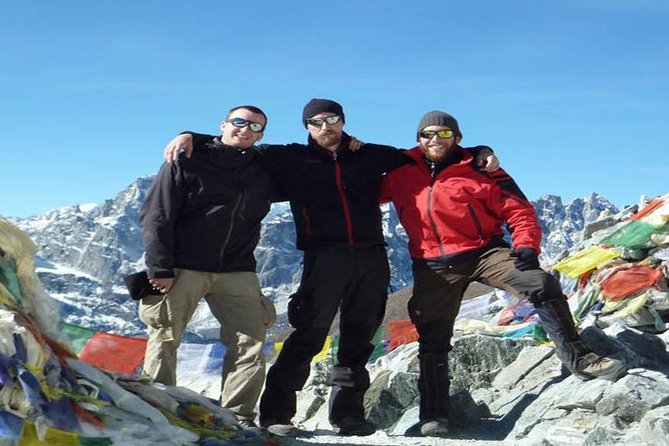
The mountains start before the walking does. This 13-day Everest Base Camp Trek links Kathmandu, Lukla, Namche Bazaar, Tengboche, Dingboche, Lobuche, Everest Base Camp, and Kala Patthar in one demanding Himalayan journey. I like the mix of mountain scenery and Sherpa villages, and I like that the plan includes two acclimatization days rather than treating high altitude as a minor detail.
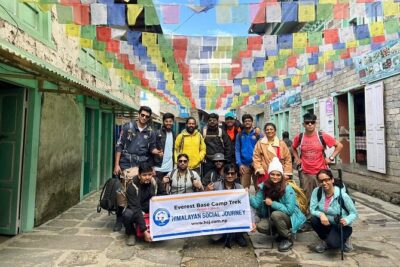
The guide and porter support is another strong point. The company assigns one porter for every two trekkers, and past guests have singled out guides and staff including Dilli, Sambhu, Dipak, and Rishi for patience, care, and quick communication. The main caution is the pricing detail: at $1,800 per person, accommodation, personal equipment, and national park permit fees are listed as extra, while the meal inclusions are worded inconsistently. Get the final cost in writing before you pay.
Six things to know before choosing this trek
- Lukla flight included: The trip begins with a roughly 30-minute flight from Kathmandu to Lukla and ends with the return flight.
- Two acclimatization days: You spend one rest and exploration day in Namche Bazaar and another in Dingboche.
- One porter for two trekkers: This can make the long walking days more manageable, though you still need to carry a daypack.
- Everest Base Camp plus Kala Patthar: The route reaches the famous base camp and includes an early morning climb toward Kala Patthar.
- Basic mountain services: Hot showers, Wi-Fi, battery charging, accommodation, permits, and personal clothing are not included in the stated price.
- Private group format: Only your group takes part, with a stated start time of 7:15 am and pickup available.
What the $1,800 price really covers
At first glance, $1,800 looks competitive for a guided Everest Base Camp trek. The price includes airport or local transport arrangements, two-way flights between Kathmandu and Lukla, a professional English-speaking trekking guide, and one porter for every two trekkers.
Meals are listed as 11 lunches, 11 dinners, and 12 breakfasts. Yet the exclusions also say breakfast, lunch, dinner, and all drinks are not included. That is a major point to settle before booking. Ask for a current written breakdown showing exactly which meals are covered and which are not.
Accommodation is also listed as extra, along with national park permit fees. You should budget separately for personal clothing and equipment, hot showers, Wi-Fi, battery charging, and tips for your guide and porter. The price is more attractive if the food and lodging costs are handled clearly, but less so if you expect an all-inclusive trek.
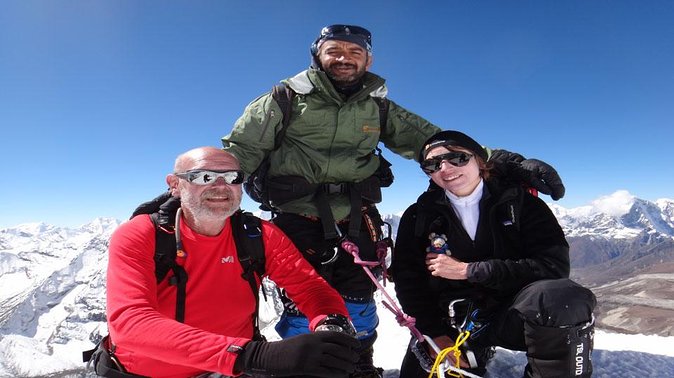
I like the fact that the company uses local Sherpa guides and porters. This gives you practical support on steep paths and lets you travel with people who understand the route. The strongest praise connected with this operator focuses on care, fast replies, and problem-solving. Dipak is repeatedly described as quick to respond, while guides such as Dilli and Sambhu are praised for patience and encouragement.
You should also understand what this is not. The standard itinerary does not include a helicopter return. Several highly praised trips connected with the same company used helicopter returns, Gokyo Lake, or extra high passes, but those are different packages. If you want the regular 13-day trek described here, confirm that your booking does not quietly substitute another route or return option.
More Everest Base Camp Treks in Kathmandu:
- Everest Base Camp Trek – 14 Days
★ 5.0 · 1,499 reviews - Everest Base Camp Trek
★ 5.0 · 842 reviews - Everest Base Camp Trekking
★ 5.0 · 485 reviews
Kathmandu begins with Thamel and Durbar Square
Your first day is light. A company representative meets you and transfers you to your hotel in Thamel. If your flight has left you awake rather than flattened, you can walk around Thamel for a few hours and get your first taste of Kathmandu.
Thamel is useful for more than food and wandering. It is also the practical place to check your trekking supplies, although personal equipment is your responsibility. Keep this first evening easy. You are about to spend almost two weeks walking at increasing altitude.
Kathmandu Durbar Square is available as an optional visit on the first day, with about two hours suggested for the stop. Admission is not included. The square gives you a cultural start before the mountain section, but do not force it if your arrival is late or you need sleep.
Lukla to Phakding brings the first walking miles
The second day begins early at Tribhuvan Domestic Airport. The Lukla flight takes about 30 minutes, but the short duration does not make it a throwaway transfer. From the air, you may see mountains, hills, greenery, and lakes before landing in Lukla.
Once you arrive, the trek begins toward Phakding. Your guide gives you an introduction to the trip, and your porter joins the group. This first walking day is important because it lets you find your rhythm before the route becomes steeper and colder.
The itinerary does not give a detailed walking time for this section. Your pace, weather, and flight schedule will matter. The most useful approach is to treat Lukla as the real beginning of the trek, not as a scenic airport stop.
Namche Bazaar and the first acclimatization day
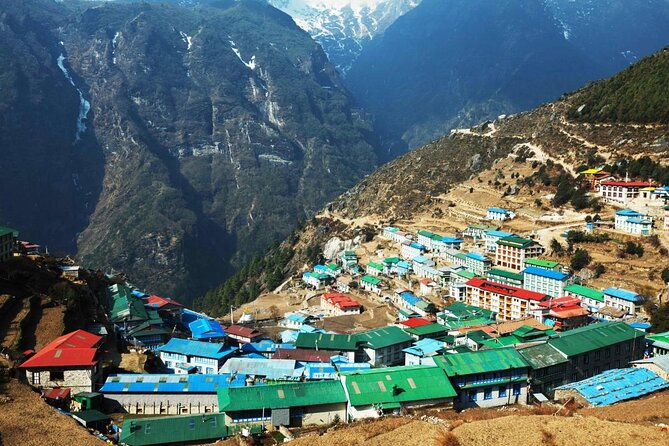
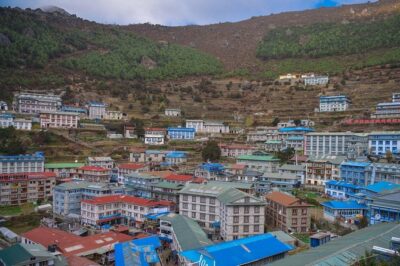
The route continues beside the Dudh Koshi River toward Monjo. Pine and rhododendron forest frame the path, and Monjo marks the entrance to Sagarmatha National Park. From there, you continue toward Namche Bazaar, the best-known settlement on this section of the route.
Namche is more than an overnight stop. It is the first major pause where you can slow down, explore, and let your body adjust. Day 4 is set aside for acclimatization, with time to explore Namche and visit Sagarmatha National Park.
I consider this one of the most valuable parts of the schedule. Some short itineraries try to race upward, but a planned rest day gives you a better chance of handling the next stages. Rest does not mean sitting indoors all day. Gentle exploration is built into the plan, giving you movement without another full trekking day.
The altitude is already serious here. You should tell your guide if you feel unwell, rather than trying to prove you can continue. The itinerary promises experienced support, but no guide can remove the effects of altitude.
A few more treks around Kathmandu worth a look
- Annapurna Circuit Trek with Tilicho Lake
★ 5.0 · 368 reviews - Everest Base Camp Trekking – 13 Day
★ 5.0 · 365 reviews - Everest Base Camp Trek
★ 5.0 · 350 reviews - Everest Base Camp Trek -14 Days
★ 5.0 · 321 reviews
Tengboche brings forest, wildlife, and a mountain monastery setting
Day 5 is a harder walking day. You climb above the Dudh Koshi River and follow the route toward Tengboche. The trail passes through forest, and the itinerary points out rhododendrons, pine, surrounding Himalayan peaks, and danfe, Nepal’s national bird.
The path drops toward Phunkitenga after the section from Trashinga, then climbs again after lunch toward Tengboche. That up-and-down shape matters. A day can feel harder than its distance suggests when you lose height and then have to regain it.
Tengboche is described as a scenic settlement surrounded by hills and forest. You spend the night there, giving you time to appreciate the setting instead of rushing through it. The mix of woodland, open mountain views, and Sherpa culture makes this one of the most memorable stops on the route.
Dingboche gives your body another useful pause
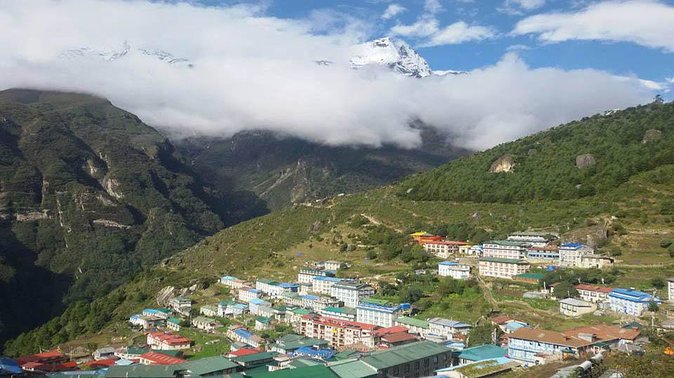
From Tengboche, you continue toward Dingboche through rhododendron forest with white mountains in view. The air becomes cooler, the ground more exposed, and the route feels more like a high mountain trek than a forest walk.
Day 7 is another acclimatization day. You explore Dingboche village and climb Nagarkshang Hill before returning to the hotel. This is not a wasted day. The climb gives you some extra height without requiring you to move your sleeping place higher that night.
I like the structure here because the itinerary places a second adjustment day before the highest and coldest part of the route. You should still expect tired legs. A rest day at altitude is active, not luxurious, and the facilities are not described as included.
Lobuche and the approach to Everest Base Camp
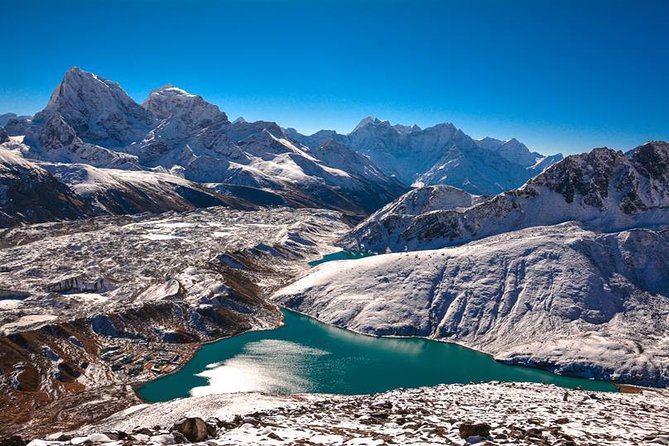
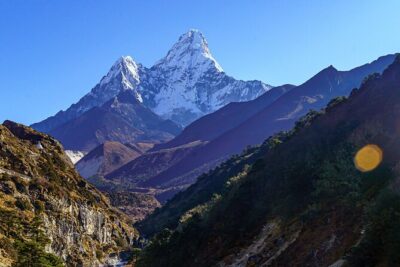
The next stage heads toward the Khumbu Glacier and Lobuche. Views of Tawache and Cholatse accompany the route, and the surroundings become colder because of the altitude and exposed terrain.
The itinerary uses the name Douglas for the next destination before describing the walk toward Lobuche. Since Lobuche is the actual overnight stop identified for this stage, confirm the day-by-day route with the operator before departure. Small itinerary errors are worth clearing up when you are dealing with high-altitude lodging and flights.
Lobuche is described as very cold. Pack for that reality. Jackets, trousers, gloves, and hats are specifically excluded from the price, so you need to bring or rent suitable personal gear before leaving Kathmandu.
Everest Base Camp is the emotional high point
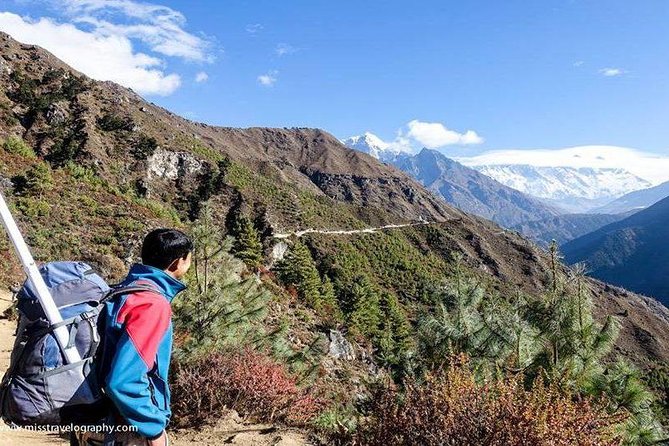
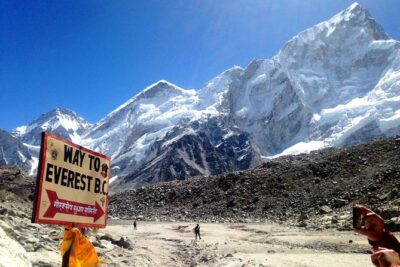
Day 9 is the main goal: Everest Base Camp. The route continues toward the base camp area, where mountaineers prepare for attempts on Mount Everest, listed in the itinerary at 8,848 meters.
You should keep expectations realistic. Reaching base camp does not mean you climb Everest, and the experience is about standing in the place where major expeditions begin. The route itself, the altitude, and the surrounding peaks make the moment meaningful.
After visiting base camp, you continue to Gorakshep for the night. The timing matters because you are not returning to a lower village immediately. You finish the day at high altitude, likely tired and ready for a basic evening.
Kala Patthar starts early, then the route drops
The following morning begins early with a walk toward Kala Patthar. The itinerary describes a mountain setting on all sides, and this is the point where you get one of the route’s broadest high-altitude views.
After the early climb, you continue to Pheriche for the night. This is a demanding day because you begin before sunrise and then cover a substantial distance afterward. The descent should help your body, but it does not make the walking effortless.
The Kala Patthar section is especially useful for anyone who wants a strong mountain viewpoint rather than only the base camp destination. You should ask your guide about the exact timing and walking plan, since weather and energy levels can affect the day.
The return through Tengboche and Namche
The descent continues through Tengboche, where you have time to explore for a couple of hours. Returning through a familiar village can feel different because the trail now runs downhill and your body has started adjusting to lower altitude.
You continue to Namche Bazaar for the night. The route is still long, but the return direction gives you a psychological lift. You have completed the main goal, and the villages feel more approachable than they did on the way up.
This is another place where a guide matters. Fatigue often causes careless steps, especially after several days of walking. A patient guide can help keep the pace sensible instead of treating the descent as a race.
Lukla closes the walking section
Day 12 covers a longer distance toward Lukla. The itinerary notes that the scenery can distract you from tiredness, which is a fair description of the route’s appeal. You also have time to visit Lukla Bazaar and buy a souvenir before the final overnight stop.
Lukla is where the walking ends, but not where the logistical uncertainty ends. Flights can be affected by weather, and the trip depends on the return flight to Kathmandu the next day. One past booking involved a last-minute flight from Lukla to Ramechap, allowing an earlier return to the city, so flexibility can be useful when flight arrangements change.
Returning to Kathmandu after the mountains
Day 13 uses a roughly 35-minute flight from Lukla to Kathmandu. Once back, you may have time to walk around the city before a farewell dinner arranged by Adventure White Mountain.
The farewell meal is a pleasant touch, especially after a demanding route. Still, keep your final day flexible. Mountain flights can shift, and the exact amount of free time in Kathmandu depends on the flight schedule.
How hard is this Everest Base Camp trek?
The tour requires a moderate level of physical fitness, but the description understates the seriousness of walking at high altitude. You should be comfortable with repeated uphill and downhill walking, cold conditions, early starts, and long trekking days.
The two acclimatization days help, but they do not guarantee that you will feel well. A good guide should monitor your condition, and you should be prepared to stop or change plans if altitude symptoms appear. The itinerary’s strongest human feature is the support from guides and porters, but personal preparation remains essential.
This trip suits you best if you want a private group, structured support, and a classic Everest route without arranging every flight and village stop yourself. It is less suitable if you want a soft hotel-based holiday, included personal gear, or a fully inclusive price.
Practical booking details and cancellation terms
Pickup is offered, mobile tickets are available, and confirmation is provided at booking. The stated start time is 7:15 am, and the experience is private, meaning only your group takes part.
You can cancel at least 24 hours before the start time for a full refund. Cancellations or changes inside 24 hours are not refunded or accepted. If bad weather cancels the trip, you are offered another date or a full refund. The same applies if the minimum number of participants is not met.
Before booking, ask the operator to confirm the accommodation standard, permit cost, meal coverage, exact flight arrangements, and any change caused by weather. Those questions matter more here than they would on a city tour.
Should you book the Everest Base Camp Trek?
I would consider this trek if you want a classic Everest Base Camp route with local support and a clear 13-day framework. The two acclimatization days, porter arrangement, Kathmandu pickup, and return flights give the trip a useful structure.
I would not book it without clarifying the confusing meal and accommodation information. At $1,800, the value can be good, but only after you know the true total. If the operator confirms the costs in writing and you are ready for cold, altitude, and long walking days, this is a strong option for reaching Everest Base Camp with experienced help around you.
FAQ
How long is the Everest Base Camp Trek?
The trip lasts approximately 13 days, including arrival and departure in Kathmandu, the Lukla flights, the trek to Everest Base Camp, the return walk, and the final flight back.
Where does the trek begin?
The experience begins in Kathmandu, with pickup and transfer to a hotel in Thamel. The walking section starts after the flight from Kathmandu to Lukla.
Is the flight to Lukla included?
Yes. The stated package includes a flight to Lukla and a return flight to Kathmandu, along with shared vehicle transport.
Are meals included?
The package lists 11 lunches, 11 dinners, and 12 breakfasts as included. However, the exclusions also say that breakfast, lunch, dinner, and drinks are not included, so you should confirm the final meal arrangement before booking.
Is accommodation included?
No. Accommodation during the trip is listed as an extra cost.
Are national park permits included?
No. National park permit fees are listed among the items not included.
Is a guide provided?
Yes. The package includes a professional English-speaking trekking guide.
How many porters are included?
One porter is provided for every two trekkers.
What happens if bad weather cancels the trek?
If poor weather causes cancellation, you are offered a different date or a full refund.
Recently added around Kathmandu
- Ghorepani Poon Hill Trek★ 5.0 · 16 reviews
- Private Manaslu Circuit Trek at Himalayas★ 5.0 · 3 reviews
- Amazing 1 Day Trekking Experience in Kathmandu Nepal★ 5.0 · 24 reviews
- Ghorepani Poonhill Trek★ 5.0 · 5 reviews
- Upper Mustang Trekking★ 5.0 · 2 reviews
- Upper Mustang Trekking★ 3.0 · 2 reviews
- Upper Mustang Trekking★ 5.0 · 4 reviews
- Upper Mustang Trek★ 5.0 · 5 reviews
Everest Base Camp Treks, compared.
Browse the lists this tour appears in