
REVIEW · KATHMANDU
Everest Base Camp Trek
Everest begins before you reach the mountain. This 16-day trek combines the classic Lukla to Everest Base Camp route with careful acclimatization at Namche and Dingboche, plus a sunrise walk to Kala Patthar. I like the included meals, lodges, permits, guides, porters, sleeping bag, and down jacket, which make the $1,850 price easier to understand. The main drawback is the demanding altitude, along with long road and flight transfers through Manthali.
You also get useful cultural stops, including Khumjung Village, Hillary School, Tengboche Monastery, and Sherpa settlements along the trail. Guide Aashish receives especially warm praise for his patience, encouragement, and habit of telling trekkers to go slowly. Still, you need a moderate fitness level, proper insurance, and a willingness to accept basic mountain lodging.
Key points to know before booking
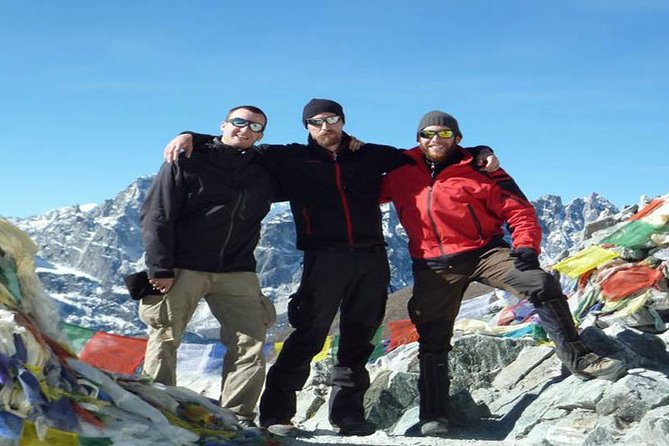
- The route reaches Everest Base Camp and Kala Patthar: You get both the famous base camp walk and the sunrise viewpoint above it.
- Acclimatization is built into the schedule: Rest and hiking days in Namche and Dingboche help break up the climb.
- The package covers much of the costly groundwork: Lodging, three meals a day on trek, permits, guide, porters, gear, and transport are included.
- Manthali replaces a simple Kathmandu airport connection: Expect a four-hour road transfer before the Lukla flight, depending on the day’s schedule.
- Altitude changes the pace: From Day 9 onward, slow walking, warm drinks, water, and body heat become practical necessities.
- This is a private experience: Only your group takes part, with confirmation provided at booking.
Why this 16-day route works
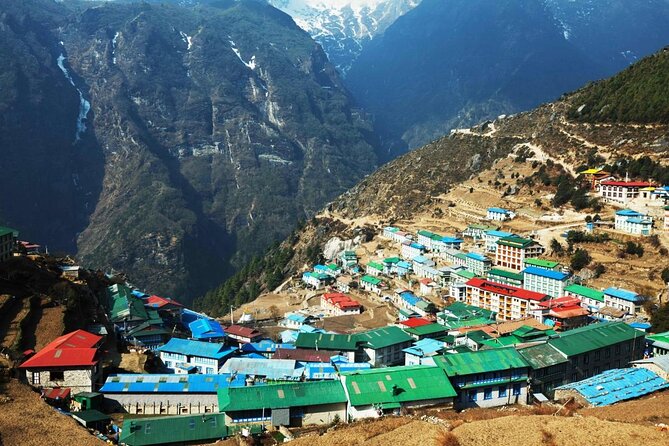
The Everest Base Camp trek is famous for good reason. You walk through the Khumbu region toward the mountain that measures 8,848 meters, following a route shaped by Sherpa villages, suspension bridges, monasteries, river valleys, glaciers, and high mountain viewpoints.
I like that this itinerary does not try to rush the climb. You spend time in Namche Bazaar, take an acclimatization hike to Everest View Hotel and Khumjung, pause near Dingboche or Pheriche, and add a walk to Nangkartshang Peak. That extra time matters. At altitude, a slower plan is not wasted time. It is part of reaching the goal safely and with enough energy to enjoy it.
The route is private, so your group can move at its own pace within the guide’s plan. You are not joining a large procession of strangers, though you should still expect a physically demanding trek with basic facilities and changing weather.
More Everest Base Camp Treks in Kathmandu:
- Everest Base Camp Trek – 14 Days
★ 5.0 · 1,499 reviews - Everest Base Camp Trek
★ 5.0 · 842 reviews - Everest Base Camp Trekking
★ 5.0 · 485 reviews
Day 1: Kathmandu arrival and trek briefing
Your trip begins with airport pickup in Kathmandu and transfer to the hotel. The schedule includes a briefing about the Everest Base Camp trek, followed by time to prepare and organize your gear.
This first day is useful because your bags and clothing need sorting before the trail. The company provides a waterproof trekking duffel, down jacket, sleeping bag, walking pole, and T-shirt, but you still need to bring the clothing and personal items listed in the preparation notes.
The welcome dinner is included. It gives the trip a friendly start, though meals in Kathmandu outside the listed dinner are not included.
Day 2: Kathmandu sightseeing and the road to Manthali
You spend part of the morning on a city tour, then drive toward Manthali Airport after lunch. The drive is listed at about four hours and offers views of villages, farmland, and local life.
This transfer is one of the less glamorous parts of the trip, but it serves a real purpose. Flights to Lukla are often arranged through Manthali, so you should not picture a simple airport departure from central Kathmandu. The road journey adds time and can feel tiring before the trek even starts.
The itinerary does not specify which heritage sites are visited on this half-day tour. The final day also includes heritage sightseeing, but entrance fees for Kathmandu attractions are not included. Budget for those separately.
Day 3: Lukla and the first walk to Phakding
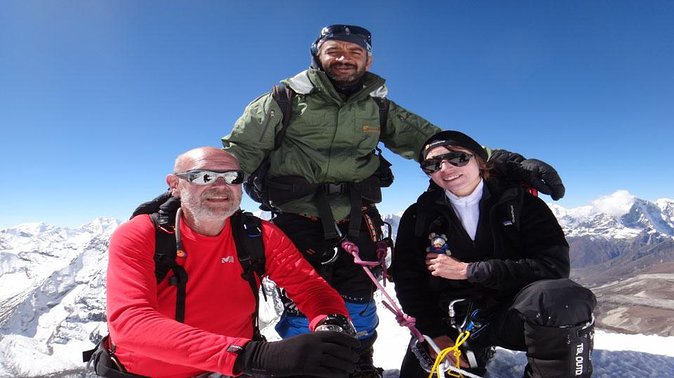
An early domestic flight takes you to Lukla’s Hillary Airport. From there, the walk begins through Sherpa villages and mountain country, finishing around Phakding after roughly three hours.
This first trekking day is a sensible introduction. You get your first taste of walking trails, local settlements, and mountain views without immediately tackling the highest sections of the route.
Your guide and porters handle much of the practical load. The package includes guide and porter lodging and food, insurance for them, and your own trekking supplies. You should still keep essential personal items in a daypack, especially water, sun protection, and warm layers.
A few more treks around Kathmandu worth a look
- Annapurna Circuit Trek with Tilicho Lake
★ 5.0 · 368 reviews - Everest Base Camp Trekking – 13 Day
★ 5.0 · 365 reviews - Everest Base Camp Trek
★ 5.0 · 350 reviews - Everest Base Camp Trek -14 Days
★ 5.0 · 321 reviews
Day 4: Suspension bridges and the climb to Namche Bazaar
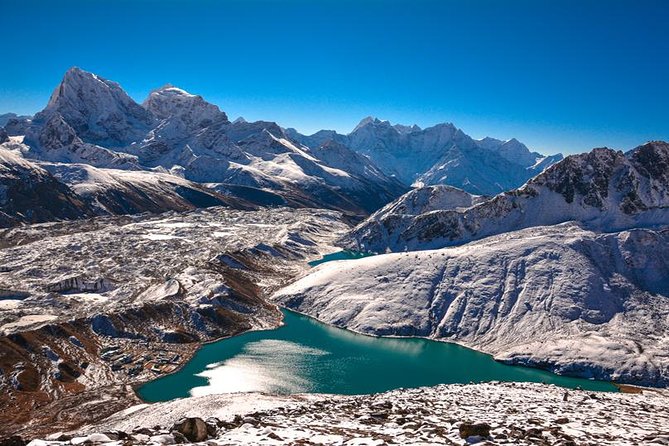
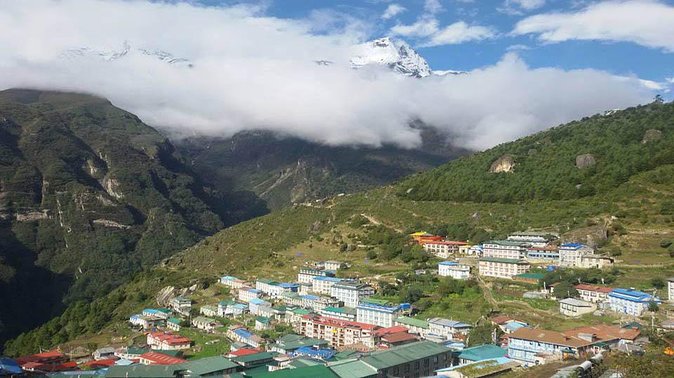
The trail follows rivers and crosses suspension bridges before climbing toward Namche Bazaar. The approach includes the Hillary Steps, and, if the weather is clear, you may catch an early view of Everest and other peaks.
Namche is more than a stopping point. It is the main gateway for routes deeper into the Everest region, and it is where the trip begins to feel properly high and remote. The climb into town can be tiring, so having time to settle into the lodge matters.
The route’s mountain views depend heavily on cloud and weather. A clear forecast is never guaranteed, so you should enjoy every opening in the sky without treating one missed view as a failed day.
Day 5: Everest View Hotel and Khumjung Village
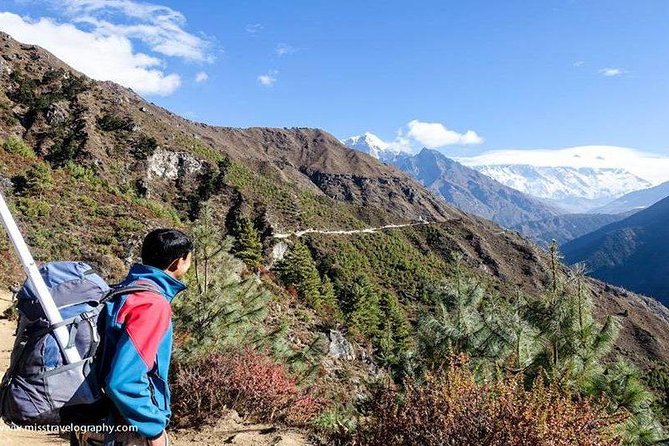
This is one of the itinerary’s best-paced days. You hike into Sagarmatha National Park, visit Everest View Hotel, continue to Khumjung Village, and see Hillary School before returning to Namche for rest.
The point is not only the view. Walking higher and returning to sleep at Namche gives your body an acclimatization day. That is a much better use of time than simply remaining inside the lodge.
Khumjung also adds a human side to the trek. You see a Sherpa village and a school linked with Hillary, rather than spending every hour focused only on peaks and photographs.
Day 6: Thamserku, Ama Dablam, and Tengboche
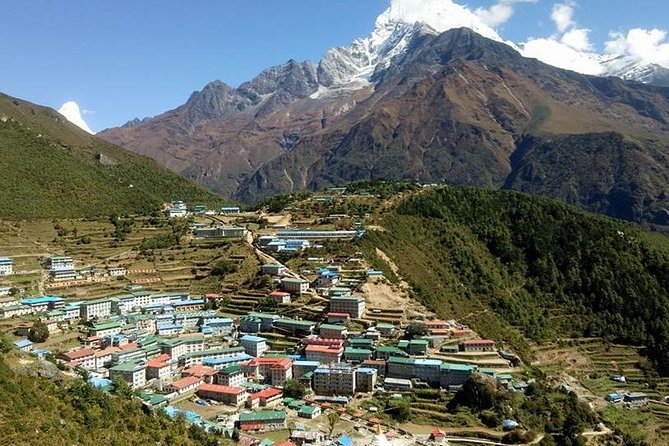
The trail provides views toward Thamserku, Ama Dablam, Everest, and other mountains. You descend toward Phungi Thanga, then climb to Tengboche Monastery.
Tengboche is one of the cultural highlights of the route. The monastery gives the walk a quiet spiritual dimension, and it breaks up the physical effort with a place for reflection and prayer.
The descent followed by a climb can feel harder than the distance suggests. On mountain trails, elevation gained and lost matters as much as the number of hours. Take the guide’s slow pace seriously.
Day 7: Pangboche and the high valley
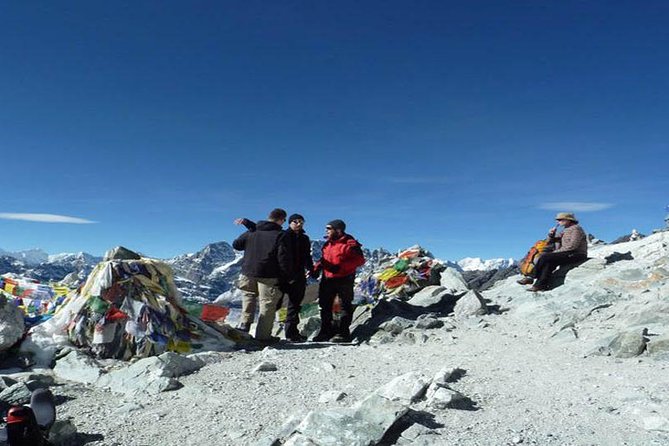
You continue through the old village of Pangboche, with river and mountain views along the way. The listed walking time is about six hours.
Pangboche is a good reminder that the trek is not simply a straight march to Base Camp. Villages, trails, and river crossings remain part of the experience. The higher you go, the more the route feels shaped by the mountains rather than roads.
The package includes lodge stays and three meals during the trekking portion. Food choices may be simpler at altitude, and the inclusion is valuable because buying every meal separately would make budgeting harder.
Day 8: Nangkartshang Peak for acclimatization
You hike to Nangkartshang Peak, then return to the lodge to rest. The day is listed at about four hours.
This is another smart pause before the thin-air section. The walk gives you a higher outing without requiring you to move lodges, then allows you to sleep at the same place. That pattern is useful for both physical adjustment and confidence.
Do not treat a short day as an easy day. A high climb can feel much tougher than a longer walk at lower altitude. Keep your pace steady, drink regularly, and tell your guide early if you feel unwell.
Day 9: Into thinner air
The route now enters much thinner air. The guidance is simple and sound: walk slowly, breathe steadily, drink hot water, use honey and ginger, and keep warm.
I appreciate the practical nature of this advice. You are not being sold a high-altitude trek as a casual hike. The experience requires attention to your body, especially as the trail continues through increasingly exposed mountain terrain.
Your fitness preparation should include regular hiking before the trip. The suggested preparation is once-weekly hiking or daily walking in the week before departure. That is a minimum guide rather than a promise that training will make altitude easy.
Day 10: Gorak Shep and Everest Base Camp
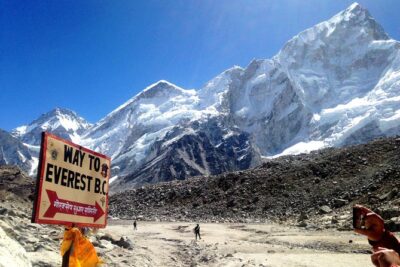
The trek continues through mountains and glacier country before checking into a lodge for a quick lunch. From Gorak Shep, you hike to Everest Base Camp.
Bring enough drinking water and energy bars for this section. No tea shop is available between Gorak Shep and Base Camp, so you should not count on buying supplies during the walk.
The published schedule lists six hours for this day, though one entry also shows six minutes. Treat the six-hour figure as the practical guide, while allowing flexibility for weather, pace, and altitude. The Base Camp walk is a major goal, but it is not the best place to race. The point is to arrive safely, take in the setting, and return with energy.
Day 11: Sunrise at Kala Patthar and the return to Lobuche
You start early for Kala Patthar, aiming to catch sunrise over Everest and the surrounding Himalayan peaks. Afterward, you trek back to Lobuche, with about six hours of walking listed.
For many people, this is the visual high point of the trek. Base Camp gives you the emotional satisfaction of reaching the destination, while Kala Patthar provides the broader mountain view. The early start means cold and darkness at first, so your headlamp, gloves, warm layers, and spare batteries matter.
This day is physically demanding because the sunrise hike comes after the Base Camp walk. Follow your guide’s pace and keep your expectations flexible if weather blocks the sunrise.
Days 12 to 14: Monastery, Namche, and the final trail
The return follows much of the same route, but the descent changes how it feels. Day 12 brings you back toward one of the major Buddhist monasteries in Solu Khumbu, with about six hours of walking.
On Day 13, you have time for a final visit and prayer at the monastery before continuing down and up toward Namche, then on to Monjo. The schedule lists six minutes for this day, almost certainly a timing error, so plan around a full trekking day rather than a few minutes.
Day 14 is the final stretch in the Everest region, listed at about five hours. The trip ends its trekking section with a celebration involving your guide and porters. That is a fitting finish, since the support team handles navigation, food arrangements, luggage, and much of the day-to-day organization.
Day 15 and Day 16: Back to Kathmandu
A short flight takes you from the mountain region to Manthali, followed by the four-hour drive back to Kathmandu. You then have time to rest.
The final day includes breakfast, guided heritage sightseeing, and a farewell dinner with Nepali cultural elements. Kathmandu sightseeing entrance fees are not included, so carry funds for those visits.
The return schedule depends on flight and road conditions. Keep your international departure plans realistic and avoid booking a tight connection immediately after this transfer.
What the $1,850 price covers
At $1,850 per person, the package offers good value if you want a guided, organized trek rather than arranging each part yourself. It includes Kathmandu hotel nights with breakfast, airport and road transfers, welcome and farewell dinners, trekking lodges, breakfast, lunch, dinner, tea, and coffee during the trek.
It also includes the Sagarmatha National Park trekking permit, TIMS cards, government and local taxes where necessary, medical kit, guide, porters, porter and guide insurance, waterproof duffel, down jacket, sleeping bag, and walking pole.
The strongest value comes from the practical inclusions. Hiring equipment locally, arranging permits, organizing lodge stays, and managing Lukla and Manthali transfers can be a headache on your own.
You still need to budget for cold drinks, bottled or mineral water, hot showers, hot water, charging, phone calls, laundry, bar bills, guide and porter tips, high-altitude sickness insurance, Kathmandu lunches and dinners, sightseeing entrance fees, international airfare, and the Nepal visa. Visa charges are listed as $25 for 15 days and $40 for 30 days.
Who should book this trek?
I would recommend it to someone with moderate fitness who wants a private itinerary and prefers having meals, permits, lodging, gear, and staff arranged in advance. It also suits you if cultural stops matter as much as the mountain goal.
I would hesitate if you dislike basic lodges, long walking days, early starts, uncertain weather, or high-altitude conditions. The itinerary is not a soft adventure, and the route requires patience even when the schedule looks short.
The company’s strongest praised quality is its personal support. Aashish is repeatedly singled out for patience, encouragement, and careful pacing, while the wider team receives credit for looking after meals and daily needs. That matters greatly when you are tired, cold, or unsure how your body is handling the height.
The experience has a five-star average from seven published ratings, but you should still read the conditions closely. The booking is non-refundable and cannot be changed for any reason, so purchase suitable insurance and confirm your dates before paying.
Should you book it?
Book this Everest Base Camp trek if you want the classic route with a sensible acclimatization pattern, private guiding, strong logistical support, and many major costs included. The combination of Namche, Khumjung, Tengboche, Nangkartshang Peak, Base Camp, and Kala Patthar gives you more than a quick walk to a famous sign.
Think twice if your schedule cannot absorb the Manthali transfer, or if you need flexible cancellation. For a fit and prepared walker who accepts simple mountain conditions, the $1,850 package is a practical way to tackle one of Nepal’s best-known routes with help close at hand.
FAQ
How long is the Everest Base Camp trek?
The experience lasts approximately 16 days, including Kathmandu time, transfers, trekking days, the return to Kathmandu, and final sightseeing.
Where does the trek begin?
The experience starts in Kathmandu. You later travel by road to Manthali Airport and take an early domestic flight to Lukla, where the main trek begins.
Is the trek private?
Yes. This is a private tour or activity, so only your group participates.
Are meals included?
Breakfast, lunch, dinner, tea, and coffee are included during the trekking section. Kathmandu lunches and dinners are not included, apart from the listed welcome and farewell dinners.
Is trekking equipment provided?
A warm down jacket, sleeping bag, walking pole, waterproof trekking duffel, and T-shirt are provided. You need to bring your own clothing, shoes, gloves, hat, sunglasses, sun block, lip balm, thermal layers, flashlight, and spare batteries.
What fitness level do I need?
A moderate physical fitness level is required. You should prepare with regular hiking or walking before departure and expect slow progress in thin air.
Is travel insurance included?
Insurance for the guide and porters is included, but high-altitude sickness insurance for you is not. You need to arrange that separately.
Recently added around Kathmandu
- Ghorepani Poon Hill Trek★ 5.0 · 16 reviews
- Private Manaslu Circuit Trek at Himalayas★ 5.0 · 3 reviews
- Amazing 1 Day Trekking Experience in Kathmandu Nepal★ 5.0 · 24 reviews
- Ghorepani Poonhill Trek★ 5.0 · 5 reviews
- Upper Mustang Trekking★ 5.0 · 2 reviews
- Upper Mustang Trekking★ 3.0 · 2 reviews
- Upper Mustang Trekking★ 5.0 · 4 reviews
- Upper Mustang Trek★ 5.0 · 5 reviews
Everest Base Camp Treks, compared.




Browse the lists this tour appears in