
REVIEW · KATHMANDU
Everest Base Camp Trek -17 Days
The Himalaya rewards steady steps. This 17-day Everest Base Camp trek combines the classic route with useful acclimatization days, Sherpa villages, monasteries, and a climb of Kala Pattar for broad mountain views. I especially like the included Khumjung and Khunde day hike and the fact that meals, permits, porters, domestic flights, and guide support are covered.
The main caution is altitude. You reach Gorak Shep at 5,140 meters and Everest Base Camp at 5,364 meters, so this is a serious high-altitude trek, not a casual walk. The $2,000 price offers good value for the services included, but you still need personal insurance, suitable gear, and enough fitness for long uphill days.
Key things to know before booking
- Kala Pattar reaches about 5,550 meters: This is the highest point on the planned route and the best chance for sweeping views of Everest and neighboring peaks.
- Two acclimatization hikes are built in: You spend time around Namche Bazaar and Dingboche instead of simply racing uphill.
- The package includes a Sherpa guide, porters, meals, permits, and flights: That removes many of the costly and complicated parts of organizing the trek yourself.
- You fly between Kathmandu and Lukla: The short mountain flight saves days of walking, but your schedule needs room for changes.
- Sherpa culture is part of the trip: Visits to Khumjung, Khunde, Tengboche Monastery, and other villages add meaning beyond the mountain views.
- The final return includes a spare day: Day 16 is set aside as an emergency day for a delayed Lukla to Kathmandu flight.
Why this 17-day route works well
The route follows the traditional approach to Everest Base Camp, but its timing is sensible. You do not go straight from Lukla to the high valleys. Instead, the schedule gives you a night near Phakding, a full day around Namche Bazaar, and another day around Dingboche.
That matters because altitude is the chief challenge here. Your body needs time to adjust as the route climbs from Lukla at 2,840 meters to Gorak Shep above 5,000 meters. The itinerary cannot guarantee easy acclimatization, but the slower pattern is far more sensible than cutting out every rest day.
I also like that the trip is private. Only your own group participates, which can make pacing, photo stops, and daily decisions easier. The information does not state the maximum group size, so ask how many people will be in your party and how many porters will support it.
Dream Himalaya Adventures assigns an experienced Sherpa guide and support staff, with the company director, Dawa, receiving repeated praise for communication and organization. One guide was also singled out for being an excellent photographer. That does not replace careful questions before departure, but it suggests that personal support is a major strength of this operation.
More Everest Base Camp Treks in Kathmandu:
- Everest Base Camp Trek – 14 Days
★ 5.0 · 1,499 reviews - Everest Base Camp Trek
★ 5.0 · 842 reviews - Everest Base Camp Trekking
★ 5.0 · 485 reviews
Day 1 and Day 2: Kathmandu orientation and preparation
Your first day begins with an airport transfer in Kathmandu and a trip briefing. Airport, hotel, and airport transfers are included in private vehicles, which is helpful after an international flight into a busy city.
The stated meeting time is 12:15 am at Tribhuvan Airport. That time is unusual, so confirm the exact arrival and pickup details before flying. Your booking confirmation should arrive when you reserve, but it is still wise to send your flight number and arrival time directly to the operator.
Day 2 is used for a Kathmandu sightseeing tour, preparation, and packing. The package includes a half-day visit to World Heritage sites with a guide and private transport. This gives you a short introduction to Nepal before the mountains take over.
The preparation time is just as useful as the sightseeing. You can check your personal equipment, organize the provided trek duffle bag, and settle any questions about the walking days. Four nights of three-star hotel accommodation are included on a twin-sharing bed-and-breakfast basis. The exact nights should be confirmed, since the schedule includes free time in Kathmandu after the trek as well.
Major meals in Kathmandu are not included. Plan for those separately, along with laundry, phone calls, toiletries, and drinks.
Day 3: Lukla flight and the walk to Phakding
The mountain section starts with a flight from Kathmandu to Lukla, at 2,840 meters. The flight is short compared with the days of walking that follow, but it is one of the key pieces of the route. Round-trip domestic airfare and airport taxes are included.
From Lukla, you walk to Phakding at 2,610 meters, taking about three hours. This is a gentle opening day by Everest trekking standards. It gives you time to settle into the rhythm of walking with a daypack while your porters carry the main trek bags.
The schedule calls for a night in Phakding. Accommodation details beyond the included hotel nights are not specified, so ask what type of lodging is used during the trek and whether room arrangements are twin-sharing or another format.
Day 4 and Day 5: Namche Bazaar and Sherpa villages
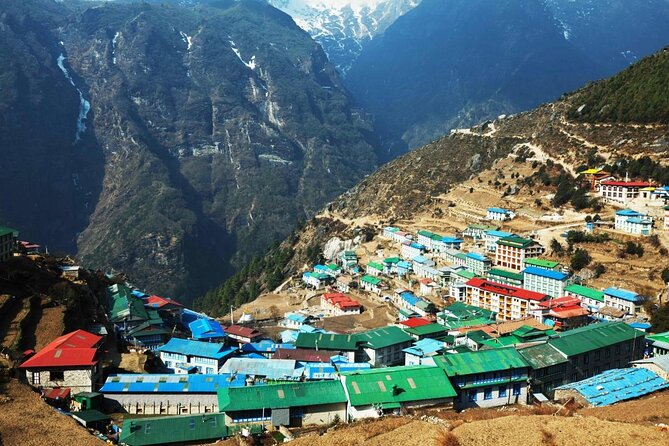
Day 4 takes you to Namche Bazaar at 3,440 meters, with about five hours of walking. Namche is an important stop in the Khumbu region and the main acclimatization point on the way to Base Camp.
Day 5 is not a rest day in the lazy sense. You hike to Khumjung and Khunde, reaching about 3,840 meters, then return to Namche for the night. This four-hour outing lets you gain height during the day without sleeping at the higher elevation.
The villages are a major reason to choose this route. The Everest region is home to the Sherpa people, whose ancestors migrated from eastern Tibet and settled in the Himalaya several centuries ago. You get a closer look at village life and local Buddhist traditions rather than seeing the region only as a path toward a famous mountain.
I consider this one of the strongest parts of the trip. The mountains may draw you here, but the villages and monasteries give the trek a human scale. You are not simply ticking off a base camp. You are walking through a living region with its own culture and pace.
A few more treks around Kathmandu worth a look
- Annapurna Circuit Trek with Tilicho Lake
★ 5.0 · 368 reviews - Everest Base Camp Trekking – 13 Day
★ 5.0 · 365 reviews - Everest Base Camp Trek
★ 5.0 · 350 reviews - Everest Base Camp Trek -14 Days
★ 5.0 · 321 reviews
Day 6 and Day 7: Tengboche and Dingboche
The trail continues to Tengboche on Day 6, a five-hour walk ending at about 3,860 meters. A visit to Tengboche Monastery is included. The monastery is one of the major cultural stops on this route, and its setting gives the day a memorable change of mood after the practical business of walking, eating, and adjusting to altitude.
Day 7 brings a five-hour trek to Dingboche, at 4,410 meters. The air will feel thinner here, and the walking pace should become slower. You will want to follow the guide’s instructions rather than trying to preserve your low-altitude pace.
The itinerary spells the destination as Dengboche in one place and Dingboche in another. These refer to the same stop. Ask the operator to confirm the final daily schedule and lodging names before departure.
Day 8: Acclimatization at about 5,085 meters
Day 8 includes a hike to Nagarjun Peak, listed at approximately 5,085 meters, followed by another night in Dingboche. The walk takes about five hours.
This is a demanding acclimatization day. You gain significant height, then sleep lower in Dingboche rather than at the peak. That basic climb-high, sleep-lower pattern is a sensible part of the plan, though the itinerary does not promise a particular acclimatization protocol or medical assessment.
You should be honest with your guide about headaches, nausea, unusual tiredness, or other symptoms. The package includes a first aid kit and insurance for the guide and porters with emergency rescue, but your own insurance must cover medical treatment and emergency evacuation.
Day 9 and Day 10: Lobuche and Gorak Shep
On Day 9, you trek four hours to Lobuche at 4,910 meters. The route is now firmly in the high mountains, and the reduced oxygen can make even short inclines feel long.
Day 10 takes about four hours to Gorak Shep, at 5,140 meters. This is the last overnight base before Everest Base Camp and Kala Pattar. Sleeping at this height can be difficult, so keep your expectations realistic. The goal is not speed. It is to arrive in good enough shape for the next two key days.
Meals are included throughout the trek, along with hot drinks such as tea, coffee, and hot chocolate. Treated drinking water is also included. Bottled water, boiled water, soft drinks, beer, and other personal drinks cost extra. Since hydration matters at altitude, confirm exactly how treated water is supplied and bring a reusable bottle.
Day 11: Everest Base Camp at 5,364 meters
Day 11 is the central goal: a six-hour outing to Everest Base Camp, followed by another night at Gorak Shep.
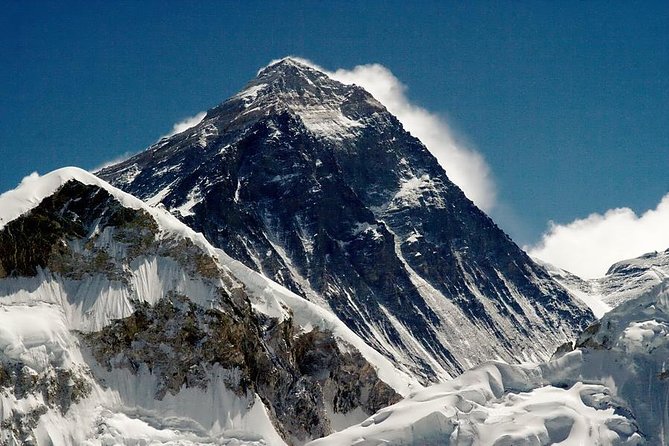
Everest rises to 8,848 meters, and its first successful ascent was made by Sir Edmund Hillary and Tenzing Norgay on May 29, 1953. Reaching Base Camp does not mean climbing Everest, of course. It means arriving at the staging area used by mountaineering expeditions and standing at the foot of one of the world’s most famous peaks.
The experience here is tied to conditions. The mountain views can be remarkable, but cloud, weather, fatigue, and the season affect what you see. The schedule wisely keeps you at Gorak Shep afterward rather than forcing an immediate long descent.
This is also the day when you should pay attention to your energy reserves. The six-hour estimate is only an approximate walking time, and altitude can slow you considerably.
Day 12: Kala Pattar and the long descent to Pheriche
Day 12 begins with a climb of Kala Pattar to approximately 5,550 meters. The ascent takes about four hours, followed by another four-hour trek to Pheriche at 4,210 meters.
For many people, Kala Pattar provides the most rewarding viewpoint of the trip. Everest and its neighboring peaks can appear from a wide mountain setting, and the high point gives you a stronger sense of the scale of the Khumbu region than Base Camp alone.
This is also one of the hardest days. You climb to the highest point on the route and then descend for several hours. A strong breakfast, careful pacing, and warm clothing will matter. Once in Pheriche, you sleep substantially lower than at Gorak Shep, which should feel welcome.
Day 13 and Day 14: Returning through Namche to Lukla
Day 13 is a six-hour trek back to Namche Bazaar at 3,440 meters. The return route is not simply an afterthought. Descending can be tough on knees and ankles, and the long day requires steady concentration.
Day 14 takes about six hours to Lukla. You have an evening of free time, which gives you a chance to rest, sort your belongings, and enjoy a final evening with the trekking team.
The package includes a farewell celebration dinner. Tips for guides and porters are not included, so budget for those separately and ask the company about customary amounts for your group and route.
Day 15 to Day 17: Kathmandu and departure
Day 15 begins with an early flight from Lukla to Kathmandu. Once back in the capital, you have free time. Day 16 is another free day and also serves as an emergency day for a delayed Lukla to Kathmandu flight.
That spare day is one of the practical strengths of the schedule. Mountain flights can affect plans, and leaving no margin before an international departure would be risky. You should still avoid scheduling an important international connection too close to the return flight.
Day 17 is reserved for your international departure. Airport transfers are included, but international flights are not.
What the $2,000 price really covers
At $2,000 per person, the cost is not just paying for a walking route. It includes round-trip Kathmandu to Lukla flights, airport transfers, permits, conservation and national park fees, local and government taxes, an experienced Sherpa guide, support staff, porters, trek meals, hot drinks, treated water, a duffle bag, first aid support, and guide and porter rescue insurance.
That is a useful package for someone who wants one company handling the major moving parts. Domestic flights and permits alone can make self-organizing less simple than it first appears. The included meals also make the budget easier to estimate in the mountains.
You still need to pay for international airfare, food in Kathmandu beyond breakfast, personal equipment, personal insurance, bottled or boiled water, alcohol, laundry, communication, toiletries, tips, and costs caused by unforeseen events. The most important extra is medical insurance that specifically covers emergency evacuation.
The price is strongest for a private group that values organization and local support. If you already have trekking experience, your own equipment, and a preference for independent planning, a guided package may feel less flexible. For a first high-altitude trek, the logistics and support can justify the cost.
Who should book this Everest Base Camp trek?
This trip suits you if you have moderate physical fitness, can handle repeated five to six-hour walking days, and want a structured route with support. It also works well for families and larger private groups, provided every member is prepared for the altitude and the length of the trek.
The service has received especially strong praise for communication, organization, professional support, and personal attention. Dawa and the Dream Himalaya team are repeatedly associated with careful logistics, and one guide was praised for both competence and photography. A group of 12 was also handled successfully, according to the information provided.
Still, do not treat positive service comments as a substitute for preparation. Your health, fitness, gear, insurance, and response to altitude will shape the trip as much as the guide’s work.
Cancellation is free if you cancel at least 24 hours before the local start time. Cancellations or changes made later are not eligible for a refund.
Should you book it?
I would choose this trek if you want the classic Everest Base Camp route without arranging every flight, permit, meal, porter, and village transfer yourself. The best features are the acclimatization days, cultural stops, private-group format, and the spare day for Lukla flight problems.
I would pause before booking if you are unsure about high-altitude walking or expect a relaxed holiday. This is a demanding mountain journey with long days, basic conditions during the trekking section, and costs that continue beyond the advertised price.
Ask the operator to confirm the pickup time, daily lodging, group size, water arrangements, personal gear list, and emergency procedures. If those details are clear and you are ready for the physical challenge, this is a well-structured way to reach Everest Base Camp and see the Sherpa heartland along the way.
FAQ
How long is the Everest Base Camp trek?
The experience lasts approximately 17 days, including arrival, Kathmandu sightseeing and preparation, the trek, the return to Kathmandu, a spare day, and international departure.
Is transportation from Kathmandu to Lukla included?
Yes. Round-trip domestic airfare between Kathmandu and Lukla, including domestic airport taxes, is included. Airport, hotel, and airport transfers by private vehicle are also included.
What level of fitness is required?
The tour states that you should have a moderate physical fitness level. Walking days range from about three to six hours, with the highest points reaching approximately 5,550 meters.
Are meals included?
Breakfast, lunch, and dinner are included during the trek, along with hot drinks and treated drinking water. Major meals in Kathmandu, bottled water, boiled water, soft drinks, beer, and other personal drinks are not included.
Is travel insurance included?
Medical and personal high-risk insurance is not included. You must arrange insurance that covers emergency evacuation. Insurance for the guide and porters, including emergency rescue, is included.
Can I cancel for a full refund?
Yes, if you cancel at least 24 hours before the experience start time. Cancellations or changes made less than 24 hours in advance are not accepted for a refund.
Recently added around Kathmandu
- Ghorepani Poon Hill Trek★ 5.0 · 16 reviews
- Amazing 1 Day Trekking Experience in Kathmandu Nepal★ 5.0 · 24 reviews
- Private Manaslu Circuit Trek at Himalayas★ 5.0 · 3 reviews
- Ghorepani Poonhill Trek★ 5.0 · 5 reviews
- Upper Mustang Trekking★ 5.0 · 2 reviews
- Upper Mustang Trekking★ 3.0 · 2 reviews
- Upper Mustang Trekking★ 5.0 · 4 reviews
- Upper Mustang Trek★ 5.0 · 5 reviews
Everest Base Camp Treks, compared.






Browse the lists this tour appears in